Design of a Scramjet Engine
Adam J. Resler
ME 566 – Aerospace Propulsion
Wed 04/29/15
Overview
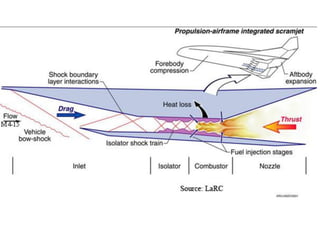
• Scramjet Introduction
• Current State of Scramjet Technology
• Design Considerations
• Methods
• Results and Conclusions
• Questions & Comments
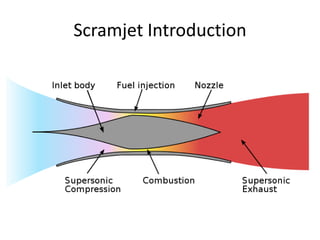
Scramjet Introduction
Scramjet Benefits
• Air-Breathing Engine – No oxidizer required to
be carried onboard
• No moving parts
• Theoretical Specific Impulse between 1000 –
4000 seconds
• Escape velocity capable; Theoretical Range
between Mach 5 and Mach 26 flight velocity
Scramjet Disadvantages
• Special materials requirements
– High strength/weight – scramjet have high
payload mass fractions making weight a concern
– High thermal stress characteristics – heavy cooling
burden; also loss of cooling ability as fuel is
consumed
• Current designs typically start at Mach 5
• Poor thrust/weight ratio
• Low to very low lift/drag ratio
Scramjet Programs
• SCRAM: USA; Mach 4 – 10
• National Aerospace Plane (NASP): USA; Mach 17
Upper Limit; Mach 25 Possible; Current H2
Combustion Model (31 Reactions; 16 Species)
• HyShot: Australia; Flew at Mach 7.6 for 6
seconds; 10 vehicles; 40% Success Rate
• HyperX: USA; Mach 7 for 11 seconds (15 miles)
2004; Mach 10 in 2004;
• X-51 Waverider: USA; In 2013 flew for 240
seconds ~Mach 5.1 before running out of fuel
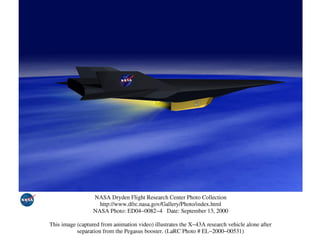
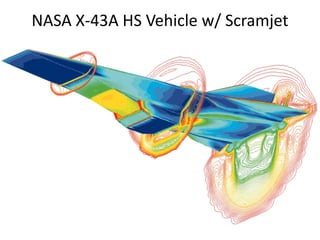
NASA X-43A HS Vehicle w/ Scramjet
Design Considerations
• Design Velocity: Mach 5
• Maximum Temperature: 2000 K
• Flight Altitude: 15 km
• Number of Inlet Shocks: 3
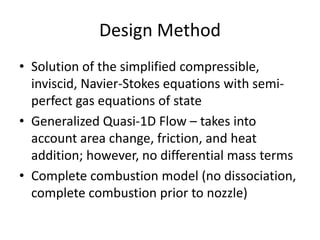
Design Method
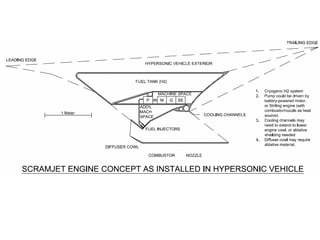
• Solution of the simplified compressible,
inviscid, Navier-Stokes equations with semi-
perfect gas equations of state
• Generalized Quasi-1D Flow – takes into
account area change, friction, and heat
addition; however, no differential mass terms
• Complete combustion model (no dissociation,
complete combustion prior to nozzle)
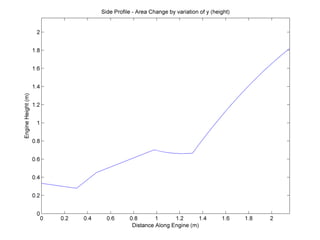
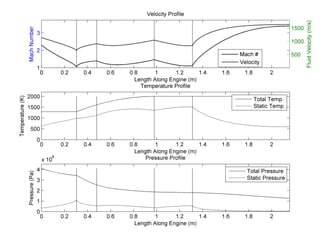
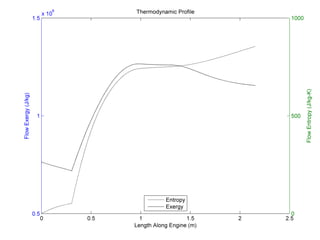
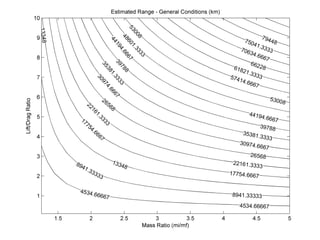
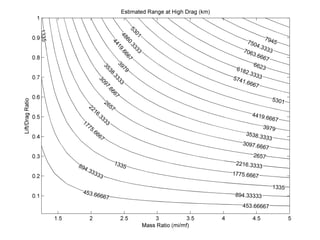
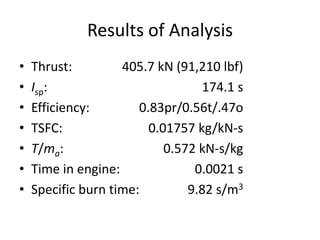
Results of Analysis
• Thrust: 405.7 kN (91,210 lbf)
• Isp: 174.1 s
• Efficiency: 0.83pr/0.56t/.47o
• TSFC: 0.01757 kg/kN-s
• T/ma: 0.572 kN-s/kg
• Time in engine: 0.0021 s
• Specific burn time: 9.82 s/m3
Results of Analysis
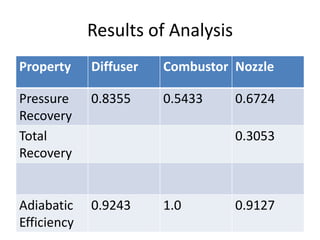
Property Diffuser Combustor Nozzle
Pressure
Recovery
0.8355 0.5433 0.6724
Total
Recovery
0.3053
Adiabatic
Efficiency
0.9243 1.0 0.9127
Perspective
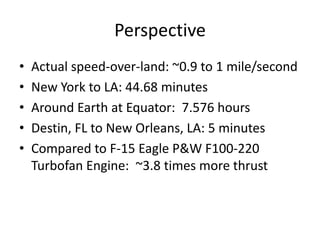
• Actual speed-over-land: ~0.9 to 1 mile/second
• New York to LA: 44.68 minutes
• Around Earth at Equator: 7.576 hours
• Destin, FL to New Orleans, LA: 5 minutes
• Compared to F-15 Eagle P&W F100-220
Turbofan Engine: ~3.8 times more thrust
Conclusions
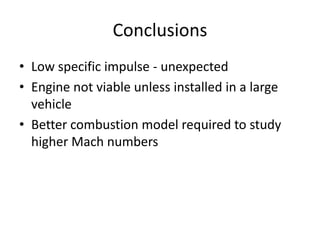
• Low specific impulse - unexpected
• Engine not viable unless installed in a large
vehicle
• Better combustion model required to study
higher Mach numbers
Summary
• Scramjet Introduction
• Current State of Scramjet Technology
• Design Considerations
• Methods
• Results and Conclusions
• Questions & Comments
Q&C
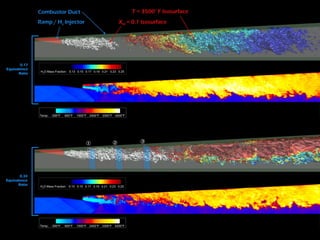
• Scramjet CFD Model (1 min)
https://www.youtube.com/watch?v=kaVDDm222H8
• Scramjet Engine Wind Tunnel Test (no
apparent combustion): (40 sec)
https://www.youtube.com/watch?v=EfJp2luk_IY

Design of a Scramjet Engine

  • 1.
    Design of aScramjet Engine Adam J. Resler ME 566 – Aerospace Propulsion Wed 04/29/15
  • 2.
    Overview • Scramjet Introduction •Current State of Scramjet Technology • Design Considerations • Methods • Results and Conclusions • Questions & Comments
  • 3.
  • 5.
    Scramjet Benefits • Air-BreathingEngine – No oxidizer required to be carried onboard • No moving parts • Theoretical Specific Impulse between 1000 – 4000 seconds • Escape velocity capable; Theoretical Range between Mach 5 and Mach 26 flight velocity
  • 6.
    Scramjet Disadvantages • Specialmaterials requirements – High strength/weight – scramjet have high payload mass fractions making weight a concern – High thermal stress characteristics – heavy cooling burden; also loss of cooling ability as fuel is consumed • Current designs typically start at Mach 5 • Poor thrust/weight ratio • Low to very low lift/drag ratio
  • 7.
    Scramjet Programs • SCRAM:USA; Mach 4 – 10 • National Aerospace Plane (NASP): USA; Mach 17 Upper Limit; Mach 25 Possible; Current H2 Combustion Model (31 Reactions; 16 Species) • HyShot: Australia; Flew at Mach 7.6 for 6 seconds; 10 vehicles; 40% Success Rate • HyperX: USA; Mach 7 for 11 seconds (15 miles) 2004; Mach 10 in 2004; • X-51 Waverider: USA; In 2013 flew for 240 seconds ~Mach 5.1 before running out of fuel
  • 10.
    NASA X-43A HSVehicle w/ Scramjet
  • 12.
    Design Considerations • DesignVelocity: Mach 5 • Maximum Temperature: 2000 K • Flight Altitude: 15 km • Number of Inlet Shocks: 3
  • 13.
    Design Method • Solutionof the simplified compressible, inviscid, Navier-Stokes equations with semi- perfect gas equations of state • Generalized Quasi-1D Flow – takes into account area change, friction, and heat addition; however, no differential mass terms • Complete combustion model (no dissociation, complete combustion prior to nozzle)
  • 20.
    Results of Analysis •Thrust: 405.7 kN (91,210 lbf) • Isp: 174.1 s • Efficiency: 0.83pr/0.56t/.47o • TSFC: 0.01757 kg/kN-s • T/ma: 0.572 kN-s/kg • Time in engine: 0.0021 s • Specific burn time: 9.82 s/m3
  • 21.
    Results of Analysis PropertyDiffuser Combustor Nozzle Pressure Recovery 0.8355 0.5433 0.6724 Total Recovery 0.3053 Adiabatic Efficiency 0.9243 1.0 0.9127
  • 22.
    Perspective • Actual speed-over-land:~0.9 to 1 mile/second • New York to LA: 44.68 minutes • Around Earth at Equator: 7.576 hours • Destin, FL to New Orleans, LA: 5 minutes • Compared to F-15 Eagle P&W F100-220 Turbofan Engine: ~3.8 times more thrust
  • 23.
    Conclusions • Low specificimpulse - unexpected • Engine not viable unless installed in a large vehicle • Better combustion model required to study higher Mach numbers
  • 24.
    Summary • Scramjet Introduction •Current State of Scramjet Technology • Design Considerations • Methods • Results and Conclusions • Questions & Comments
  • 25.
    Q&C • Scramjet CFDModel (1 min) https://www.youtube.com/watch?v=kaVDDm222H8 • Scramjet Engine Wind Tunnel Test (no apparent combustion): (40 sec) https://www.youtube.com/watch?v=EfJp2luk_IY