SINGLE-CELL
          PROTIEN
Being investigated as solution to world food
                 problem


            Presented by
           Mohamed Abdulazim

               Supervisor
          Prof. Eman Elmasry
Introduction
   The development of SCP was really the
    beginning of biotechnology.
   Prior to this the industrial fermentation
    was mainly focused on antibiotics and
    other products which did not have to
    compete.
   The development was brought up by
    the oil companies rather than the food
    companies.
   People in third world and developing countries are
    suffering from menace of protein deficiency in their diets
    resulting in serious protein malnutrition problems.
   The situation, accompanied with rapid population growth
    demands exploration of new & un-conventional protein
    sources to fortify human foods.
   Saccharomyces cerevisiae is very promising and cost
    effective source of single cell protein due to its bigger size,
    easy harvesting, lower amount of nucleic acids and good
    blend of essential amino acids.
   Its protein quality & chemical score is comparable with
    soybean or egg protein.
   The yeast is highly significant as an alternative source of
    protein to cover the increasing demands due to rapidly
    escalating population.
   Single Cell Protein (SCP) sources that can be derived from
    algae, yeasts, fungi and bacteria can be used as food
    supplements for animals or humans.
   Most targeted areas of SCP would apply towards animal
    feed
   Single Cell Protein (SCPs) sources such as mycoproteins
    can serve as food substitutes such as meat replacement
    products similar to Tofu
   QuornTM similar to Tofu, is used as a flexible meat substitute
    produce that has been marketed as products such as
    chicken pieces, turkey and beef substitute products.
   Other products marketed also include fish fillets, deli meat
    substitutes, pies and pastries and ready made meals.
Definition

 The term single cell protein (SCP) refers
  to dead, dry cells of micro-organisms
  such as yeast, bacteria, fungi and algae
  which grow on different carbon sources.
 The name "single cell protein" was used
  for the first time by the M.I.T. professor
  Carol Wilson to give a better image than
  "microbial protein.
SCP production
            Process
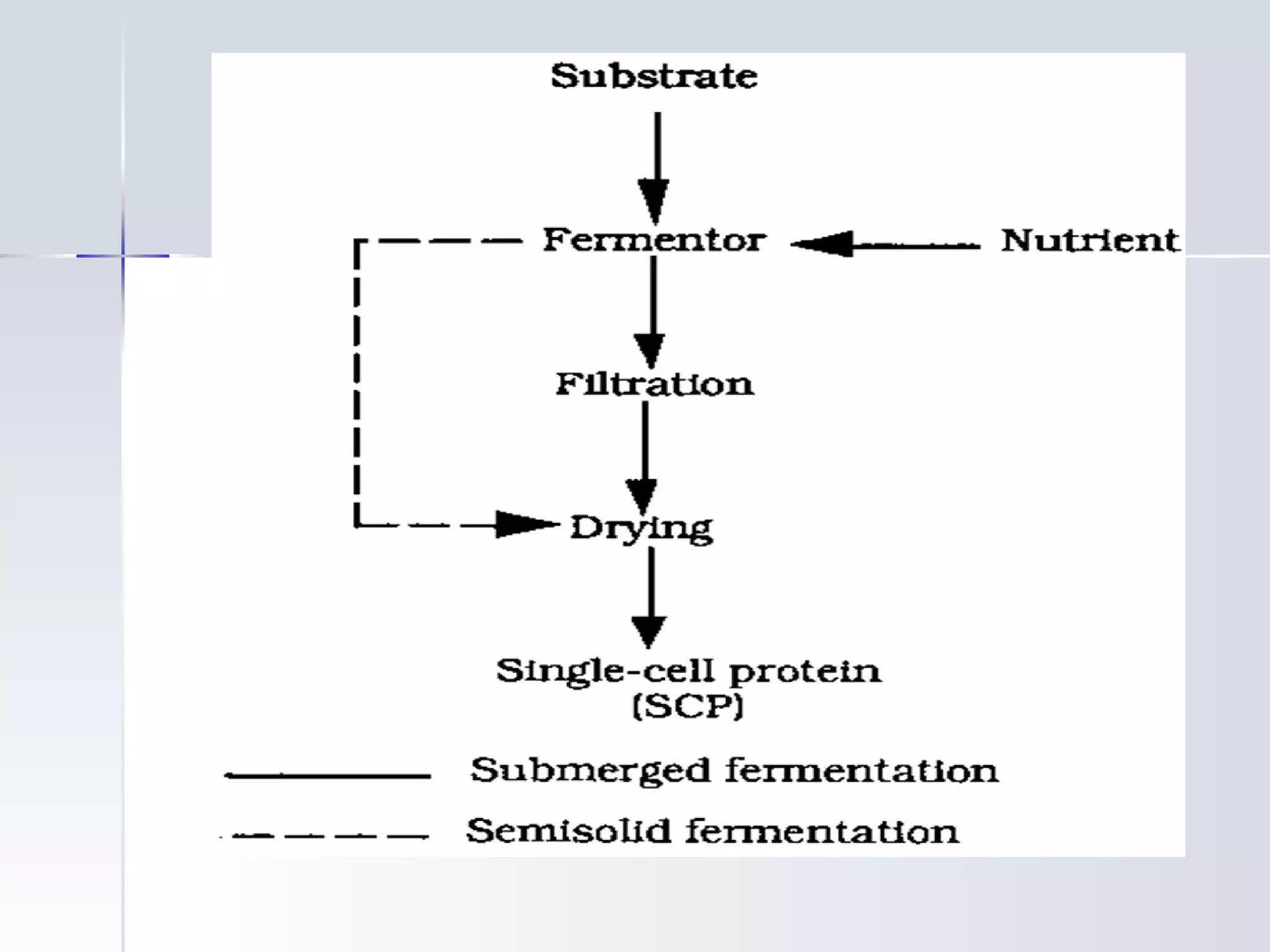
    Following basic steps are involved in SCP
    production process.
   PREPARATION of suitable medium with
    suitable carbon source.
   CULTIVATION of suitable strain of micro
    organism.
   PREVENTION of contaminations.
   SEPARATION of microbial biomass with or
    without product.
Production of SCP

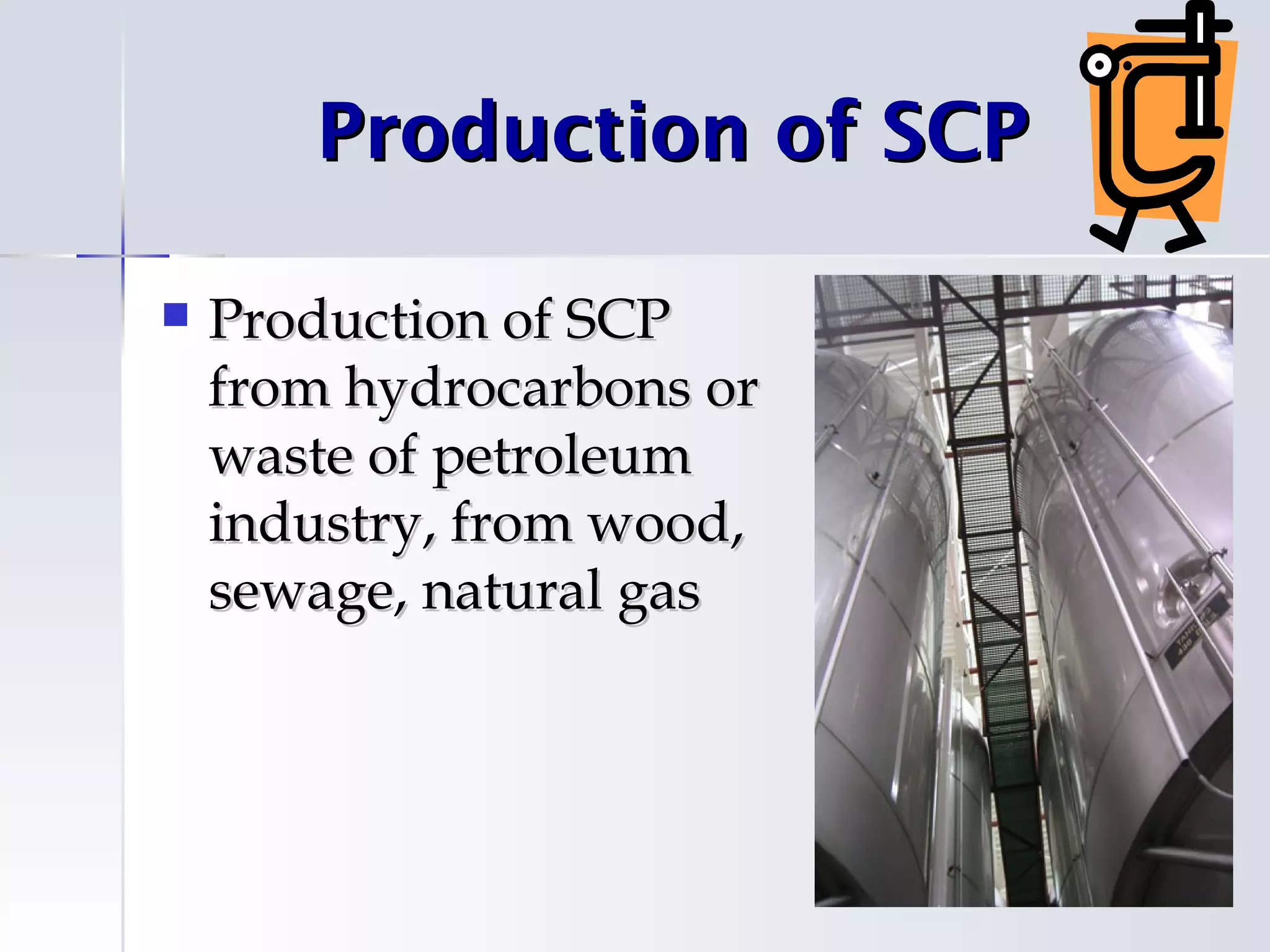
   Production of SCP
    from hydrocarbons or
    waste of petroleum
    industry, from wood,
    sewage, natural gas
SCP FROM WOOD : 
   Cellulose from natural sources and waste wood
    is an attractive starting material for SCP
    production because of its abundance.
   The association of cellulose with lignin in wood
    makes it intractable to microbial degradation
   Thermal or chemical pretreatment, used in
    combination with enzymatic hydrolysis, is
    usually required.
   Systems using cellulolytic organisms appear to
    have promise, but economic viability has yet to
    be Achieved
SCP FROM
     CARBOHYDRATES : 
   Whole milk whey or deproteinised whey is a
    carbohydrate source, which creates disposal
    problems.
   (High BOD) Problems associated with whey for
    SCP production are usually insufficient substrate,
    seasonal supply variations and its high water
    content (>90%) which makes transport prohibitively
    expensive.
   While most organisms do not grow on lactose as a
    carbon source, strains of the yeast Kluyveromyces
    marxianus readily grow on lactose.
SCP FROM NATURAL GAS : 

 Methane was initially considered as a SCP raw
  material because, as a gas product, purification
  problems after fermentation would be minimal.
 Disadvantages associated with methane-based
  processes are related to:
 (a) The greater oxygen requirements necessary to
  fully oxidize methane compared with paraffin's,
 (b) The low solubility of methane in water and
 (c) the requirement that the Fermentation plant
  is flame proof as methane-oxygen mixtures are
  highly explosive
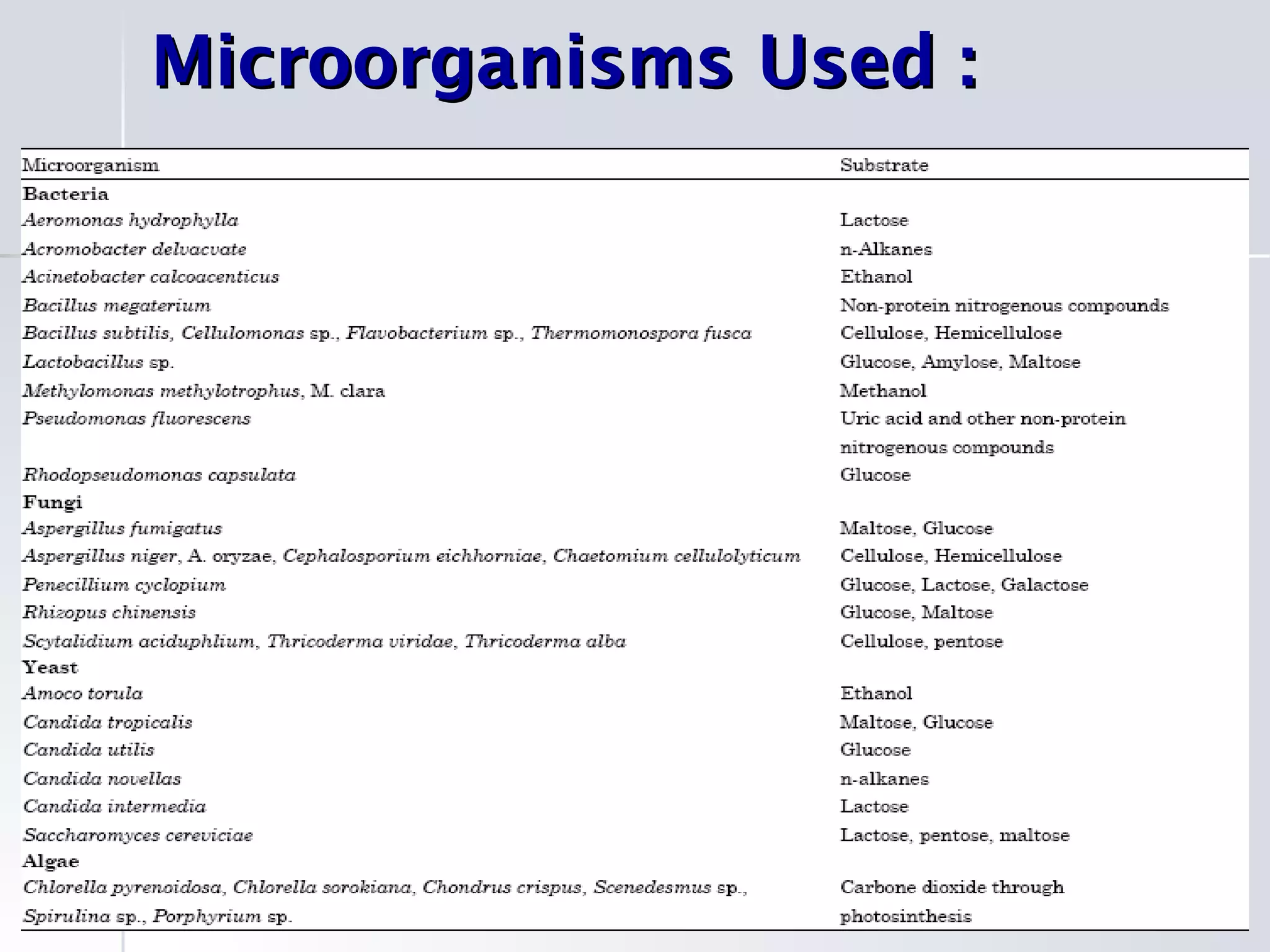
Microorganisms Used : 
Yeasts and Fungi
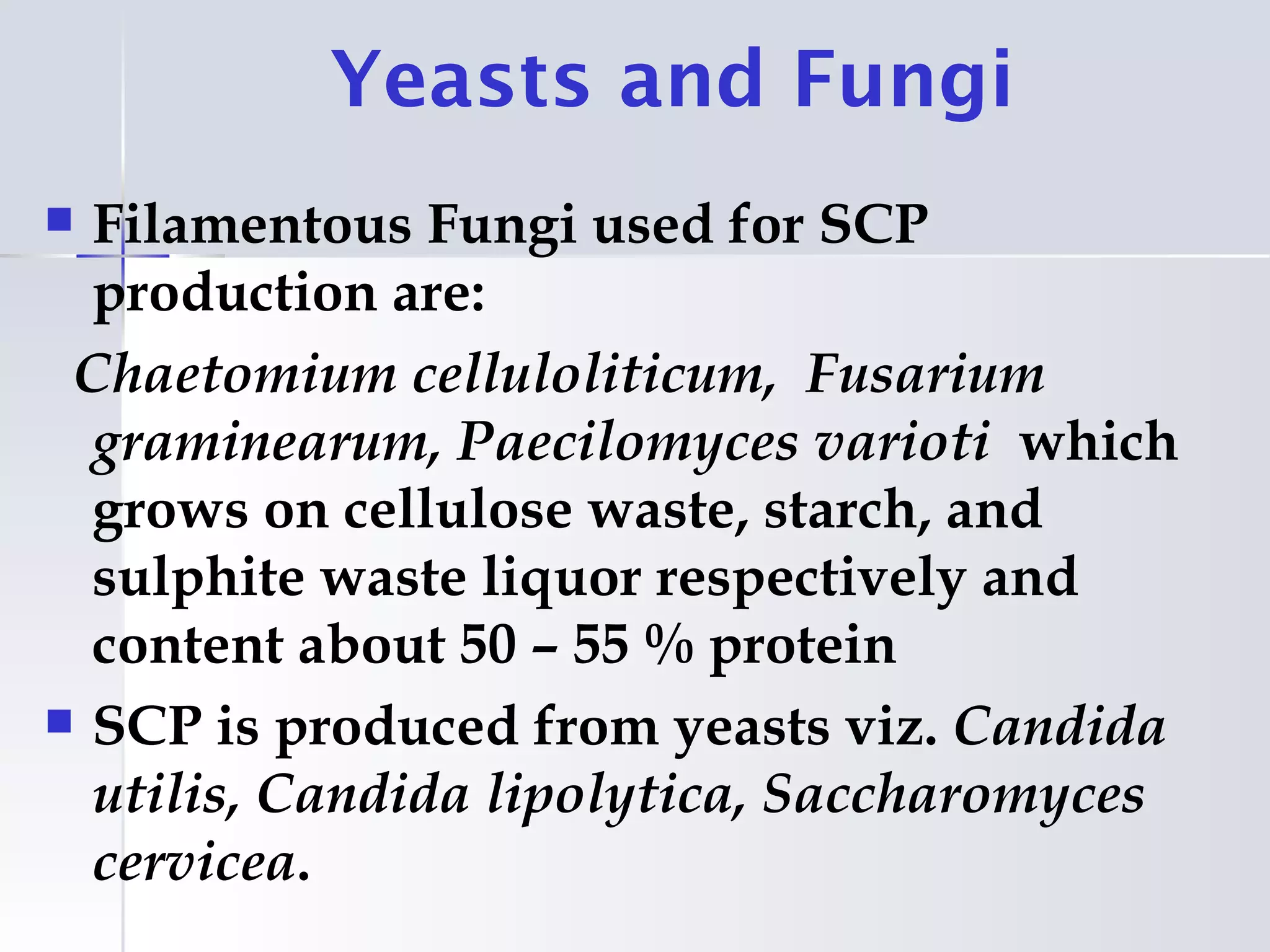
 Filamentous Fungi used for SCP
  production are:
 Chaetomium celluloliticum, Fusarium
  graminearum, Paecilomyces varioti which
  grows on cellulose waste, starch, and
  sulphite waste liquor respectively and
  content about 50 – 55 % protein
 SCP is produced from yeasts viz. Candida
  utilis, Candida lipolytica, Saccharomyces
  cervicea.
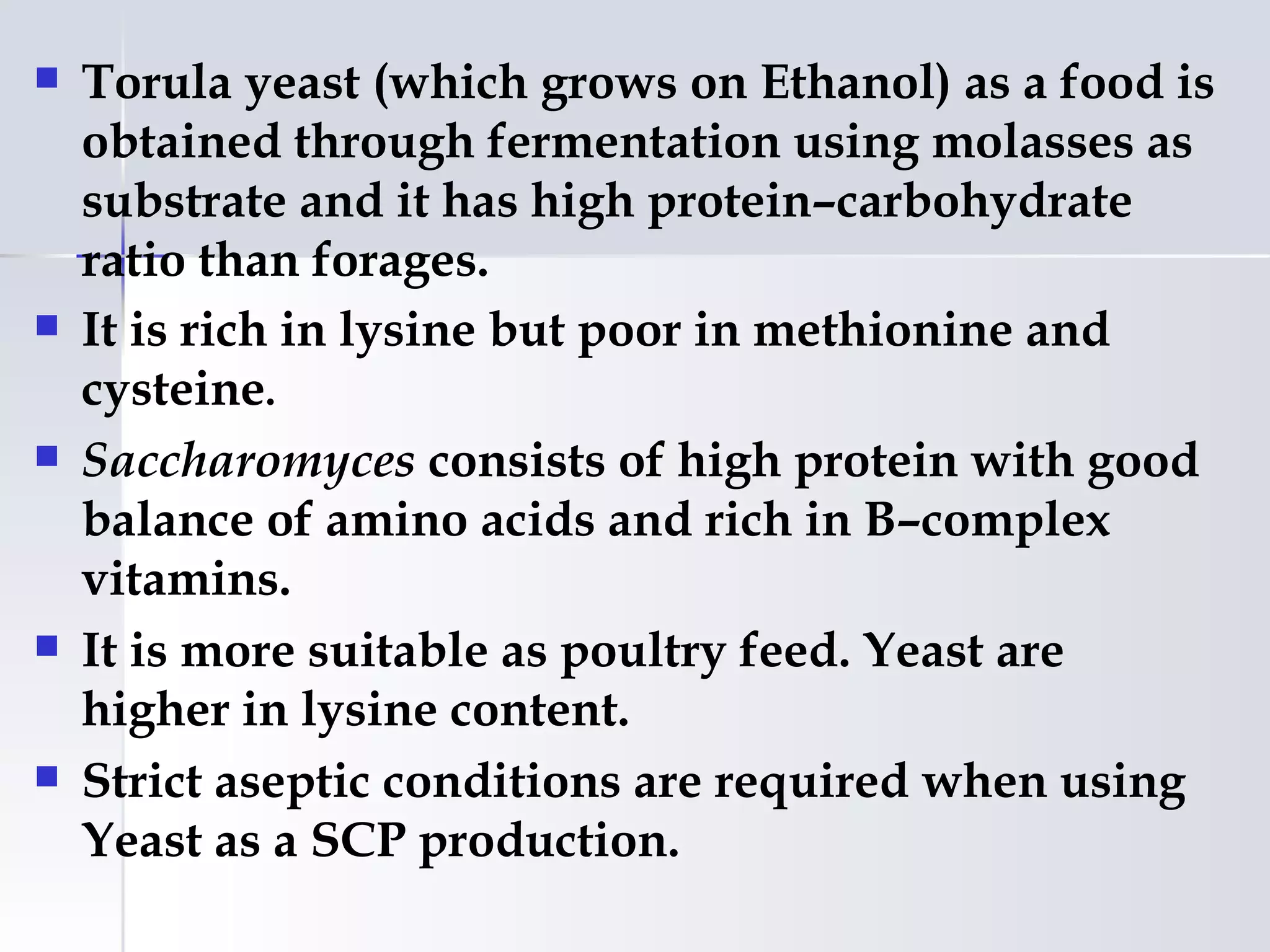
   Torula yeast (which grows on Ethanol) as a food is
    obtained through fermentation using molasses as
    substrate and it has high protein–carbohydrate
    ratio than forages.
   It is rich in lysine but poor in methionine and
    cysteine.
   Saccharomyces consists of high protein with good
    balance of amino acids and rich in B–complex
    vitamins.
   It is more suitable as poultry feed. Yeast are
    higher in lysine content.
   Strict aseptic conditions are required when using
    Yeast as a SCP production.
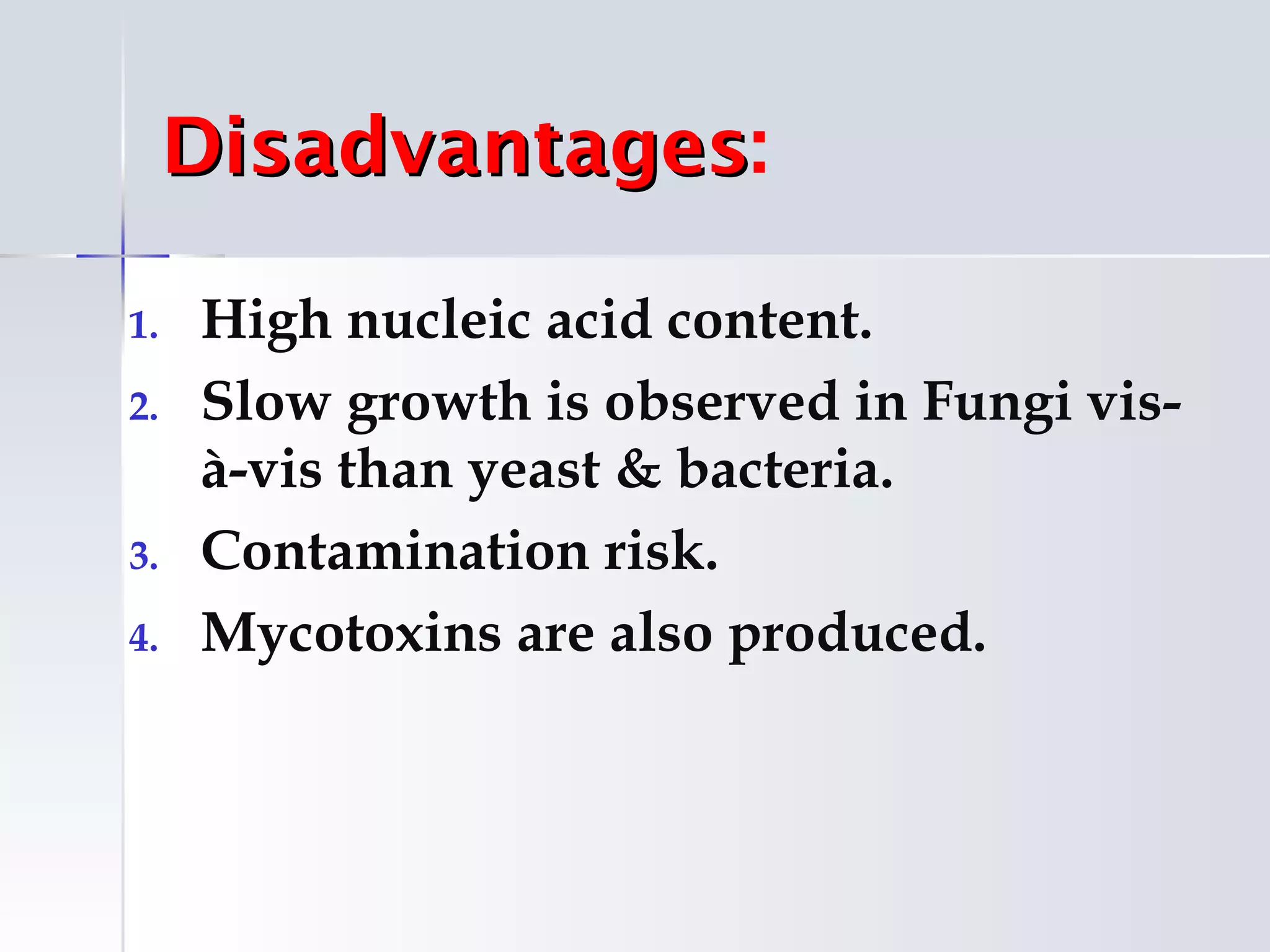
Disadvantages:
     Disadvantages

1.   High nucleic acid content.
2.   Slow growth is observed in Fungi vis-
     à-vis than yeast & bacteria.
3.   Contamination risk.
4.   Mycotoxins are also produced.
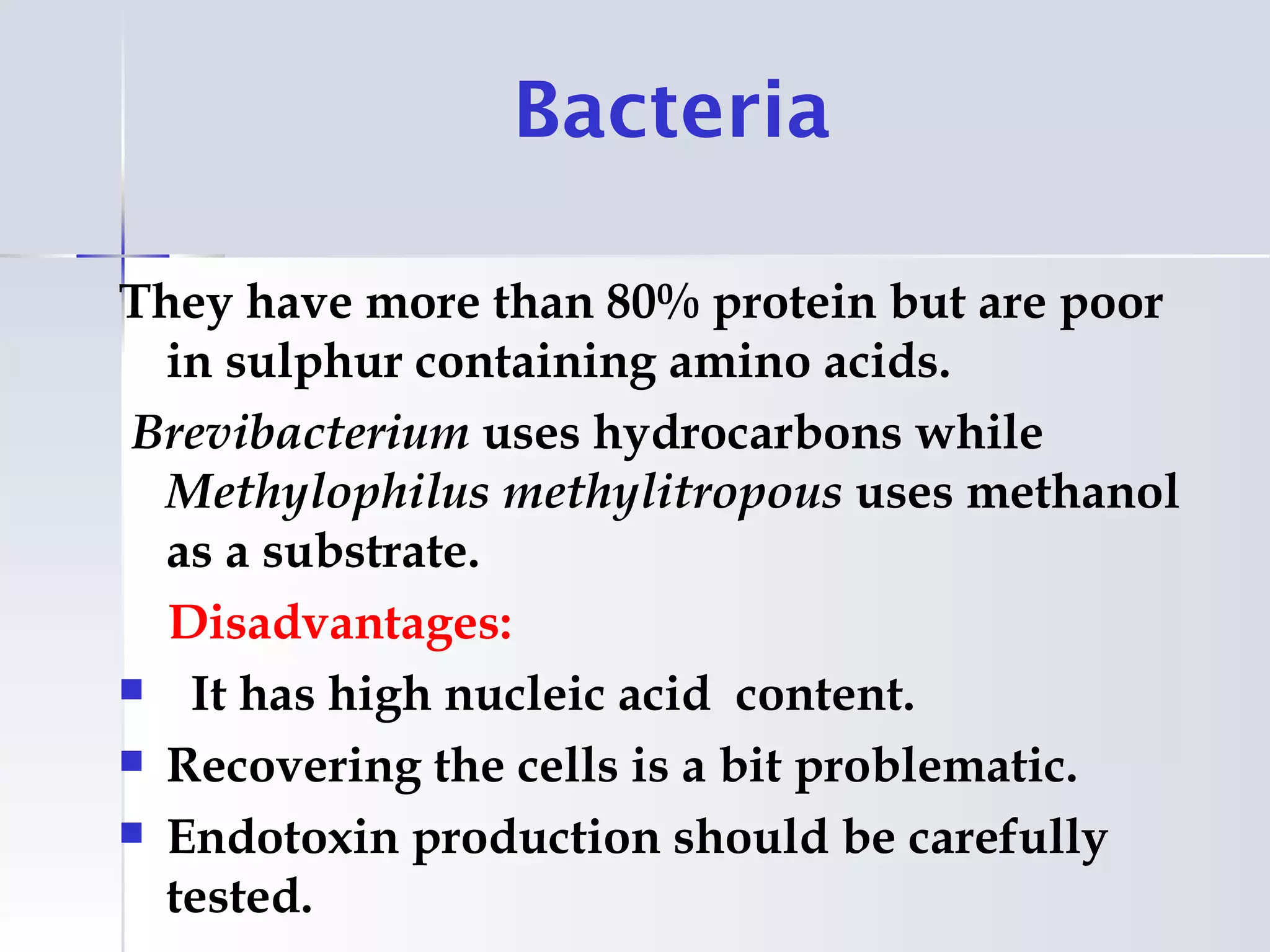
Bacteria

They have more than 80% protein but are poor
  in sulphur containing amino acids.
Brevibacterium uses hydrocarbons while
  Methylophilus methylitropous uses methanol
  as a substrate.
  Disadvantages:
 It has high nucleic acid content.

 Recovering the cells is a bit problematic.

 Endotoxin production should be carefully
  tested.
Algae
  Chlorella, Scenedesmus acutus and Spirulina maxima are
  grown for SCP.
 These have about 60% protein with good amino acid
  composition but less in sulphur containing amino acids.
 Chlorella and Spirulina are used for commercial scale
  production in Taiwan, Thailand, Japan, Israel, Mexico and
  USA.
 It is spray dried and sold as pills and powders.

Disadvantages:
   As they are rich in Chlorophyll, it is not advised for human
    consumption (except Spirulina).
    It has low density i.e. 1-2 gm dry weight/litre of substrate.
    There is lot of risk of contamination during growth.
Spirulina
 The United Nations Organization(UNO) in its
  World Food Conference of 1974 declared
  Spirulina as the best food for tomorrow.
 World Health Organization(WHO) has
  hailed Spirulina the greatest super food on
  the earth.
 Upon testing it NASA scientists found 1 kg of
  Spirulina nutritionally
 equal to 1000 kgs of assorted vegetables
PRODUCTION COST
   The production cost strongly influenced by the nature of raw
    starting material used.
   If starting material used is disposed of as a waste product ,
    then the raw material cost is negative.
   However, if a useful material is used, then starting Material
    used will play a major role in the final cost of SCP.
   Price of SCP varies depending on how it is used, i.e: SCP for
    human is about 10 times more expensive than SCP for animal
    feed because it is more highly refined.
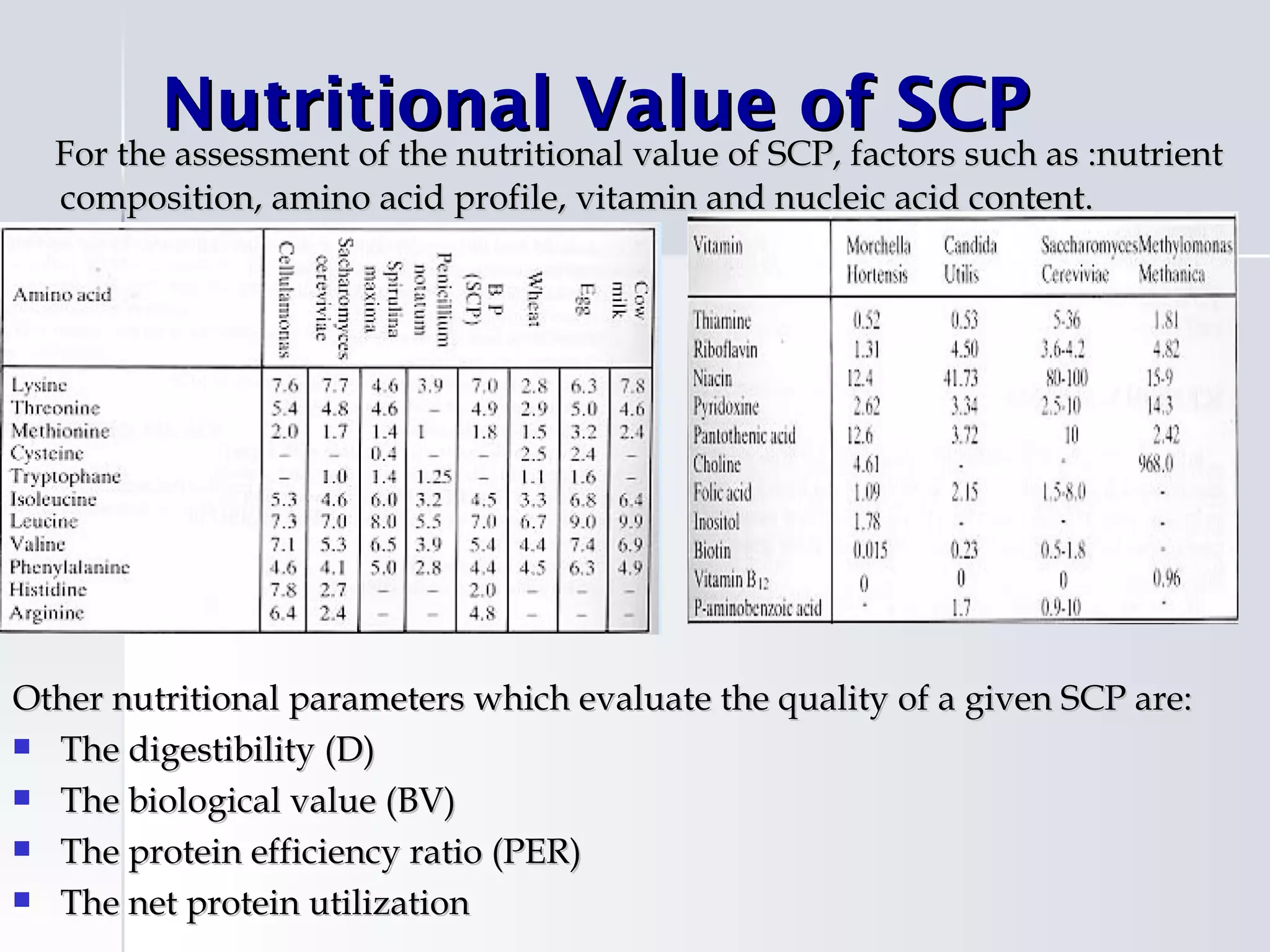
Nutritional Value of SCP
  For the assessment of the nutritional value of SCP, factors such as :nutrient
  For the assessment of the nutritional value of SCP, factors such as :nutrient
  composition, amino acid profile, vitamin and nucleic acid content.


Other nutritional parameters which evaluate the quality of a given SCP are:
 The digestibility (D)

 The biological value (BV)

 The protein efficiency ratio (PER)

 The net protein utilization
Uses of SCP

Single cell proteins have application
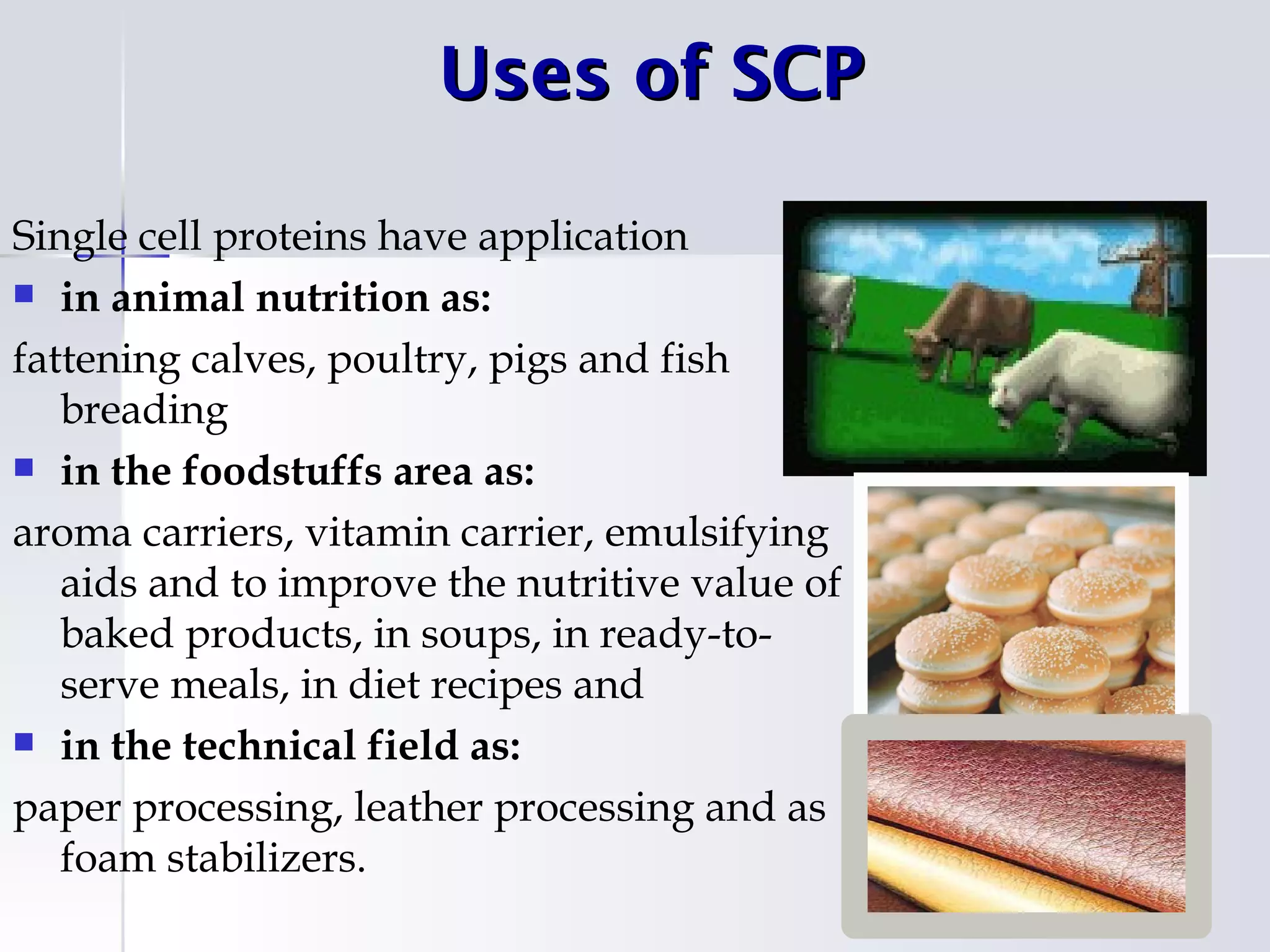
 in animal nutrition as:

fattening calves, poultry, pigs and fish
   breading
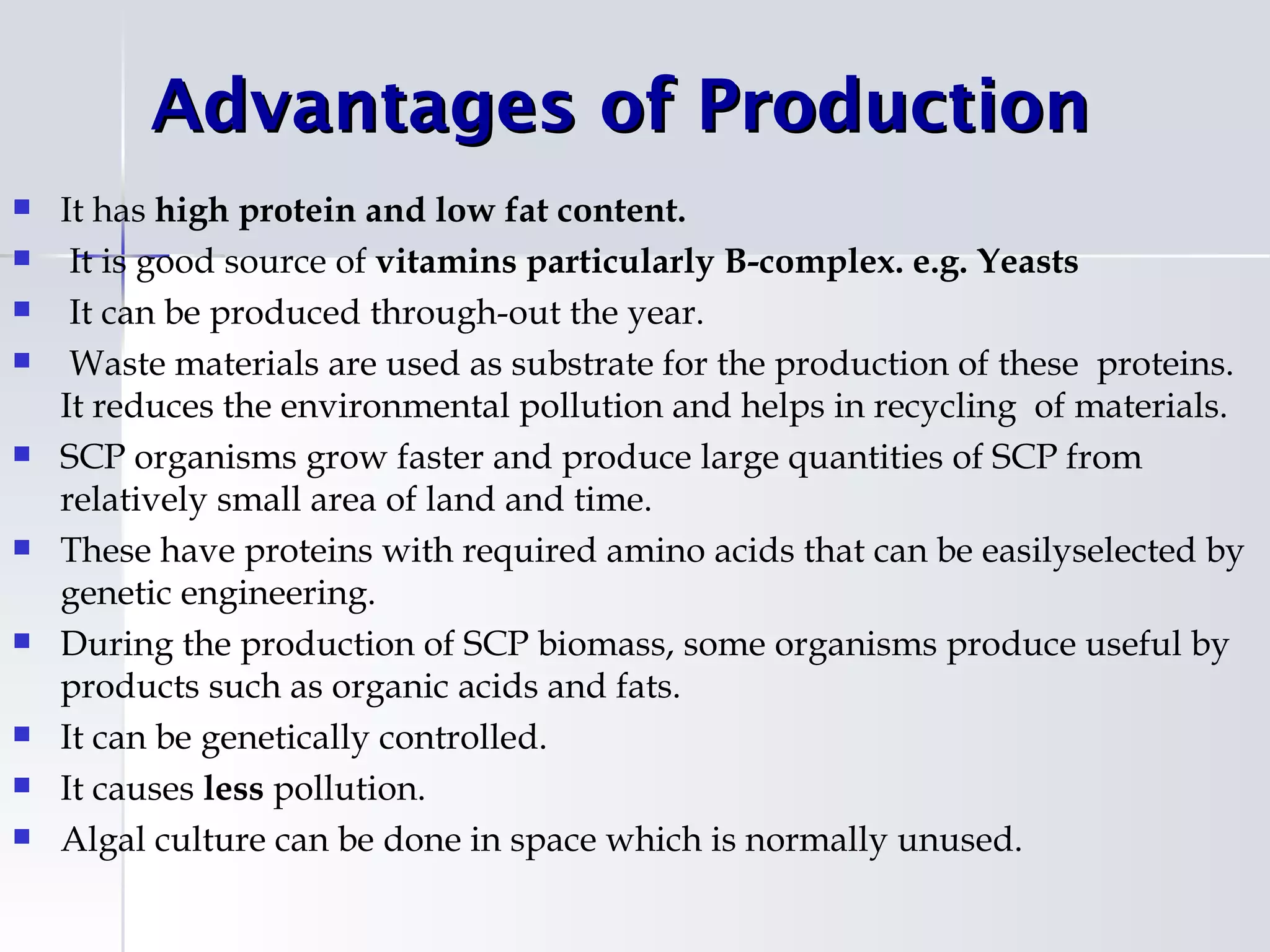
 in the foodstuffs area as:

aroma carriers, vitamin carrier, emulsifying
   aids and to improve the nutritive value of
   baked products, in soups, in ready-to-
   serve meals, in diet recipes and
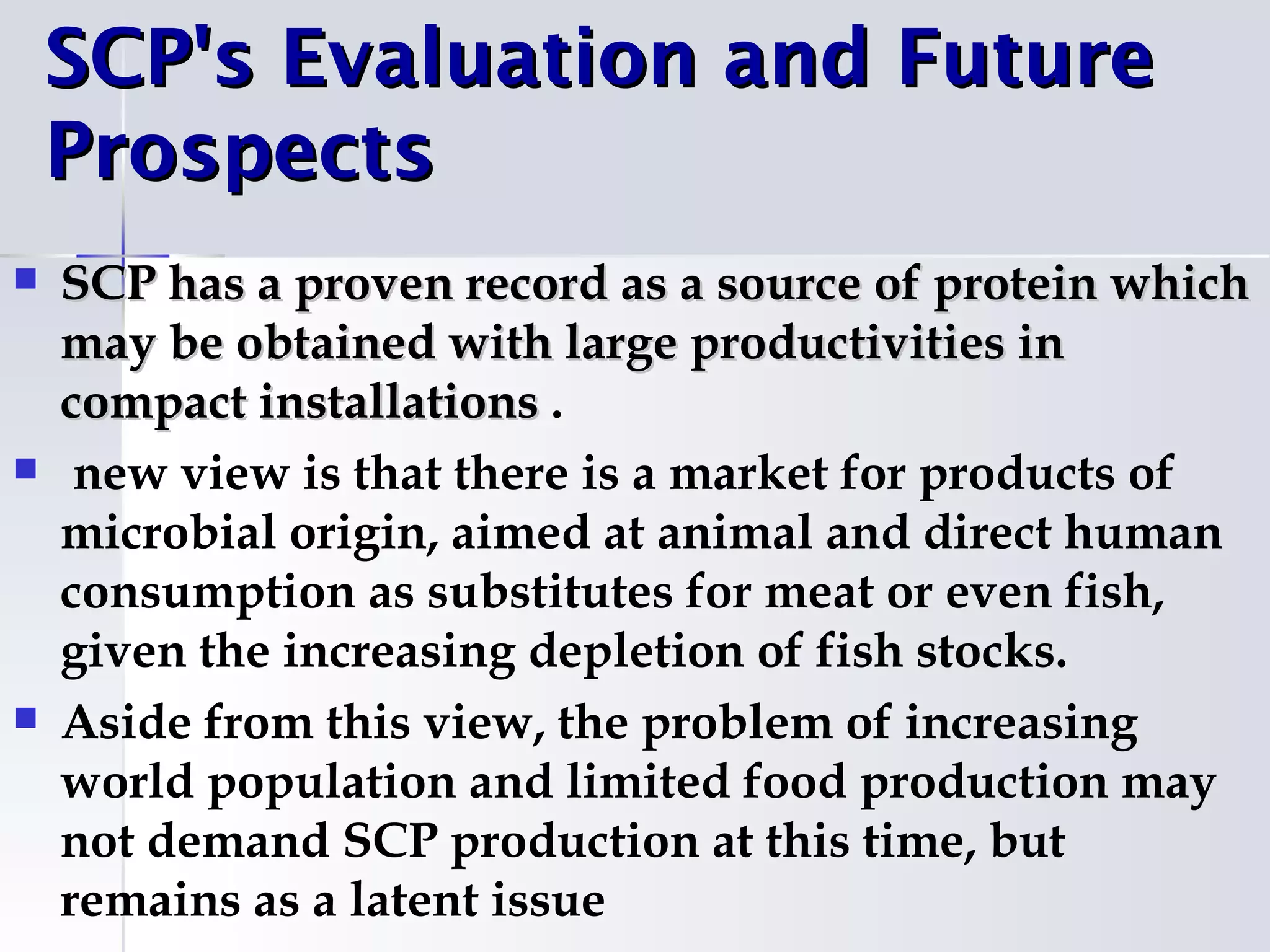
 in the technical field as:

paper processing, leather processing and as
   foam stabilizers.
Advantages of Production
   It has high protein and low fat content.
    It is good source of vitamins particularly B-complex. e.g. Yeasts
    It can be produced through-out the year.
    Waste materials are used as substrate for the production of these proteins.
    It reduces the environmental pollution and helps in recycling of materials.
   SCP organisms grow faster and produce large quantities of SCP from
    relatively small area of land and time.
   These have proteins with required amino acids that can be easilyselected by
    genetic engineering.
   During the production of SCP biomass, some organisms produce useful by
    products such as organic acids and fats.
   It can be genetically controlled.
   It causes less pollution.
   Algal culture can be done in space which is normally unused.
SCP's Evaluation and Future
    Prospects
   SCP has a proven record as a source of protein which
    may be obtained with large productivities in
    compact installations .
    new view is that there is a market for products of
    microbial origin, aimed at animal and direct human
    consumption as substitutes for meat or even fish,
    given the increasing depletion of fish stocks.
   Aside from this view, the problem of increasing
    world population and limited food production may
    not demand SCP production at this time, but
    remains as a latent issue
      The continued research on the
    production of microorganisms for animal
    and     human      consumption        will
    undoubtedly find application in the
    future.
   This research should also incorporate the
    development of recombinant strains
    from no conventional GRAS (Generally
    Regarded as a Safe) yeasts and fungi .
For future success of SCP:

   First, food technology problems have
    to be solved in order to make it
    similar to familiar foods.

   Second, the production should
    compare favorably with other
    protein sources
REFERENCES
   Adedayo, M.R. Ajiboye, E.A., Akintunde, J.K. Odaibo, A.
    Advances in Applied Science Research. 2011, 2 (5):396-409.
   Alvarez, R. and A. Enriquez, 1988. Nucleic acid reduction in
    yeast. Applied Microbial. Biotechnology. 29: 208-210.
   Burke, G., Ramnarine Sing, B. & Theodore L. (2000).
    Handbook of environmental management and technology
    (2nd Ed.). (Chapter 2).12:1-65.
   Israelidis, C. J. (2003) .Nutrition – single cell protein. twenty
    years later, 29: 497-516.
   Srivastava. M.L. (2008). Fermentation Technology,
    Environmental Microbiology. 6:195-221.
   Trehan K. (1990). Microbial production of food.
    Biotechnology, 12:85-113.
   White J. (1954) Yeast Technology, 47:103-109.
   Dirar, H. (1993). The Indigenous Fermented Foods of the
    Sudan. A Study in African Food and Nutrition 55:285-311.
   Harden.A ,Young. W.J (1906). The Alcoholic Ferment of Yeast-
    Juice. Proceedings of the Royal Society, (526): 369-375.
   Steinkraus, K. H., Ed. (1995). Handbook of Indigenous
    Fermented Foods,5:943-1011.
   Dubos J. (1951). "Louis Pasteur: Free Lance of Science,
    Gollancz. Quoted in Manchester K. L. (1995) Louis Pasteur
    (1822-1895)-chance and the prepared mind". Trends
    Biotechnol 12: 511-515.
   Rehm, H. J. & Reed, G. (1989). Biotechnology: A
    comprehensive treatise, Vol. 8; Weinheim (Germany);
    Deerfield Beach, Fla.: Verlag Chemie.
   Anderson, C., Longton, J., Maddix, C., Scammell, G. W. and
    Solomons, G. L. (1975) The growth of microfungi on
    carbohydrates. In Single Cell Protein (Tannenbaum and D. I.
    C. Wang Eds.) p. 314, MIT Press. Cambridge MA.
Scp

Scp

  • 1.
    SINGLE-CELL PROTIEN Being investigated as solution to world food problem Presented by Mohamed Abdulazim Supervisor Prof. Eman Elmasry
  • 2.
    Introduction  The development of SCP was really the beginning of biotechnology.  Prior to this the industrial fermentation was mainly focused on antibiotics and other products which did not have to compete.  The development was brought up by the oil companies rather than the food companies.
  • 3.
    People in third world and developing countries are suffering from menace of protein deficiency in their diets resulting in serious protein malnutrition problems.  The situation, accompanied with rapid population growth demands exploration of new & un-conventional protein sources to fortify human foods.  Saccharomyces cerevisiae is very promising and cost effective source of single cell protein due to its bigger size, easy harvesting, lower amount of nucleic acids and good blend of essential amino acids.  Its protein quality & chemical score is comparable with soybean or egg protein.  The yeast is highly significant as an alternative source of protein to cover the increasing demands due to rapidly escalating population.
  • 4.
    Single Cell Protein (SCP) sources that can be derived from algae, yeasts, fungi and bacteria can be used as food supplements for animals or humans.  Most targeted areas of SCP would apply towards animal feed  Single Cell Protein (SCPs) sources such as mycoproteins can serve as food substitutes such as meat replacement products similar to Tofu  QuornTM similar to Tofu, is used as a flexible meat substitute produce that has been marketed as products such as chicken pieces, turkey and beef substitute products.  Other products marketed also include fish fillets, deli meat substitutes, pies and pastries and ready made meals.
  • 5.
    Definition  The termsingle cell protein (SCP) refers to dead, dry cells of micro-organisms such as yeast, bacteria, fungi and algae which grow on different carbon sources.  The name "single cell protein" was used for the first time by the M.I.T. professor Carol Wilson to give a better image than "microbial protein.
  • 6.
    SCP production Process  Following basic steps are involved in SCP production process.  PREPARATION of suitable medium with suitable carbon source.  CULTIVATION of suitable strain of micro organism.  PREVENTION of contaminations.  SEPARATION of microbial biomass with or without product.
  • 8.
    Production of SCP  Production of SCP from hydrocarbons or waste of petroleum industry, from wood, sewage, natural gas
  • 9.
    SCP FROM WOOD:   Cellulose from natural sources and waste wood is an attractive starting material for SCP production because of its abundance.  The association of cellulose with lignin in wood makes it intractable to microbial degradation  Thermal or chemical pretreatment, used in combination with enzymatic hydrolysis, is usually required.  Systems using cellulolytic organisms appear to have promise, but economic viability has yet to be Achieved
  • 10.
    SCP FROM CARBOHYDRATES :   Whole milk whey or deproteinised whey is a carbohydrate source, which creates disposal problems.  (High BOD) Problems associated with whey for SCP production are usually insufficient substrate, seasonal supply variations and its high water content (>90%) which makes transport prohibitively expensive.  While most organisms do not grow on lactose as a carbon source, strains of the yeast Kluyveromyces marxianus readily grow on lactose.
  • 11.
    SCP FROM NATURALGAS :   Methane was initially considered as a SCP raw material because, as a gas product, purification problems after fermentation would be minimal.  Disadvantages associated with methane-based processes are related to: (a) The greater oxygen requirements necessary to fully oxidize methane compared with paraffin's, (b) The low solubility of methane in water and (c) the requirement that the Fermentation plant is flame proof as methane-oxygen mixtures are highly explosive
  • 12.
  • 13.
    Yeasts and Fungi Filamentous Fungi used for SCP production are: Chaetomium celluloliticum, Fusarium graminearum, Paecilomyces varioti which grows on cellulose waste, starch, and sulphite waste liquor respectively and content about 50 – 55 % protein  SCP is produced from yeasts viz. Candida utilis, Candida lipolytica, Saccharomyces cervicea.
  • 14.
    Torula yeast (which grows on Ethanol) as a food is obtained through fermentation using molasses as substrate and it has high protein–carbohydrate ratio than forages.  It is rich in lysine but poor in methionine and cysteine.  Saccharomyces consists of high protein with good balance of amino acids and rich in B–complex vitamins.  It is more suitable as poultry feed. Yeast are higher in lysine content.  Strict aseptic conditions are required when using Yeast as a SCP production.
  • 15.
    Disadvantages: Disadvantages 1. High nucleic acid content. 2. Slow growth is observed in Fungi vis- à-vis than yeast & bacteria. 3. Contamination risk. 4. Mycotoxins are also produced.
  • 16.
    Bacteria They have morethan 80% protein but are poor in sulphur containing amino acids. Brevibacterium uses hydrocarbons while Methylophilus methylitropous uses methanol as a substrate. Disadvantages:  It has high nucleic acid content.  Recovering the cells is a bit problematic.  Endotoxin production should be carefully tested.
  • 17.
    Algae  Chlorella,Scenedesmus acutus and Spirulina maxima are grown for SCP.  These have about 60% protein with good amino acid composition but less in sulphur containing amino acids.  Chlorella and Spirulina are used for commercial scale production in Taiwan, Thailand, Japan, Israel, Mexico and USA.  It is spray dried and sold as pills and powders. Disadvantages:  As they are rich in Chlorophyll, it is not advised for human consumption (except Spirulina).  It has low density i.e. 1-2 gm dry weight/litre of substrate.  There is lot of risk of contamination during growth.
  • 18.
    Spirulina  The UnitedNations Organization(UNO) in its World Food Conference of 1974 declared Spirulina as the best food for tomorrow.  World Health Organization(WHO) has hailed Spirulina the greatest super food on the earth.  Upon testing it NASA scientists found 1 kg of Spirulina nutritionally  equal to 1000 kgs of assorted vegetables
  • 19.
    PRODUCTION COST  The production cost strongly influenced by the nature of raw starting material used.  If starting material used is disposed of as a waste product , then the raw material cost is negative.  However, if a useful material is used, then starting Material used will play a major role in the final cost of SCP.  Price of SCP varies depending on how it is used, i.e: SCP for human is about 10 times more expensive than SCP for animal feed because it is more highly refined.
  • 20.
    Nutritional Value ofSCP For the assessment of the nutritional value of SCP, factors such as :nutrient For the assessment of the nutritional value of SCP, factors such as :nutrient composition, amino acid profile, vitamin and nucleic acid content. Other nutritional parameters which evaluate the quality of a given SCP are:  The digestibility (D)  The biological value (BV)  The protein efficiency ratio (PER)  The net protein utilization
  • 21.
    Uses of SCP Singlecell proteins have application  in animal nutrition as: fattening calves, poultry, pigs and fish breading  in the foodstuffs area as: aroma carriers, vitamin carrier, emulsifying aids and to improve the nutritive value of baked products, in soups, in ready-to- serve meals, in diet recipes and  in the technical field as: paper processing, leather processing and as foam stabilizers.
  • 22.
    Advantages of Production  It has high protein and low fat content.  It is good source of vitamins particularly B-complex. e.g. Yeasts  It can be produced through-out the year.  Waste materials are used as substrate for the production of these proteins. It reduces the environmental pollution and helps in recycling of materials.  SCP organisms grow faster and produce large quantities of SCP from relatively small area of land and time.  These have proteins with required amino acids that can be easilyselected by genetic engineering.  During the production of SCP biomass, some organisms produce useful by products such as organic acids and fats.  It can be genetically controlled.  It causes less pollution.  Algal culture can be done in space which is normally unused.
  • 23.
    SCP's Evaluation andFuture Prospects  SCP has a proven record as a source of protein which may be obtained with large productivities in compact installations .  new view is that there is a market for products of microbial origin, aimed at animal and direct human consumption as substitutes for meat or even fish, given the increasing depletion of fish stocks.  Aside from this view, the problem of increasing world population and limited food production may not demand SCP production at this time, but remains as a latent issue
  • 24.
    The continued research on the production of microorganisms for animal and human consumption will undoubtedly find application in the future.  This research should also incorporate the development of recombinant strains from no conventional GRAS (Generally Regarded as a Safe) yeasts and fungi .
  • 25.
    For future successof SCP:  First, food technology problems have to be solved in order to make it similar to familiar foods.  Second, the production should compare favorably with other protein sources
  • 26.
    REFERENCES  Adedayo, M.R. Ajiboye, E.A., Akintunde, J.K. Odaibo, A. Advances in Applied Science Research. 2011, 2 (5):396-409.  Alvarez, R. and A. Enriquez, 1988. Nucleic acid reduction in yeast. Applied Microbial. Biotechnology. 29: 208-210.  Burke, G., Ramnarine Sing, B. & Theodore L. (2000). Handbook of environmental management and technology (2nd Ed.). (Chapter 2).12:1-65.  Israelidis, C. J. (2003) .Nutrition – single cell protein. twenty years later, 29: 497-516.  Srivastava. M.L. (2008). Fermentation Technology, Environmental Microbiology. 6:195-221.  Trehan K. (1990). Microbial production of food. Biotechnology, 12:85-113.  White J. (1954) Yeast Technology, 47:103-109.
  • 27.
    Dirar, H. (1993). The Indigenous Fermented Foods of the Sudan. A Study in African Food and Nutrition 55:285-311.  Harden.A ,Young. W.J (1906). The Alcoholic Ferment of Yeast- Juice. Proceedings of the Royal Society, (526): 369-375.  Steinkraus, K. H., Ed. (1995). Handbook of Indigenous Fermented Foods,5:943-1011.  Dubos J. (1951). "Louis Pasteur: Free Lance of Science, Gollancz. Quoted in Manchester K. L. (1995) Louis Pasteur (1822-1895)-chance and the prepared mind". Trends Biotechnol 12: 511-515.  Rehm, H. J. & Reed, G. (1989). Biotechnology: A comprehensive treatise, Vol. 8; Weinheim (Germany); Deerfield Beach, Fla.: Verlag Chemie.  Anderson, C., Longton, J., Maddix, C., Scammell, G. W. and Solomons, G. L. (1975) The growth of microfungi on carbohydrates. In Single Cell Protein (Tannenbaum and D. I. C. Wang Eds.) p. 314, MIT Press. Cambridge MA.