Download to read offline







The document outlines the six main schools of thought in psychology: structuralism, functionalism, behaviorism, Gestalt psychology, psychoanalytic, and humanistic. It provides details on the founders, key ideas, and experimental methods of each school. Structuralism was founded by Wundt and focused on introspection to study the building blocks of sensations and perceptions. Functionalism shifted to studying thinking, learning, and motivation, using longitudinal research. Behaviorism criticized previous methods and focused only on observable behaviors. Gestalt psychology studied organized patterns of behavior and perception. Psychoanalytic looked at unconscious motives and used free association. Humanistic emphasized human potential and freedom of choice.
Introduces the outline of the presentation by Orlando A. Pistan, focusing on schools of psychology.
Overview of six main schools of psychology: Structuralism, Functionalism, Behaviorism, Gestalt Psychology, Psychoanalytic, Humanistic.
Discusses Structuralism, led by Wundt and Titchener, emphasizing sensations, perceptions, and introspection.
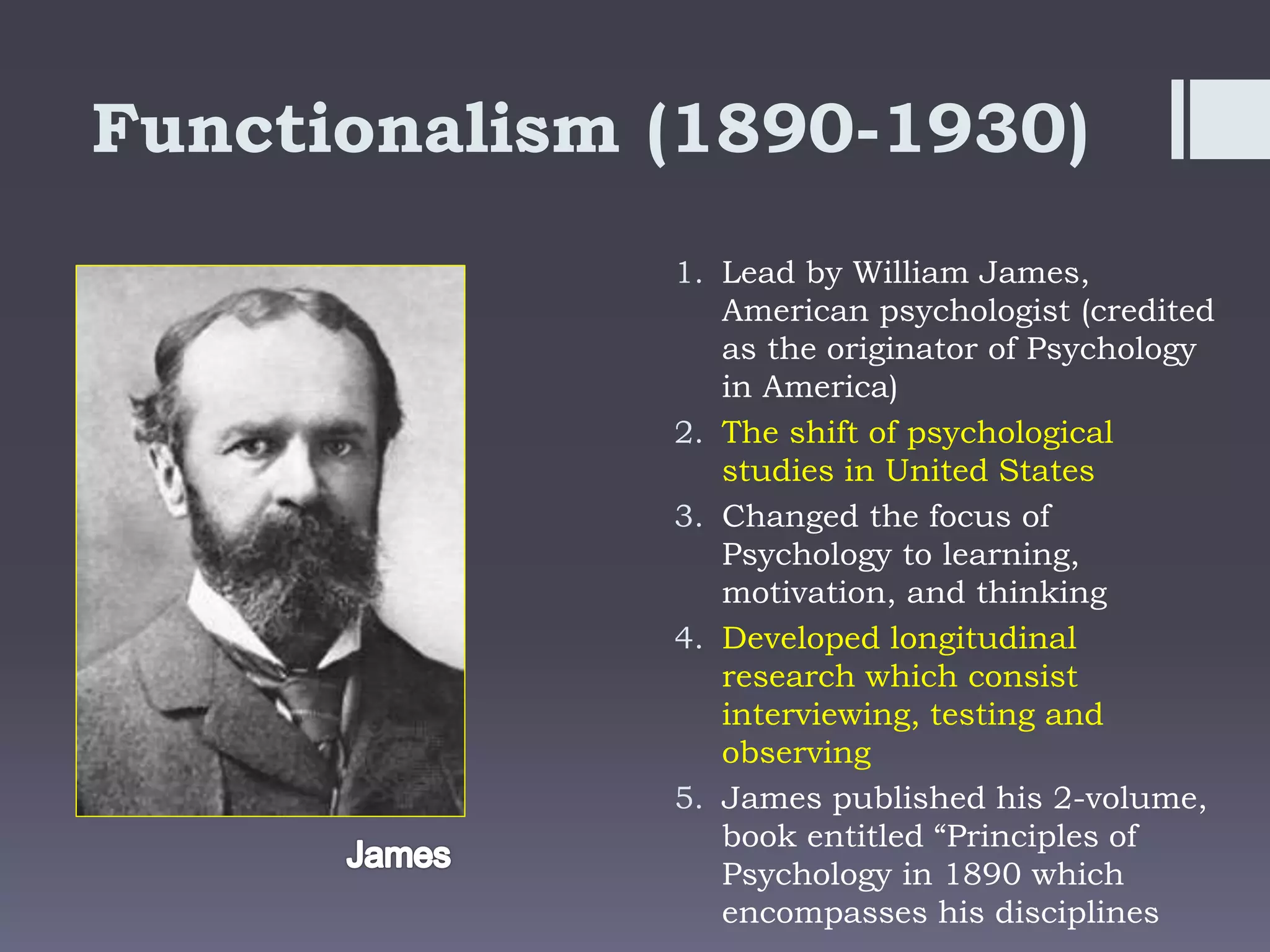
Covers Functionalism, led by William James, focusing on learning, motivation, and behavior, with longitudinal research.
Details Behaviorism initiated by Watson, stressing observable behavior and verifiable methods of study.
Highlights Ivan Pavlov’s conditioning experiment with dogs, contributing to the Behaviorism school.
Discusses B.F. Skinner's experimental work on behavior and external stimuli in the Behaviorism context.
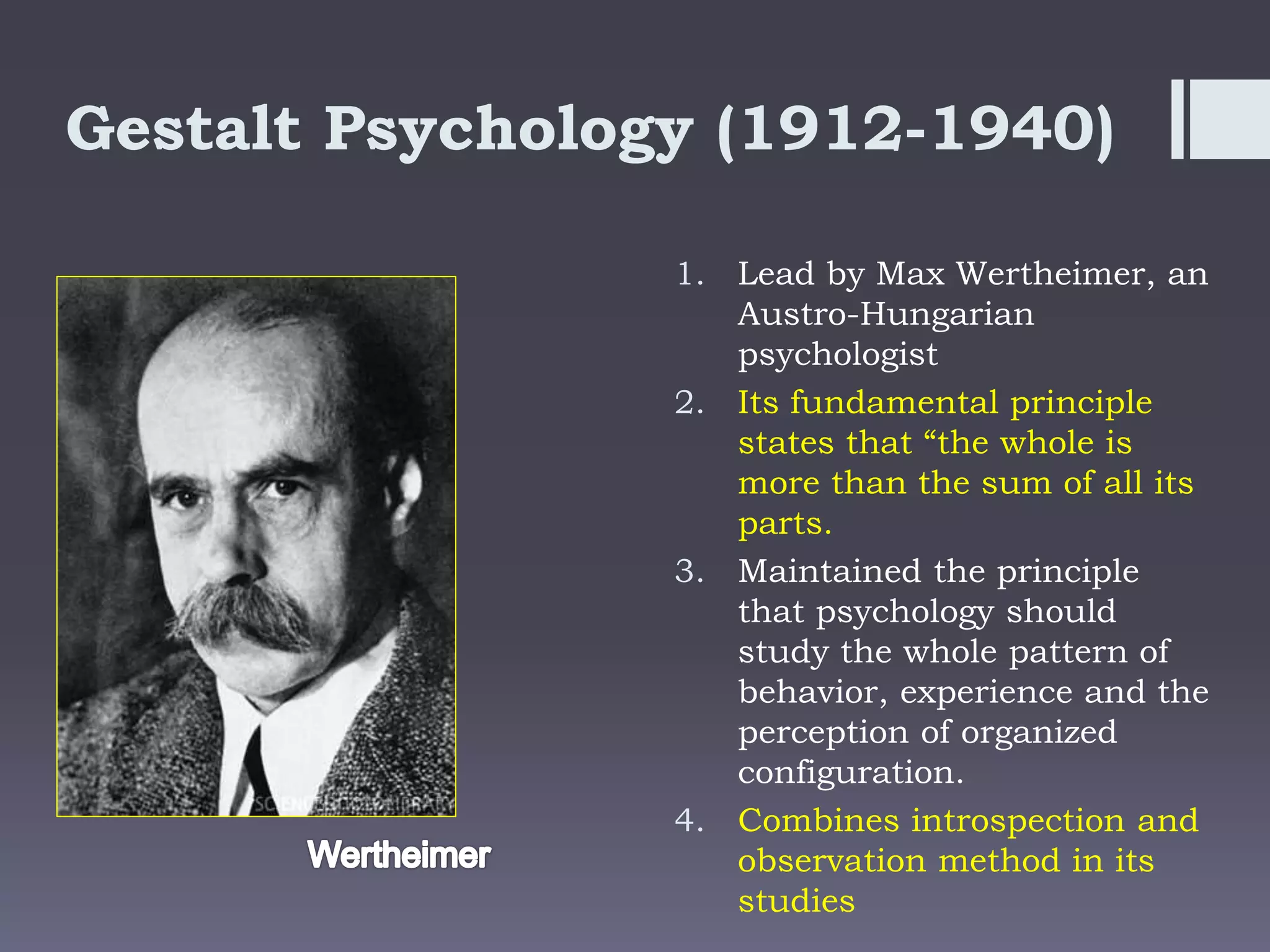
Introduces Gestalt Psychology led by Wertheimer, focusing on holistic patterns over individual parts.
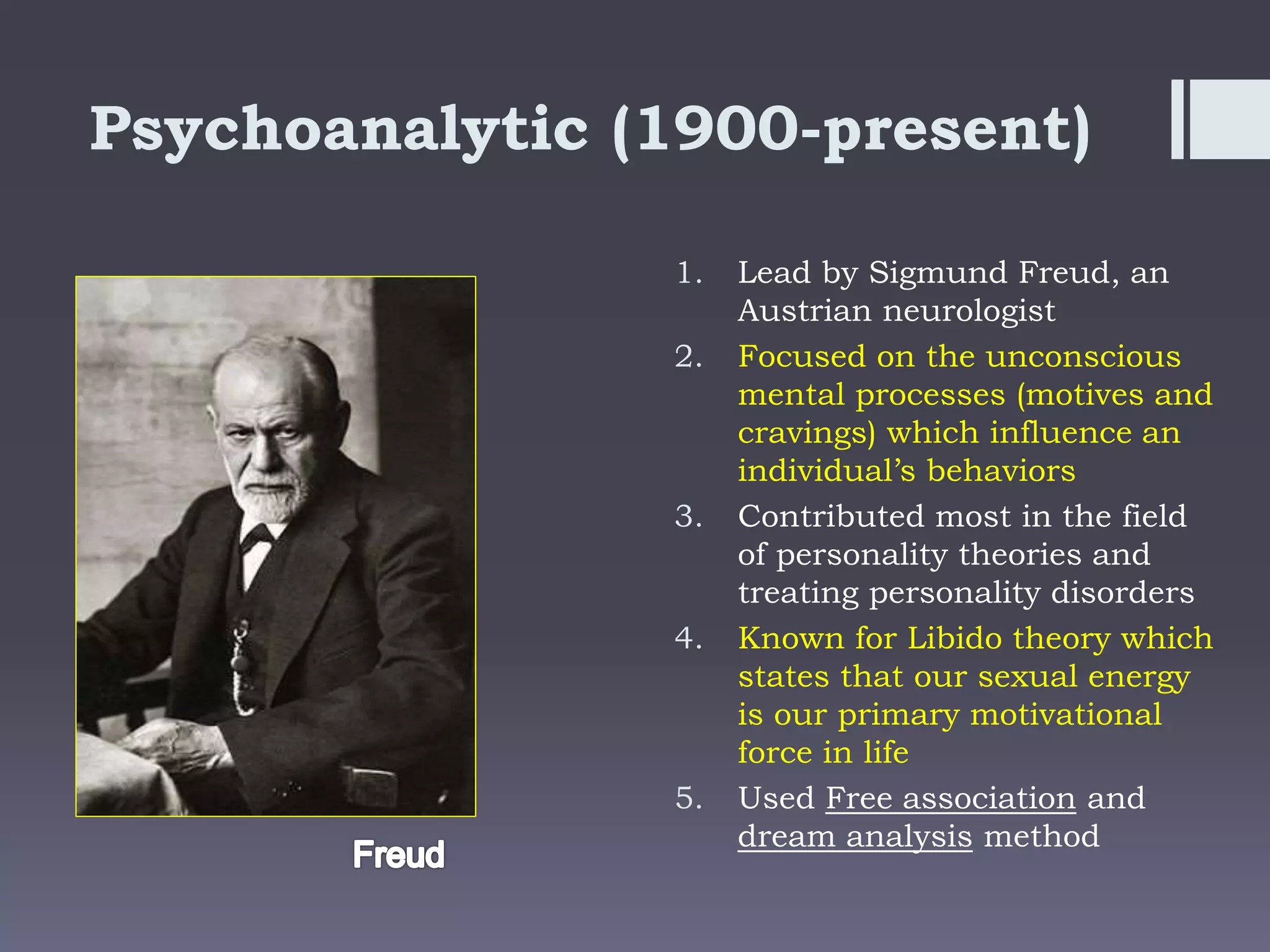
Describes Psychoanalytic theory by Freud, highlighting unconscious processes and personality theories.
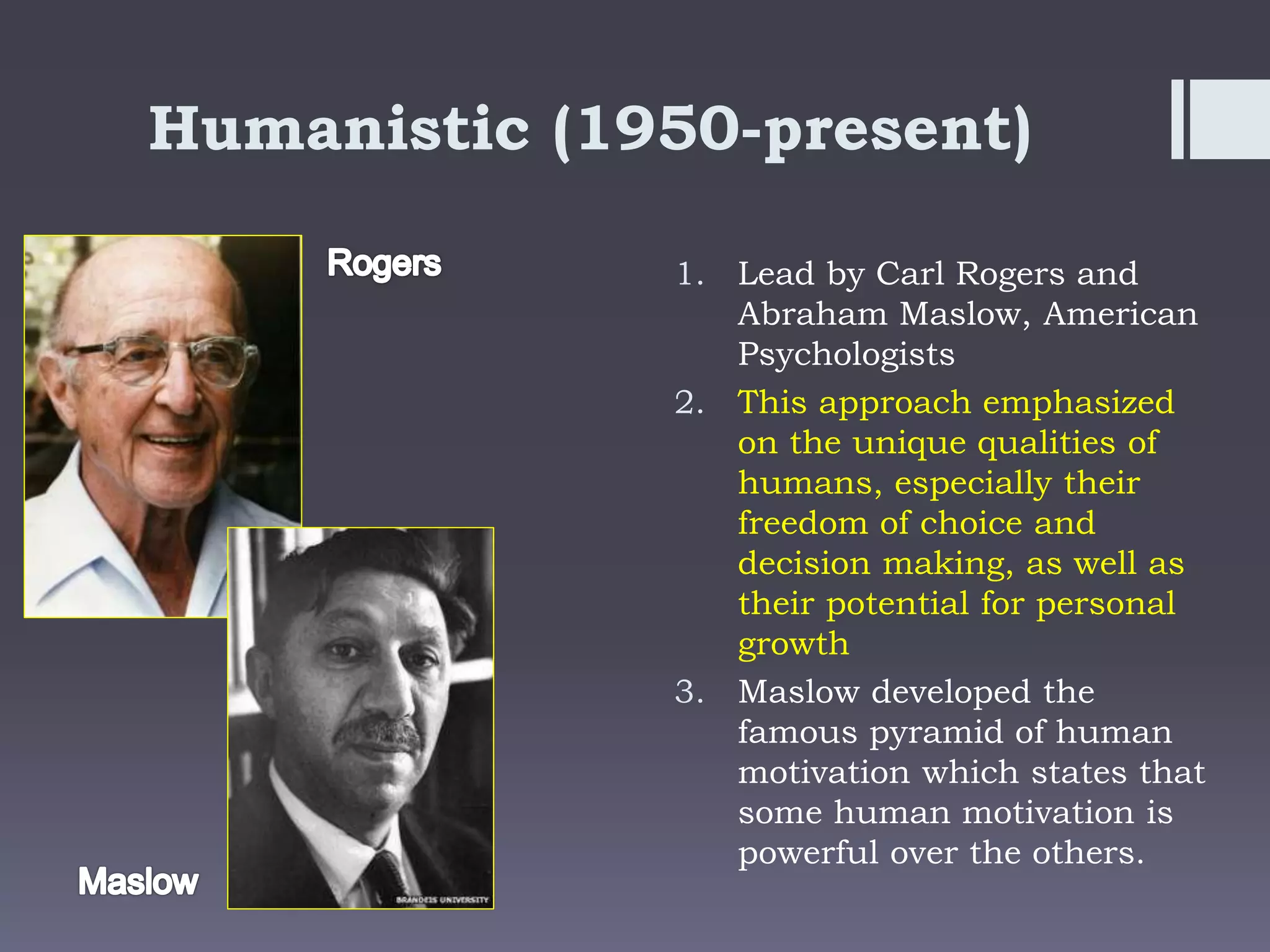
Covers Humanistic Psychology led by Rogers and Maslow, emphasizing human potential and motivations.
Final slide concludes the presentation, thanking the audience for their attention.


![lec_2_school_of_thoughts_edited[1].ppt](https://cdn.slidesharecdn.com/ss_thumbnails/lec2schoolofthoughtsedited1-230220165552-e44ad9f8-thumbnail.jpg?width=640&height=640&fit=bounds)


