Prepared by:
Orlando A. Pistan, MAEd-GC
Psychology Instructor
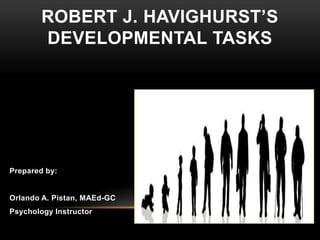
ROBERT J. HAVIGHURST’S
DEVELOPMENTAL TASKS
• Robert James Havighurst was a
professor, physicist, educator, and
expert on aging. Both his father,
Freeman Alfred Havighurst, and
mother, Winifred Weter Havighurst,
had been educators at Lawrence
University.
• Born: 5 June 1900, De Pere,
Wisconsin, United States
• Died: 31 January 1991, Richmond,
Indiana, United States
• Books: Developmental tasks and
education,
• Education: Ohio State
University, Ohio Wesleyan
University, Harvard University
ROBERT J. HAVIGHURST
A developmental task is an undertaking or
responsibility that arises at or about a certain
period in life, unsuccessful achievement of which
leads to inability to perform tasks associated with
the next period or stage in life.
DEVELOPMENTAL TASKS
• Learning to take food
• Learning to walk
• Learning to talk
• Learning to control the elimination of body wastes
• Learning sex differences and sexual modesty
• Getting ready to read
• Learning to distinguish right and wrong
BABYHOOD & EARLY
CHILDHOOD (2-6 YEARS)
• Learning physical skills necessary for ordinary games
• Building a wholesome attitude
• Learning to get along with age-mates
• Beginning to develop appropriate masculine and feminine
social roles
• Developing fundamental skills in reading, writing and
calculating
• Developing concepts necessary for everyday living
• Developing a scale of values
• Achieving personal independence
LATE CHILDHOOD (7-10 OR 12
YEARS)
• Achieving new and more mature relations with
age-mates or both sexes
• Achieving a masculine or feminine social role
• Accepting one’s physique and using one’s body
effectively
• Achieving emotional independence from parents
• Preparing for economic career
PUBERTY & ADOLESCENCE
(10 OR 12 – 17 YEARS)
• Getting started in an occupation
• Selecting a mate
• Learning to live with a marriage partner
• Starting a family
• Raising children
• Managing a home
EARLY ADULTHOOD (18-35
YEARS)
• Assisting teenage children to become
responsible and happy adults
• Developing adult leisure time activities
• Accepting and adjusting to the physiological
changes of middle age
• Reaching and maintaining satisfactory
performance in one’s occupation
MIDDLE ADULTHOOD (36-65
YEARS)
• Adjusting to decreasing physical strength
and health
• Adjusting to retirement and reduced
income
• Adjusting to death of spouse
LATE ADULTHOOD (66-DEATH)
• They are guidelines to enable individuals to
know what the society expects of them;
• They motivate individuals to do what the society
expects; and
• They show individuals what lies ahead.
PURPOSES OF
DEVELOPMENTAL TASKS
Thank you for paying
attention.
ROBERT J. HAVIGHURST’S
DEVELOPMENTAL TASKS

Developmental Tasks - Havighurst

  • 1.
    Prepared by: Orlando A.Pistan, MAEd-GC Psychology Instructor ROBERT J. HAVIGHURST’S DEVELOPMENTAL TASKS
  • 2.
    • Robert JamesHavighurst was a professor, physicist, educator, and expert on aging. Both his father, Freeman Alfred Havighurst, and mother, Winifred Weter Havighurst, had been educators at Lawrence University. • Born: 5 June 1900, De Pere, Wisconsin, United States • Died: 31 January 1991, Richmond, Indiana, United States • Books: Developmental tasks and education, • Education: Ohio State University, Ohio Wesleyan University, Harvard University ROBERT J. HAVIGHURST
  • 3.
    A developmental taskis an undertaking or responsibility that arises at or about a certain period in life, unsuccessful achievement of which leads to inability to perform tasks associated with the next period or stage in life. DEVELOPMENTAL TASKS
  • 4.
    • Learning totake food • Learning to walk • Learning to talk • Learning to control the elimination of body wastes • Learning sex differences and sexual modesty • Getting ready to read • Learning to distinguish right and wrong BABYHOOD & EARLY CHILDHOOD (2-6 YEARS)
  • 5.
    • Learning physicalskills necessary for ordinary games • Building a wholesome attitude • Learning to get along with age-mates • Beginning to develop appropriate masculine and feminine social roles • Developing fundamental skills in reading, writing and calculating • Developing concepts necessary for everyday living • Developing a scale of values • Achieving personal independence LATE CHILDHOOD (7-10 OR 12 YEARS)
  • 6.
    • Achieving newand more mature relations with age-mates or both sexes • Achieving a masculine or feminine social role • Accepting one’s physique and using one’s body effectively • Achieving emotional independence from parents • Preparing for economic career PUBERTY & ADOLESCENCE (10 OR 12 – 17 YEARS)
  • 7.
    • Getting startedin an occupation • Selecting a mate • Learning to live with a marriage partner • Starting a family • Raising children • Managing a home EARLY ADULTHOOD (18-35 YEARS)
  • 8.
    • Assisting teenagechildren to become responsible and happy adults • Developing adult leisure time activities • Accepting and adjusting to the physiological changes of middle age • Reaching and maintaining satisfactory performance in one’s occupation MIDDLE ADULTHOOD (36-65 YEARS)
  • 9.
    • Adjusting todecreasing physical strength and health • Adjusting to retirement and reduced income • Adjusting to death of spouse LATE ADULTHOOD (66-DEATH)
  • 10.
    • They areguidelines to enable individuals to know what the society expects of them; • They motivate individuals to do what the society expects; and • They show individuals what lies ahead. PURPOSES OF DEVELOPMENTAL TASKS
  • 12.
    Thank you forpaying attention. ROBERT J. HAVIGHURST’S DEVELOPMENTAL TASKS