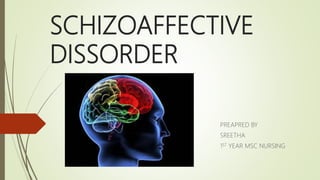
SCHIZOAFFECTIVE
DISSORDER
PREAPRED BY
SREETHA
1ST YEAR MSC NURSING
SCHIZOPHRENIA
AFFECTIVE
DISSORDER
DSM IV (TR)
Axis I:
Schizophrenia and Other Psychotic Disorders
 Schizophrenia: Catatonic | Disorganized | Paranoid | Residual | Undifferentia
ted
 Schizophreniform Disorder
 Schizoaffective Disorder
 Delusional Disorder
 Brief Psychotic Disorder
 Shared Psychotic Disorder
 Psychotic Disorder Due to a General Medical
Condition with: Delusions | Hallucinations
 Substance-Induced Psychotic Disorder
ICD - 10
F25 Schizoaffective disorders
 F25.0 Schizoaffective disorder, manic type
F25.1 Schizoaffective disorder, depressive
type
F25.2 Schizoaffective disorder, mixed type
 F25.8 Other schizoaffective disorders
 F25.9 Schizoaffective disorder, unspecified
Schizoaffective disorder is a chronic mental health
condition characterized primarily by symptoms of
schizophrenia, such as hallucinations or delusions, and
symptoms of a mood disorder, such as mania and
depression.
This is a disorder of the mind that affects your thoughts
and emotions, and may affect your actions.
GENETIC
FACTOR
• ENVIORNMENTAL FACTORS
PATHOPHYSIOLOGY
Neurotransmitter imbalance
Reduced hippocampal
volume
Thalamic abnormality
White matter abnormality
PSYCHODYNAMICS
LAZARRUS AND FOLKMAN’S TRANSACTIONAL MODEL
PRECIPITATING EVENT
PREDISPOSING FACTOR
O
G
N
I
T
I
V
E
A
P
P
R
A
I
S
A
COGINITIVE APPRAISAL
PRIMARY APPRAISAL
SECONDARY APPRAISAL
QUALITY OF RESPONSE
ADAPTIVE MALADAPTIVE
DSM VI DIAGNOSTIC CRIETIRIA
1. An uninterrupted period of illness occurs during which a major
depressive episode, a manic episode, or a mixed episode occurs with
symptoms that meet criterion for schizophrenia. The major depressive
episode must include a depressed mood.
In the DSM-IV-TR, criterion A for schizophrenia requires two of the
following
Delusions
Hallucinations
Disorganized speech (incoherence)
Grossly disorganized or catatonic behaviour
Negative symptoms such as a flattened affect, alogia, avolition
During the same period of illness, delusions or
hallucinations occur for at least 2 weeks, in the absence
of prominent mood symptoms.
The bipolar type is diagnosed if the disturbance includes
a manic or a mixed episode (or a manic or a mixed
episode and major depressive episodes).
The depressive type is diagnosed if the disturbance
includes only major depressive episodes.
Other possible etiologies such as substances or general
medical conditions have been ruled out
TYPES
Schizoaffective disorder manic type
Schizoaffective depressive type
Schizoaffective disorder mixed type
TREATMENT MODALITY
Medications
Antipsychotics.
Mood-stabilizing
medications
Antidepressants.
PSYCHOTHERAPY
INDIVIDUAL THERAPY
COGNITIVE BEHAVIOURAL THERAPY
(CBT)
FAMILY OR GROUP THERAPY
LIFE SKILLS TRAINING
Social skills training
Vocational rehabilitation and supported employment
Hospitalization
During crisis periods or times of severe
symptoms, hospitalization may be necessary
to ensure safety, proper nutrition, adequate
sleep, and basic personal care and
cleanliness.
ELECTROCONVULSIVE THERAPY
NURSING DIAGNOSIS
Disturbed sensory perception related to withdrawal from
environment/Lack of adequate support persons
Impaired verbal communication related to altered thought
process / poverty of speech / disturbance in structure of
association.
Disabled family coping related to knowledge deficit of
significant persons regarding illness and management
Disturbed thought process related to disintegration of
boundaries between self and others and self and
environment.
Establish trust and rapport
Maximize level of functioning
Promote social skills
Ensure safety
Ensure adequate nutrition
Keep it real
Deal with hallucinations by presenting reality
Promote compliance and monitor drug therapy.
Encourage family involvement.
BIBLIOGRAPHY
Towsand MC. Essentials of psychiatric mental health nursing. 3rd
edition. Philadelphia; F A Davis company publication.2005
Sreevani R. A guide to mental health and psychiatric nursing. 3rd
edition. New Delhi: Jaypee brother medical publication.2010.
Raju S M, Raju B. Psychiatry and mental health nursing. Bangaluru;
Jay pee brothers medical publications.2010
Gupta R K. Mental health nursing. Third edition. Bikrampura;S vikas
& company medical publications. 2016
Brien P G, Kennady W Z, Ballard K A. psychiatric mental health
nursing.Cannada; johns and batlett publishers.2008
Fortinas KM, Worret PAH. Psychiatric nursing care plans. Fourth
edition. Misssouri; mosby publication. 1991
Schizoaffective dissorder

Schizoaffective dissorder

  • 1.
  • 2.
  • 3.
    DSM IV (TR) AxisI: Schizophrenia and Other Psychotic Disorders  Schizophrenia: Catatonic | Disorganized | Paranoid | Residual | Undifferentia ted  Schizophreniform Disorder  Schizoaffective Disorder  Delusional Disorder  Brief Psychotic Disorder  Shared Psychotic Disorder  Psychotic Disorder Due to a General Medical Condition with: Delusions | Hallucinations  Substance-Induced Psychotic Disorder
  • 4.
    ICD - 10 F25Schizoaffective disorders  F25.0 Schizoaffective disorder, manic type F25.1 Schizoaffective disorder, depressive type F25.2 Schizoaffective disorder, mixed type  F25.8 Other schizoaffective disorders  F25.9 Schizoaffective disorder, unspecified
  • 5.
    Schizoaffective disorder isa chronic mental health condition characterized primarily by symptoms of schizophrenia, such as hallucinations or delusions, and symptoms of a mood disorder, such as mania and depression. This is a disorder of the mind that affects your thoughts and emotions, and may affect your actions.
  • 6.
  • 8.
  • 9.
  • 10.
  • 11.
    PRECIPITATING EVENT PREDISPOSING FACTOR O G N I T I V E A P P R A I S A COGINITIVEAPPRAISAL PRIMARY APPRAISAL SECONDARY APPRAISAL QUALITY OF RESPONSE ADAPTIVE MALADAPTIVE
  • 12.
    DSM VI DIAGNOSTICCRIETIRIA 1. An uninterrupted period of illness occurs during which a major depressive episode, a manic episode, or a mixed episode occurs with symptoms that meet criterion for schizophrenia. The major depressive episode must include a depressed mood. In the DSM-IV-TR, criterion A for schizophrenia requires two of the following Delusions Hallucinations Disorganized speech (incoherence) Grossly disorganized or catatonic behaviour Negative symptoms such as a flattened affect, alogia, avolition
  • 13.
    During the sameperiod of illness, delusions or hallucinations occur for at least 2 weeks, in the absence of prominent mood symptoms. The bipolar type is diagnosed if the disturbance includes a manic or a mixed episode (or a manic or a mixed episode and major depressive episodes). The depressive type is diagnosed if the disturbance includes only major depressive episodes. Other possible etiologies such as substances or general medical conditions have been ruled out
  • 14.
    TYPES Schizoaffective disorder manictype Schizoaffective depressive type Schizoaffective disorder mixed type
  • 15.
  • 16.
  • 17.
  • 18.
  • 19.
    LIFE SKILLS TRAINING Socialskills training Vocational rehabilitation and supported employment
  • 20.
    Hospitalization During crisis periodsor times of severe symptoms, hospitalization may be necessary to ensure safety, proper nutrition, adequate sleep, and basic personal care and cleanliness.
  • 21.
  • 22.
    NURSING DIAGNOSIS Disturbed sensoryperception related to withdrawal from environment/Lack of adequate support persons Impaired verbal communication related to altered thought process / poverty of speech / disturbance in structure of association. Disabled family coping related to knowledge deficit of significant persons regarding illness and management Disturbed thought process related to disintegration of boundaries between self and others and self and environment.
  • 23.
    Establish trust andrapport Maximize level of functioning Promote social skills Ensure safety Ensure adequate nutrition Keep it real Deal with hallucinations by presenting reality Promote compliance and monitor drug therapy. Encourage family involvement.
  • 24.
    BIBLIOGRAPHY Towsand MC. Essentialsof psychiatric mental health nursing. 3rd edition. Philadelphia; F A Davis company publication.2005 Sreevani R. A guide to mental health and psychiatric nursing. 3rd edition. New Delhi: Jaypee brother medical publication.2010. Raju S M, Raju B. Psychiatry and mental health nursing. Bangaluru; Jay pee brothers medical publications.2010 Gupta R K. Mental health nursing. Third edition. Bikrampura;S vikas & company medical publications. 2016 Brien P G, Kennady W Z, Ballard K A. psychiatric mental health nursing.Cannada; johns and batlett publishers.2008 Fortinas KM, Worret PAH. Psychiatric nursing care plans. Fourth edition. Misssouri; mosby publication. 1991