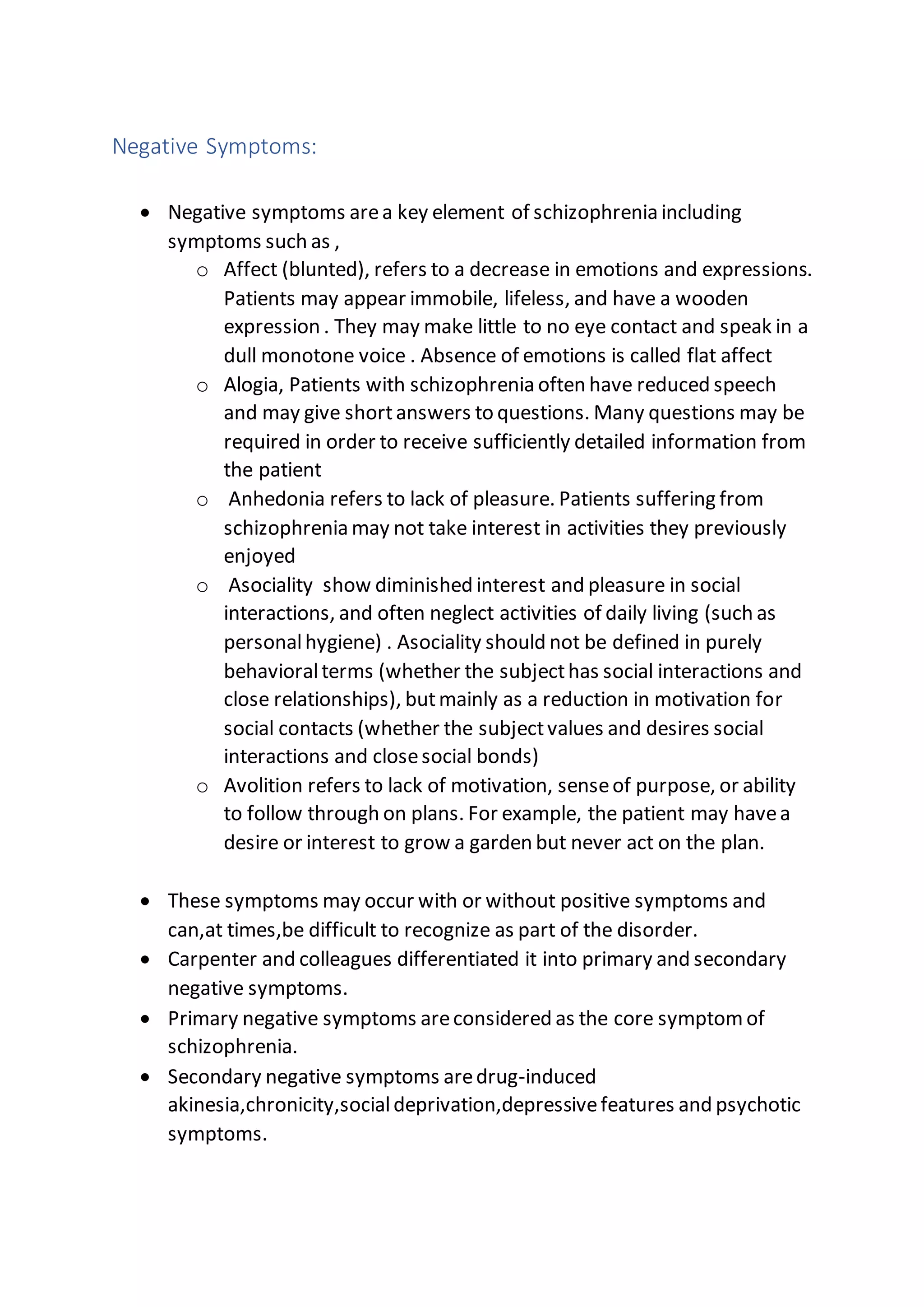
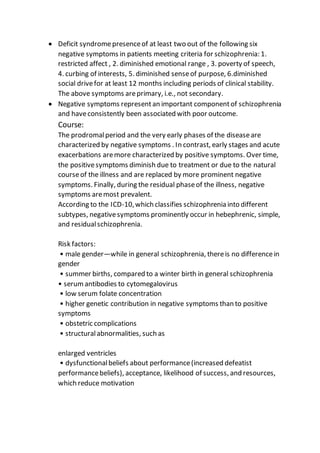
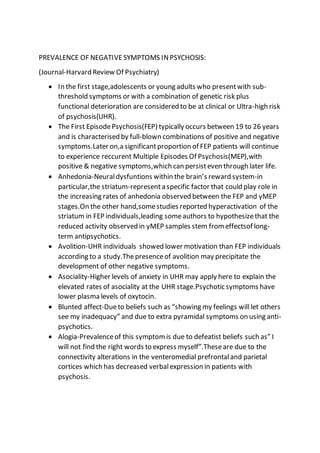
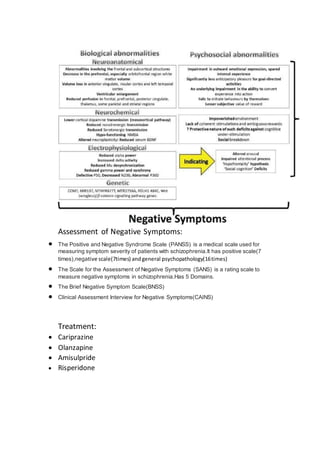
Negative symptoms in schizophrenia include affective flattening, alogia, anhedonia, asociality, and avolition. These symptoms can be difficult to recognize and differentiate into primary symptoms that are core to schizophrenia versus secondary symptoms caused by other factors like medication side effects. Over time, positive symptoms tend to diminish whereas negative symptoms become more prominent, especially in the residual phase of schizophrenia. Risk factors for negative symptoms include male gender, genetic factors, and structural brain abnormalities. Various scales are used to assess negative symptoms including the Positive and Negative Syndrome Scale and the Scale for the Assessment of Negative Symptoms. Treatments targeting negative symptoms include cariprazine, olanzapine, amisulpride, and ris