Scales and
Preparation of Maps
2022
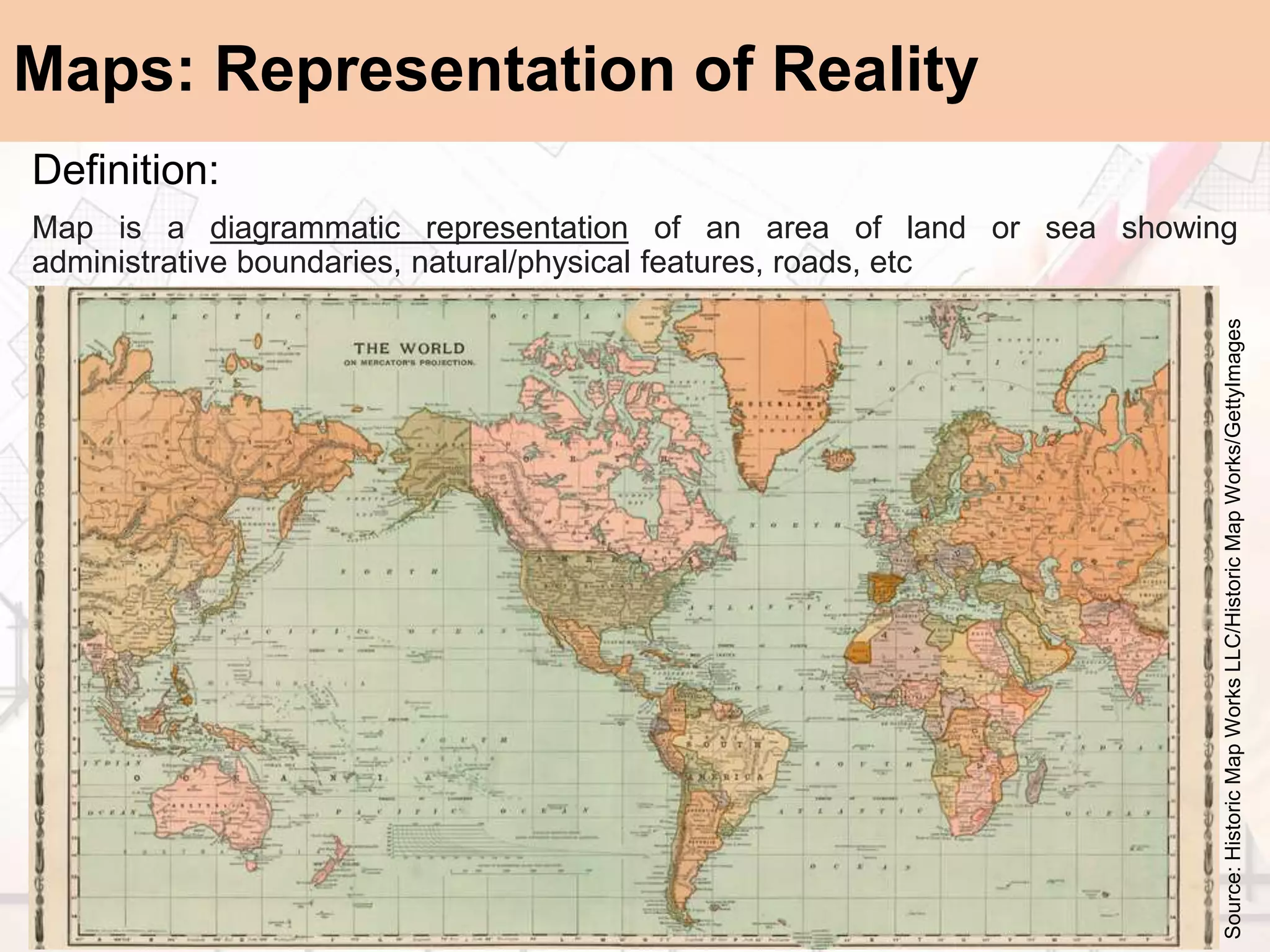
Maps: Representation of Reality
Definition:
Map is a diagrammatic representation of an area of land or sea showing
administrative boundaries, natural/physical features, roads, etc
Source:
Historic
Map
Works
LLC/Historic
Map
Works/GettyImages
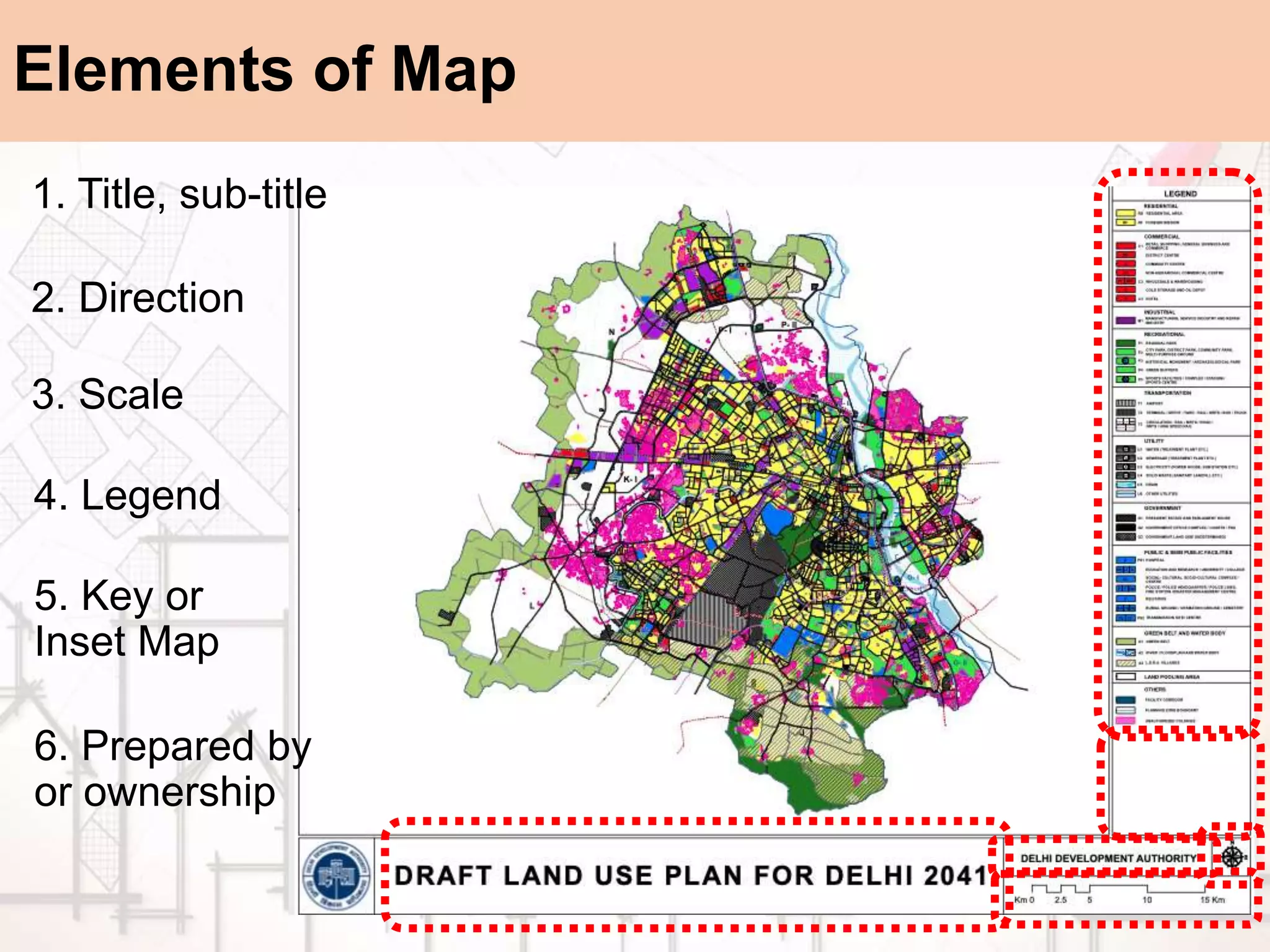
Elements of Map
1. Title, sub-title
2. Direction
3. Scale
5. Key or
Inset Map
6. Prepared by
or ownership
4. Legend
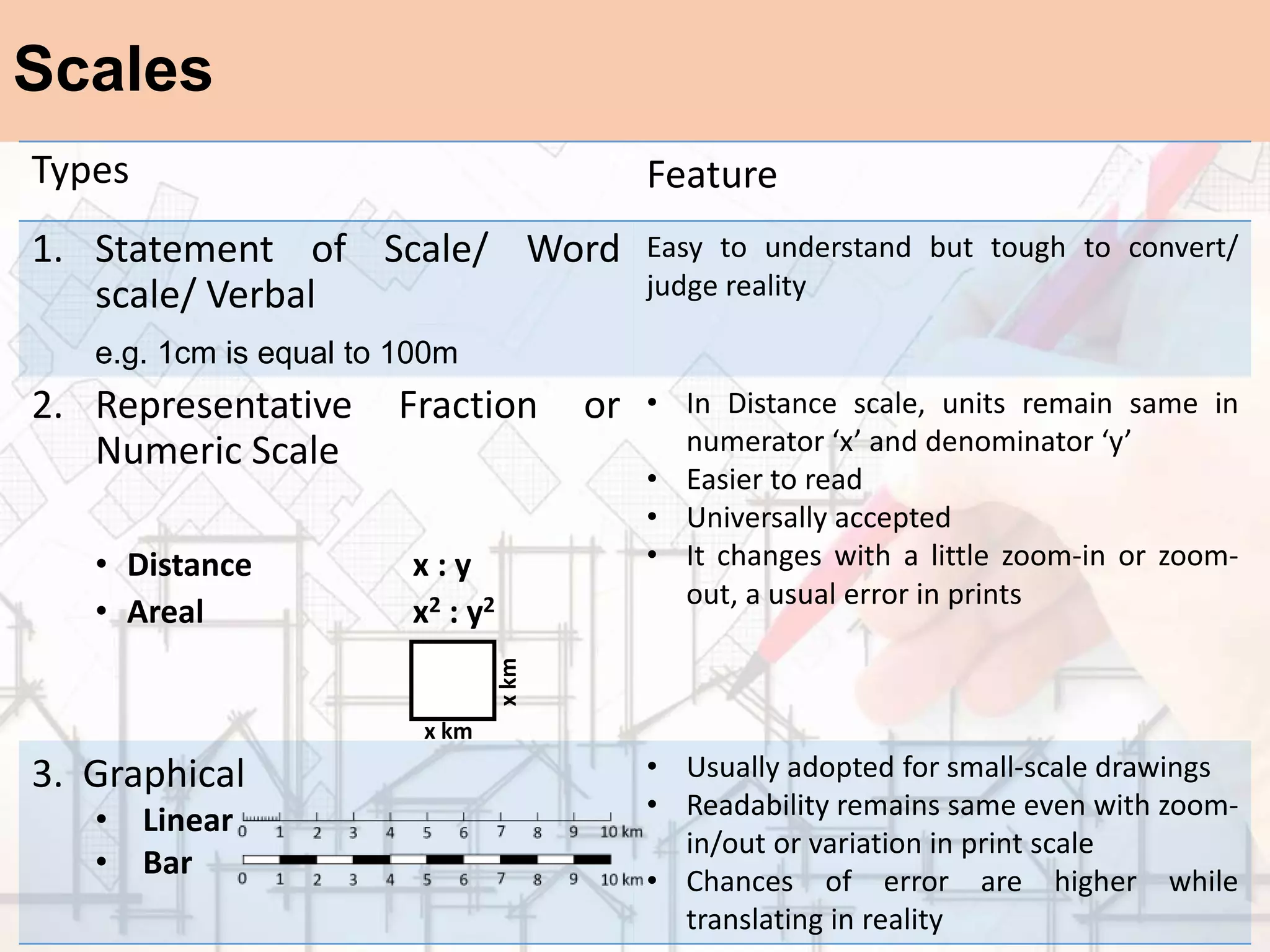
Scales
Types Feature
1. Statement of Scale/ Word
scale/ Verbal
e.g. 1cm is equal to 100m
Easy to understand but tough to convert/
judge reality
2. Representative Fraction or
Numeric Scale
• Distance x : y
• Areal x2 : y2
• In Distance scale, units remain same in
numerator ‘x’ and denominator ‘y’
• Easier to read
• Universally accepted
• It changes with a little zoom-in or zoom-
out, a usual error in prints
3. Graphical
• Linear
• Bar
• Usually adopted for small-scale drawings
• Readability remains same even with zoom-
in/out or variation in print scale
• Chances of error are higher while
translating in reality
x
km
x km
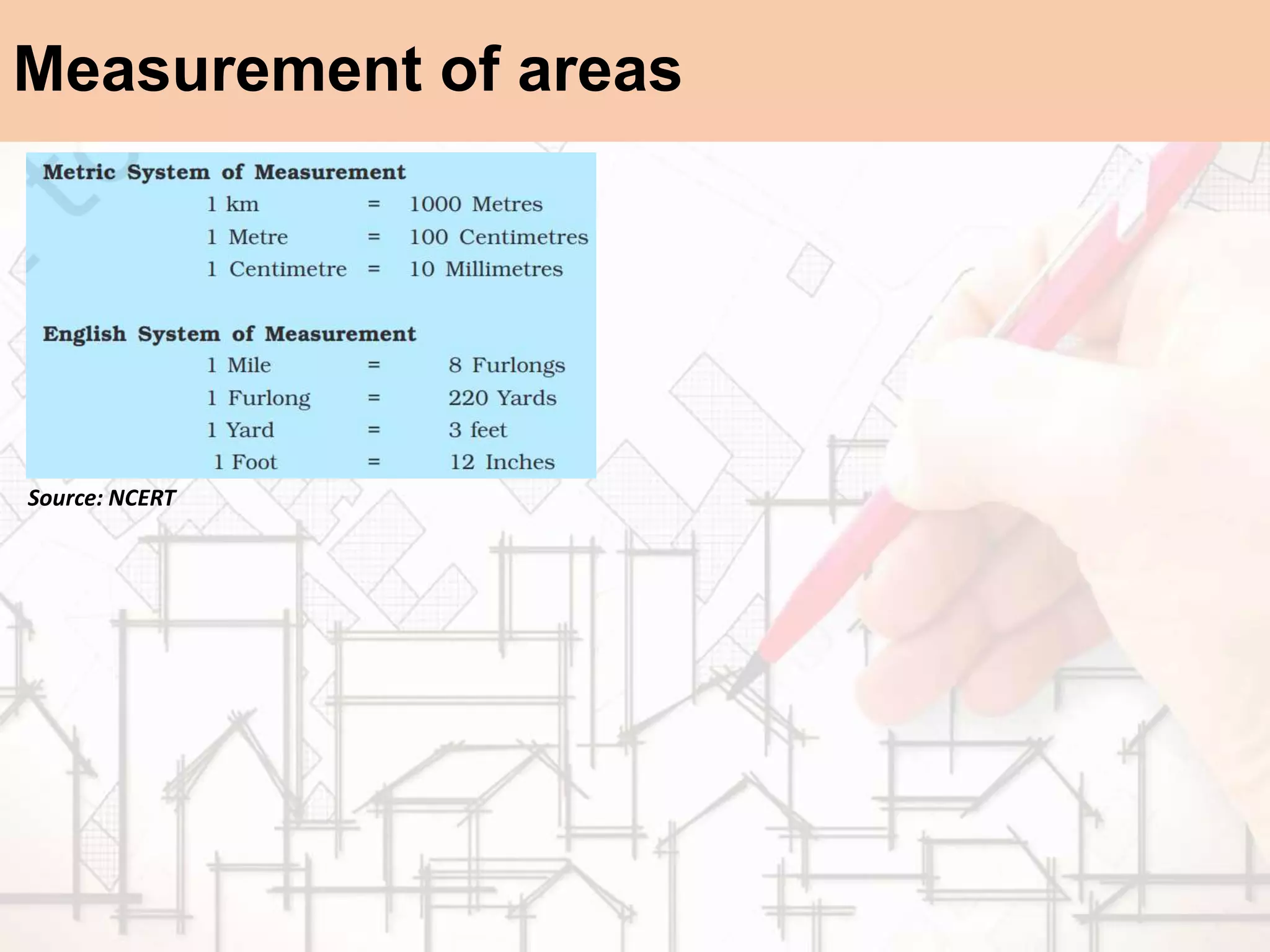
Measurement of areas
Source: NCERT
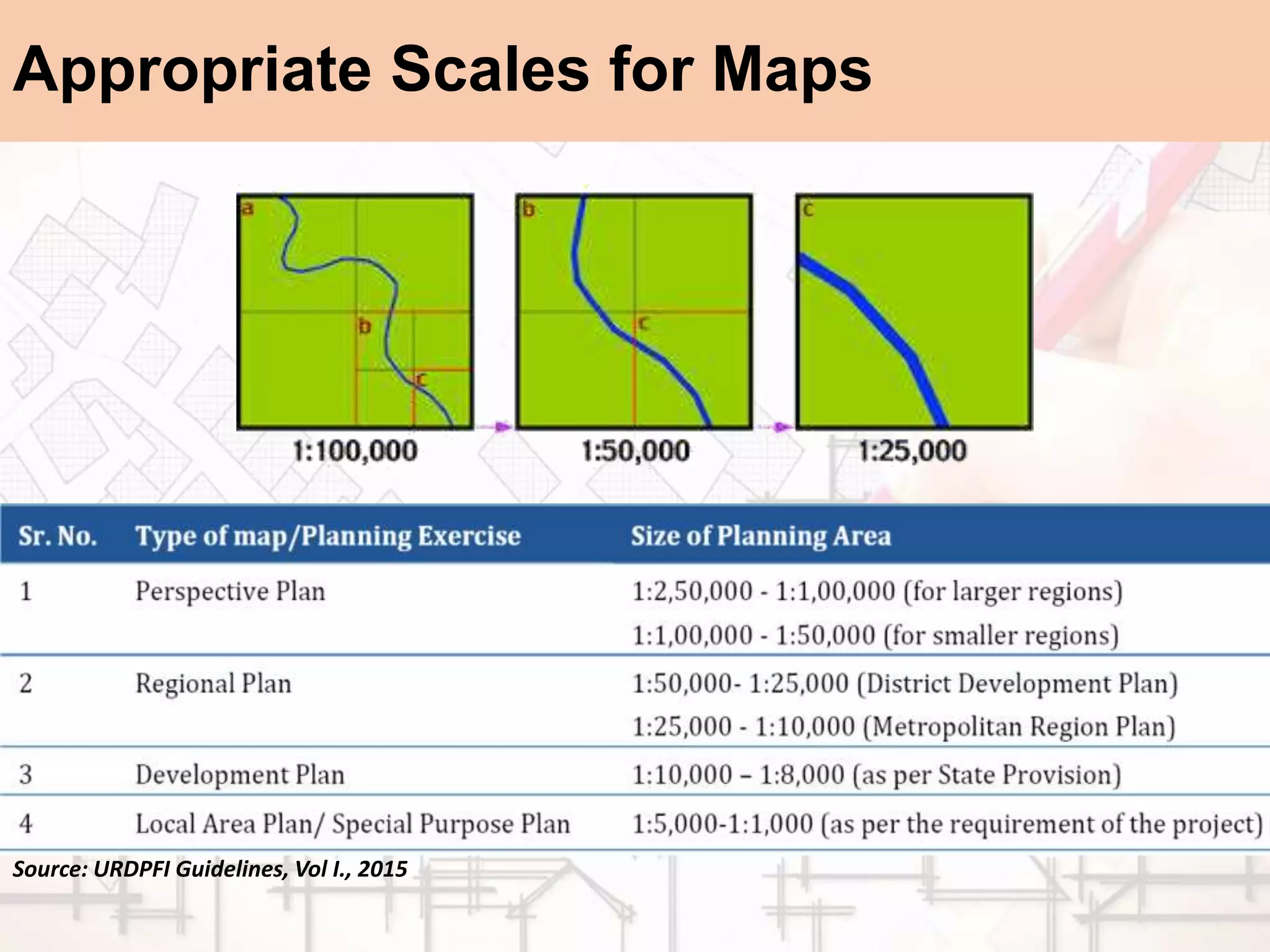
Appropriate Scales for Maps
Source: URDPFI Guidelines, Vol I., 2015
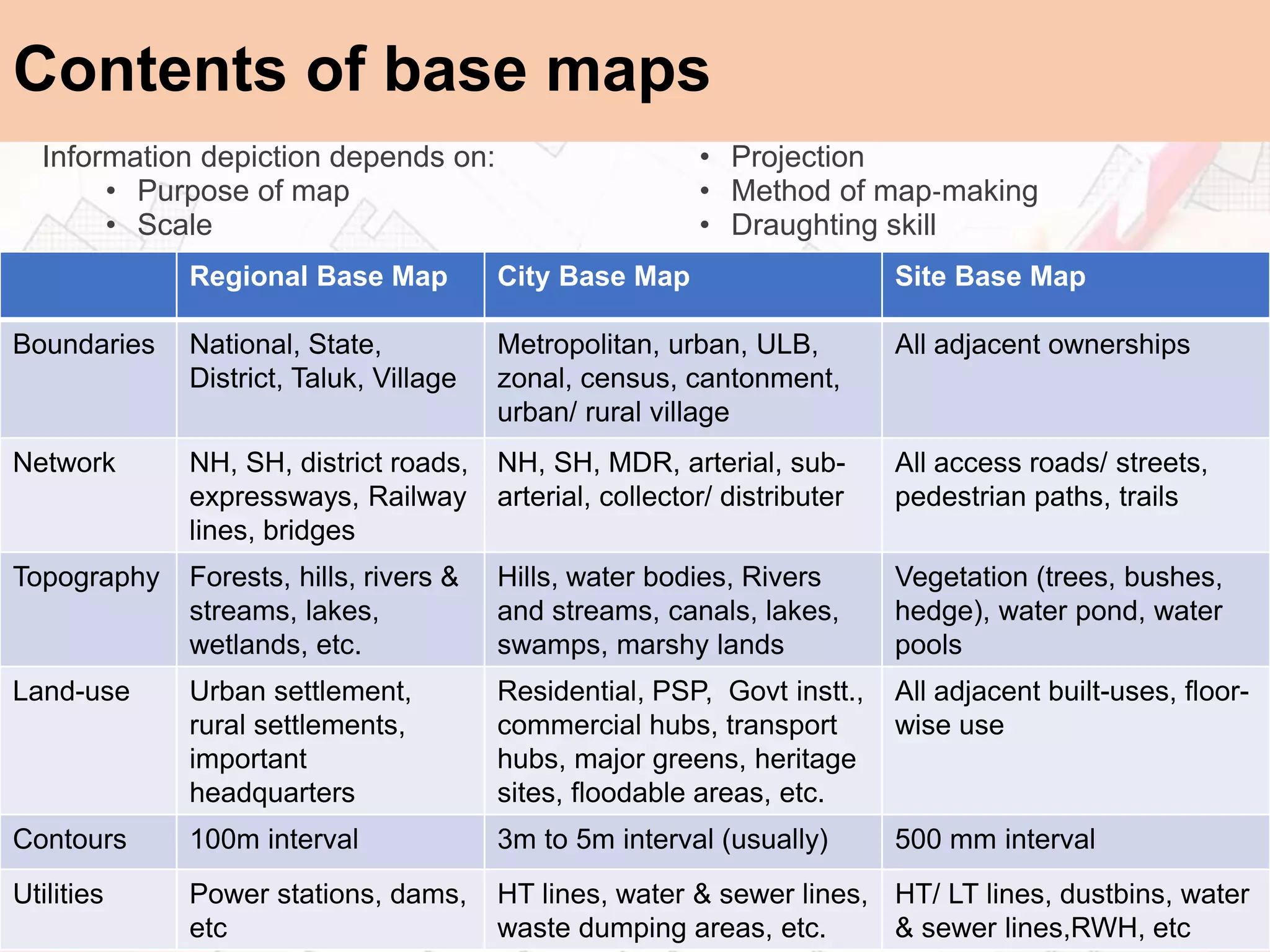
Contents of base maps
Information depiction depends on:
• Purpose of map
• Scale
• Projection
• Method of map‐making
• Draughting skill
Regional Base Map City Base Map Site Base Map
Boundaries National, State,
District, Taluk, Village
Metropolitan, urban, ULB,
zonal, census, cantonment,
urban/ rural village
All adjacent ownerships
Network NH, SH, district roads,
expressways, Railway
lines, bridges
NH, SH, MDR, arterial, sub-
arterial, collector/ distributer
All access roads/ streets,
pedestrian paths, trails
Topography Forests, hills, rivers &
streams, lakes,
wetlands, etc.
Hills, water bodies, Rivers
and streams, canals, lakes,
swamps, marshy lands
Vegetation (trees, bushes,
hedge), water pond, water
pools
Land-use Urban settlement,
rural settlements,
important
headquarters
Residential, PSP, Govt instt.,
commercial hubs, transport
hubs, major greens, heritage
sites, floodable areas, etc.
All adjacent built-uses, floor-
wise use
Contours 100m interval 3m to 5m interval (usually) 500 mm interval
Utilities Power stations, dams,
etc
HT lines, water & sewer lines,
waste dumping areas, etc.
HT/ LT lines, dustbins, water
& sewer lines,RWH, etc
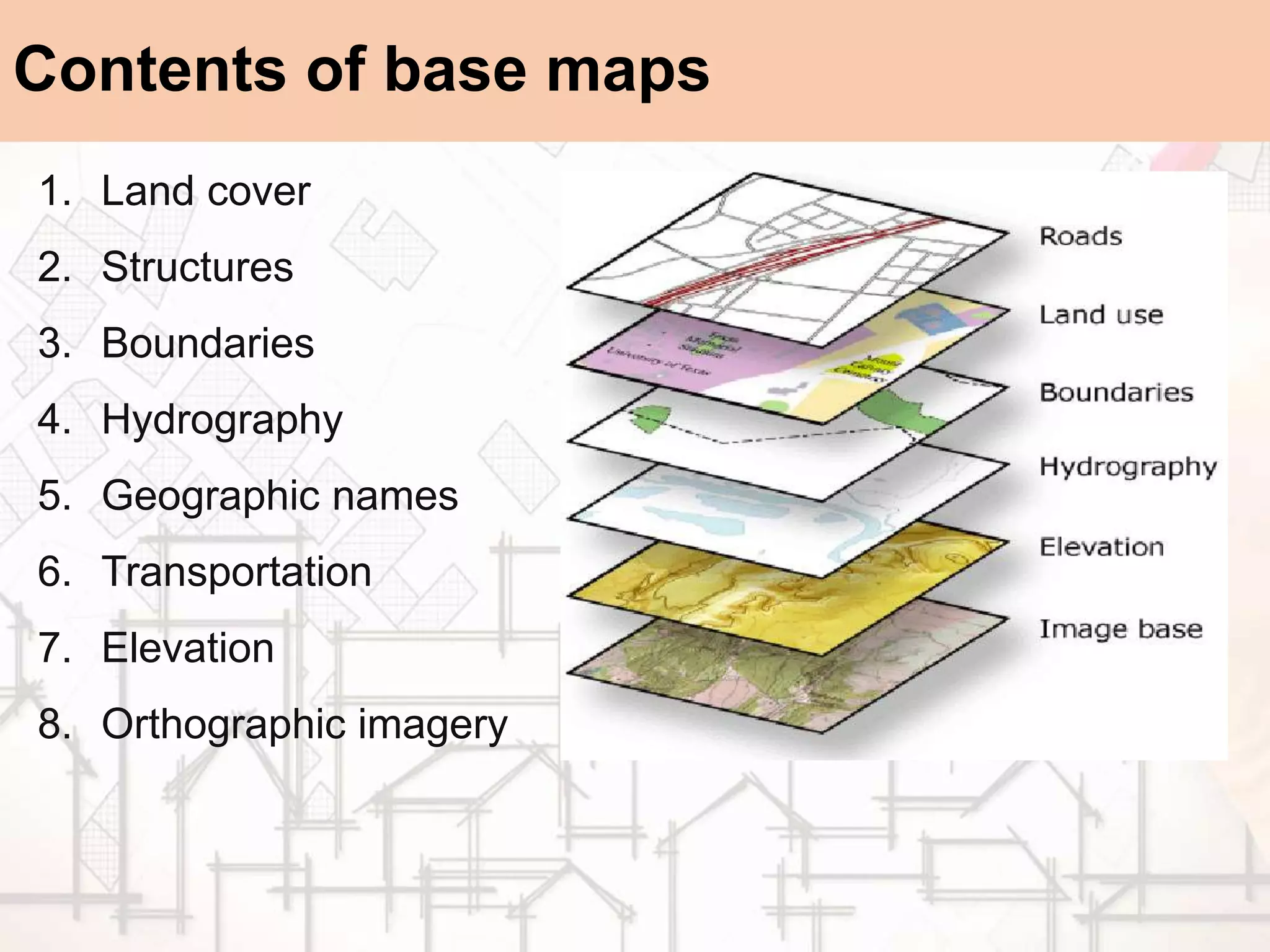
Contents of base maps
1. Land cover
2. Structures
3. Boundaries
4. Hydrography
5. Geographic names
6. Transportation
7. Elevation
8. Orthographic imagery
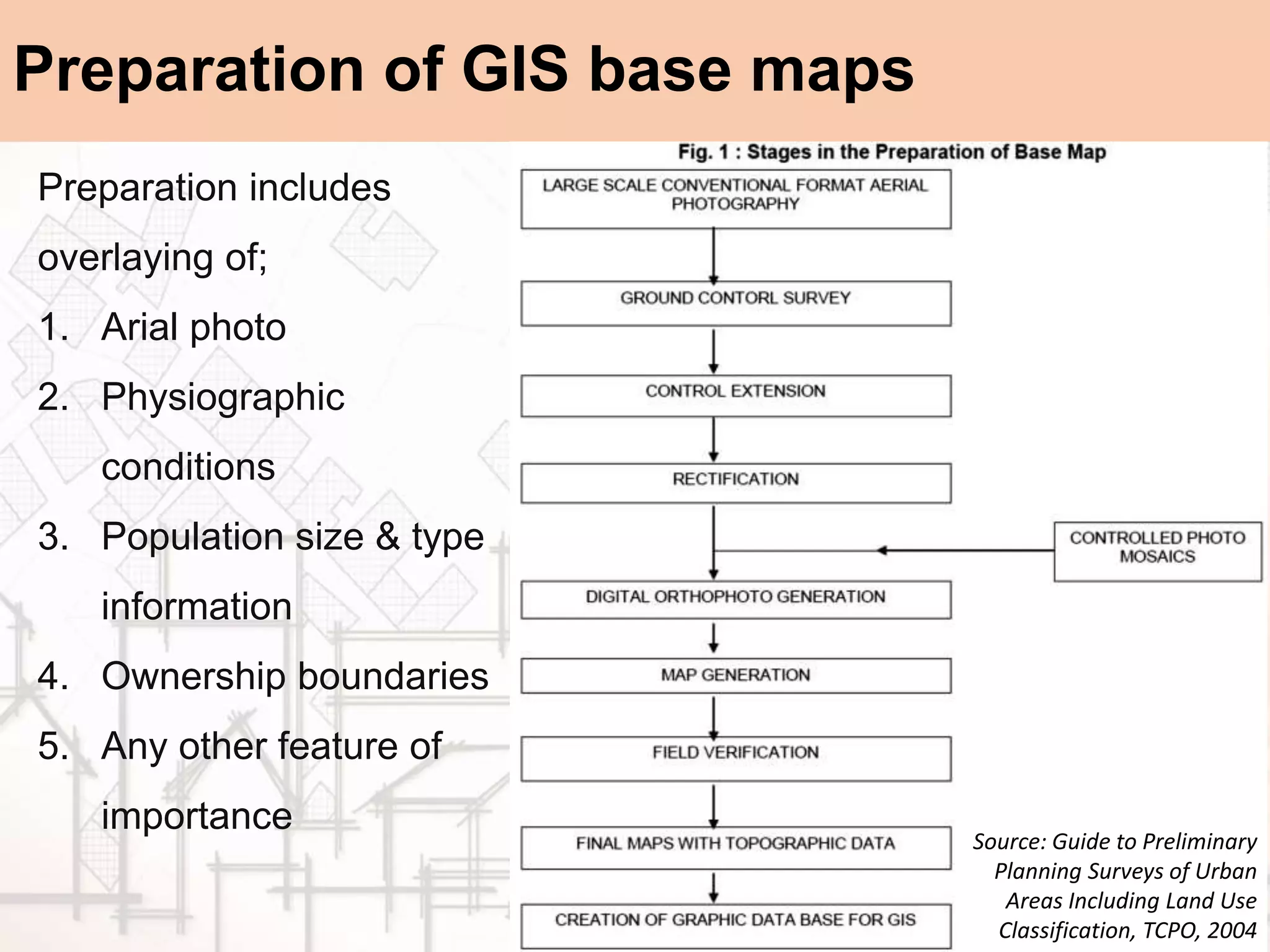
Preparation of GIS base maps
Preparation includes
overlaying of;
1. Arial photo
2. Physiographic
conditions
3. Population size & type
information
4. Ownership boundaries
5. Any other feature of
importance
Source: Guide to Preliminary
Planning Surveys of Urban
Areas Including Land Use
Classification, TCPO, 2004
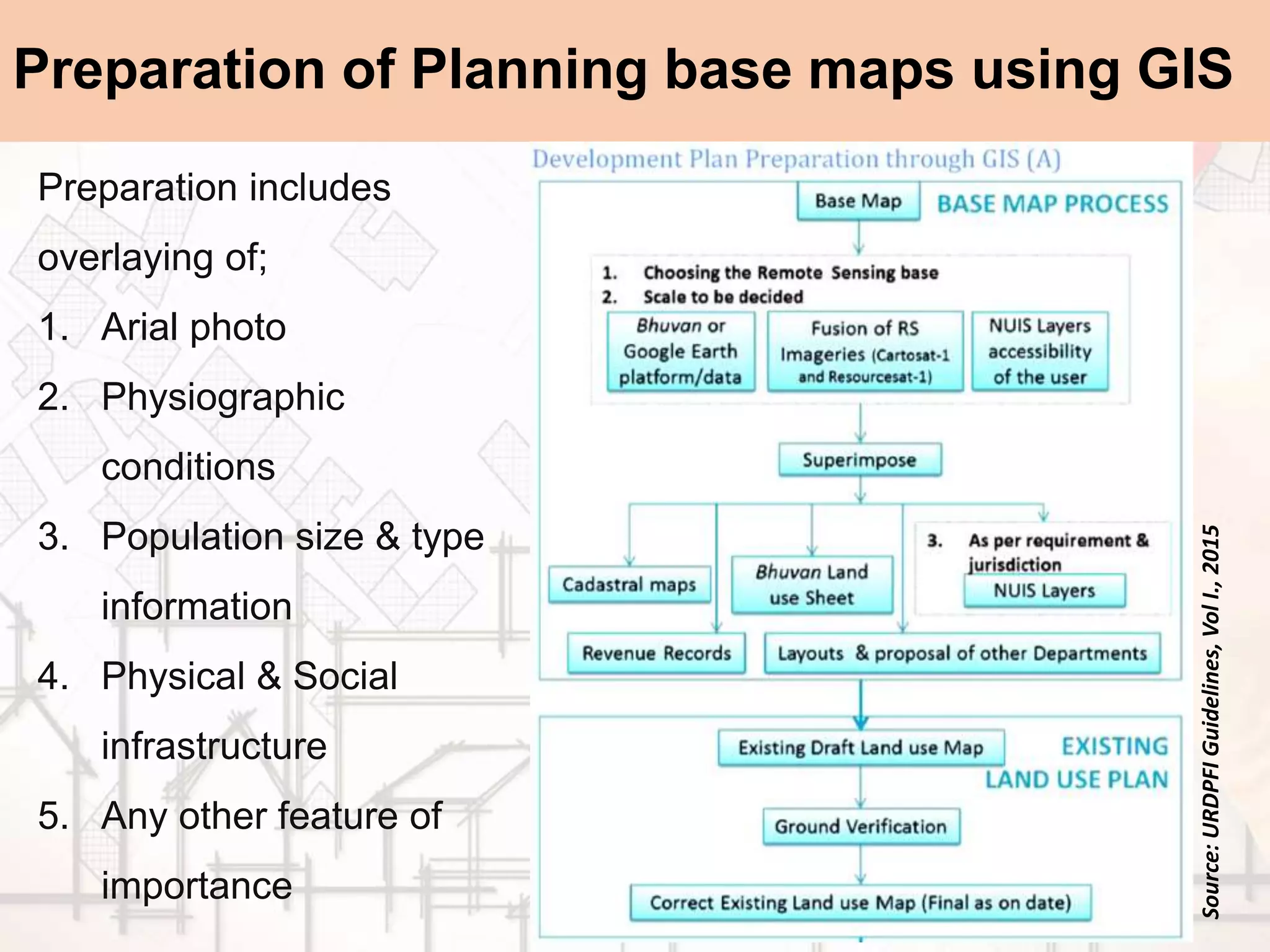
Preparation of Planning base maps using GIS
Preparation includes
overlaying of;
1. Arial photo
2. Physiographic
conditions
3. Population size & type
information
4. Physical & Social
infrastructure
5. Any other feature of
importance
Source:
URDPFI
Guidelines,
Vol
I.,
2015
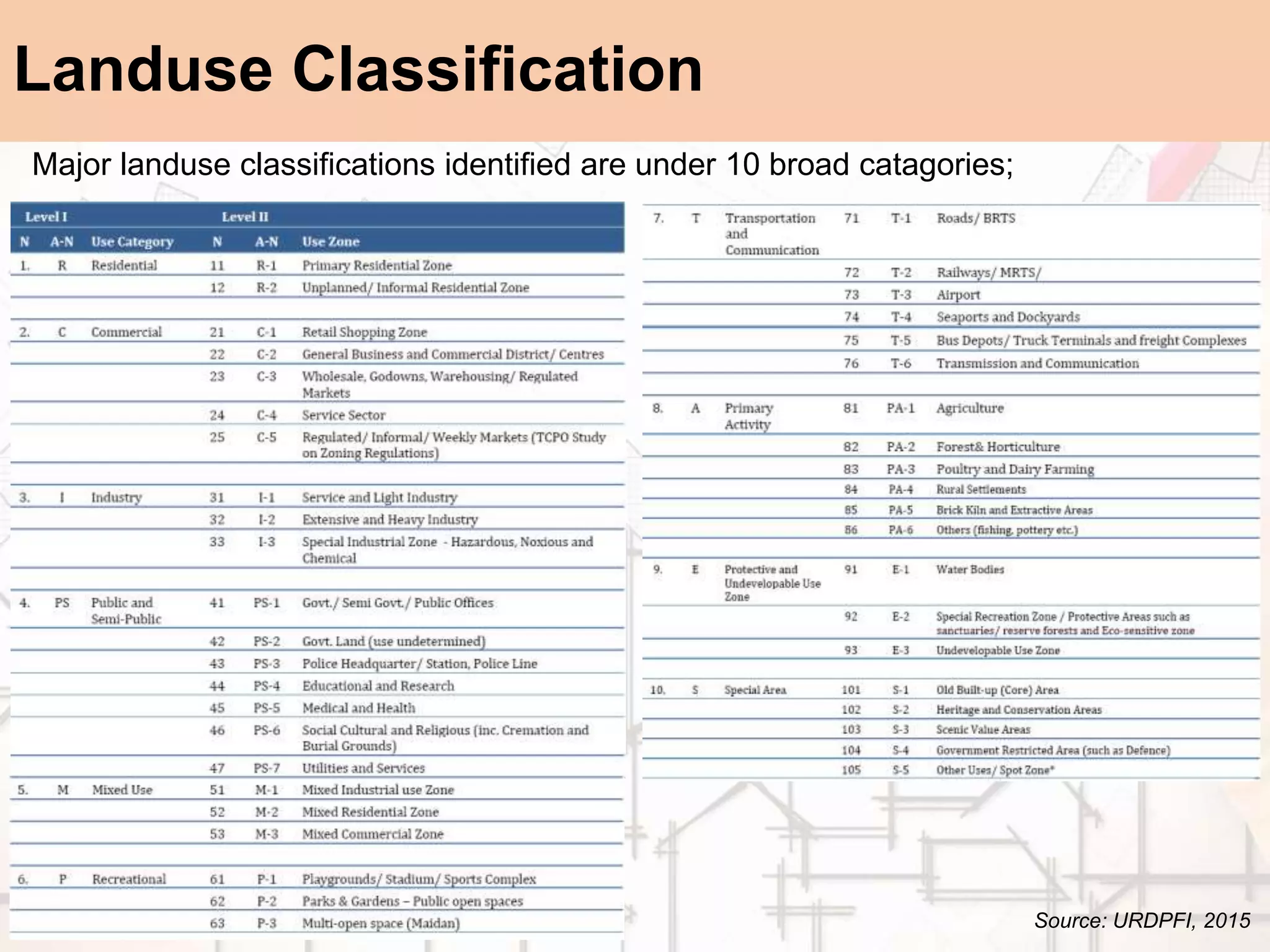
Landuse Classification
Major landuse classifications identified are under 10 broad catagories;
Source: URDPFI, 2015
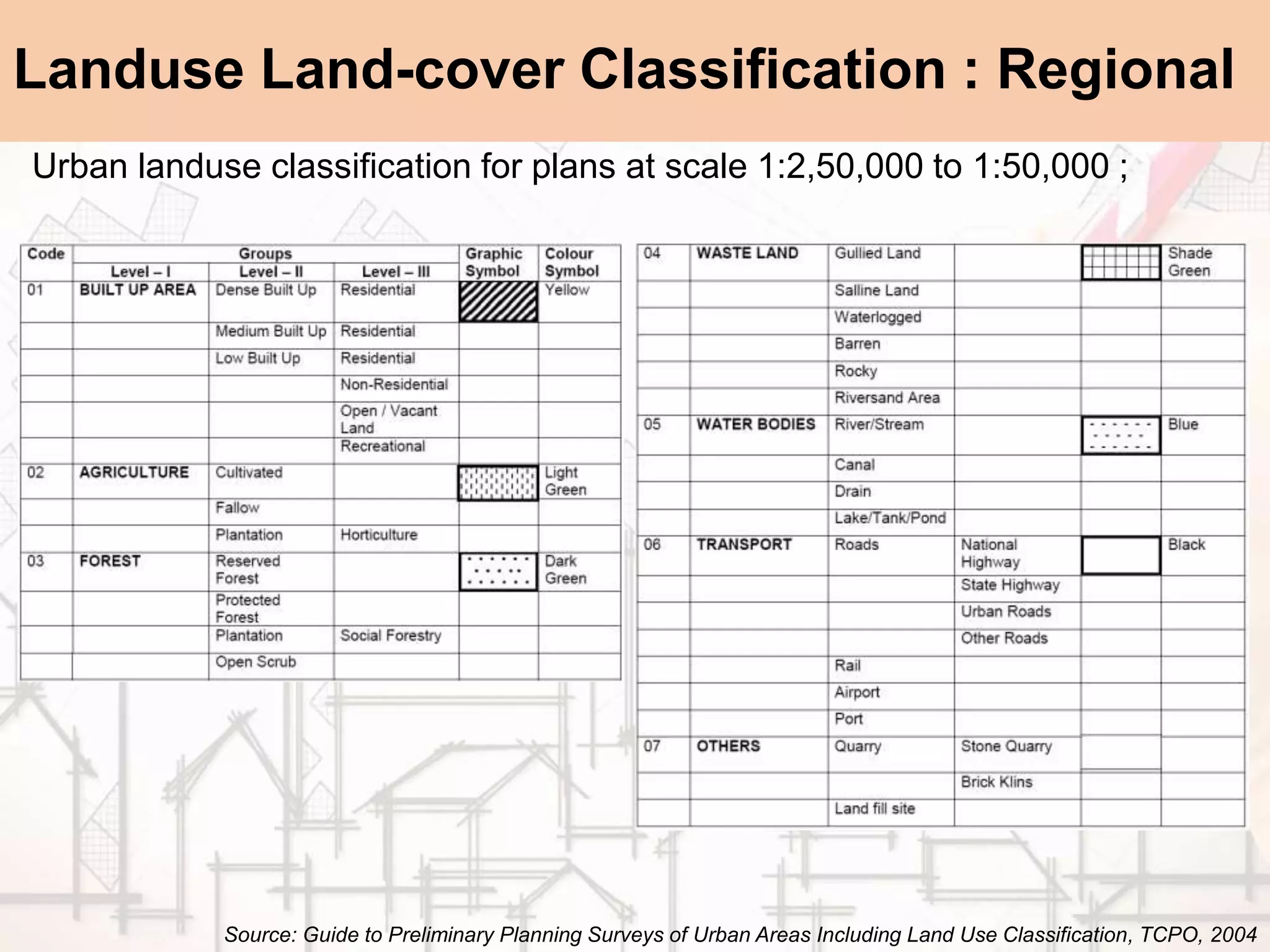
Landuse Land-cover Classification : Regional
Urban landuse classification for plans at scale 1:2,50,000 to 1:50,000 ;
Source: Guide to Preliminary Planning Surveys of Urban Areas Including Land Use Classification, TCPO, 2004
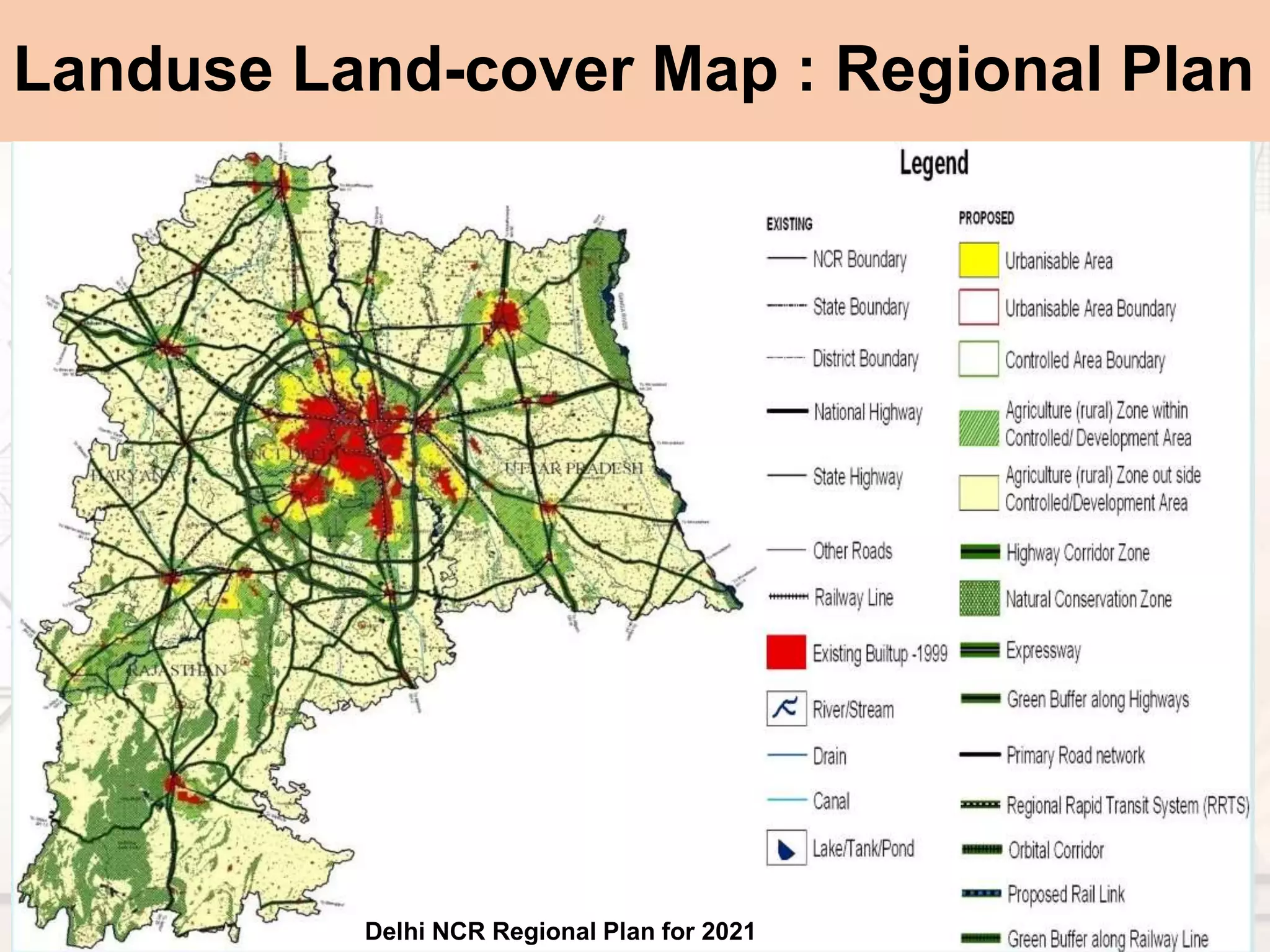
Landuse Land-cover Map : Regional Plan
Delhi NCR Regional Plan for 2021
Land Use Classification : Urban scale
Urban landuse classification for plans at scale 1:50000 to 1:8000 ;
Source: Guide to Preliminary Planning Surveys of Urban Areas Including Land Use Classification, TCPO, 2004
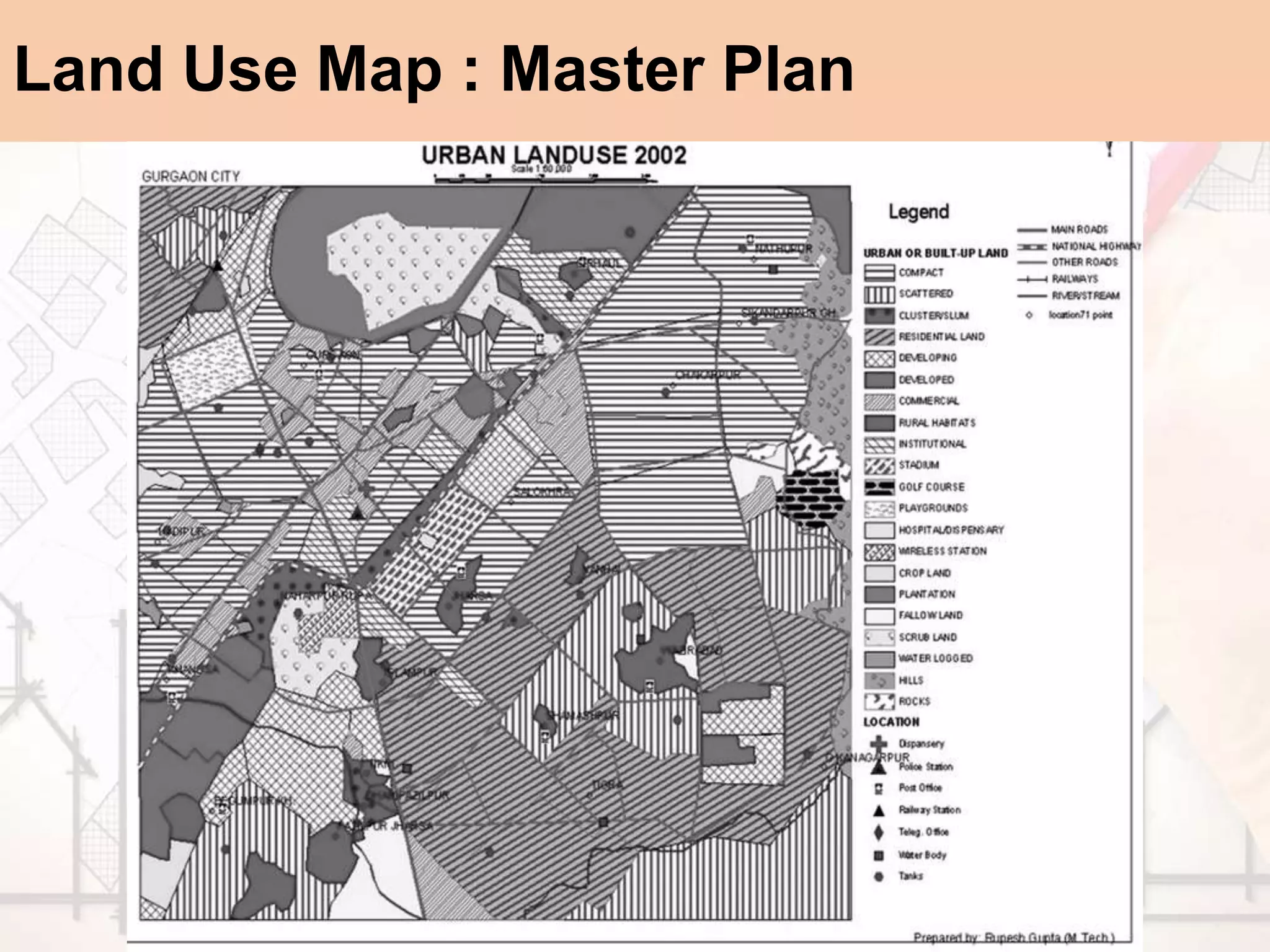
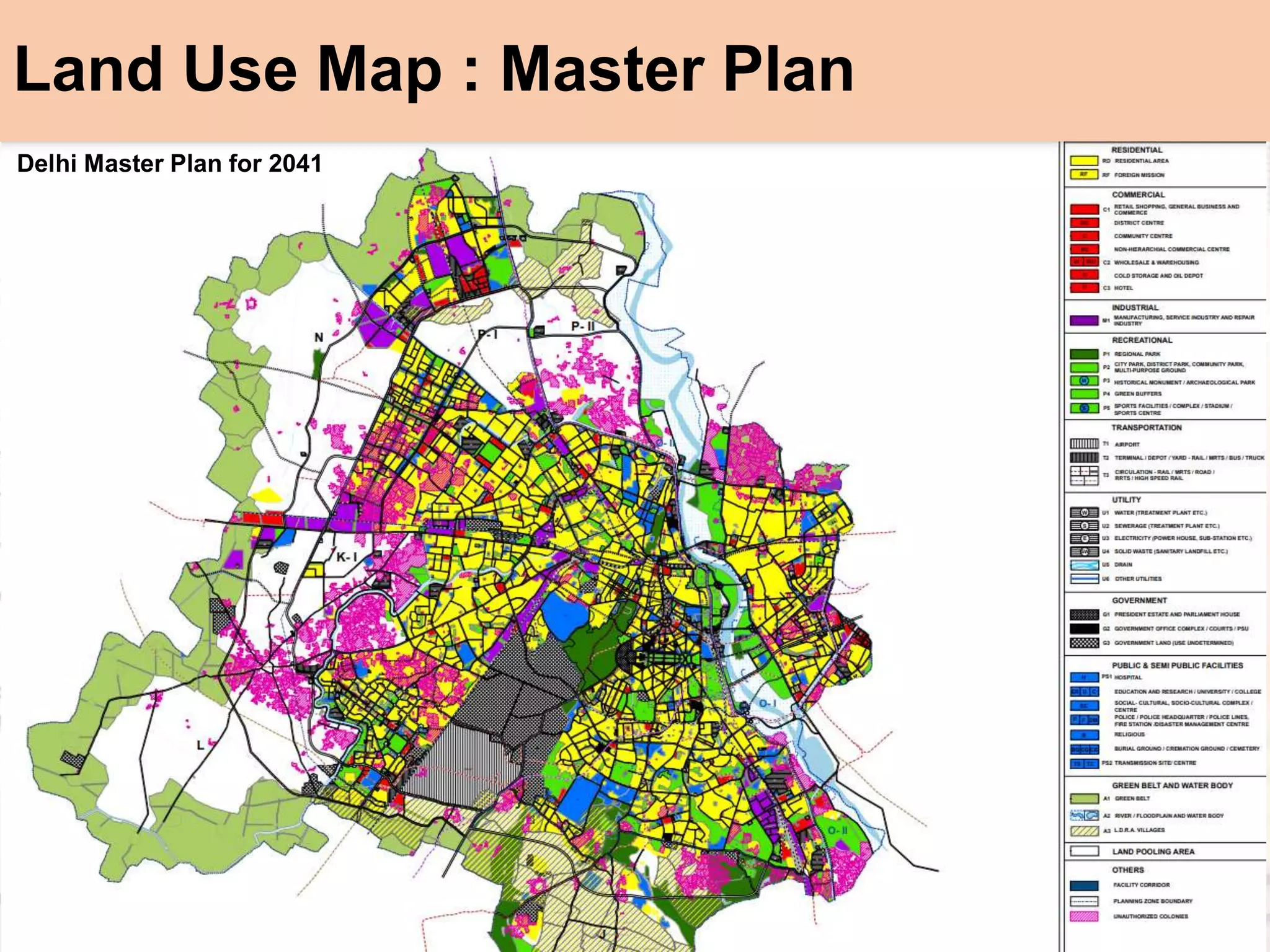
Land Use Map : Master Plan
Delhi Master Plan for 2041
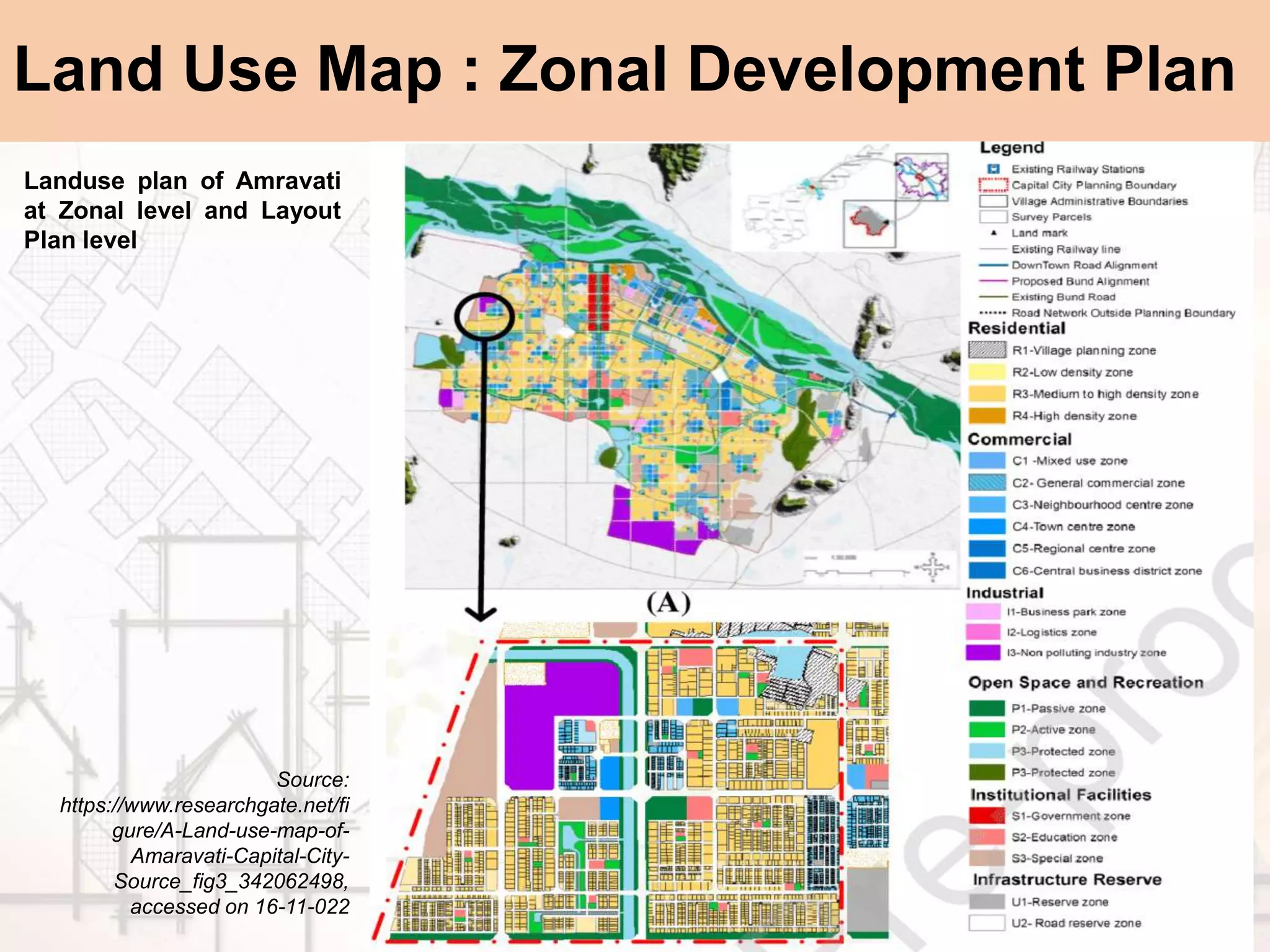
Land Use Map : Zonal Development Plan
Landuse plan of Amravati
at Zonal level and Layout
Plan level
Source:
https://www.researchgate.net/fi
gure/A-Land-use-map-of-
Amaravati-Capital-City-
Source_fig3_342062498,
accessed on 16-11-022

Scales and Preparation of Maps

  • 1.
  • 2.
    Maps: Representation ofReality Definition: Map is a diagrammatic representation of an area of land or sea showing administrative boundaries, natural/physical features, roads, etc Source: Historic Map Works LLC/Historic Map Works/GettyImages
  • 3.
    Elements of Map 1.Title, sub-title 2. Direction 3. Scale 5. Key or Inset Map 6. Prepared by or ownership 4. Legend
  • 4.
    Scales Types Feature 1. Statementof Scale/ Word scale/ Verbal e.g. 1cm is equal to 100m Easy to understand but tough to convert/ judge reality 2. Representative Fraction or Numeric Scale • Distance x : y • Areal x2 : y2 • In Distance scale, units remain same in numerator ‘x’ and denominator ‘y’ • Easier to read • Universally accepted • It changes with a little zoom-in or zoom- out, a usual error in prints 3. Graphical • Linear • Bar • Usually adopted for small-scale drawings • Readability remains same even with zoom- in/out or variation in print scale • Chances of error are higher while translating in reality x km x km
  • 5.
  • 6.
    Appropriate Scales forMaps Source: URDPFI Guidelines, Vol I., 2015
  • 7.
    Contents of basemaps Information depiction depends on: • Purpose of map • Scale • Projection • Method of map‐making • Draughting skill Regional Base Map City Base Map Site Base Map Boundaries National, State, District, Taluk, Village Metropolitan, urban, ULB, zonal, census, cantonment, urban/ rural village All adjacent ownerships Network NH, SH, district roads, expressways, Railway lines, bridges NH, SH, MDR, arterial, sub- arterial, collector/ distributer All access roads/ streets, pedestrian paths, trails Topography Forests, hills, rivers & streams, lakes, wetlands, etc. Hills, water bodies, Rivers and streams, canals, lakes, swamps, marshy lands Vegetation (trees, bushes, hedge), water pond, water pools Land-use Urban settlement, rural settlements, important headquarters Residential, PSP, Govt instt., commercial hubs, transport hubs, major greens, heritage sites, floodable areas, etc. All adjacent built-uses, floor- wise use Contours 100m interval 3m to 5m interval (usually) 500 mm interval Utilities Power stations, dams, etc HT lines, water & sewer lines, waste dumping areas, etc. HT/ LT lines, dustbins, water & sewer lines,RWH, etc
  • 8.
    Contents of basemaps 1. Land cover 2. Structures 3. Boundaries 4. Hydrography 5. Geographic names 6. Transportation 7. Elevation 8. Orthographic imagery
  • 9.
    Preparation of GISbase maps Preparation includes overlaying of; 1. Arial photo 2. Physiographic conditions 3. Population size & type information 4. Ownership boundaries 5. Any other feature of importance Source: Guide to Preliminary Planning Surveys of Urban Areas Including Land Use Classification, TCPO, 2004
  • 10.
    Preparation of Planningbase maps using GIS Preparation includes overlaying of; 1. Arial photo 2. Physiographic conditions 3. Population size & type information 4. Physical & Social infrastructure 5. Any other feature of importance Source: URDPFI Guidelines, Vol I., 2015
  • 11.
    Landuse Classification Major landuseclassifications identified are under 10 broad catagories; Source: URDPFI, 2015
  • 12.
    Landuse Land-cover Classification: Regional Urban landuse classification for plans at scale 1:2,50,000 to 1:50,000 ; Source: Guide to Preliminary Planning Surveys of Urban Areas Including Land Use Classification, TCPO, 2004
  • 13.
    Landuse Land-cover Map: Regional Plan Delhi NCR Regional Plan for 2021
  • 14.
    Land Use Classification: Urban scale Urban landuse classification for plans at scale 1:50000 to 1:8000 ; Source: Guide to Preliminary Planning Surveys of Urban Areas Including Land Use Classification, TCPO, 2004
  • 15.
    Land Use Map: Master Plan
  • 16.
    Land Use Map: Master Plan Delhi Master Plan for 2041
  • 17.
    Land Use Map: Zonal Development Plan Landuse plan of Amravati at Zonal level and Layout Plan level Source: https://www.researchgate.net/fi gure/A-Land-use-map-of- Amaravati-Capital-City- Source_fig3_342062498, accessed on 16-11-022