HOW DOES LAND USE RELATE TO TRANSPORTATION PLANNING?
Land use typically refers to the changes we make to the natural environment to create
homes, subdivisions, offices, urban areas, etc.
How we use our land, whether for residential, commercial or industrial development, affects
our transportation needs, such as roads, modes of travel (i.e., cars, buses, bicycles or
walking) and services. Land use has a direct impact on the number of trips and the type of
mode used for each trip.
For example, when a neighbourhood includes a shopping area within easy walking
distance of residences, people can replace some or all of their car trips with walking.
Commercial development located next to highways or arterial streets strongly encourages
car trips, often restricts opportunities for walking, biking or taking public transportation, and
can lead to longer trips to shopping areas.

THE LAND USE/TRANSPORTATION CYCLE
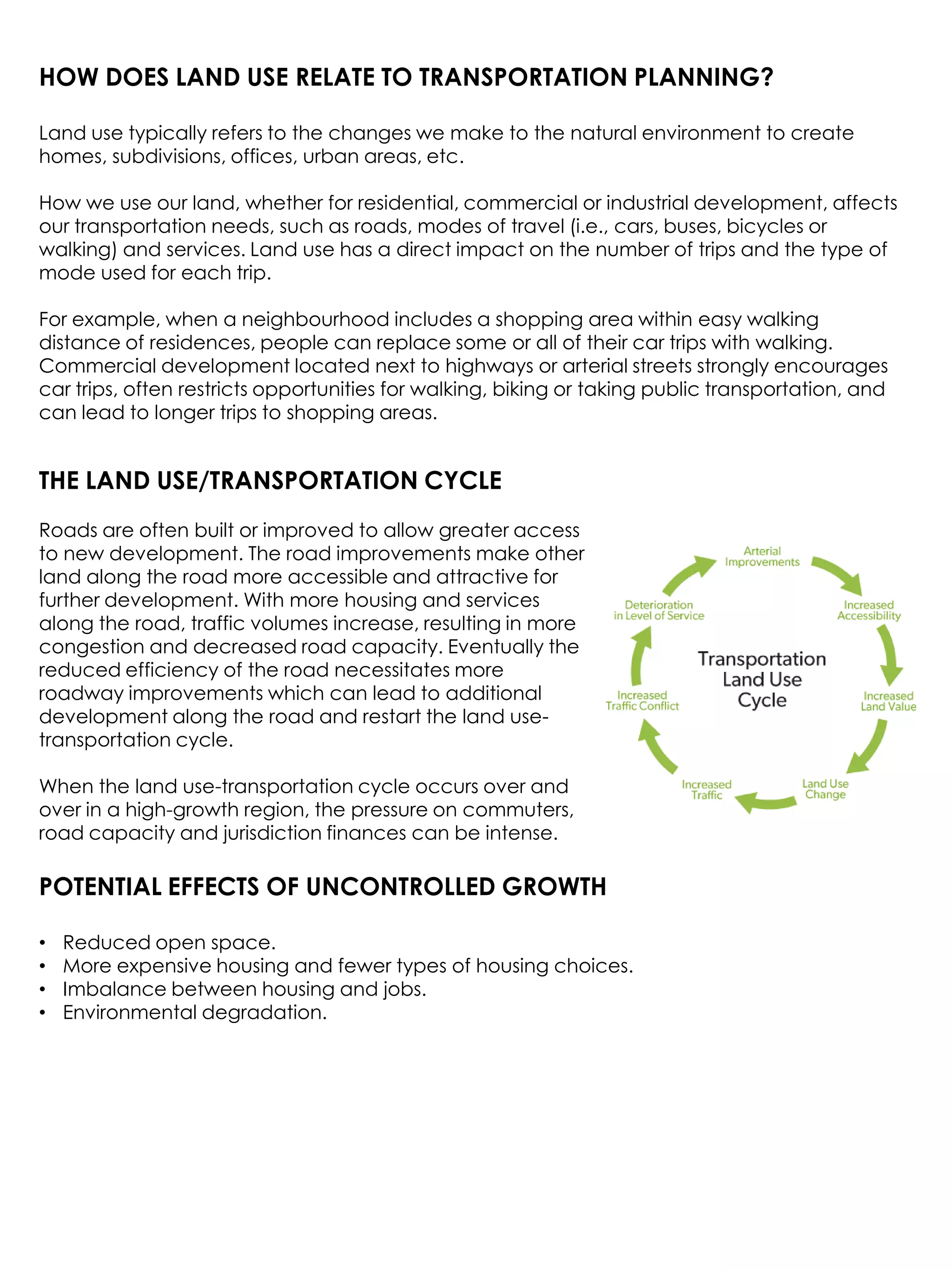
Roads are often built or improved to allow greater access
to new development. The road improvements make other
land along the road more accessible and attractive for
further development. With more housing and services
along the road, traffic volumes increase, resulting in more
congestion and decreased road capacity. Eventually the
reduced efficiency of the road necessitates more
roadway improvements which can lead to additional
development along the road and restart the land usetransportation cycle.
When the land use-transportation cycle occurs over and
over in a high-growth region, the pressure on commuters,
road capacity and jurisdiction finances can be intense.

POTENTIAL EFFECTS OF UNCONTROLLED GROWTH
•
•
•
•

Reduced open space.
More expensive housing and fewer types of housing choices.
Imbalance between housing and jobs.
Environmental degradation.
PRINCIPLES FOR EFFECTIVE LAND USE DEVELPOMENT
•
•
•
•
•
•
•
•
•
•

Create a range of housing opportunities and choices.
Encourage community and stakeholder collaboration.
Foster distinctive, attractive places with a strong sense of place.
Make development decisions predictable, fair, and cost effective.
Mix land uses.
Create walkable/ bike-friendly neighbourhoods.
Preserve open space, natural beauty, and critical environmental areas.
Provide a variety of transportation choices.
Strengthen and direct development toward existing communities.
Take advantage of compact building design.

Land use transportation cycle

  • 1.
    HOW DOES LANDUSE RELATE TO TRANSPORTATION PLANNING? Land use typically refers to the changes we make to the natural environment to create homes, subdivisions, offices, urban areas, etc. How we use our land, whether for residential, commercial or industrial development, affects our transportation needs, such as roads, modes of travel (i.e., cars, buses, bicycles or walking) and services. Land use has a direct impact on the number of trips and the type of mode used for each trip. For example, when a neighbourhood includes a shopping area within easy walking distance of residences, people can replace some or all of their car trips with walking. Commercial development located next to highways or arterial streets strongly encourages car trips, often restricts opportunities for walking, biking or taking public transportation, and can lead to longer trips to shopping areas. THE LAND USE/TRANSPORTATION CYCLE Roads are often built or improved to allow greater access to new development. The road improvements make other land along the road more accessible and attractive for further development. With more housing and services along the road, traffic volumes increase, resulting in more congestion and decreased road capacity. Eventually the reduced efficiency of the road necessitates more roadway improvements which can lead to additional development along the road and restart the land usetransportation cycle. When the land use-transportation cycle occurs over and over in a high-growth region, the pressure on commuters, road capacity and jurisdiction finances can be intense. POTENTIAL EFFECTS OF UNCONTROLLED GROWTH • • • • Reduced open space. More expensive housing and fewer types of housing choices. Imbalance between housing and jobs. Environmental degradation.
  • 2.
    PRINCIPLES FOR EFFECTIVELAND USE DEVELPOMENT • • • • • • • • • • Create a range of housing opportunities and choices. Encourage community and stakeholder collaboration. Foster distinctive, attractive places with a strong sense of place. Make development decisions predictable, fair, and cost effective. Mix land uses. Create walkable/ bike-friendly neighbourhoods. Preserve open space, natural beauty, and critical environmental areas. Provide a variety of transportation choices. Strengthen and direct development toward existing communities. Take advantage of compact building design.