Livestock: the global context
Shirley Tarawali, Assistant Director General, ILRI, Kenya
Livestock advocacy and communications convening
Addis Ababa, Ethiopia
10 – 12 November 2015
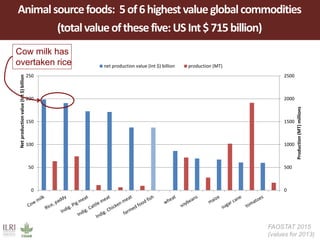
Animalsourcefoods: 5of6highestvalueglobalcommodities
(totalvalueofthesefive:USInt$715billion)
FAOSTAT 2015
(values for 2013)
0
500
1000
1500
2000
2500
0
50
100
150
200
250
Production(MT)millions
Netproductionvalue(Int$)billion
net production value (Int $) billion production (MT)
Cow milk has
overtaken rice
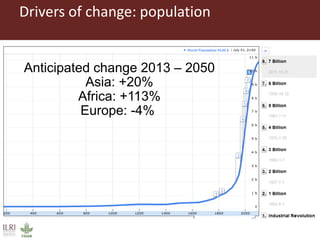
Drivers of change: population
Anticipated change 2013 – 2050
Asia: +20%
Africa: +113%
Europe: -4%
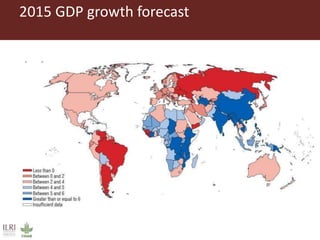
2015 GDP growth forecast
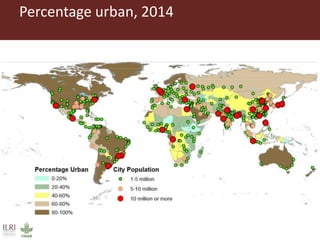
Percentage urban, 2014
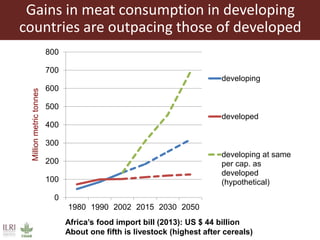
Gains in meat consumption in developing
countries are outpacing those of developed
0
100
200
300
400
500
600
700
800
1980 1990 2002 2015 2030 2050
Millionmetrictonnes
developing
developed
developing at same
per cap. as
developed
(hypothetical)
Africa’s food import bill (2013): US $ 44 billion
About one fifth is livestock (highest after cereals)
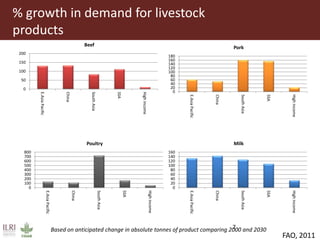
% growth in demand for livestock
products
2000 - 2030
7
0
50
100
150
200
E.AsiaPacific
China
SouthAsia
SSA
Highincome
Beef
0
20
40
60
80
100
120
140
160
180
E.AsiaPacific
China
SouthAsia
SSA
Highincome
Pork
0
100
200
300
400
500
600
700
800
E.AsiaPacific
China
SouthAsia
SSA
Highincome
Poultry
0
20
40
60
80
100
120
140
160
E.AsiaPacific
China
SouthAsia
SSA
Highincome
Milk
FAO, 2011
Based on anticipated change in absolute tonnes of product comparing 2000 and 2030
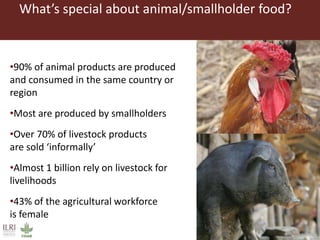
What’s special about animal/smallholder food?
•90% of animal products are produced
and consumed in the same country or
region
•Most are produced by smallholders
•Over 70% of livestock products
are sold ‘informally’
•Almost 1 billion rely on livestock for
livelihoods
•43% of the agricultural workforce
is female
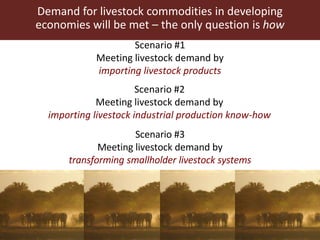
Demand for livestock commodities in developing
economies will be met – the only question is how
Scenario #1
Meeting livestock demand by
importing livestock products
Scenario #2
Meeting livestock demand by
importing livestock industrial production know-how
Scenario #3
Meeting livestock demand by
transforming smallholder livestock systems
Policy conversations
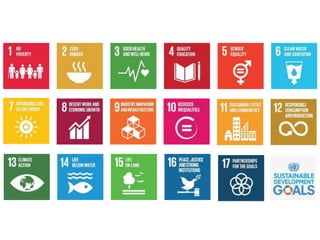
…………..the Sustainable Development
Goals………….
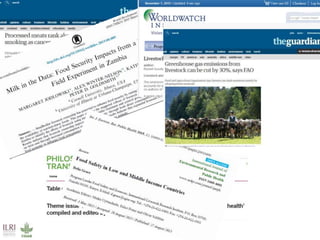
……………livestock ‘bads’ ……………and
confusing messages………………….
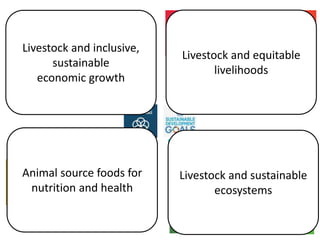
Livestock and inclusive,
sustainable
economic growth
Livestock and equitable
livelihoods
Animal source foods for
nutrition and health
Livestock and sustainable
ecosystems
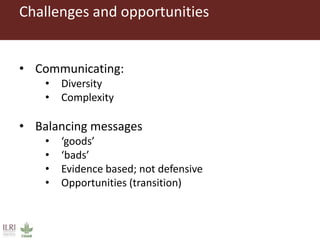
Challenges and opportunities
• Communicating:
• Diversity
• Complexity
• Balancing messages
• ‘goods’
• ‘bads’
• Evidence based; not defensive
• Opportunities (transition)
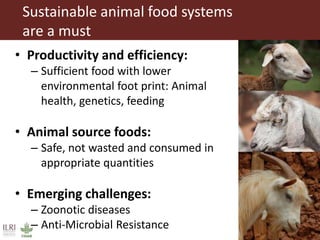
Sustainable animal food systems
are a must
• Productivity and efficiency:
– Sufficient food with lower
environmental foot print: Animal
health, genetics, feeding
• Animal source foods:
– Safe, not wasted and consumed in
appropriate quantities
• Emerging challenges:
– Zoonotic diseases
– Anti-Microbial Resistance
The presentation has a Creative Commons licence. You are free to re-use or distribute this work, provided credit is given to ILRI.
better lives through livestock
ilri.org

Livestock: The global context

  • 1.
    Livestock: the globalcontext Shirley Tarawali, Assistant Director General, ILRI, Kenya Livestock advocacy and communications convening Addis Ababa, Ethiopia 10 – 12 November 2015
  • 2.
    Animalsourcefoods: 5of6highestvalueglobalcommodities (totalvalueofthesefive:USInt$715billion) FAOSTAT 2015 (valuesfor 2013) 0 500 1000 1500 2000 2500 0 50 100 150 200 250 Production(MT)millions Netproductionvalue(Int$)billion net production value (Int $) billion production (MT) Cow milk has overtaken rice
  • 3.
    Drivers of change:population Anticipated change 2013 – 2050 Asia: +20% Africa: +113% Europe: -4%
  • 4.
  • 5.
  • 6.
    Gains in meatconsumption in developing countries are outpacing those of developed 0 100 200 300 400 500 600 700 800 1980 1990 2002 2015 2030 2050 Millionmetrictonnes developing developed developing at same per cap. as developed (hypothetical) Africa’s food import bill (2013): US $ 44 billion About one fifth is livestock (highest after cereals)
  • 7.
    % growth indemand for livestock products 2000 - 2030 7 0 50 100 150 200 E.AsiaPacific China SouthAsia SSA Highincome Beef 0 20 40 60 80 100 120 140 160 180 E.AsiaPacific China SouthAsia SSA Highincome Pork 0 100 200 300 400 500 600 700 800 E.AsiaPacific China SouthAsia SSA Highincome Poultry 0 20 40 60 80 100 120 140 160 E.AsiaPacific China SouthAsia SSA Highincome Milk FAO, 2011 Based on anticipated change in absolute tonnes of product comparing 2000 and 2030
  • 8.
    What’s special aboutanimal/smallholder food? •90% of animal products are produced and consumed in the same country or region •Most are produced by smallholders •Over 70% of livestock products are sold ‘informally’ •Almost 1 billion rely on livestock for livelihoods •43% of the agricultural workforce is female
  • 9.
    Demand for livestockcommodities in developing economies will be met – the only question is how Scenario #1 Meeting livestock demand by importing livestock products Scenario #2 Meeting livestock demand by importing livestock industrial production know-how Scenario #3 Meeting livestock demand by transforming smallholder livestock systems
  • 10.
    Policy conversations …………..the SustainableDevelopment Goals…………. ……………livestock ‘bads’ ……………and confusing messages………………….
  • 12.
    Livestock and inclusive, sustainable economicgrowth Livestock and equitable livelihoods Animal source foods for nutrition and health Livestock and sustainable ecosystems
  • 15.
    Challenges and opportunities •Communicating: • Diversity • Complexity • Balancing messages • ‘goods’ • ‘bads’ • Evidence based; not defensive • Opportunities (transition)
  • 16.
    Sustainable animal foodsystems are a must • Productivity and efficiency: – Sufficient food with lower environmental foot print: Animal health, genetics, feeding • Animal source foods: – Safe, not wasted and consumed in appropriate quantities • Emerging challenges: – Zoonotic diseases – Anti-Microbial Resistance
  • 17.
    The presentation hasa Creative Commons licence. You are free to re-use or distribute this work, provided credit is given to ILRI. better lives through livestock ilri.org