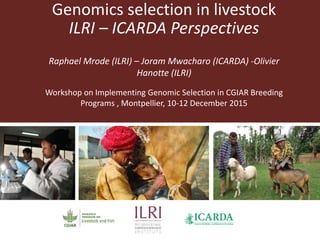
Genomics selection in livestock
ILRI – ICARDA Perspectives
Raphael Mrode (ILRI) – Joram Mwacharo (ICARDA) -Olivier
Hanotte (ILRI)
Workshop on Implementing Genomic Selection in CGIAR Breeding
Programs , Montpellier, 10-12 December 2015
Benefits of genomic selection
• Benefits of genomic selections have well been demonstrated
in developed countries
• Reduced generation interval
• Accuracies of above 70% have been reported for young genomic
proven bulls
• Higher rates of genetic gains
• Genomic systems in developed countries are characterised
• With large reference populations
• Collaboration among countries
• Well defined phenotypes and mostly within pure breeds
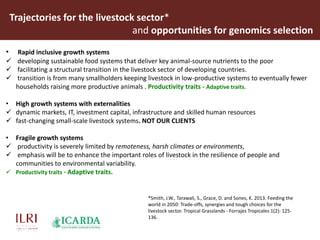
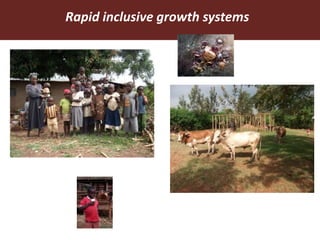
• Rapid inclusive growth systems
 developing sustainable food systems that deliver key animal-source nutrients to the poor
 facilitating a structural transition in the livestock sector of developing countries.
 transition is from many smallholders keeping livestock in low-productive systems to eventually fewer
households raising more productive animals . Productivity traits - Adaptive traits.
• High growth systems with externalities
 dynamic markets, IT, investment capital, infrastructure and skilled human resources
 fast-changing small-scale livestock systems. NOT OUR CLIENTS
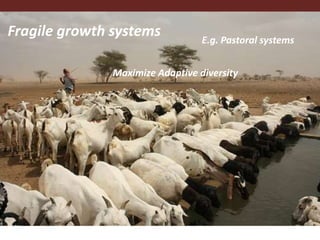
• Fragile growth systems
 productivity is severely limited by remoteness, harsh climates or environments,
 emphasis will be to enhance the important roles of livestock in the resilience of people and
communities to environmental variability.
 Productivity traits - Adaptive traits.
Trajectories for the livestock sector*
and opportunities for genomics selection
*Smith, J.W., Tarawali, S., Grace, D. and Sones, K. 2013. Feeding the
world in 2050: Trade‐offs, synergies and tough choices for the
livestock sector. Tropical Grasslands - Forrajes Tropicales 1(2): 125-
136.
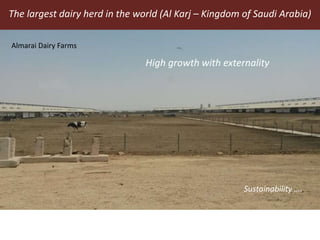
The largest dairy herd in the world (Al Karj – Kingdom of Saudi Arabia)
67,000 dairy cow heads – 2,5 million liters per day ( 40 l/day/per cow)
Almarai Dairy Farms
Sustainability ….
High growth with externality
Rapid inclusive growth systems
Small-holders farmers from Western Kenya
Milk
East Coast Fever
Milk
Fragile growth systems E.g. Pastoral systems
Maximize Adaptive diversity
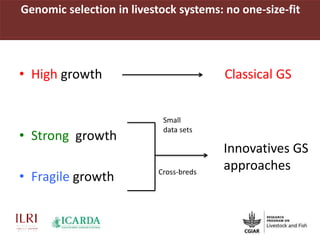
Genomic selection in livestock systems: no one-size-fit
• High growth Classical GS
• Strong growth
• Fragile growth
Innovatives GS
approaches
Small
data sets
Cross-breds
Opportunities offered by genomics in small
holder systems
• Quick wins from genotypic data includes
• Reduces the need for accurate pedigree recording as genomic
relationship can easily be computed
• Parentage discovery using SNP data
• Usage to determine the breed composition of cross-bred animals in the
absence of pedigree.
• Gives the opportunity to match different genotypes & management
system
• Using DGEA small holder data -- 1038 cows HD genotypes
• Successfully determined the breed composition of the animals using
admixture analysis
• Computed G matrix and undertake genomic predictions: GBLUP, SNP-
BLUP and BayesC & BayesCpi
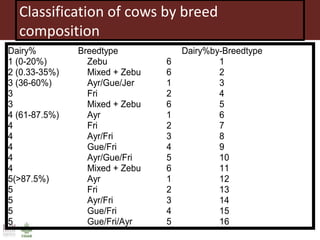
Classification of cows by breed
composition
Dairy% Breedtype Dairy%by-Breedtype
1 (0-20%) Zebu 6 1
2 (0.33-35%) Mixed + Zebu 6 2
3 (36-60%) Ayr/Gue/Jer 1 3
3 Fri 2 4
3 Mixed + Zebu 6 5
4 (61-87.5%) Ayr 1 6
4 Fri 2 7
4 Ayr/Fri 3 8
4 Gue/Fri 4 9
4 Ayr/Gue/Fri 5 10
4 Mixed + Zebu 6 11
5(>87.5%) Ayr 1 12
5 Fri 2 13
5 Ayr/Fri 3 14
5 Gue/Fri 4 15
5 Gue/Fri/Ayr 5 16
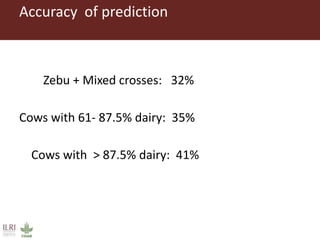
Accuracy of prediction
Zebu + Mixed crosses: 32%
Cows with 61- 87.5% dairy: 35%
Cows with > 87.5% dairy: 41%
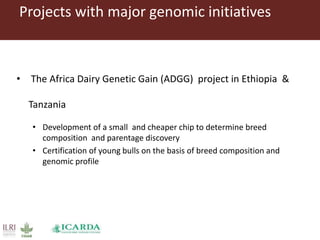
Projects with major genomic initiatives
• The Africa Dairy Genetic Gain (ADGG) project in Ethiopia &
Tanzania
• Development of a small and cheaper chip to determine breed
composition and parentage discovery
• Certification of young bulls on the basis of breed composition and
genomic profile
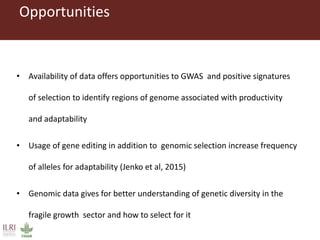
Opportunities
• Availability of data offers opportunities to GWAS and positive signatures
of selection to identify regions of genome associated with productivity
and adaptability
• Usage of gene editing in addition to genomic selection increase frequency
of alleles for adaptability (Jenko et al, 2015)
• Genomic data gives for better understanding of genetic diversity in the
fragile growth sector and how to select for it
Regional and International Collaborations
(dairy sector)
• Across regional genomics might be necessary for application of
genomics for small holder farmers
• Only third of the 20,000 bulls in the reference pop for the German
genomic system are home proven.
• In the UK, less than one third of 22,000 bulls in the reference pop
are domestic bulls
• Possibly most exotics sires used in crossing breeding are similar
across regions or countries
• Policies that promote easy flow of data across country boundaries
while maintaining data security and ownership will be needed
Regional and International Collaborations
(dairy sector)
• Need to collaborate with developed countries where some of the sires of
these cows could have been genotyped
• Parentage discovery & determine breed composition
• Genotype by environmental interaction if enough data
Conclusions
• Genomics offers quick wins in small holder systems through use of
genomic relationship matrix and parentage discovery
• Given smaller data structure, well adapted methodologies both in terms
of developing relevant chips and analytics tools will be needed
• Collaboration on across country or regional basis will be needed to
ensure adequate data and best sires can be used across regions
• Strong national partnership with be needed to deliver the impact of
better genetics resulting from genomics
• Genotyping of cross bred animals offers possibilities for further optimize
cross breeding systems
The presentation has a Creative Commons licence. You are free to re-use or distribute this work, provided credit is given to ILRI.
better lives through livestock
ilri.org

Genomics selection in livestock: ILRI–ICARDA perspectives

  • 1.
    Genomics selection inlivestock ILRI – ICARDA Perspectives Raphael Mrode (ILRI) – Joram Mwacharo (ICARDA) -Olivier Hanotte (ILRI) Workshop on Implementing Genomic Selection in CGIAR Breeding Programs , Montpellier, 10-12 December 2015
  • 2.
    Benefits of genomicselection • Benefits of genomic selections have well been demonstrated in developed countries • Reduced generation interval • Accuracies of above 70% have been reported for young genomic proven bulls • Higher rates of genetic gains • Genomic systems in developed countries are characterised • With large reference populations • Collaboration among countries • Well defined phenotypes and mostly within pure breeds
  • 3.
    • Rapid inclusivegrowth systems  developing sustainable food systems that deliver key animal-source nutrients to the poor  facilitating a structural transition in the livestock sector of developing countries.  transition is from many smallholders keeping livestock in low-productive systems to eventually fewer households raising more productive animals . Productivity traits - Adaptive traits. • High growth systems with externalities  dynamic markets, IT, investment capital, infrastructure and skilled human resources  fast-changing small-scale livestock systems. NOT OUR CLIENTS • Fragile growth systems  productivity is severely limited by remoteness, harsh climates or environments,  emphasis will be to enhance the important roles of livestock in the resilience of people and communities to environmental variability.  Productivity traits - Adaptive traits. Trajectories for the livestock sector* and opportunities for genomics selection *Smith, J.W., Tarawali, S., Grace, D. and Sones, K. 2013. Feeding the world in 2050: Trade‐offs, synergies and tough choices for the livestock sector. Tropical Grasslands - Forrajes Tropicales 1(2): 125- 136.
  • 4.
    The largest dairyherd in the world (Al Karj – Kingdom of Saudi Arabia) 67,000 dairy cow heads – 2,5 million liters per day ( 40 l/day/per cow) Almarai Dairy Farms Sustainability …. High growth with externality
  • 5.
    Rapid inclusive growthsystems Small-holders farmers from Western Kenya Milk East Coast Fever Milk
  • 6.
    Fragile growth systemsE.g. Pastoral systems Maximize Adaptive diversity
  • 7.
    Genomic selection inlivestock systems: no one-size-fit • High growth Classical GS • Strong growth • Fragile growth Innovatives GS approaches Small data sets Cross-breds
  • 8.
    Opportunities offered bygenomics in small holder systems • Quick wins from genotypic data includes • Reduces the need for accurate pedigree recording as genomic relationship can easily be computed • Parentage discovery using SNP data • Usage to determine the breed composition of cross-bred animals in the absence of pedigree. • Gives the opportunity to match different genotypes & management system • Using DGEA small holder data -- 1038 cows HD genotypes • Successfully determined the breed composition of the animals using admixture analysis • Computed G matrix and undertake genomic predictions: GBLUP, SNP- BLUP and BayesC & BayesCpi
  • 9.
    Classification of cowsby breed composition Dairy% Breedtype Dairy%by-Breedtype 1 (0-20%) Zebu 6 1 2 (0.33-35%) Mixed + Zebu 6 2 3 (36-60%) Ayr/Gue/Jer 1 3 3 Fri 2 4 3 Mixed + Zebu 6 5 4 (61-87.5%) Ayr 1 6 4 Fri 2 7 4 Ayr/Fri 3 8 4 Gue/Fri 4 9 4 Ayr/Gue/Fri 5 10 4 Mixed + Zebu 6 11 5(>87.5%) Ayr 1 12 5 Fri 2 13 5 Ayr/Fri 3 14 5 Gue/Fri 4 15 5 Gue/Fri/Ayr 5 16
  • 10.
    Accuracy of prediction Zebu+ Mixed crosses: 32% Cows with 61- 87.5% dairy: 35% Cows with > 87.5% dairy: 41%
  • 11.
    Projects with majorgenomic initiatives • The Africa Dairy Genetic Gain (ADGG) project in Ethiopia & Tanzania • Development of a small and cheaper chip to determine breed composition and parentage discovery • Certification of young bulls on the basis of breed composition and genomic profile
  • 12.
    Opportunities • Availability ofdata offers opportunities to GWAS and positive signatures of selection to identify regions of genome associated with productivity and adaptability • Usage of gene editing in addition to genomic selection increase frequency of alleles for adaptability (Jenko et al, 2015) • Genomic data gives for better understanding of genetic diversity in the fragile growth sector and how to select for it
  • 13.
    Regional and InternationalCollaborations (dairy sector) • Across regional genomics might be necessary for application of genomics for small holder farmers • Only third of the 20,000 bulls in the reference pop for the German genomic system are home proven. • In the UK, less than one third of 22,000 bulls in the reference pop are domestic bulls • Possibly most exotics sires used in crossing breeding are similar across regions or countries • Policies that promote easy flow of data across country boundaries while maintaining data security and ownership will be needed
  • 14.
    Regional and InternationalCollaborations (dairy sector) • Need to collaborate with developed countries where some of the sires of these cows could have been genotyped • Parentage discovery & determine breed composition • Genotype by environmental interaction if enough data
  • 15.
    Conclusions • Genomics offersquick wins in small holder systems through use of genomic relationship matrix and parentage discovery • Given smaller data structure, well adapted methodologies both in terms of developing relevant chips and analytics tools will be needed • Collaboration on across country or regional basis will be needed to ensure adequate data and best sires can be used across regions • Strong national partnership with be needed to deliver the impact of better genetics resulting from genomics • Genotyping of cross bred animals offers possibilities for further optimize cross breeding systems
  • 16.
    The presentation hasa Creative Commons licence. You are free to re-use or distribute this work, provided credit is given to ILRI. better lives through livestock ilri.org

Editor's Notes

  • #2 There MUST be a CGIAR logo or a CRP logo. You can copy and paste the logo you need from the final slide of this presentation. Then you can delete that final slide   To replace a photo above, copy and paste this link in your browser: http://www.flickr.com/photos/ilri/sets/72157632057087650/detail/   Find a photo you like and the right size, copy and paste it in the block above.
  • #5 Example of high growth with externality COP21 carbone foot print….
  • #6 And these photographs illustrate the typical habitats and environment of the animals, a family extended family will have 1 to 3 animals on average, communal grazing and heavy tick challenges The ear of an animal parasitised by the brown ear tick, Rhipicephalus appendiculatus, the vector of the protozoan causing East Coast fever (ECF). Note the size of engorged females compared to the much smaller males