 A tranquilizer is a drug that acts on the CNS and is used to calm,
decrease anxiety, or help a person to sleep.
 Often called depressants because they suppress the CNS and slow the
body down.
 Used to treat mental illness that are characteristic of the psychoses
which is a behavioral disorder.
 Also used in common anxiety and sleeplessness.
 Can cause dependence and certain ones can easily be abused.
 Minor tranquilizers are called anxiolytics and major tranquilizers are
called Antipsychotics.
 Psychoses eg Schizophrenia
 Affective disorders eg Depression and Mania
 False perceptions (Hallucinations)
 False beliefs (Delusions)
 Emotional disturbances:
Mood is very low (Depression)
Mood is very high (Mania)
 Most common form of psychosis (1% of world
population)
 Most typical features are :
-Delusions
-Hallucinations
-Disorganised thinking
-Emotional abnormalities
Psychosis:
 The psychosis are inhibition of mood and emotional responses.
 Psychiatric illness can be divided into neurosis and psychosis.
 Neurosis is a class of functional mental disorders involving distress but
neither delusions nor hallucinations. Neurosis may also be called
psychoneurosis or neurotic disorder.
 The psychotic patient have difficulty in understanding reality and their own
conditions, they live in a world of his own.
 They experience hallucinations and delusions (paranoid in nature), thought
disorders and withdrawal from social contacts and flattering of emotional
responses.
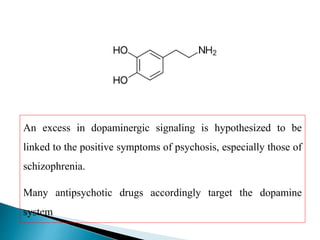
An excess in dopaminergic signaling is hypothesized to be
linked to the positive symptoms of psychosis, especially those of
schizophrenia.
Many antipsychotic drugs accordingly target the dopamine
system
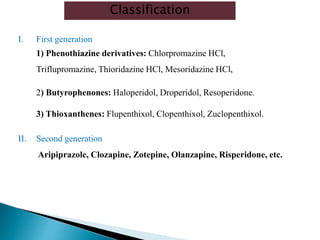
I. First generation
1) Phenothiazine derivatives: Chlorpromazine HCl,
Triflupromazine, Thioridazine HCl, Mesoridazine HCl,
2) Butyrophenones: Haloperidol, Droperidol, Resoperidone.
3) Thioxanthenes: Flupenthixol, Clopenthixol, Zuclopenthixol.
II. Second generation
Aripiprazole, Clozapine, Zotepine, Olanzapine, Risperidone, etc.
Classification
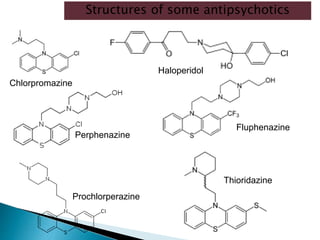
Chlorpromazine
Haloperidol
Fluphenazine
Perphenazine
Thioridazine
Prochlorperazine
Structures of some antipsychotics
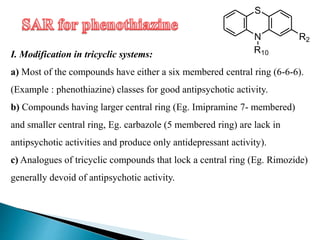
I. Modification in tricyclic systems:
a) Most of the compounds have either a six membered central ring (6-6-6).
(Example : phenothiazine) classes for good antipsychotic activity.
b) Compounds having larger central ring (Eg. Imipramine 7- membered)
and smaller central ring, Eg. carbazole (5 membered ring) are lack in
antipsychotic activities and produce only antidepressant activity).
c) Analogues of tricyclic compounds that lock a central ring (Eg. Rimozide)
generally devoid of antipsychotic activity.
N
S
R10
R2
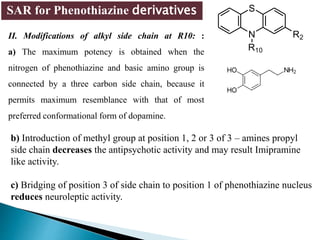
b) Introduction of methyl group at position 1, 2 or 3 of 3 – amines propyl
side chain decreases the antipsychotic activity and may result Imipramine
like activity.
c) Bridging of position 3 of side chain to position 1 of phenothiazine nucleus
reduces neuroleptic activity.
SAR for Phenothiazine derivatives
N
S
R10
R2II. Modifications of alkyl side chain at R10: :
a) The maximum potency is obtained when the
nitrogen of phenothiazine and basic amino group is
connected by a three carbon side chain, because it
permits maximum resemblance with that of most
preferred conformational form of dopamine.
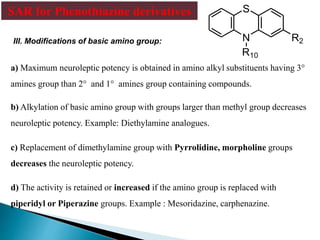
a) Maximum neuroleptic potency is obtained in amino alkyl substituents having 3°
amines group than 2° and 1° amines group containing compounds.
b) Alkylation of basic amino group with groups larger than methyl group decreases
neuroleptic potency. Example: Diethylamine analogues.
c) Replacement of dimethylamine group with Pyrrolidine, morpholine groups
decreases the neuroleptic potency.
d) The activity is retained or increased if the amino group is replaced with
piperidyl or Piperazine groups. Example : Mesoridazine, carphenazine.
SAR for Phenothiazine derivatives
N
S
R10
R2III. Modifications of basic amino group:
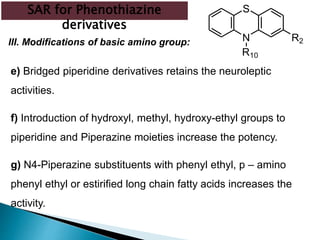
e) Bridged piperidine derivatives retains the neuroleptic
activities.
f) Introduction of hydroxyl, methyl, hydroxy-ethyl groups to
piperidine and Piperazine moieties increase the potency.
g) N4-Piperazine substituents with phenyl ethyl, p – amino
phenyl ethyl or estirified long chain fatty acids increases the
activity.
SAR for Phenothiazine
derivatives
N
S
R10
R2III. Modifications of basic amino group:
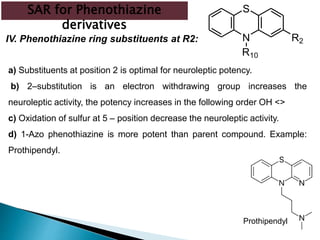
a) Substituents at position 2 is optimal for neuroleptic potency.
b) 2–substitution is an electron withdrawing group increases the
neuroleptic activity, the potency increases in the following order OH <>
c) Oxidation of sulfur at 5 – position decrease the neuroleptic activity.
d) 1-Azo phenothiazine is more potent than parent compound. Example:
Prothipendyl.
SAR for Phenothiazine
derivatives
N
S
R10
R2IV. Phenothiazine ring substituents at R2:
Prothipendyl
 Mechanisms of action
-competitive blockade of dopamine receptors and
serotonin receptors
-adverse effect result from blockade of different
receptors
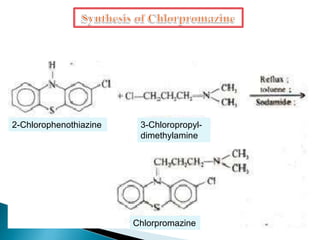
Chlorpromazine
2-Chlorophenothiazine 3-Chloropropyl-
dimethylamine
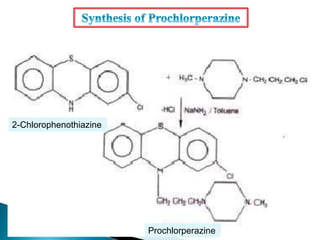
Prochlorperazine
2-Chlorophenothiazine
 Chlorpromazine, Fluphenazine, Thioridazine,
Trifluoperazine
 Similar therapeutic effects
 Different potency and side effect
 Chlo. And Thio. lower potency, more autonomic side
effects and fewer extrapyramidal side effects than high
potency
 Flu. Higher potency
 Blockade of D2 receptors
 Positive symptoms of Sch. Decrease in 1-3 weeks
 Less agitated, fewer auditory hallucinations, disappear of
paranoid delusions
 Behavioural improvement

Tranquilizers

  • 2.
     A tranquilizeris a drug that acts on the CNS and is used to calm, decrease anxiety, or help a person to sleep.  Often called depressants because they suppress the CNS and slow the body down.  Used to treat mental illness that are characteristic of the psychoses which is a behavioral disorder.  Also used in common anxiety and sleeplessness.  Can cause dependence and certain ones can easily be abused.  Minor tranquilizers are called anxiolytics and major tranquilizers are called Antipsychotics.
  • 3.
     Psychoses egSchizophrenia  Affective disorders eg Depression and Mania
  • 4.
     False perceptions(Hallucinations)  False beliefs (Delusions)
  • 5.
     Emotional disturbances: Moodis very low (Depression) Mood is very high (Mania)
  • 6.
     Most commonform of psychosis (1% of world population)  Most typical features are : -Delusions -Hallucinations -Disorganised thinking -Emotional abnormalities
  • 7.
    Psychosis:  The psychosisare inhibition of mood and emotional responses.  Psychiatric illness can be divided into neurosis and psychosis.  Neurosis is a class of functional mental disorders involving distress but neither delusions nor hallucinations. Neurosis may also be called psychoneurosis or neurotic disorder.  The psychotic patient have difficulty in understanding reality and their own conditions, they live in a world of his own.  They experience hallucinations and delusions (paranoid in nature), thought disorders and withdrawal from social contacts and flattering of emotional responses.
  • 8.
    An excess indopaminergic signaling is hypothesized to be linked to the positive symptoms of psychosis, especially those of schizophrenia. Many antipsychotic drugs accordingly target the dopamine system
  • 9.
    I. First generation 1)Phenothiazine derivatives: Chlorpromazine HCl, Triflupromazine, Thioridazine HCl, Mesoridazine HCl, 2) Butyrophenones: Haloperidol, Droperidol, Resoperidone. 3) Thioxanthenes: Flupenthixol, Clopenthixol, Zuclopenthixol. II. Second generation Aripiprazole, Clozapine, Zotepine, Olanzapine, Risperidone, etc. Classification
  • 10.
  • 11.
    I. Modification intricyclic systems: a) Most of the compounds have either a six membered central ring (6-6-6). (Example : phenothiazine) classes for good antipsychotic activity. b) Compounds having larger central ring (Eg. Imipramine 7- membered) and smaller central ring, Eg. carbazole (5 membered ring) are lack in antipsychotic activities and produce only antidepressant activity). c) Analogues of tricyclic compounds that lock a central ring (Eg. Rimozide) generally devoid of antipsychotic activity. N S R10 R2
  • 12.
    b) Introduction ofmethyl group at position 1, 2 or 3 of 3 – amines propyl side chain decreases the antipsychotic activity and may result Imipramine like activity. c) Bridging of position 3 of side chain to position 1 of phenothiazine nucleus reduces neuroleptic activity. SAR for Phenothiazine derivatives N S R10 R2II. Modifications of alkyl side chain at R10: : a) The maximum potency is obtained when the nitrogen of phenothiazine and basic amino group is connected by a three carbon side chain, because it permits maximum resemblance with that of most preferred conformational form of dopamine.
  • 13.
    a) Maximum neurolepticpotency is obtained in amino alkyl substituents having 3° amines group than 2° and 1° amines group containing compounds. b) Alkylation of basic amino group with groups larger than methyl group decreases neuroleptic potency. Example: Diethylamine analogues. c) Replacement of dimethylamine group with Pyrrolidine, morpholine groups decreases the neuroleptic potency. d) The activity is retained or increased if the amino group is replaced with piperidyl or Piperazine groups. Example : Mesoridazine, carphenazine. SAR for Phenothiazine derivatives N S R10 R2III. Modifications of basic amino group:
  • 14.
    e) Bridged piperidinederivatives retains the neuroleptic activities. f) Introduction of hydroxyl, methyl, hydroxy-ethyl groups to piperidine and Piperazine moieties increase the potency. g) N4-Piperazine substituents with phenyl ethyl, p – amino phenyl ethyl or estirified long chain fatty acids increases the activity. SAR for Phenothiazine derivatives N S R10 R2III. Modifications of basic amino group:
  • 15.
    a) Substituents atposition 2 is optimal for neuroleptic potency. b) 2–substitution is an electron withdrawing group increases the neuroleptic activity, the potency increases in the following order OH <> c) Oxidation of sulfur at 5 – position decrease the neuroleptic activity. d) 1-Azo phenothiazine is more potent than parent compound. Example: Prothipendyl. SAR for Phenothiazine derivatives N S R10 R2IV. Phenothiazine ring substituents at R2: Prothipendyl
  • 16.
     Mechanisms ofaction -competitive blockade of dopamine receptors and serotonin receptors -adverse effect result from blockade of different receptors
  • 17.
  • 18.
  • 19.
     Chlorpromazine, Fluphenazine,Thioridazine, Trifluoperazine  Similar therapeutic effects  Different potency and side effect  Chlo. And Thio. lower potency, more autonomic side effects and fewer extrapyramidal side effects than high potency  Flu. Higher potency
  • 20.
     Blockade ofD2 receptors  Positive symptoms of Sch. Decrease in 1-3 weeks  Less agitated, fewer auditory hallucinations, disappear of paranoid delusions  Behavioural improvement