
Presented by:
SAGAR Y. GODA
M.Pharm - I
Roll no: 03
EN NO: 162120808005
Guided by:
Dr. RAMESH D.PARMAR
.K. MODY GOVERNMENT PHARMACY COLLEGE,
RAJKOT.
1
CONTENT
 DEFINITION
 IMPORTANCE AND APPLICATION
 FACTORS AFFECTING DISSOLUTION RATE
1) Physicochemical properties of drug
2) Drug product formulation factors
3) Processing factors
4) Factors relating dissolution apparatus
5) Factors relating dissolution test parameters
 THEORIES OF DISSOLUTION
 DISSOLUTION APPARATUS
 QUESTION BANK
 REFERENCES
2
DEFINITION
Dissolution:
 Dissolution is defined as a process in which a solid
substance solubilizes in a given solvent i.e. mass
transfer from solid surface to the liquid phase.
Dissolution rate:
 Dissolution rate is defined as the amount of solute
dissolved in a given solvent under standard conditions
of temperature, pH, solvent composition and constant
solid surface area.
3
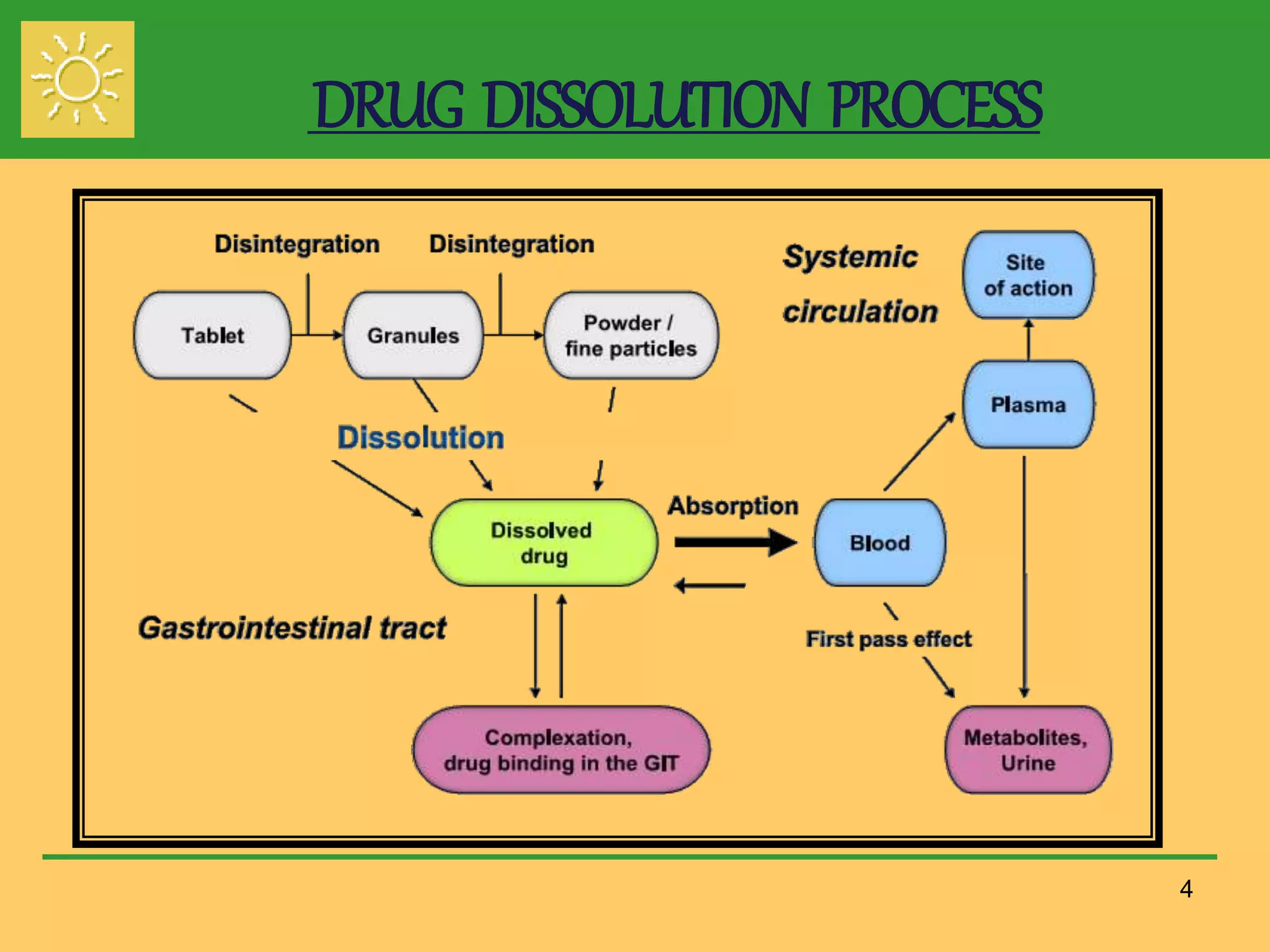
DRUG DISSOLUTION PROCESS
4
IMPORTANCE ANDAPPLICATION
IMPORTANCE
 Selection of best formulation & comparison of
excipient effect on dosage form.
 Dissolution testing evaluated critical parameter such as
• Predict adequate bioavailability
• Provide information to formulator in development of
more efficacious & therapeutically optimal dosage
form.
5
 Most sensitive and reliable predictor of in-vivo
availability.
 Dissolution analysis of pharmaceutical dosage forms
has emerged as single most important test that will
ensure quality of product.
 It can ensure bioavailability of product between
batches that meet dissolution criteria.
 Ensure batch-to-batch quality equivalence both in-
vitro and in-vivo , but also to screen formulation to
arrive at optimally effective products.
6
APPLICATION
 To formulate drug dosage forms and to develop
quality control specifications for it’s manufacturing
process.
 To identify the manufacturing variable, like the
binding agent effect, mixing effects, granulation
procedure, coating parameters and comparison
profile.
 To simulate food effect on bioavailability.
7
Factors affecting dissolution rate
Physicochemical Properties of Drug
Drug Product Formulation Factors
Processing Factors
Factors Relating Dissolution Apparatus
Factors Relating Dissolution Test Parameters
8
Physicochemical Properties Of Drug
 Drug solubility
 Minimum aqueous solubility of 1% is required to avoid
potential solubility limited absorption problems.
 Compounds with high solubilities exhibit significantly
higher dissolution rates.
 Salt formation
 It is one of the common approaches used to increase
drug solubility and dissolution rate.
9
Physicochemical Properties Of Drug
 Particle size
There is a direct relationship between surface area of
drug and its dissolution rate.
Hydrophobic drugs like phenacetin, aspirin shows
decrease in dissolution rate on micronization.
 Solid state characteristics
Solid phase characteristics of drug, such as amorphicity,
crystallinity, state of hydration and polymorphic
structures have significant influence on dissolution rate.
10
Drug product formulation factors
 Diluents
 The dissolution rate is not only affected by nature of the
diluent but also affected by excipient dilution
(drug/excipient ratio).
 Disintegrants
 Disintegrants added before & after the granulation affect
the dissolution rate.
 Dissolution rate of disintegrants with moderate swelling
capacity depend to a large extent on mixing time of
drug/excipient preblended with lubricant.
11
Drug product formulation factors
 Binders and granulating agents
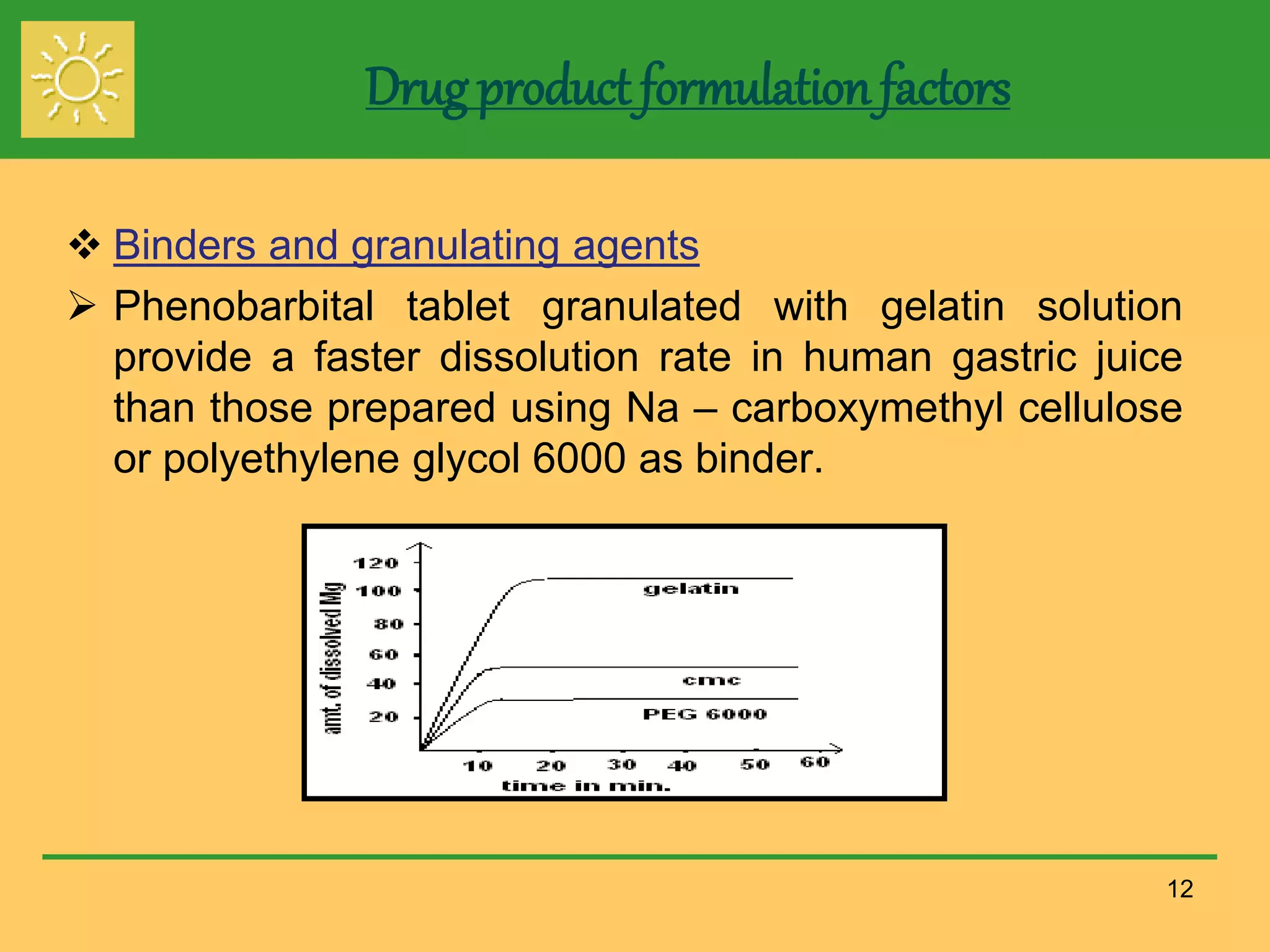
 Phenobarbital tablet granulated with gelatin solution
provide a faster dissolution rate in human gastric juice
than those prepared using Na – carboxymethyl cellulose
or polyethylene glycol 6000 as binder.
12
Drug product formulation factors
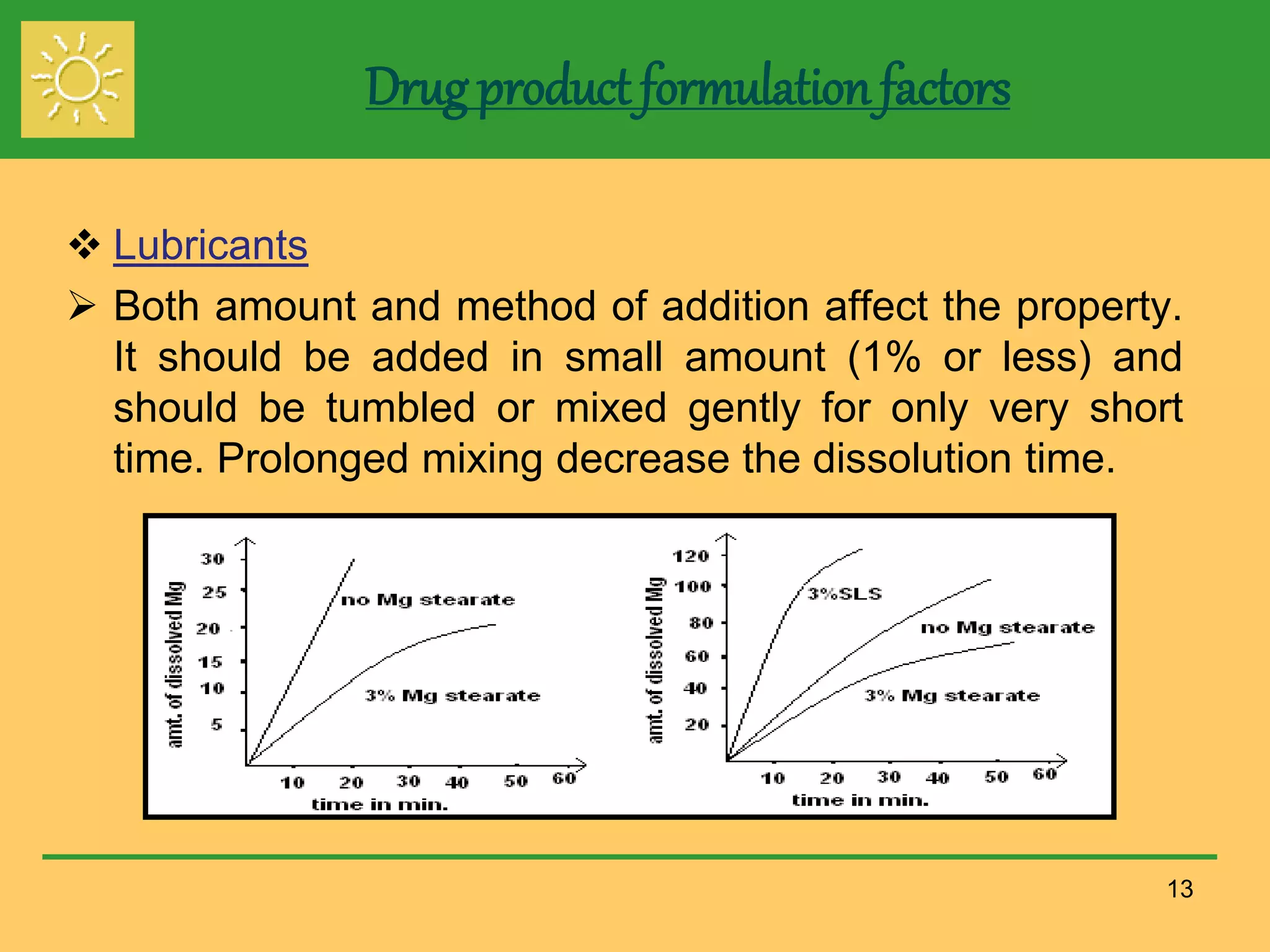
 Lubricants
 Both amount and method of addition affect the property.
It should be added in small amount (1% or less) and
should be tumbled or mixed gently for only very short
time. Prolonged mixing decrease the dissolution time.
13
Drug product formulation factors
 Surfactants
 They enhance the dissolution rate of poorly soluble drug
 Dyes
 Dissolution rate of single crystal of sulphathiazole was
found to decrease significantly in presence of FD&C
Blue No.1
 Coating polymers
 Tablets with MC coating were found to exhibit lower
dissolution profiles than those with HPMC at 37°C.
14
Processing factors
 Method of granulation
 Granulation process in general enhances dissolution rate
of poorly soluble drug.
 A newer technology called as APOC “Agglomerative
Phase of Comminution” was found to produce
mechanically stronger tablets with higher dissolution
rates than those made by wet granulation
 Drug excipient interaction
 Polysorbate-80 used as excipient in capsules causes
formation of formaldehyde by autooxidation which
causes film formation by denaturing the inner surface of
capsule. This causes decrease in dissolution rate of
capsules.
15
Processing factors
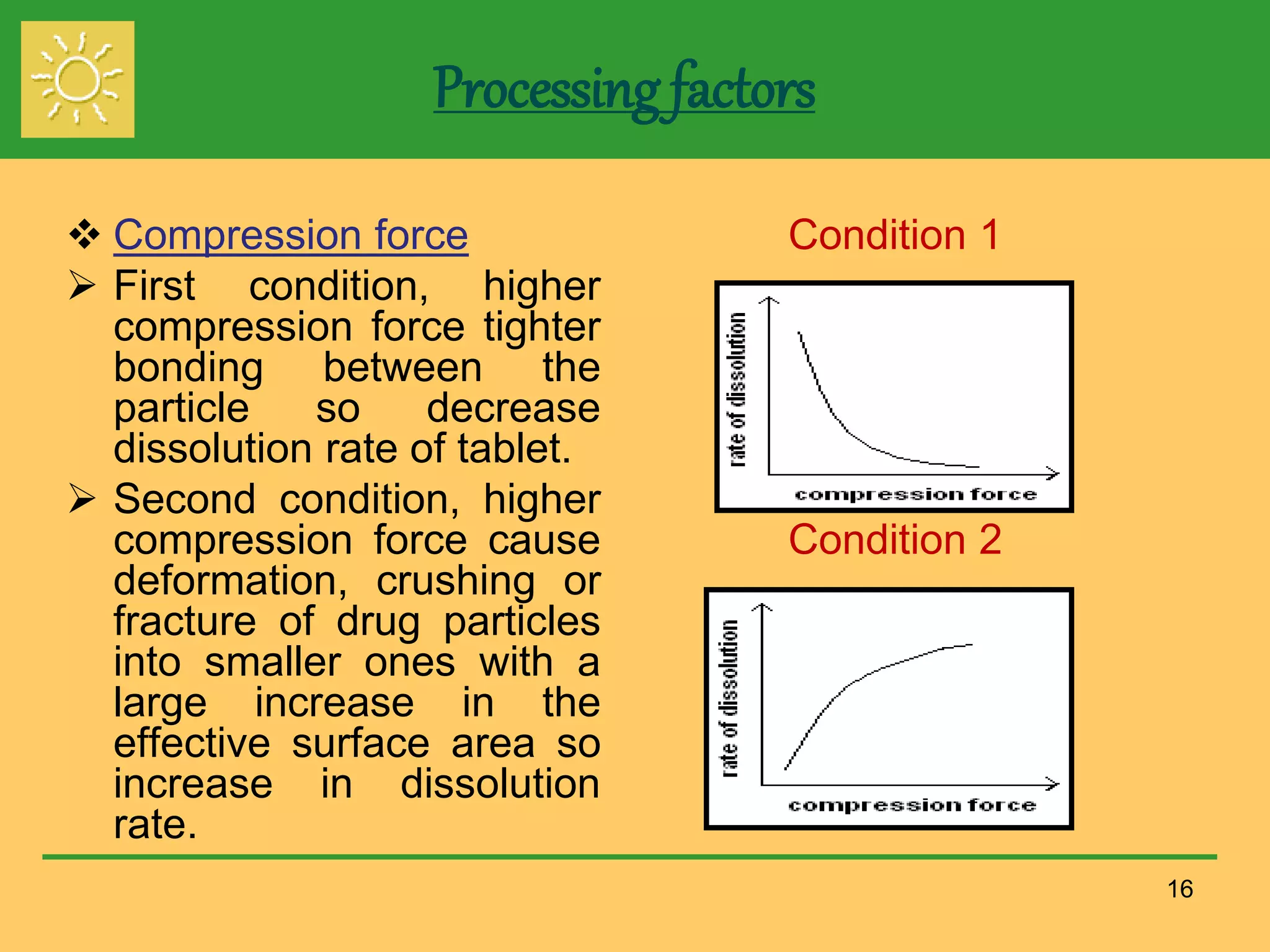
 Compression force
 First condition, higher
compression force tighter
bonding between the
particle so decrease
dissolution rate of tablet.
 Second condition, higher
compression force cause
deformation, crushing or
fracture of drug particles
into smaller ones with a
large increase in the
effective surface area so
increase in dissolution
rate.
Condition 1
Condition 2
16
Processing factors
 Storage conditions
 Hydrochlorthiazide tablets granulated with Acacia- ↓ in
dissolution rate after 1 yr storage at R.T. or after 14 days
at elevated temp.
Factors relating dissolution apparatus
 Agitation
 In general relatively low agitation should be applied in
order to prevent turbulence and sustain a reproducible
laminar flow, which is essential for obtaining reliable
results.
 Basket method- 100 rpm
 Paddle method- 50-75 rpm
17
Factors relating dissolution apparatus
 Stirring element
 The USP / NF XV states that the axis of the stirring element
must not deviate more than 0.2 mm from the axis of the
dissolution vessel.
 Significant increase in dissolution rate up to 13% occurs if
shaft is offset 2-6 mm from the center axis of the flask.
 Sampling probe position and filter
USP / NF states that sample should be removed at
approximately half the distance from the basket or paddle to
the dissolution medium and not closer than 1 cm to the side
of the flask.
Filter material must be saturated with the drug by repeated
passage to avoid losses that might go undetected during the
test sampling. 18
Factors relating dissolution test parameters
 Temperature
 A temp. of 37º ± 0.5 is needed for oral dosage forms and
suppositories
 Temp. as low as 30º and 25º is required for topical
preparations.
 Dissolution medium
 Volume of dissolution medium and sink conditions
The conc. of drug should not exceed 10-15% of its max.
solubility in dissolution medium selected.
For some insoluble drug different approaches have been
tried like:
19
Factors relating dissolution test parameters
1.Continuous flow method
2.Use of non ionic surfactants in conc. Above CMC.
3.Use of alcoholic solution(10-30%)
 Deaeration of dissolution medium
Dissolved air in distilled water could significantly lower
its pH.
 Effect of pH
Weak acids, dissolution rate increases with increase
in pH. whereas for weak bases, increases with
decrease in pH.
20
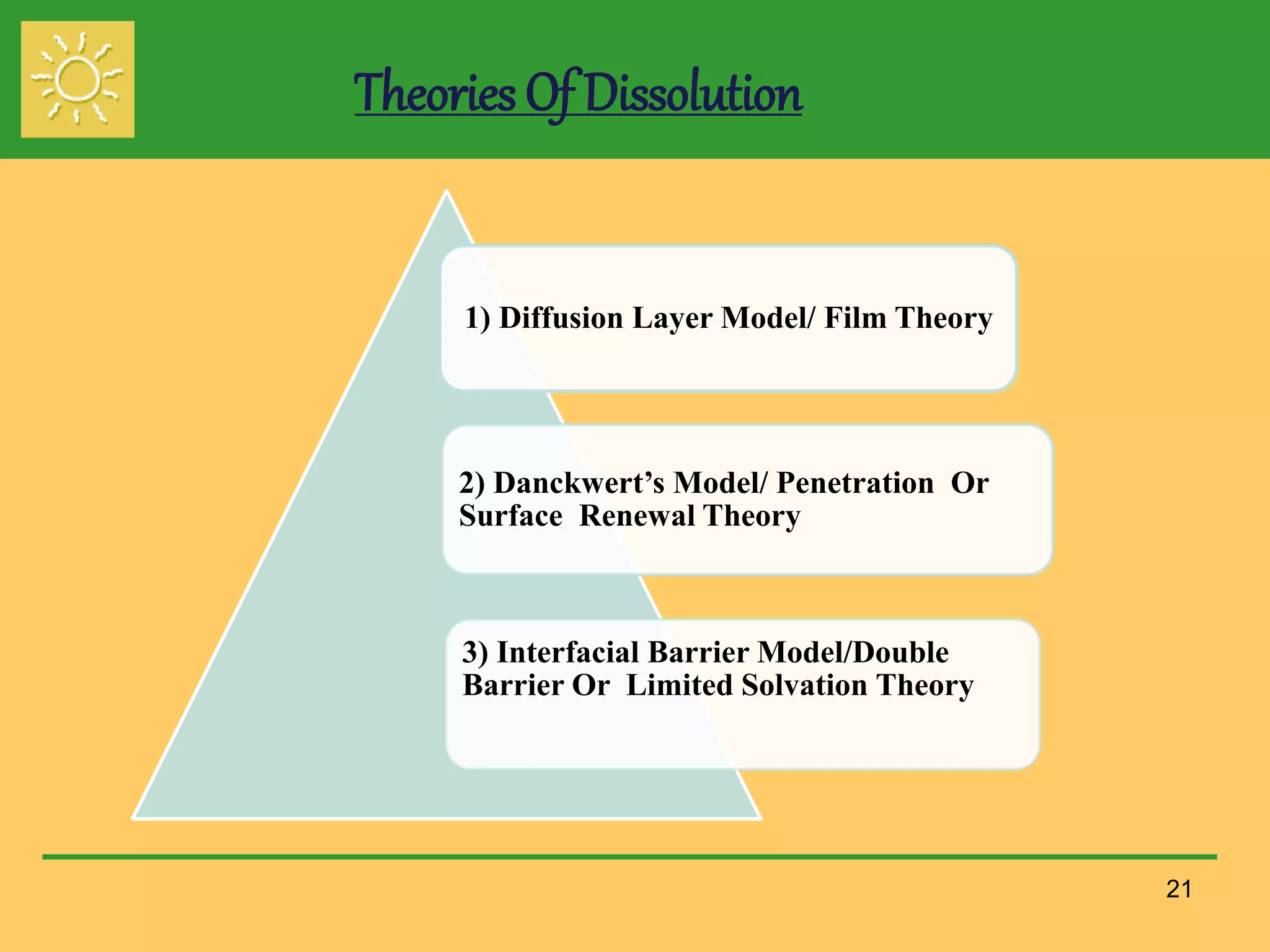
Theories Of Dissolution
1) Diffusion Layer Model/ Film Theory
2) Danckwert’s Model/ Penetration Or
Surface Renewal Theory
3) Interfacial Barrier Model/Double
Barrier Or Limited Solvation Theory
21
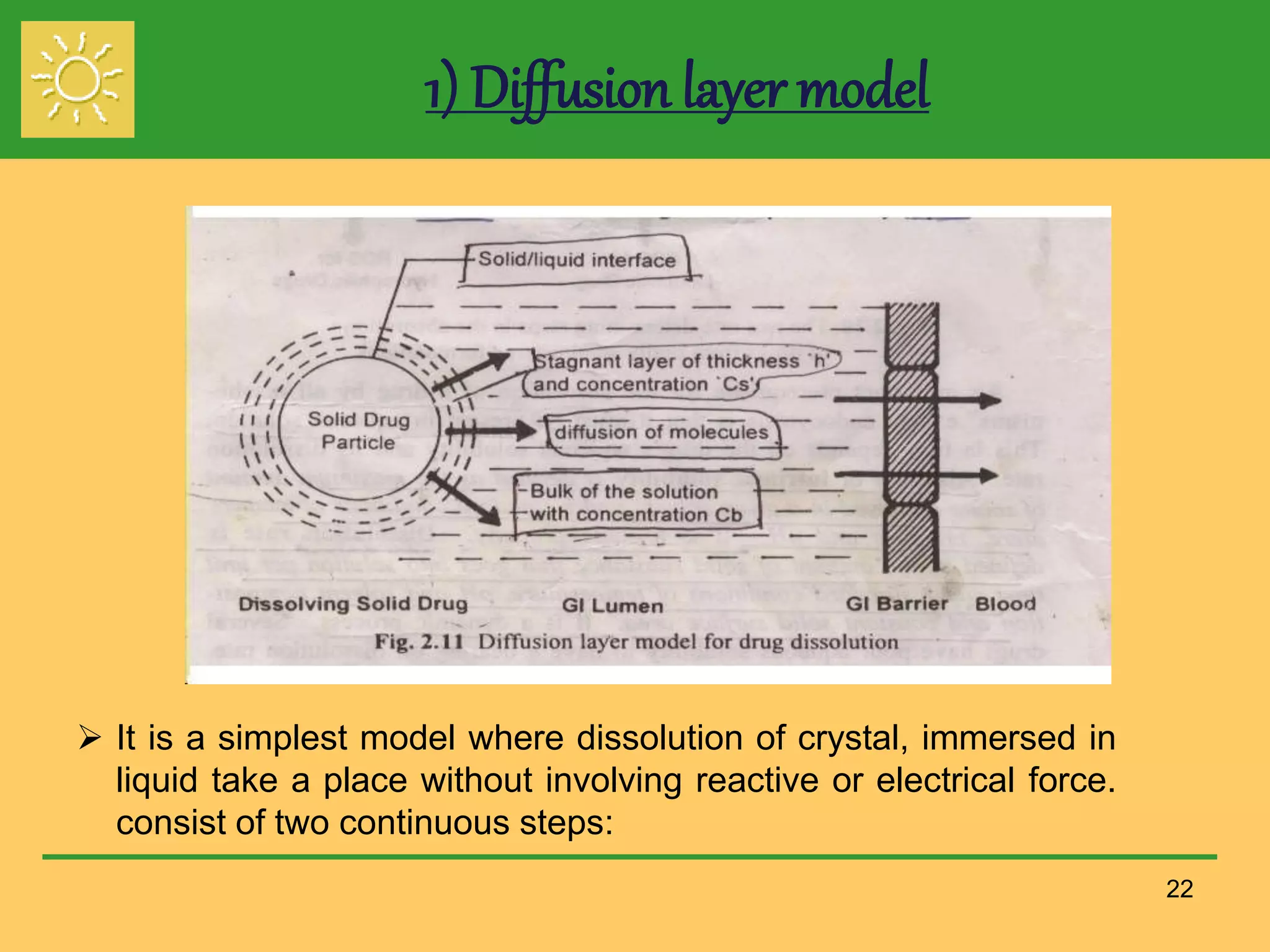
1) Diffusion layer model
22
 It is a simplest model where dissolution of crystal, immersed in
liquid take a place without involving reactive or electrical force.
consist of two continuous steps:
23
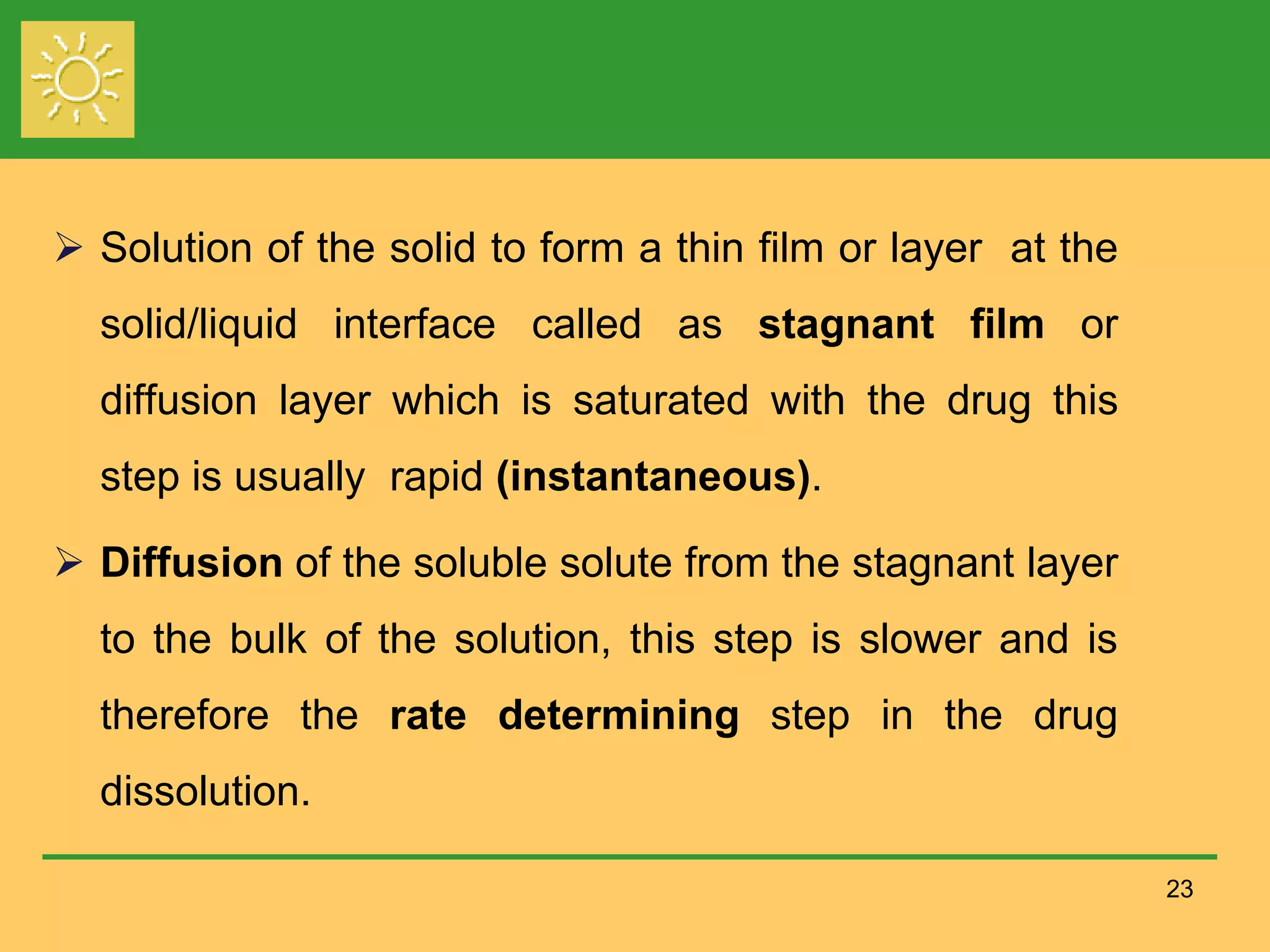
 Solution of the solid to form a thin film or layer at the
solid/liquid interface called as stagnant film or
diffusion layer which is saturated with the drug this
step is usually rapid (instantaneous).
 Diffusion of the soluble solute from the stagnant layer
to the bulk of the solution, this step is slower and is
therefore the rate determining step in the drug
dissolution.
24
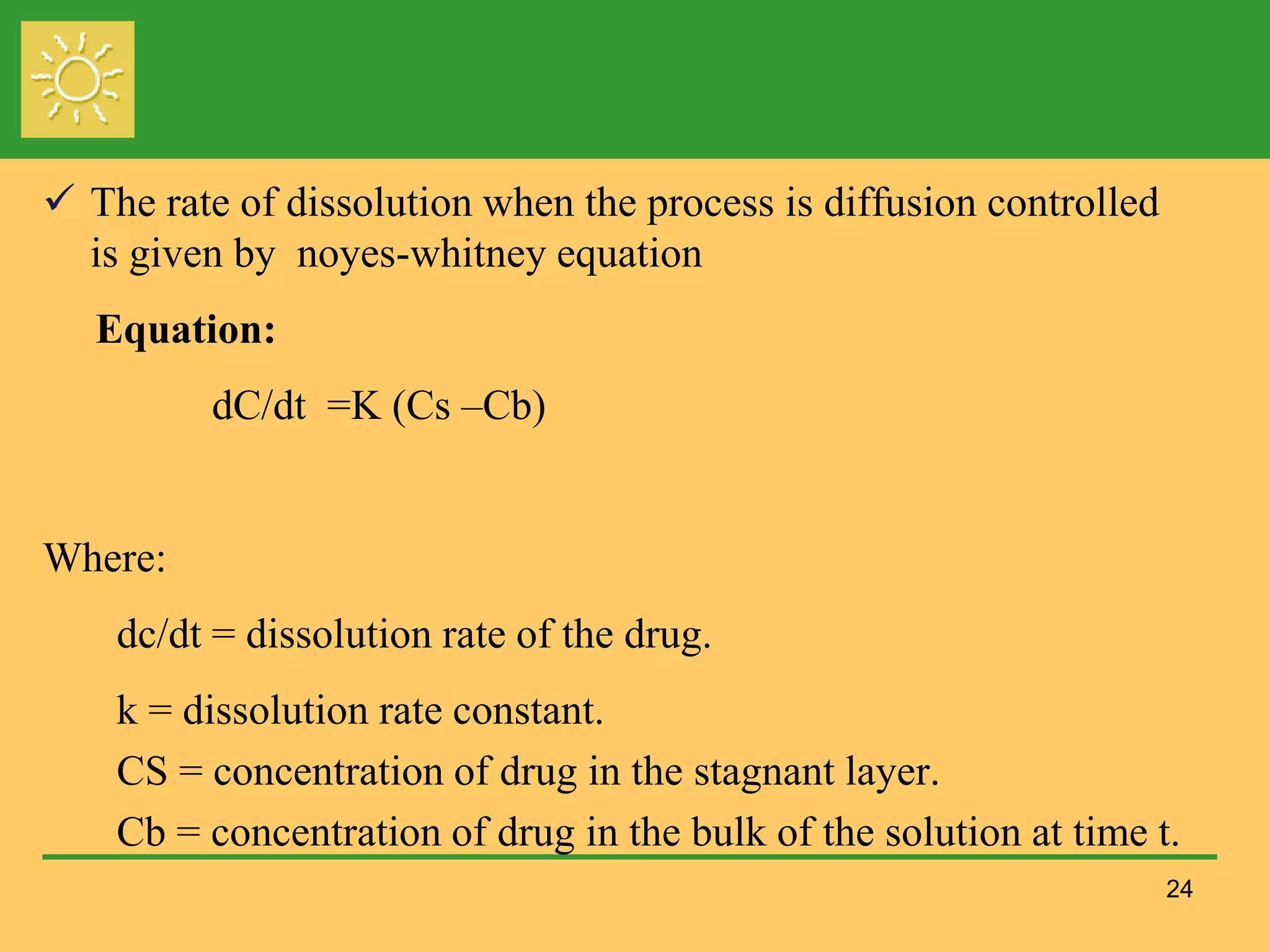
 The rate of dissolution when the process is diffusion controlled
is given by noyes-whitney equation
Equation:
dC/dt =K (Cs –Cb)
Where:
dc/dt = dissolution rate of the drug.
k = dissolution rate constant.
CS = concentration of drug in the stagnant layer.
Cb = concentration of drug in the bulk of the solution at time t.
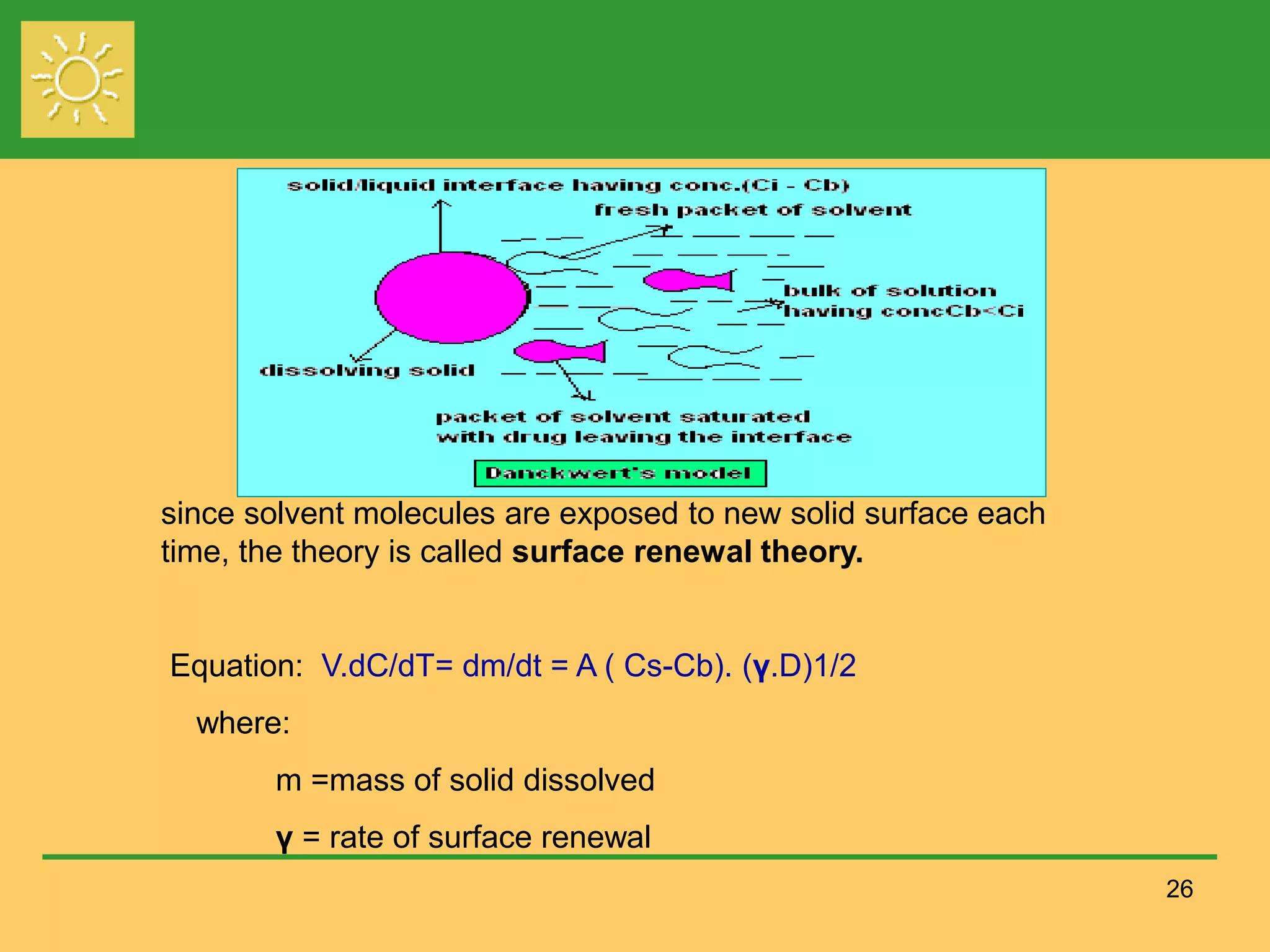
2) Danckwert’s model/penetration or surface renewal theory
 Did not approve the existence of stagnant layer as said
by diffusion layer theory
 Said that turbulence existed in dissolution medium near
solid –liquid interface. Due to agitation, mass of eddies
or packets reach the solid –liquid interface and absorb
the solute and carry to bulk of solution.
25
26
since solvent molecules are exposed to new solid surface each
time, the theory is called surface renewal theory.
Equation: V.dC/dT= dm/dt = A ( Cs-Cb). (γ.D)1/2
where:
m =mass of solid dissolved
γ = rate of surface renewal
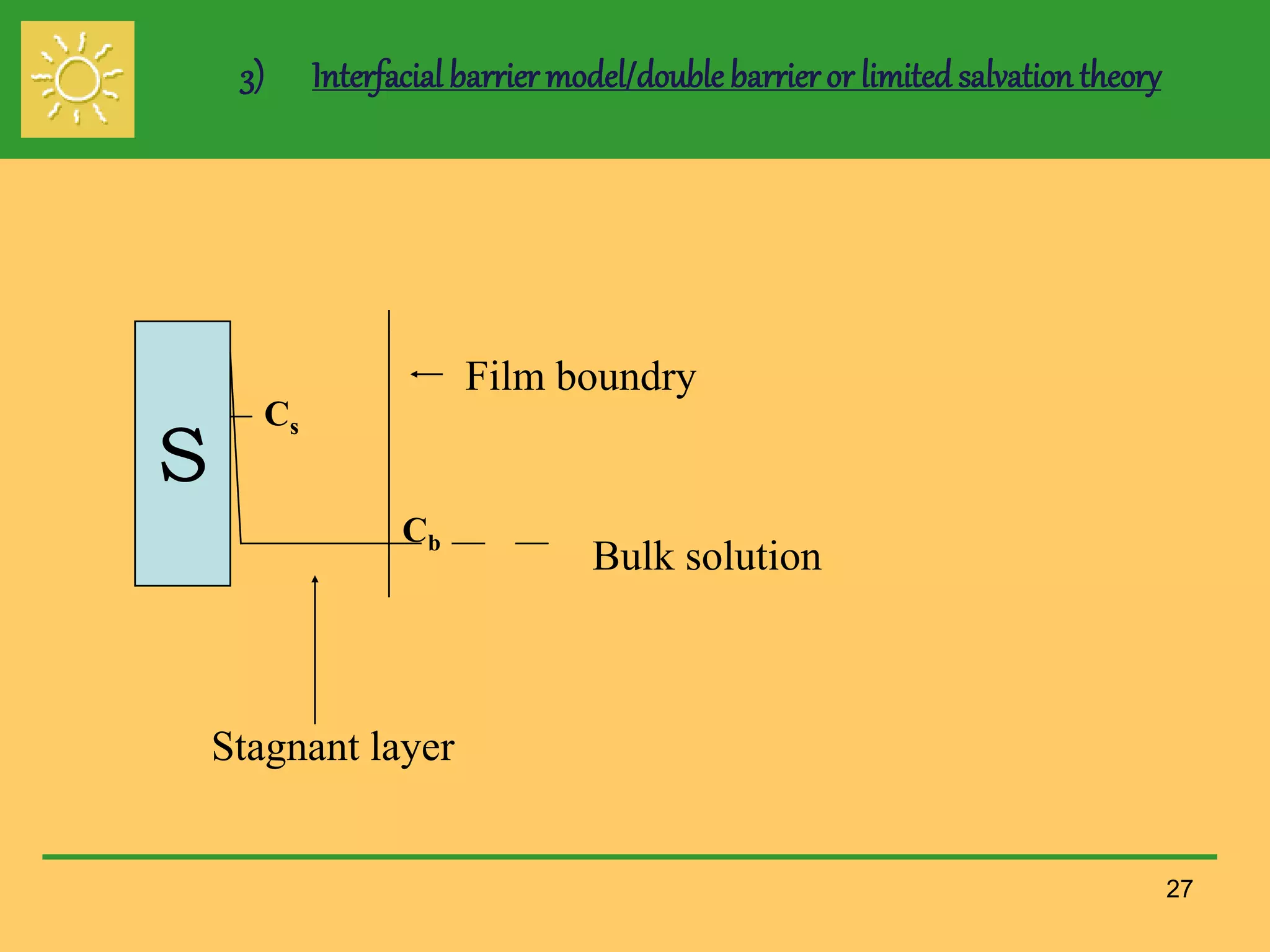
3) Interfacial barrier model/double barrieror limited salvation theory
27
S
Film boundry
Bulk solution
Cs
Cb
Stagnant layer
28
 According to the interfacial barrier model, an intermediate concentration
can exist at the interface as a result of solvation mechanism and is a
function of solubility rather than diffusion.
 When considering the dissolution of crystal, each face of crystal will have
a different interfacial barrier.
 Such a concept is given by the following equation:
G= Ki (Cs-Cb)
Where,G = dissolution rate per unit area,
Ki = effective interfacial transport constant.
Dissolution Apparatus
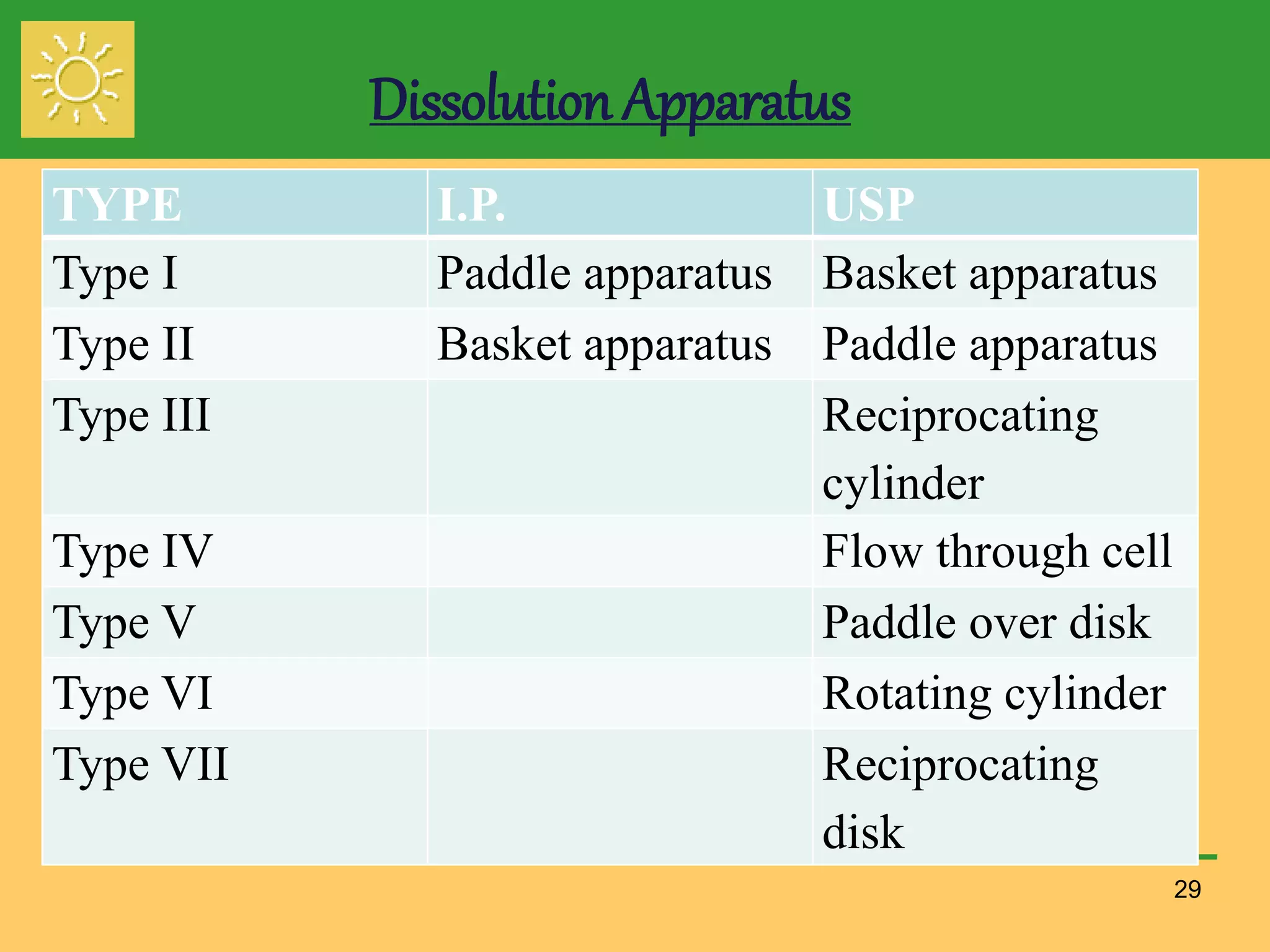
TYPE I.P. USP
Type I Paddle apparatus Basket apparatus
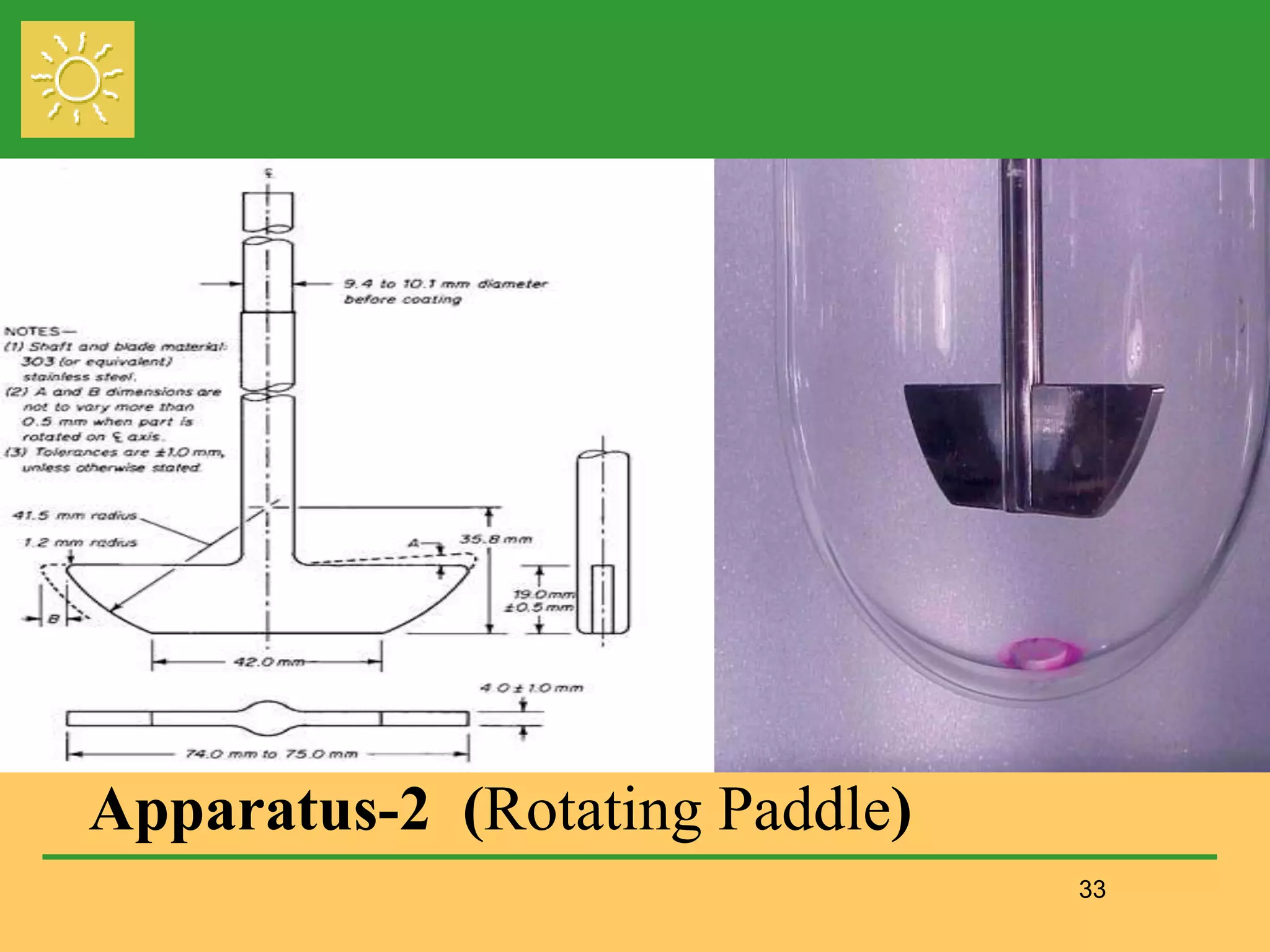
Type II Basket apparatus Paddle apparatus
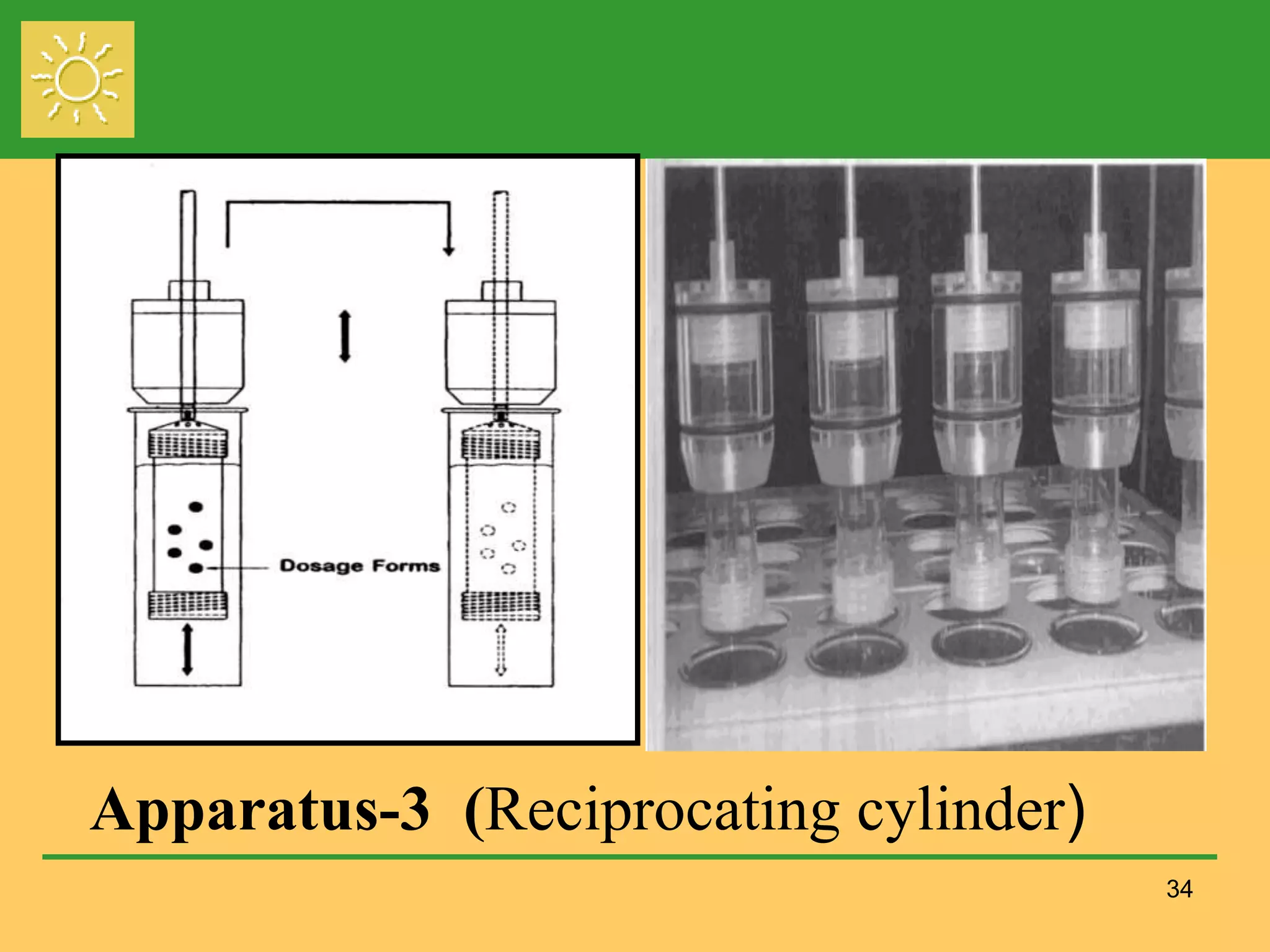
Type III Reciprocating
cylinder
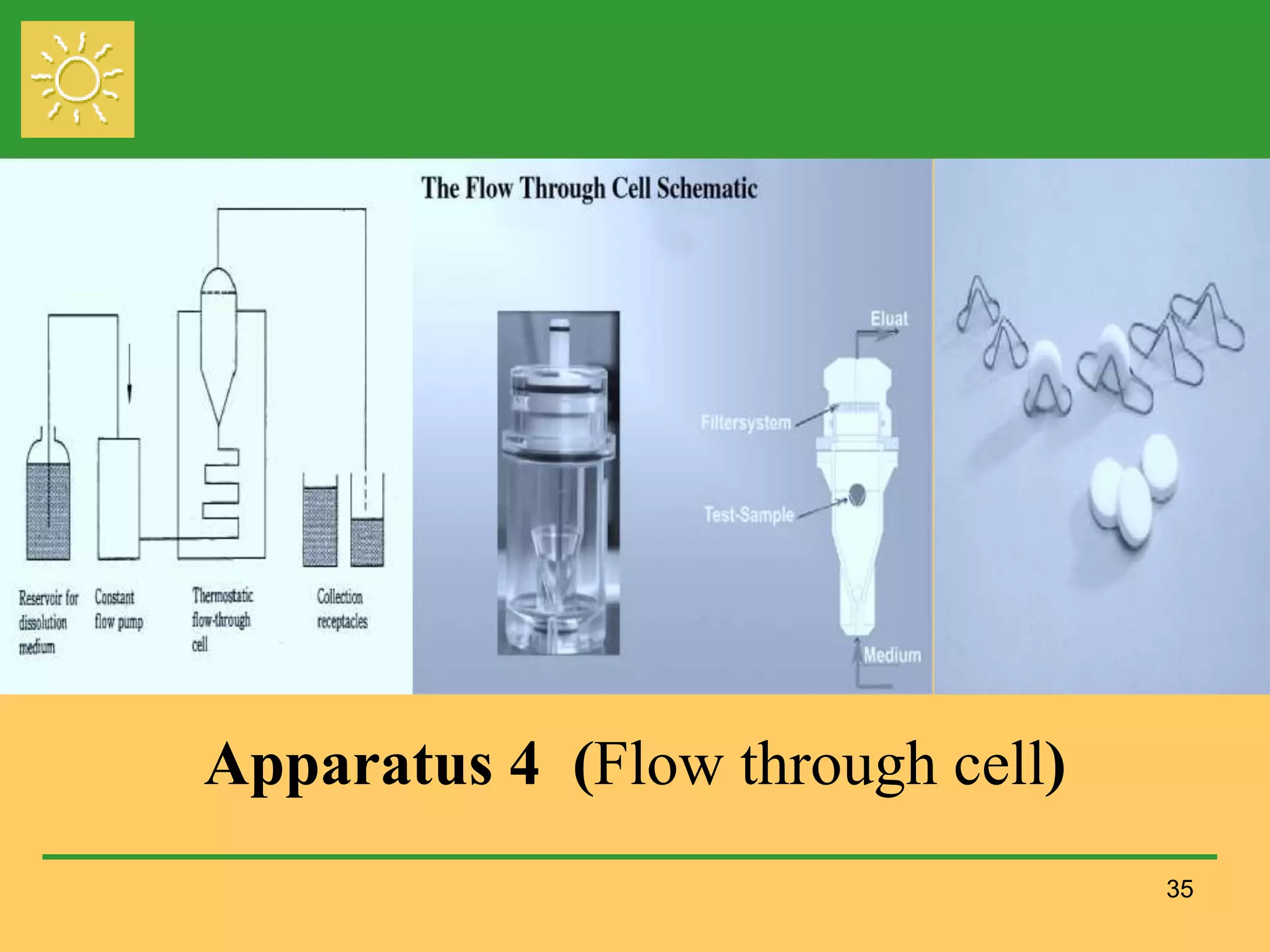
Type IV Flow through cell
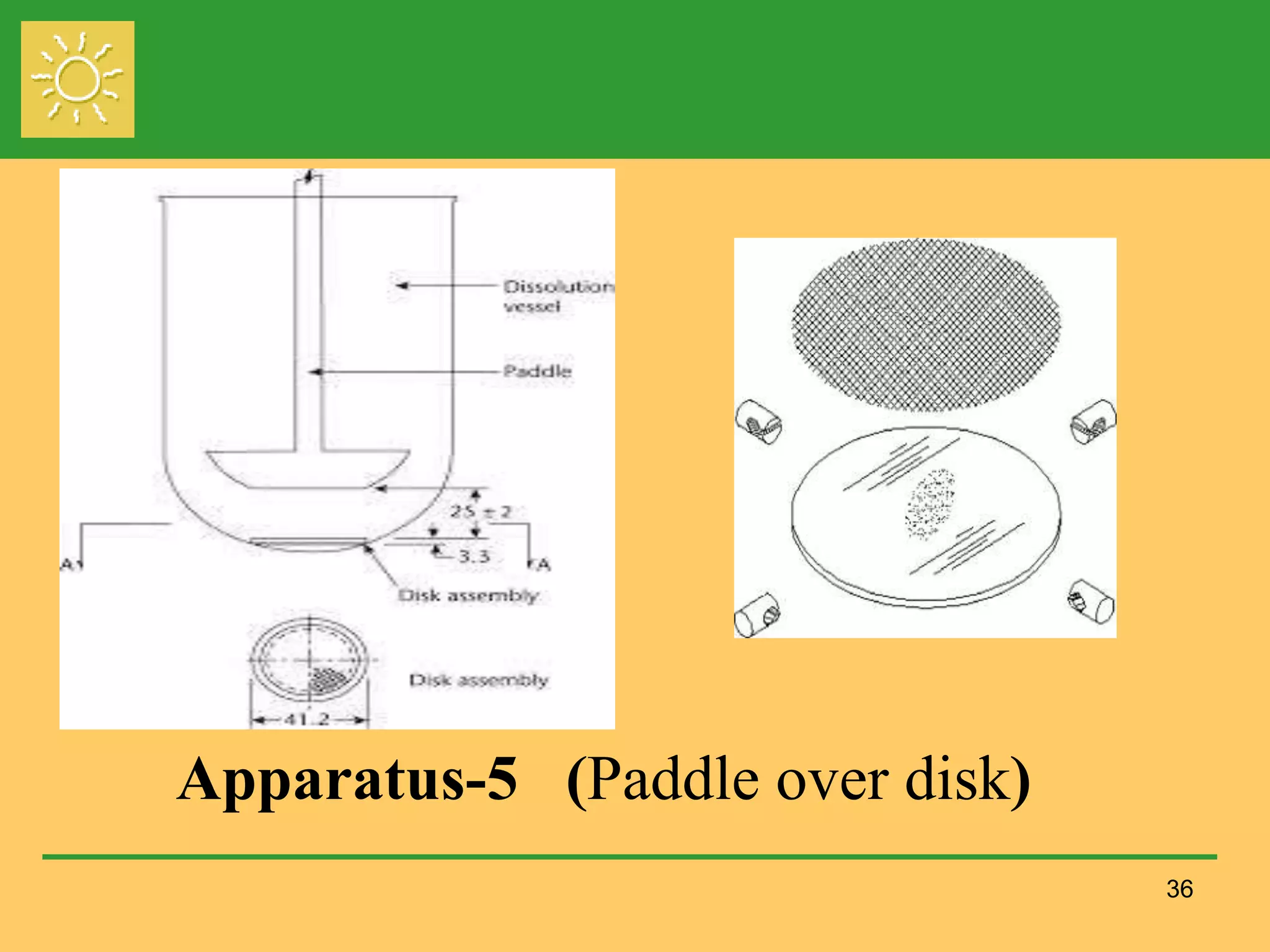
Type V Paddle over disk
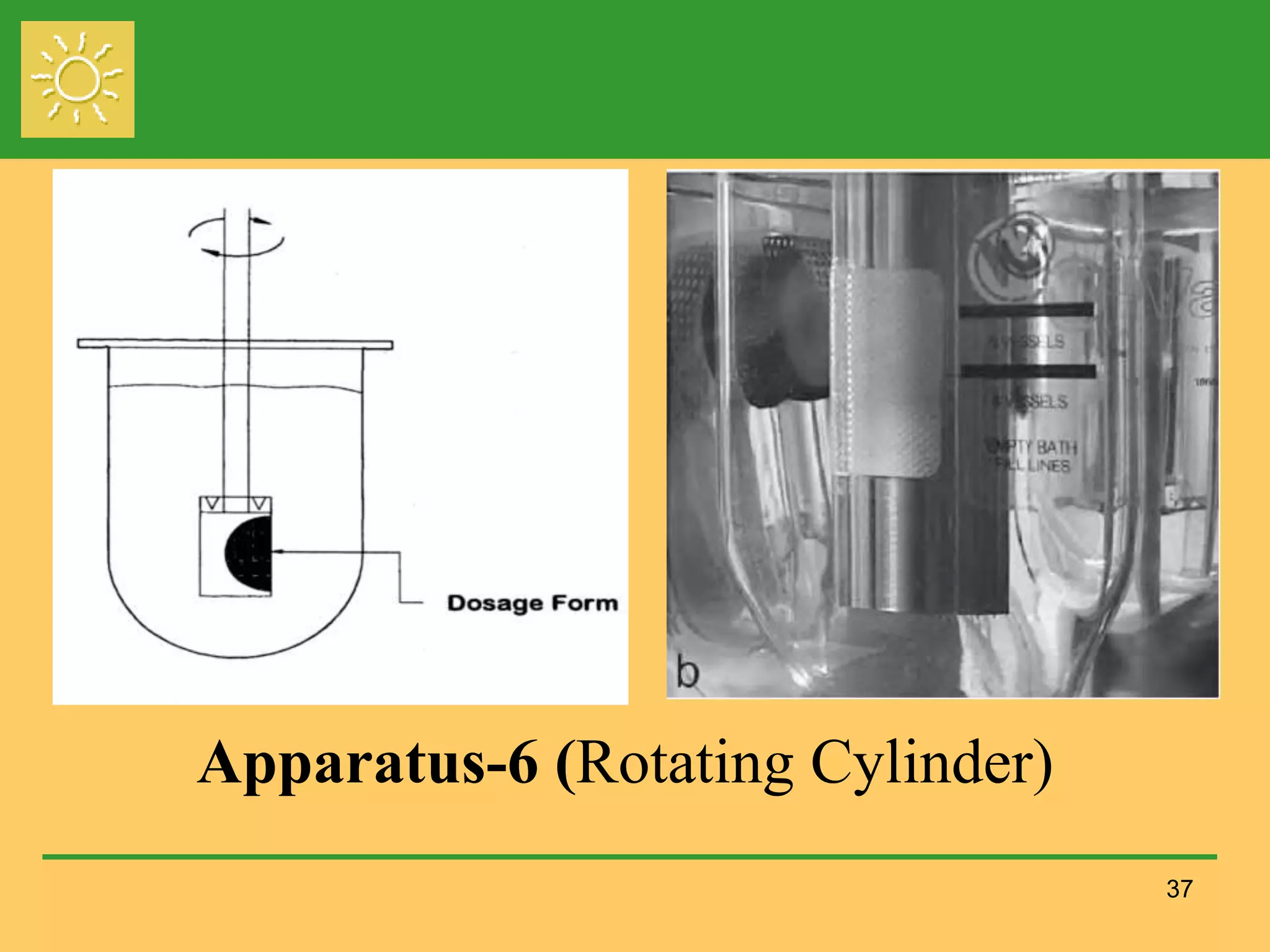
Type VI Rotating cylinder
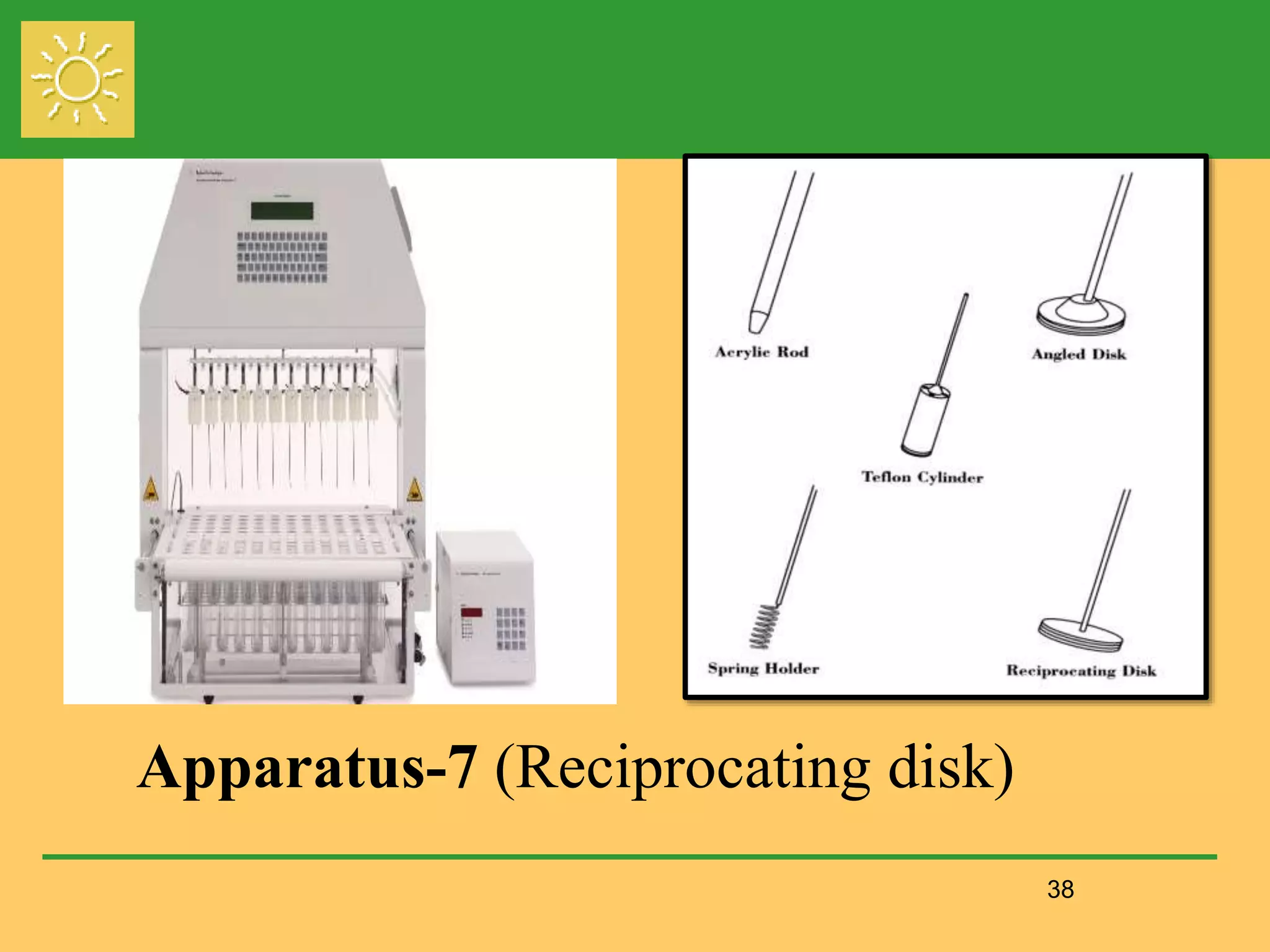
Type VII Reciprocating
disk
29
APPARATUS AND DOSAGE FORMS
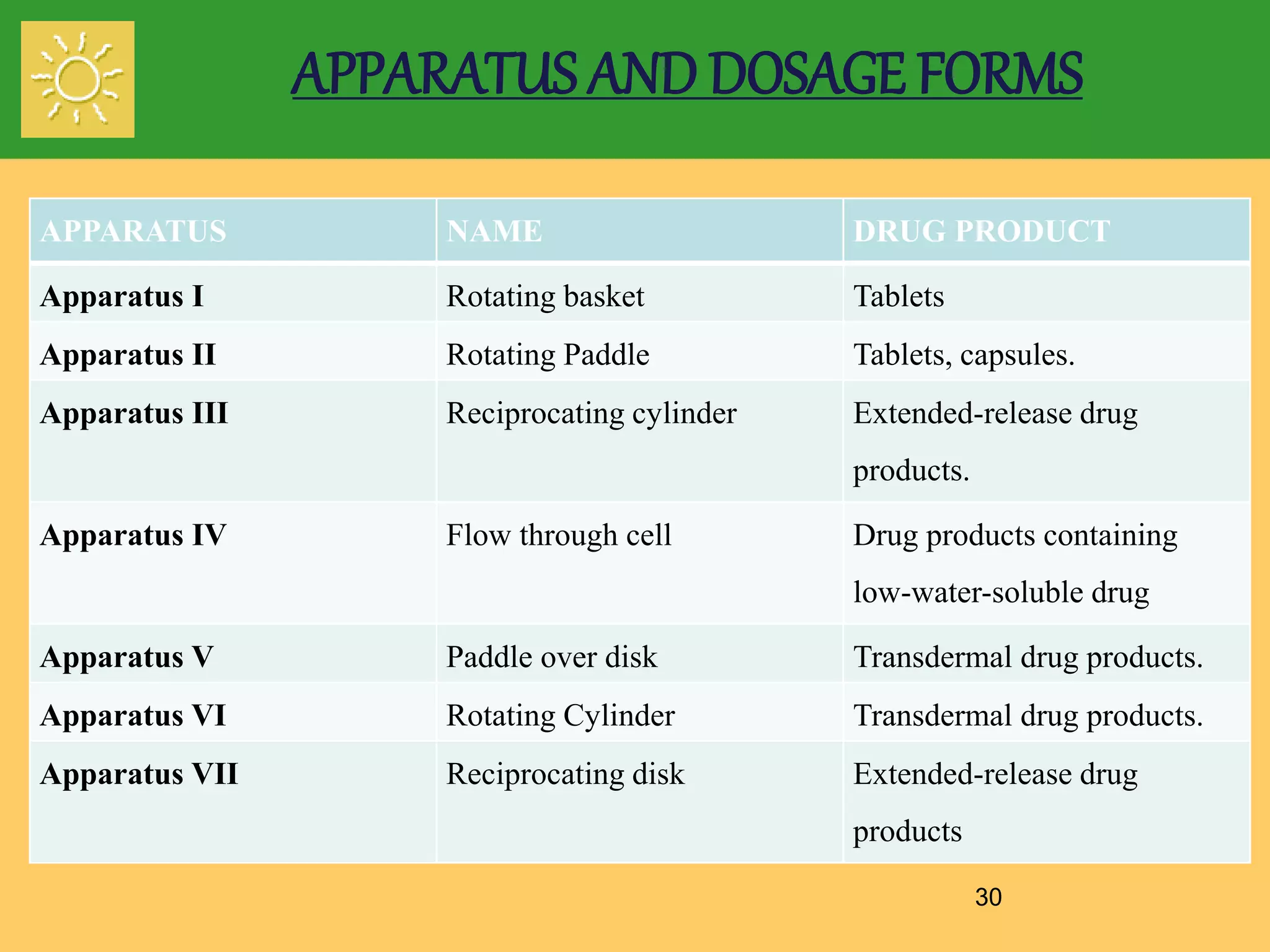
APPARATUS NAME DRUG PRODUCT
Apparatus I Rotating basket Tablets
Apparatus II Rotating Paddle Tablets, capsules.
Apparatus III Reciprocating cylinder Extended-release drug
products.
Apparatus IV Flow through cell Drug products containing
low-water-soluble drug
Apparatus V Paddle over disk Transdermal drug products.
Apparatus VI Rotating Cylinder Transdermal drug products.
Apparatus VII Reciprocating disk Extended-release drug
products
30
31
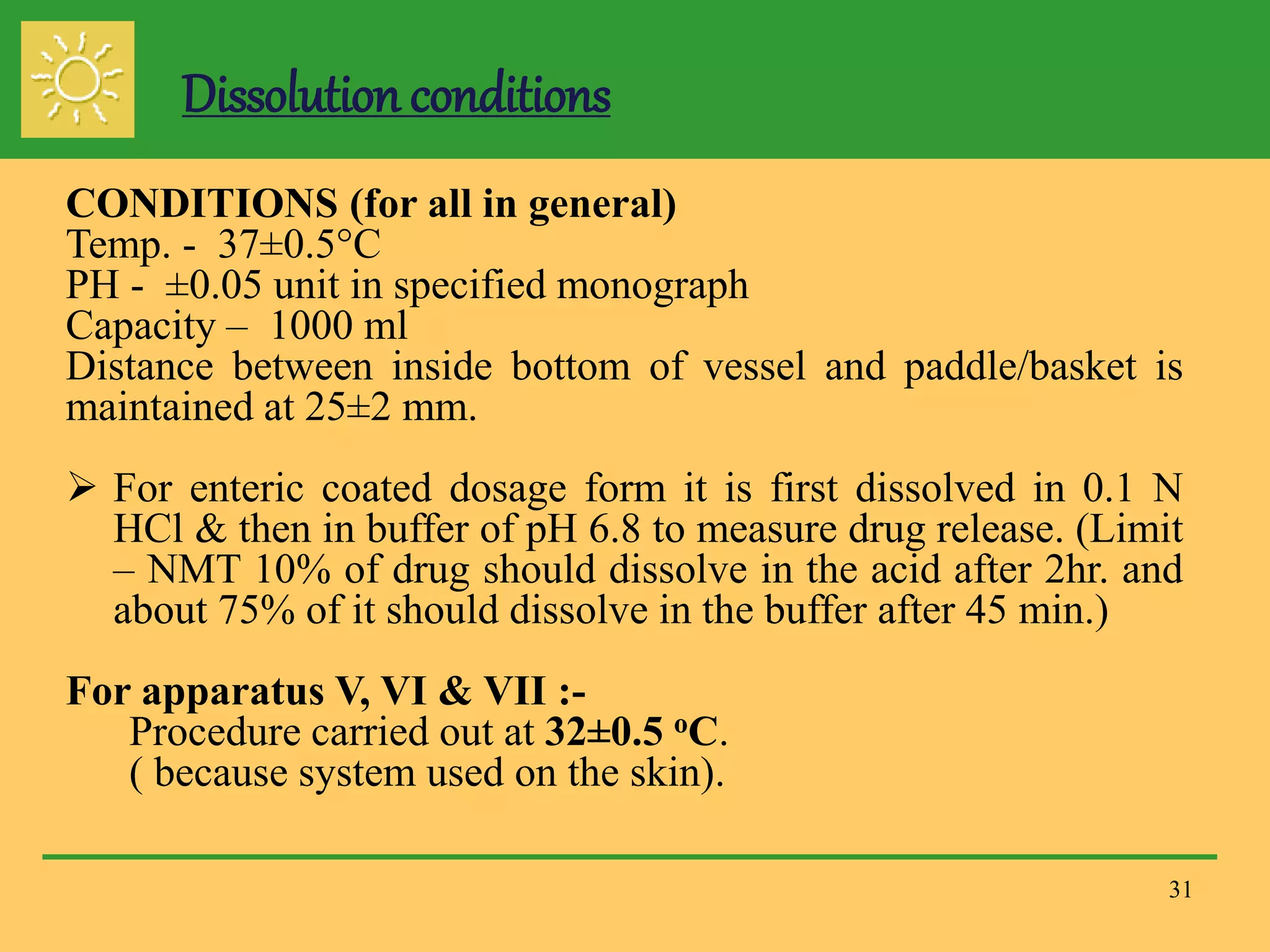
CONDITIONS (for all in general)
Temp. - 37±0.5°C
PH - ±0.05 unit in specified monograph
Capacity – 1000 ml
Distance between inside bottom of vessel and paddle/basket is
maintained at 25±2 mm.
 For enteric coated dosage form it is first dissolved in 0.1 N
HCl & then in buffer of pH 6.8 to measure drug release. (Limit
– NMT 10% of drug should dissolve in the acid after 2hr. and
about 75% of it should dissolve in the buffer after 45 min.)
For apparatus V, VI & VII :-
Procedure carried out at 32±0.5 oC.
( because system used on the skin).
Dissolution conditions
32
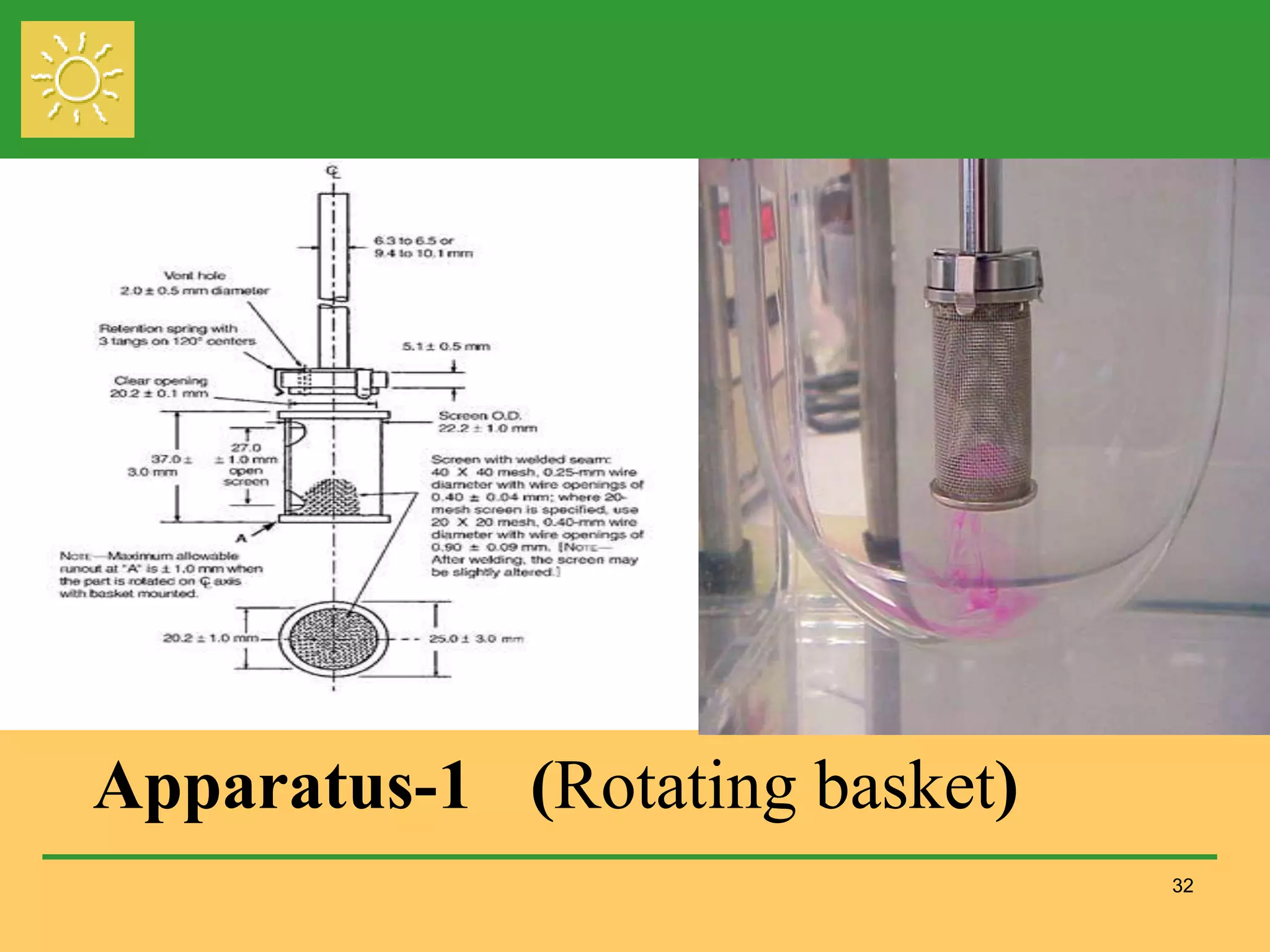
Apparatus-1 (Rotating basket)
Apparatus-2 (Rotating Paddle)
33
Apparatus-3 (Reciprocating cylinder)
34
Apparatus 4 (Flow through cell)
35
Apparatus-5 (Paddle over disk)
36
Apparatus-6 (Rotating Cylinder)
37
Apparatus-7 (Reciprocating disk)
38
39
• Describe the dissolution apparatus for buccal tablets and
transdermal patches.(Summer 2013)
• Describe the equipment related factors affecting results
of dissolution testing.(Winter 2013)
• Give the details of diffusion layer model with respect to
theories of dissolution.(Summer 2013)
• Discuss objectives of dissolution study and dissolution
equipment for floating tablets.(Summer 2015, Winter
2015)
STUDY QUESTIONS
REFERENCE
40
 Remington, The Science and practice of Pharmacy, 21st Edition, Volume-1,
672-688.
 Dissolution, Bioavailability & Bioequivalence by M. Abdou.
Generic Drug Product Development, vol-143 by Shargel.
Current concepts in pharmaceutical sciences & biopharmaceutics by James
Swarbrick.
USP 29 general chapter <721>
 Leon lachman, Herbert A. lieberman , The theory practice of industrial
pharmacy, 3rd Edition, 189-190,301-303.
 Indian Pharmacopeia,2010 volume-1 page- 189-192
 D.M.Brahmankar, Biopharmaceutics & Pharmacokinetics , Vallabh :2004,
20-29.
 James swabrick, Encyclopedia of pharmaceutical technology , 3rd Edition,
909-930.
 www.sciencedirect.com
 www.dissolutiontech.com
41

Sagar Goda dissolution studies

  • 1.
    Presented by: SAGAR Y.GODA M.Pharm - I Roll no: 03 EN NO: 162120808005 Guided by: Dr. RAMESH D.PARMAR .K. MODY GOVERNMENT PHARMACY COLLEGE, RAJKOT. 1
  • 2.
    CONTENT  DEFINITION  IMPORTANCEAND APPLICATION  FACTORS AFFECTING DISSOLUTION RATE 1) Physicochemical properties of drug 2) Drug product formulation factors 3) Processing factors 4) Factors relating dissolution apparatus 5) Factors relating dissolution test parameters  THEORIES OF DISSOLUTION  DISSOLUTION APPARATUS  QUESTION BANK  REFERENCES 2
  • 3.
    DEFINITION Dissolution:  Dissolution isdefined as a process in which a solid substance solubilizes in a given solvent i.e. mass transfer from solid surface to the liquid phase. Dissolution rate:  Dissolution rate is defined as the amount of solute dissolved in a given solvent under standard conditions of temperature, pH, solvent composition and constant solid surface area. 3
  • 4.
  • 5.
    IMPORTANCE ANDAPPLICATION IMPORTANCE  Selectionof best formulation & comparison of excipient effect on dosage form.  Dissolution testing evaluated critical parameter such as • Predict adequate bioavailability • Provide information to formulator in development of more efficacious & therapeutically optimal dosage form. 5
  • 6.
     Most sensitiveand reliable predictor of in-vivo availability.  Dissolution analysis of pharmaceutical dosage forms has emerged as single most important test that will ensure quality of product.  It can ensure bioavailability of product between batches that meet dissolution criteria.  Ensure batch-to-batch quality equivalence both in- vitro and in-vivo , but also to screen formulation to arrive at optimally effective products. 6
  • 7.
    APPLICATION  To formulatedrug dosage forms and to develop quality control specifications for it’s manufacturing process.  To identify the manufacturing variable, like the binding agent effect, mixing effects, granulation procedure, coating parameters and comparison profile.  To simulate food effect on bioavailability. 7
  • 8.
    Factors affecting dissolutionrate Physicochemical Properties of Drug Drug Product Formulation Factors Processing Factors Factors Relating Dissolution Apparatus Factors Relating Dissolution Test Parameters 8
  • 9.
    Physicochemical Properties OfDrug  Drug solubility  Minimum aqueous solubility of 1% is required to avoid potential solubility limited absorption problems.  Compounds with high solubilities exhibit significantly higher dissolution rates.  Salt formation  It is one of the common approaches used to increase drug solubility and dissolution rate. 9
  • 10.
    Physicochemical Properties OfDrug  Particle size There is a direct relationship between surface area of drug and its dissolution rate. Hydrophobic drugs like phenacetin, aspirin shows decrease in dissolution rate on micronization.  Solid state characteristics Solid phase characteristics of drug, such as amorphicity, crystallinity, state of hydration and polymorphic structures have significant influence on dissolution rate. 10
  • 11.
    Drug product formulationfactors  Diluents  The dissolution rate is not only affected by nature of the diluent but also affected by excipient dilution (drug/excipient ratio).  Disintegrants  Disintegrants added before & after the granulation affect the dissolution rate.  Dissolution rate of disintegrants with moderate swelling capacity depend to a large extent on mixing time of drug/excipient preblended with lubricant. 11
  • 12.
    Drug product formulationfactors  Binders and granulating agents  Phenobarbital tablet granulated with gelatin solution provide a faster dissolution rate in human gastric juice than those prepared using Na – carboxymethyl cellulose or polyethylene glycol 6000 as binder. 12
  • 13.
    Drug product formulationfactors  Lubricants  Both amount and method of addition affect the property. It should be added in small amount (1% or less) and should be tumbled or mixed gently for only very short time. Prolonged mixing decrease the dissolution time. 13
  • 14.
    Drug product formulationfactors  Surfactants  They enhance the dissolution rate of poorly soluble drug  Dyes  Dissolution rate of single crystal of sulphathiazole was found to decrease significantly in presence of FD&C Blue No.1  Coating polymers  Tablets with MC coating were found to exhibit lower dissolution profiles than those with HPMC at 37°C. 14
  • 15.
    Processing factors  Methodof granulation  Granulation process in general enhances dissolution rate of poorly soluble drug.  A newer technology called as APOC “Agglomerative Phase of Comminution” was found to produce mechanically stronger tablets with higher dissolution rates than those made by wet granulation  Drug excipient interaction  Polysorbate-80 used as excipient in capsules causes formation of formaldehyde by autooxidation which causes film formation by denaturing the inner surface of capsule. This causes decrease in dissolution rate of capsules. 15
  • 16.
    Processing factors  Compressionforce  First condition, higher compression force tighter bonding between the particle so decrease dissolution rate of tablet.  Second condition, higher compression force cause deformation, crushing or fracture of drug particles into smaller ones with a large increase in the effective surface area so increase in dissolution rate. Condition 1 Condition 2 16
  • 17.
    Processing factors  Storageconditions  Hydrochlorthiazide tablets granulated with Acacia- ↓ in dissolution rate after 1 yr storage at R.T. or after 14 days at elevated temp. Factors relating dissolution apparatus  Agitation  In general relatively low agitation should be applied in order to prevent turbulence and sustain a reproducible laminar flow, which is essential for obtaining reliable results.  Basket method- 100 rpm  Paddle method- 50-75 rpm 17
  • 18.
    Factors relating dissolutionapparatus  Stirring element  The USP / NF XV states that the axis of the stirring element must not deviate more than 0.2 mm from the axis of the dissolution vessel.  Significant increase in dissolution rate up to 13% occurs if shaft is offset 2-6 mm from the center axis of the flask.  Sampling probe position and filter USP / NF states that sample should be removed at approximately half the distance from the basket or paddle to the dissolution medium and not closer than 1 cm to the side of the flask. Filter material must be saturated with the drug by repeated passage to avoid losses that might go undetected during the test sampling. 18
  • 19.
    Factors relating dissolutiontest parameters  Temperature  A temp. of 37º ± 0.5 is needed for oral dosage forms and suppositories  Temp. as low as 30º and 25º is required for topical preparations.  Dissolution medium  Volume of dissolution medium and sink conditions The conc. of drug should not exceed 10-15% of its max. solubility in dissolution medium selected. For some insoluble drug different approaches have been tried like: 19
  • 20.
    Factors relating dissolutiontest parameters 1.Continuous flow method 2.Use of non ionic surfactants in conc. Above CMC. 3.Use of alcoholic solution(10-30%)  Deaeration of dissolution medium Dissolved air in distilled water could significantly lower its pH.  Effect of pH Weak acids, dissolution rate increases with increase in pH. whereas for weak bases, increases with decrease in pH. 20
  • 21.
    Theories Of Dissolution 1)Diffusion Layer Model/ Film Theory 2) Danckwert’s Model/ Penetration Or Surface Renewal Theory 3) Interfacial Barrier Model/Double Barrier Or Limited Solvation Theory 21
  • 22.
    1) Diffusion layermodel 22  It is a simplest model where dissolution of crystal, immersed in liquid take a place without involving reactive or electrical force. consist of two continuous steps:
  • 23.
    23  Solution ofthe solid to form a thin film or layer at the solid/liquid interface called as stagnant film or diffusion layer which is saturated with the drug this step is usually rapid (instantaneous).  Diffusion of the soluble solute from the stagnant layer to the bulk of the solution, this step is slower and is therefore the rate determining step in the drug dissolution.
  • 24.
    24  The rateof dissolution when the process is diffusion controlled is given by noyes-whitney equation Equation: dC/dt =K (Cs –Cb) Where: dc/dt = dissolution rate of the drug. k = dissolution rate constant. CS = concentration of drug in the stagnant layer. Cb = concentration of drug in the bulk of the solution at time t.
  • 25.
    2) Danckwert’s model/penetrationor surface renewal theory  Did not approve the existence of stagnant layer as said by diffusion layer theory  Said that turbulence existed in dissolution medium near solid –liquid interface. Due to agitation, mass of eddies or packets reach the solid –liquid interface and absorb the solute and carry to bulk of solution. 25
  • 26.
    26 since solvent moleculesare exposed to new solid surface each time, the theory is called surface renewal theory. Equation: V.dC/dT= dm/dt = A ( Cs-Cb). (γ.D)1/2 where: m =mass of solid dissolved γ = rate of surface renewal
  • 27.
    3) Interfacial barriermodel/double barrieror limited salvation theory 27 S Film boundry Bulk solution Cs Cb Stagnant layer
  • 28.
    28  According tothe interfacial barrier model, an intermediate concentration can exist at the interface as a result of solvation mechanism and is a function of solubility rather than diffusion.  When considering the dissolution of crystal, each face of crystal will have a different interfacial barrier.  Such a concept is given by the following equation: G= Ki (Cs-Cb) Where,G = dissolution rate per unit area, Ki = effective interfacial transport constant.
  • 29.
    Dissolution Apparatus TYPE I.P.USP Type I Paddle apparatus Basket apparatus Type II Basket apparatus Paddle apparatus Type III Reciprocating cylinder Type IV Flow through cell Type V Paddle over disk Type VI Rotating cylinder Type VII Reciprocating disk 29
  • 30.
    APPARATUS AND DOSAGEFORMS APPARATUS NAME DRUG PRODUCT Apparatus I Rotating basket Tablets Apparatus II Rotating Paddle Tablets, capsules. Apparatus III Reciprocating cylinder Extended-release drug products. Apparatus IV Flow through cell Drug products containing low-water-soluble drug Apparatus V Paddle over disk Transdermal drug products. Apparatus VI Rotating Cylinder Transdermal drug products. Apparatus VII Reciprocating disk Extended-release drug products 30
  • 31.
    31 CONDITIONS (for allin general) Temp. - 37±0.5°C PH - ±0.05 unit in specified monograph Capacity – 1000 ml Distance between inside bottom of vessel and paddle/basket is maintained at 25±2 mm.  For enteric coated dosage form it is first dissolved in 0.1 N HCl & then in buffer of pH 6.8 to measure drug release. (Limit – NMT 10% of drug should dissolve in the acid after 2hr. and about 75% of it should dissolve in the buffer after 45 min.) For apparatus V, VI & VII :- Procedure carried out at 32±0.5 oC. ( because system used on the skin). Dissolution conditions
  • 32.
  • 33.
  • 34.
  • 35.
    Apparatus 4 (Flowthrough cell) 35
  • 36.
  • 37.
  • 38.
  • 39.
    39 • Describe thedissolution apparatus for buccal tablets and transdermal patches.(Summer 2013) • Describe the equipment related factors affecting results of dissolution testing.(Winter 2013) • Give the details of diffusion layer model with respect to theories of dissolution.(Summer 2013) • Discuss objectives of dissolution study and dissolution equipment for floating tablets.(Summer 2015, Winter 2015) STUDY QUESTIONS
  • 40.
    REFERENCE 40  Remington, TheScience and practice of Pharmacy, 21st Edition, Volume-1, 672-688.  Dissolution, Bioavailability & Bioequivalence by M. Abdou. Generic Drug Product Development, vol-143 by Shargel. Current concepts in pharmaceutical sciences & biopharmaceutics by James Swarbrick. USP 29 general chapter <721>  Leon lachman, Herbert A. lieberman , The theory practice of industrial pharmacy, 3rd Edition, 189-190,301-303.  Indian Pharmacopeia,2010 volume-1 page- 189-192  D.M.Brahmankar, Biopharmaceutics & Pharmacokinetics , Vallabh :2004, 20-29.  James swabrick, Encyclopedia of pharmaceutical technology , 3rd Edition, 909-930.  www.sciencedirect.com  www.dissolutiontech.com
  • 41.