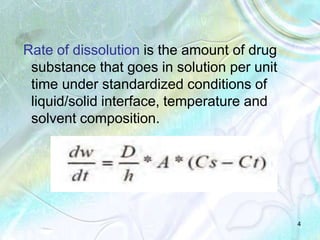
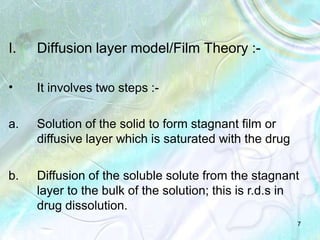
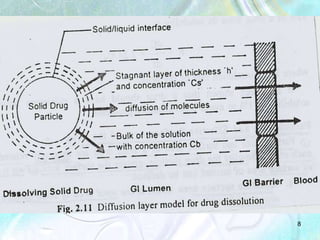
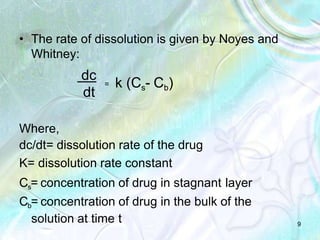
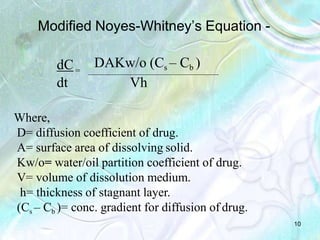
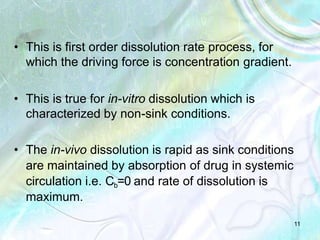
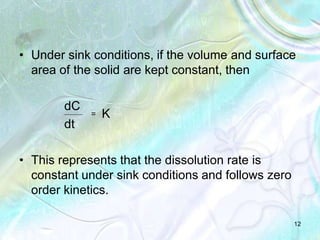
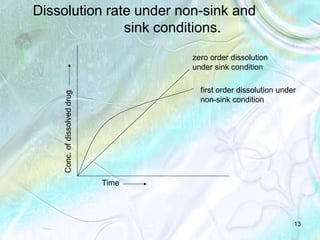
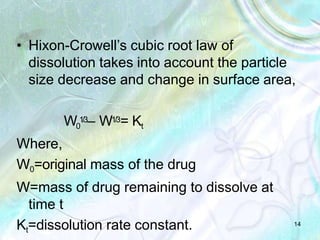
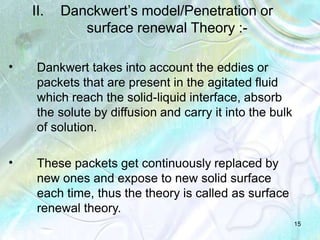
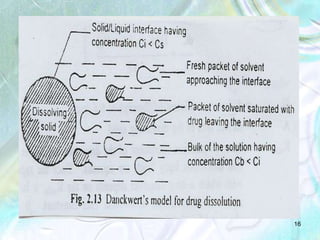
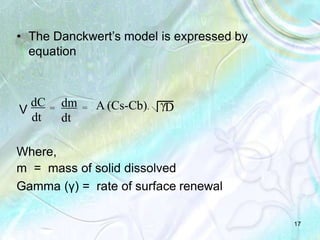
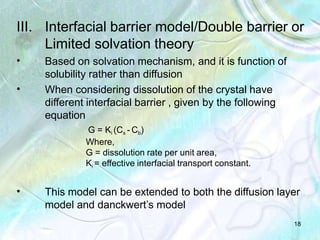
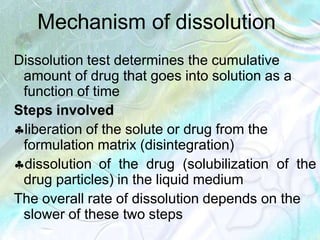
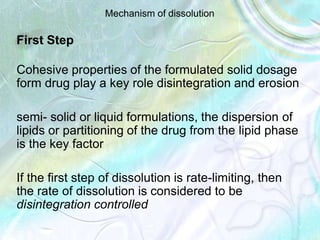
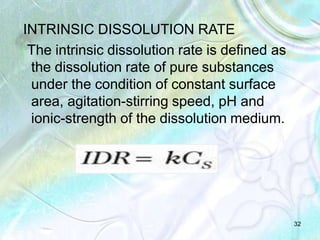
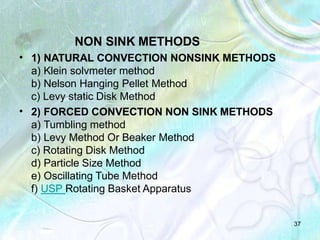
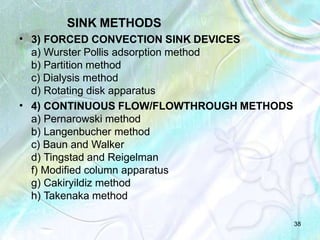
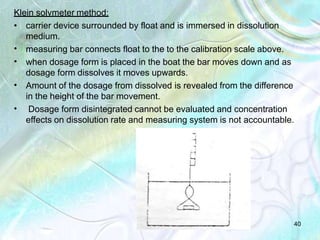
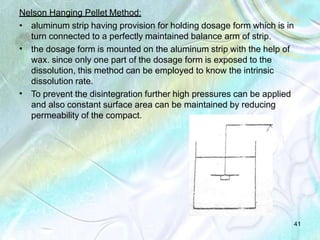
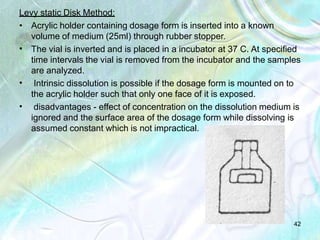
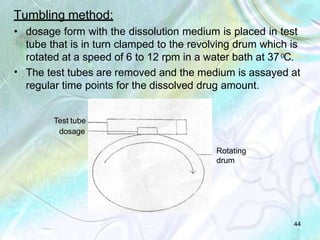
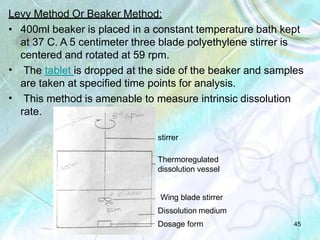
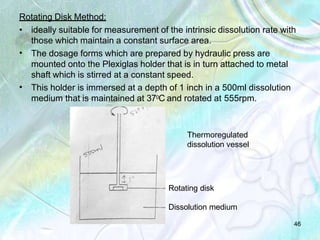
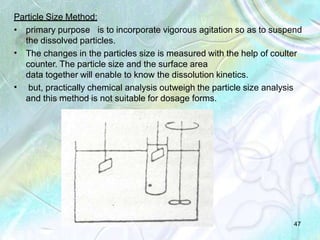
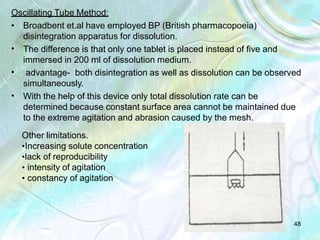
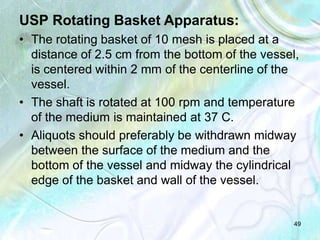
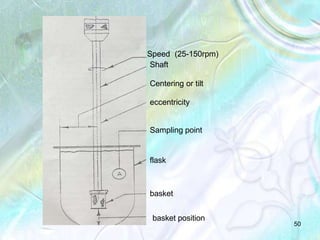
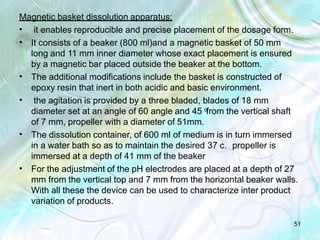
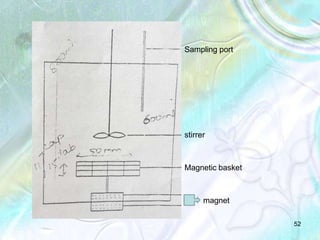
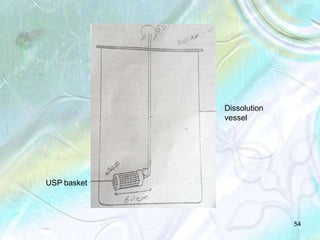
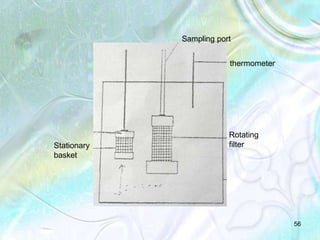
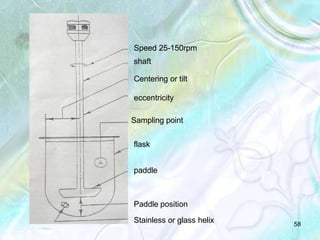
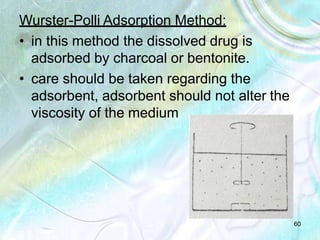
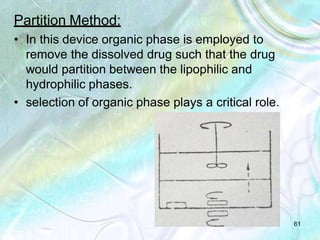
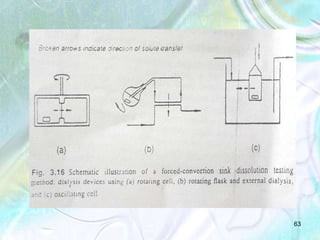
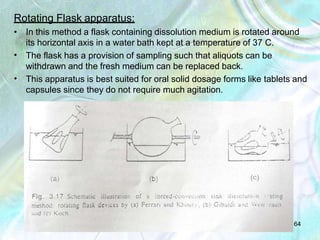
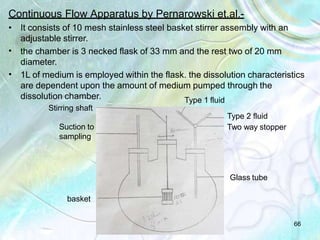
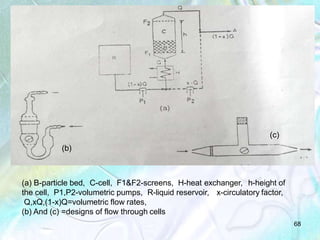
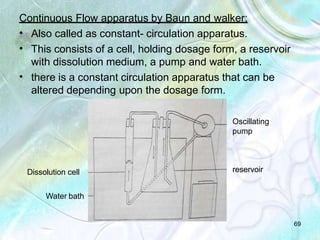
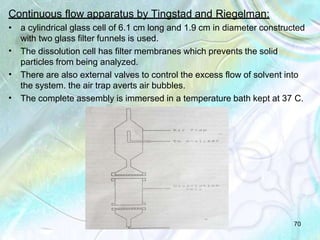
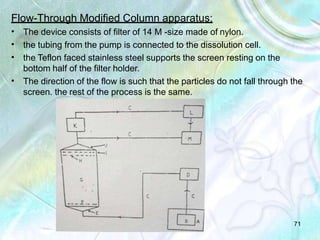
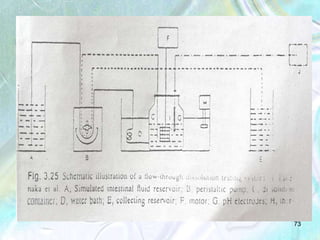


This document discusses drug dissolution, including definitions, theories, mechanisms, factors affecting dissolution, intrinsic dissolution rate, and in-vitro dissolution testing models. It defines dissolution as the process where a solid substance solubilizes in a solvent. The key theories of drug dissolution discussed are the diffusion layer model, Danckwert's model, and the interfacial barrier model. Factors that can impact dissolution include properties of the drug substance, dosage form excipients, test conditions, and more. Intrinsic dissolution rate is defined as the dissolution of pure substances under standardized conditions. Various in-vitro dissolution testing models are also summarized, including non-sink and sink methods.


