Ruminant Animals b.stev
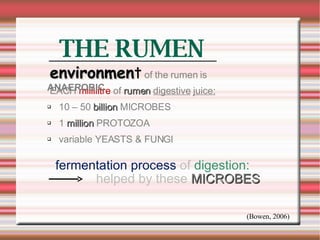
THE RUMEN EACH  millilitre  of  rumen   digestive   juice: 10 – 50  billion  MICROBES 1  million  PROTOZOA variable YEASTS & FUNGI environmen t  of the rumen is  ANAEROBIC fermentation process  of  digestion:   helped by these   MICROBES (Bowen, 2006)
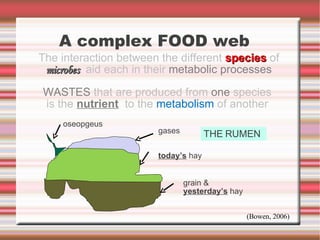
The interaction between the different  species   of   microbes   aid each in their  metabolic processes WASTES  that are produced from  one  species  is the   nutrient   to the  metabolism  of another   A complex FOOD web oseopgeus gases today’s  hay grain & yesterday’s  hay THE RUMEN (Bowen, 2006)
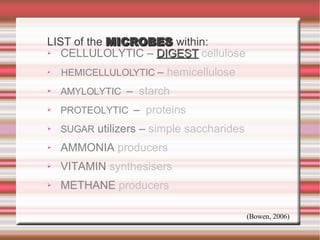
CELLULOLYTIC –  DIGEST   cellulose HEMICELLULOLYTIC  –  hemicellulose AMYLOLYTIC  –  starch PROTEOLYTIC  –  proteins SUGAR   utilizers –  simple saccharides AMMONIA  producers VITAMIN  synthesisers  METHANE  producers LIST of the  MICROBES  within: (Bowen, 2006)
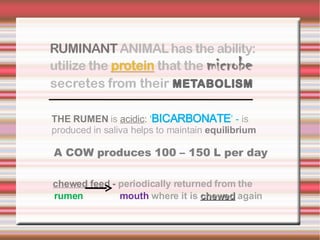
THE RUMEN  is   acidic :  ‘ BICARBONATE ’ -  is produced in saliva helps to maintain   equilibrium A COW produces 100 – 150 L per day chewed   feed  -  periodically returned from the rumen   mouth  where it is  chewed   again
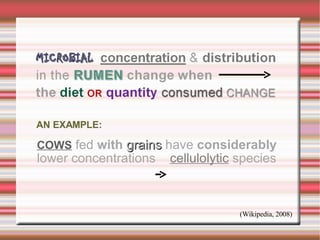
AN EXAMPLE:  COWS   fed  with   grains  have  considerably   lower concentrations   cellulolytic   species (Wikipedia, 2008)
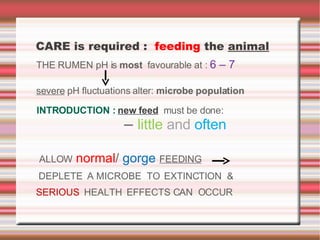
THE RUMEN pH is  most   favourable at :  6 – 7  severe  pH fluctuations alter:  microbe   population INTRODUCTION :  new   feed   must be done: –  little   and   often ALLOW   normal /  gorge   FEEDING   DEPLETE  A MICROBE  TO  EXTINCTION  &  SERIOUS   HEALTH  EFFECTS CAN  OCCUR  CARE is required :  feeding  the  animal
Bibliography Wikipedia. (2008).  Rumen – wikipedia, the free enclyclopedia . Retrieved September 28, 2008, from  en.wikipedia.org/wiki/ Rumen  - 35k - Bowen. R. (2006).  Digestive physiology of herbivores . Retrieved September 28, 2008, from  http://arbl.cvmbs.colostate.edu/hbooks/pathphys/digestion /herbivores/index.html

Ruminant Animals

  • 1.
  • 2.
    THE RUMEN EACH millilitre of rumen digestive juice: 10 – 50 billion MICROBES 1 million PROTOZOA variable YEASTS & FUNGI environmen t of the rumen is ANAEROBIC fermentation process of digestion: helped by these MICROBES (Bowen, 2006)
  • 3.
    The interaction betweenthe different species of microbes aid each in their metabolic processes WASTES that are produced from one species is the nutrient to the metabolism of another A complex FOOD web oseopgeus gases today’s hay grain & yesterday’s hay THE RUMEN (Bowen, 2006)
  • 4.
    CELLULOLYTIC – DIGEST cellulose HEMICELLULOLYTIC – hemicellulose AMYLOLYTIC – starch PROTEOLYTIC – proteins SUGAR utilizers – simple saccharides AMMONIA producers VITAMIN synthesisers METHANE producers LIST of the MICROBES within: (Bowen, 2006)
  • 5.
    THE RUMEN is acidic : ‘ BICARBONATE ’ - is produced in saliva helps to maintain equilibrium A COW produces 100 – 150 L per day chewed feed - periodically returned from the rumen mouth where it is chewed again
  • 6.
    AN EXAMPLE: COWS fed with grains have considerably lower concentrations cellulolytic species (Wikipedia, 2008)
  • 7.
    THE RUMEN pHis most favourable at : 6 – 7 severe pH fluctuations alter: microbe population INTRODUCTION : new feed must be done: – little and often ALLOW normal / gorge FEEDING DEPLETE A MICROBE TO EXTINCTION & SERIOUS HEALTH EFFECTS CAN OCCUR CARE is required : feeding the animal
  • 8.
    Bibliography Wikipedia. (2008). Rumen – wikipedia, the free enclyclopedia . Retrieved September 28, 2008, from en.wikipedia.org/wiki/ Rumen - 35k - Bowen. R. (2006). Digestive physiology of herbivores . Retrieved September 28, 2008, from http://arbl.cvmbs.colostate.edu/hbooks/pathphys/digestion /herbivores/index.html