Rumen microbes
PRESENTED BY
၃ဂုဏ်ဏဇ-၁ HNIN WUT YEE
၃ဂုဏ်ဏဇ-၂ EI YATI AUNG
၃ဂုဏ်ဏဇ-၃ Mhuu Neichi
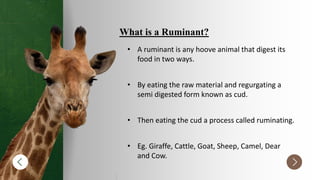
What is a Ruminant?
• A ruminant is any hoove animal that digest its
food in two ways.
• By eating the raw material and regurgating a
semi digested form known as cud.
• Then eating the cud a process called ruminating.
• Eg. Giraffe, Cattle, Goat, Sheep, Camel, Dear
and Cow.
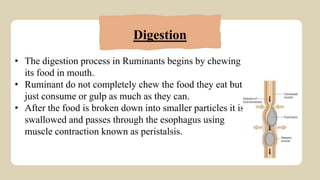
Digestion
• The digestion process in Ruminants begins by chewing
its food in mouth.
• Ruminant do not completely chew the food they eat but
just consume or gulp as much as they can.
• After the food is broken down into smaller particles it is
swallowed and passes through the esophagus using
muscle contraction known as peristalsis.
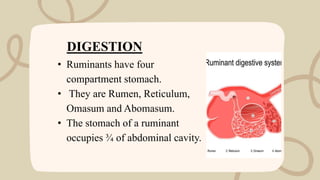
• Ruminants have four
compartment stomach.
• They are Rumen, Reticulum,
Omasum and Abomasum.
• The stomach of a ruminant
occupies ¾ of abdominal cavity.
DIGESTION
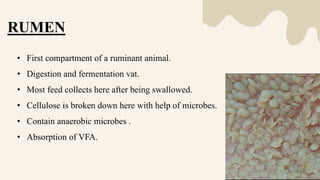
• First compartment of a ruminant animal.
• Digestion and fermentation vat.
• Most feed collects here after being swallowed.
• Cellulose is broken down here with help of microbes.
• Contain anaerobic microbes .
• Absorption of VFA.
RUMEN
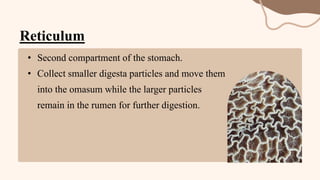
• Second compartment of the stomach.
• Collect smaller digesta particles and move them
into the omasum while the larger particles
remain in the rumen for further digestion.
Reticulum
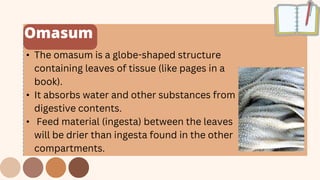
Omasum
• The omasum is a globe-shaped structure
containing leaves of tissue (like pages in a
book).
• It absorbs water and other substances from
digestive contents.
• Feed material (ingesta) between the leaves
will be drier than ingesta found in the other
compartments.
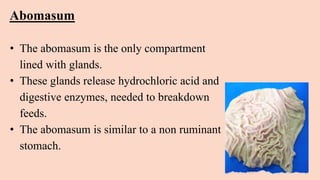
• The abomasum is the only compartment
lined with glands.
• These glands release hydrochloric acid and
digestive enzymes, needed to breakdown
feeds.
• The abomasum is similar to a non ruminant
stomach.
Abomasum
Belching Rumination
• Digestion produces 30 to 50 quarts
of gas per hour in the rumen.
• Carbon dioxide and methane are
the main gases present.
• Cows must release this gas to avoid
bloating.
• Under normal conditions, swelling
from gas formation causes the cow
to belch and release the gas.
• Cows may spend 35 to 40 percent of
each day ruminating (cud chewing).
• The amount of time spent
ruminating depends on the diet.
• Little ruminating occurs when cows
eat grain or finely ground rations.
• But when eating long hay, cows may
ruminate for several hours.
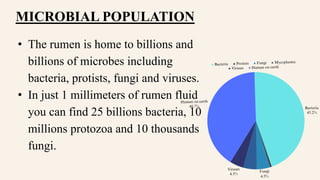
• The rumen is home to billions and
billions of microbes including
bacteria, protists, fungi and viruses.
• In just 1 millimeters of rumen fluid
you can find 25 billions bacteria, 10
millions protozoa and 10 thousands
fungi.
MICROBIAL POPULATION
RUMEN BACTERIA
• MOSTLY ANAEROBIC
• DEGRADE
• Cellulose
• Starch
• Soluble carbohydrates
• Acidophilus
• Protein and
• Other compounds
• Some produce CH 4 ,CO² and H²
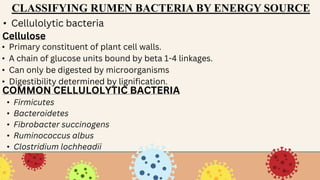
CLASSIFYING RUMEN BACTERIA BY ENERGY SOURCE
• Cellulolytic bacteria
Cellulose
• Primary constituent of plant cell walls.
• A chain of glucose units bound by beta 1-4 linkages.
• Can only be digested by microorganisms
• Digestibility determined by lignification.
COMMON CELLULOLYTIC BACTERIA
• Firmicutes
• Bacteroidetes
• Fibrobacter succinogens
• Ruminococcus albus
• Clostridium lochheadii
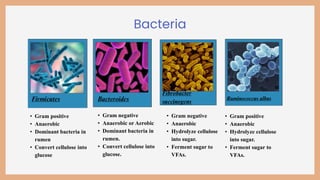
Bacteria
• Gram positive
• Anaerobic
• Dominant bacteria in
rumen
• Convert cellulose into
glucose
Firmicutes
• Gram negative
• Anaerobic or Aerobic
• Dominant bacteria in
rumen.
• Convert cellulose into
glucose.
Bacteroides
Fibrobacter
succinogens
Ruminococcus albus
• Gram negative
• Anaerobic
• Hydrolyze cellulose
into sugar.
• Ferment sugar to
VFAs.
• Gram positive
• Anaerobic
• Hydrolyze cellulose
into sugar.
• Ferment sugar to
VFAs.
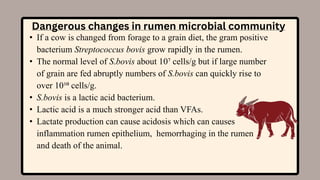
• If a cow is changed from forage to a grain diet, the gram positive
bacterium Streptococcus bovis grow rapidly in the rumen.
• The normal level of S.bovis about 10⁷ cells/g but if large number
of grain are fed abruptly numbers of S.bovis can quickly rise to
over 10¹⁰ cells/g.
• S.bovis is a lactic acid bacterium.
• Lactic acid is a much stronger acid than VFAs.
• Lactate production can cause acidosis which can causes
inflammation rumen epithelium, hemorrhaging in the rumen
and death of the animal.
Dangerous changes in rumen microbial community
Rumen Fungi
Rumen protists
• The rumen also has ciliated protists.
• Many of these protists are obligate anaerobes
and rare among eukaryotes.
• Protists are not essential for rumen fermentation
.
• Some protists are able to hydrolyze cellulose
and starch and ferment glucose with the
production of the same VFAs.
• Rumen protists also consume rumen bacteria
and smaller rumen protists thus play a role in
controlling bacterial density in the rumen.
• Anaerobic fungi also inhabit the
rumen and play a role in its digestive
processes.
• Rumen fungi are flagellated and
thallus form and can ferment
cellulose to VFAs.
• Neocallimastix, for eg. is an obligate
anaerobic fungus that ferments
glucose to formate, acetate, lactate,
ethanol, CO² and H².
• Rumen fungi play an important role
in the degradation of polysaccharides
other than cellulose, including lignin,
hemicellulose and pectin.
• The food chewed mixed with saliva enters
the first two stomach chambers, the
reticulum and rumen.
• The reticulum and rumen work together to
separate solids and liquids.
• Contractions push solid food particles back
up into the rumen, while liquids are drained
into the reticulum.
• Specialized microbe species live in the
rumen and help ruminants break down
cellulose..
• Liquid digesta in the reticulum is passed into
the omasum where nutrients and water are
absorbed into the blood stream.
• After the abomasum, digesta moves through
the large and small intestines.
thank
you

Rumen.pptx

  • 1.
    Rumen microbes PRESENTED BY ၃ဂုဏ်ဏဇ-၁HNIN WUT YEE ၃ဂုဏ်ဏဇ-၂ EI YATI AUNG ၃ဂုဏ်ဏဇ-၃ Mhuu Neichi
  • 2.
    What is aRuminant? • A ruminant is any hoove animal that digest its food in two ways. • By eating the raw material and regurgating a semi digested form known as cud. • Then eating the cud a process called ruminating. • Eg. Giraffe, Cattle, Goat, Sheep, Camel, Dear and Cow.
  • 3.
    Digestion • The digestionprocess in Ruminants begins by chewing its food in mouth. • Ruminant do not completely chew the food they eat but just consume or gulp as much as they can. • After the food is broken down into smaller particles it is swallowed and passes through the esophagus using muscle contraction known as peristalsis.
  • 4.
    • Ruminants havefour compartment stomach. • They are Rumen, Reticulum, Omasum and Abomasum. • The stomach of a ruminant occupies ¾ of abdominal cavity. DIGESTION
  • 5.
    • First compartmentof a ruminant animal. • Digestion and fermentation vat. • Most feed collects here after being swallowed. • Cellulose is broken down here with help of microbes. • Contain anaerobic microbes . • Absorption of VFA. RUMEN
  • 6.
    • Second compartmentof the stomach. • Collect smaller digesta particles and move them into the omasum while the larger particles remain in the rumen for further digestion. Reticulum
  • 7.
    Omasum • The omasumis a globe-shaped structure containing leaves of tissue (like pages in a book). • It absorbs water and other substances from digestive contents. • Feed material (ingesta) between the leaves will be drier than ingesta found in the other compartments.
  • 8.
    • The abomasumis the only compartment lined with glands. • These glands release hydrochloric acid and digestive enzymes, needed to breakdown feeds. • The abomasum is similar to a non ruminant stomach. Abomasum
  • 9.
    Belching Rumination • Digestionproduces 30 to 50 quarts of gas per hour in the rumen. • Carbon dioxide and methane are the main gases present. • Cows must release this gas to avoid bloating. • Under normal conditions, swelling from gas formation causes the cow to belch and release the gas. • Cows may spend 35 to 40 percent of each day ruminating (cud chewing). • The amount of time spent ruminating depends on the diet. • Little ruminating occurs when cows eat grain or finely ground rations. • But when eating long hay, cows may ruminate for several hours.
  • 10.
    • The rumenis home to billions and billions of microbes including bacteria, protists, fungi and viruses. • In just 1 millimeters of rumen fluid you can find 25 billions bacteria, 10 millions protozoa and 10 thousands fungi. MICROBIAL POPULATION
  • 11.
    RUMEN BACTERIA • MOSTLYANAEROBIC • DEGRADE • Cellulose • Starch • Soluble carbohydrates • Acidophilus • Protein and • Other compounds • Some produce CH 4 ,CO² and H²
  • 12.
    CLASSIFYING RUMEN BACTERIABY ENERGY SOURCE • Cellulolytic bacteria Cellulose • Primary constituent of plant cell walls. • A chain of glucose units bound by beta 1-4 linkages. • Can only be digested by microorganisms • Digestibility determined by lignification. COMMON CELLULOLYTIC BACTERIA • Firmicutes • Bacteroidetes • Fibrobacter succinogens • Ruminococcus albus • Clostridium lochheadii
  • 13.
    Bacteria • Gram positive •Anaerobic • Dominant bacteria in rumen • Convert cellulose into glucose Firmicutes • Gram negative • Anaerobic or Aerobic • Dominant bacteria in rumen. • Convert cellulose into glucose. Bacteroides Fibrobacter succinogens Ruminococcus albus • Gram negative • Anaerobic • Hydrolyze cellulose into sugar. • Ferment sugar to VFAs. • Gram positive • Anaerobic • Hydrolyze cellulose into sugar. • Ferment sugar to VFAs.
  • 14.
    • If acow is changed from forage to a grain diet, the gram positive bacterium Streptococcus bovis grow rapidly in the rumen. • The normal level of S.bovis about 10⁷ cells/g but if large number of grain are fed abruptly numbers of S.bovis can quickly rise to over 10¹⁰ cells/g. • S.bovis is a lactic acid bacterium. • Lactic acid is a much stronger acid than VFAs. • Lactate production can cause acidosis which can causes inflammation rumen epithelium, hemorrhaging in the rumen and death of the animal. Dangerous changes in rumen microbial community
  • 15.
    Rumen Fungi Rumen protists •The rumen also has ciliated protists. • Many of these protists are obligate anaerobes and rare among eukaryotes. • Protists are not essential for rumen fermentation . • Some protists are able to hydrolyze cellulose and starch and ferment glucose with the production of the same VFAs. • Rumen protists also consume rumen bacteria and smaller rumen protists thus play a role in controlling bacterial density in the rumen. • Anaerobic fungi also inhabit the rumen and play a role in its digestive processes. • Rumen fungi are flagellated and thallus form and can ferment cellulose to VFAs. • Neocallimastix, for eg. is an obligate anaerobic fungus that ferments glucose to formate, acetate, lactate, ethanol, CO² and H². • Rumen fungi play an important role in the degradation of polysaccharides other than cellulose, including lignin, hemicellulose and pectin.
  • 16.
    • The foodchewed mixed with saliva enters the first two stomach chambers, the reticulum and rumen. • The reticulum and rumen work together to separate solids and liquids. • Contractions push solid food particles back up into the rumen, while liquids are drained into the reticulum. • Specialized microbe species live in the rumen and help ruminants break down cellulose.. • Liquid digesta in the reticulum is passed into the omasum where nutrients and water are absorbed into the blood stream. • After the abomasum, digesta moves through the large and small intestines.
  • 17.