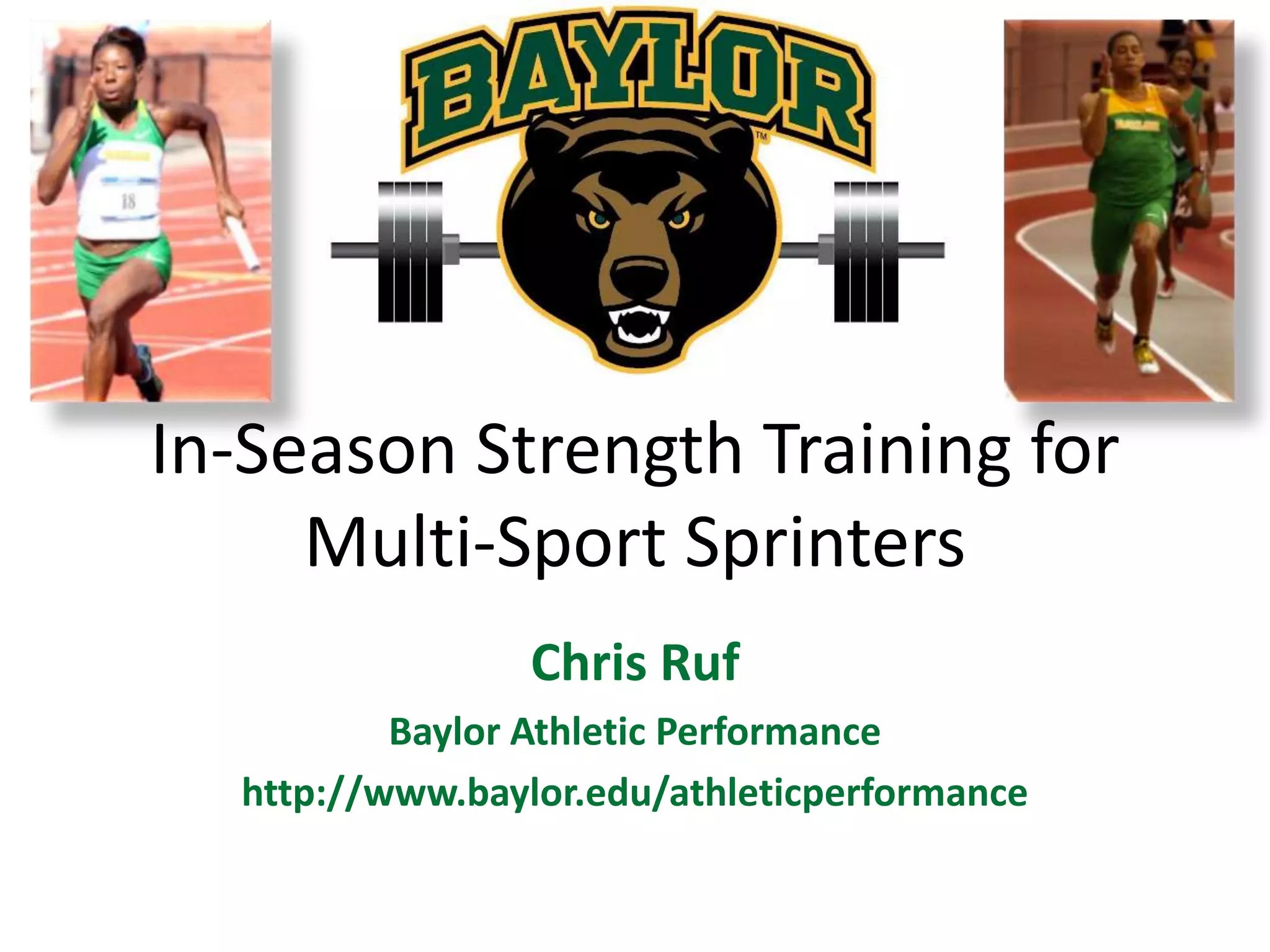
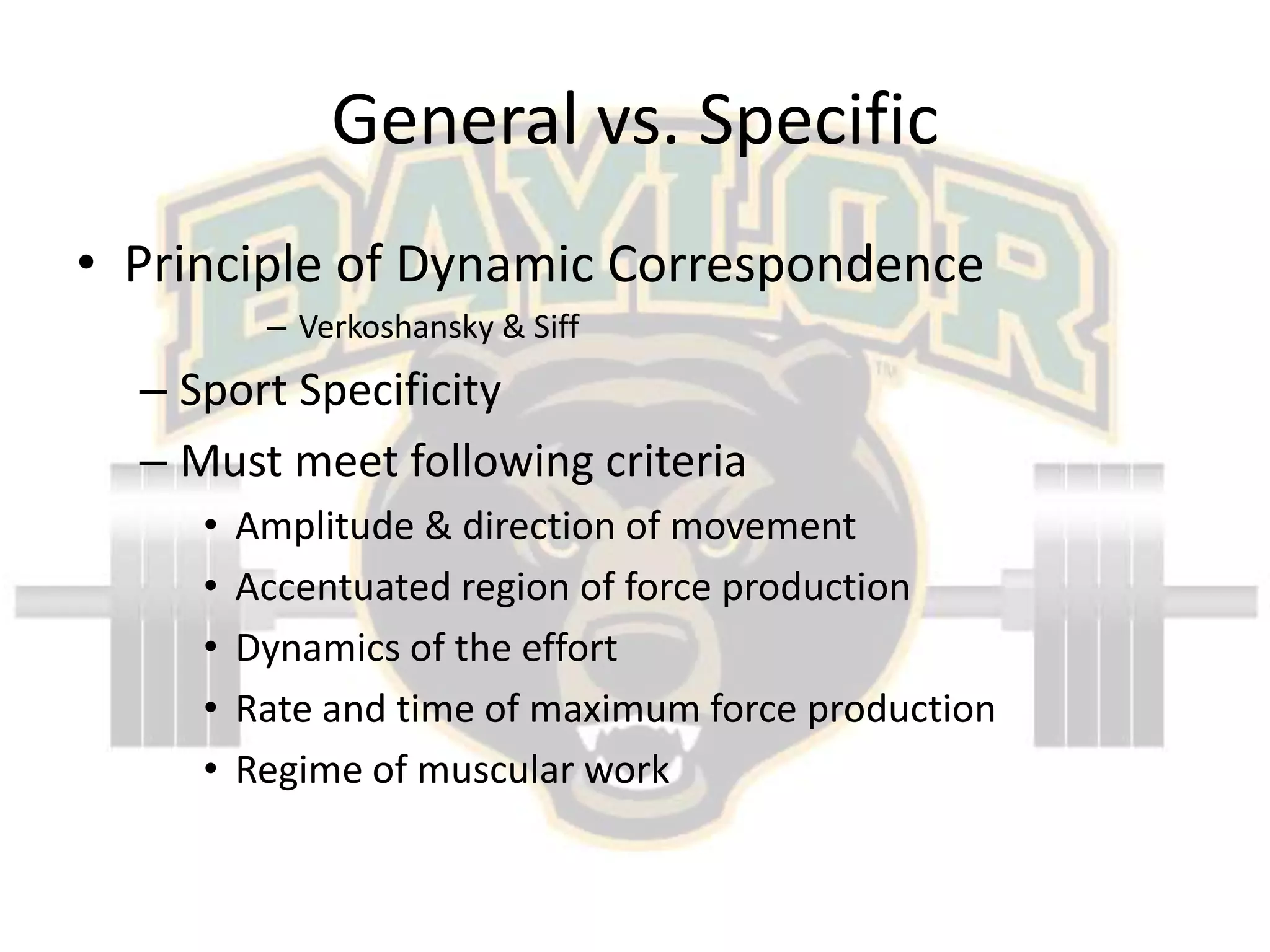
In-Season Strength Training for Multi-Sport SprintersChris RufBaylor Athletic Performancehttp://www.baylor.edu/athleticperformance
Multi-Sport/Multi-Lateral TrainingBenefitsDevelop wide range of motor abilitiesCan still improve physically in multiple seasonsWhen athlete specializes at an appropriate age, will have a larger “tool box” to succeed at chosen sport
General vs. SpecificPrinciple of Dynamic CorrespondenceVerkoshansky & SiffSport SpecificityMust meet following criteriaAmplitude & direction of movementAccentuated region of force productionDynamics of the effortRate and time of maximum force productionRegime of muscular work
General vs. SpecificNearly all training for HS athletes is generalExceptionsSport practicesCompetitionsHS athletes’ physical capabilities can be improved for a long period through general means
General vs. SpecificSprint training can have a high transfer to the sprinting needs of other sportsMajority of other sports require some elements of sprintingBecause of this, some elements of sprint training can be considered a “sport-specific” training means for other sportsSprinting is also a powerful developer of general qualities
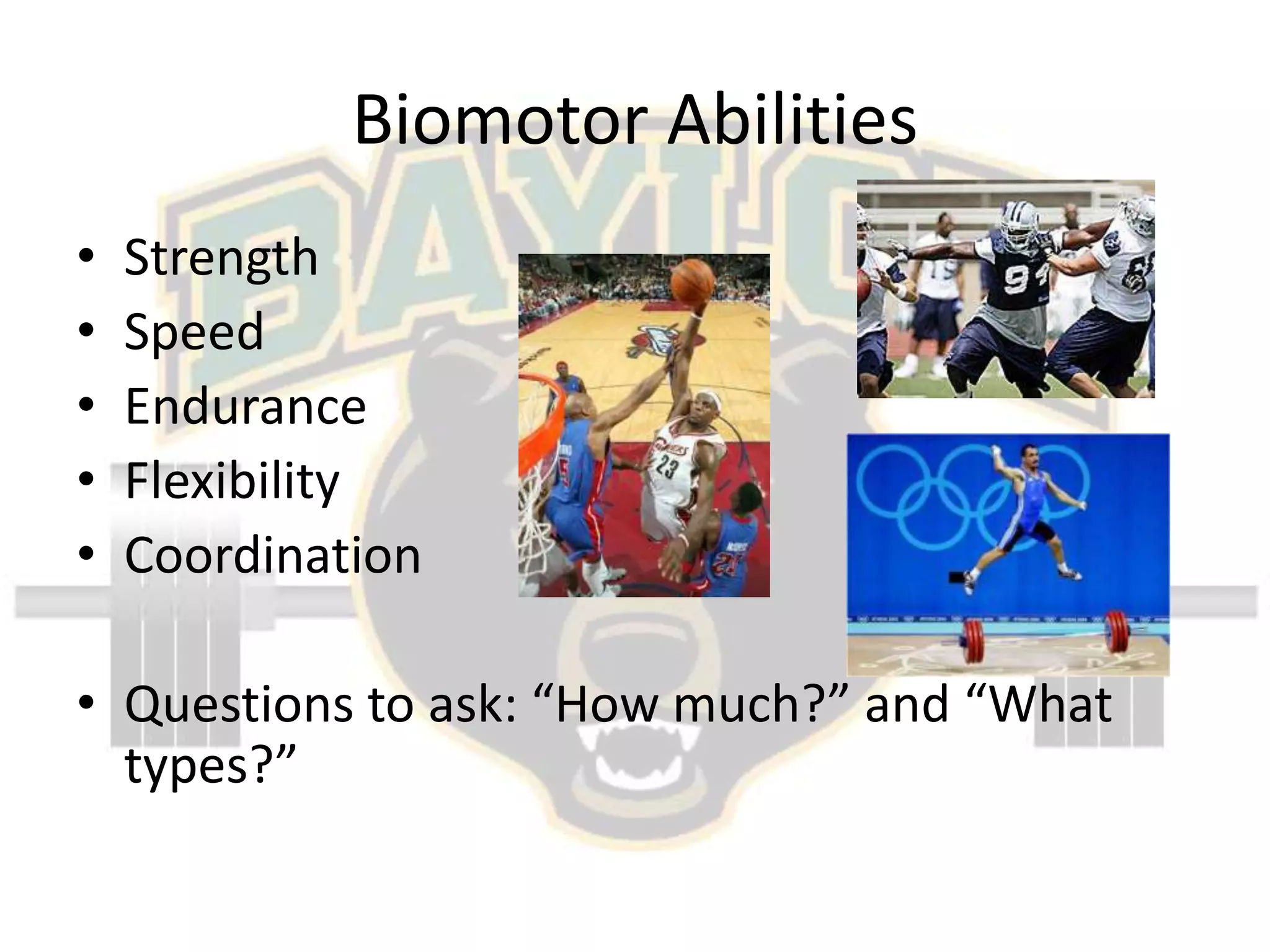
Biomotor AbilitiesStrengthSpeedEnduranceFlexibilityCoordinationQuestions to ask: “How much?” and “What types?”
Biomotor AbilitiesThese 5 abilities can be improved through sound sprint-based trainingSpeed, Endurance, Flexibility (to some degree) and Coordination improved directlyFlexibility required by some sports may not be trained to the necessary levels by sprint training aloneStrength will be improved indirectlyChicken or the egg?
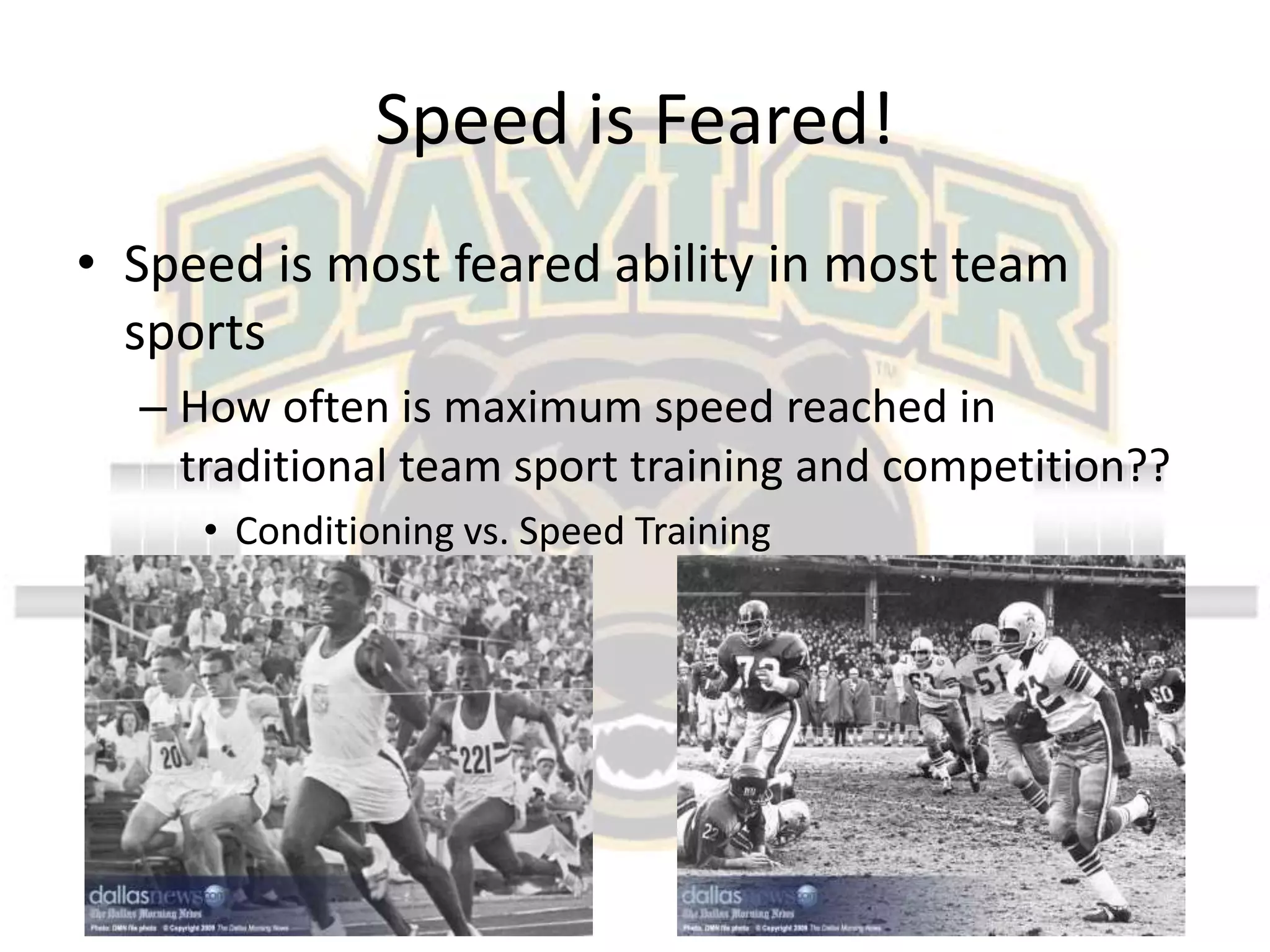
Speed is Feared!Speed is most feared ability in most team sportsHow often is maximum speed reached in traditional team sport training and competition??Conditioning vs. Speed Training
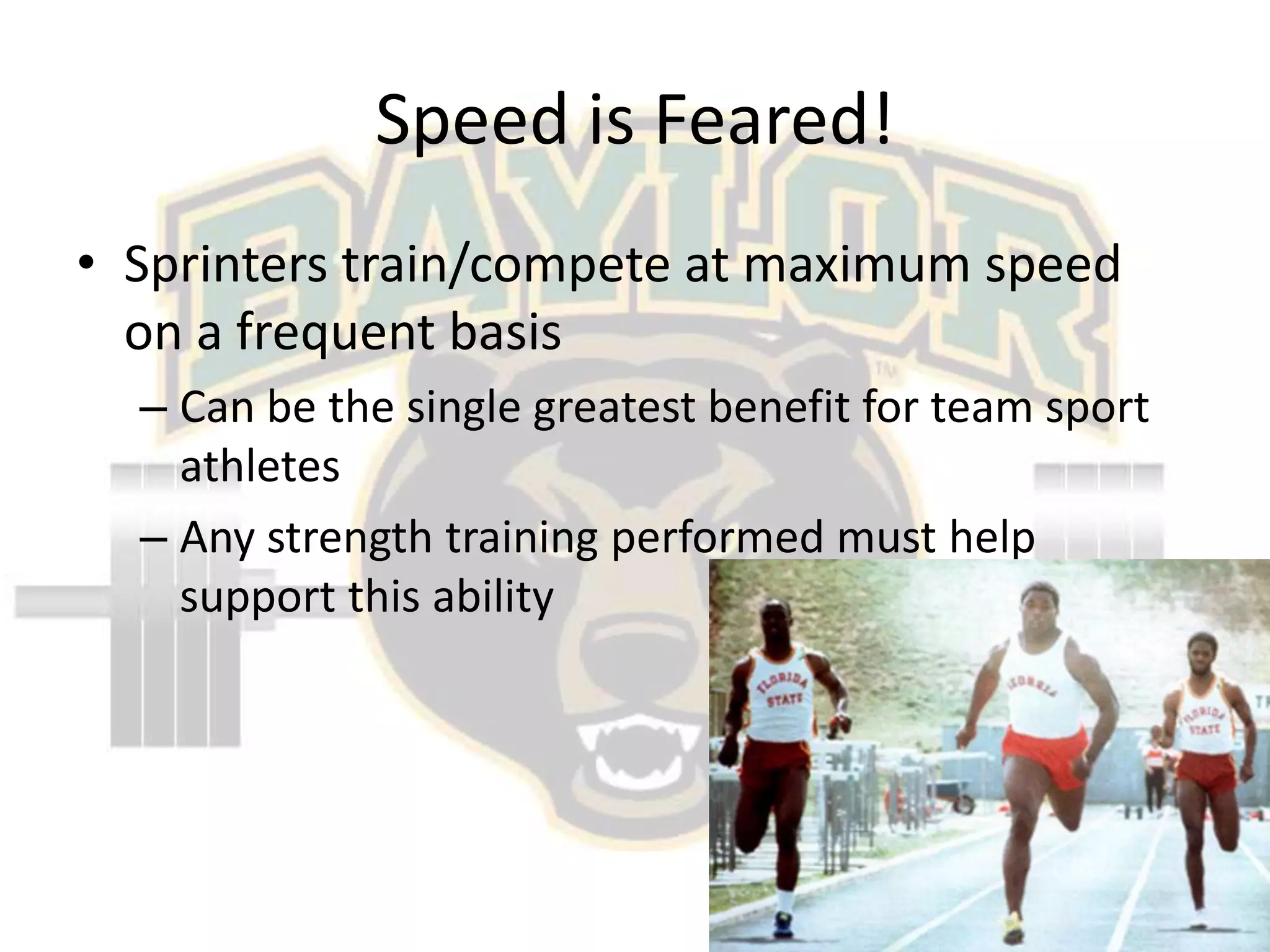
Speed is Feared!Sprinters train/compete at maximum speed on a frequent basisCan be the single greatest benefit for team sport athletesAny strength training performed must help support this ability
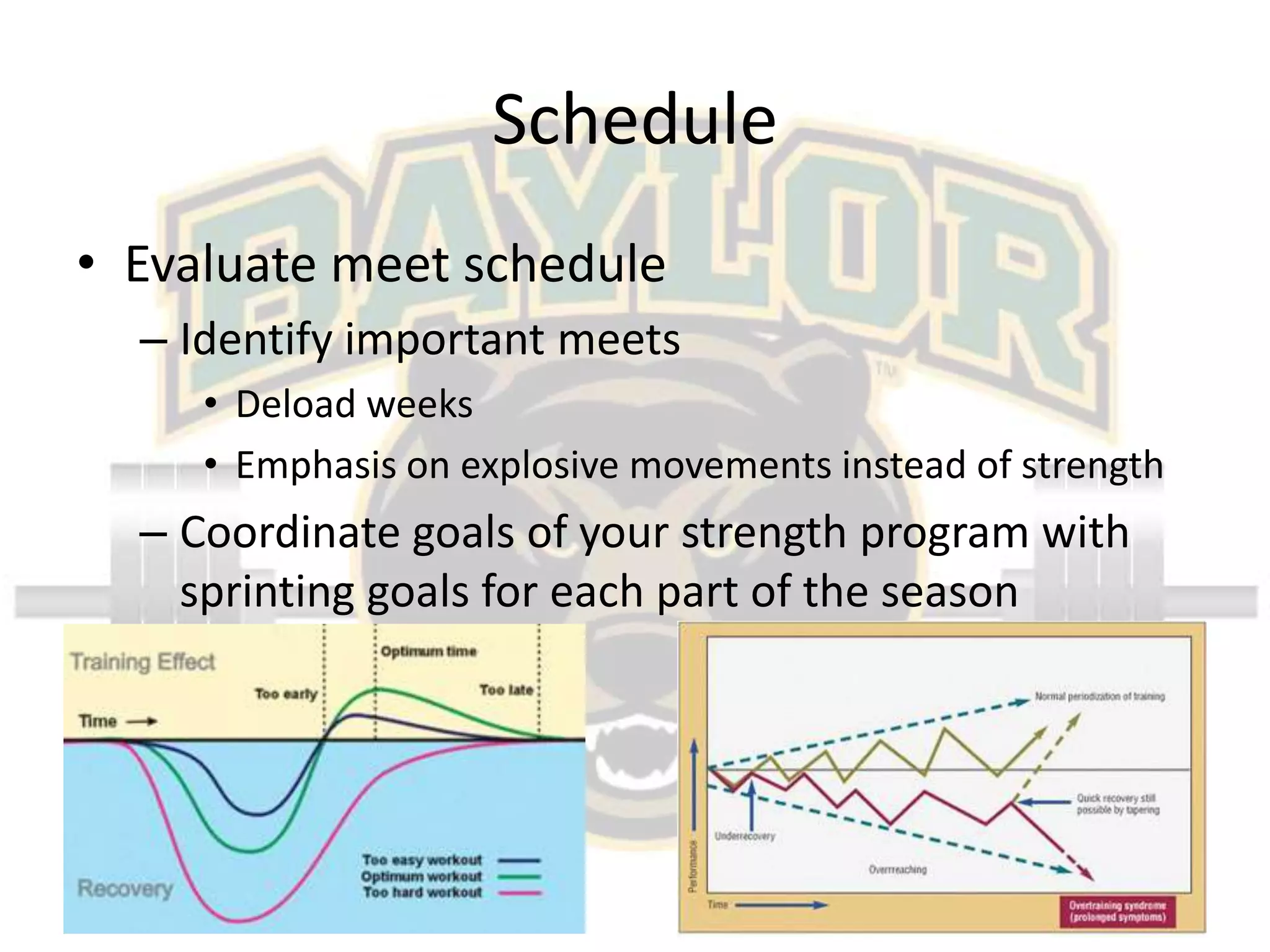
ScheduleEvaluate meet scheduleIdentify important meetsDeload weeksEmphasis on explosive movements instead of strengthCoordinate goals of your strength program with sprinting goals for each part of the season
ScheduleWeekly scheduleMost meets run on Fri/SatMany different combinations for lifting schedulesDepends on many factorsTime you have with athletes each daySprint programWeight room set-upNumber of athletesEtc.
ScheduleHigh/Low SequencingCharlie Francis – Training For SpeedBeneficial to lift on your “hardest” days on the trackKeep 1 day in between lifts if possibleMore time to recover, better sprint session on the following “hard” day2 days of lifting/week can support needs3 days/week can be utilized depending on programming and schedule
SchedulePreferable to lift following sprint trainingRecovery between sessionsIf not possible to lift following sprinting, 4+ hours prior to practice is the next best optionMay have to alter programmingDo not want to compromise the quality of sprint training
Needs AnalysisHave to consider needs of different sportsKeep in mind you are training to improve athleticismPriority goes to the sprint programAfter that, consider the next highest priority sport for the athlete
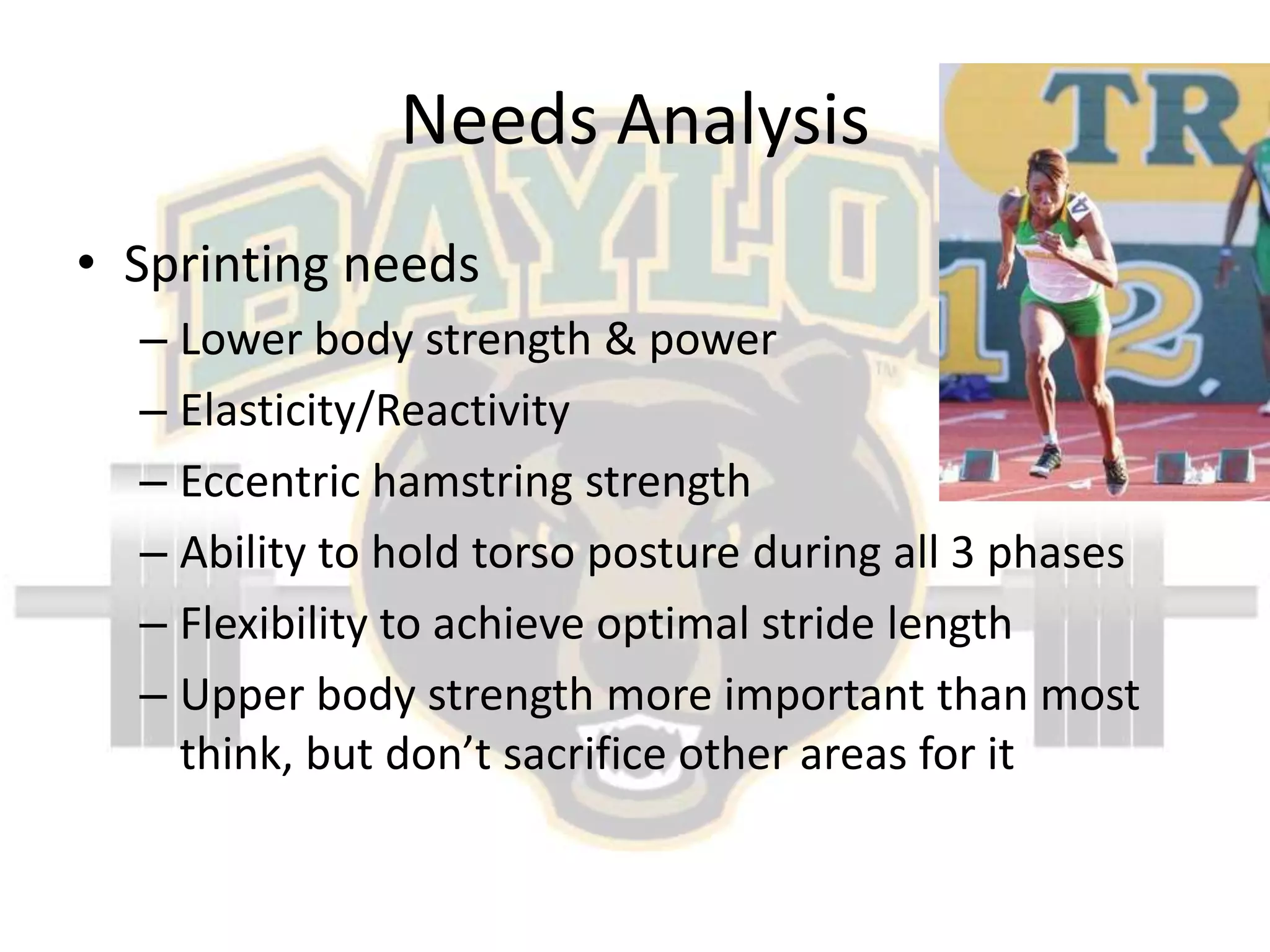
Needs AnalysisSprinting needsLower body strength & powerElasticity/ReactivityEccentric hamstring strengthAbility to hold torso posture during all 3 phasesFlexibility to achieve optimal stride lengthUpper body strength more important than most think, but don’t sacrifice other areas for it
Needs AnalysisOther sports’ needs largely depends on the sportMany team sports share the same following needs with sprintingLower body strength & power productionElasticity/ReactivityEccentric hamstring strength
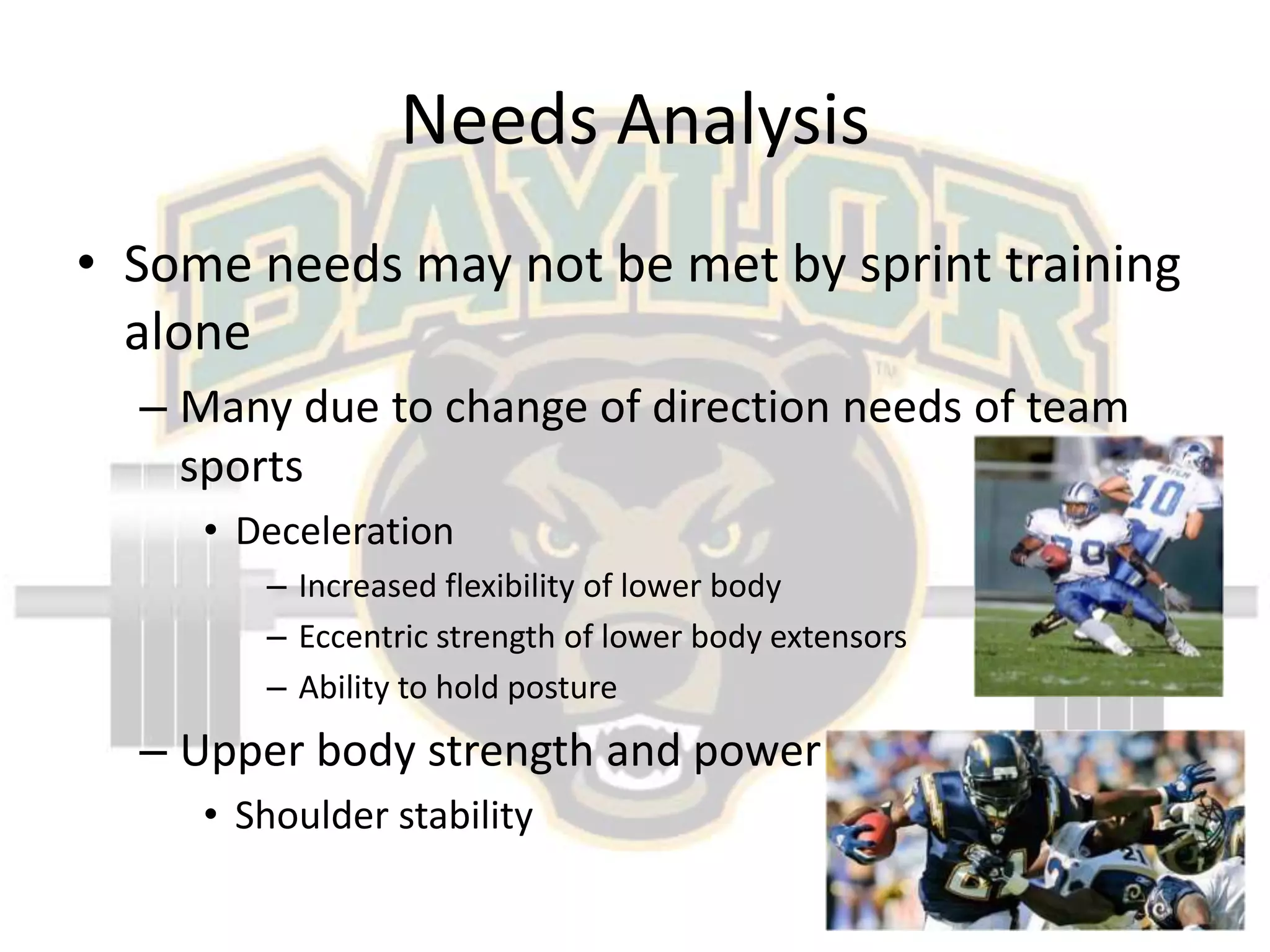
Needs AnalysisSome needs may not be met by sprint training aloneMany due to change of direction needs of team sportsDecelerationIncreased flexibility of lower bodyEccentric strength of lower body extensorsAbility to hold postureUpper body strength and powerShoulder stability
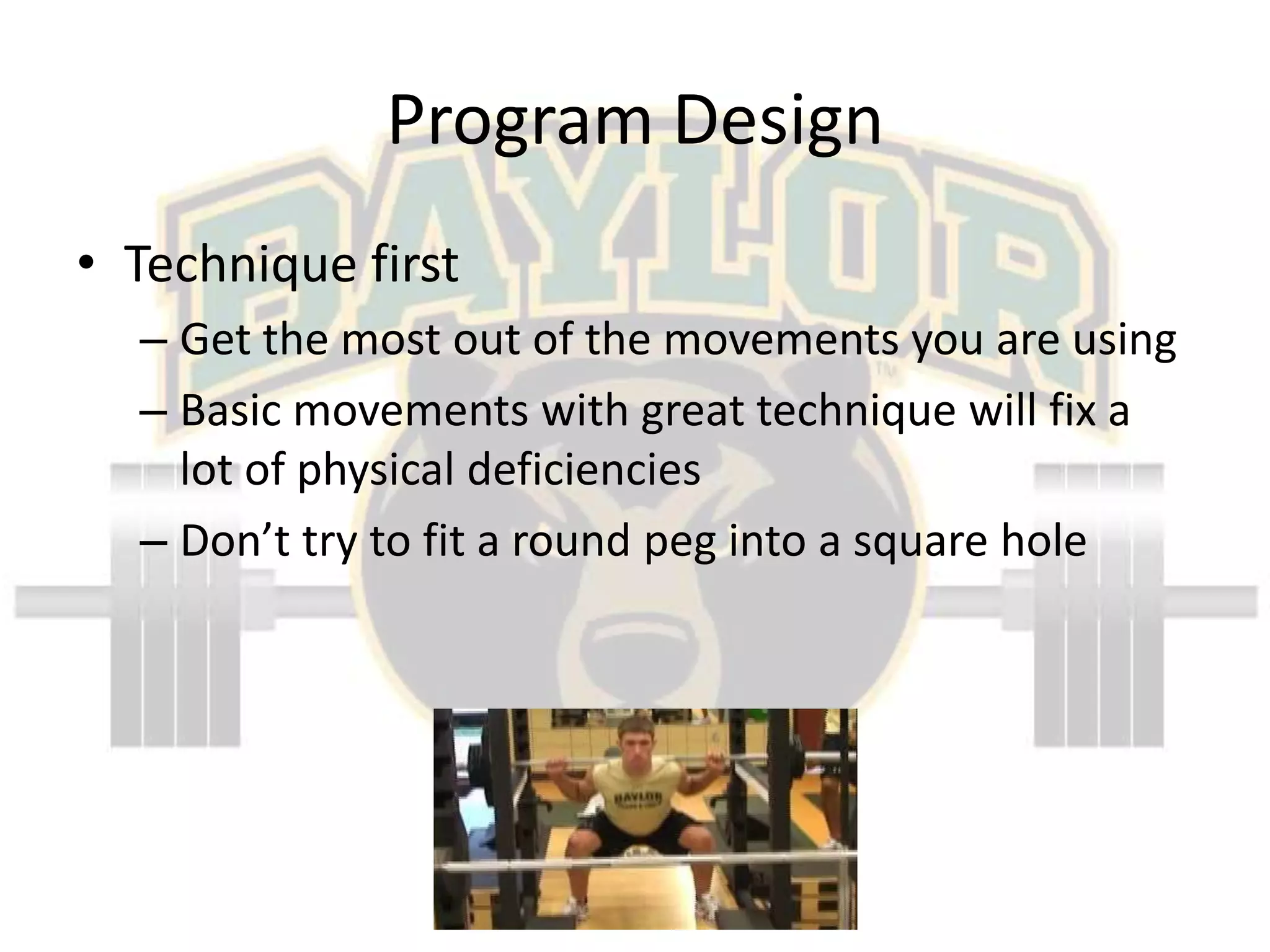
Program DesignTechnique firstGet the most out of the movements you are usingBasic movements with great technique will fix a lot of physical deficienciesDon’t try to fit a round peg into a square hole
Program DesignSlow Cook ‘EmPlan and train with the end goals in mindFor a HS multi-sport sprinter, what is                     more important?Setting an ugly 40# PR in the squat tomorrow?Setting a PR in the 100M at the end of track season?Developing someone into the best athlete they can be when they reach their senior year?
Program DesignGreat athletic benefit from sprint workWant to accentuate thisMajority of lifting will be at submaximal intensitiesToo many stressors will stagnate development and performanceHelps the lifting to support the sprint work rather than compete with itCan still make great strength gainsHigher intensity work can be utilizedif organized wisely
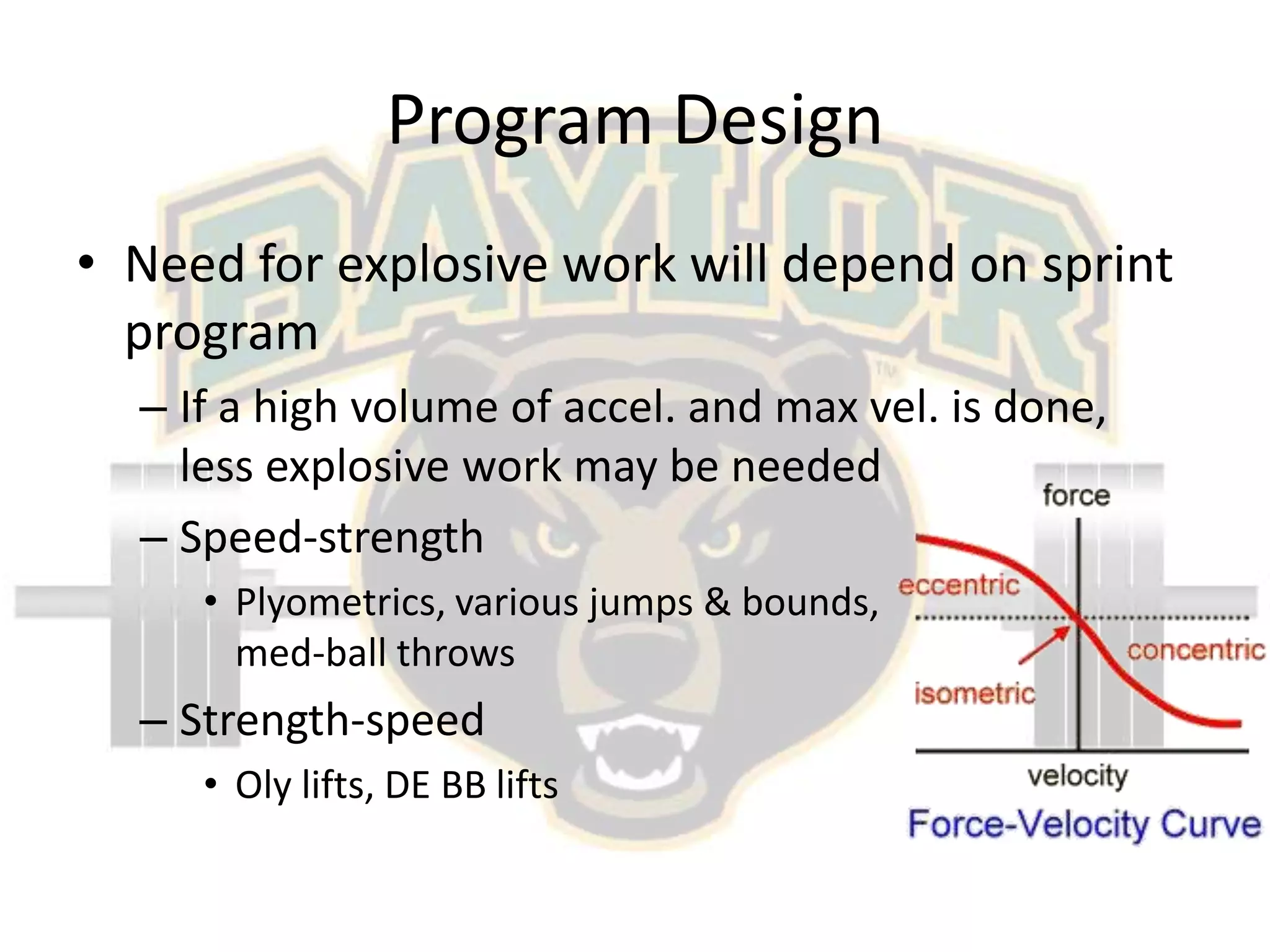
Program DesignNeed for explosive work will depend on sprint programIf a high volume of accel. and max vel. is done, less explosive work may be neededSpeed-strengthPlyometrics, various jumps & bounds,                        med-ball throwsStrength-speedOly lifts, DE BB lifts
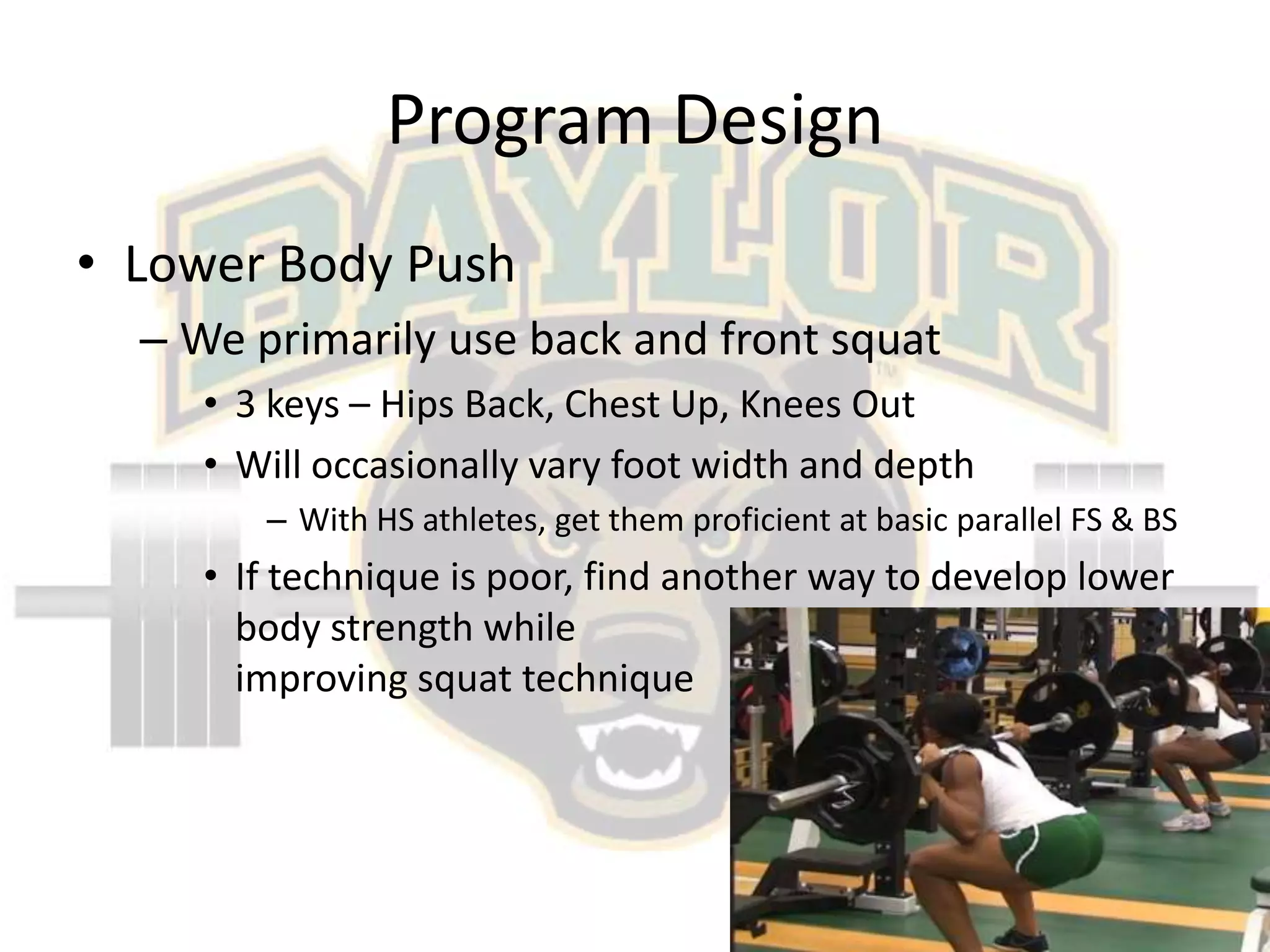
Program DesignLower Body PushWe primarily use back and front squat3 keys – Hips Back, Chest Up, Knees OutWill occasionally vary foot width and depthWith HS athletes, get them proficient at basic parallel FS & BSIf technique is poor, find another way to develop lower body strength while                                                      improving squat technique
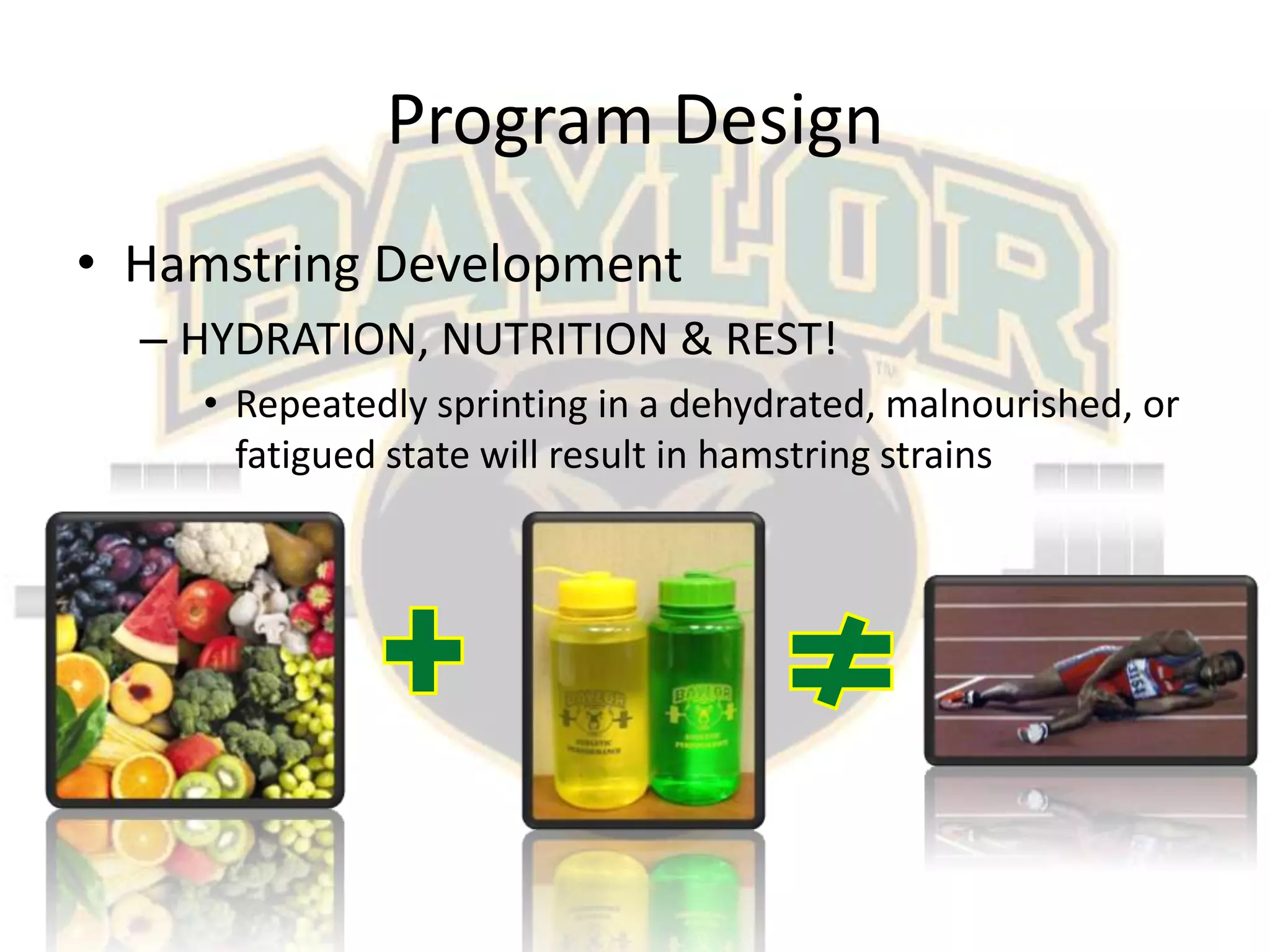
Program DesignHamstring DevelopmentHYDRATION, NUTRITION & REST!Repeatedly sprinting in a dehydrated, malnourished, or fatigued state will result in hamstring strains
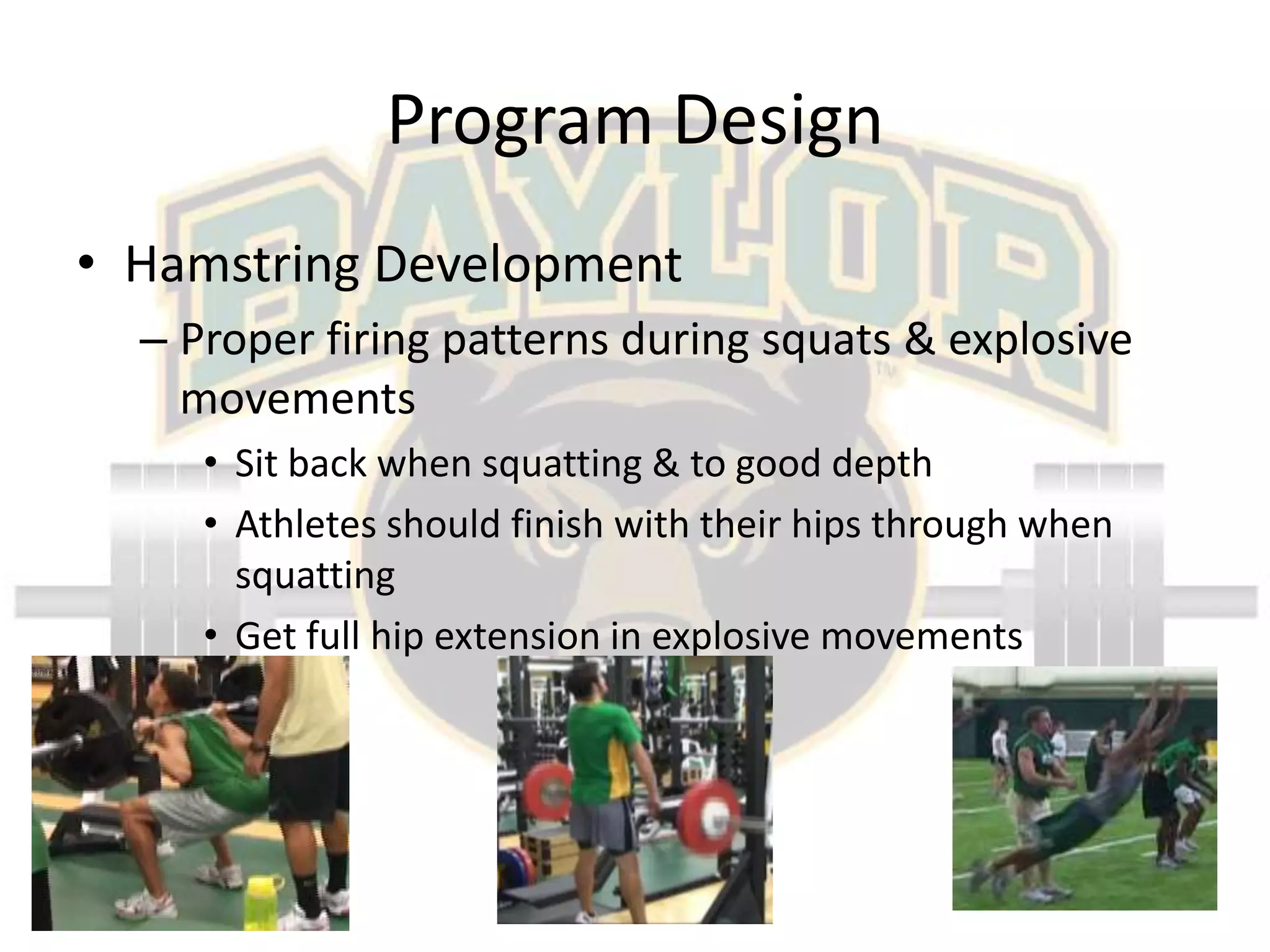
Program DesignHamstring DevelopmentProper firing patterns during squats & explosive movementsSit back when squatting & to good depthAthletes should finish with their hips through when squattingGet full hip extension in explosive movements
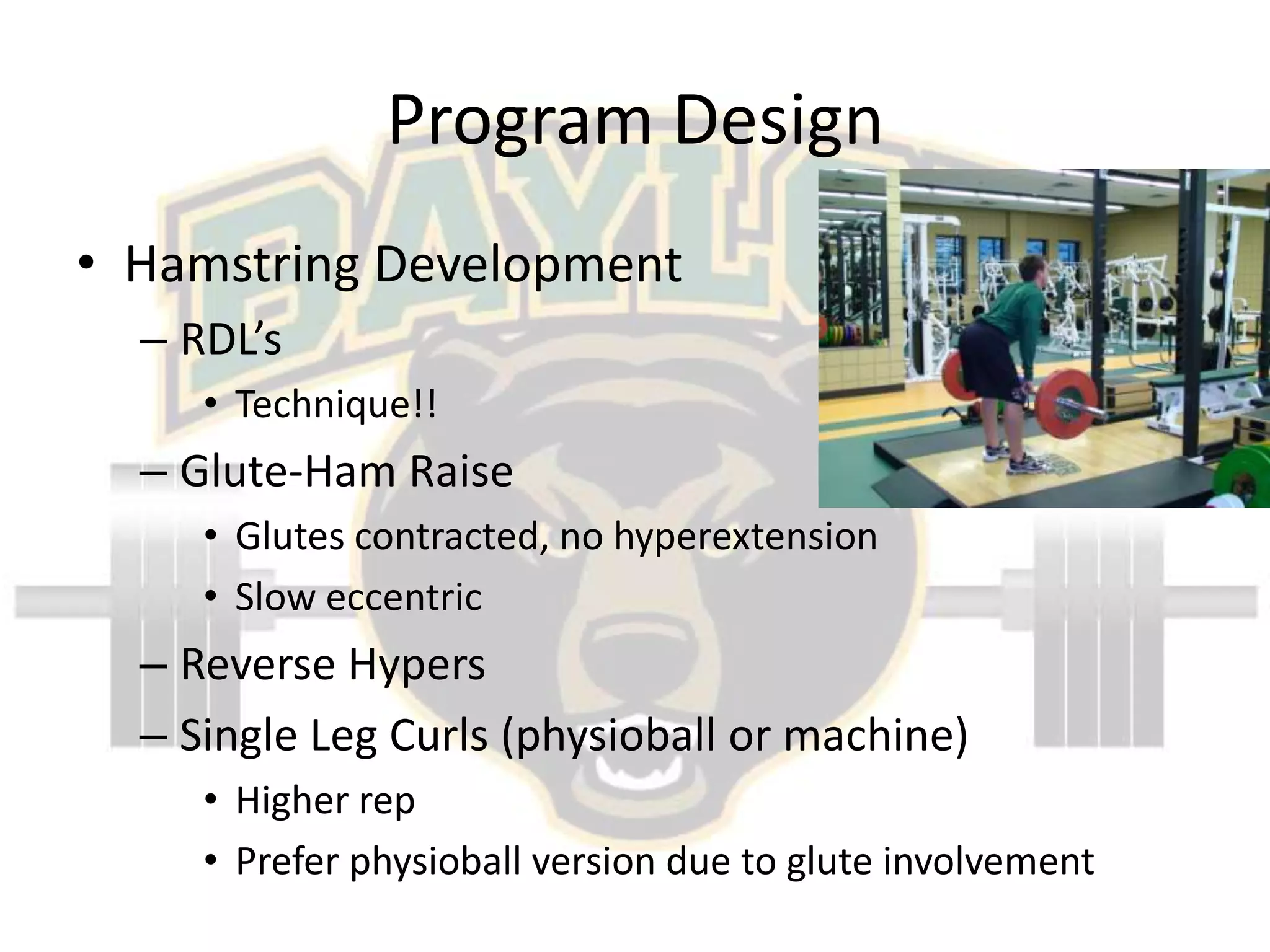
Program DesignHamstring DevelopmentRDL’sTechnique!!Glute-Ham RaiseGlutes contracted, no hyperextensionSlow eccentricReverse HypersSingle Leg Curls (physioball or machine)Higher repPrefer physioball version due to glute involvement
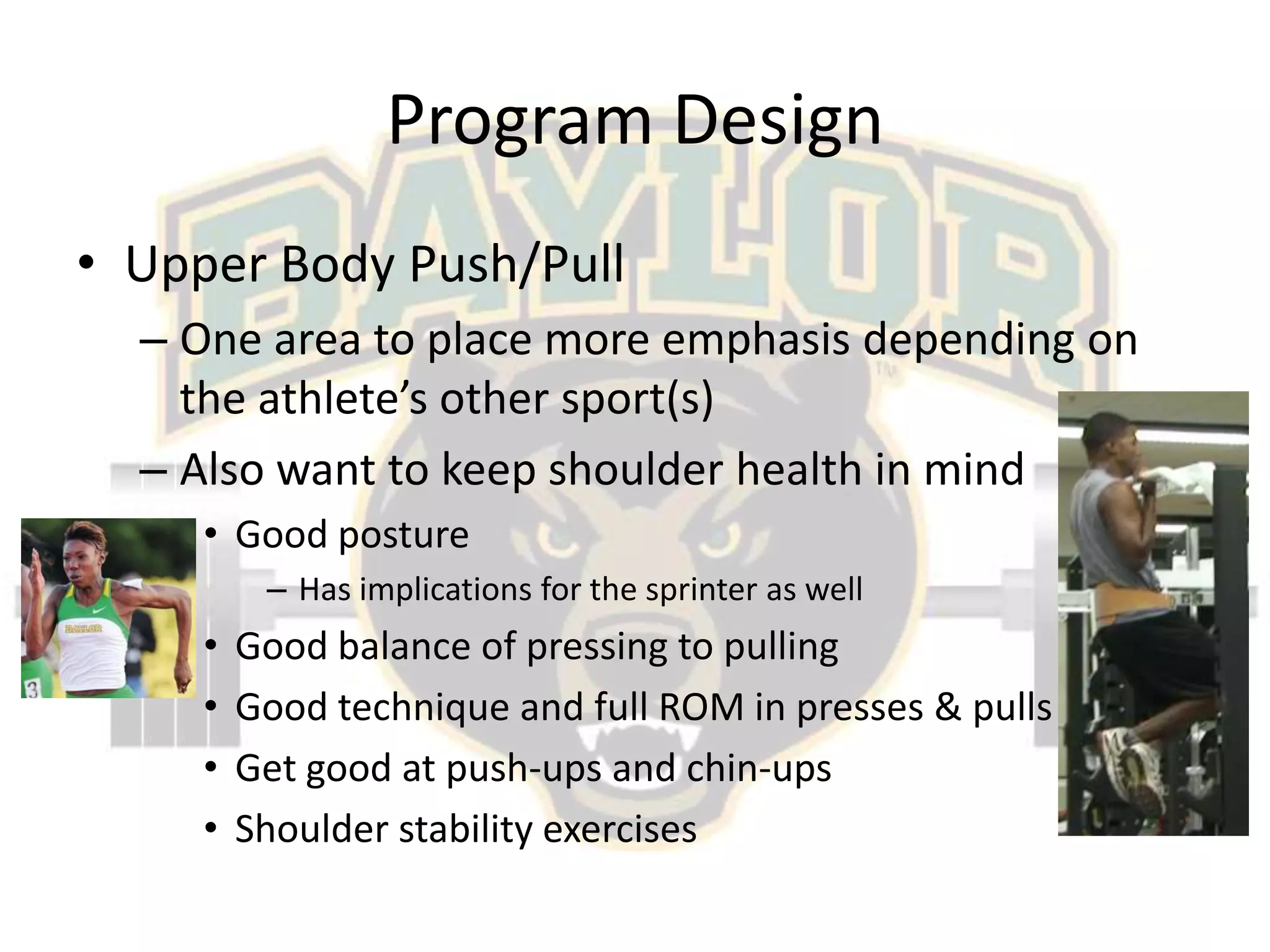
Program DesignUpper Body Push/PullOne area to place more emphasis depending on the athlete’s other sport(s)Also want to keep shoulder health in mindGood postureHas implications for the sprinter as wellGood balance of pressing to pullingGood technique and full ROM in presses & pullsGet good at push-ups and chin-upsShoulder stability exercises
Program DesignTorso TrainingPlank progressionFront plank (or push-up hold)Front plank w/one limb in the airFront plank w/opposite arm/leg in the airReverse CrunchStrengthen external obliques, helps prevent excessive anterior pelvic tiltGeneral sit-up and crunch variations
Program DesignExercise RotationWe will try to limit switching exercises during the seasonLeads to soreness/stiffnessChanges in lower body exercises will be gradual and progressive in natureBe aware of the effects
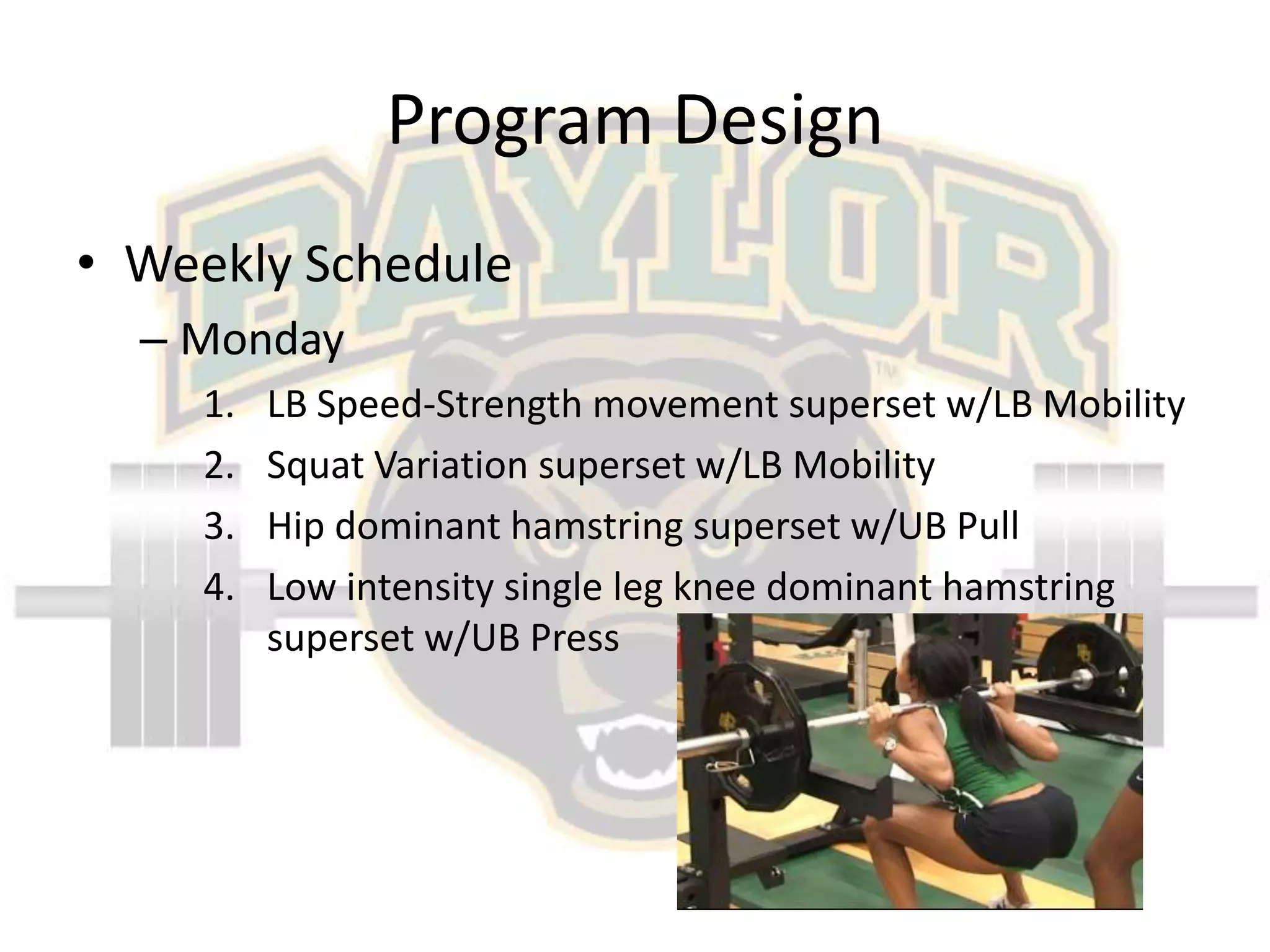
Program DesignWeekly ScheduleMonday	LB Speed-Strength movement superset w/LB MobilitySquat Variation superset w/LB MobilityHip dominant hamstring superset w/UB PullLow intensity single leg knee dominant hamstring superset w/UB Press
Program DesignWeekly ScheduleWednesday	LB Strength-Speed movement superset w/LB MobilitySquat Variation or Single Leg superset w/Shoulder StabilityUB Press superset w/Hypers or Reverse Hypers and UB Pull
Program DesignWeekly ScheduleFriday of Non-Meet Weeks	Explosive MB Throw superset w/LB MobilitySquat Variation or Single Leg superset w/Shoulder StabilityUB Press superset w/UB PullBi’s/Tri’s
Program DesignTraining BlocksWe will construct our training into blocksEach block characterized by it’s central training focusWill still train other qualitiesEach block should build on the qualities developed in the previous training block
Program DesignIn-Season Training BlocksWork Capacity (Accumulation)Focus is on use of volume to prep for future trainingLow volume of strength and power development workWork at 55-70% on core strength movements for 4-6 sets of 3-6 repsWork at 65-75% on Olympic movements for 3-4 sets of 2-3 repsSome work done on landing skills to prep for jump/plyo exercisesThis block should only need to be performed once
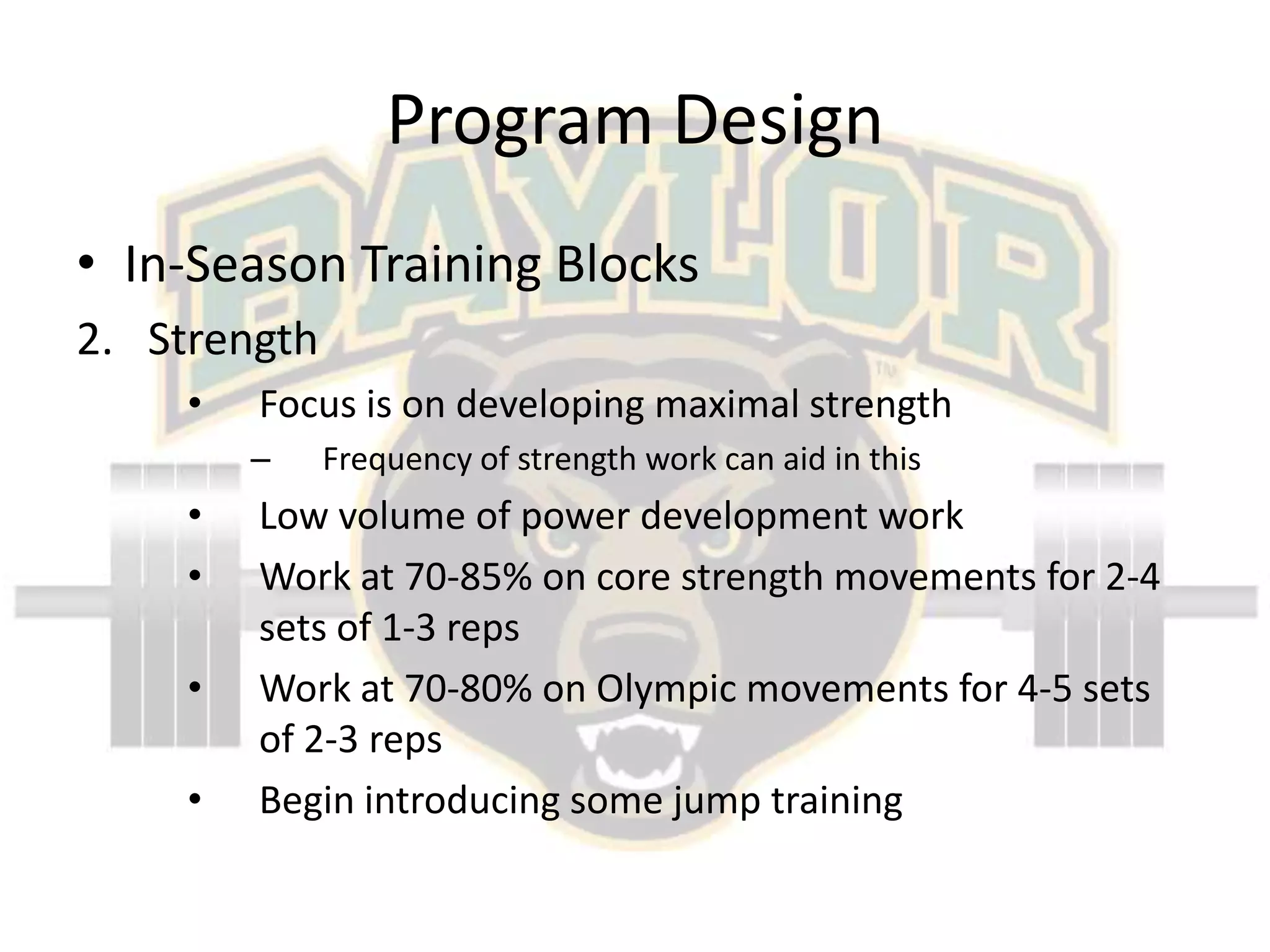
Program DesignIn-Season Training BlocksStrengthFocus is on developing maximal strengthFrequency of strength work can aid in thisLow volume of power development workWork at 70-85% on core strength movements for 2-4 sets of 1-3 repsWork at 70-80% on Olympic movements for 4-5 sets of 2-3 repsBegin introducing some jump training
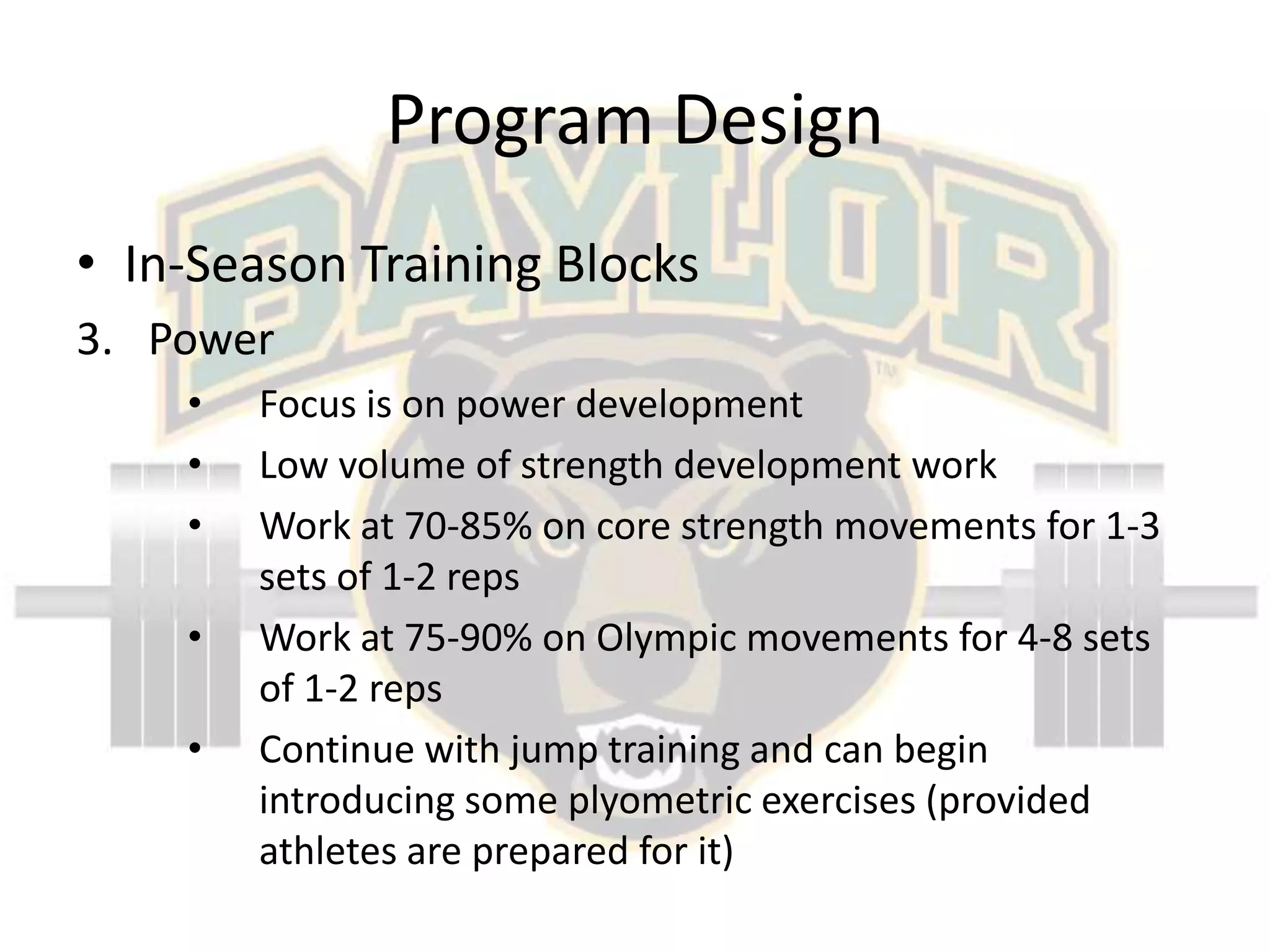
Program DesignIn-Season Training BlocksPowerFocus is on power developmentLow volume of strength development workWork at 70-85% on core strength movements for 1-3 sets of 1-2 repsWork at 75-90% on Olympic movements for 4-8 sets of 1-2 repsContinue with jump training and can begin introducing some plyometric exercises (provided athletes are prepared for it)
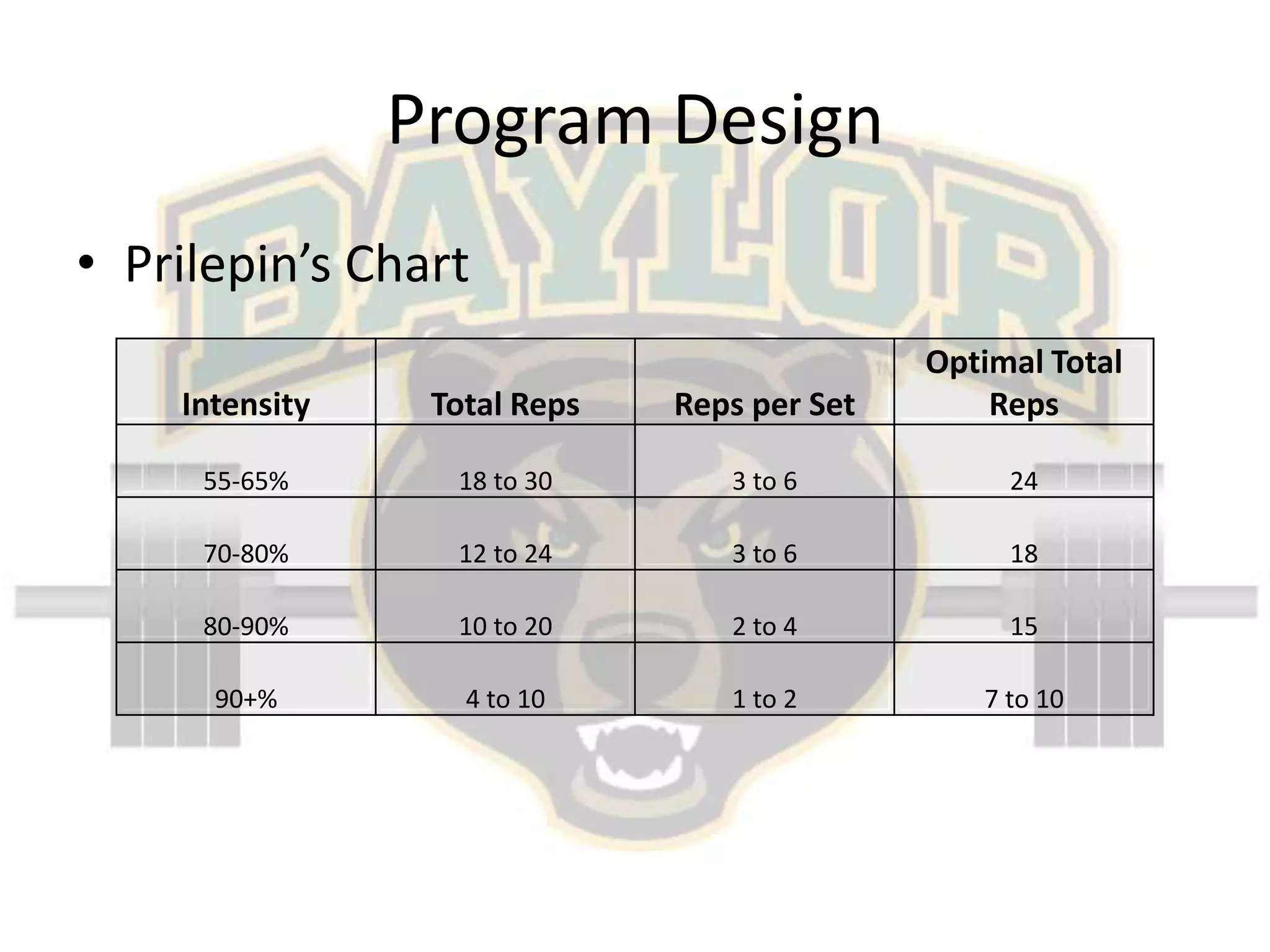
Program DesignPrilepin’s Chart
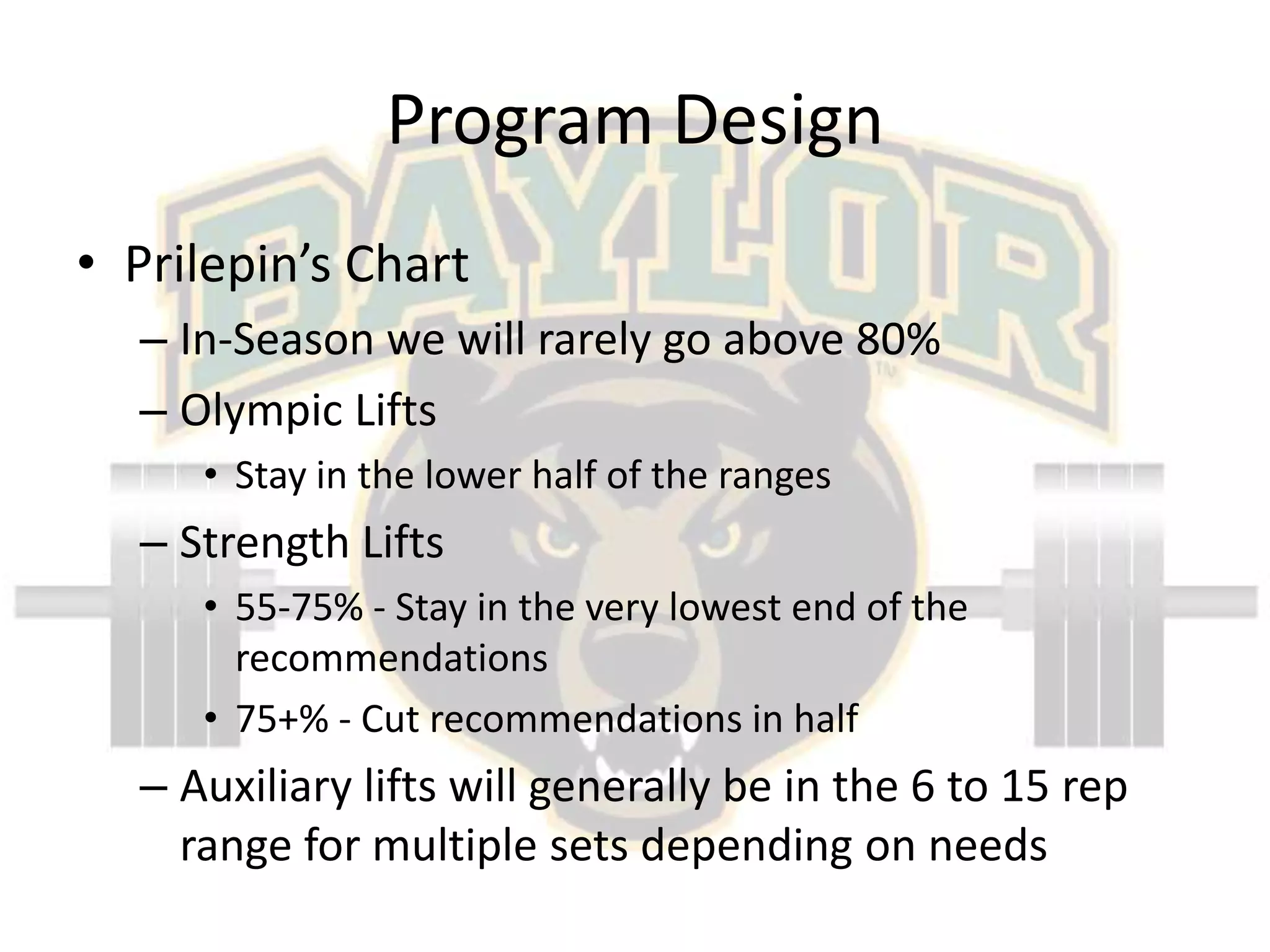
Program DesignPrilepin’s ChartIn-Season we will rarely go above 80%Olympic LiftsStay in the lower half of the rangesStrength Lifts55-75% - Stay in the very lowest end of the recommendations75+% - Cut recommendations in halfAuxiliary lifts will generally be in the 6 to 15 rep range for multiple sets depending on needs
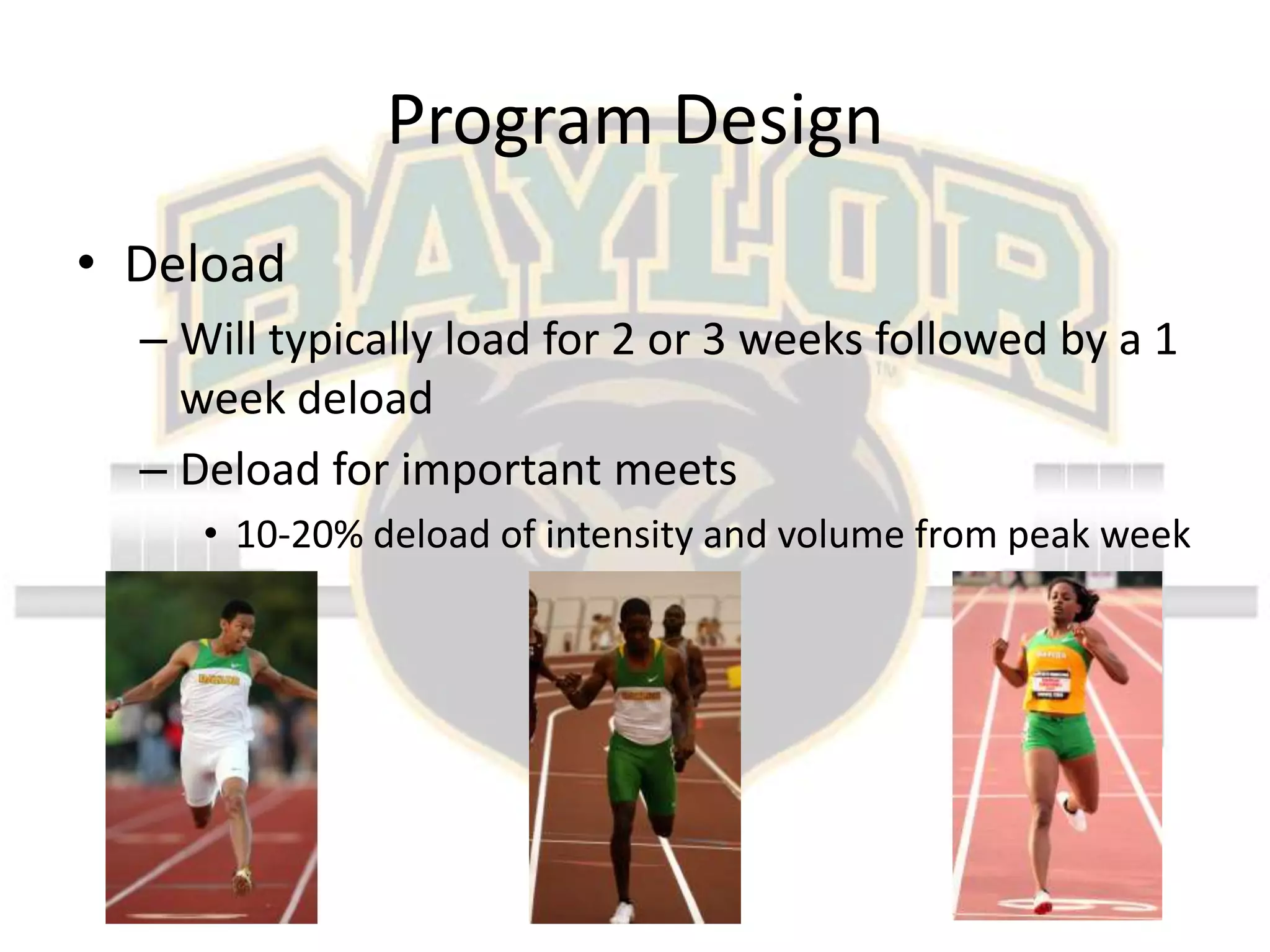
Program DesignDeloadWill typically load for 2 or 3 weeks followed by a 1 week deloadDeload for important meets10-20% deload of intensity and volume from peak week
References/Recommended ReadingsFrancis, C. (1997) The Charlie Francis Training System. Faccioni Speed and Conditioning ConsultantIssurin, V. (2008) Block Periodization. Grand Rapids, MI: Ultimate Athlete Concepts.Rippetoe, Mark & Kilgore, Lon. (2005) Starting Strength: A Simple and Practical Guide for Coaching Beginners. Wichita Falls, TX: The Aasgaard Company.Siff, M. (2003) Supertraining (6th ed.). Denver: Mel C. Siff.Smith, J. (2008) Accumulating, Concentrating, and Intensifying the Training Load Lecture DVD. Grand Rapids, MI: Ultimate Athlete Concepts
Thank You!Coaches in attendance - Continue to be great leadersBaylor Athletic Performance StaffAndrew Althoff & Tyson Brown – Assist w/T&FBaylor Track & Field ProgramBaylor Athletic Performance Clinic – Sat., June 5thChris Ruf254-710-3395chris_ruf@baylor.eduhttp://www.baylor.edu/athleticperformance

Ruf - Strength Training for Sprinters

  • 1.
    In-Season Strength Trainingfor Multi-Sport SprintersChris RufBaylor Athletic Performancehttp://www.baylor.edu/athleticperformance
  • 2.
    Multi-Sport/Multi-Lateral TrainingBenefitsDevelop widerange of motor abilitiesCan still improve physically in multiple seasonsWhen athlete specializes at an appropriate age, will have a larger “tool box” to succeed at chosen sport
  • 3.
    General vs. SpecificPrincipleof Dynamic CorrespondenceVerkoshansky & SiffSport SpecificityMust meet following criteriaAmplitude & direction of movementAccentuated region of force productionDynamics of the effortRate and time of maximum force productionRegime of muscular work
  • 4.
    General vs. SpecificNearlyall training for HS athletes is generalExceptionsSport practicesCompetitionsHS athletes’ physical capabilities can be improved for a long period through general means
  • 5.
    General vs. SpecificSprinttraining can have a high transfer to the sprinting needs of other sportsMajority of other sports require some elements of sprintingBecause of this, some elements of sprint training can be considered a “sport-specific” training means for other sportsSprinting is also a powerful developer of general qualities
  • 6.
  • 7.
    Biomotor AbilitiesThese 5abilities can be improved through sound sprint-based trainingSpeed, Endurance, Flexibility (to some degree) and Coordination improved directlyFlexibility required by some sports may not be trained to the necessary levels by sprint training aloneStrength will be improved indirectlyChicken or the egg?
  • 8.
    Speed is Feared!Speedis most feared ability in most team sportsHow often is maximum speed reached in traditional team sport training and competition??Conditioning vs. Speed Training
  • 9.
    Speed is Feared!Sprinterstrain/compete at maximum speed on a frequent basisCan be the single greatest benefit for team sport athletesAny strength training performed must help support this ability
  • 10.
    ScheduleEvaluate meet scheduleIdentifyimportant meetsDeload weeksEmphasis on explosive movements instead of strengthCoordinate goals of your strength program with sprinting goals for each part of the season
  • 11.
    ScheduleWeekly scheduleMost meetsrun on Fri/SatMany different combinations for lifting schedulesDepends on many factorsTime you have with athletes each daySprint programWeight room set-upNumber of athletesEtc.
  • 12.
    ScheduleHigh/Low SequencingCharlie Francis– Training For SpeedBeneficial to lift on your “hardest” days on the trackKeep 1 day in between lifts if possibleMore time to recover, better sprint session on the following “hard” day2 days of lifting/week can support needs3 days/week can be utilized depending on programming and schedule
  • 13.
    SchedulePreferable to liftfollowing sprint trainingRecovery between sessionsIf not possible to lift following sprinting, 4+ hours prior to practice is the next best optionMay have to alter programmingDo not want to compromise the quality of sprint training
  • 14.
    Needs AnalysisHave toconsider needs of different sportsKeep in mind you are training to improve athleticismPriority goes to the sprint programAfter that, consider the next highest priority sport for the athlete
  • 15.
    Needs AnalysisSprinting needsLowerbody strength & powerElasticity/ReactivityEccentric hamstring strengthAbility to hold torso posture during all 3 phasesFlexibility to achieve optimal stride lengthUpper body strength more important than most think, but don’t sacrifice other areas for it
  • 16.
    Needs AnalysisOther sports’needs largely depends on the sportMany team sports share the same following needs with sprintingLower body strength & power productionElasticity/ReactivityEccentric hamstring strength
  • 17.
    Needs AnalysisSome needsmay not be met by sprint training aloneMany due to change of direction needs of team sportsDecelerationIncreased flexibility of lower bodyEccentric strength of lower body extensorsAbility to hold postureUpper body strength and powerShoulder stability
  • 18.
    Program DesignTechnique firstGetthe most out of the movements you are usingBasic movements with great technique will fix a lot of physical deficienciesDon’t try to fit a round peg into a square hole
  • 19.
    Program DesignSlow Cook‘EmPlan and train with the end goals in mindFor a HS multi-sport sprinter, what is more important?Setting an ugly 40# PR in the squat tomorrow?Setting a PR in the 100M at the end of track season?Developing someone into the best athlete they can be when they reach their senior year?
  • 20.
    Program DesignGreat athleticbenefit from sprint workWant to accentuate thisMajority of lifting will be at submaximal intensitiesToo many stressors will stagnate development and performanceHelps the lifting to support the sprint work rather than compete with itCan still make great strength gainsHigher intensity work can be utilizedif organized wisely
  • 21.
    Program DesignNeed forexplosive work will depend on sprint programIf a high volume of accel. and max vel. is done, less explosive work may be neededSpeed-strengthPlyometrics, various jumps & bounds, med-ball throwsStrength-speedOly lifts, DE BB lifts
  • 22.
    Program DesignLower BodyPushWe primarily use back and front squat3 keys – Hips Back, Chest Up, Knees OutWill occasionally vary foot width and depthWith HS athletes, get them proficient at basic parallel FS & BSIf technique is poor, find another way to develop lower body strength while improving squat technique
  • 23.
    Program DesignHamstring DevelopmentHYDRATION,NUTRITION & REST!Repeatedly sprinting in a dehydrated, malnourished, or fatigued state will result in hamstring strains
  • 24.
    Program DesignHamstring DevelopmentProperfiring patterns during squats & explosive movementsSit back when squatting & to good depthAthletes should finish with their hips through when squattingGet full hip extension in explosive movements
  • 25.
    Program DesignHamstring DevelopmentRDL’sTechnique!!Glute-HamRaiseGlutes contracted, no hyperextensionSlow eccentricReverse HypersSingle Leg Curls (physioball or machine)Higher repPrefer physioball version due to glute involvement
  • 26.
    Program DesignUpper BodyPush/PullOne area to place more emphasis depending on the athlete’s other sport(s)Also want to keep shoulder health in mindGood postureHas implications for the sprinter as wellGood balance of pressing to pullingGood technique and full ROM in presses & pullsGet good at push-ups and chin-upsShoulder stability exercises
  • 27.
    Program DesignTorso TrainingPlankprogressionFront plank (or push-up hold)Front plank w/one limb in the airFront plank w/opposite arm/leg in the airReverse CrunchStrengthen external obliques, helps prevent excessive anterior pelvic tiltGeneral sit-up and crunch variations
  • 28.
    Program DesignExercise RotationWewill try to limit switching exercises during the seasonLeads to soreness/stiffnessChanges in lower body exercises will be gradual and progressive in natureBe aware of the effects
  • 29.
    Program DesignWeekly ScheduleMonday LBSpeed-Strength movement superset w/LB MobilitySquat Variation superset w/LB MobilityHip dominant hamstring superset w/UB PullLow intensity single leg knee dominant hamstring superset w/UB Press
  • 30.
    Program DesignWeekly ScheduleWednesday LBStrength-Speed movement superset w/LB MobilitySquat Variation or Single Leg superset w/Shoulder StabilityUB Press superset w/Hypers or Reverse Hypers and UB Pull
  • 31.
    Program DesignWeekly ScheduleFridayof Non-Meet Weeks Explosive MB Throw superset w/LB MobilitySquat Variation or Single Leg superset w/Shoulder StabilityUB Press superset w/UB PullBi’s/Tri’s
  • 32.
    Program DesignTraining BlocksWewill construct our training into blocksEach block characterized by it’s central training focusWill still train other qualitiesEach block should build on the qualities developed in the previous training block
  • 33.
    Program DesignIn-Season TrainingBlocksWork Capacity (Accumulation)Focus is on use of volume to prep for future trainingLow volume of strength and power development workWork at 55-70% on core strength movements for 4-6 sets of 3-6 repsWork at 65-75% on Olympic movements for 3-4 sets of 2-3 repsSome work done on landing skills to prep for jump/plyo exercisesThis block should only need to be performed once
  • 34.
    Program DesignIn-Season TrainingBlocksStrengthFocus is on developing maximal strengthFrequency of strength work can aid in thisLow volume of power development workWork at 70-85% on core strength movements for 2-4 sets of 1-3 repsWork at 70-80% on Olympic movements for 4-5 sets of 2-3 repsBegin introducing some jump training
  • 35.
    Program DesignIn-Season TrainingBlocksPowerFocus is on power developmentLow volume of strength development workWork at 70-85% on core strength movements for 1-3 sets of 1-2 repsWork at 75-90% on Olympic movements for 4-8 sets of 1-2 repsContinue with jump training and can begin introducing some plyometric exercises (provided athletes are prepared for it)
  • 36.
  • 37.
    Program DesignPrilepin’s ChartIn-Seasonwe will rarely go above 80%Olympic LiftsStay in the lower half of the rangesStrength Lifts55-75% - Stay in the very lowest end of the recommendations75+% - Cut recommendations in halfAuxiliary lifts will generally be in the 6 to 15 rep range for multiple sets depending on needs
  • 38.
    Program DesignDeloadWill typicallyload for 2 or 3 weeks followed by a 1 week deloadDeload for important meets10-20% deload of intensity and volume from peak week
  • 39.
    References/Recommended ReadingsFrancis, C.(1997) The Charlie Francis Training System. Faccioni Speed and Conditioning ConsultantIssurin, V. (2008) Block Periodization. Grand Rapids, MI: Ultimate Athlete Concepts.Rippetoe, Mark & Kilgore, Lon. (2005) Starting Strength: A Simple and Practical Guide for Coaching Beginners. Wichita Falls, TX: The Aasgaard Company.Siff, M. (2003) Supertraining (6th ed.). Denver: Mel C. Siff.Smith, J. (2008) Accumulating, Concentrating, and Intensifying the Training Load Lecture DVD. Grand Rapids, MI: Ultimate Athlete Concepts
  • 40.
    Thank You!Coaches inattendance - Continue to be great leadersBaylor Athletic Performance StaffAndrew Althoff & Tyson Brown – Assist w/T&FBaylor Track & Field ProgramBaylor Athletic Performance Clinic – Sat., June 5thChris Ruf254-710-3395chris_ruf@baylor.eduhttp://www.baylor.edu/athleticperformance

Editor's Notes

  • #3 Try to add Steve Nash video?
  • #4 examples
  • #6 What general qualities?
  • #15 Put in pix of a couple diff sports