John M. Cissik 
“There is nothing more difficult to carry out, nor more 
doubtful of success, nor more dangerous to handle, 
than to initiate a new order of things.” Machiavelli, The 
Prince.
Tools 
What they are 
Advantages/Disadvantages 
How they are used
Tools 
Olympic lifts 
Powerlifts 
Assistance exercises 
Kettlebells 
Heavy ropes 
Suspension training
Trends 
Functional training 
Conditioning 
Core training 
FMS/Corrective exercises
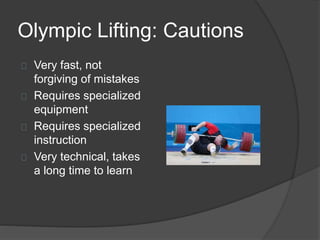
Olympic Lifting: Cautions 
Very fast, not 
forgiving of mistakes 
Requires specialized 
equipment 
Requires specialized 
instruction 
Very technical, takes 
a long time to learn
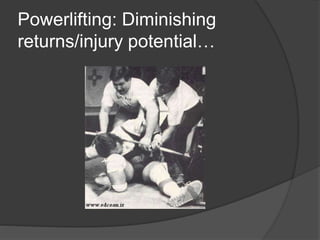
Powerlifting: Diminishing 
returns/injury potential…
Functional training 
Training with much better application to 
“real life” than traditional strength 
training and cardio. 
Balance, unstable, unilateral training. 
Great branding. 
Isn’t increased muscle mass and 
strength functional?
Conditioning 
In theory, getting the 
benefits of doing cardio 
(burning calories, 
cardio-vascular fitness, 
endurance, etc.) without 
actually having to do 
cardio. 
Involves performing a 
series of strength 
training exercises, for a 
period of time, with little 
to no rest. 
Theory: best of all 
worlds
Conditioning, cont. 
In the 1980’s we called it either circuit training 
or getting in shape for our sport 
With 21st century branding you have: 
CrossFit 
Insanity 
P90X 
High intensity interval training 
Metabolic conditioning 
MetCon 
Conditioning 
Etc… 
“Outward show is a wonderful perverter of 
reason.” Marcus Aurelius, Meditations.
Conditioning 
Benefits: 
Group setting good for adherence 
Variety, “fun,” not boring 
Easy to increase/decrease intensity 
Concerns: 
One size doesn’t fit all 
Group setting also promotes injuries and 
overtraining/peer pressure 
Branding leads to dogma 
Cardio can be very intense too, most people just 
don’t want to do it at that level – too hard 
“The first rule of CrossFit is to talk about CrossFit…”
Conditioning: What about 
cardio? 
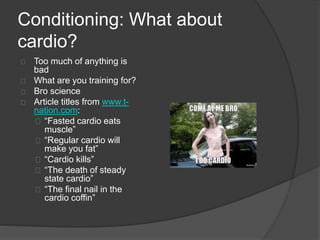
Too much of anything is 
bad 
What are you training for? 
Bro science 
Article titles from www.t-nation. 
com: 
“Fasted cardio eats 
muscle” 
“Regular cardio will 
make you fat” 
“Cardio kills” 
“The death of steady 
state cardio” 
“The final nail in the 
cardio coffin”
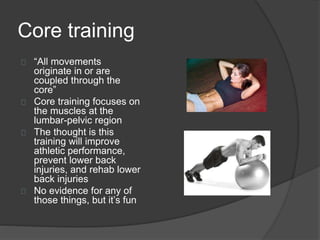
Core training 
“All movements 
originate in or are 
coupled through the 
core” 
Core training focuses on 
the muscles at the 
lumbar-pelvic region 
The thought is this 
training will improve 
athletic performance, 
prevent lower back 
injuries, and rehab lower 
back injuries 
No evidence for any of 
those things, but it’s fun
Core training 
Stabilization exercises 
“Classic” exercises 
Balance exercises
FMS/Corrective exercises 
There are things fundamentally wrong 
with how you move. 
If these things are not fixed, you will be 
(or are) in severe pain and will possibly 
be disabled later in life. 
A functional movement screen (FMS) 
can diagnose these things and then a 
corrective exercise program can be 
designed to help you.
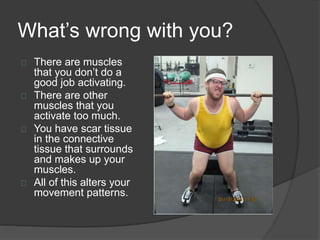
What’s wrong with you? 
There are muscles 
that you don’t do a 
good job activating. 
There are other 
muscles that you 
activate too much. 
You have scar tissue 
in the connective 
tissue that surrounds 
and makes up your 
muscles. 
All of this alters your 
movement patterns.
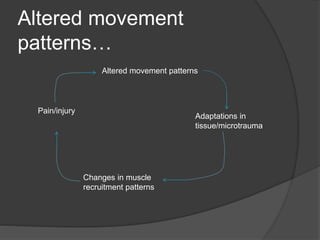
Altered movement 
patterns… 
Altered movement patterns 
Adaptations in 
tissue/microtrauma 
Changes in muscle 
recruitment patterns 
Pain/injury
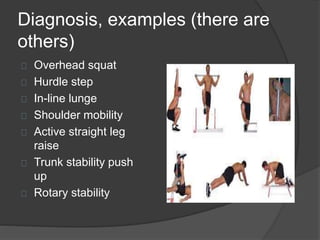
Diagnosis, examples (there are 
others) 
Overhead squat 
Hurdle step 
In-line lunge 
Shoulder mobility 
Active straight leg 
raise 
Trunk stability push 
up 
Rotary stability
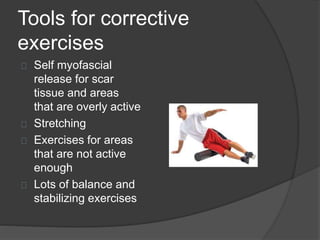
Tools for corrective 
exercises 
Self myofascial 
release for scar 
tissue and areas 
that are overly active 
Stretching 
Exercises for areas 
that are not active 
enough 
Lots of balance and 
stabilizing exercises
Thoughts on corrective 
approaches 
Awesome marketing and sales potential 
Sounds great 
No research basis 
Research disputes foam rolling, flexibility 
and neural activation, and is mixed on the 
FMS 
Makes assumption about how the body 
functions that aren’t really founded in 
anything 
“Skepticism is the mother of security” 
Frederick the Great
“Since, however, the blind leads the blind they fall into 
the ditch together.” Tertullian, Against Marcion.

Fitness tools and trends

  • 1.
    John M. Cissik “There is nothing more difficult to carry out, nor more doubtful of success, nor more dangerous to handle, than to initiate a new order of things.” Machiavelli, The Prince.
  • 2.
    Tools What theyare Advantages/Disadvantages How they are used
  • 3.
    Tools Olympic lifts Powerlifts Assistance exercises Kettlebells Heavy ropes Suspension training
  • 4.
    Trends Functional training Conditioning Core training FMS/Corrective exercises
  • 5.
    Olympic Lifting: Cautions Very fast, not forgiving of mistakes Requires specialized equipment Requires specialized instruction Very technical, takes a long time to learn
  • 6.
  • 7.
    Functional training Trainingwith much better application to “real life” than traditional strength training and cardio. Balance, unstable, unilateral training. Great branding. Isn’t increased muscle mass and strength functional?
  • 8.
    Conditioning In theory,getting the benefits of doing cardio (burning calories, cardio-vascular fitness, endurance, etc.) without actually having to do cardio. Involves performing a series of strength training exercises, for a period of time, with little to no rest. Theory: best of all worlds
  • 9.
    Conditioning, cont. Inthe 1980’s we called it either circuit training or getting in shape for our sport With 21st century branding you have: CrossFit Insanity P90X High intensity interval training Metabolic conditioning MetCon Conditioning Etc… “Outward show is a wonderful perverter of reason.” Marcus Aurelius, Meditations.
  • 10.
    Conditioning Benefits: Groupsetting good for adherence Variety, “fun,” not boring Easy to increase/decrease intensity Concerns: One size doesn’t fit all Group setting also promotes injuries and overtraining/peer pressure Branding leads to dogma Cardio can be very intense too, most people just don’t want to do it at that level – too hard “The first rule of CrossFit is to talk about CrossFit…”
  • 11.
    Conditioning: What about cardio? Too much of anything is bad What are you training for? Bro science Article titles from www.t-nation. com: “Fasted cardio eats muscle” “Regular cardio will make you fat” “Cardio kills” “The death of steady state cardio” “The final nail in the cardio coffin”
  • 12.
    Core training “Allmovements originate in or are coupled through the core” Core training focuses on the muscles at the lumbar-pelvic region The thought is this training will improve athletic performance, prevent lower back injuries, and rehab lower back injuries No evidence for any of those things, but it’s fun
  • 13.
    Core training Stabilizationexercises “Classic” exercises Balance exercises
  • 14.
    FMS/Corrective exercises Thereare things fundamentally wrong with how you move. If these things are not fixed, you will be (or are) in severe pain and will possibly be disabled later in life. A functional movement screen (FMS) can diagnose these things and then a corrective exercise program can be designed to help you.
  • 15.
    What’s wrong withyou? There are muscles that you don’t do a good job activating. There are other muscles that you activate too much. You have scar tissue in the connective tissue that surrounds and makes up your muscles. All of this alters your movement patterns.
  • 16.
    Altered movement patterns… Altered movement patterns Adaptations in tissue/microtrauma Changes in muscle recruitment patterns Pain/injury
  • 17.
    Diagnosis, examples (thereare others) Overhead squat Hurdle step In-line lunge Shoulder mobility Active straight leg raise Trunk stability push up Rotary stability
  • 18.
    Tools for corrective exercises Self myofascial release for scar tissue and areas that are overly active Stretching Exercises for areas that are not active enough Lots of balance and stabilizing exercises
  • 19.
    Thoughts on corrective approaches Awesome marketing and sales potential Sounds great No research basis Research disputes foam rolling, flexibility and neural activation, and is mixed on the FMS Makes assumption about how the body functions that aren’t really founded in anything “Skepticism is the mother of security” Frederick the Great
  • 20.
    “Since, however, theblind leads the blind they fall into the ditch together.” Tertullian, Against Marcion.