PRESENTED BY
     M.SRINIVASAN
PGT(MATHS), ZIET, MUMBAI
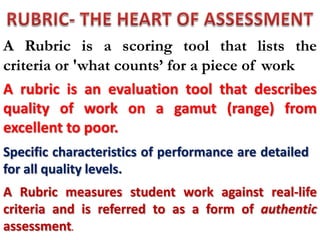
A Rubric is a scoring tool that lists the
criteria or 'what counts’ for a piece of work
A rubric is an evaluation tool that describes
quality of work on a gamut (range) from
excellent to poor.
Specific characteristics of performance are detailed
for all quality levels.
A Rubric measures student work against real-life
criteria and is referred to as a form of authentic
assessment.
RUBRIC is a guide listing
specific criteria for grading or
scoring     academic     papers,
projects, or tests
A scoring rubric is an attempt to
communicate expectations of
quality around a task
FOCUS ON MEASURING A STATED OBJECTIVE
 (PERFORMANCE, BEHAVIOR, OR QUALITY)
USE A RANGE TO RATE PERFORMANCE
CONTAIN SPECIFIC PERFORMANCE
 CHARACTERISTICS   ARRANGED   IN
 LEVELS INDICATING THE DEGREE TO
 WHICH STANDARD HAS BEEN MET
 A RUBRIC INCLUDES LEVELS OF POTENTIAL
  ACHIEVEMENT FOR EACH CRITERION, AND WORK
  OR PERFORMANCE SAMPLES THAT TYPIFY EACH
  OF THOSE LEVELS
LEVELS OF ACHIEVEMENT ARE OFTEN GIVEN
 NUMERICAL SCORES
A SUMMARY SCORE FOR THE WORK BEING
 ASSESSED MAY BE PRODUCED BY ADDING THE
 SCORES FOR EACH CRITERION.
 THE RUBRIC MAY ALSO INCLUDE SPACE FOR THE
  JUDGE TO DESCRIBE THE REASONS FOR EACH
  JUDGMENT OR TO MAKE SUGGESTIONS
• Identify a learning goal
• Choose outcomes that may be measured
  with a rubric
• Develop or adopt (and adapt) an existing
  rubric
• Share it with students
• Assess / Grade
• Analyze and report results
• Needs Improvement...Satisfactory...Good...Exemplary
• Beginning...Developing...Accomplished...Exemplary
• Needs work...Good...Excellent
• Novice...Apprentice...Proficient...Distinguished
• Numeric scale ranging from 1 to 5, for example
DESCRIBES LEVELS OF PERFORMANCE FOR EACH
CRITERION TO ASSESS STUDENT PERFORMANCE ON
EACH OF THEM.
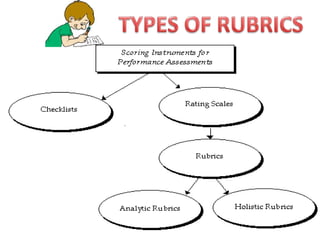
Analytical rubrics are designed to assess
students' work based on specified criteria and
different degrees of quality of the assignment.
Analytic rubrics are more common because teachers
typically want to           assess  each criterion
separately, particularly for assignments that involve
a larger number of criteria
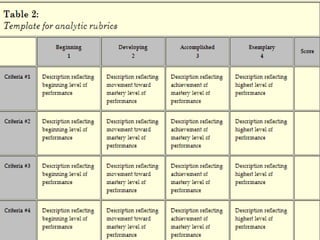
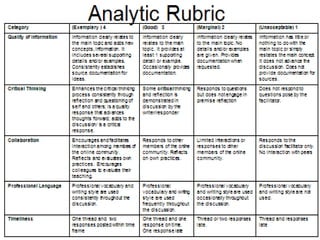
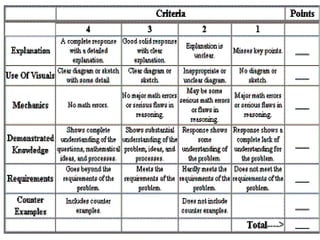
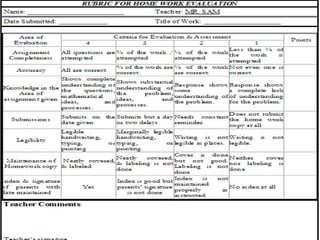
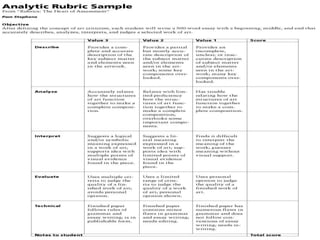
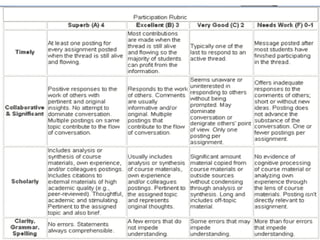
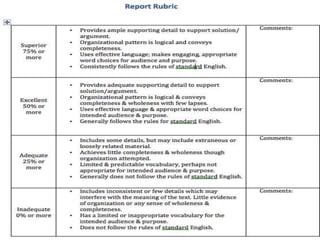
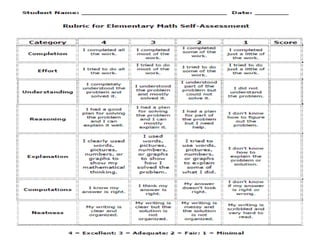
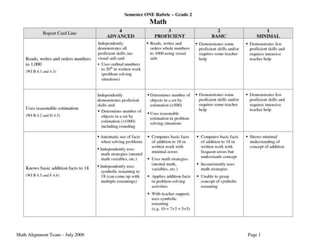
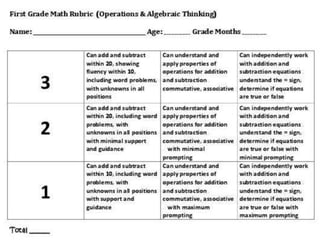
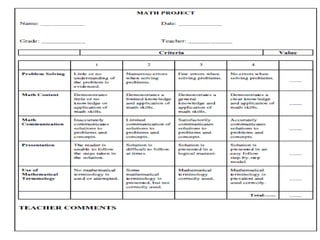
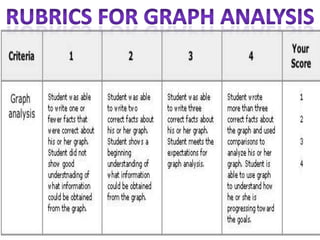
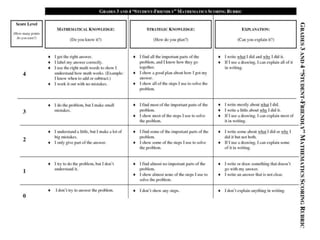
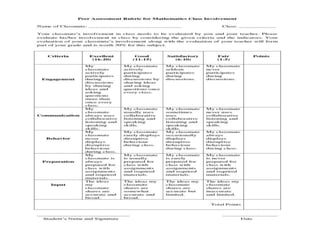
An analytic rubric resembles a grid with the criteria
for a student product listed in the leftmost column
and with levels of performance listed across the top
row often using numbers and/or descriptive tags
When scoring with an analytic rubric each of
the criteria is scored individually
The cells within the center of the rubric may be
left blank or may contain descriptions of what the
specified criteria look like for each level of
performance
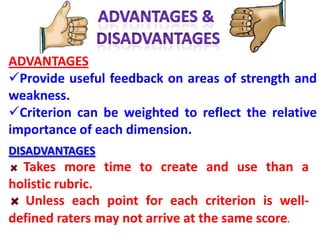
ADVANTAGES
Provide useful feedback on areas of strength and
weakness.
Criterion can be weighted to reflect the relative
importance of each dimension.
DISADVANTAGES
  Takes more time to create and use than a
holistic rubric.
   Unless each point for each criterion is well-
defined raters may not arrive at the same score.
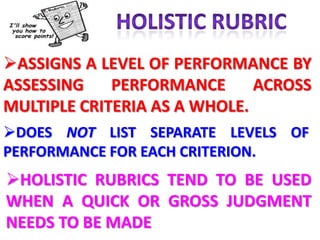
ASSIGNS A LEVEL OF PERFORMANCE BY
ASSESSING    PERFORMANCE      ACROSS
MULTIPLE CRITERIA AS A WHOLE.
DOES NOT LIST SEPARATE LEVELS OF
PERFORMANCE FOR EACH CRITERION.
HOLISTIC RUBRICS TEND TO BE USED
WHEN A QUICK OR GROSS JUDGMENT
NEEDS TO BE MADE
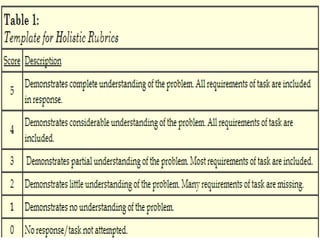
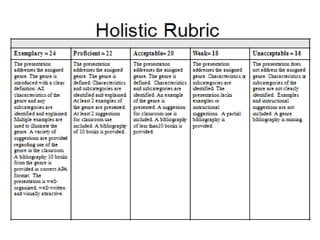
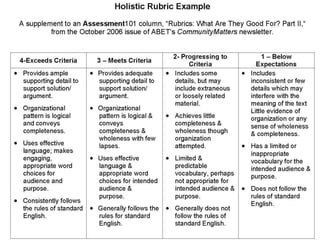
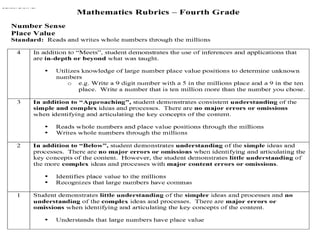
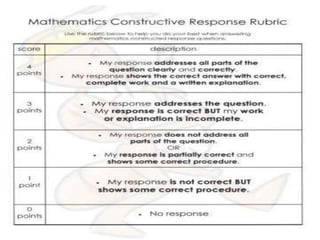
A holistic rubric consists of a single scale with all
criteria to be included in the evaluation being
considered together (e.g., clarity, organization, and
mechanics).
  With a holistic rubric the rater assigns a single
score (usually on a 1 to 4 or 1 to 6 point scale)
based on an overall judgment of the student
work.
  The rater matches an entire piece of student work
to a single description on the scale.
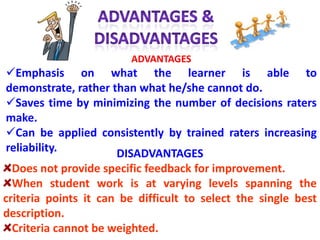
ADVANTAGES
Emphasis on what the learner is able to
demonstrate, rather than what he/she cannot do.
Saves time by minimizing the number of decisions raters
make.
Can be applied consistently by trained raters increasing
reliability.         DISADVANTAGES
  Does not provide specific feedback for improvement.
  When student work is at varying levels spanning the
criteria points it can be difficult to select the single best
description.
  Criteria cannot be weighted.
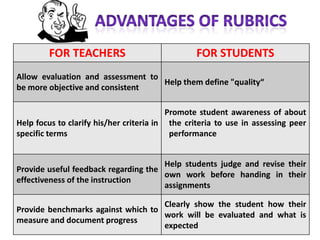
FOR TEACHERS                             FOR STUDENTS
Allow evaluation and assessment to
                                   Help them define "quality“
be more objective and consistent

                                          Promote student awareness of about
Help focus to clarify his/her criteria in the criteria to use in assessing peer
specific terms                             performance


                                      Help students judge and revise their
Provide useful feedback regarding the
                                      own work before handing in their
effectiveness of the instruction
                                      assignments

                                    Clearly show the student how their
Provide benchmarks against which to
                                    work will be evaluated and what is
measure and document progress
                                    expected
Rubrics ppt
Rubrics ppt
Rubrics ppt
Rubrics ppt
Rubrics ppt
Rubrics ppt
Rubrics ppt
Rubrics ppt
Rubrics ppt
Rubrics ppt
Rubrics ppt

Rubrics ppt

  • 1.
    PRESENTED BY M.SRINIVASAN PGT(MATHS), ZIET, MUMBAI
  • 8.
    A Rubric isa scoring tool that lists the criteria or 'what counts’ for a piece of work A rubric is an evaluation tool that describes quality of work on a gamut (range) from excellent to poor. Specific characteristics of performance are detailed for all quality levels. A Rubric measures student work against real-life criteria and is referred to as a form of authentic assessment.
  • 9.
    RUBRIC is aguide listing specific criteria for grading or scoring academic papers, projects, or tests A scoring rubric is an attempt to communicate expectations of quality around a task
  • 10.
    FOCUS ON MEASURINGA STATED OBJECTIVE (PERFORMANCE, BEHAVIOR, OR QUALITY) USE A RANGE TO RATE PERFORMANCE CONTAIN SPECIFIC PERFORMANCE CHARACTERISTICS ARRANGED IN LEVELS INDICATING THE DEGREE TO WHICH STANDARD HAS BEEN MET
  • 11.
     A RUBRICINCLUDES LEVELS OF POTENTIAL ACHIEVEMENT FOR EACH CRITERION, AND WORK OR PERFORMANCE SAMPLES THAT TYPIFY EACH OF THOSE LEVELS LEVELS OF ACHIEVEMENT ARE OFTEN GIVEN NUMERICAL SCORES A SUMMARY SCORE FOR THE WORK BEING ASSESSED MAY BE PRODUCED BY ADDING THE SCORES FOR EACH CRITERION.  THE RUBRIC MAY ALSO INCLUDE SPACE FOR THE JUDGE TO DESCRIBE THE REASONS FOR EACH JUDGMENT OR TO MAKE SUGGESTIONS
  • 12.
    • Identify alearning goal • Choose outcomes that may be measured with a rubric • Develop or adopt (and adapt) an existing rubric • Share it with students • Assess / Grade • Analyze and report results
  • 13.
    • Needs Improvement...Satisfactory...Good...Exemplary •Beginning...Developing...Accomplished...Exemplary • Needs work...Good...Excellent • Novice...Apprentice...Proficient...Distinguished • Numeric scale ranging from 1 to 5, for example
  • 16.
    DESCRIBES LEVELS OFPERFORMANCE FOR EACH CRITERION TO ASSESS STUDENT PERFORMANCE ON EACH OF THEM. Analytical rubrics are designed to assess students' work based on specified criteria and different degrees of quality of the assignment. Analytic rubrics are more common because teachers typically want to assess each criterion separately, particularly for assignments that involve a larger number of criteria
  • 17.
    An analytic rubricresembles a grid with the criteria for a student product listed in the leftmost column and with levels of performance listed across the top row often using numbers and/or descriptive tags When scoring with an analytic rubric each of the criteria is scored individually The cells within the center of the rubric may be left blank or may contain descriptions of what the specified criteria look like for each level of performance
  • 24.
    ADVANTAGES Provide useful feedbackon areas of strength and weakness. Criterion can be weighted to reflect the relative importance of each dimension. DISADVANTAGES Takes more time to create and use than a holistic rubric. Unless each point for each criterion is well- defined raters may not arrive at the same score.
  • 25.
    ASSIGNS A LEVELOF PERFORMANCE BY ASSESSING PERFORMANCE ACROSS MULTIPLE CRITERIA AS A WHOLE. DOES NOT LIST SEPARATE LEVELS OF PERFORMANCE FOR EACH CRITERION. HOLISTIC RUBRICS TEND TO BE USED WHEN A QUICK OR GROSS JUDGMENT NEEDS TO BE MADE
  • 26.
    A holistic rubricconsists of a single scale with all criteria to be included in the evaluation being considered together (e.g., clarity, organization, and mechanics). With a holistic rubric the rater assigns a single score (usually on a 1 to 4 or 1 to 6 point scale) based on an overall judgment of the student work. The rater matches an entire piece of student work to a single description on the scale.
  • 31.
    ADVANTAGES Emphasis on whatthe learner is able to demonstrate, rather than what he/she cannot do. Saves time by minimizing the number of decisions raters make. Can be applied consistently by trained raters increasing reliability. DISADVANTAGES Does not provide specific feedback for improvement. When student work is at varying levels spanning the criteria points it can be difficult to select the single best description. Criteria cannot be weighted.
  • 32.
    FOR TEACHERS FOR STUDENTS Allow evaluation and assessment to Help them define "quality“ be more objective and consistent Promote student awareness of about Help focus to clarify his/her criteria in the criteria to use in assessing peer specific terms performance Help students judge and revise their Provide useful feedback regarding the own work before handing in their effectiveness of the instruction assignments Clearly show the student how their Provide benchmarks against which to work will be evaluated and what is measure and document progress expected