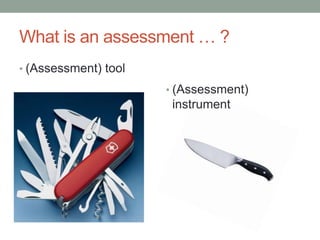
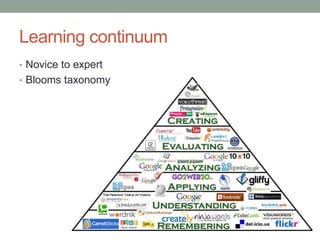
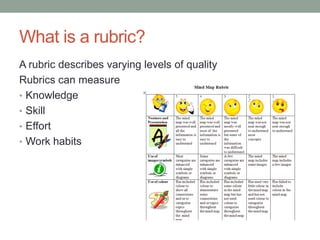
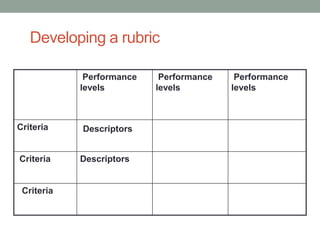
This document discusses assessment tools and rubrics. It defines assessment tools and the four main types of assessment: diagnostic, evaluative, formative, and summative. It explains validity, reliability, and the learning continuum from novice to expert. Methods of assessment include direct observation, projects, essays, and reports from supervisors. The document defines rubrics and how they describe varying levels of quality. It provides an example rubric and discusses benefits of rubrics for students and teachers, such as making expectations clear, measuring progress, and developing responsibility. Reasons to involve students in designing rubrics are also presented. The document concludes with instructions on how to design a rubric.