Downloaded 138 times
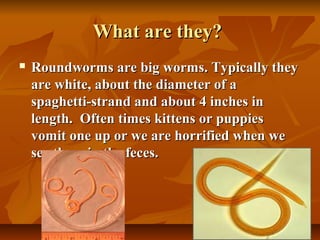

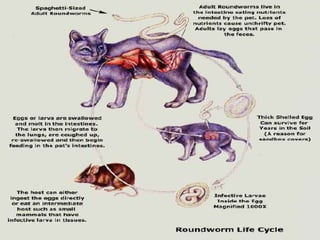

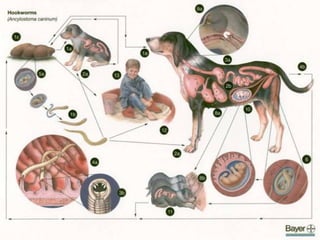
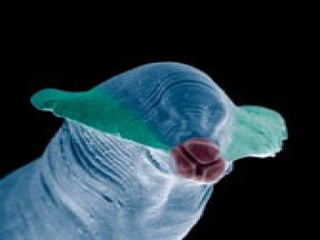
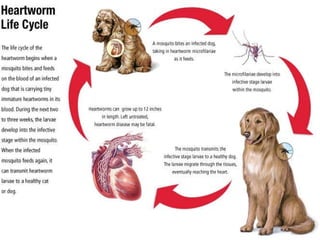

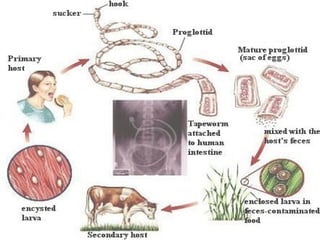
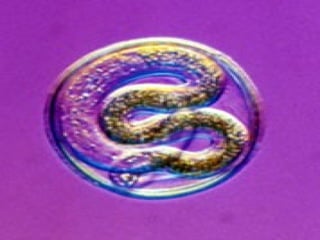
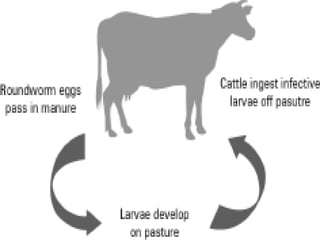

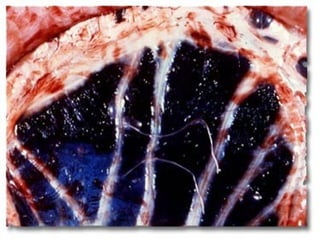


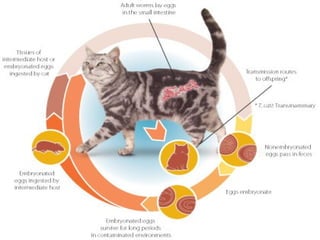




Roundworms have complex life cycles involving eggs passed in feces that develop into infective larvae. Puppies, kittens, and young animals are most commonly infected through prenatal, nursing, or environmental exposure. Roundworm larvae migrate through tissues before maturing and reproducing in the intestines, completing their life cycles. Regular deworming is especially important for hunting or outdoor animals to prevent roundworm infection and spread.


