Bone Marrow Transplant in
Oncology
SK REJAUL
DEPARTMENT OF BIOMEDICAL ENGINEERING
NETAJI SUBHASH ENGINEERING COLLEGE
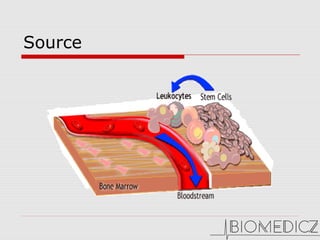
Source
Pathology
 Treat Leukemia by chemotherapy
 Regeneration of normal marrow
 Chemotherapy alone cannot eliminate
all malignant cells
 Stem cell transplants.
Transplant
 Patient's bone marrow stem cells are
replaced with healthy cells
 Existing bone marrow and abnormal
leukocytes killed
 Chemotherapy and radiation
 Next bone marrow containing healthy
stem cells re-infused
Procedure
 Bone Marrow versus Peripheral Stem
Cells
 Accessibility
 Cost
 Sample size
 Donor/Patient factors
 Expertise
Adult Stem Cell Transplant
Procedure
 Most blood stem cells reside in the
bone marrow and a small number are
present in the bloodstream
 Multipotent peripheral blood stem
cells
 Can be obtained from drawn blood
 PBSCs are easier to collect than bone
marrow stem cells
Harvesting
Umbilical Cord Blood Stem Cell
Transplant
 Umbilical cords have traditionally
been discarded as a by-product of the
birth process.
 Pluripotent-stem-cell-rich blood found
in the umbilical cord rich in marrow
stem cells and PBSC’s.
Umbilical Cord Tx
 Umbilical cord transplants are less
prone to rejection.
 Cells have not yet developed the
features that can be recognized and
attacked by the recipient's immune
system.
 Umbilical cord blood lacks well-
developed immune cells, there is
smaller incidence of graft versus host
disease.
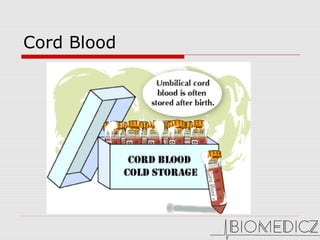
Cord Blood
THE FUNCTION OF BMT UNIT
Handling services & Intensive care
for:
 Mobilization / stem cell collection &
infusion.
 Chemotherapy for pre - transplant
 Pre & post care for Transplant
patients.
Transplantation
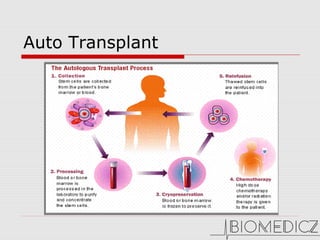
    Autologous 
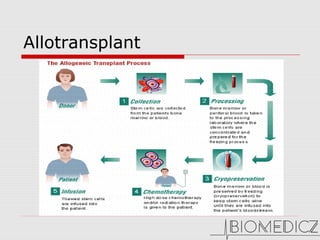
    Allogeneic 
    Syngeneic 
Indications
 Hematological diseases
Benign : Thallassaemia, Aplastic 
    Anaemia 
Malignant : Leukemia Lymphoma 
       Myeloma
 Immune deficiency disorders 
Pediatric and Adult
 Neurological Disease (MS)
Auto Transplant
Recovering from the transplant 
 Recovery of normal levels cells is called 
engraftment
 Day 8 - 12 
 Neutrophil engraftment important (GCSF) 
may be given to accelerate the process
 Platelets are the next to return with red 
cells last.
 Commonly patients require transfusion of 
red cells and platelets following a 
transplant.
 Discharge upon neutrophil & platelet 
engraftment
Allotransplant
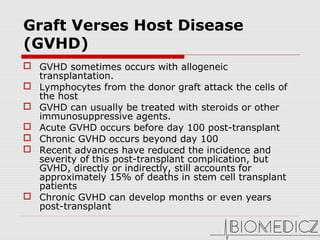
Graft Verses Host Disease
(GVHD) 
 GVHD sometimes occurs with allogeneic 
transplantation. 
 Lymphocytes from the donor graft attack the cells of 
the host
 GVHD can usually be treated with steroids or other 
immunosuppressive agents. 
 Acute GVHD occurs before day 100 post-transplant 
 Chronic GVHD occurs beyond day 100 
 Recent advances have reduced the incidence and 
severity of this post-transplant complication, but 
GVHD, directly or indirectly, still accounts for 
approximately 15% of deaths in stem cell transplant 
patients
 Chronic GVHD can develop months or even years 
post-transplant
GVHD
 Skin/Hair
Rash, scleroderma, lichenoid skin changes, dyspigmentation,alopecia
 Eyes
Dryness, abnormal Schirmer's Test, cornealerosions, conjunctivitis
 Mouth Atrophic changes, lichenoid changes, mucositis,ulcers, xerostomia, dental
caries
 Lungs
Bronchiolitis obliterans
 GI tract
Esophageal involvement, chronic nausea/vomiting, chronic diarrhea,
malabsorption, fibrosis, abdomina l pain/cramps
 Liver
Abnormal LFTs, biopsy abnormalities
 Genitourinary
Vaginitis, strictures, stenosis, cystitis
 Musculoskeletal
Arthritis, contractures, myositis, myasthenia, fascities
 Hematologic
Thrombocytopenia, eosinophilia, autoantibodies
Transplantation
 Unit is important
 Expertise
 Facility
Isolation
Phoresis
Platelet and blood support
Motivated patient
Problems
 Intensive process that consumes
resources
 HIV
 Donor registry limited
 Other health care priorities

Bone Marrow Transplant in Oncology

  • 1.
    Bone Marrow Transplantin Oncology SK REJAUL DEPARTMENT OF BIOMEDICAL ENGINEERING NETAJI SUBHASH ENGINEERING COLLEGE
  • 2.
  • 3.
    Pathology  Treat Leukemiaby chemotherapy  Regeneration of normal marrow  Chemotherapy alone cannot eliminate all malignant cells  Stem cell transplants.
  • 4.
    Transplant  Patient's bonemarrow stem cells are replaced with healthy cells  Existing bone marrow and abnormal leukocytes killed  Chemotherapy and radiation  Next bone marrow containing healthy stem cells re-infused
  • 5.
    Procedure  Bone Marrowversus Peripheral Stem Cells  Accessibility  Cost  Sample size  Donor/Patient factors  Expertise
  • 6.
    Adult Stem CellTransplant
  • 7.
    Procedure  Most bloodstem cells reside in the bone marrow and a small number are present in the bloodstream  Multipotent peripheral blood stem cells  Can be obtained from drawn blood  PBSCs are easier to collect than bone marrow stem cells
  • 8.
  • 9.
    Umbilical Cord BloodStem Cell Transplant  Umbilical cords have traditionally been discarded as a by-product of the birth process.  Pluripotent-stem-cell-rich blood found in the umbilical cord rich in marrow stem cells and PBSC’s.
  • 10.
    Umbilical Cord Tx Umbilical cord transplants are less prone to rejection.  Cells have not yet developed the features that can be recognized and attacked by the recipient's immune system.  Umbilical cord blood lacks well- developed immune cells, there is smaller incidence of graft versus host disease.
  • 11.
  • 12.
    THE FUNCTION OFBMT UNIT Handling services & Intensive care for:  Mobilization / stem cell collection & infusion.  Chemotherapy for pre - transplant  Pre & post care for Transplant patients.
  • 13.
  • 14.
  • 15.
  • 16.
    Recovering from thetransplant   Recovery of normal levels cells is called  engraftment  Day 8 - 12   Neutrophil engraftment important (GCSF)  may be given to accelerate the process  Platelets are the next to return with red  cells last.  Commonly patients require transfusion of  red cells and platelets following a  transplant.  Discharge upon neutrophil & platelet  engraftment
  • 17.
  • 18.
    Graft Verses HostDisease (GVHD)   GVHD sometimes occurs with allogeneic  transplantation.   Lymphocytes from the donor graft attack the cells of  the host  GVHD can usually be treated with steroids or other  immunosuppressive agents.   Acute GVHD occurs before day 100 post-transplant   Chronic GVHD occurs beyond day 100   Recent advances have reduced the incidence and  severity of this post-transplant complication, but  GVHD, directly or indirectly, still accounts for  approximately 15% of deaths in stem cell transplant  patients  Chronic GVHD can develop months or even years  post-transplant
  • 19.
    GVHD  Skin/Hair Rash, scleroderma,lichenoid skin changes, dyspigmentation,alopecia  Eyes Dryness, abnormal Schirmer's Test, cornealerosions, conjunctivitis  Mouth Atrophic changes, lichenoid changes, mucositis,ulcers, xerostomia, dental caries  Lungs Bronchiolitis obliterans  GI tract Esophageal involvement, chronic nausea/vomiting, chronic diarrhea, malabsorption, fibrosis, abdomina l pain/cramps  Liver Abnormal LFTs, biopsy abnormalities  Genitourinary Vaginitis, strictures, stenosis, cystitis  Musculoskeletal Arthritis, contractures, myositis, myasthenia, fascities  Hematologic Thrombocytopenia, eosinophilia, autoantibodies
  • 20.
    Transplantation  Unit isimportant  Expertise  Facility Isolation Phoresis Platelet and blood support Motivated patient
  • 21.
    Problems  Intensive processthat consumes resources  HIV  Donor registry limited  Other health care priorities