Dr. Akif Ibn Salam
Medical officer
Medicine unit – II
Bone Marrow
Transplantation
BEST FOR You
O R G A N I C S C O M P A N Y
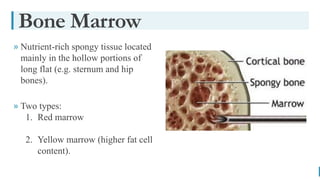
» Nutrient-rich spongy tissue located
mainly in the hollow portions of
long flat (e.g. sternum and hip
bones).
» Two types:
1. Red marrow
2. Yellow marrow (higher fat cell
content).
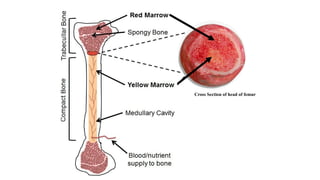
Bone Marrow
Cross Section of head of femur
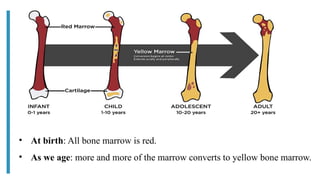
• At birth: All bone marrow is red.
• As we age: more and more of the marrow converts to yellow bone marrow.
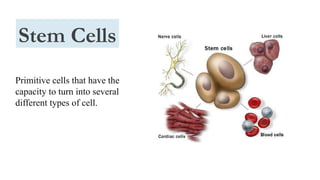
Primitive cells that have the
capacity to turn into several
different types of cell.
Stem Cells
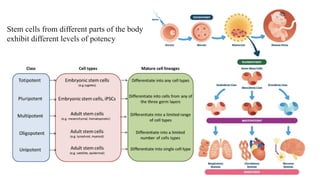
Stem cells from different parts of the body
exhibit different levels of potency
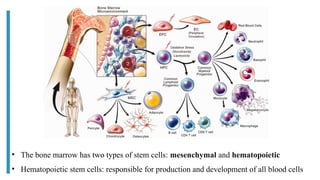
• The bone marrow has two types of stem cells: mesenchymal and hematopoietic
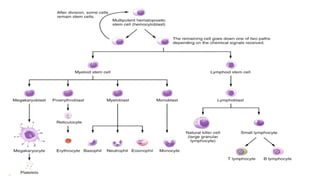
• Hematopoietic stem cells: responsible for production and development of all blood cells
BEST FOR You
O R G A N I C S C O M P A N Y
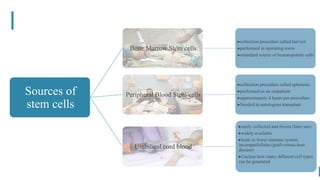
Sources of
stem cells
Bone Marrow Stem cells
▸collection procedure called harvest
▸performed in operating room
▸sstandard source of hematopoietic cells
Peripheral Blood Stem cells
▸collection procedure called apheresis
▸performed as an outpatient
▸approximately 4 hours per procedure
▸Needed in autologous transplant
Umbilical cord blood
▸easily collected and frozen (later use)
▸widely available
▸leads to fewer immune system
incompatibilities (graft-versus-host
disease)
▸Unclear how many different cell types
can be generated
BEST FOR You
O R G A N I C S C O M P A N Y
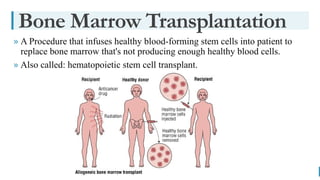
» A Procedure that infuses healthy blood-forming stem cells into patient to
replace bone marrow that's not producing enough healthy blood cells.
» Also called: hematopoietic stem cell transplant.
Bone Marrow Transplantation
BEST FOR You
O R G A N I C S C O M P A N Y
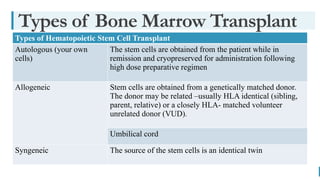
Types of Bone Marrow Transplant
Types of Hematopoietic Stem Cell Transplant
Autologous (your own
cells)
The stem cells are obtained from the patient while in
remission and cryopreserved for administration following
high dose preparative regimen
Allogeneic Stem cells are obtained from a genetically matched donor.
The donor may be related –usually HLA identical (sibling,
parent, relative) or a closely HLA- matched volunteer
unrelated donor (VUD).
Umbilical cord
Syngeneic The source of the stem cells is an identical twin
BEST FOR You
O R G A N I C S C O M P A N Y
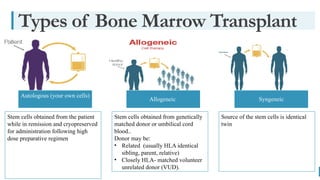
Types of Bone Marrow Transplant
Autologous (your own cells)
Allogeneic Syngeneic
Stem cells obtained from the patient
while in remission and cryopreserved
for administration following high
dose preparative regimen
Stem cells obtained from genetically
matched donor or umbilical cord
blood..
Donor may be:
• Related (usually HLA identical
sibling, parent, relative)
• Closely HLA- matched volunteer
unrelated donor (VUD).
Source of the stem cells is identical
twin
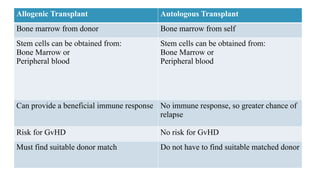
Allogenic Transplant Autologous Transplant
Bone marrow from donor Bone marrow from self
Stem cells can be obtained from:
Bone Marrow or
Peripheral blood
Stem cells can be obtained from:
Bone Marrow or
Peripheral blood
Can provide a beneficial immune response No immune response, so greater chance of
relapse
Risk for GvHD No risk for GvHD
Must find suitable donor match Do not have to find suitable matched donor
BEST FOR You
O R G A N I C S C O M P A N Y
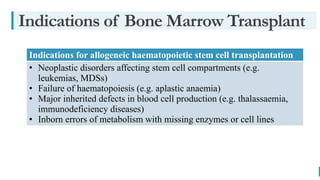
Indications of Bone Marrow Transplant
Indications for allogeneic haematopoietic stem cell transplantation
• Neoplastic disorders affecting stem cell compartments (e.g.
leukemias, MDSs)
• Failure of haematopoiesis (e.g. aplastic anaemia)
• Major inherited defects in blood cell production (e.g. thalassaemia,
immunodeficiency diseases)
• Inborn errors of metabolism with missing enzymes or cell lines
BEST FOR You
O R G A N I C S C O M P A N Y
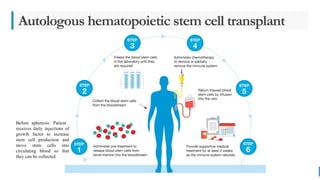
Autologous hematopoietic stem cell transplant
Before apheresis: Patient
receives daily injections of
growth factor to increase
stem cell production and
move stem cells into
circulating blood so that
they can be collected.
BEST FOR You
O R G A N I C S C O M P A N Y
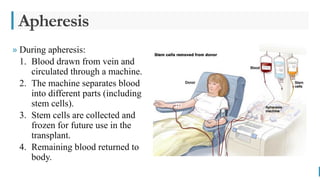
Apheresis
» During apheresis:
1. Blood drawn from vein and
circulated through a machine.
2. The machine separates blood
into different parts (including
stem cells).
3. Stem cells are collected and
frozen for future use in the
transplant.
4. Remaining blood returned to
body.
BEST FOR You
O R G A N I C S C O M P A N Y
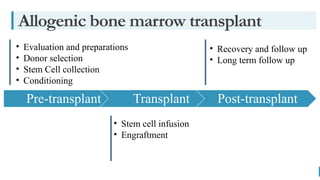
Allogenic bone marrow transplant
Pre-transplant Transplant Post-transplant
• Evaluation and preparations
• Donor selection
• Stem Cell collection
• Conditioning
• Stem cell infusion
• Engraftment
• Recovery and follow up
• Long term follow up
BEST FOR You
O R G A N I C S C O M P A N Y
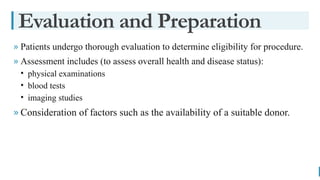
» Patients undergo thorough evaluation to determine eligibility for procedure.
» Assessment includes (to assess overall health and disease status):
• physical examinations
• blood tests
• imaging studies
» Consideration of factors such as the availability of a suitable donor.
Evaluation and Preparation
BEST FOR You
O R G A N I C S C O M P A N Y
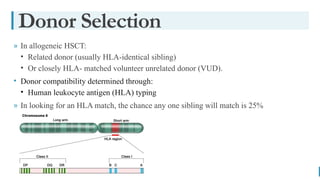
» In allogeneic HSCT:
• Related donor (usually HLA-identical sibling)
• Or closely HLA- matched volunteer unrelated donor (VUD).
• Donor compatibility determined through:
• Human leukocyte antigen (HLA) typing
» In looking for an HLA match, the chance any one sibling will match is 25%
Donor Selection
BEST FOR You
O R G A N I C S C O M P A N Y
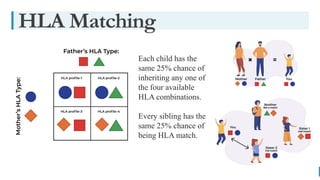
HLA Matching
Each child has the
same 25% chance of
inheriting any one of
the four available
HLA combinations.
Every sibling has the
same 25% chance of
being HLA match.
BEST FOR You
O R G A N I C S C O M P A N Y
» Obtained from donor’s bone marrow or peripheral blood (depending on specific
transplantation method).
Stem Cell Collection
BEST FOR You
O R G A N I C S C O M P A N Y
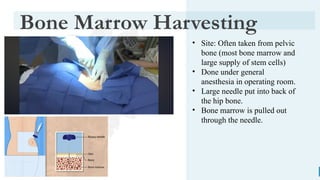
Bone Marrow Harvesting
• Site: Often taken from pelvic
bone (most bone marrow and
large supply of stem cells)
• Done under general
anesthesia in operating room.
• Large needle put into back of
the hip bone.
• Bone marrow is pulled out
through the needle.
BEST FOR You
O R G A N I C S C O M P A N Y
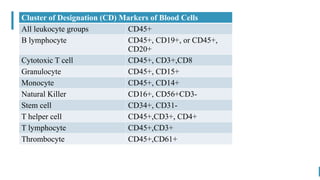
Cluster of Designation (CD) Markers of Blood Cells
All leukocyte groups CD45+
B lymphocyte CD45+, CD19+, or CD45+,
CD20+
Cytotoxic T cell CD45+, CD3+,CD8
Granulocyte CD45+, CD15+
Monocyte CD45+, CD14+
Natural Killer CD16+, CD56+CD3-
Stem cell CD34+, CD31-
T helper cell CD45+,CD3+, CD4+
T lymphocyte CD45+,CD3+
Thrombocyte CD45+,CD61+
BEST FOR You
O R G A N I C S C O M P A N Y
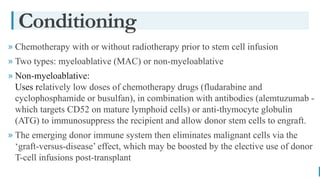
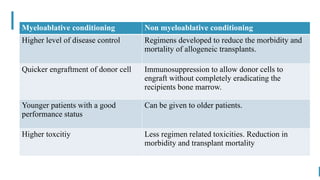
» Chemotherapy with or without radiotherapy prior to stem cell infusion
» Two types: myeloablative (MAC) or non-myeloablative
» Non-myeloablative:
Uses relatively low doses of chemotherapy drugs (fludarabine and
cyclophosphamide or busulfan), in combination with antibodies (alemtuzumab -
which targets CD52 on mature lymphoid cells) or anti-thymocyte globulin
(ATG) to immunosuppress the recipient and allow donor stem cells to engraft.
» The emerging donor immune system then eliminates malignant cells via the
‘graft-versus-disease’ effect, which may be boosted by the elective use of donor
T-cell infusions post-transplant
Conditioning
BEST FOR You
O R G A N I C S C O M P A N Y
Myeloablative conditioning Non myeloablative conditioning
Higher level of disease control Regimens developed to reduce the morbidity and
mortality of allogeneic transplants.
Quicker engraftment of donor cell Immunosuppression to allow donor cells to
engraft without completely eradicating the
recipients bone marrow.
Younger patients with a good
performance status
Can be given to older patients.
Higher toxcitiy Less regimen related toxicities. Reduction in
morbidity and transplant mortality
BEST FOR You
O R G A N I C S C O M P A N Y
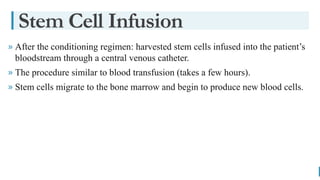
» After the conditioning regimen: harvested stem cells infused into the patient’s
bloodstream through a central venous catheter.
» The procedure similar to blood transfusion (takes a few hours).
» Stem cells migrate to the bone marrow and begin to produce new blood cells.
Stem Cell Infusion
BEST FOR You
O R G A N I C S C O M P A N Y
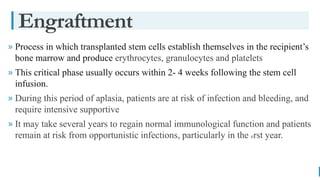
» Process in which transplanted stem cells establish themselves in the recipient’s
bone marrow and produce erythrocytes, granulocytes and platelets
» This critical phase usually occurs within 2- 4 weeks following the stem cell
infusion.
» During this period of aplasia, patients are at risk of infection and bleeding, and
require intensive supportive
» It may take several years to regain normal immunological function and patients
remain at risk from opportunistic infections, particularly in the rst year.

Engraftment
BEST FOR You
O R G A N I C S C O M P A N Y
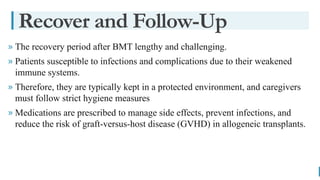
» The recovery period after BMT lengthy and challenging.
» Patients susceptible to infections and complications due to their weakened
immune systems.
» Therefore, they are typically kept in a protected environment, and caregivers
must follow strict hygiene measures
» Medications are prescribed to manage side effects, prevent infections, and
reduce the risk of graft-versus-host disease (GVHD) in allogeneic transplants.
Recover and Follow-Up
BEST FOR You
O R G A N I C S C O M P A N Y
» After discharge from the hospital, patients continue to receive regular follow-up
care to monitor their recovery and assess any late complications, such as
GVHD or the recurrence of the original disease.
» This long-term follow-up may last for several years or even a lifetime,
depending on the patient’s condition.
Long Term Follow-Up
BEST FOR You
O R G A N I C S C O M P A N Y
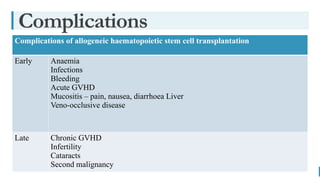
Complications
Complications of allogeneic haematopoietic stem cell transplantation
Early Anaemia
Infections
Bleeding
Acute GVHD
Mucositis – pain, nausea, diarrhoea Liver
Veno-occlusive disease
Late Chronic GVHD
Infertility
Cataracts
Second malignancy
BEST FOR You
O R G A N I C S C O M P A N Y
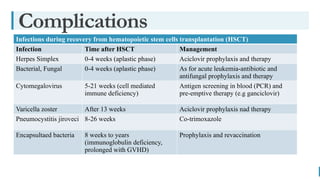
Complications
Infections during recovery from hematopoietic stem cells transplantation (HSCT)
Infection Time after HSCT Management
Herpes Simplex 0-4 weeks (aplastic phase) Aciclovir prophylaxis and therapy
Bacterial, Fungal 0-4 weeks (aplastic phase) As for acute leukemia-antibiotic and
antifungal prophylaxis and therapy
Cytomegalovirus 5-21 weeks (cell mediated
immune deficiency)
Antigen screening in blood (PCR) and
pre-emptive therapy (e.g ganciclovir)
Varicella zoster After 13 weeks Aciclovir prophylaxis nad therapy
Pneumocystitis jiroveci 8-26 weeks Co-trimoxazole
Encapsultaed bacteria 8 weeks to years
(immunoglobulin deficiency,
prolonged with GVHD)
Prophylaxis and revaccination
BEST FOR You
O R G A N I C S C O M P A N Y
32
BEST FOR You
O R G A N I C S C O M P A N Y
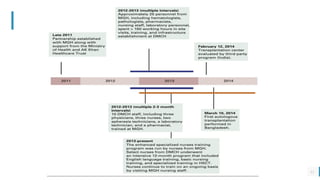
Interest at DMCH
» In 2012: MOHFW and political leadership of Bangladesh became interested
in establishing an HSCT program at DMCH.
» MOHFW approached transplantation physicians at the MGH Cancer Center
to develop a national transplantation program.
» Intention of the program: provide treatment of non malignant hematologic
disorders that are curable by HSCT in Bangladesh.
» The Bangladesh government provided funding for the endeavor.
» The initial goal was to build a comprehensive program and center of
excellence for hematologic malignancies.
Thank you

Bone Marrow Transplantation: Principles, Types, Indications, and Clinical Process

  • 1.
    Dr. Akif IbnSalam Medical officer Medicine unit – II Bone Marrow Transplantation
  • 2.
    BEST FOR You OR G A N I C S C O M P A N Y » Nutrient-rich spongy tissue located mainly in the hollow portions of long flat (e.g. sternum and hip bones). » Two types: 1. Red marrow 2. Yellow marrow (higher fat cell content). Bone Marrow
  • 3.
    Cross Section ofhead of femur
  • 4.
    • At birth:All bone marrow is red. • As we age: more and more of the marrow converts to yellow bone marrow.
  • 5.
    Primitive cells thathave the capacity to turn into several different types of cell. Stem Cells
  • 6.
    Stem cells fromdifferent parts of the body exhibit different levels of potency
  • 7.
    • The bonemarrow has two types of stem cells: mesenchymal and hematopoietic • Hematopoietic stem cells: responsible for production and development of all blood cells
  • 9.
    BEST FOR You OR G A N I C S C O M P A N Y Sources of stem cells Bone Marrow Stem cells ▸collection procedure called harvest ▸performed in operating room ▸sstandard source of hematopoietic cells Peripheral Blood Stem cells ▸collection procedure called apheresis ▸performed as an outpatient ▸approximately 4 hours per procedure ▸Needed in autologous transplant Umbilical cord blood ▸easily collected and frozen (later use) ▸widely available ▸leads to fewer immune system incompatibilities (graft-versus-host disease) ▸Unclear how many different cell types can be generated
  • 10.
    BEST FOR You OR G A N I C S C O M P A N Y » A Procedure that infuses healthy blood-forming stem cells into patient to replace bone marrow that's not producing enough healthy blood cells. » Also called: hematopoietic stem cell transplant. Bone Marrow Transplantation
  • 11.
    BEST FOR You OR G A N I C S C O M P A N Y Types of Bone Marrow Transplant Types of Hematopoietic Stem Cell Transplant Autologous (your own cells) The stem cells are obtained from the patient while in remission and cryopreserved for administration following high dose preparative regimen Allogeneic Stem cells are obtained from a genetically matched donor. The donor may be related –usually HLA identical (sibling, parent, relative) or a closely HLA- matched volunteer unrelated donor (VUD). Umbilical cord Syngeneic The source of the stem cells is an identical twin
  • 12.
    BEST FOR You OR G A N I C S C O M P A N Y Types of Bone Marrow Transplant Autologous (your own cells) Allogeneic Syngeneic Stem cells obtained from the patient while in remission and cryopreserved for administration following high dose preparative regimen Stem cells obtained from genetically matched donor or umbilical cord blood.. Donor may be: • Related (usually HLA identical sibling, parent, relative) • Closely HLA- matched volunteer unrelated donor (VUD). Source of the stem cells is identical twin
  • 13.
    Allogenic Transplant AutologousTransplant Bone marrow from donor Bone marrow from self Stem cells can be obtained from: Bone Marrow or Peripheral blood Stem cells can be obtained from: Bone Marrow or Peripheral blood Can provide a beneficial immune response No immune response, so greater chance of relapse Risk for GvHD No risk for GvHD Must find suitable donor match Do not have to find suitable matched donor
  • 14.
    BEST FOR You OR G A N I C S C O M P A N Y Indications of Bone Marrow Transplant Indications for allogeneic haematopoietic stem cell transplantation • Neoplastic disorders affecting stem cell compartments (e.g. leukemias, MDSs) • Failure of haematopoiesis (e.g. aplastic anaemia) • Major inherited defects in blood cell production (e.g. thalassaemia, immunodeficiency diseases) • Inborn errors of metabolism with missing enzymes or cell lines
  • 15.
    BEST FOR You OR G A N I C S C O M P A N Y Autologous hematopoietic stem cell transplant Before apheresis: Patient receives daily injections of growth factor to increase stem cell production and move stem cells into circulating blood so that they can be collected.
  • 16.
    BEST FOR You OR G A N I C S C O M P A N Y Apheresis » During apheresis: 1. Blood drawn from vein and circulated through a machine. 2. The machine separates blood into different parts (including stem cells). 3. Stem cells are collected and frozen for future use in the transplant. 4. Remaining blood returned to body.
  • 17.
    BEST FOR You OR G A N I C S C O M P A N Y Allogenic bone marrow transplant Pre-transplant Transplant Post-transplant • Evaluation and preparations • Donor selection • Stem Cell collection • Conditioning • Stem cell infusion • Engraftment • Recovery and follow up • Long term follow up
  • 18.
    BEST FOR You OR G A N I C S C O M P A N Y » Patients undergo thorough evaluation to determine eligibility for procedure. » Assessment includes (to assess overall health and disease status): • physical examinations • blood tests • imaging studies » Consideration of factors such as the availability of a suitable donor. Evaluation and Preparation
  • 19.
    BEST FOR You OR G A N I C S C O M P A N Y » In allogeneic HSCT: • Related donor (usually HLA-identical sibling) • Or closely HLA- matched volunteer unrelated donor (VUD). • Donor compatibility determined through: • Human leukocyte antigen (HLA) typing » In looking for an HLA match, the chance any one sibling will match is 25% Donor Selection
  • 20.
    BEST FOR You OR G A N I C S C O M P A N Y HLA Matching Each child has the same 25% chance of inheriting any one of the four available HLA combinations. Every sibling has the same 25% chance of being HLA match.
  • 21.
    BEST FOR You OR G A N I C S C O M P A N Y » Obtained from donor’s bone marrow or peripheral blood (depending on specific transplantation method). Stem Cell Collection
  • 22.
    BEST FOR You OR G A N I C S C O M P A N Y Bone Marrow Harvesting • Site: Often taken from pelvic bone (most bone marrow and large supply of stem cells) • Done under general anesthesia in operating room. • Large needle put into back of the hip bone. • Bone marrow is pulled out through the needle.
  • 23.
    BEST FOR You OR G A N I C S C O M P A N Y Cluster of Designation (CD) Markers of Blood Cells All leukocyte groups CD45+ B lymphocyte CD45+, CD19+, or CD45+, CD20+ Cytotoxic T cell CD45+, CD3+,CD8 Granulocyte CD45+, CD15+ Monocyte CD45+, CD14+ Natural Killer CD16+, CD56+CD3- Stem cell CD34+, CD31- T helper cell CD45+,CD3+, CD4+ T lymphocyte CD45+,CD3+ Thrombocyte CD45+,CD61+
  • 24.
    BEST FOR You OR G A N I C S C O M P A N Y » Chemotherapy with or without radiotherapy prior to stem cell infusion » Two types: myeloablative (MAC) or non-myeloablative » Non-myeloablative: Uses relatively low doses of chemotherapy drugs (fludarabine and cyclophosphamide or busulfan), in combination with antibodies (alemtuzumab - which targets CD52 on mature lymphoid cells) or anti-thymocyte globulin (ATG) to immunosuppress the recipient and allow donor stem cells to engraft. » The emerging donor immune system then eliminates malignant cells via the ‘graft-versus-disease’ effect, which may be boosted by the elective use of donor T-cell infusions post-transplant Conditioning
  • 25.
    BEST FOR You OR G A N I C S C O M P A N Y Myeloablative conditioning Non myeloablative conditioning Higher level of disease control Regimens developed to reduce the morbidity and mortality of allogeneic transplants. Quicker engraftment of donor cell Immunosuppression to allow donor cells to engraft without completely eradicating the recipients bone marrow. Younger patients with a good performance status Can be given to older patients. Higher toxcitiy Less regimen related toxicities. Reduction in morbidity and transplant mortality
  • 26.
    BEST FOR You OR G A N I C S C O M P A N Y » After the conditioning regimen: harvested stem cells infused into the patient’s bloodstream through a central venous catheter. » The procedure similar to blood transfusion (takes a few hours). » Stem cells migrate to the bone marrow and begin to produce new blood cells. Stem Cell Infusion
  • 27.
    BEST FOR You OR G A N I C S C O M P A N Y » Process in which transplanted stem cells establish themselves in the recipient’s bone marrow and produce erythrocytes, granulocytes and platelets » This critical phase usually occurs within 2- 4 weeks following the stem cell infusion. » During this period of aplasia, patients are at risk of infection and bleeding, and require intensive supportive » It may take several years to regain normal immunological function and patients remain at risk from opportunistic infections, particularly in the rst year.  Engraftment
  • 28.
    BEST FOR You OR G A N I C S C O M P A N Y » The recovery period after BMT lengthy and challenging. » Patients susceptible to infections and complications due to their weakened immune systems. » Therefore, they are typically kept in a protected environment, and caregivers must follow strict hygiene measures » Medications are prescribed to manage side effects, prevent infections, and reduce the risk of graft-versus-host disease (GVHD) in allogeneic transplants. Recover and Follow-Up
  • 29.
    BEST FOR You OR G A N I C S C O M P A N Y » After discharge from the hospital, patients continue to receive regular follow-up care to monitor their recovery and assess any late complications, such as GVHD or the recurrence of the original disease. » This long-term follow-up may last for several years or even a lifetime, depending on the patient’s condition. Long Term Follow-Up
  • 30.
    BEST FOR You OR G A N I C S C O M P A N Y Complications Complications of allogeneic haematopoietic stem cell transplantation Early Anaemia Infections Bleeding Acute GVHD Mucositis – pain, nausea, diarrhoea Liver Veno-occlusive disease Late Chronic GVHD Infertility Cataracts Second malignancy
  • 31.
    BEST FOR You OR G A N I C S C O M P A N Y Complications Infections during recovery from hematopoietic stem cells transplantation (HSCT) Infection Time after HSCT Management Herpes Simplex 0-4 weeks (aplastic phase) Aciclovir prophylaxis and therapy Bacterial, Fungal 0-4 weeks (aplastic phase) As for acute leukemia-antibiotic and antifungal prophylaxis and therapy Cytomegalovirus 5-21 weeks (cell mediated immune deficiency) Antigen screening in blood (PCR) and pre-emptive therapy (e.g ganciclovir) Varicella zoster After 13 weeks Aciclovir prophylaxis nad therapy Pneumocystitis jiroveci 8-26 weeks Co-trimoxazole Encapsultaed bacteria 8 weeks to years (immunoglobulin deficiency, prolonged with GVHD) Prophylaxis and revaccination
  • 32.
    BEST FOR You OR G A N I C S C O M P A N Y 32
  • 33.
    BEST FOR You OR G A N I C S C O M P A N Y Interest at DMCH » In 2012: MOHFW and political leadership of Bangladesh became interested in establishing an HSCT program at DMCH. » MOHFW approached transplantation physicians at the MGH Cancer Center to develop a national transplantation program. » Intention of the program: provide treatment of non malignant hematologic disorders that are curable by HSCT in Bangladesh. » The Bangladesh government provided funding for the endeavor. » The initial goal was to build a comprehensive program and center of excellence for hematologic malignancies.
  • 34.