Education and Training
Program in the Hospital
Dr. Subhash R. Yende
Asst Professor,
Gurunanak College of Pharmacy,
Nagpur
PHARMACY PRACTICE
Introduction
 It is scientific process of improving the knowledge and
skills of employee for doing a particular job.
 The main purpose of training is to mould the behaviour of
new recruits so that they can do their job in a more
efficient way
 In hospitals education and training activity includes
undergraduate and graduate programme in medicine,
teaching student nurses, training of technologist,
physiotherapist, dietician, administrative residents, social
service worker and pharmacist
Dr. Subhash R. Yende, GNCP, Nagpur
2
Role of Pharmacist
 Educating the medical and allied health professional as well
as the patients
 Participate in education program related to different medical
area such as psychiatric, physical, rehabilitation, special
education program like diabetic or cardiac patient
 Involve in education of student nurses, training of graduate
nurses, undergraduate as well as graduate pharmacy student
or students in hospital pharmacy programmes
 Involve in internal and external teaching activity
 Educate general public through lecture or demonstration
about the rational use of drugs and their dosages
Dr. Subhash R. Yende, GNCP, Nagpur
3
Internal Teaching Programme
 Training of students nurses
 Seminar for graduate nurses, house staff and medical
staff
 Training undergraduate students in hospital pharmacy
 Patient teaching programme
 Training clinical pharmacist
 Training residents in hospital administration
Dr. Subhash R. Yende, GNCP, Nagpur
4
External Teaching Programme
 Any teaching activity performed by pharmacist outside the
hospital
 Participation in seminar, refresher course
 Participation in activities of nursing, dietary, oxygen therapy and
medical technology
 Preparation of manuscript for publication in professional press
 Obtain various grant-in-aid to support research in drug
distribution techniques or prescription techniques
 Participate in educational activities organized during annual
session of professional bodies such as Indian Pharmaceutical
congress
Dr. Subhash R. Yende, GNCP, Nagpur
5
Code of Ethics for Community
Pharmacy
 The code defines and seeks to clarify the obligations of
pharmacist to use their own knowledge and skills for the
benefit of others, to minimize harm, to respect patient
autonomy and to provide fair and just pharmacy care for their
patients
 For those entering the profession, the code identifies the basic
moral commitments of pharmacy care and serves as a source
for education and reflection
 Professional ethics are defined as rules of “conduct or
standards by which a professional community regulates its
actions and sets standards for its members”
Dr. Subhash R. Yende, GNCP, Nagpur
6
Code of Ethics Principle
 Principles 1 –Pharmacists respect the professional
relationship with the patient and acts with honesty,
integrity and compassion.
 Principle 2. Pharmacists honor the individual needs,
values and dignity of the patient
 Principle 3- Pharmacists support the right of the patient to
make personal choices about pharmacy care
 Principle 4- Pharmacist provide a complete care to the
patients and actively supports the patients right to receive
competent and ethical care
Dr. Subhash R. Yende, GNCP, Nagpur
7
 Principle 5- Pharmacists protects the patients right of
confidentiality
 Principle 6- Pharmacists respect the values and abilities of
the colleagues and other health professionals
 Principle 7- Pharmacists Endeavour to ensure that the
practice environment contributes to safe and effective
pharmacy care
 Principle 8- Pharmacists ensure continuity of care in the
event of job action, pharmacy closure or conflict with
moral benefits
Dr. Subhash R. Yende, GNCP, Nagpur
8
Advantages of code of ethics
 The code provide clear direction for avoiding ethical
violations
 The code tries to provide guidance for those pharmacists
who face ethical problems
Dr. Subhash R. Yende, GNCP, Nagpur
9
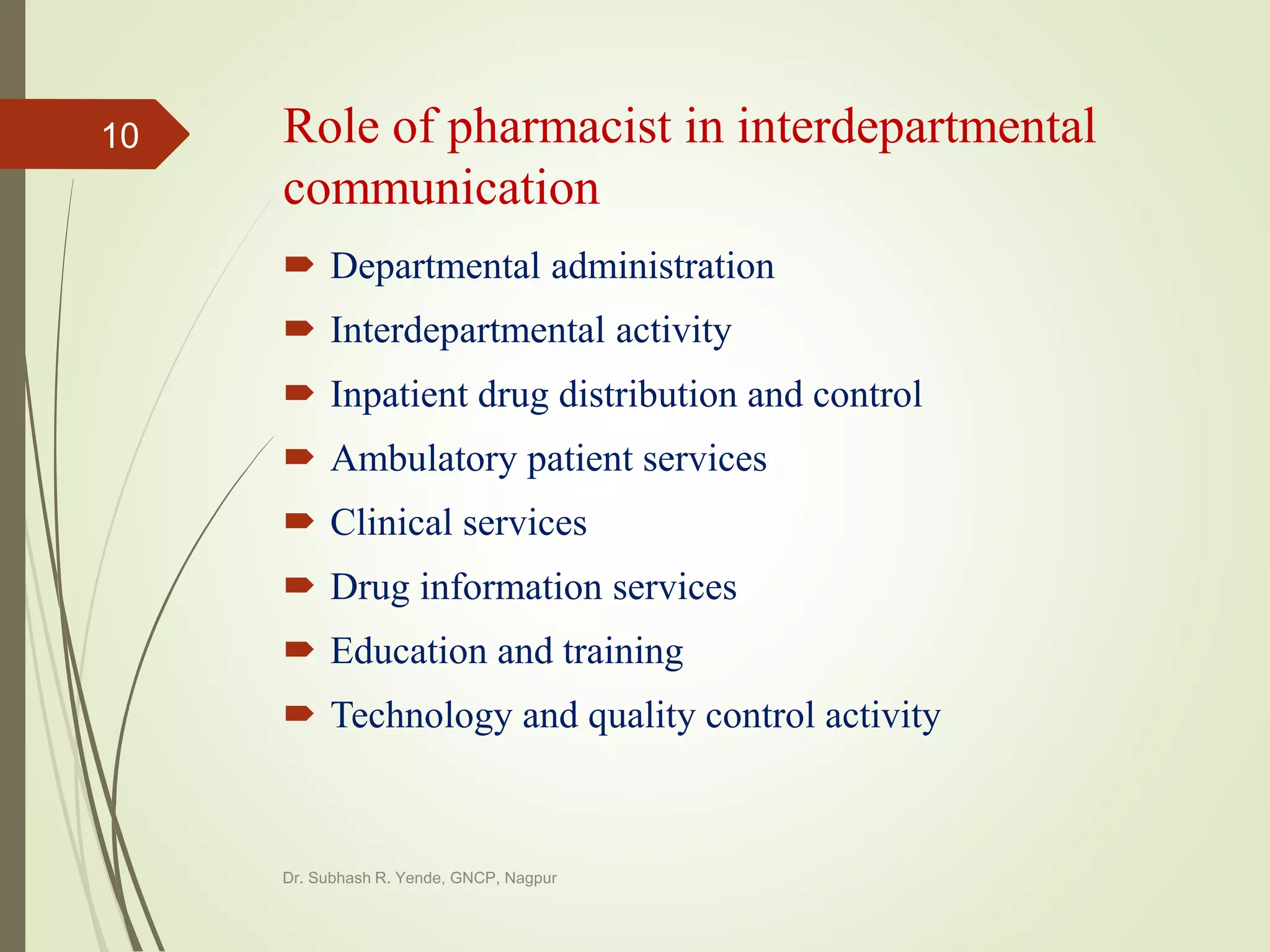
Role of pharmacist in interdepartmental
communication
 Departmental administration
 Interdepartmental activity
 Inpatient drug distribution and control
 Ambulatory patient services
 Clinical services
 Drug information services
 Education and training
 Technology and quality control activity
Dr. Subhash R. Yende, GNCP, Nagpur
10
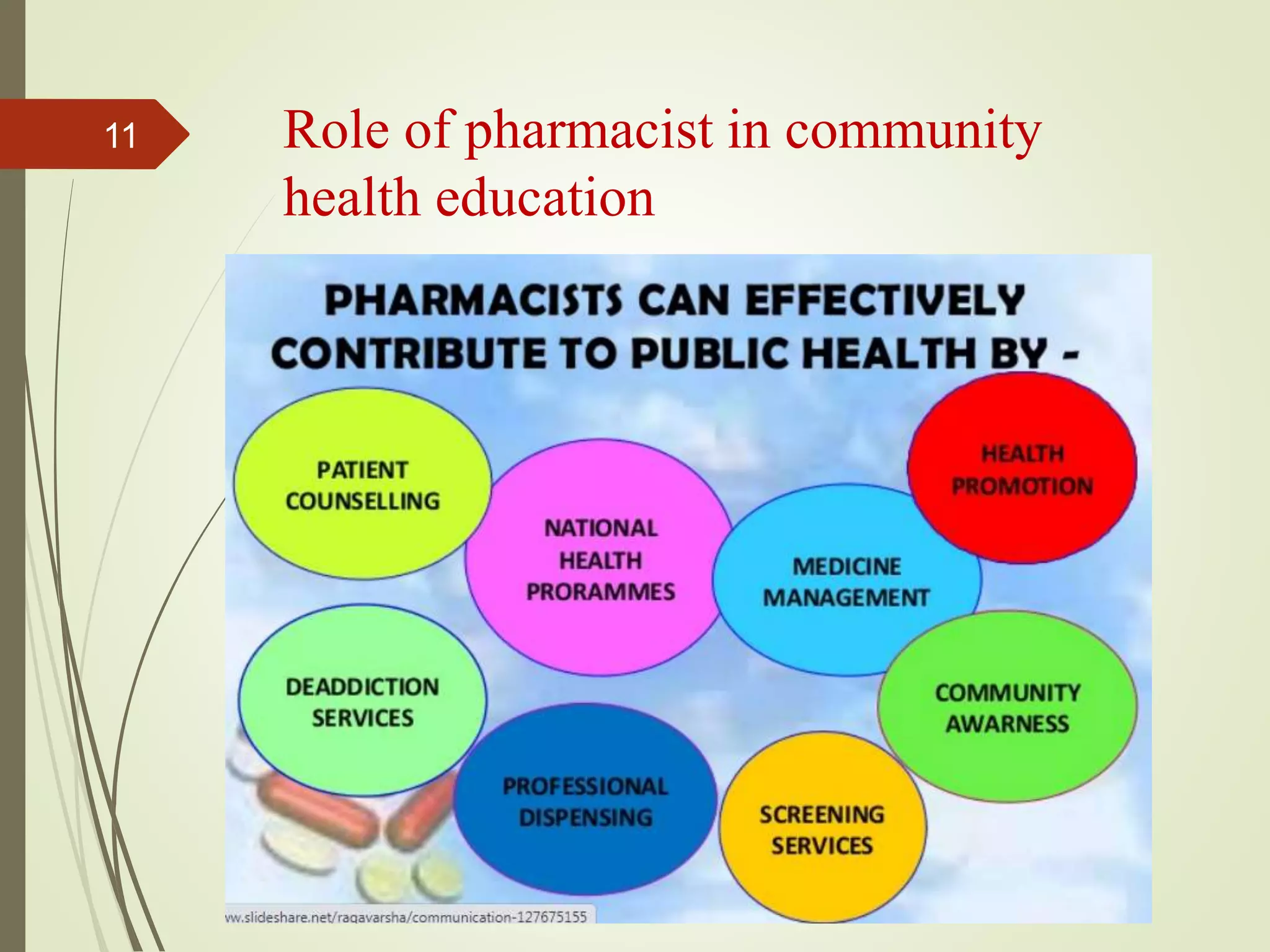
Role of pharmacist in community
health education
Dr. Subhash R. Yende, GNCP, Nagpur
11
Reference
 RK Goyal & RK Parikh. Text book of Hospital
Pharmacy, B S Shah Prakashan Ahmedabad.
 AB Budhrani, R. Usman, M Sharma, P Kumar.
Concise Course in Pharmacy Practice. S. Vikas
and Company.
 https://www.slideshare.net/pavithravinayak/code-
of-ethics-for-community-pharamcists
Dr. Subhash R. Yende, GNCP, Nagpur
12

Education and Training Program in the Hospital

  • 1.
    Education and Training Programin the Hospital Dr. Subhash R. Yende Asst Professor, Gurunanak College of Pharmacy, Nagpur PHARMACY PRACTICE
  • 2.
    Introduction  It isscientific process of improving the knowledge and skills of employee for doing a particular job.  The main purpose of training is to mould the behaviour of new recruits so that they can do their job in a more efficient way  In hospitals education and training activity includes undergraduate and graduate programme in medicine, teaching student nurses, training of technologist, physiotherapist, dietician, administrative residents, social service worker and pharmacist Dr. Subhash R. Yende, GNCP, Nagpur 2
  • 3.
    Role of Pharmacist Educating the medical and allied health professional as well as the patients  Participate in education program related to different medical area such as psychiatric, physical, rehabilitation, special education program like diabetic or cardiac patient  Involve in education of student nurses, training of graduate nurses, undergraduate as well as graduate pharmacy student or students in hospital pharmacy programmes  Involve in internal and external teaching activity  Educate general public through lecture or demonstration about the rational use of drugs and their dosages Dr. Subhash R. Yende, GNCP, Nagpur 3
  • 4.
    Internal Teaching Programme Training of students nurses  Seminar for graduate nurses, house staff and medical staff  Training undergraduate students in hospital pharmacy  Patient teaching programme  Training clinical pharmacist  Training residents in hospital administration Dr. Subhash R. Yende, GNCP, Nagpur 4
  • 5.
    External Teaching Programme Any teaching activity performed by pharmacist outside the hospital  Participation in seminar, refresher course  Participation in activities of nursing, dietary, oxygen therapy and medical technology  Preparation of manuscript for publication in professional press  Obtain various grant-in-aid to support research in drug distribution techniques or prescription techniques  Participate in educational activities organized during annual session of professional bodies such as Indian Pharmaceutical congress Dr. Subhash R. Yende, GNCP, Nagpur 5
  • 6.
    Code of Ethicsfor Community Pharmacy  The code defines and seeks to clarify the obligations of pharmacist to use their own knowledge and skills for the benefit of others, to minimize harm, to respect patient autonomy and to provide fair and just pharmacy care for their patients  For those entering the profession, the code identifies the basic moral commitments of pharmacy care and serves as a source for education and reflection  Professional ethics are defined as rules of “conduct or standards by which a professional community regulates its actions and sets standards for its members” Dr. Subhash R. Yende, GNCP, Nagpur 6
  • 7.
    Code of EthicsPrinciple  Principles 1 –Pharmacists respect the professional relationship with the patient and acts with honesty, integrity and compassion.  Principle 2. Pharmacists honor the individual needs, values and dignity of the patient  Principle 3- Pharmacists support the right of the patient to make personal choices about pharmacy care  Principle 4- Pharmacist provide a complete care to the patients and actively supports the patients right to receive competent and ethical care Dr. Subhash R. Yende, GNCP, Nagpur 7
  • 8.
     Principle 5-Pharmacists protects the patients right of confidentiality  Principle 6- Pharmacists respect the values and abilities of the colleagues and other health professionals  Principle 7- Pharmacists Endeavour to ensure that the practice environment contributes to safe and effective pharmacy care  Principle 8- Pharmacists ensure continuity of care in the event of job action, pharmacy closure or conflict with moral benefits Dr. Subhash R. Yende, GNCP, Nagpur 8
  • 9.
    Advantages of codeof ethics  The code provide clear direction for avoiding ethical violations  The code tries to provide guidance for those pharmacists who face ethical problems Dr. Subhash R. Yende, GNCP, Nagpur 9
  • 10.
    Role of pharmacistin interdepartmental communication  Departmental administration  Interdepartmental activity  Inpatient drug distribution and control  Ambulatory patient services  Clinical services  Drug information services  Education and training  Technology and quality control activity Dr. Subhash R. Yende, GNCP, Nagpur 10
  • 11.
    Role of pharmacistin community health education Dr. Subhash R. Yende, GNCP, Nagpur 11
  • 12.
    Reference  RK Goyal& RK Parikh. Text book of Hospital Pharmacy, B S Shah Prakashan Ahmedabad.  AB Budhrani, R. Usman, M Sharma, P Kumar. Concise Course in Pharmacy Practice. S. Vikas and Company.  https://www.slideshare.net/pavithravinayak/code- of-ethics-for-community-pharamcists Dr. Subhash R. Yende, GNCP, Nagpur 12