Fundamentals of Engineering
Drawing
Prof.A.J.More
Engineering Sciences Department
What is an Engineering Drawing
2
• Engineering drawing is a graphical language which also uses written language for
effective communication.
• A drawing is a graphical representation of an object, or part of it, and is the result of
creative thought by an engineer or technician.
• “An Engineering Drawing is a technical (not artistic) drawing which clearly defines and
communicates a design to other interested parties. Other parties may have an interest
in design collaboration, procurement / purchasing, costing, manufacturing, quality
control, marketing, handling / packaging.”
Engineering Drawing
• "a graphic representation of an idea, a concept or an entity which actually or
potentially exists in life“
• There are two basic types of drawings: Artistic and Technical drawings.
• Technical drawings: “a precise and detailed drawing of an object, as employed
in architecture or engineering.”
• Technical drawing is the preferred method of drafting in all engineering fields,
including, but not limited to, civil engineering, electrical engineering,
electronics,mechanical engineering and architecture.
3
Purpose of studying engineering drawing:
• To develop the ability to produce simple engineering drawing and sketches
based on current practice.
• To develop the skills to read manufacturing and construction drawings used in
industry.
• To develop a working knowledge of the layout of plant and equipment.
• To develop skills in abstracting information from calculation sheets and
schematic diagrams to produce working drawings for manufacturers, installers
and fabricators.
4
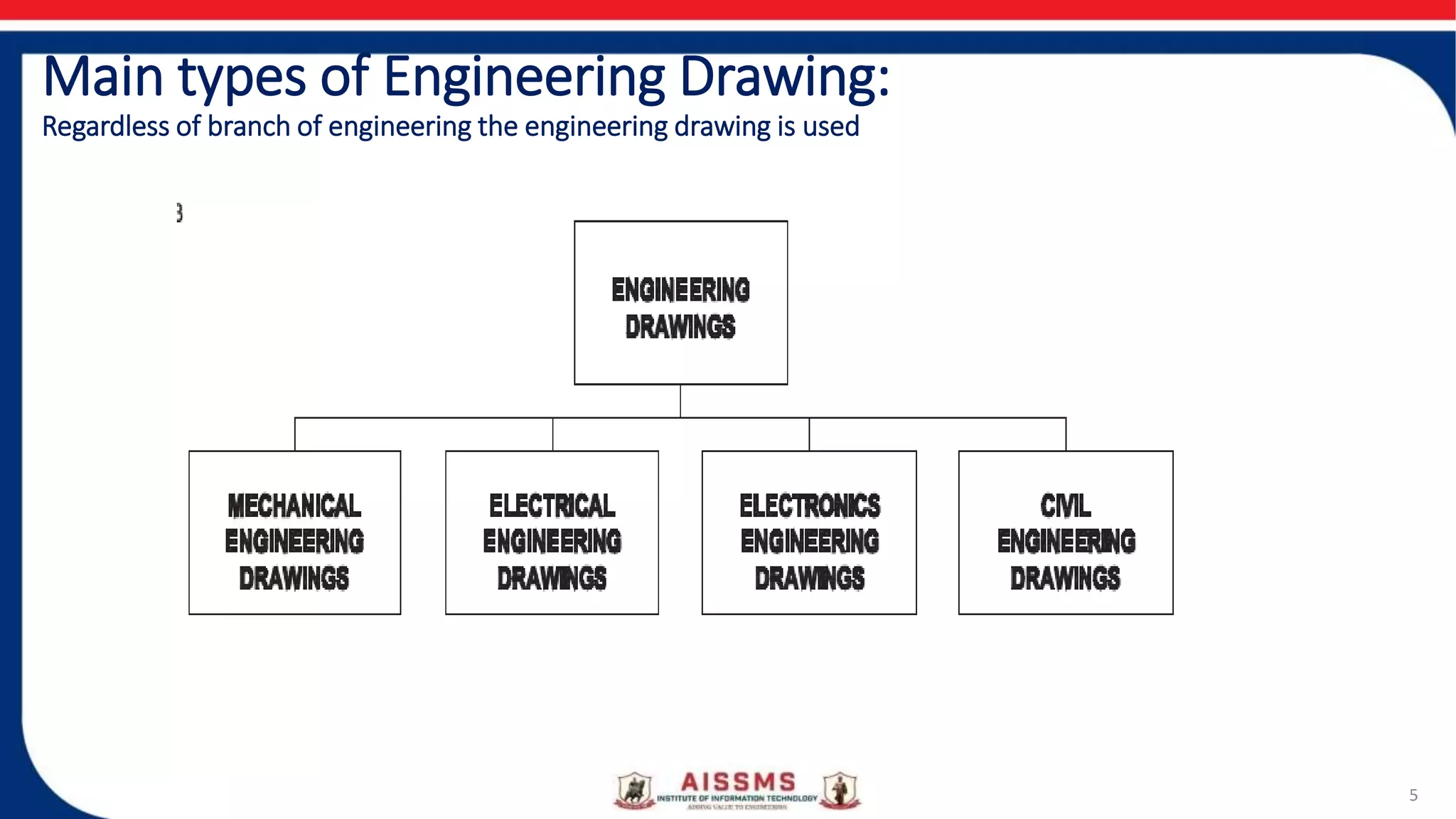
Main types of Engineering Drawing:
Regardless of branch of engineering the engineering drawing is used
5
Mechanical engineering drawings:
• Some examples of mechanical engineering drawings are
• part and assembly drawings, riveted joints, welded joints,
• fabrication drawings, pneumatics and hydraulics drawings,
• pipeline diagrams, keys coupling drawings etc.
6
• Electrical Engineering drawings
• Wiring diagrams of home and industries, circuit diagrams, electrical installation
drawings etc.
• Electronics Engineering drawings:
• Circuit drawings, PCB tracks drawings etc.
• Civil Engineering drawings
• Plan, front elevation of homes to be built, foundation drawings,
etc.,
7
Role of Engineering Graphics
• Visualization
• Communication
• Documentation
• Engineering students will benefit if drafting skills continue to be developed in
their materials, manufacturing and design synthesis courses.
8
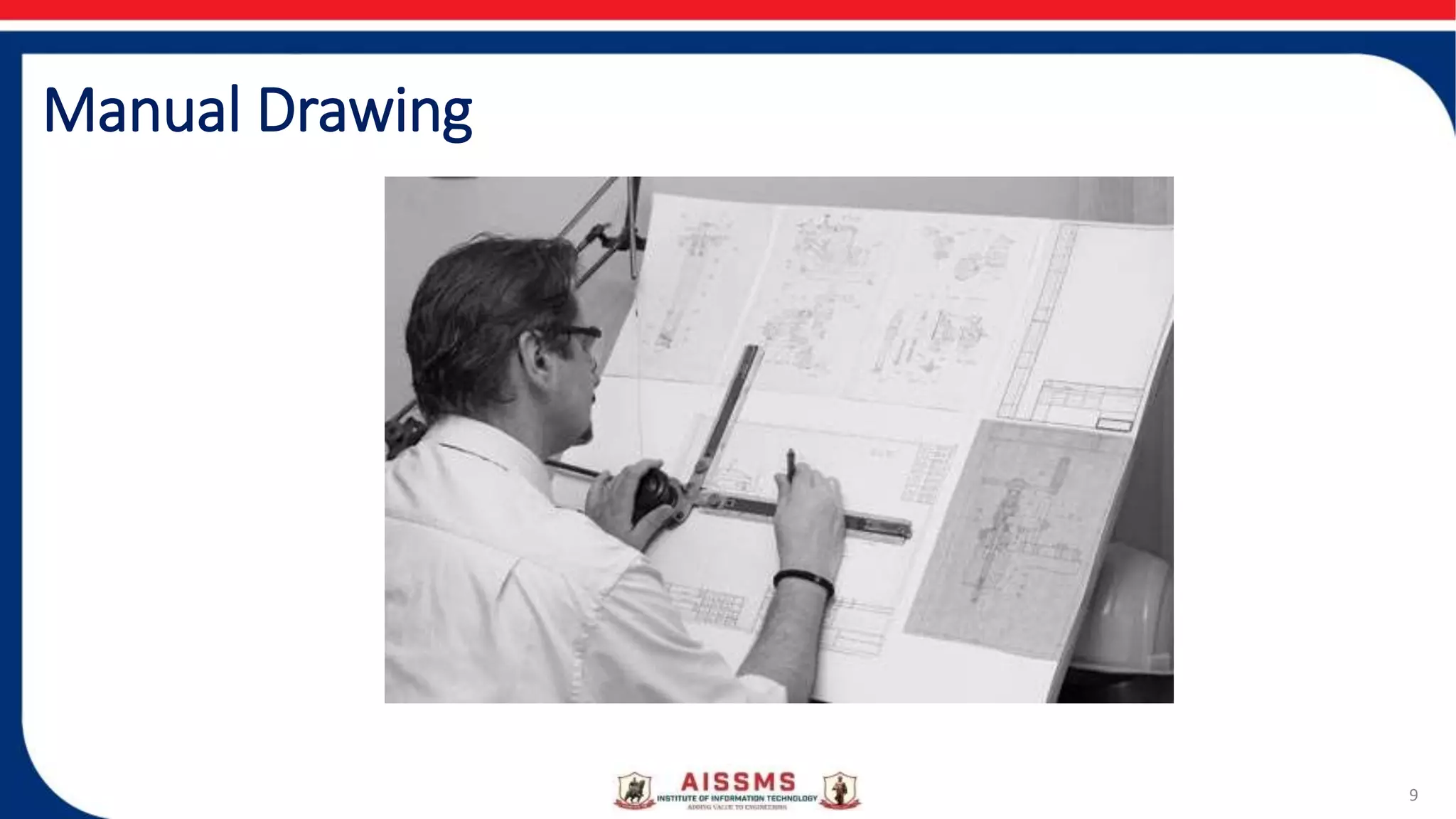
Manual Drawing
9
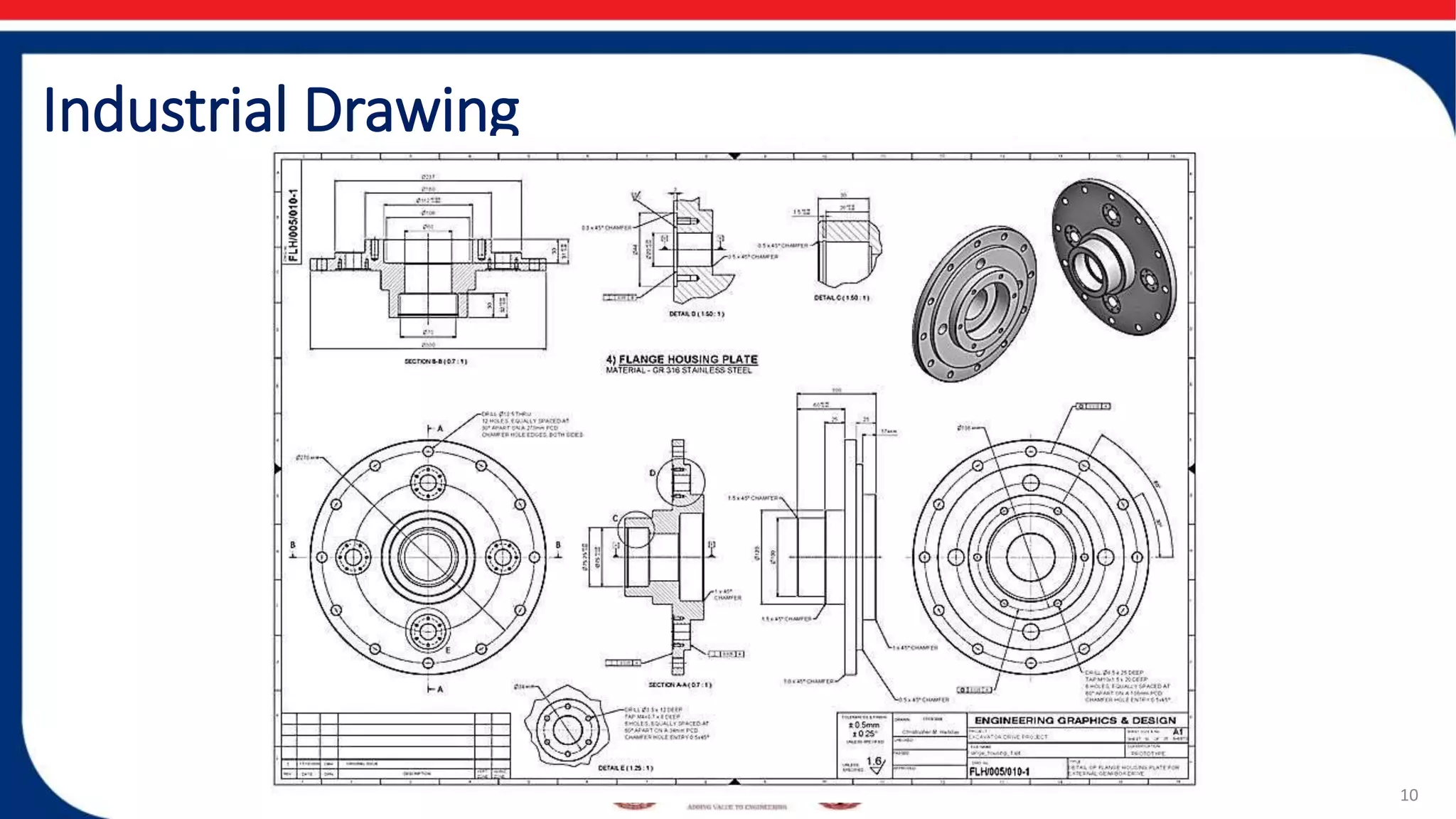
Industrial Drawing
10
CAD DRAWING
11
CAD Example- Transformer
12
Role of Engineering Graphics
13
1200 CE, 73 meter high minar with 14.32 meter
diameter at the base and 2.75 meter diameter at the
peak. It has inside stair with 379 steps.
Applications of Engineering Drawing
14
• SHIP
Application - Design and Manufacturing of Automobiles
15
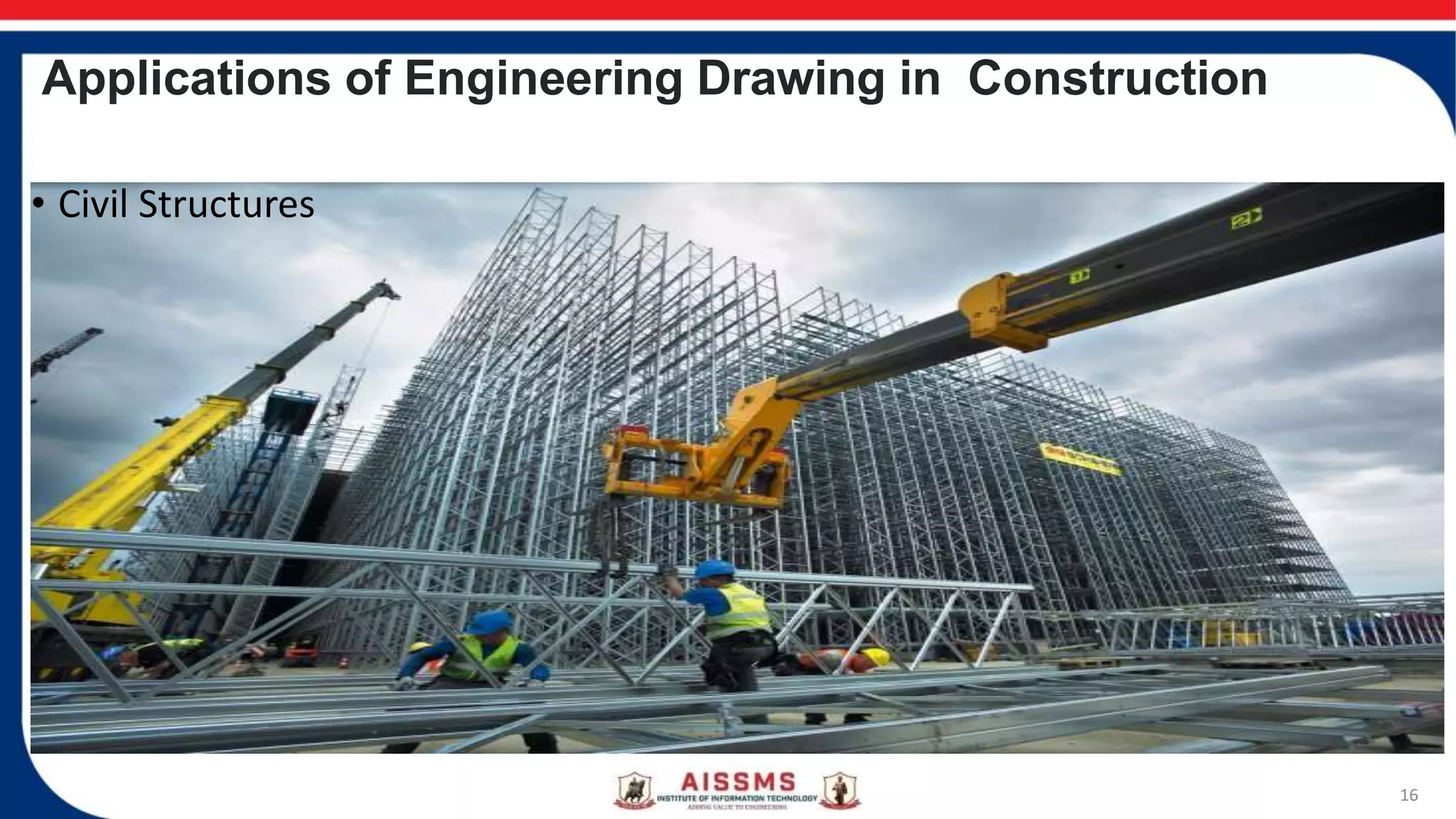
Applications of Engineering Drawing in Construction
16
• Civil Structures
Applications of Engineering Drawing in Aerospace
Industries
17
Thank You

role of engineering drawing

  • 1.
  • 2.
    What is anEngineering Drawing 2 • Engineering drawing is a graphical language which also uses written language for effective communication. • A drawing is a graphical representation of an object, or part of it, and is the result of creative thought by an engineer or technician. • “An Engineering Drawing is a technical (not artistic) drawing which clearly defines and communicates a design to other interested parties. Other parties may have an interest in design collaboration, procurement / purchasing, costing, manufacturing, quality control, marketing, handling / packaging.”
  • 3.
    Engineering Drawing • "agraphic representation of an idea, a concept or an entity which actually or potentially exists in life“ • There are two basic types of drawings: Artistic and Technical drawings. • Technical drawings: “a precise and detailed drawing of an object, as employed in architecture or engineering.” • Technical drawing is the preferred method of drafting in all engineering fields, including, but not limited to, civil engineering, electrical engineering, electronics,mechanical engineering and architecture. 3
  • 4.
    Purpose of studyingengineering drawing: • To develop the ability to produce simple engineering drawing and sketches based on current practice. • To develop the skills to read manufacturing and construction drawings used in industry. • To develop a working knowledge of the layout of plant and equipment. • To develop skills in abstracting information from calculation sheets and schematic diagrams to produce working drawings for manufacturers, installers and fabricators. 4
  • 5.
    Main types ofEngineering Drawing: Regardless of branch of engineering the engineering drawing is used 5
  • 6.
    Mechanical engineering drawings: •Some examples of mechanical engineering drawings are • part and assembly drawings, riveted joints, welded joints, • fabrication drawings, pneumatics and hydraulics drawings, • pipeline diagrams, keys coupling drawings etc. 6
  • 7.
    • Electrical Engineeringdrawings • Wiring diagrams of home and industries, circuit diagrams, electrical installation drawings etc. • Electronics Engineering drawings: • Circuit drawings, PCB tracks drawings etc. • Civil Engineering drawings • Plan, front elevation of homes to be built, foundation drawings, etc., 7
  • 8.
    Role of EngineeringGraphics • Visualization • Communication • Documentation • Engineering students will benefit if drafting skills continue to be developed in their materials, manufacturing and design synthesis courses. 8
  • 9.
  • 10.
  • 11.
  • 12.
  • 13.
    Role of EngineeringGraphics 13 1200 CE, 73 meter high minar with 14.32 meter diameter at the base and 2.75 meter diameter at the peak. It has inside stair with 379 steps.
  • 14.
    Applications of EngineeringDrawing 14 • SHIP
  • 15.
    Application - Designand Manufacturing of Automobiles 15
  • 16.
    Applications of EngineeringDrawing in Construction 16 • Civil Structures
  • 17.
    Applications of EngineeringDrawing in Aerospace Industries 17
  • 18.