
Basics of Engineering Drawing
By
Prof. A.J.More
Department of Engineering Sciences
Contents:
• Concept of Engineering Drawing/Graphics
• Need of Engineering Drawing
• Applications of Engineering Drawing
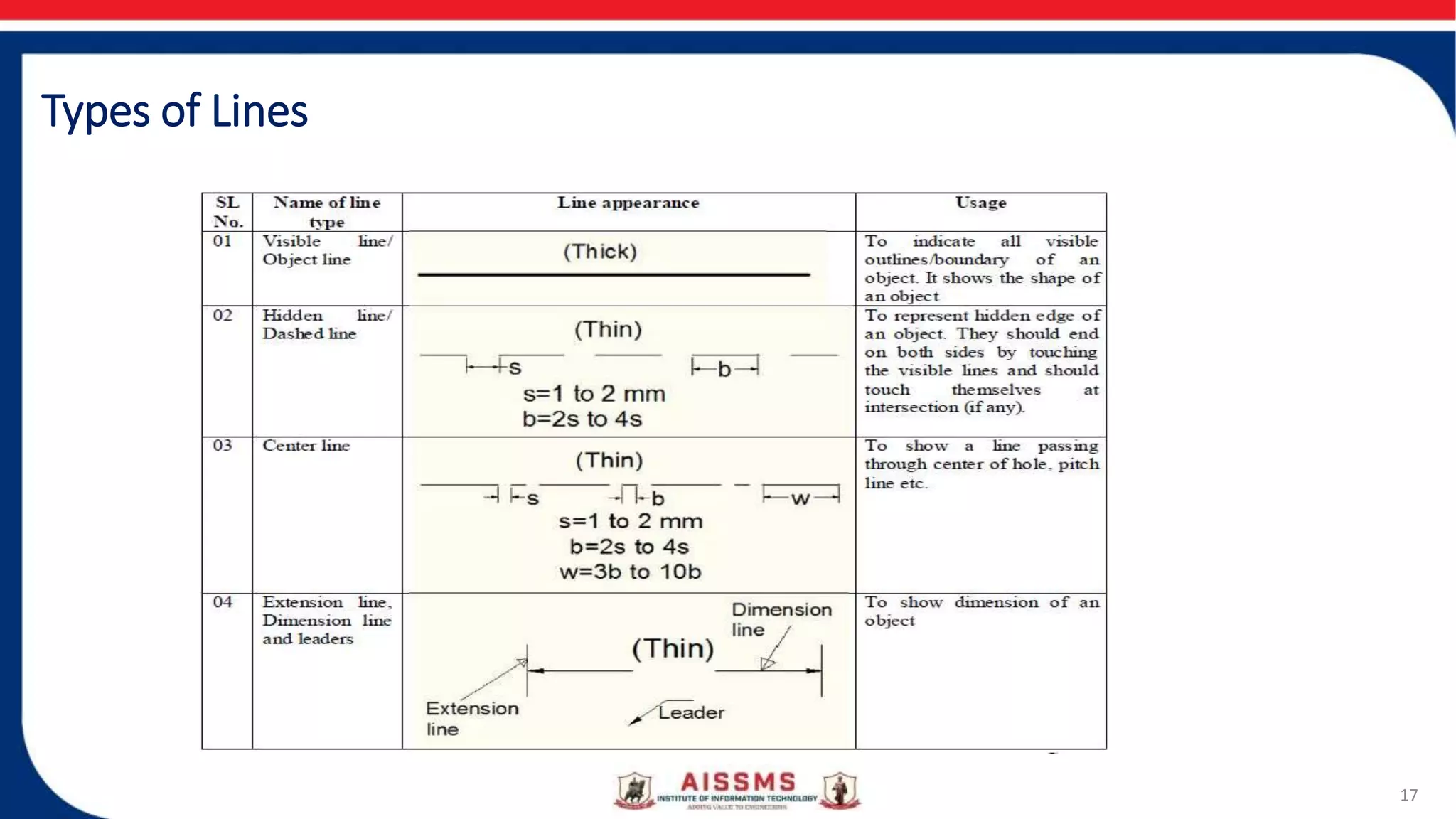
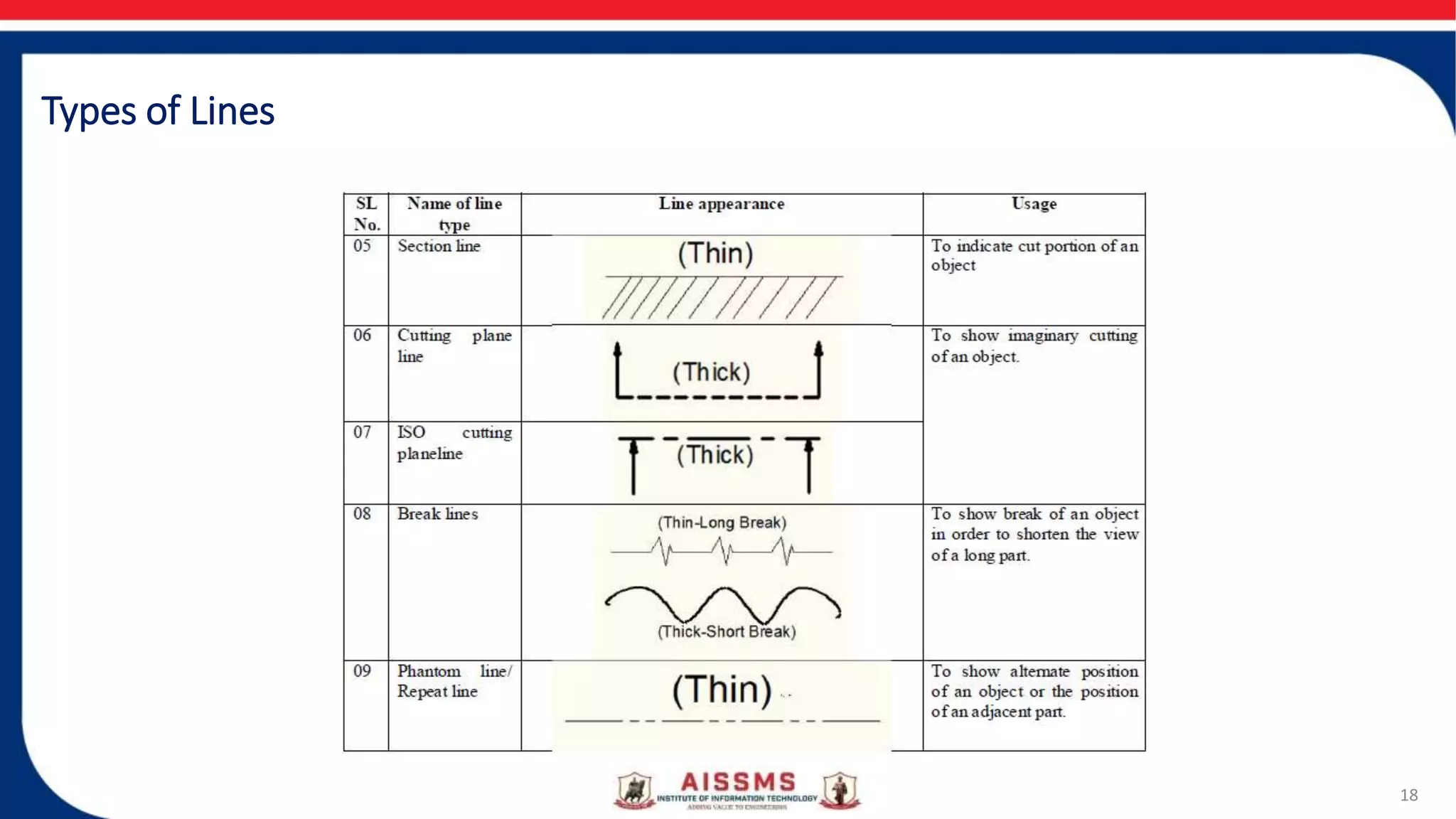
• Types of Lines
3
Engineering Drawing and Graphics
• Bertoline et al. “Drawing is the process of conceiving or inventing ideas and
communicating those ideas to others in a form that is understood easily.”
• Eide , “Engineering design is a systematic process by which solutions to the
needs of humankind are obtained.”
• Lockhart et al. “Design is the act of creating the specifications for a product
or process that best satisfies the design criteria.”
• The graphical representation of any object or idea can be termed as
drawing. A drawing can be prepared either using free hand or using
engineering instruments or using computer program
Engineering Drawing
• Engineering drawing can be defined as a graphical language used by engineers
and other technical personnel associated with the engineering profession
which fully and clearly defines the requirements for engineered items.
• In other words, The art of representing a real or imaginary object precisely
using some graphics, symbols, letters and numbers with the help of
engineering drawing instruments is called engineering drawing.
• The art of representing engineering objects such as buildings, roads, machines,
circuits etc. on a paper is called engineering drawing.
4
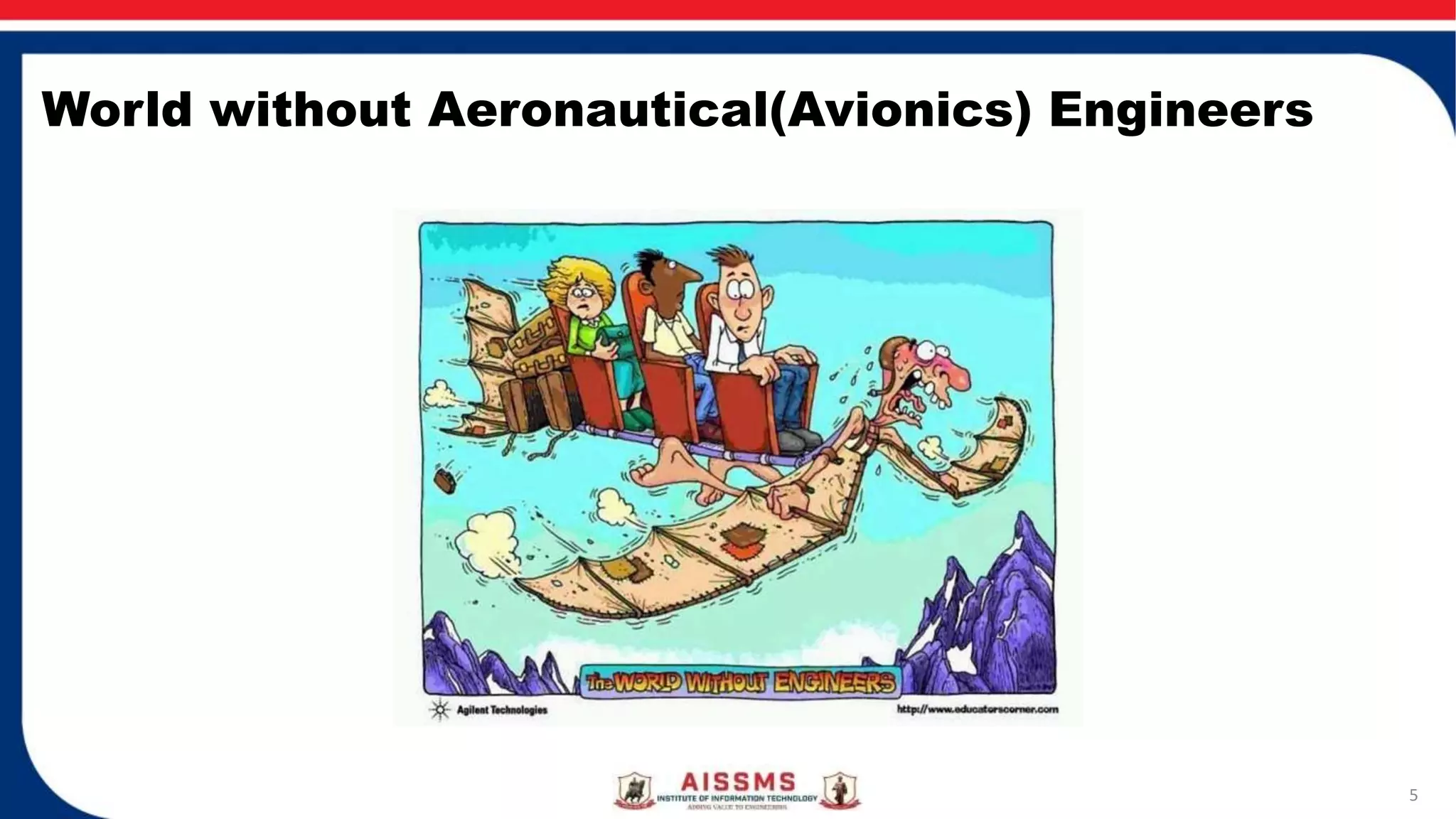
World without Aeronautical(Avionics) Engineers
5
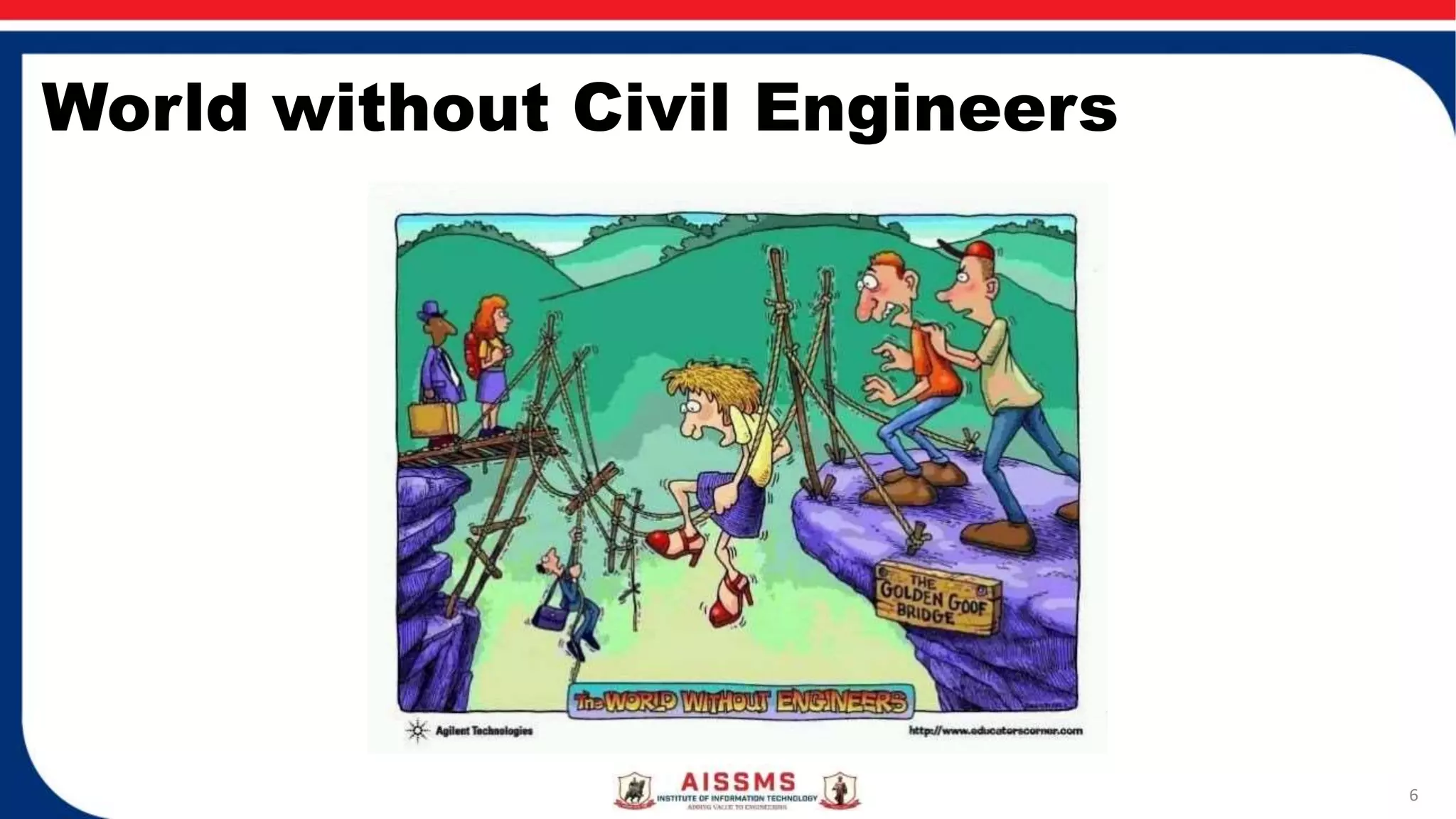
World without Civil Engineers
6
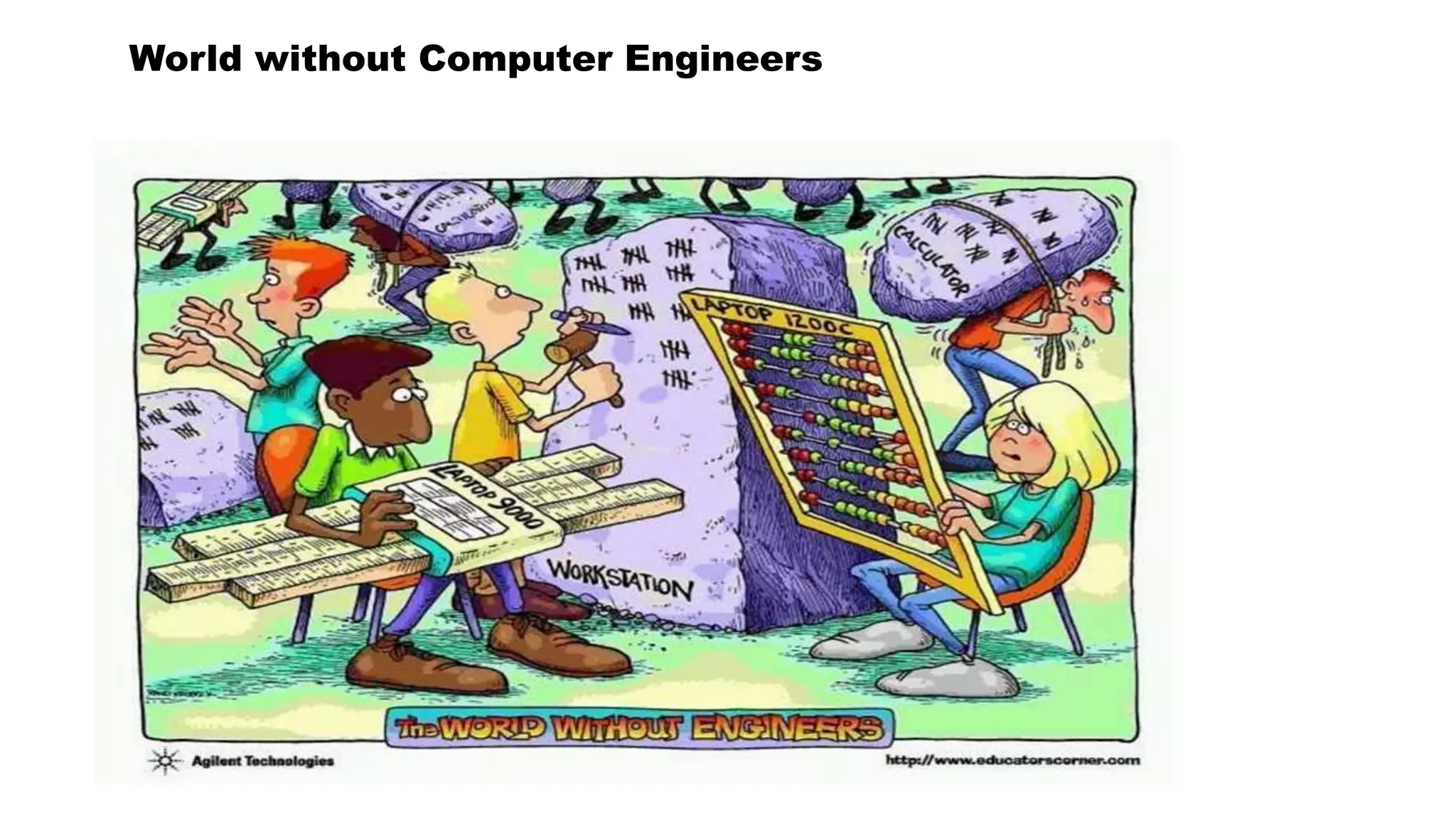
World without Computer Engineers
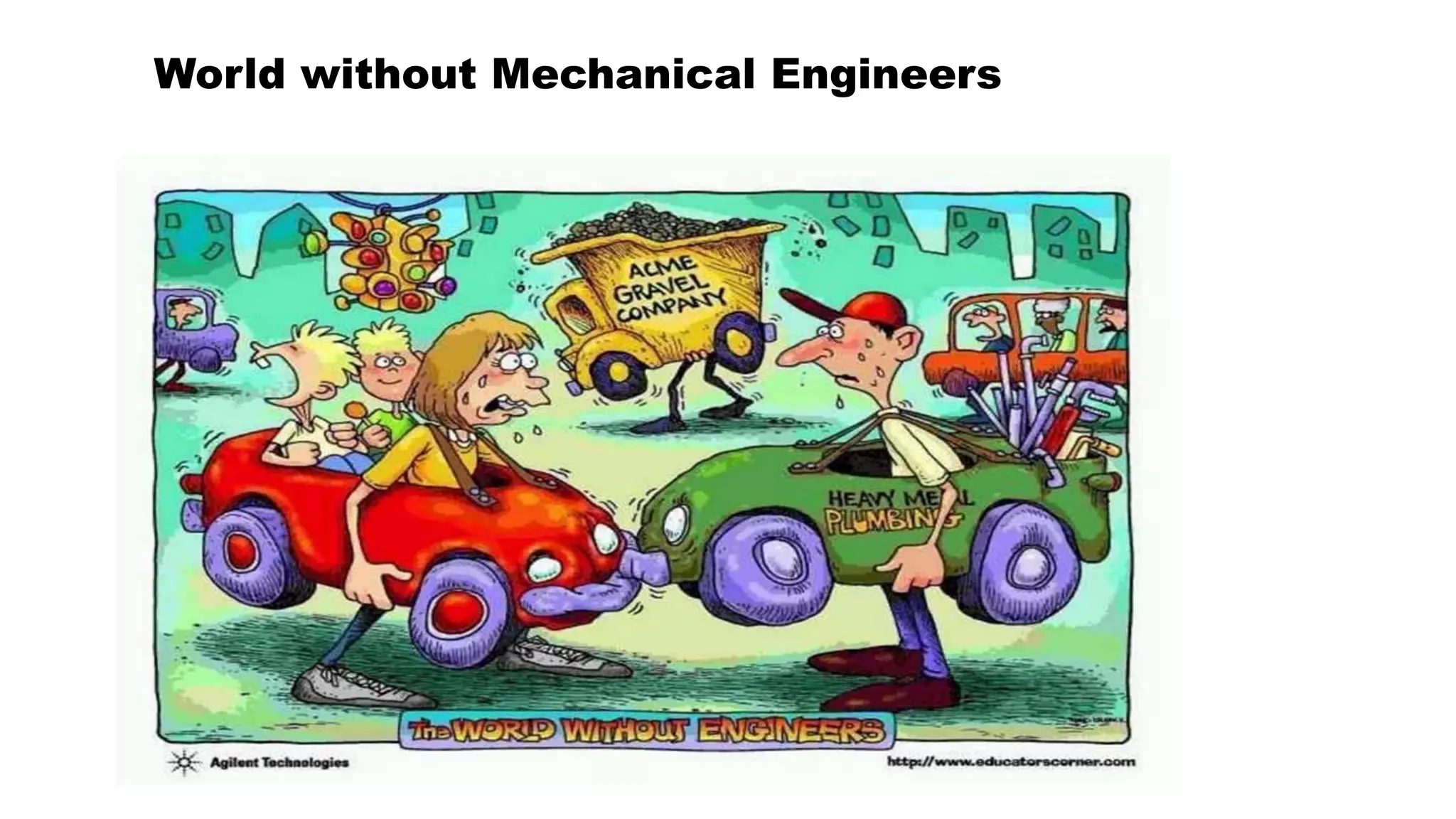
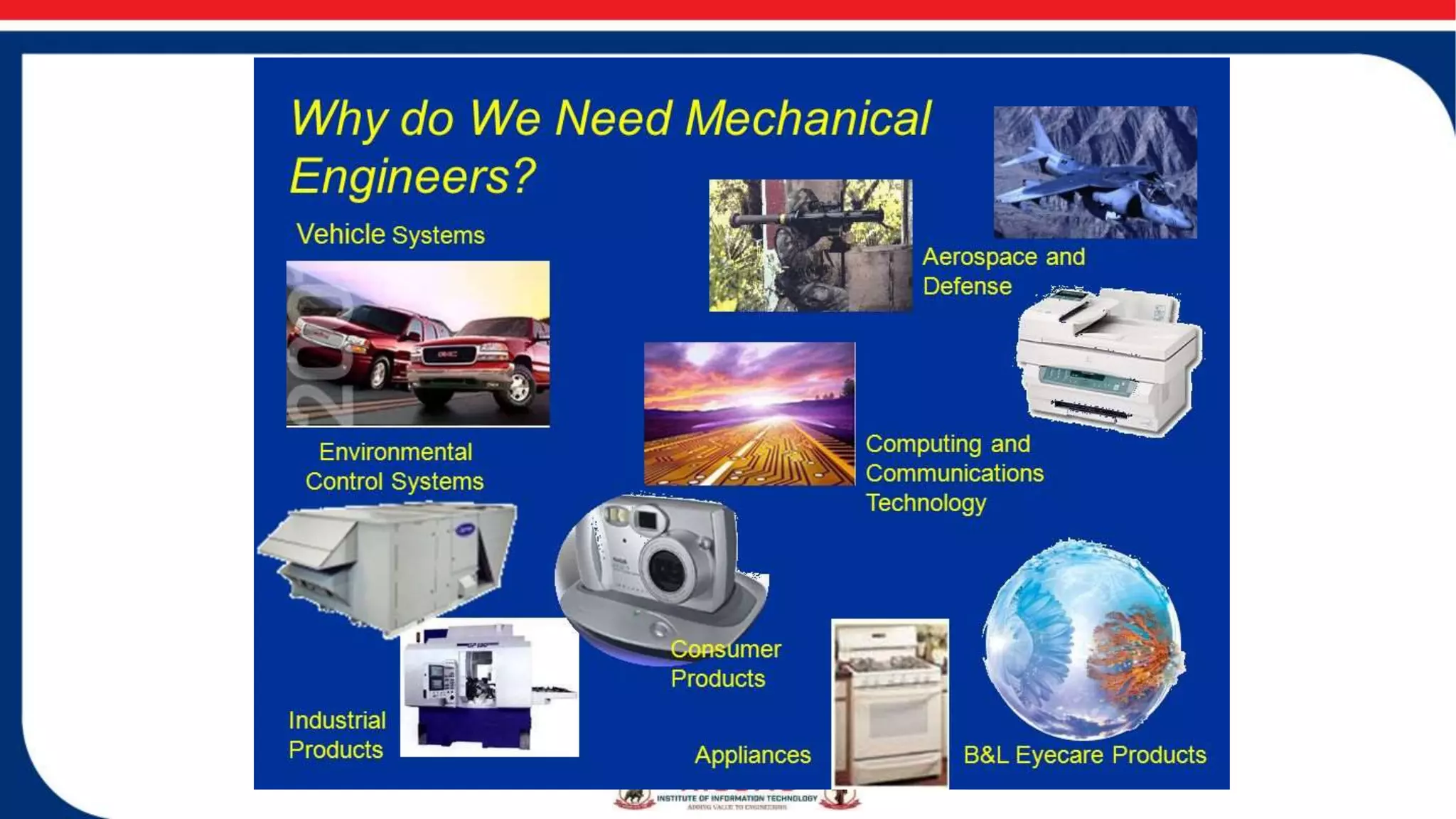
World without Mechanical Engineers
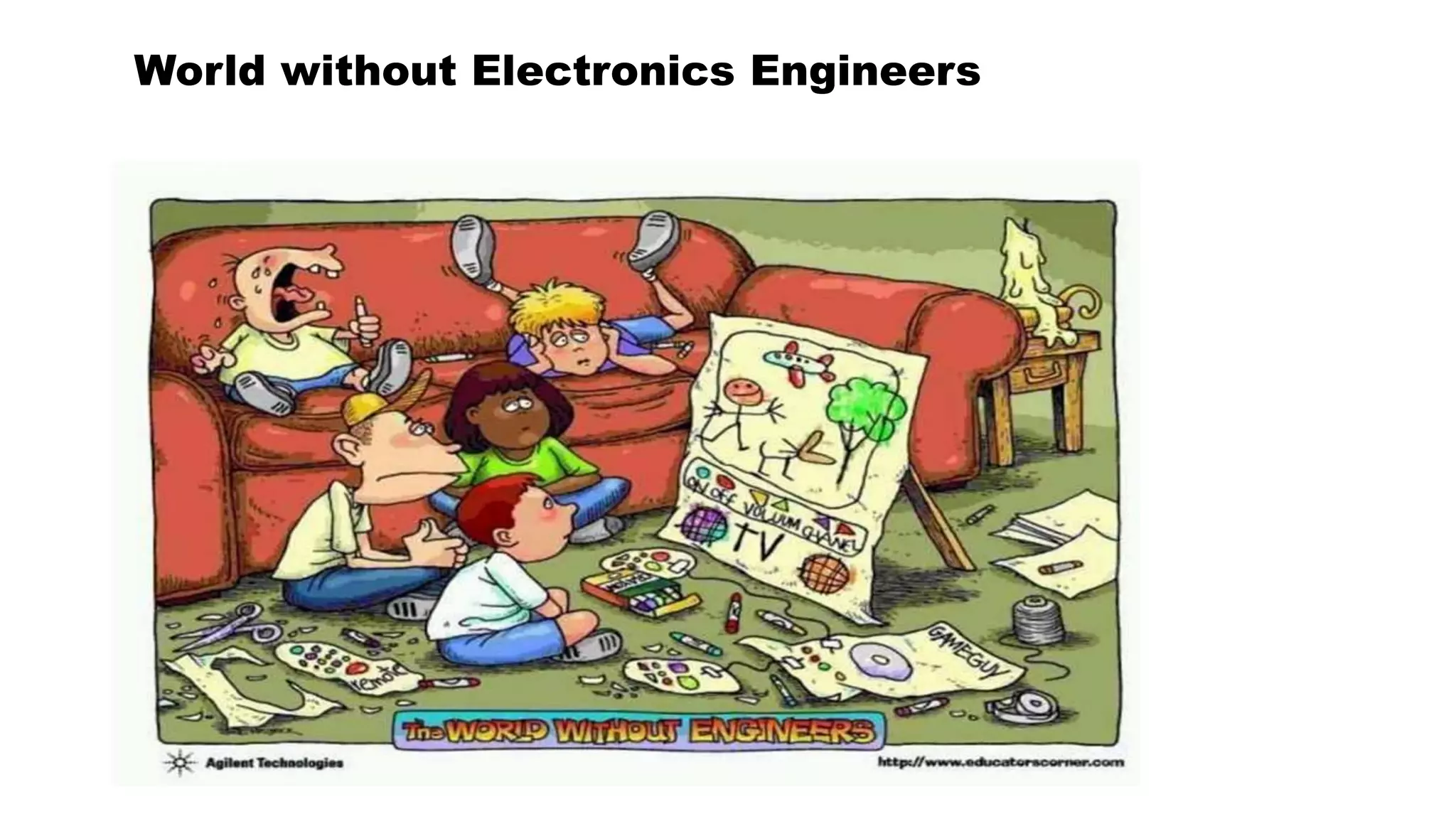
World without Electronics Engineers
Applications of Engineering Drawing
1. For manufacturing of machines, machine components,automobiles etc.
2. For construction of buildings, roads, bridges, dams, electrical and
telecommunication structures etc.
3. For manufacturing of electric appliances like TV, phone, computers etc.
4. Power Production
5. Medical instruments and appliances
6. Chemical industries – Heat Exchangers and Pipes etc
7. It is used in ships for navigation.
8. Aerospace industries
Need of Engineering Drawing
The Role of Graphics
•Visualization
•Communication
•Documentation
Classification:
• 1. Artistic Drawing (Free-hand or Model Drawing):
The art of representation of an object by the artist by his imagination
or by keeping the object before him.e.g. paintings, cinema posters,
advertisement boards, etc.
• 2. Engineering Drawing (Instrument Drawing):
The art of representation of engineering objects.
e.g. buildings, roads, machines, etc.
15
• Types of Engineering Drawing:
i. Geometrical Drawing:
e.g. geometrical objects - rectangle, square, cube, cone, cylinder, etc.
a. Plain Geometrical Drawing:
Two dimensional drawing having only length and breadth.
e.g. square, triangle, etc.
b. Solid Geometrical Drawing:
Three dimensional drawing having length, breadth and thickness.
e.g. cube, prism, etc.
ii. Mechanical Engineering or Machine Drawing:
e.g. mechanical engineering objects – machines, machine parts, etc.
iii. Civil Engineering Drawing:
e.g. civil engineering objects – roads, buildings, bridges, dams, etc.
iv. Electrical & Electronics Engineering Drawing:
e.g. electrical and electronics objects – transformers, wiring diagrams. PCB,
Robotics
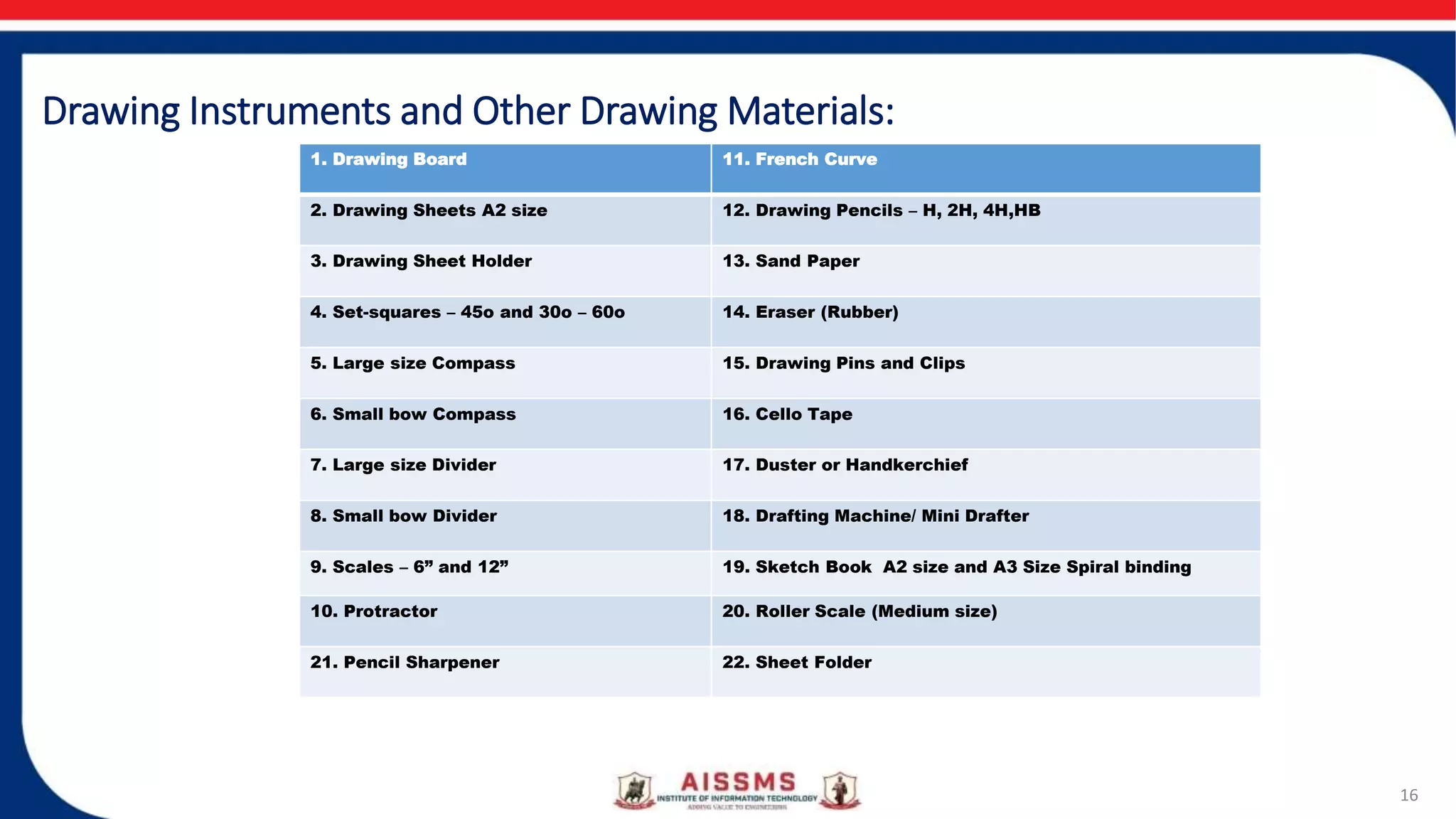
Drawing Instruments and Other Drawing Materials:
16
1. Drawing Board 11. French Curve
2. Drawing Sheets A2 size 12. Drawing Pencils – H, 2H, 4H,HB
3. Drawing Sheet Holder 13. Sand Paper
4. Set-squares – 45o and 30o – 60o 14. Eraser (Rubber)
5. Large size Compass 15. Drawing Pins and Clips
6. Small bow Compass 16. Cello Tape
7. Large size Divider 17. Duster or Handkerchief
8. Small bow Divider 18. Drafting Machine/ Mini Drafter
9. Scales – 6” and 12” 19. Sketch Book A2 size and A3 Size Spiral binding
10. Protractor 20. Roller Scale (Medium size)
21. Pencil Sharpener 22. Sheet Folder
Types of Lines
17
Types of Lines
18
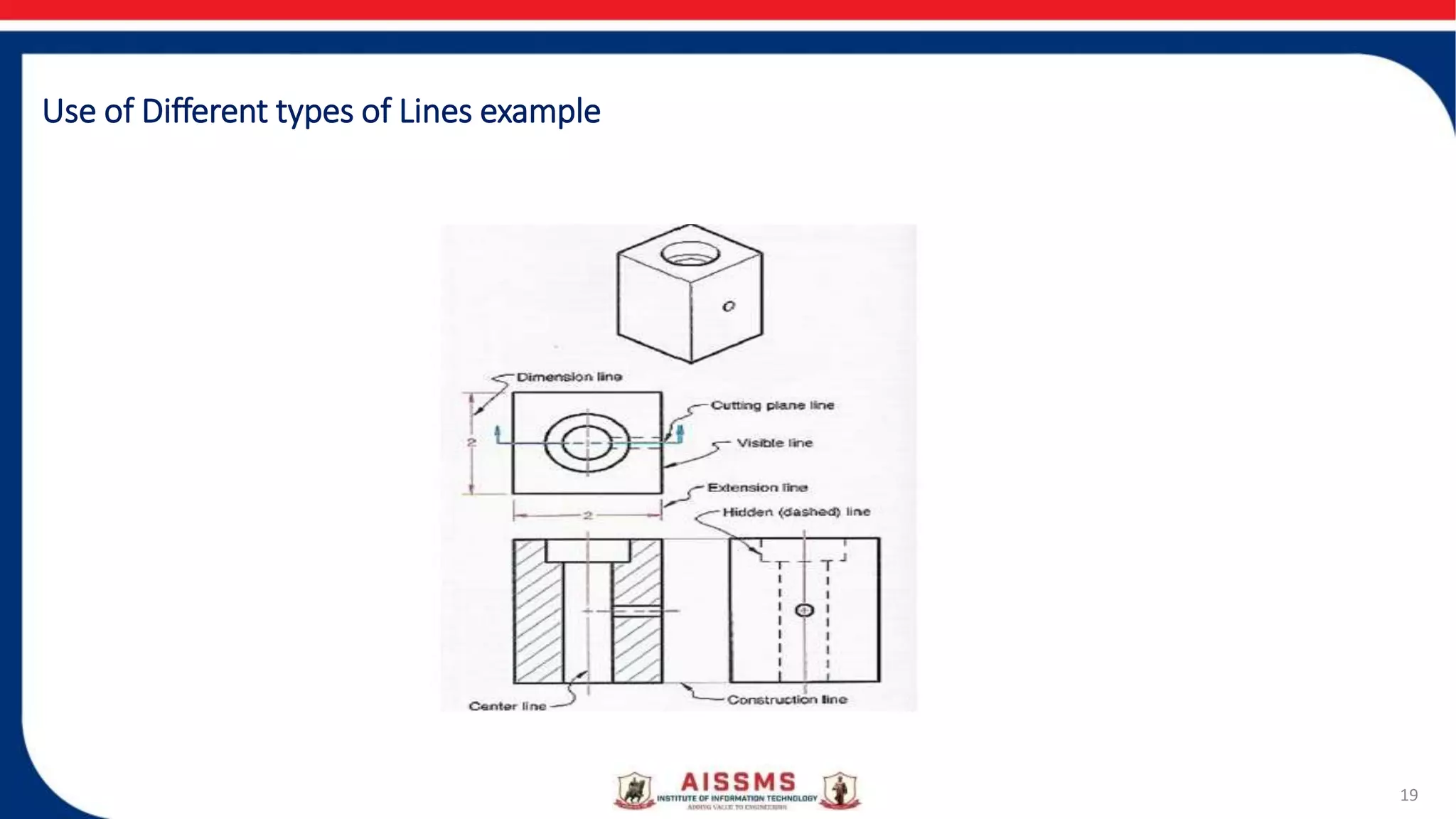
Use of Different types of Lines example
19
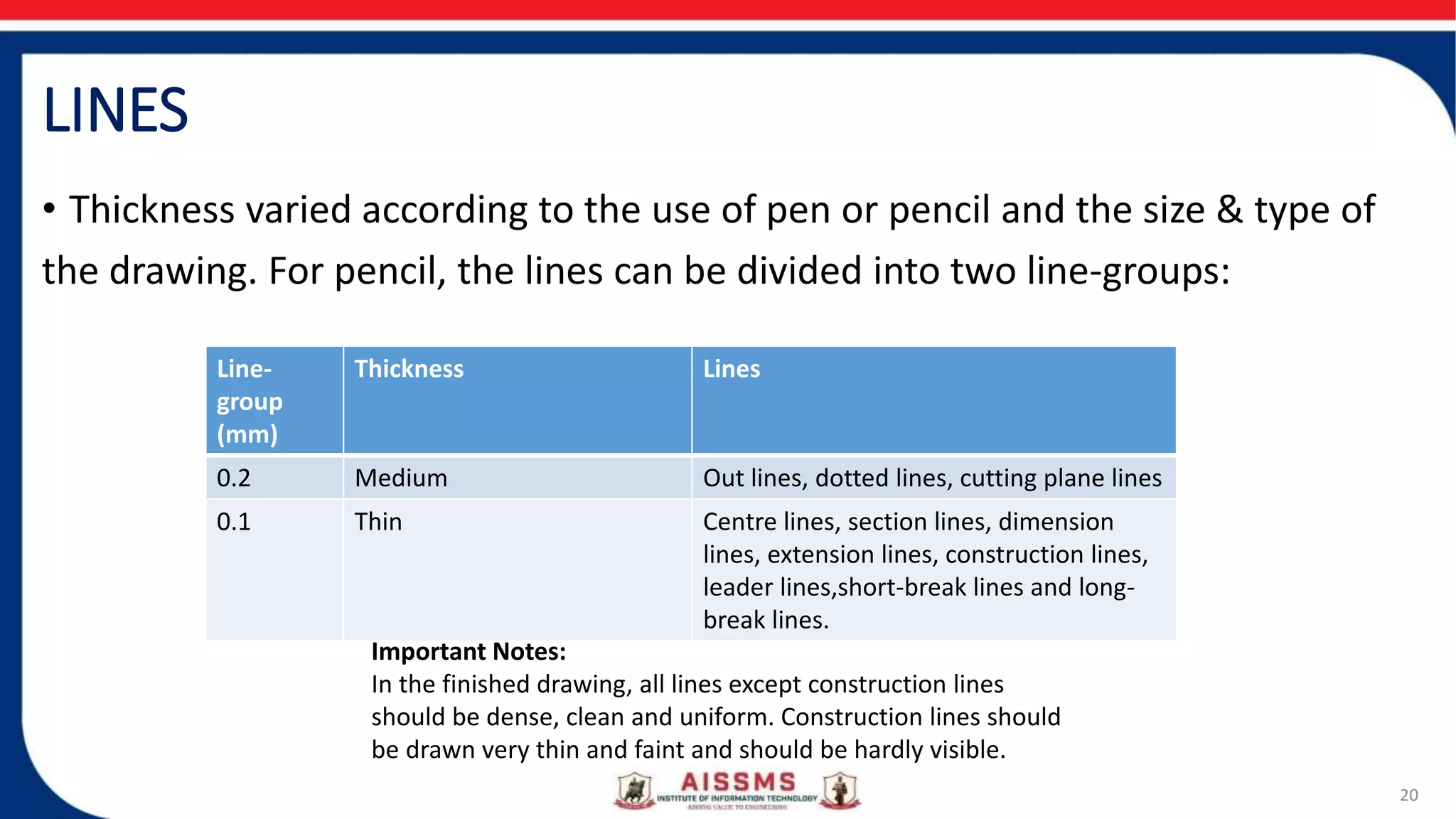
LINES
• Thickness varied according to the use of pen or pencil and the size & type of
the drawing. For pencil, the lines can be divided into two line-groups:
20
Line-
group
(mm)
Thickness Lines
0.2 Medium Out lines, dotted lines, cutting plane lines
0.1 Thin Centre lines, section lines, dimension
lines, extension lines, construction lines,
leader lines,short-break lines and long-
break lines.
Important Notes:
In the finished drawing, all lines except construction lines
should be dense, clean and uniform. Construction lines should
be drawn very thin and faint and should be hardly visible.
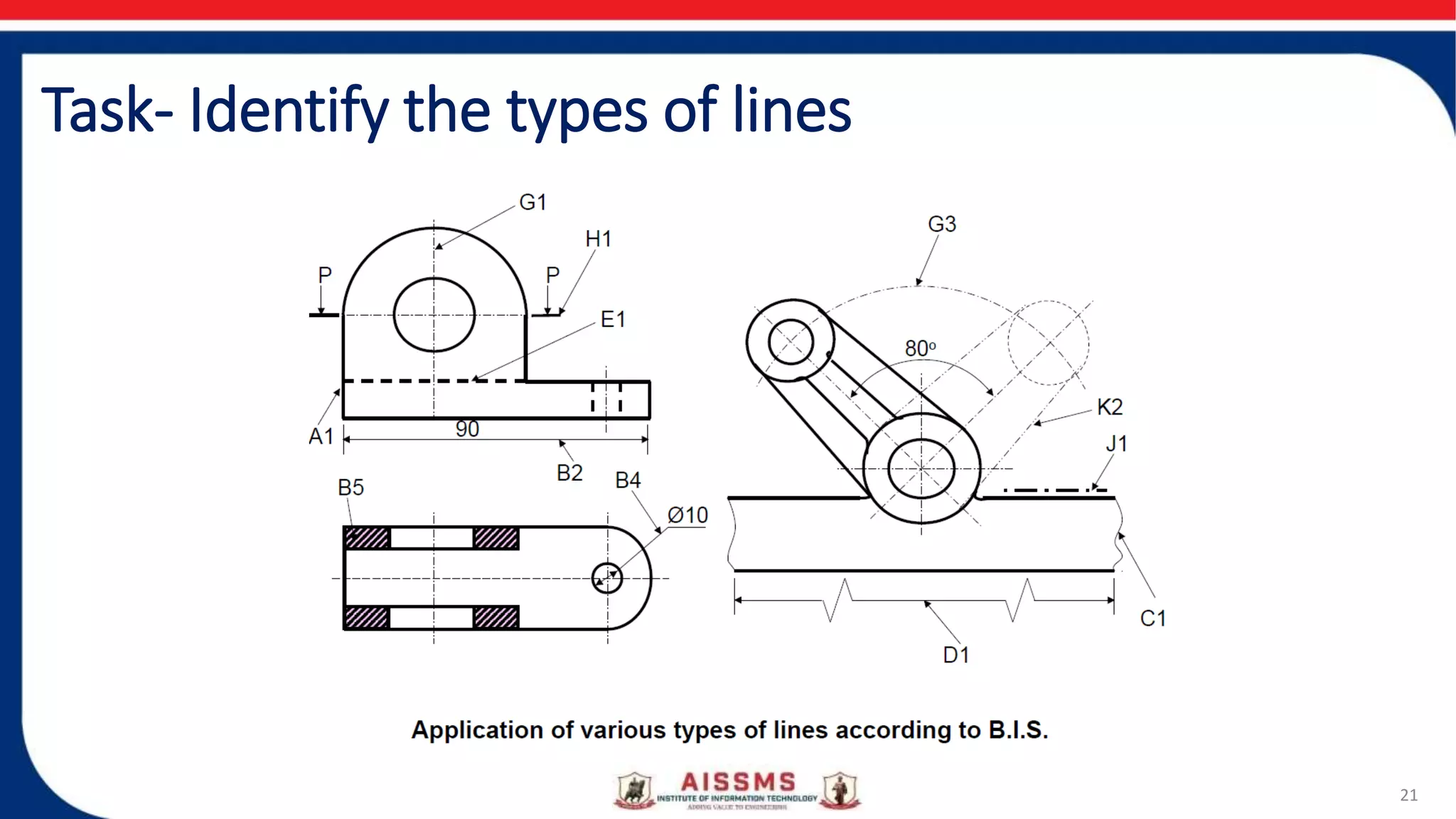
Task- Identify the types of lines
21
Thank You

Basic of engineering drawing v1

  • 1.
    Basics of EngineeringDrawing By Prof. A.J.More Department of Engineering Sciences
  • 2.
    Contents: • Concept ofEngineering Drawing/Graphics • Need of Engineering Drawing • Applications of Engineering Drawing • Types of Lines
  • 3.
    3 Engineering Drawing andGraphics • Bertoline et al. “Drawing is the process of conceiving or inventing ideas and communicating those ideas to others in a form that is understood easily.” • Eide , “Engineering design is a systematic process by which solutions to the needs of humankind are obtained.” • Lockhart et al. “Design is the act of creating the specifications for a product or process that best satisfies the design criteria.” • The graphical representation of any object or idea can be termed as drawing. A drawing can be prepared either using free hand or using engineering instruments or using computer program
  • 4.
    Engineering Drawing • Engineeringdrawing can be defined as a graphical language used by engineers and other technical personnel associated with the engineering profession which fully and clearly defines the requirements for engineered items. • In other words, The art of representing a real or imaginary object precisely using some graphics, symbols, letters and numbers with the help of engineering drawing instruments is called engineering drawing. • The art of representing engineering objects such as buildings, roads, machines, circuits etc. on a paper is called engineering drawing. 4
  • 5.
  • 6.
  • 7.
  • 8.
  • 9.
  • 10.
    Applications of EngineeringDrawing 1. For manufacturing of machines, machine components,automobiles etc. 2. For construction of buildings, roads, bridges, dams, electrical and telecommunication structures etc. 3. For manufacturing of electric appliances like TV, phone, computers etc. 4. Power Production 5. Medical instruments and appliances 6. Chemical industries – Heat Exchangers and Pipes etc 7. It is used in ships for navigation. 8. Aerospace industries
  • 12.
  • 13.
    The Role ofGraphics •Visualization •Communication •Documentation
  • 14.
    Classification: • 1. ArtisticDrawing (Free-hand or Model Drawing): The art of representation of an object by the artist by his imagination or by keeping the object before him.e.g. paintings, cinema posters, advertisement boards, etc. • 2. Engineering Drawing (Instrument Drawing): The art of representation of engineering objects. e.g. buildings, roads, machines, etc.
  • 15.
    15 • Types ofEngineering Drawing: i. Geometrical Drawing: e.g. geometrical objects - rectangle, square, cube, cone, cylinder, etc. a. Plain Geometrical Drawing: Two dimensional drawing having only length and breadth. e.g. square, triangle, etc. b. Solid Geometrical Drawing: Three dimensional drawing having length, breadth and thickness. e.g. cube, prism, etc. ii. Mechanical Engineering or Machine Drawing: e.g. mechanical engineering objects – machines, machine parts, etc. iii. Civil Engineering Drawing: e.g. civil engineering objects – roads, buildings, bridges, dams, etc. iv. Electrical & Electronics Engineering Drawing: e.g. electrical and electronics objects – transformers, wiring diagrams. PCB, Robotics
  • 16.
    Drawing Instruments andOther Drawing Materials: 16 1. Drawing Board 11. French Curve 2. Drawing Sheets A2 size 12. Drawing Pencils – H, 2H, 4H,HB 3. Drawing Sheet Holder 13. Sand Paper 4. Set-squares – 45o and 30o – 60o 14. Eraser (Rubber) 5. Large size Compass 15. Drawing Pins and Clips 6. Small bow Compass 16. Cello Tape 7. Large size Divider 17. Duster or Handkerchief 8. Small bow Divider 18. Drafting Machine/ Mini Drafter 9. Scales – 6” and 12” 19. Sketch Book A2 size and A3 Size Spiral binding 10. Protractor 20. Roller Scale (Medium size) 21. Pencil Sharpener 22. Sheet Folder
  • 17.
  • 18.
  • 19.
    Use of Differenttypes of Lines example 19
  • 20.
    LINES • Thickness variedaccording to the use of pen or pencil and the size & type of the drawing. For pencil, the lines can be divided into two line-groups: 20 Line- group (mm) Thickness Lines 0.2 Medium Out lines, dotted lines, cutting plane lines 0.1 Thin Centre lines, section lines, dimension lines, extension lines, construction lines, leader lines,short-break lines and long- break lines. Important Notes: In the finished drawing, all lines except construction lines should be dense, clean and uniform. Construction lines should be drawn very thin and faint and should be hardly visible.
  • 21.
    Task- Identify thetypes of lines 21
  • 22.