MANZOOR ALI RAHIMOON
LETTERING TECHNIQUE
• Writing of titles, sub-titles, dimensions, scales and other
details on a drawing.
• Essential features of lettering – legibility, uniformity, ease,
rapidity, and suitability for microfilming/ photocopying/any
other photographic processes
• No ornamental/decorative and embellishing/enlarging style of
letter.
• Plain letters and numerals which are clearly distinguishable
from each other in order to avoid any confusion even in case of
slight mutilations
LETTERING TECHNIQUE
•The essential features of lettering on technical drawings are,
legibility, uniformity and suitability for microfilming and other
photographic reproductions.
•In order to meet these requirements, the characters are to be
clearly distinguishable from each other in order to avoid any
confusion between them, even in the case of slight mutilations.
•The reproductions require the distance between two adjacent
lines or the space between letters to be at least equal to twice the
line thickness.
•The line thickness for lower case and capital letters shall be the
same in order to facilitate lettering.
LETTERING TECHNIQUE
LETTERING TYPES
• Lettering A – Height of the capital letter is divided into 14 equal
parts
• Lettering B – Height of the capital letter is divided into 10 equal
parts
Your lettering must have the same height, style, and size.
Lettering is an art that you must practice to obtain proficiency
and continue practicing to maintain proficiency.
Guidelines serve as an aid to creating uniform lettering.
LETTERING TECHNIQUE
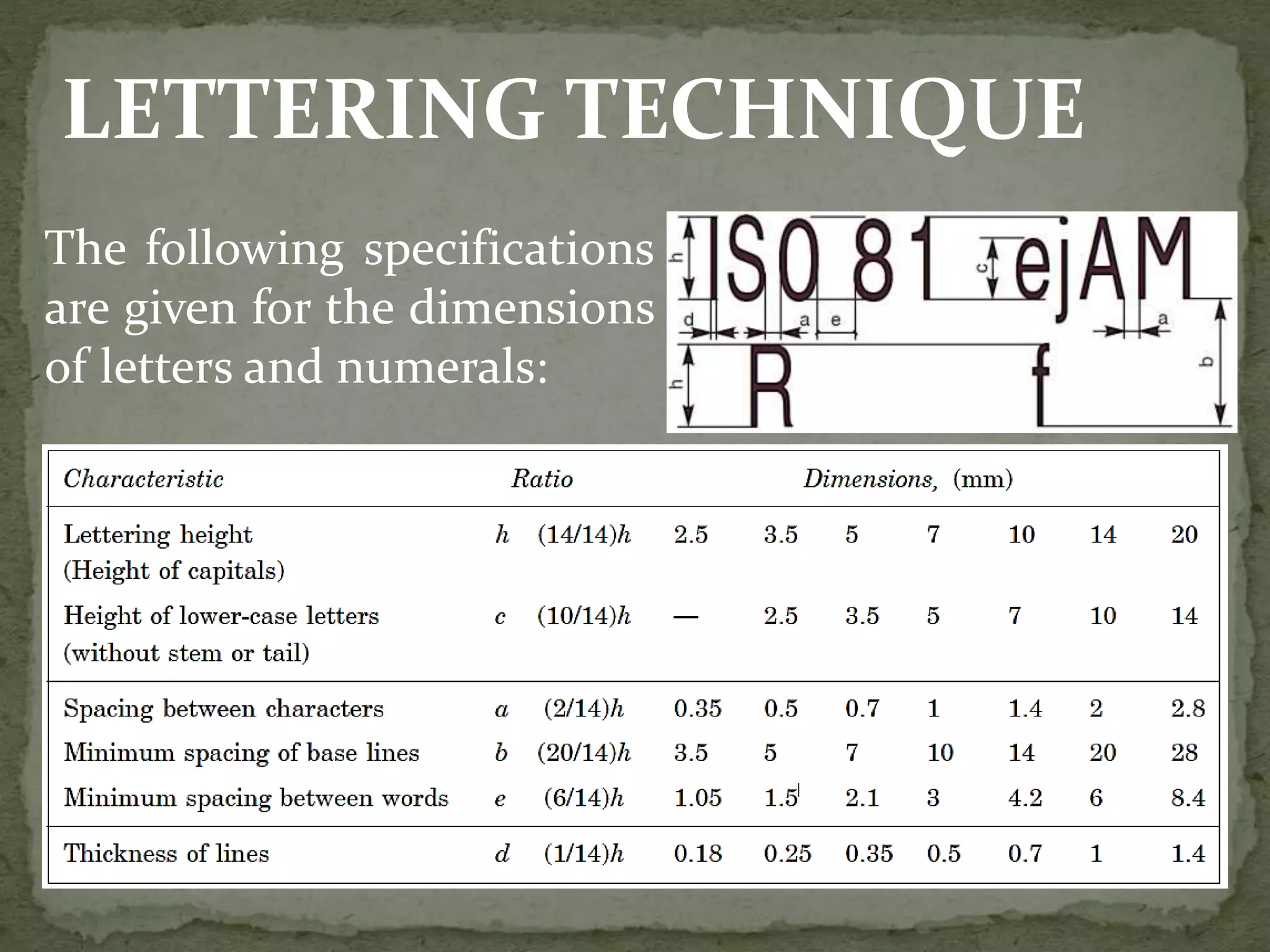
The following specifications
are given for the dimensions
of letters and numerals:
LETTERING TECHNIQUE
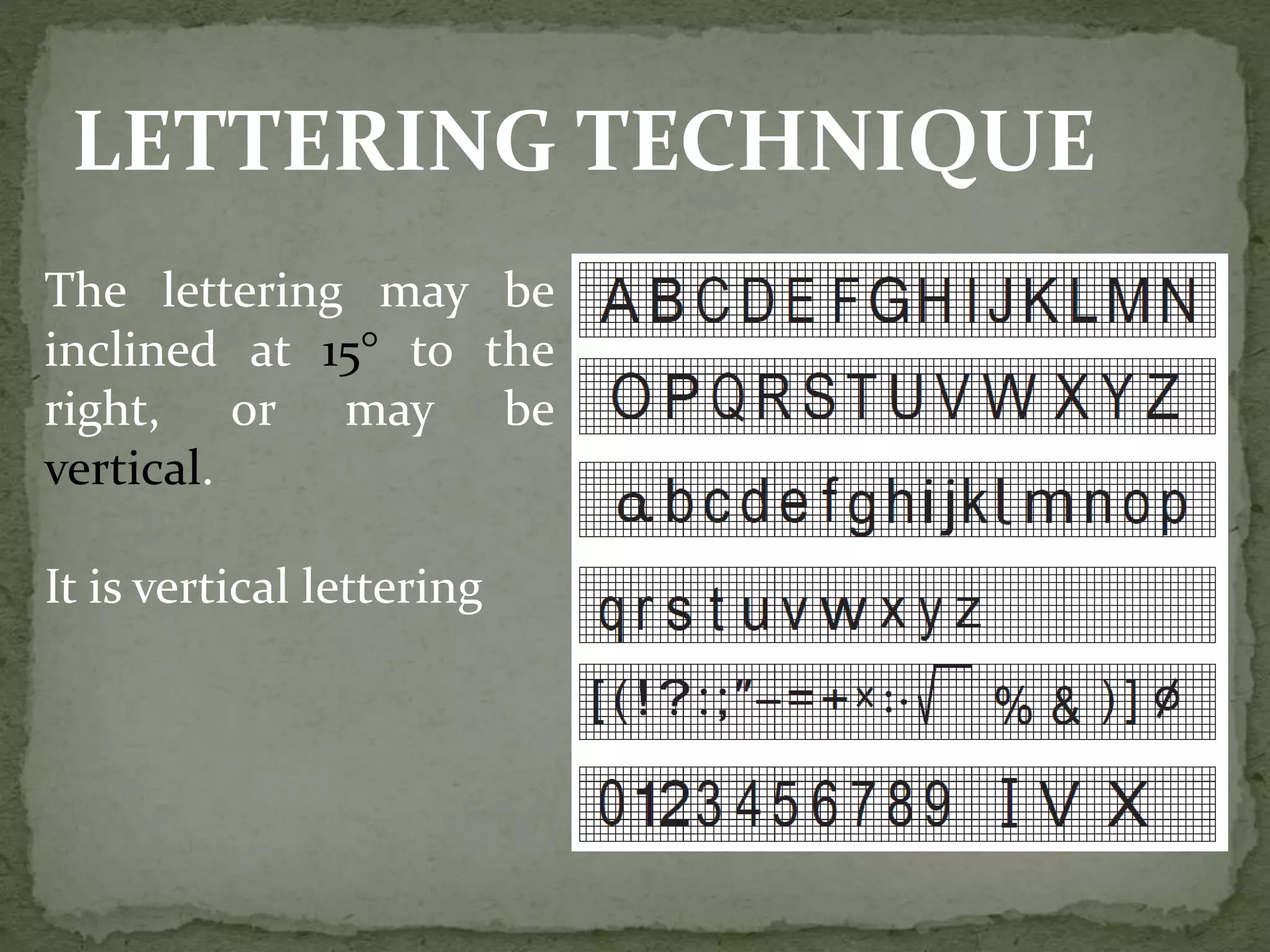
The lettering may be
inclined at 15° to the
right, or may be
vertical.
It is vertical lettering
LETTERING TECHNIQUE
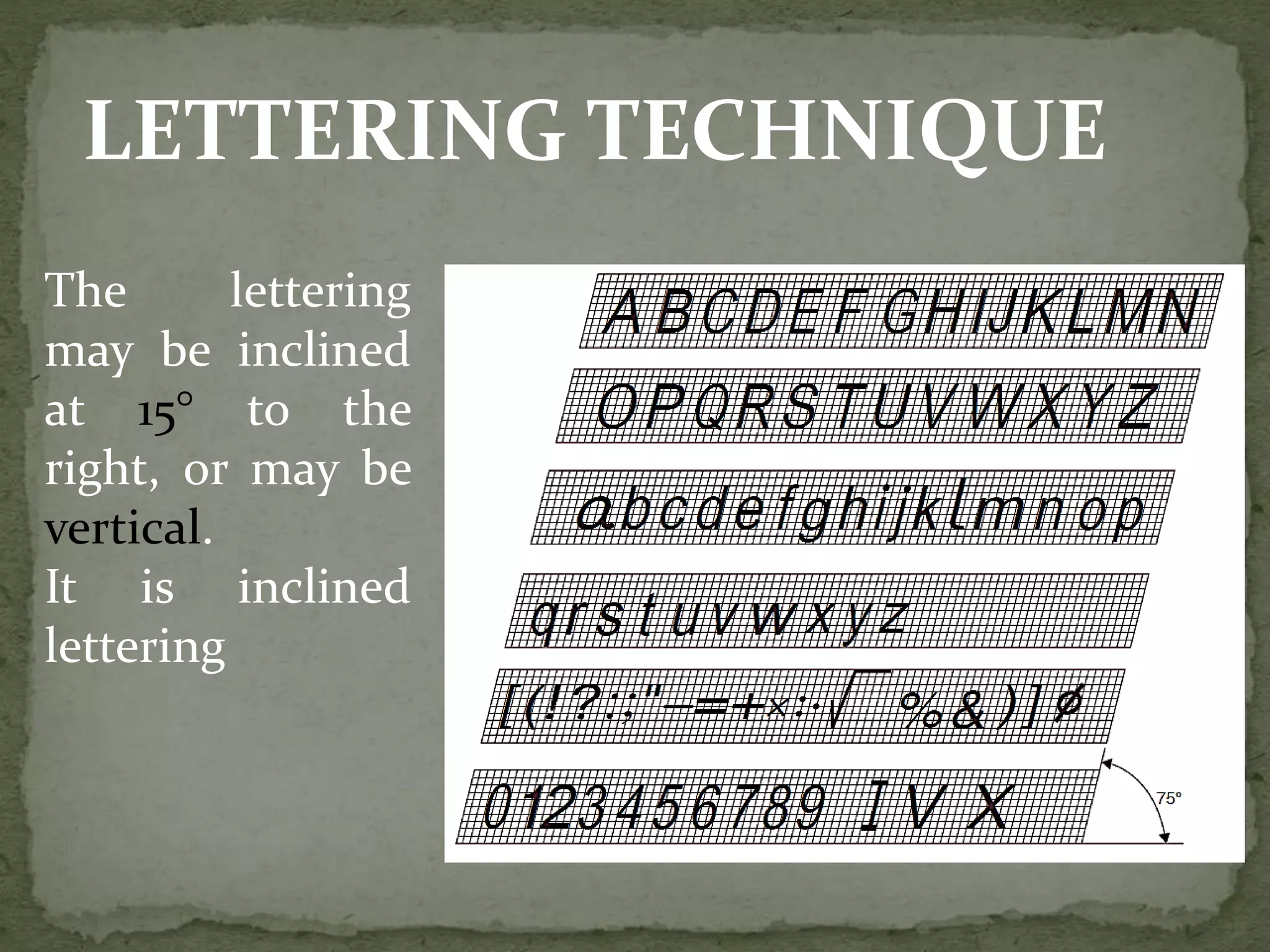
The lettering
may be inclined
at 15° to the
right, or may be
vertical.
It is inclined
lettering
LETTERING TECHNIQUE
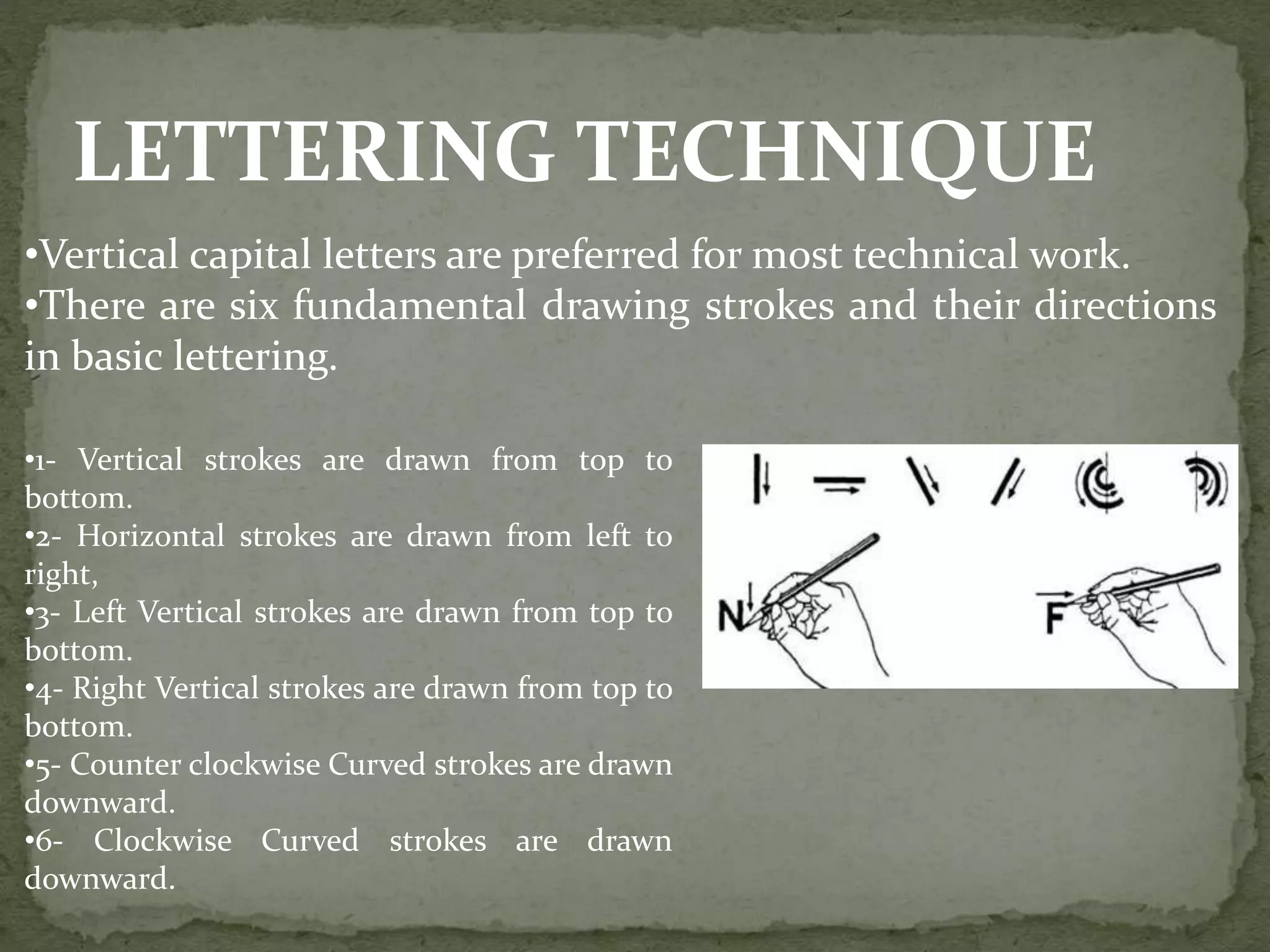
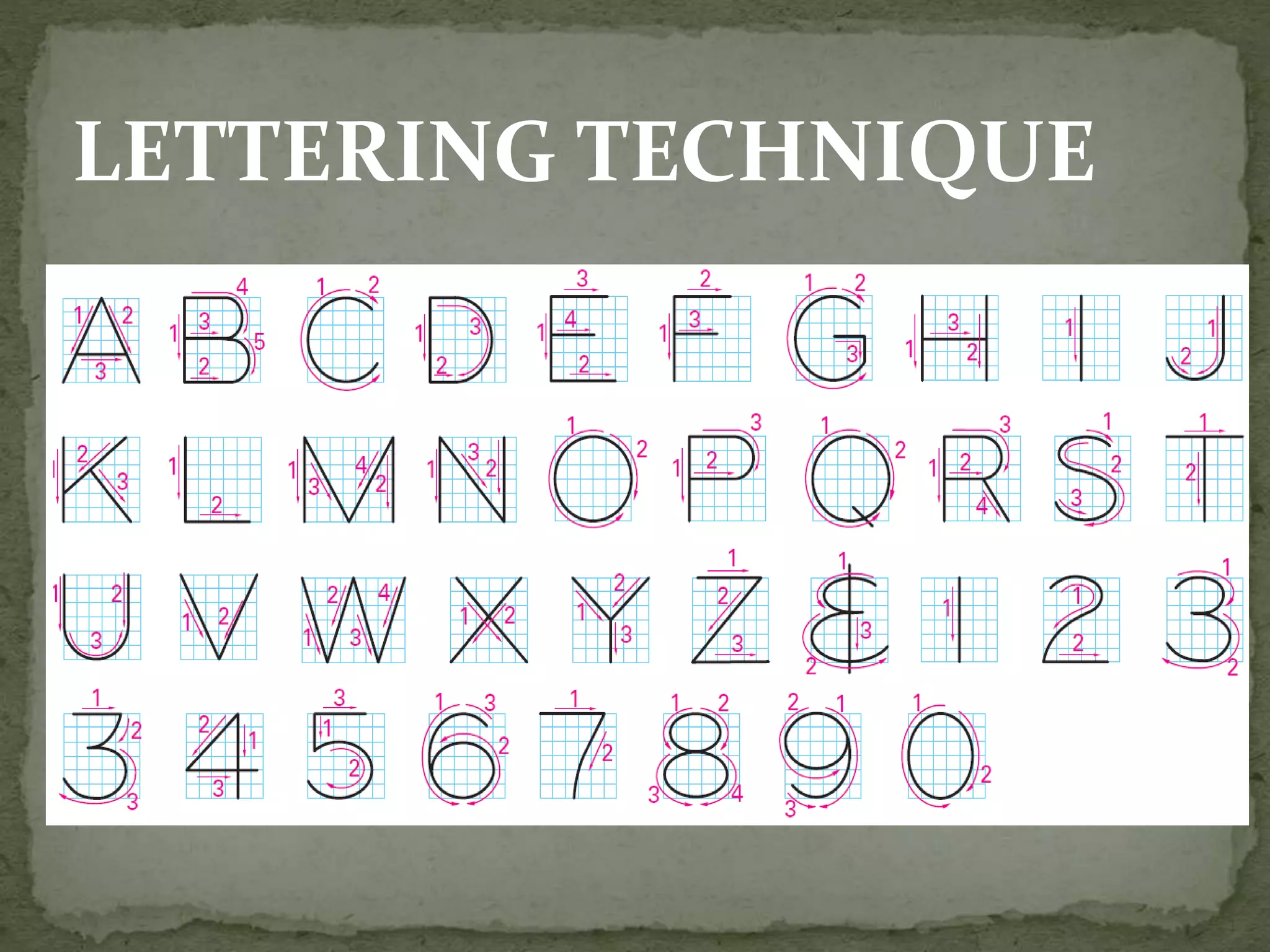
•Vertical capital letters are preferred for most technical work.
•There are six fundamental drawing strokes and their directions
in basic lettering.
•1- Vertical strokes are drawn from top to
bottom.
•2- Horizontal strokes are drawn from left to
right,
•3- Left Vertical strokes are drawn from top to
bottom.
•4- Right Vertical strokes are drawn from top to
bottom.
•5- Counter clockwise Curved strokes are drawn
downward.
•6- Clockwise Curved strokes are drawn
downward.
LETTERING TECHNIQUE
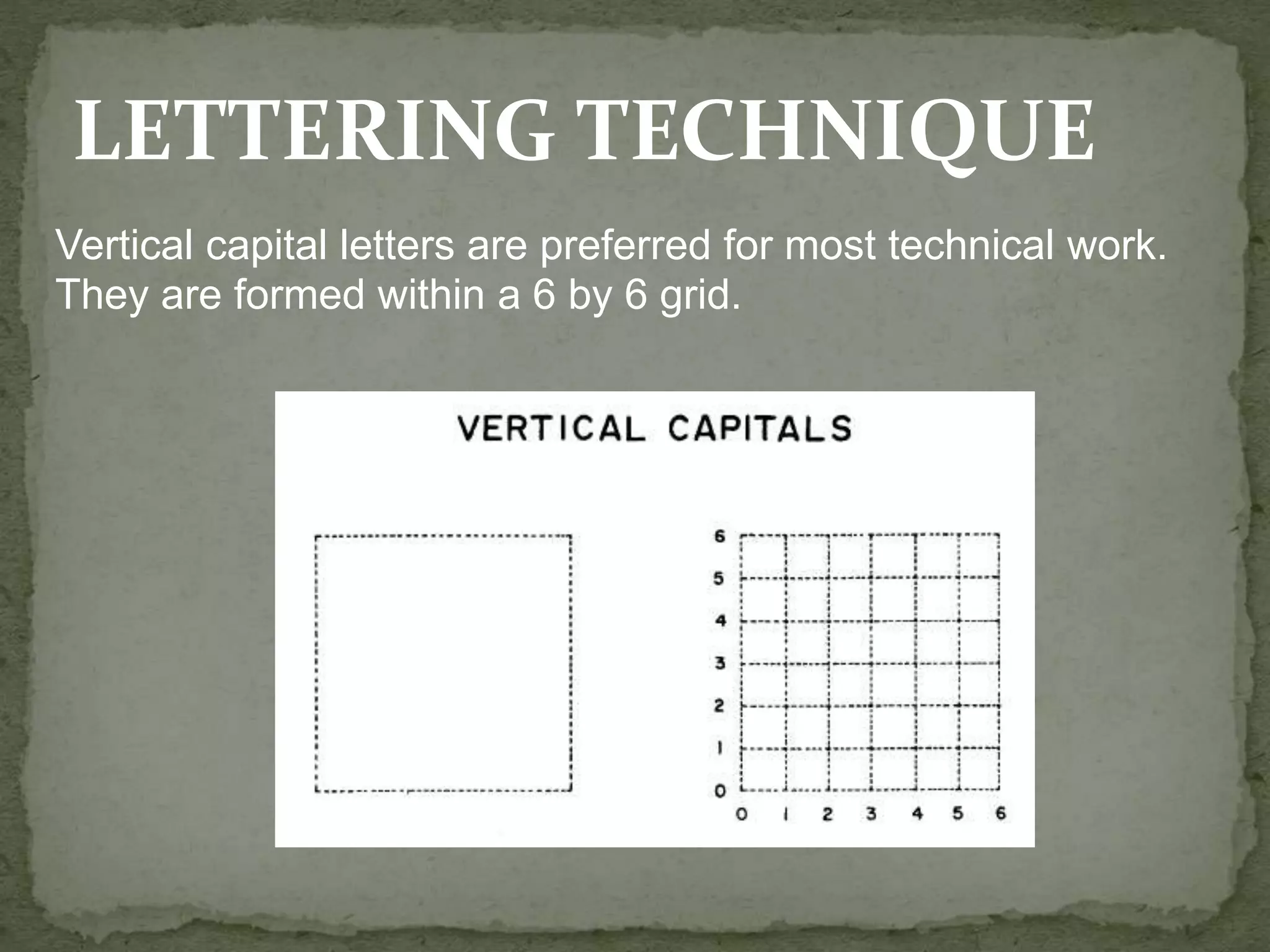
Vertical capital letters are preferred for most technical work.
They are formed within a 6 by 6 grid.
LETTERING TECHNIQUE
DRAWING SCALE
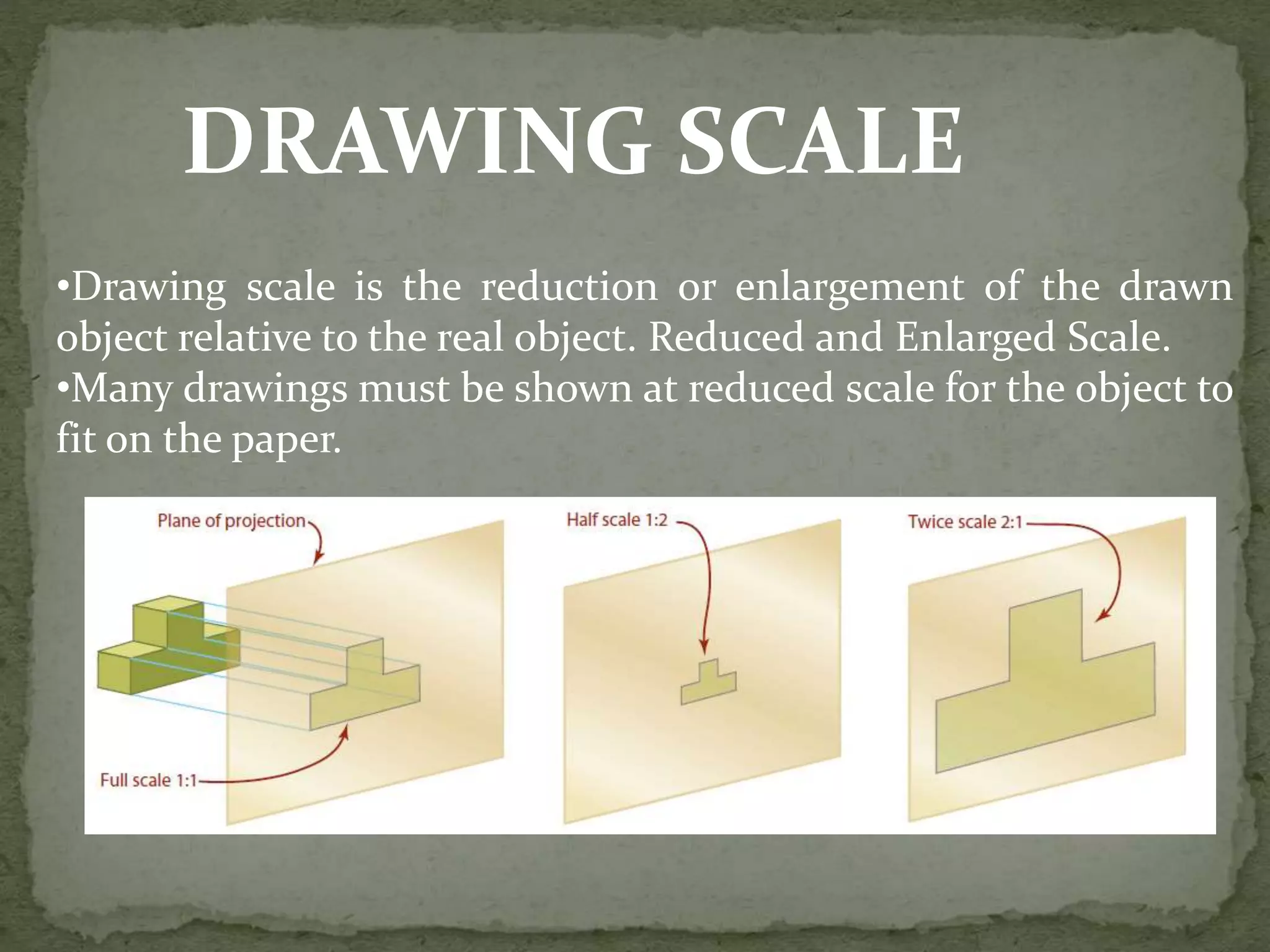
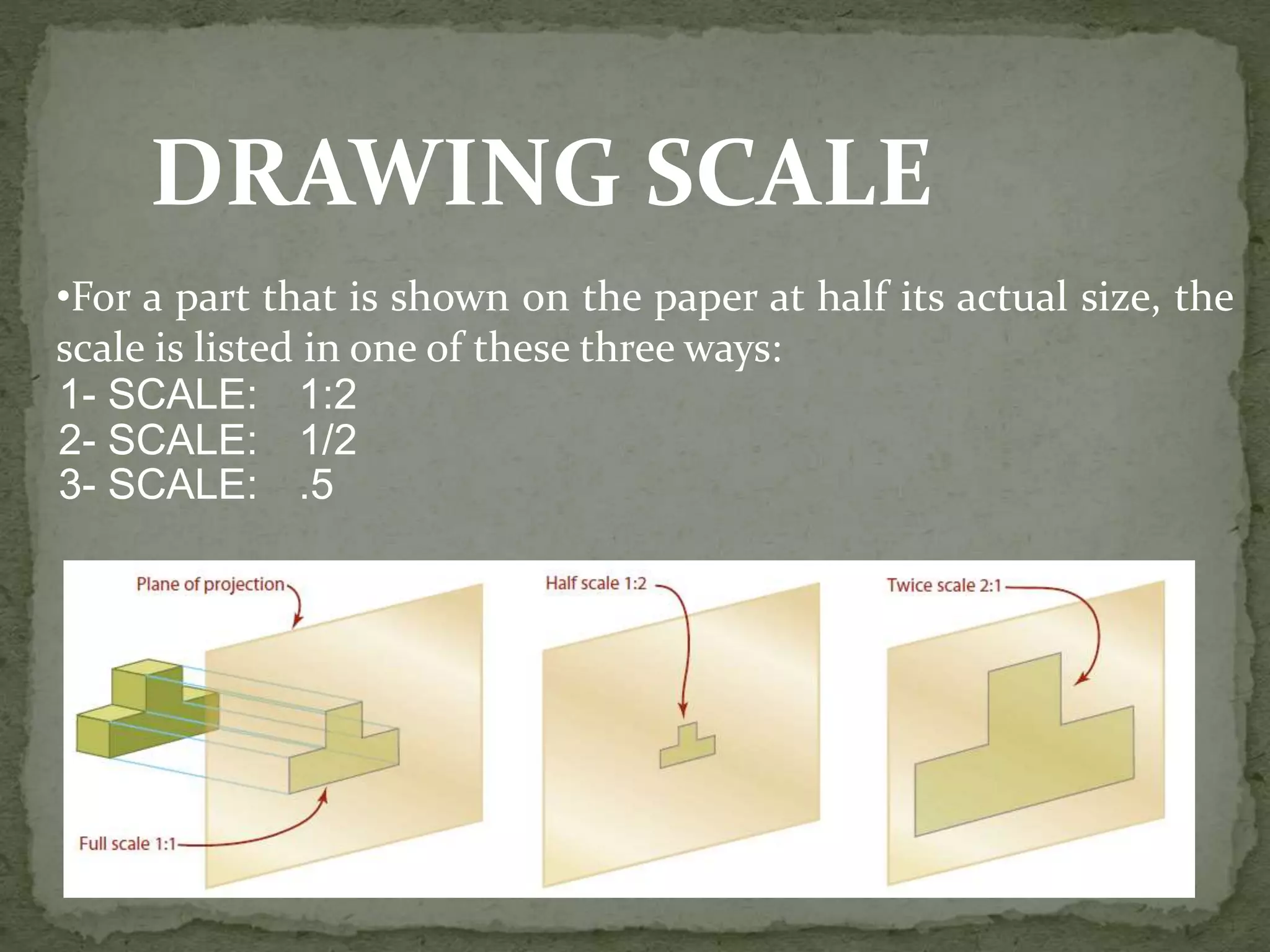
•Drawing scale is the reduction or enlargement of the drawn
object relative to the real object. Reduced and Enlarged Scale.
•Many drawings must be shown at reduced scale for the object to
fit on the paper.
DRAWING SCALE
•For a part that is shown on the paper at half its actual size, the
scale is listed in one of these three ways:
1- SCALE: 1:2
2- SCALE: 1/2
3- SCALE: .5

Lettering techniques in engineering drawing

  • 1.
  • 2.
    LETTERING TECHNIQUE • Writingof titles, sub-titles, dimensions, scales and other details on a drawing. • Essential features of lettering – legibility, uniformity, ease, rapidity, and suitability for microfilming/ photocopying/any other photographic processes • No ornamental/decorative and embellishing/enlarging style of letter. • Plain letters and numerals which are clearly distinguishable from each other in order to avoid any confusion even in case of slight mutilations
  • 4.
    LETTERING TECHNIQUE •The essentialfeatures of lettering on technical drawings are, legibility, uniformity and suitability for microfilming and other photographic reproductions. •In order to meet these requirements, the characters are to be clearly distinguishable from each other in order to avoid any confusion between them, even in the case of slight mutilations. •The reproductions require the distance between two adjacent lines or the space between letters to be at least equal to twice the line thickness. •The line thickness for lower case and capital letters shall be the same in order to facilitate lettering.
  • 5.
    LETTERING TECHNIQUE LETTERING TYPES •Lettering A – Height of the capital letter is divided into 14 equal parts • Lettering B – Height of the capital letter is divided into 10 equal parts Your lettering must have the same height, style, and size. Lettering is an art that you must practice to obtain proficiency and continue practicing to maintain proficiency. Guidelines serve as an aid to creating uniform lettering.
  • 6.
    LETTERING TECHNIQUE The followingspecifications are given for the dimensions of letters and numerals:
  • 7.
    LETTERING TECHNIQUE The letteringmay be inclined at 15° to the right, or may be vertical. It is vertical lettering
  • 8.
    LETTERING TECHNIQUE The lettering maybe inclined at 15° to the right, or may be vertical. It is inclined lettering
  • 9.
    LETTERING TECHNIQUE •Vertical capitalletters are preferred for most technical work. •There are six fundamental drawing strokes and their directions in basic lettering. •1- Vertical strokes are drawn from top to bottom. •2- Horizontal strokes are drawn from left to right, •3- Left Vertical strokes are drawn from top to bottom. •4- Right Vertical strokes are drawn from top to bottom. •5- Counter clockwise Curved strokes are drawn downward. •6- Clockwise Curved strokes are drawn downward.
  • 10.
    LETTERING TECHNIQUE Vertical capitalletters are preferred for most technical work. They are formed within a 6 by 6 grid.
  • 11.
  • 12.
    DRAWING SCALE •Drawing scaleis the reduction or enlargement of the drawn object relative to the real object. Reduced and Enlarged Scale. •Many drawings must be shown at reduced scale for the object to fit on the paper.
  • 13.
    DRAWING SCALE •For apart that is shown on the paper at half its actual size, the scale is listed in one of these three ways: 1- SCALE: 1:2 2- SCALE: 1/2 3- SCALE: .5