Mrs. Harris’s slides: Igneous Metamorphic Sedimentary
Earth Science Igneous Rocks
Today Igenous rocks Intrusive Extrusive Crystal size Texture Composition
Igneous Rock A rock made from the solidification of cooled magma Rocks melt = magma Magma cools = igneous rock What makes rock melt?
Making Magma Temperature 1,000-2,000 F o Different minerals melt at different temperatures (like cheeses) Pressure Higher pressure requires higher temperatures to melt Water and/or Carbon Dioxide These lower the pressure which lowers the temperature required to melt
Partial Melting Certain minerals will melt before others based on their chemical composition Like having butter, chocolate, and cheese in a pot… what melts first?
Types of Igneous Intrusive Form below the surface Extrusive Form on the surface
Cool It! Rate of cooling determines size of the crystals Slow = large Intrusive Fast = small Extrusive
Ever made rock candy?
Slow Cooler Large crystals Course texture Intrusive or extrusive?
Quick Cooler Small crystals Fine texture Intrusive or extrusive?
Can it be both?
Absolutely! When magma cools quickly at first and then slower it makes both crystal sizes. This is called  porphyritic
Other textures Glassy Vesicular
Intrusive Magma pushed into existing rock and cools
Intrusive
 
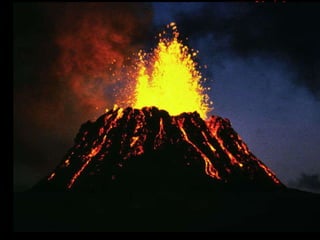
Extrusive Lava Magma on Earth’s surface Pyroclasts Ashes to rocks, erupted Pyroclastic flow Hot, dry ash, rock, and gasses
 
 
Composition Felsic Lots of silica Light in color Mafic Iron & magnesium Darker in color (sometimes has ferromagnesium minerals) Intermediate rocks are in between felsic and mafic.
Vocab Textures: Fine Course Porphyritic Glassy Vesicular Composition Felsic Mafic Intermediate
What do you call… A rock has cooled quickly and is dark in color…
What do you call… A rock has cooled slowly and is light in color…
What do you call… A rock has cooled fast then slow and is light and dark in color…
 
This week… 6-2 quiz Unit 6 discussion Unit 6 assignment 7-2 quiz 7-2 quiz Next class… Metamorphic Sedimentary
10/20/10
Metamorphic Rock What is it? When does it happen? Where do they occur? Types of metamorphism 10/20/10
Metamorphic Rock Meta & morph = change shape Rocks changed by heat, pressure, and fluids 10/20/10
Making Metamorphic Rock Two rules for changes:  Below the surface  Solid state 10/20/10
Metamorphic Heat At least 250 C o Geothermal gradient Earth gets hotter by 25 C o  for every km down Magma =  Contact metamorphism Changes bonding structure 10/20/10
Metamorphic Pressure Pressure: need 2 kilobars Depth  Add a kbar for every 3-ish km down Convergent and transform boundaries =  regional metamorphism Strains bonds, some break, more compact structure 10/20/10
10/20/10
10/20/10
Metamorphic Chemical Fluid Fluid carrying dissolved ions Magma chamber Ridge vents Changes minerology 10/20/10
After metamorphism… Recrystallization Crystal size changes Compaction Pore space reduced Foliation (not always) Parallel platy grains 10/20/10
10/20/10 Slate
10/20/10 Schist
10/20/10 Gneiss
Sedimentary Rock Rocks formed by one of 3 processes: Physical processes Plants and animals Chemical processes
Sedimentary:  Physical Process Formed by the physical breakdown of pre-existing rocks Eroding agents like water, wind, ice Transported (load), deposited, lithification (next slide) “ Clastic rocks”
Lithification-  sediment changes to rock Compaction- increased pressure & temp, removes water Cementation- any spaces become filled by minerals out of solution Mineralogic change- some break down, others change Sedimentary:  Physical Process
 
Sandstone
Sedimentary:  Plants & Animals Made of plants and/or animals Examples: Shells, bacteria, compressed plants Organic sedimentary rock
Oil Shale- Tropical plants, compressed
Stromatolites- made by algae
Sedimentary:  Chemical Process Rocks made of crystals from solution Chemicals in water, water evaporates, crystals grow Called “evaporite” Chemical Sedimentary Rocks
Halite- a.k.a. salt
Fossils
 
Looking Ahead: Unit 7 Assignments Part 1 is a unit test Part 2 is a short report  Next week: ores & mining

Rock Types

  • 1.
    Mrs. Harris’s slides:Igneous Metamorphic Sedimentary
  • 2.
  • 3.
    Today Igenous rocksIntrusive Extrusive Crystal size Texture Composition
  • 4.
    Igneous Rock Arock made from the solidification of cooled magma Rocks melt = magma Magma cools = igneous rock What makes rock melt?
  • 5.
    Making Magma Temperature1,000-2,000 F o Different minerals melt at different temperatures (like cheeses) Pressure Higher pressure requires higher temperatures to melt Water and/or Carbon Dioxide These lower the pressure which lowers the temperature required to melt
  • 6.
    Partial Melting Certainminerals will melt before others based on their chemical composition Like having butter, chocolate, and cheese in a pot… what melts first?
  • 7.
    Types of IgneousIntrusive Form below the surface Extrusive Form on the surface
  • 8.
    Cool It! Rateof cooling determines size of the crystals Slow = large Intrusive Fast = small Extrusive
  • 9.
  • 10.
    Slow Cooler Largecrystals Course texture Intrusive or extrusive?
  • 11.
    Quick Cooler Smallcrystals Fine texture Intrusive or extrusive?
  • 12.
    Can it beboth?
  • 13.
    Absolutely! When magmacools quickly at first and then slower it makes both crystal sizes. This is called porphyritic
  • 14.
  • 15.
    Intrusive Magma pushedinto existing rock and cools
  • 16.
  • 17.
  • 18.
    Extrusive Lava Magmaon Earth’s surface Pyroclasts Ashes to rocks, erupted Pyroclastic flow Hot, dry ash, rock, and gasses
  • 19.
  • 20.
  • 21.
    Composition Felsic Lotsof silica Light in color Mafic Iron & magnesium Darker in color (sometimes has ferromagnesium minerals) Intermediate rocks are in between felsic and mafic.
  • 22.
    Vocab Textures: FineCourse Porphyritic Glassy Vesicular Composition Felsic Mafic Intermediate
  • 23.
    What do youcall… A rock has cooled quickly and is dark in color…
  • 24.
    What do youcall… A rock has cooled quickly and is dark in color…
  • 25.
    What do youcall… A rock has cooled slowly and is light in color…
  • 26.
    What do youcall… A rock has cooled slowly and is light in color…
  • 27.
    What do youcall… A rock has cooled fast then slow and is light and dark in color…
  • 28.
    What do youcall… A rock has cooled fast then slow and is light and dark in color…
  • 29.
  • 30.
    This week… 6-2quiz Unit 6 discussion Unit 6 assignment 7-2 quiz 7-2 quiz Next class… Metamorphic Sedimentary
  • 31.
  • 32.
    Metamorphic Rock Whatis it? When does it happen? Where do they occur? Types of metamorphism 10/20/10
  • 33.
    Metamorphic Rock Meta& morph = change shape Rocks changed by heat, pressure, and fluids 10/20/10
  • 34.
    Making Metamorphic RockTwo rules for changes:  Below the surface  Solid state 10/20/10
  • 35.
    Metamorphic Heat Atleast 250 C o Geothermal gradient Earth gets hotter by 25 C o for every km down Magma = Contact metamorphism Changes bonding structure 10/20/10
  • 36.
    Metamorphic Pressure Pressure:need 2 kilobars Depth Add a kbar for every 3-ish km down Convergent and transform boundaries = regional metamorphism Strains bonds, some break, more compact structure 10/20/10
  • 37.
  • 38.
  • 39.
    Metamorphic Chemical FluidFluid carrying dissolved ions Magma chamber Ridge vents Changes minerology 10/20/10
  • 40.
    After metamorphism… RecrystallizationCrystal size changes Compaction Pore space reduced Foliation (not always) Parallel platy grains 10/20/10
  • 41.
  • 42.
  • 43.
  • 44.
    Sedimentary Rock Rocksformed by one of 3 processes: Physical processes Plants and animals Chemical processes
  • 45.
    Sedimentary: PhysicalProcess Formed by the physical breakdown of pre-existing rocks Eroding agents like water, wind, ice Transported (load), deposited, lithification (next slide) “ Clastic rocks”
  • 46.
    Lithification- sedimentchanges to rock Compaction- increased pressure & temp, removes water Cementation- any spaces become filled by minerals out of solution Mineralogic change- some break down, others change Sedimentary: Physical Process
  • 47.
  • 48.
  • 49.
    Sedimentary: Plants& Animals Made of plants and/or animals Examples: Shells, bacteria, compressed plants Organic sedimentary rock
  • 50.
    Oil Shale- Tropicalplants, compressed
  • 51.
  • 52.
    Sedimentary: ChemicalProcess Rocks made of crystals from solution Chemicals in water, water evaporates, crystals grow Called “evaporite” Chemical Sedimentary Rocks
  • 53.
  • 54.
  • 55.
  • 56.
    Looking Ahead: Unit7 Assignments Part 1 is a unit test Part 2 is a short report Next week: ores & mining