Types of
rocks
I G N E O U S
• Igneous rock is formed through the cooling and solidification of magma or lava.
• The melting is caused by one or more of three processes: an increase in
temperature, a decrease in pressure, or a change in composition.
• Igneous rocks can be either intrusive (plutonic and hypabyssal)
or extrusive(volcanic).
I G N E O U S
I G N E O U S
• Intrusive igneous rocks are formed from magma that cools and solidifies within the
crust of a planet, surrounded by pre-existing rock (called country rock); the magma
cools slowly and, as a result, these rocks are coarse-grained.
• Intrusive rocks can also be classified according to the shape and size of the
intrusive body and its relation to the other formations into which it intrudes.
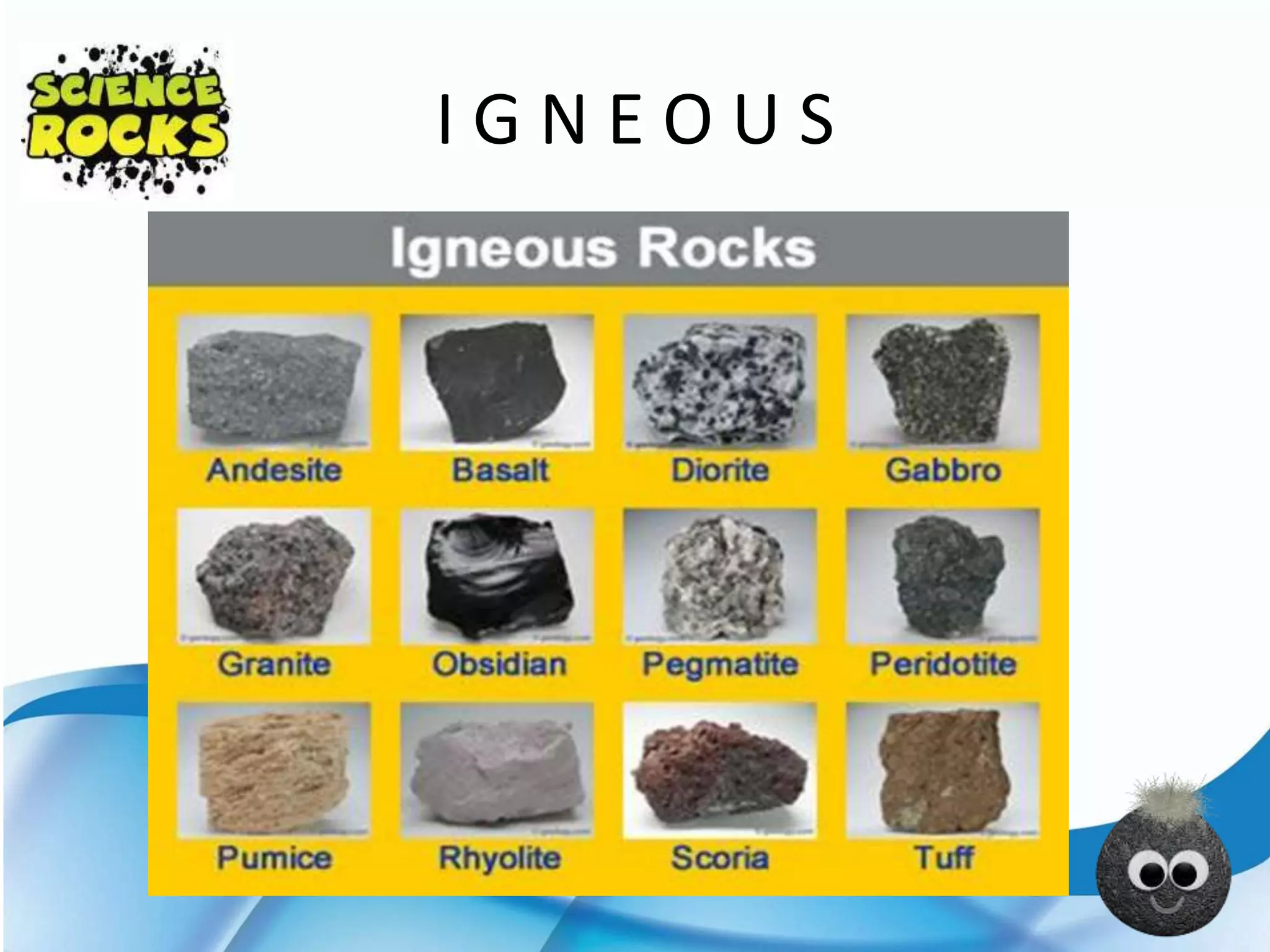
• Example: Granite, Gabbro, or Diorite.
• Extrusive igneous rocks, also known as volcanic rocks, are formed at the crust's
surface as a result of the partial melting of rocks within the mantle and crust.
• Extrusive igneous rocks cool and solidify quicker than intrusive igneous rocks. They
are formed by the cooling of molten magma on the earth's surface. The magma,
which is brought to the surface through fissures or volcanic eruptions, solidifies at
a faster rate. Hence such rocks are smooth, crystalline and fine-grained.
• Example: Basalt
S E D I M E N T A R Y
• Sedimentary rocks are formed by the accumulation of sediments. There are three
basic types of sedimentary rocks.
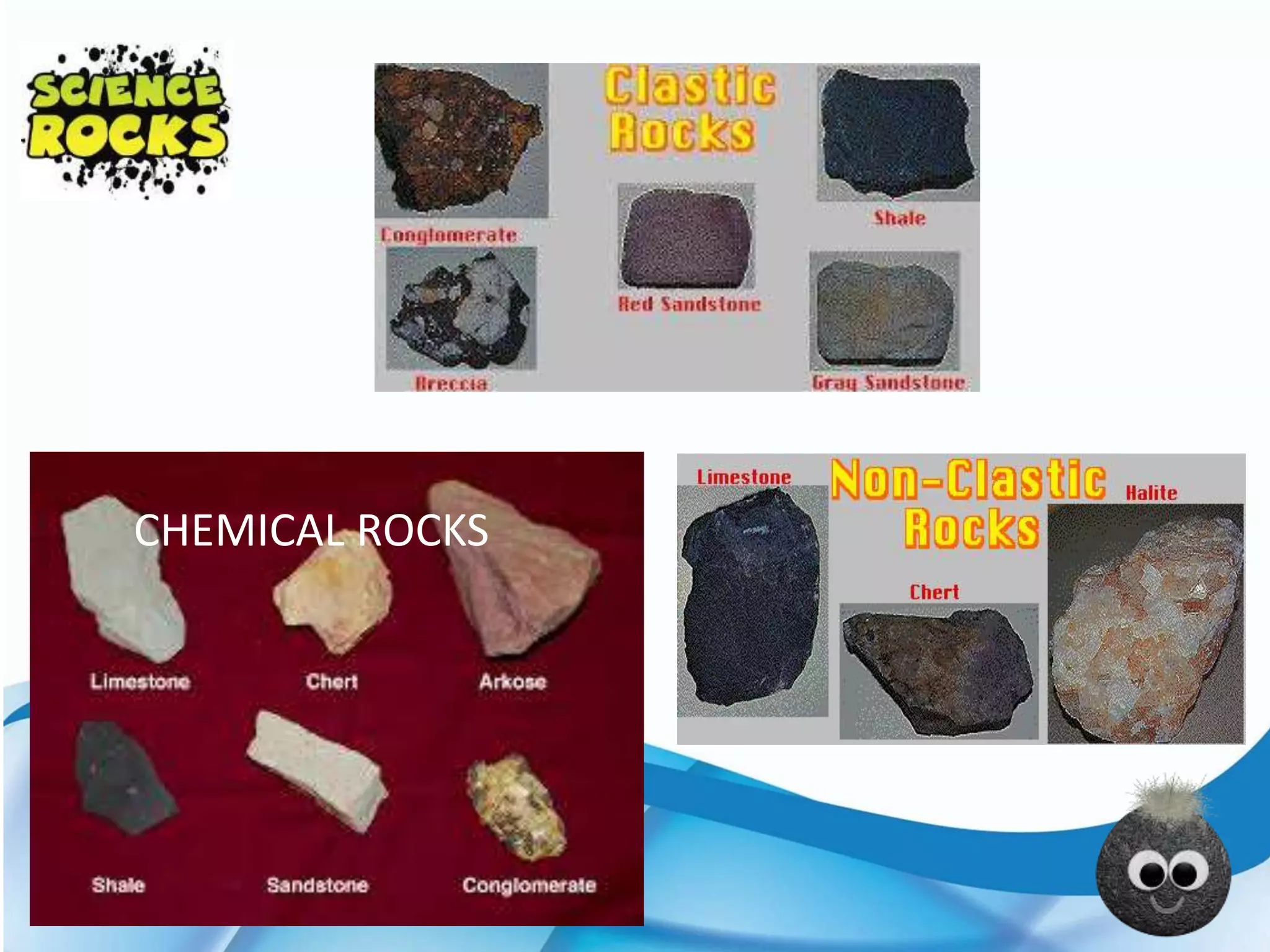
• Clastic sedimentary rocks such as breccia, conglomerate, sandstone, siltstone, and
shale are formed from mechanical weathering debris.
• Chemical sedimentary rocks, such as rock salt, iron ore, chert, flint, some
dolomites, and some limestones, form when dissolved materials precipitate from
solution.
• Organic sedimentary rocks such as coal, some dolomites, and some limestones,
form from the accumulation of plant or animal debris.
CHEMICAL ROCKS
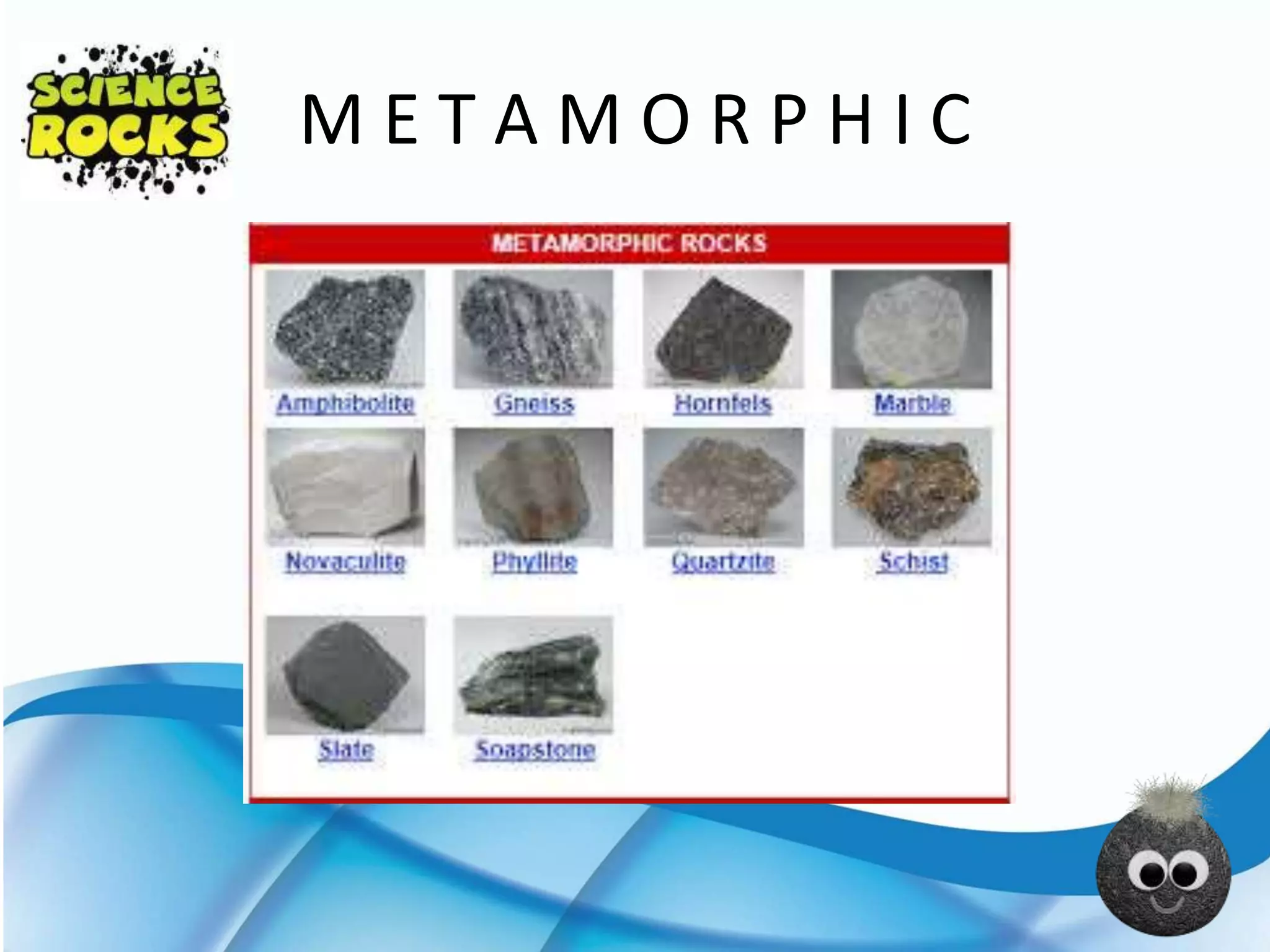
M E T A M O R P H I C
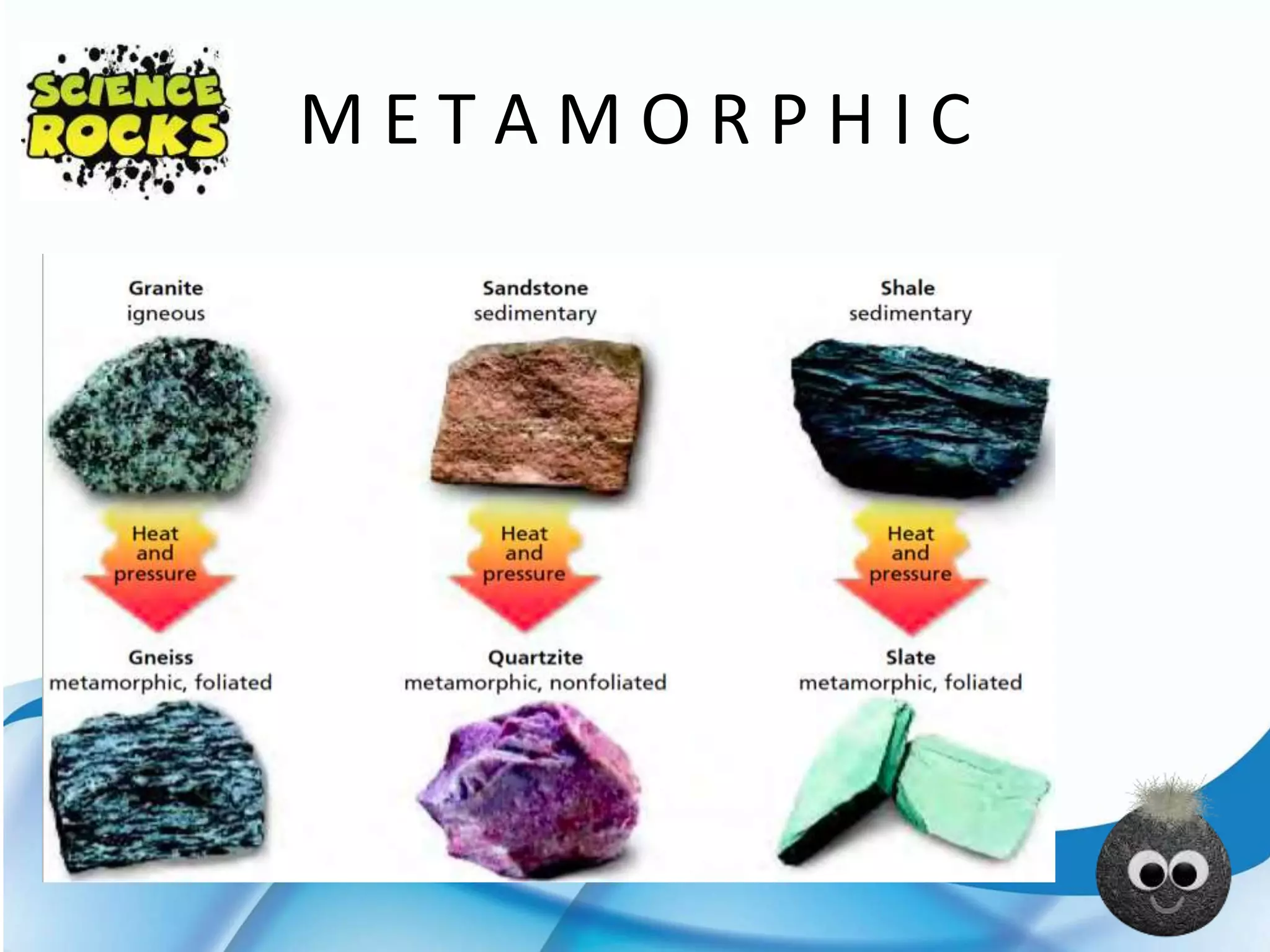
• Metamorphic rocks arise from the transformation of existing rock types, in a
process called metamorphism, which means "change in form“.
• Metamorphic rocks make up a large part of the Earth's crust and form 12% of the
Earth's current land surface.
• They are classified by texture and by chemical and mineral assemblage
• Metamorphic minerals are those that form only at the high temperatures and
pressures associated with the process of metamorphism. These minerals, known
as index minerals, include sillimanite, kyanite, staurolite, andalusite, and some
garnet.
• Other minerals, such as olivines, pyroxenes, amphiboles, micas, feldspars, and
quartz, may be found in metamorphic rocks, but are not necessarily the result of
the process of metamorphism. These minerals formed during the crystallization of
igneous rocks. They are stable at high temperatures and pressures and may remain
chemically unchanged during the metamorphic process
M E T A M O R P H I C

3 Types of rocks

  • 1.
  • 2.
    I G NE O U S • Igneous rock is formed through the cooling and solidification of magma or lava. • The melting is caused by one or more of three processes: an increase in temperature, a decrease in pressure, or a change in composition. • Igneous rocks can be either intrusive (plutonic and hypabyssal) or extrusive(volcanic).
  • 3.
    I G NE O U S
  • 4.
    I G NE O U S • Intrusive igneous rocks are formed from magma that cools and solidifies within the crust of a planet, surrounded by pre-existing rock (called country rock); the magma cools slowly and, as a result, these rocks are coarse-grained. • Intrusive rocks can also be classified according to the shape and size of the intrusive body and its relation to the other formations into which it intrudes. • Example: Granite, Gabbro, or Diorite. • Extrusive igneous rocks, also known as volcanic rocks, are formed at the crust's surface as a result of the partial melting of rocks within the mantle and crust. • Extrusive igneous rocks cool and solidify quicker than intrusive igneous rocks. They are formed by the cooling of molten magma on the earth's surface. The magma, which is brought to the surface through fissures or volcanic eruptions, solidifies at a faster rate. Hence such rocks are smooth, crystalline and fine-grained. • Example: Basalt
  • 5.
    S E DI M E N T A R Y • Sedimentary rocks are formed by the accumulation of sediments. There are three basic types of sedimentary rocks. • Clastic sedimentary rocks such as breccia, conglomerate, sandstone, siltstone, and shale are formed from mechanical weathering debris. • Chemical sedimentary rocks, such as rock salt, iron ore, chert, flint, some dolomites, and some limestones, form when dissolved materials precipitate from solution. • Organic sedimentary rocks such as coal, some dolomites, and some limestones, form from the accumulation of plant or animal debris.
  • 6.
  • 7.
    M E TA M O R P H I C • Metamorphic rocks arise from the transformation of existing rock types, in a process called metamorphism, which means "change in form“. • Metamorphic rocks make up a large part of the Earth's crust and form 12% of the Earth's current land surface. • They are classified by texture and by chemical and mineral assemblage • Metamorphic minerals are those that form only at the high temperatures and pressures associated with the process of metamorphism. These minerals, known as index minerals, include sillimanite, kyanite, staurolite, andalusite, and some garnet. • Other minerals, such as olivines, pyroxenes, amphiboles, micas, feldspars, and quartz, may be found in metamorphic rocks, but are not necessarily the result of the process of metamorphism. These minerals formed during the crystallization of igneous rocks. They are stable at high temperatures and pressures and may remain chemically unchanged during the metamorphic process
  • 8.
    M E TA M O R P H I C
  • 9.
    M E TA M O R P H I C