ROCKS defined 
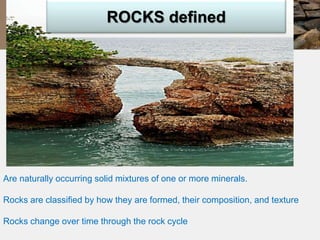
Are naturally occurring solid mixtures of one or more minerals. 
Rocks are classified by how they are formed, their composition, and texture 
Rocks change over time through the rock cycle
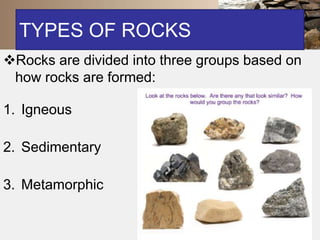
TYPES OF ROCKS 
Rocks are divided into three groups based on 
how rocks are formed: 
1. Igneous 
2. Sedimentary 
3. Metamorphic
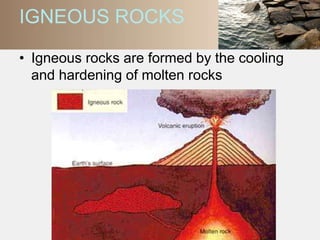
IGNEOUS ROCKS 
• Igneous rocks are formed by the cooling 
and hardening of molten rocks
TYPES OF IGNEOUS ROCKS 
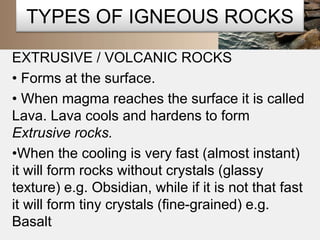
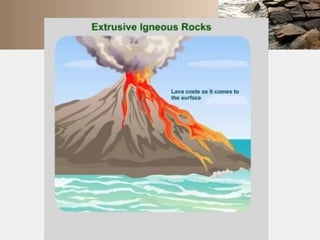
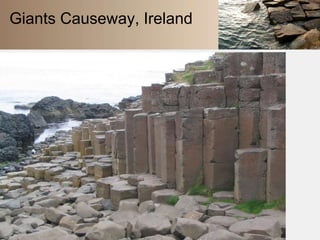
EXTRUSIVE / VOLCANIC ROCKS 
• Forms at the surface. 
• When magma reaches the surface it is called 
Lava. Lava cools and hardens to form 
Extrusive rocks. 
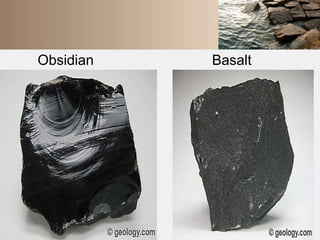
•When the cooling is very fast (almost instant) 
it will form rocks without crystals (glassy 
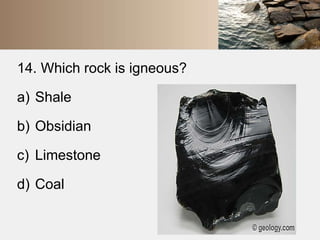
texture) e.g. Obsidian, while if it is not that fast 
it will form tiny crystals (fine-grained) e.g. 
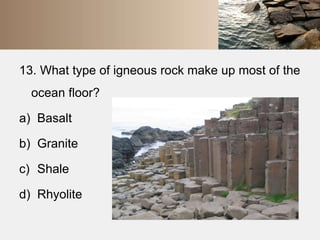
Basalt
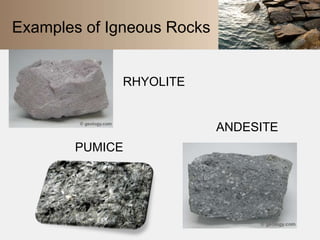
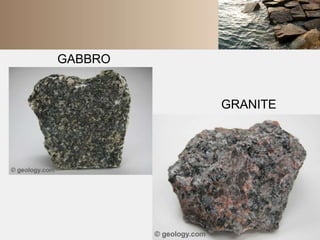
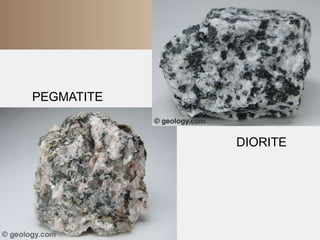
Examples of Igneous Rocks 
PUMICE 
ANDESITE 
RHYOLITE
GABBRO 
GRANITE
Obsidian Basalt
DIORITE 
PEGMATITE
Giants Causeway, Ireland
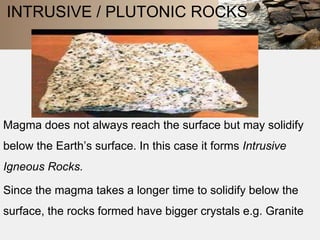
INTRUSIVE / PLUTONIC ROCKS 
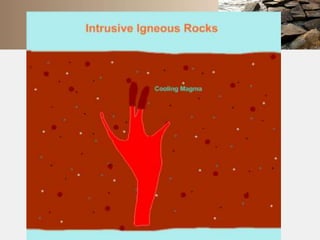
Magma does not always reach the surface but may solidify 
below the Earth’s surface. In this case it forms Intrusive 
Igneous Rocks. 
Since the magma takes a longer time to solidify below the 
surface, the rocks formed have bigger crystals e.g. Granite
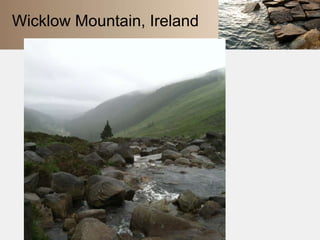
Wicklow Mountain, Ireland
Igneous Rocks 
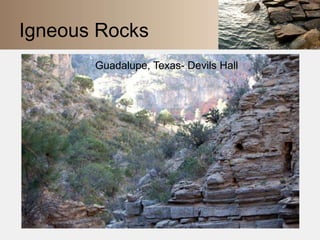
Guadalupe, Texas- Devils Hall
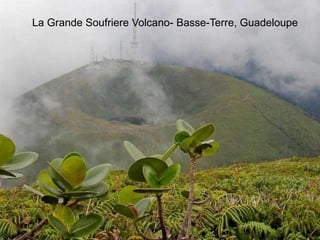
La Grande Soufriere Volcano- Basse-Terre, Guadeloupe
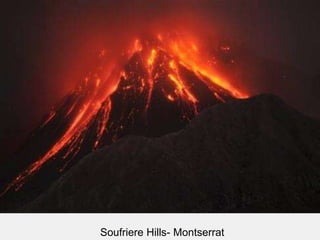
Soufriere Hills- Montserrat
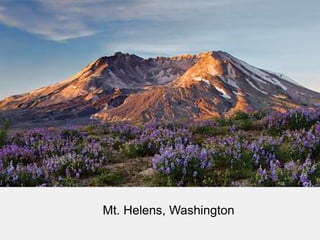
Mt. Helens, Washington
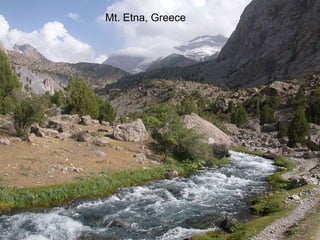
Mt. Etna, Greece
SEDIMENTARY ROCKS 
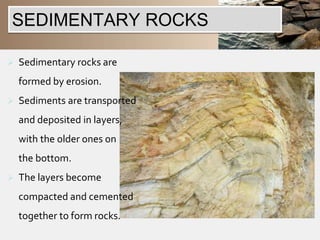
 Sedimentary rocks are 
formed by erosion. 
 Sediments are transported 
and deposited in layers, 
with the older ones on 
the bottom. 
 The layers become 
compacted and cemented 
together to form rocks.
 They are also formed as a result of exogenic 
processes e.g. chemical & mechanical weathering, 
freezing & thawing, oxidation. 
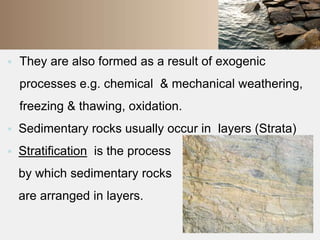
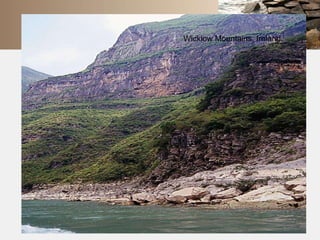
 Sedimentary rocks usually occur in layers (Strata) 
 Stratification is the process 
by which sedimentary rocks 
are arranged in layers.
Wicklow Mountains, Ireland.
THREE TYPES OF 
SEDIMENTARY ROCKS 
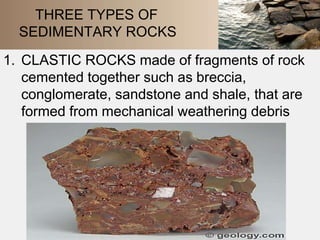
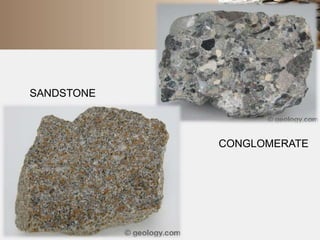
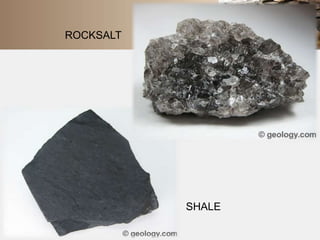
1. CLASTIC ROCKS made of fragments of rock 
cemented together such as breccia, 
conglomerate, sandstone and shale, that are 
formed from mechanical weathering debris
SANDSTONE 
CONGLOMERATE
ROCKSALT 
SHALE
NON-CLASTIC 
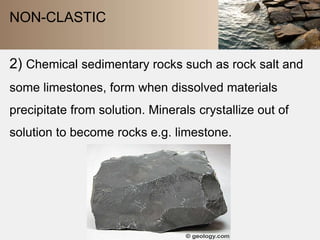
2) Chemical sedimentary rocks such as rock salt and 
some limestones, form when dissolved materials 
precipitate from solution. Minerals crystallize out of 
solution to become rocks e.g. limestone.
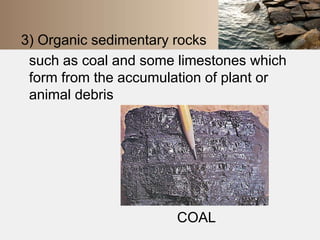
3) Organic sedimentary rocks 
such as coal and some limestones which 
form from the accumulation of plant or 
animal debris 
COAL
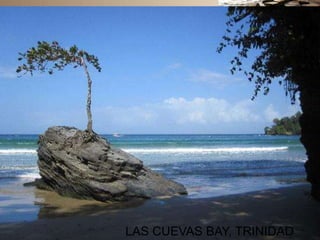
LAS CUEVAS BAY, TRINIDAD
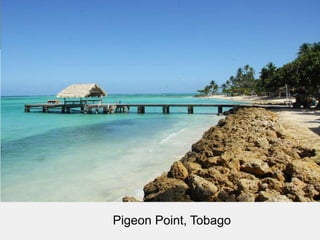
Pigeon Point, Tobago
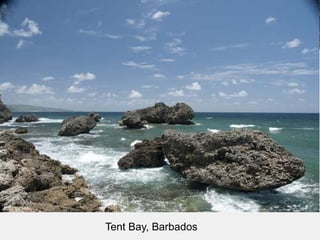
Tent Bay, Barbados
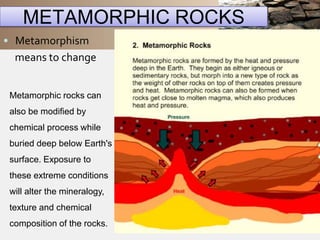
METAMORPHIC ROCKS 
• Metamorphism 
means to change 
Metamorphic rocks can 
also be modified by 
chemical process while 
buried deep below Earth's 
surface. Exposure to 
these extreme conditions 
will alter the mineralogy, 
texture and chemical 
composition of the rocks.
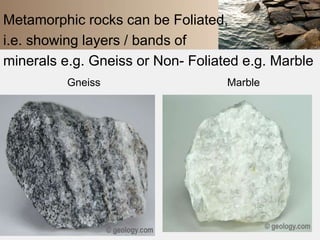
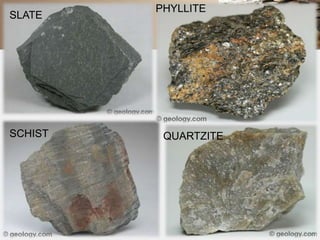
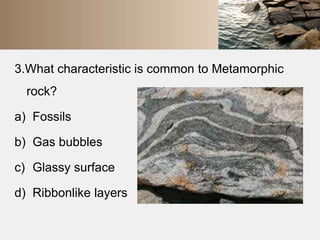
Metamorphic rocks can be Foliated, 
i.e. showing layers / bands of 
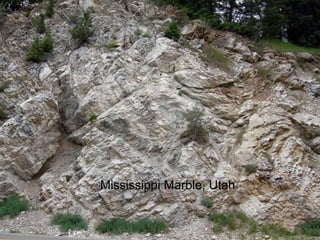
minerals e.g. Gneiss or Non- Foliated e.g. Marble 
Gneiss Marble
PHYLLITE 
SLATE 
SCHIST QUARTZITE
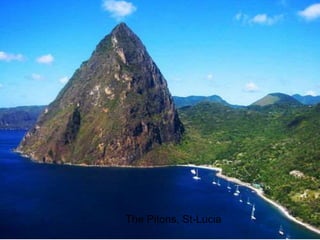
The Pitons, St-Lucia
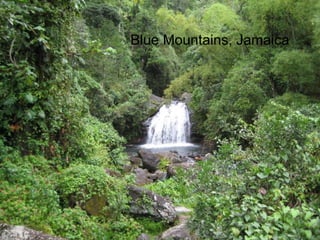
Blue Mountains, Jamaica
Mississippi Marble, Utah
USES OF ROCKS 
1. Source of minerals e.g. gold 
2. Used in construction 
3. As aquifers, they are good sources of water 
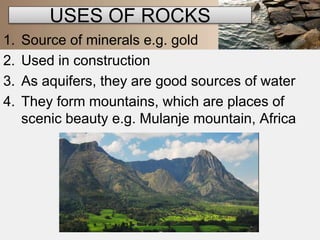
4. They form mountains, which are places of 
scenic beauty e.g. Mulanje mountain, Africa
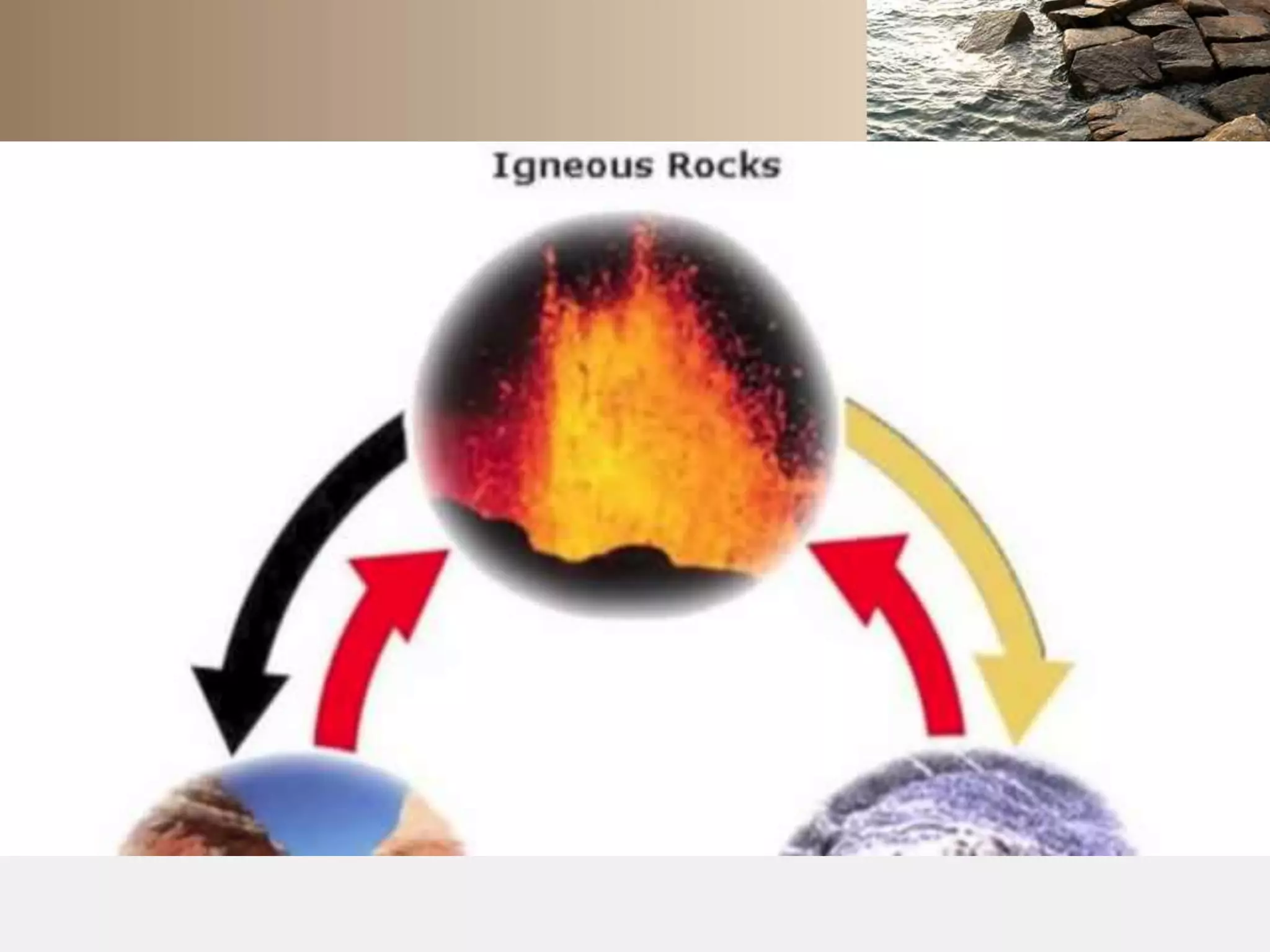
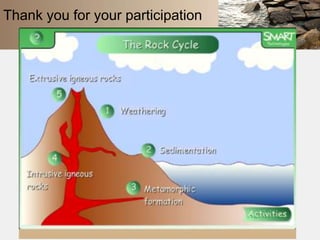
THE ROCK CYCLE 
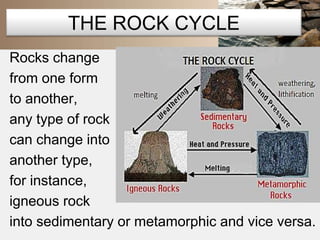
Rocks change 
from one form 
to another, 
any type of rock 
can change into 
another type, 
for instance, 
igneous rock 
into sedimentary or metamorphic and vice versa.
ROCK QUIZ 
1. What geologic process changes pieces of rocks, 
minerals and other material into sedimentary rock? 
a) Compacting and cementing 
b) Cooling 
c) Heat and Pressure 
d) Melting
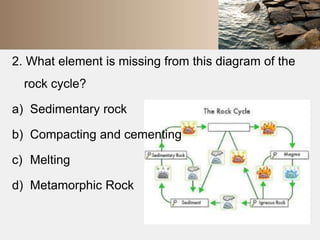
2. What element is missing from this diagram of the 
rock cycle? 
a) Sedimentary rock 
b) Compacting and cementing 
c) Melting 
d) Metamorphic Rock
3.What characteristic is common to Metamorphic 
rock? 
a) Fossils 
b) Gas bubbles 
c) Glassy surface 
d) Ribbonlike layers
4. What geologic process can change granite 
(igneous rock) into gneiss (metamorphic rock)? 
a) Compacting and cementing 
b) Cooling 
c) Heat and Pressure 
d) Melting
5. The process that shows how one rock can 
change into another is called 
a) The metamorphic cycle 
b) The mineral cycle 
c) The clastic cycle 
d) The rock cycle
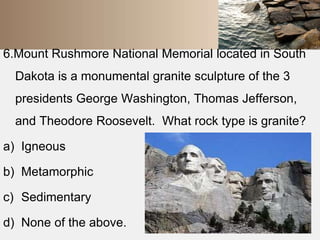
6.Mount Rushmore National Memorial located in South 
Dakota is a monumental granite sculpture of the 3 
presidents George Washington, Thomas Jefferson, 
and Theodore Roosevelt. What rock type is granite? 
a) Igneous 
b) Metamorphic 
c) Sedimentary 
d) None of the above.
7. Geologists divide rocks into three 
groups: metamorphic, sedimentary, and 
a) Clastic 
b) Minerals 
c) Igneous 
d) Magma
8. When magma cools quickly, what kind of texture 
or crystals does a rock have? 
a) coarse-grained or large crystals 
b) a mixture of all types of grains or sizes of crystals 
c) medium-grained or medium crystals 
d) fine-grained or small crystals
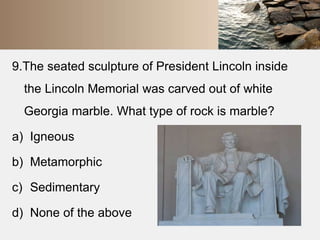
9.The seated sculpture of President Lincoln inside 
the Lincoln Memorial was carved out of white 
Georgia marble. What type of rock is marble? 
a) Igneous 
b) Metamorphic 
c) Sedimentary 
d) None of the above
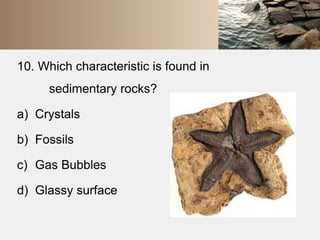
10. Which characteristic is found in 
sedimentary rocks? 
a) Crystals 
b) Fossils 
c) Gas Bubbles 
d) Glassy surface
11. Which of these statements is true? 
a) Rocks can only change on the earth's surface. 
b) Rocks can change from one type to another 
c) Rocks can only change inside the earth 
d) Rocks never change
12. During the rock cycle, what forms when magma 
cools? 
a) sedimentary rock 
b) igneous rock 
c) metamorphic rock 
d) foliated rock
13. What type of igneous rock make up most of the 
ocean floor? 
a) Basalt 
b) Granite 
c) Shale 
d) Rhyolite
14. Which rock is igneous? 
a) Shale 
b) Obsidian 
c) Limestone 
d) Coal
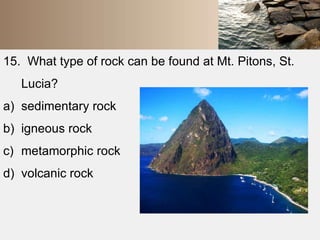
15. What type of rock can be found at Mt. Pitons, St. 
Lucia? 
a) sedimentary rock 
b) igneous rock 
c) metamorphic rock 
d) volcanic rock
Thank you for your participation

Rocks

  • 3.
    ROCKS defined Arenaturally occurring solid mixtures of one or more minerals. Rocks are classified by how they are formed, their composition, and texture Rocks change over time through the rock cycle
  • 4.
    TYPES OF ROCKS Rocks are divided into three groups based on how rocks are formed: 1. Igneous 2. Sedimentary 3. Metamorphic
  • 5.
    IGNEOUS ROCKS •Igneous rocks are formed by the cooling and hardening of molten rocks
  • 6.
    TYPES OF IGNEOUSROCKS EXTRUSIVE / VOLCANIC ROCKS • Forms at the surface. • When magma reaches the surface it is called Lava. Lava cools and hardens to form Extrusive rocks. •When the cooling is very fast (almost instant) it will form rocks without crystals (glassy texture) e.g. Obsidian, while if it is not that fast it will form tiny crystals (fine-grained) e.g. Basalt
  • 8.
    Examples of IgneousRocks PUMICE ANDESITE RHYOLITE
  • 9.
  • 10.
  • 11.
  • 12.
  • 13.
    INTRUSIVE / PLUTONICROCKS Magma does not always reach the surface but may solidify below the Earth’s surface. In this case it forms Intrusive Igneous Rocks. Since the magma takes a longer time to solidify below the surface, the rocks formed have bigger crystals e.g. Granite
  • 15.
  • 16.
    Igneous Rocks Guadalupe,Texas- Devils Hall
  • 17.
    La Grande SoufriereVolcano- Basse-Terre, Guadeloupe
  • 18.
  • 19.
  • 20.
  • 21.
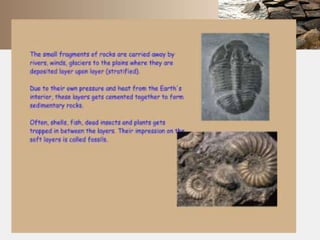
    SEDIMENTARY ROCKS Sedimentary rocks are formed by erosion.  Sediments are transported and deposited in layers, with the older ones on the bottom.  The layers become compacted and cemented together to form rocks.
  • 22.
     They arealso formed as a result of exogenic processes e.g. chemical & mechanical weathering, freezing & thawing, oxidation.  Sedimentary rocks usually occur in layers (Strata)  Stratification is the process by which sedimentary rocks are arranged in layers.
  • 25.
  • 26.
    THREE TYPES OF SEDIMENTARY ROCKS 1. CLASTIC ROCKS made of fragments of rock cemented together such as breccia, conglomerate, sandstone and shale, that are formed from mechanical weathering debris
  • 27.
  • 28.
  • 29.
    NON-CLASTIC 2) Chemicalsedimentary rocks such as rock salt and some limestones, form when dissolved materials precipitate from solution. Minerals crystallize out of solution to become rocks e.g. limestone.
  • 30.
    3) Organic sedimentaryrocks such as coal and some limestones which form from the accumulation of plant or animal debris COAL
  • 31.
  • 32.
  • 33.
  • 34.
    METAMORPHIC ROCKS •Metamorphism means to change Metamorphic rocks can also be modified by chemical process while buried deep below Earth's surface. Exposure to these extreme conditions will alter the mineralogy, texture and chemical composition of the rocks.
  • 35.
    Metamorphic rocks canbe Foliated, i.e. showing layers / bands of minerals e.g. Gneiss or Non- Foliated e.g. Marble Gneiss Marble
  • 36.
  • 37.
  • 38.
  • 39.
  • 40.
    USES OF ROCKS 1. Source of minerals e.g. gold 2. Used in construction 3. As aquifers, they are good sources of water 4. They form mountains, which are places of scenic beauty e.g. Mulanje mountain, Africa
  • 41.
    THE ROCK CYCLE Rocks change from one form to another, any type of rock can change into another type, for instance, igneous rock into sedimentary or metamorphic and vice versa.
  • 42.
    ROCK QUIZ 1.What geologic process changes pieces of rocks, minerals and other material into sedimentary rock? a) Compacting and cementing b) Cooling c) Heat and Pressure d) Melting
  • 43.
    2. What elementis missing from this diagram of the rock cycle? a) Sedimentary rock b) Compacting and cementing c) Melting d) Metamorphic Rock
  • 44.
    3.What characteristic iscommon to Metamorphic rock? a) Fossils b) Gas bubbles c) Glassy surface d) Ribbonlike layers
  • 45.
    4. What geologicprocess can change granite (igneous rock) into gneiss (metamorphic rock)? a) Compacting and cementing b) Cooling c) Heat and Pressure d) Melting
  • 46.
    5. The processthat shows how one rock can change into another is called a) The metamorphic cycle b) The mineral cycle c) The clastic cycle d) The rock cycle
  • 47.
    6.Mount Rushmore NationalMemorial located in South Dakota is a monumental granite sculpture of the 3 presidents George Washington, Thomas Jefferson, and Theodore Roosevelt. What rock type is granite? a) Igneous b) Metamorphic c) Sedimentary d) None of the above.
  • 48.
    7. Geologists dividerocks into three groups: metamorphic, sedimentary, and a) Clastic b) Minerals c) Igneous d) Magma
  • 49.
    8. When magmacools quickly, what kind of texture or crystals does a rock have? a) coarse-grained or large crystals b) a mixture of all types of grains or sizes of crystals c) medium-grained or medium crystals d) fine-grained or small crystals
  • 50.
    9.The seated sculptureof President Lincoln inside the Lincoln Memorial was carved out of white Georgia marble. What type of rock is marble? a) Igneous b) Metamorphic c) Sedimentary d) None of the above
  • 51.
    10. Which characteristicis found in sedimentary rocks? a) Crystals b) Fossils c) Gas Bubbles d) Glassy surface
  • 52.
    11. Which ofthese statements is true? a) Rocks can only change on the earth's surface. b) Rocks can change from one type to another c) Rocks can only change inside the earth d) Rocks never change
  • 53.
    12. During therock cycle, what forms when magma cools? a) sedimentary rock b) igneous rock c) metamorphic rock d) foliated rock
  • 54.
    13. What typeof igneous rock make up most of the ocean floor? a) Basalt b) Granite c) Shale d) Rhyolite
  • 55.
    14. Which rockis igneous? a) Shale b) Obsidian c) Limestone d) Coal
  • 56.
    15. What typeof rock can be found at Mt. Pitons, St. Lucia? a) sedimentary rock b) igneous rock c) metamorphic rock d) volcanic rock
  • 57.
    Thank you foryour participation

Editor's Notes

  • #27 Breccia is a clastic sedimentary rock that is composed of large (over two millimeter diameter) angular fragments. The spaces between the large fragments can be filled with a matrix of smaller particles or a mineral cement which binds the rock together. 
  • #28 Sandstone is a clastic sedimentary rock made up mainly of sand-size (1/16 to 2 millimeter diameter) weathering debris. Environments where large amounts of sand can accumulate include beaches, deserts, flood plains and deltas.
  • #29 Shale is a clastic sedimentary rock that is made up of clay-size (less then 1/256 millimeter in diameter) weathering debris. It typically breaks into thin flat pieces. 
  • #30 Limestone is a rock that is composed primarily of calcium carbonate. It can form organically from the accumulation of shell, coral, algal and fecal debris. It can also form chemically from the precipitation of calcium carbonate from lake or ocean water. Limestone is used in many ways. Some of the most common are: production of cement, crushed stone and acid neutralization. Rock Salt is a chemical sedimentary rock that forms from the evaporation of ocean or saline lake waters. It is also known by the mineral name "halite". It is rarely found at Earth's surface, except in areas of very arid climate. It is often mined for use in the chemical industry or for use as a winter highway treatment. Some halite is processed for use as a seasoning for food.
  • #36 Foliated Metamorphic Rocks have a layered or banded appearance that is produced by exposure to heat and directed pressure. Non-foliated metamorphic rocks such as marble and quartzite which do not have a layered or banded appearance.
  • #37 Schist is metamorphic rock with well developed foliation. It often contains significant amounts of mica which allow the rock to split into thin pieces. Phyllite is a foliate metamorphic rock that is made up mainly of very fine-grained mica. The surface of phyllite is typically lustrous and sometimes wrinkled. It is intermediate in grade between slate and schist. Quartzite is a non-foliated metamorphic rock that is produced by the metamorphism of sandstone. It is composed primarily of quartz.