The Formation, Mining, and use of mineralsEarth ScienceChapter 1.3
Objectives:Describe the environments in which minerals formsCompare the two types of miningDescribe two ways to reduce the effects of miningDescribedifferent uses for metallic and nonmetallic minerals
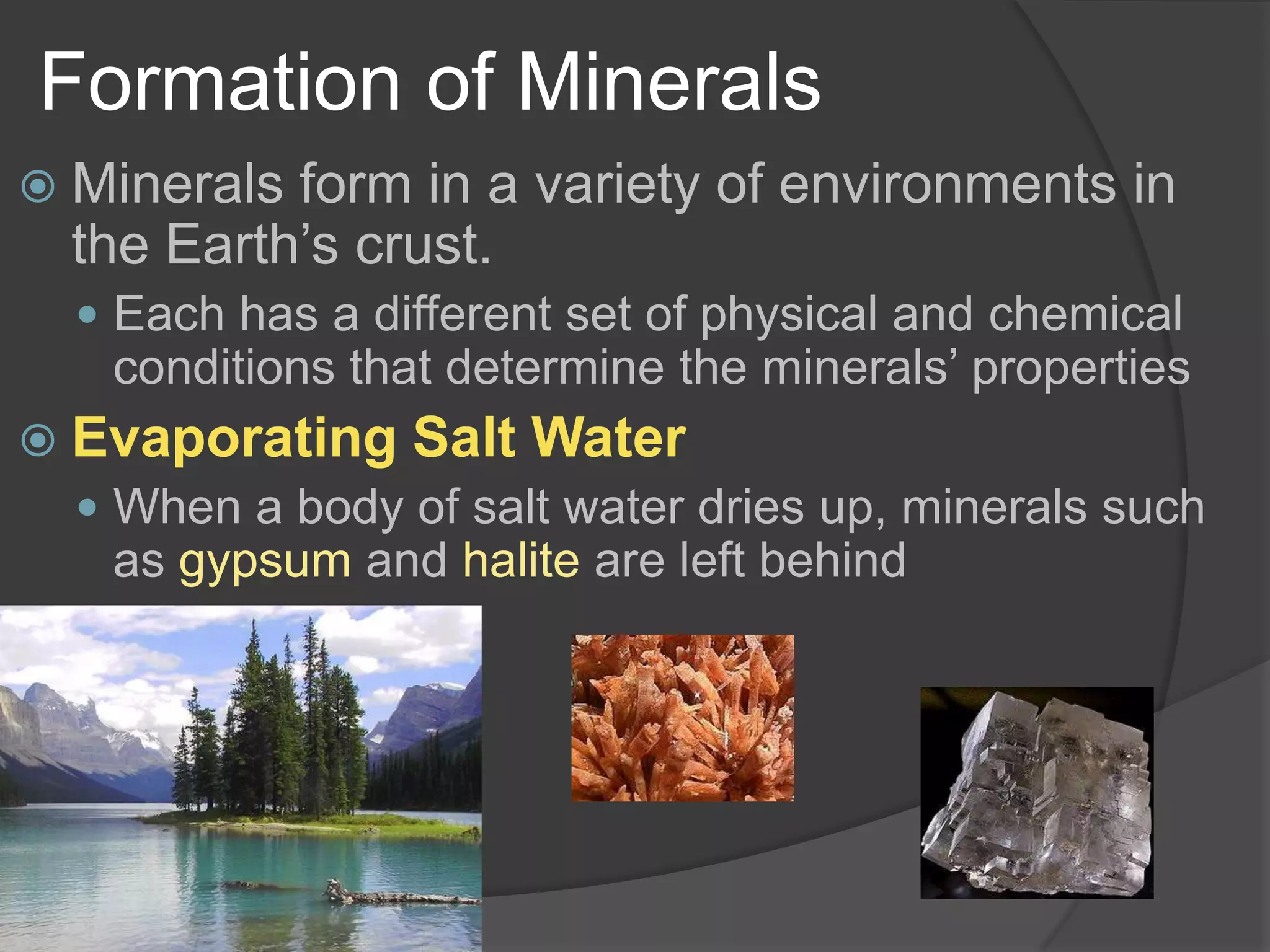
Formation of MineralsMinerals form in a variety of environments in the Earth’s crust.Each has a different set of physical and chemical conditions that determine the minerals’ propertiesEvaporating Salt WaterWhen a body of salt water dries up, minerals such as gypsum and halite are left behind
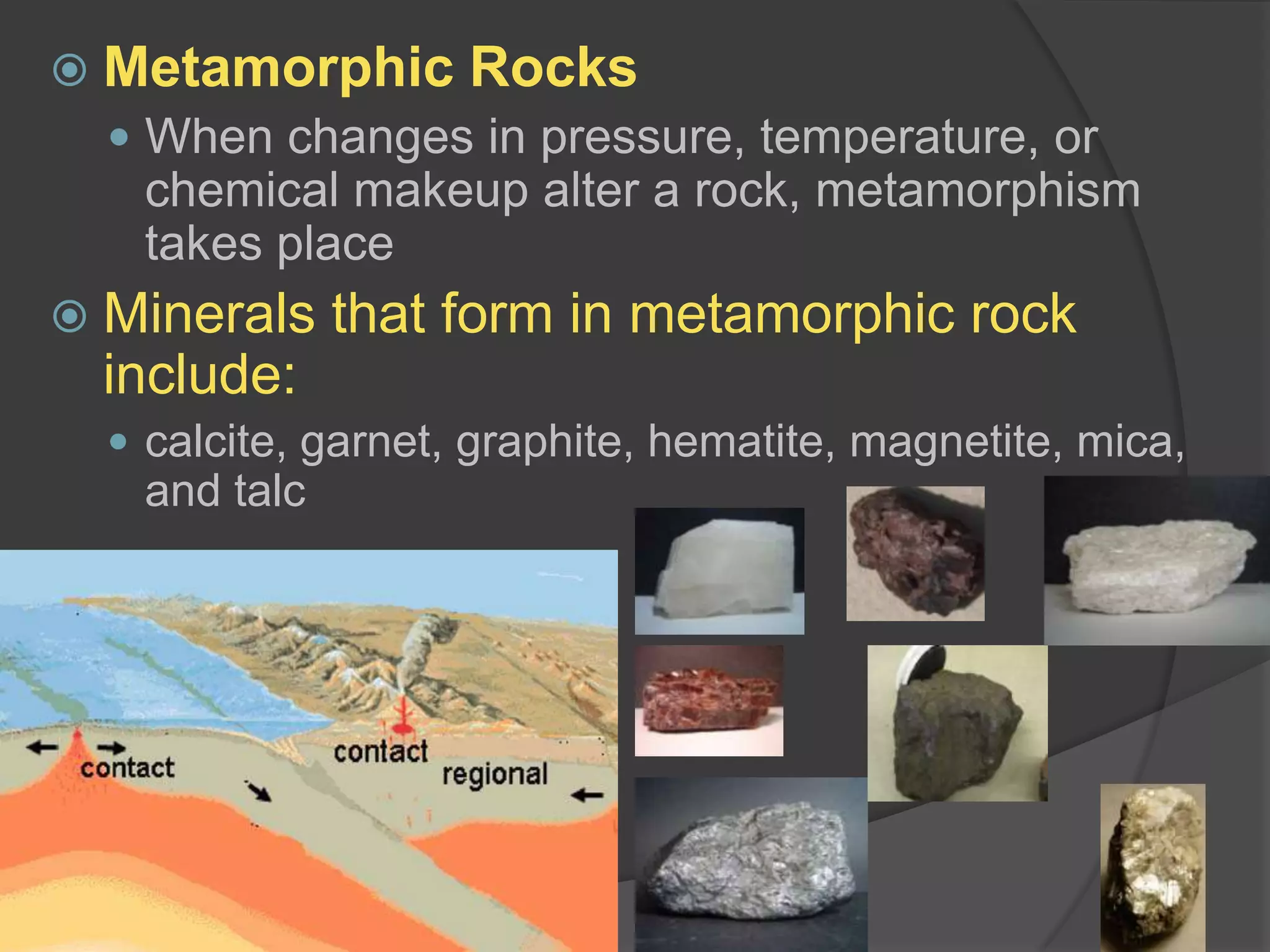
Metamorphic RocksWhen changes in pressure, temperature, or chemical makeup alter a rock, metamorphism takes placeMinerals that form in metamorphic rock include:calcite, garnet, graphite, hematite, magnetite, mica, and talc
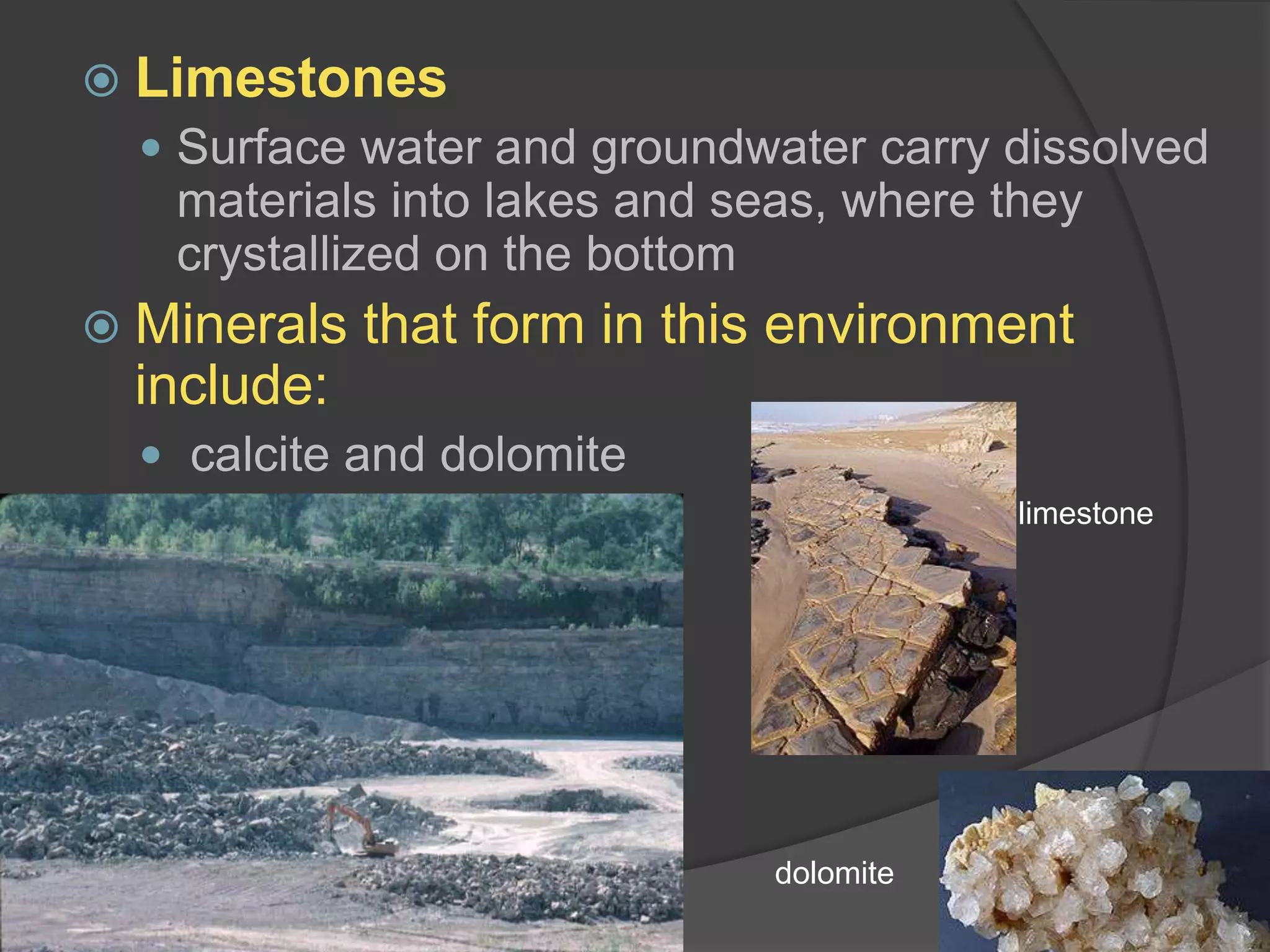
LimestonesSurface water and groundwater carry dissolved materials into lakes and seas, where they crystallized on the bottomMinerals that form in this environment include:calcite and dolomitelimestonedolomite
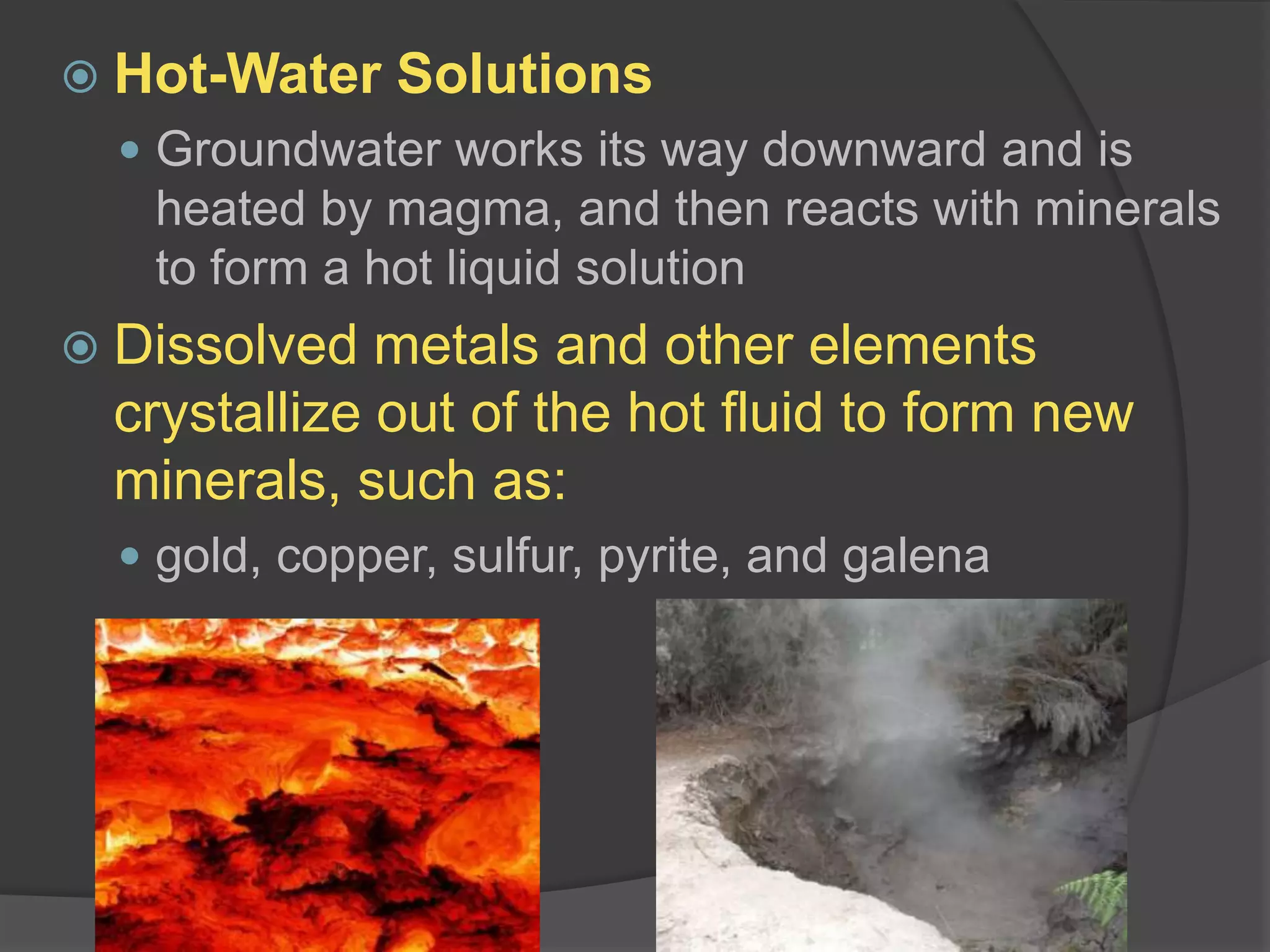
Hot-Water SolutionsGroundwater works its way downward and is heated by magma, and then reacts with minerals to form a hot liquid solutionDissolved metals and other elements crystallize out of the hot fluid to form new minerals, such as:gold, copper, sulfur, pyrite, and galena
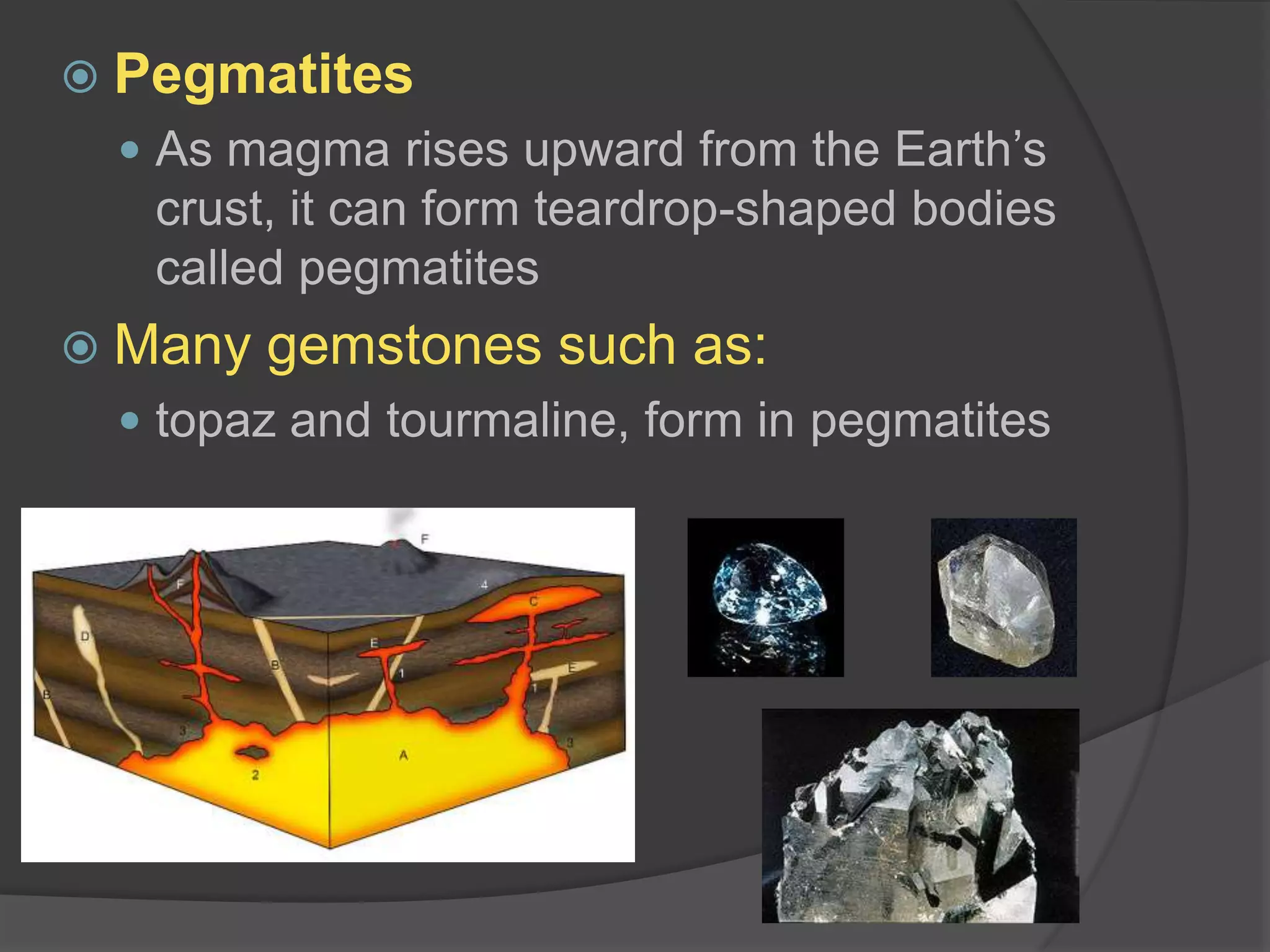
PegmatitesAs magma rises upward from the Earth’s crust, it can form teardrop-shaped bodies called pegmatitesMany gemstones such as:topaz and tourmaline, form in pegmatites
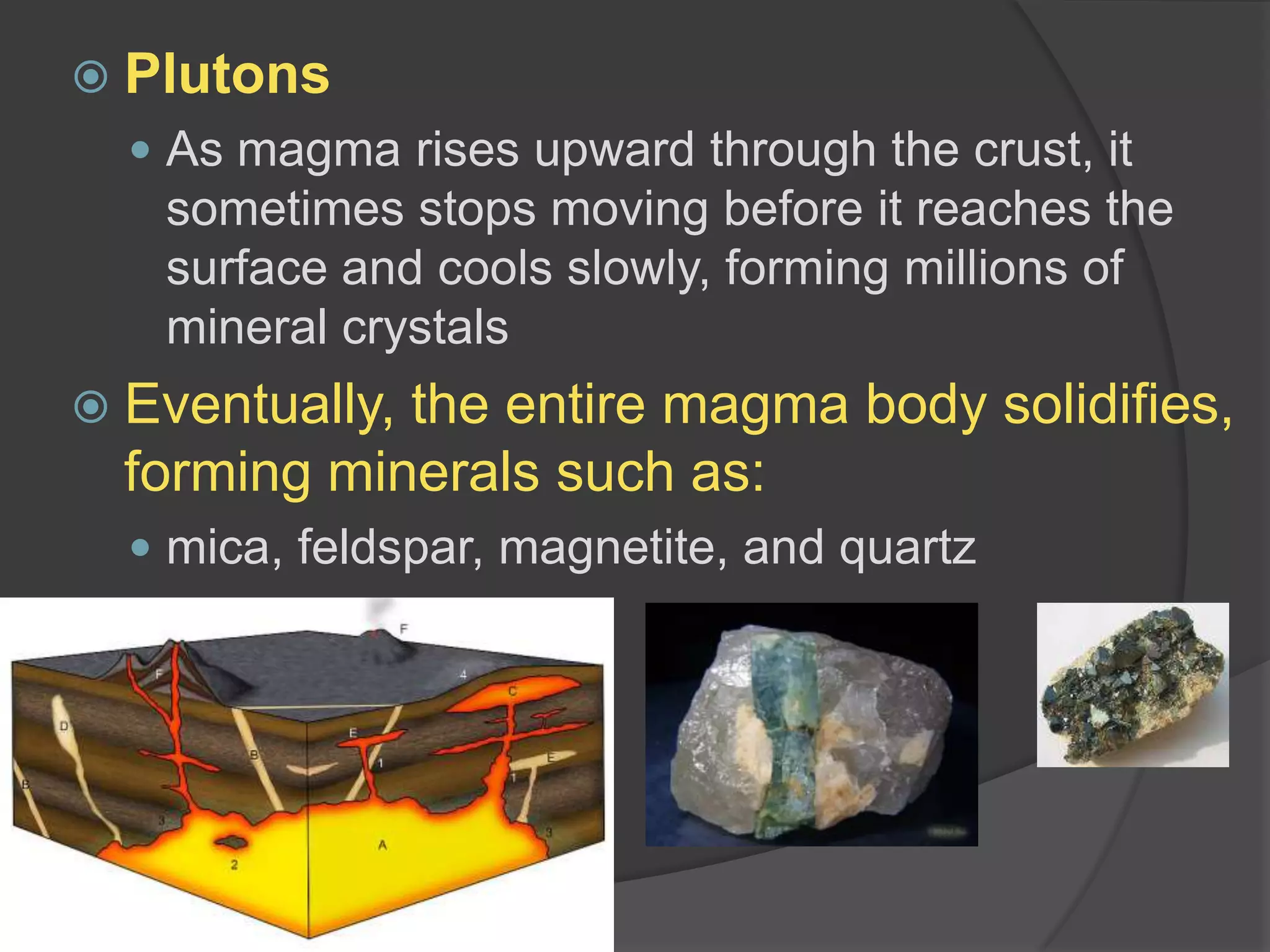
PlutonsAs magma rises upward through the crust, it sometimes stops moving before it reaches the surface and cools slowly, forming millions of mineral crystalsEventually, the entire magma body solidifies, forming minerals such as:mica, feldspar, magnetite, and quartz
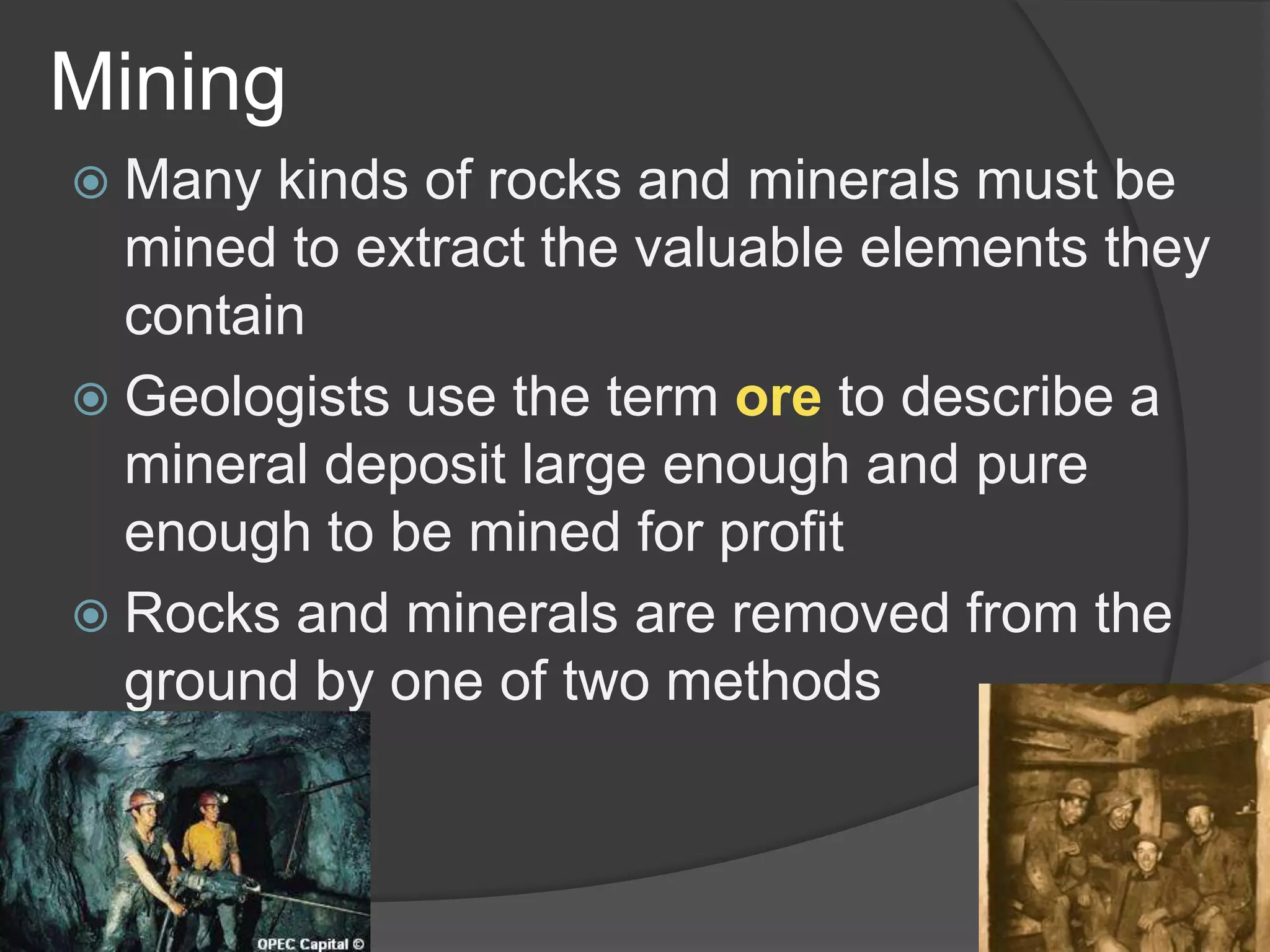
MiningMany kinds of rocks and minerals must be mined to extract the valuable elements they containGeologists use the termoreto describe a mineral deposit large enough and pure enough to be mined for profitRocks and minerals are removed from the ground by one of two methods
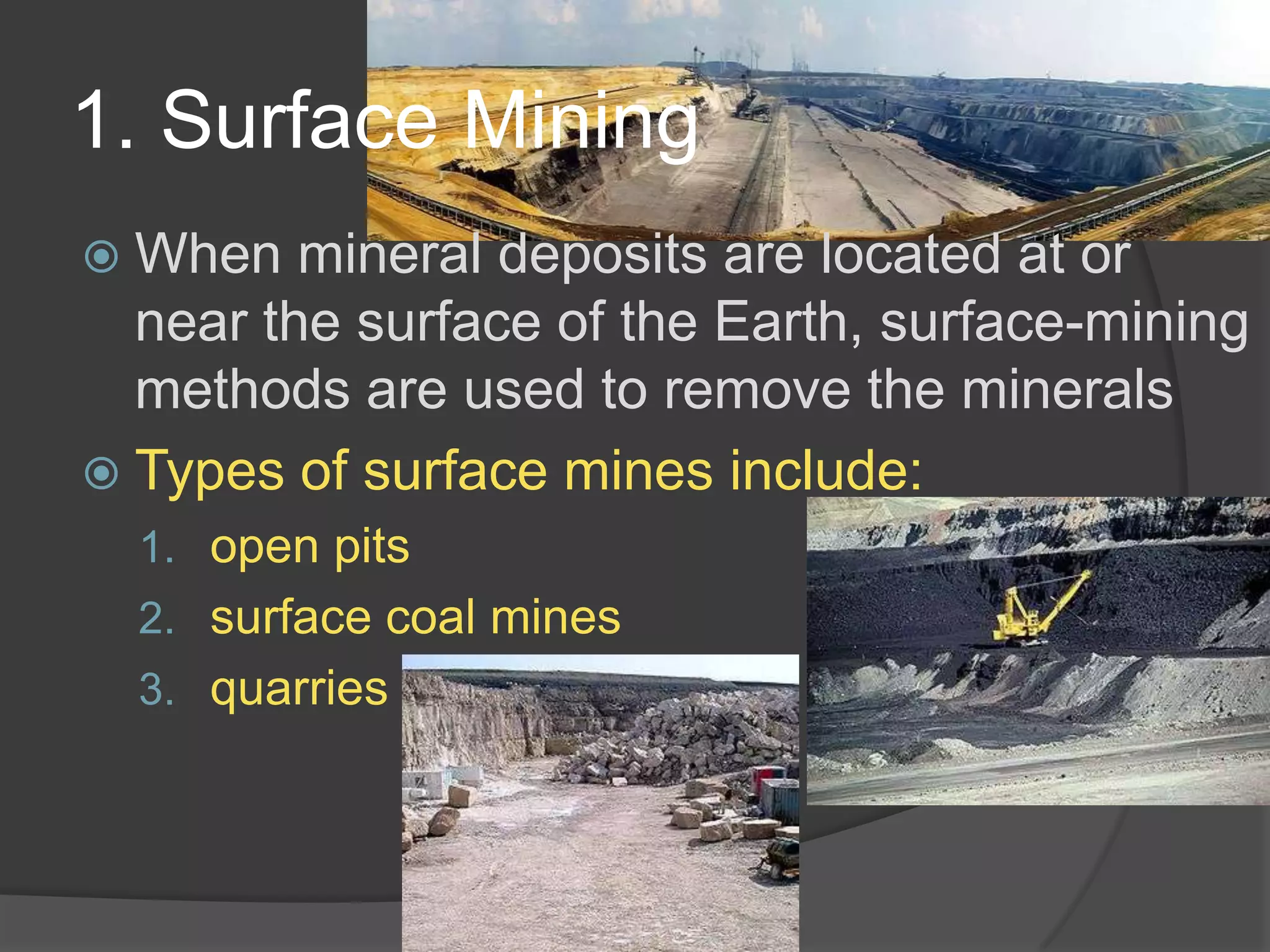
1. Surface MiningWhen mineral deposits are located at or near the surface of the Earth, surface-mining methods are used to remove the mineralsTypes of surface mines include:open pitssurface coal minesquarries
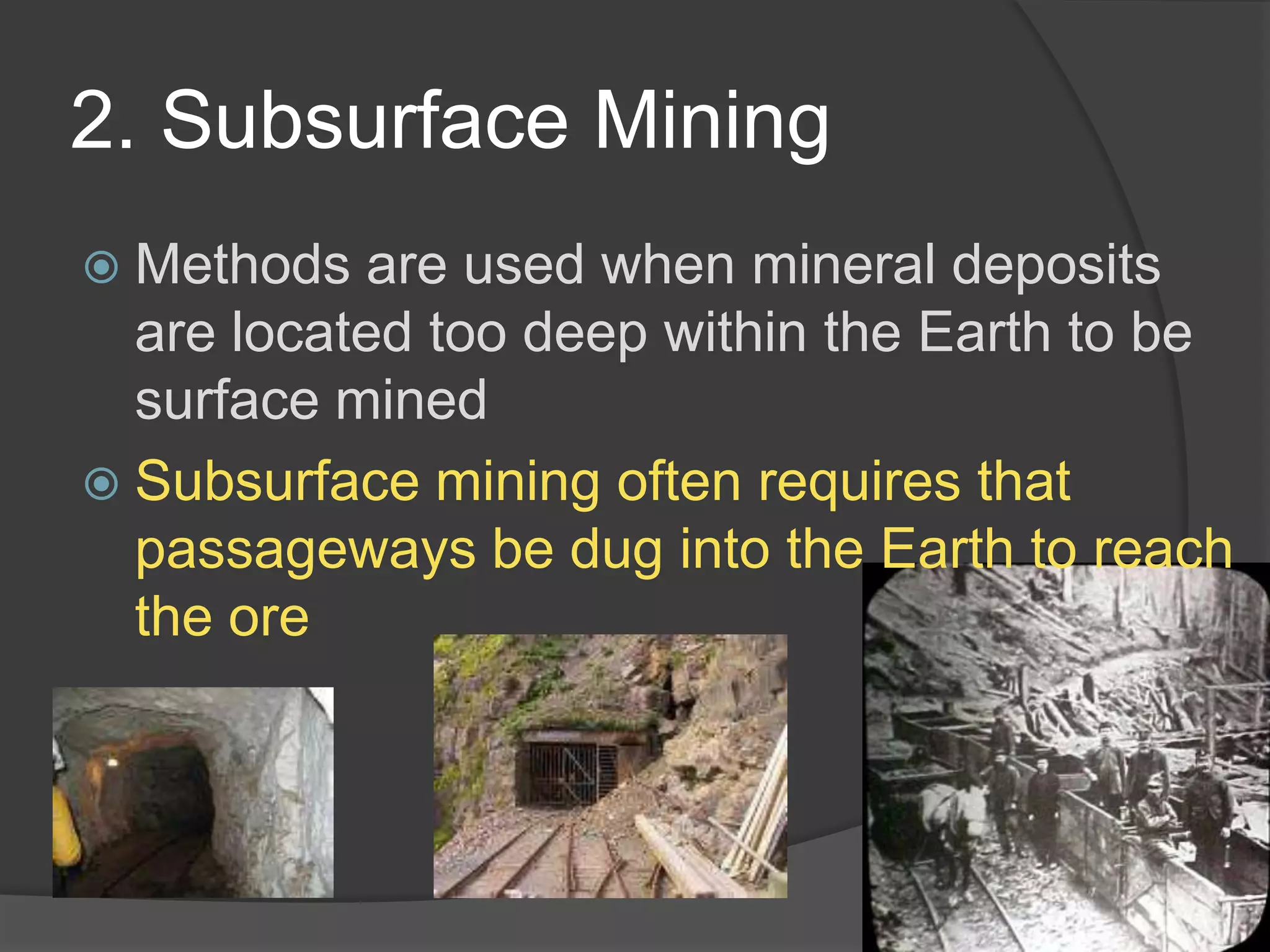
2. Subsurface MiningMethods are used when mineral deposits are located too deep within the Earth to be surface minedSubsurface mining often requires that passageways be dug into the Earth to reach the ore
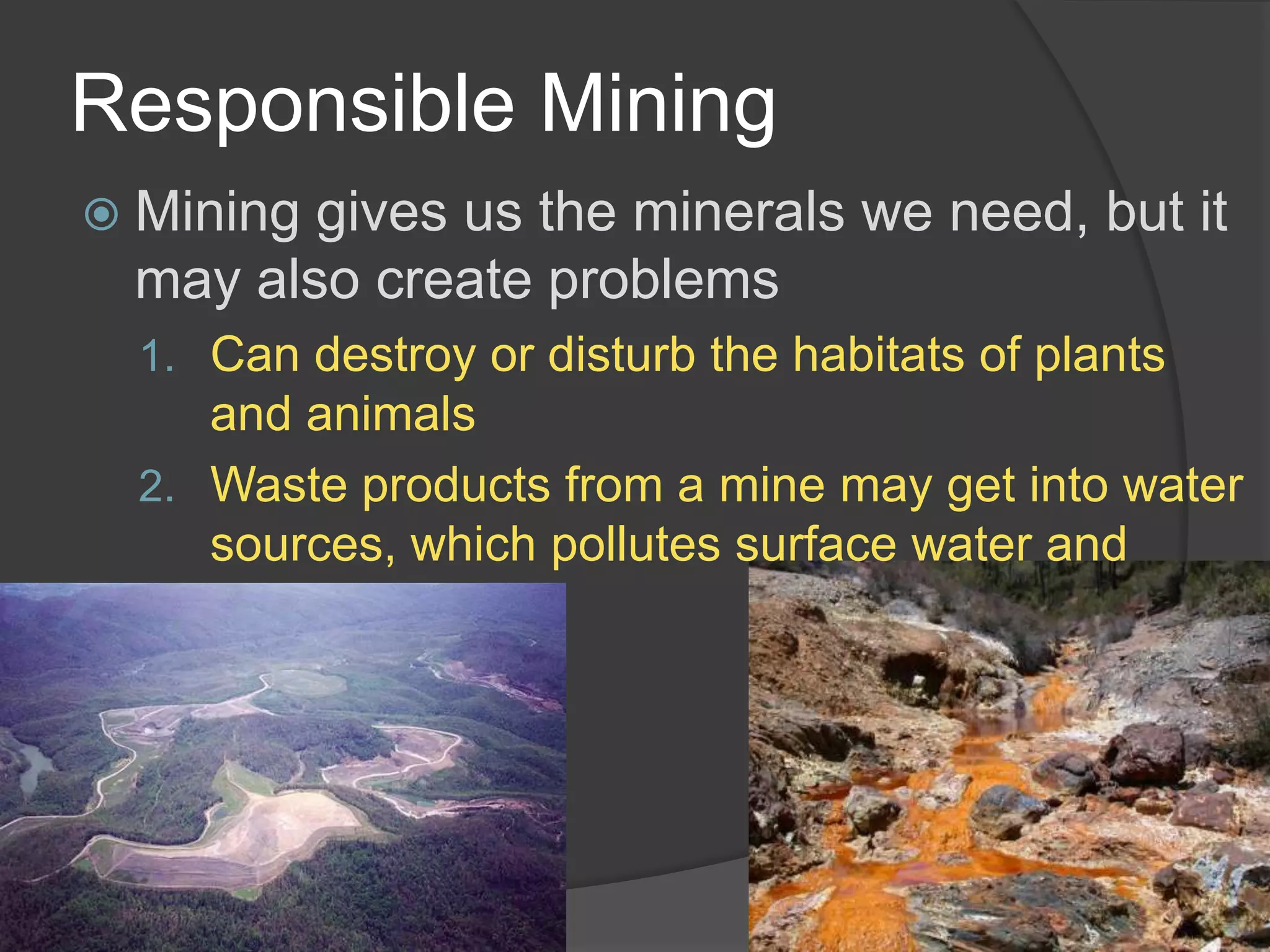
Responsible MiningMining gives us the minerals we need, but it may also create problemsCan destroy or disturb the habitats of plants and animalsWaste products from a mine may get into water sources, which pollutes surface water and ground water
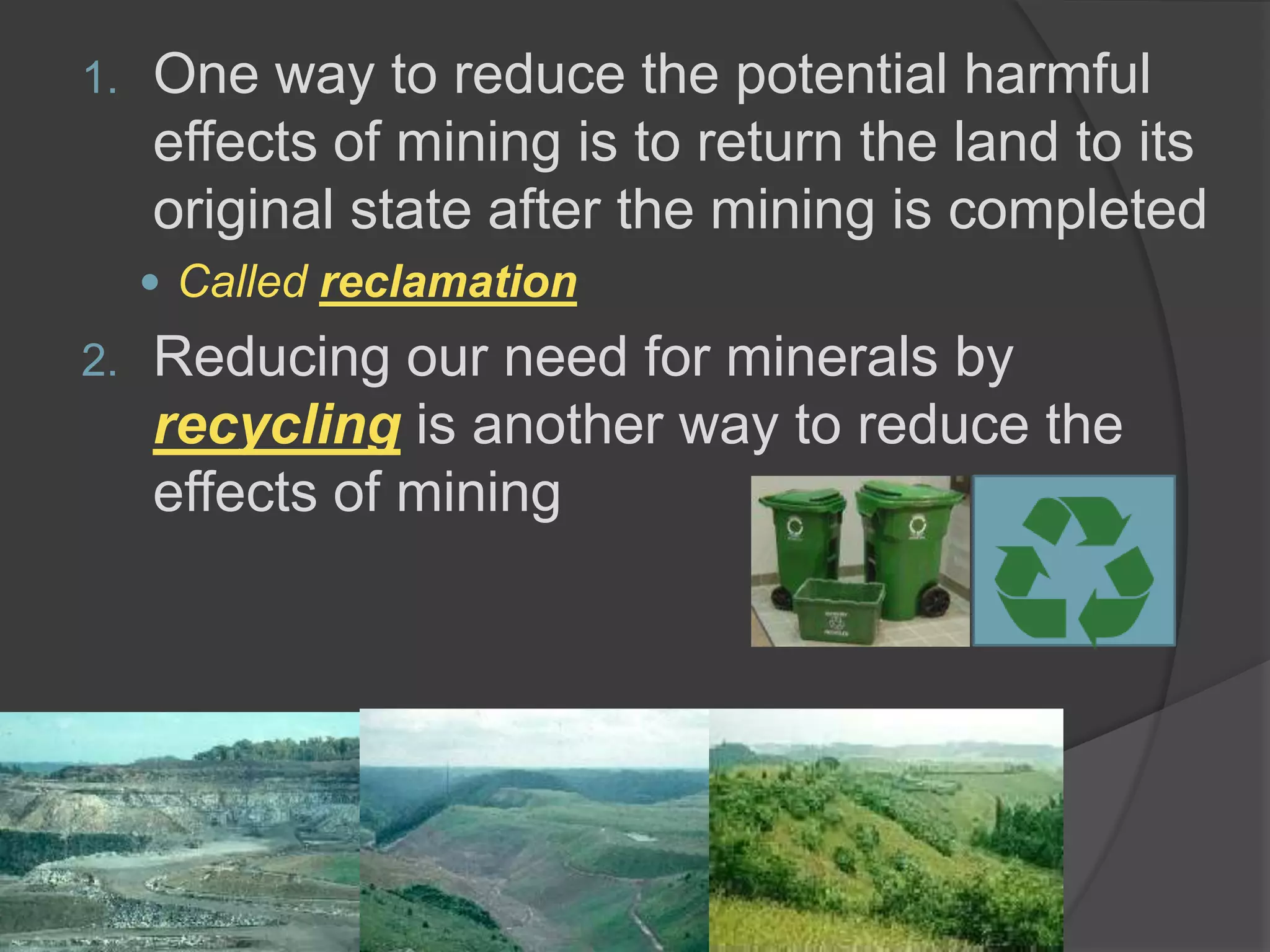
One way to reduce the potential harmful effects of mining is to return the land to its original state after the mining is completedCalled reclamationReducing our need for minerals by recycling is another way to reduce the effects of mining
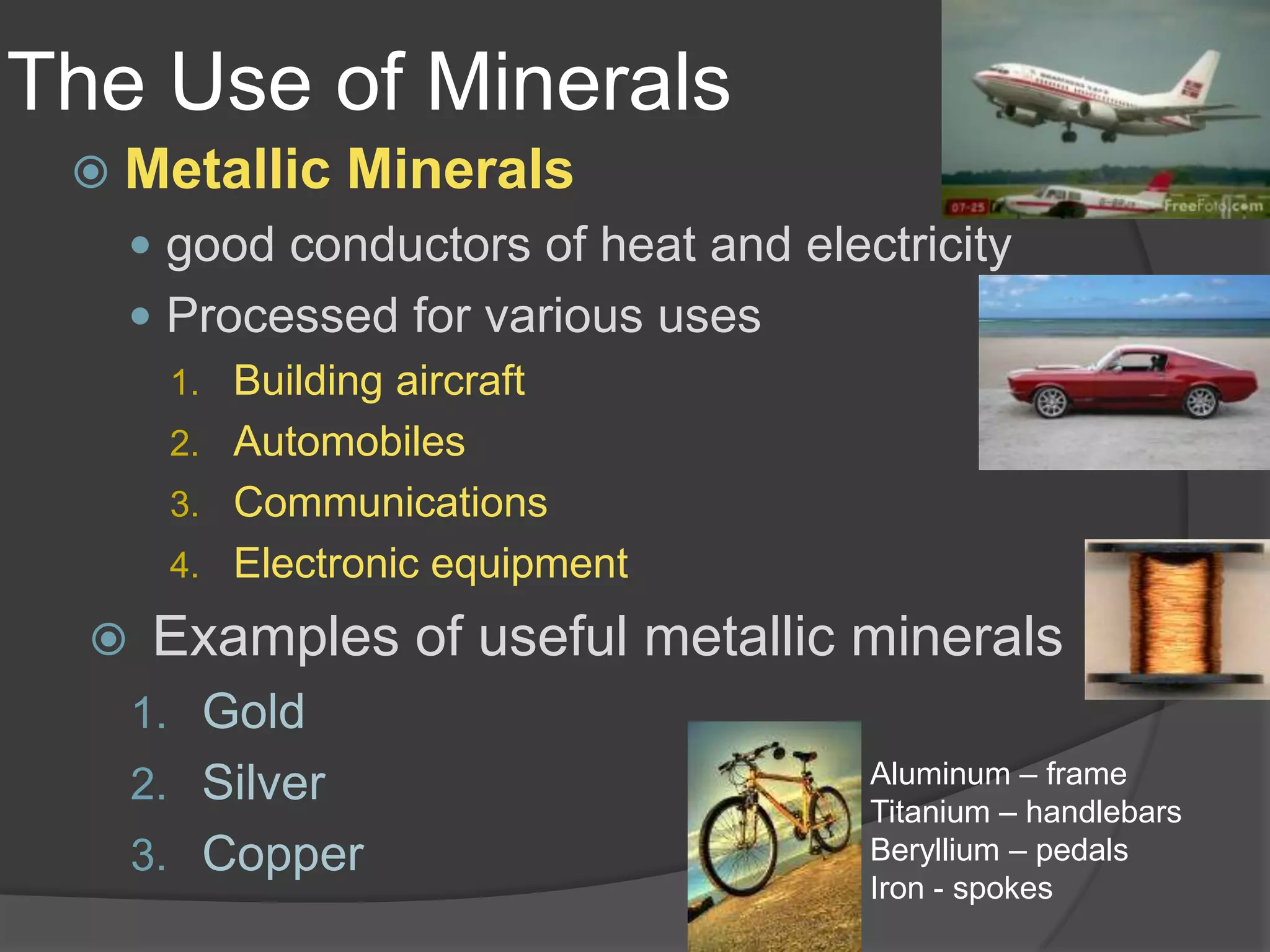
The Use of MineralsMetallic Mineralsgood conductors of heat and electricityProcessed for various usesBuilding aircraftAutomobilesCommunicationsElectronic equipmentExamples of useful metallic mineralsGoldSilverCopperAluminum – frameTitanium – handlebarsBeryllium – pedalsIron - spokes
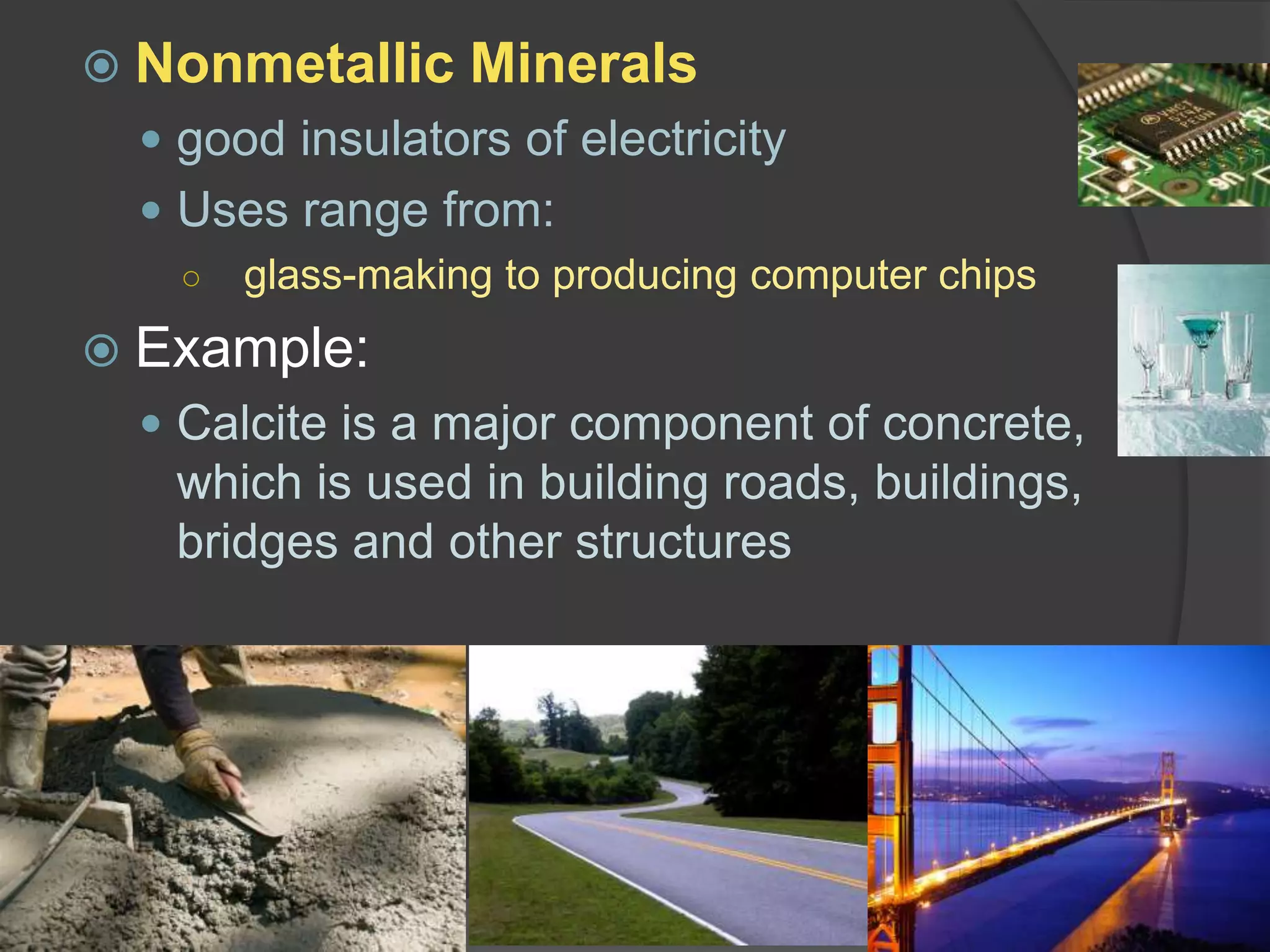
Nonmetallic Mineralsgood insulators of electricityUses range from:glass-making to producing computer chipsExample:Calcite is a major component of concrete, which is used in building roads, buildings, bridges and other structures
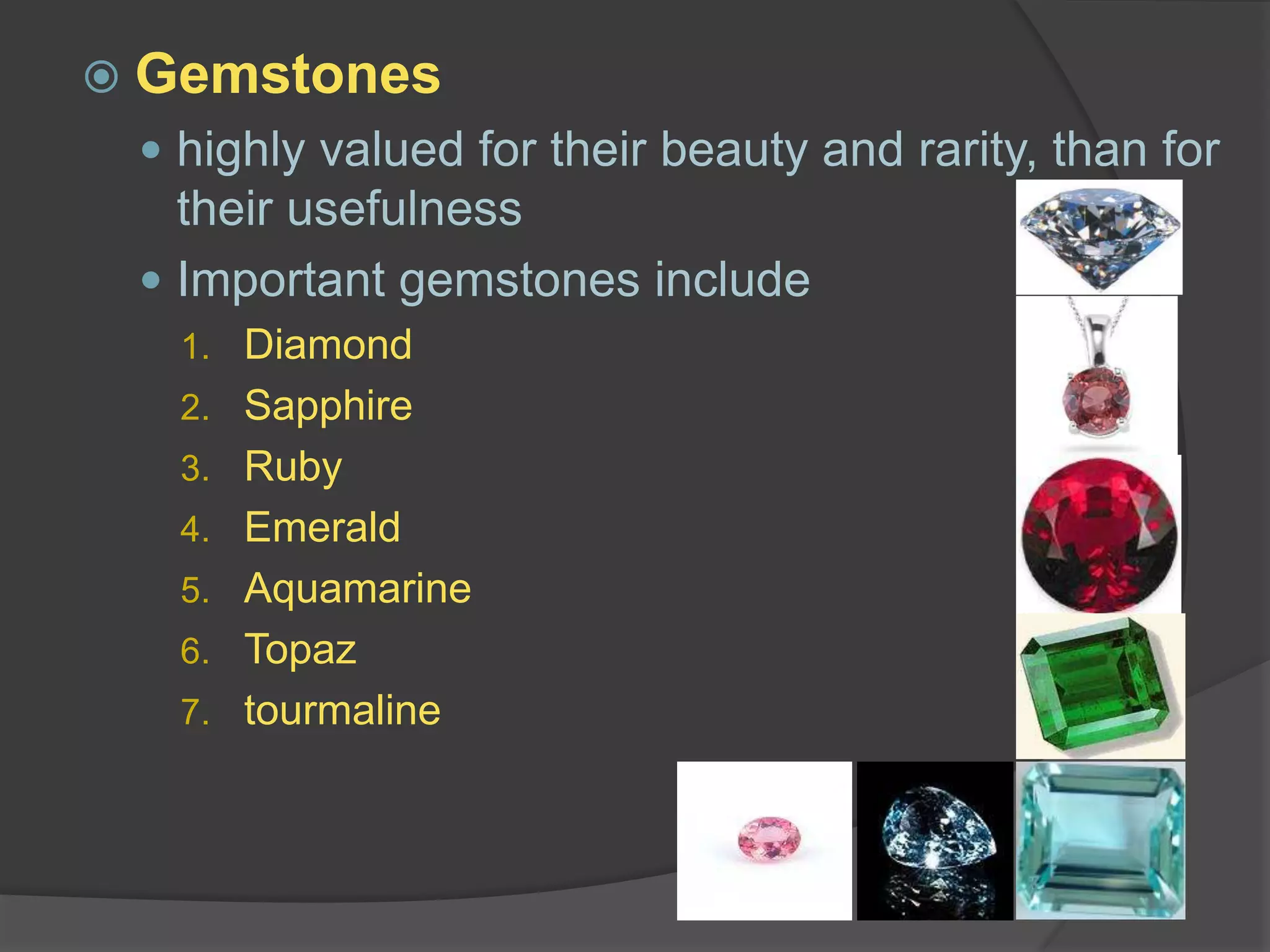
Gemstoneshighly valued for their beauty and rarity, than for their usefulnessImportant gemstones includeDiamondSapphireRubyEmeraldAquamarineTopaztourmaline

Earth Science 1.3 : Formation, Mining, and use of Minerals.

  • 1.
    The Formation, Mining,and use of mineralsEarth ScienceChapter 1.3
  • 2.
    Objectives:Describe the environmentsin which minerals formsCompare the two types of miningDescribe two ways to reduce the effects of miningDescribedifferent uses for metallic and nonmetallic minerals
  • 3.
    Formation of MineralsMineralsform in a variety of environments in the Earth’s crust.Each has a different set of physical and chemical conditions that determine the minerals’ propertiesEvaporating Salt WaterWhen a body of salt water dries up, minerals such as gypsum and halite are left behind
  • 4.
    Metamorphic RocksWhen changesin pressure, temperature, or chemical makeup alter a rock, metamorphism takes placeMinerals that form in metamorphic rock include:calcite, garnet, graphite, hematite, magnetite, mica, and talc
  • 5.
    LimestonesSurface water andgroundwater carry dissolved materials into lakes and seas, where they crystallized on the bottomMinerals that form in this environment include:calcite and dolomitelimestonedolomite
  • 6.
    Hot-Water SolutionsGroundwater worksits way downward and is heated by magma, and then reacts with minerals to form a hot liquid solutionDissolved metals and other elements crystallize out of the hot fluid to form new minerals, such as:gold, copper, sulfur, pyrite, and galena
  • 7.
    PegmatitesAs magma risesupward from the Earth’s crust, it can form teardrop-shaped bodies called pegmatitesMany gemstones such as:topaz and tourmaline, form in pegmatites
  • 8.
    PlutonsAs magma risesupward through the crust, it sometimes stops moving before it reaches the surface and cools slowly, forming millions of mineral crystalsEventually, the entire magma body solidifies, forming minerals such as:mica, feldspar, magnetite, and quartz
  • 9.
    MiningMany kinds ofrocks and minerals must be mined to extract the valuable elements they containGeologists use the termoreto describe a mineral deposit large enough and pure enough to be mined for profitRocks and minerals are removed from the ground by one of two methods
  • 10.
    1. Surface MiningWhenmineral deposits are located at or near the surface of the Earth, surface-mining methods are used to remove the mineralsTypes of surface mines include:open pitssurface coal minesquarries
  • 11.
    2. Subsurface MiningMethodsare used when mineral deposits are located too deep within the Earth to be surface minedSubsurface mining often requires that passageways be dug into the Earth to reach the ore
  • 12.
    Responsible MiningMining givesus the minerals we need, but it may also create problemsCan destroy or disturb the habitats of plants and animalsWaste products from a mine may get into water sources, which pollutes surface water and ground water
  • 13.
    One way toreduce the potential harmful effects of mining is to return the land to its original state after the mining is completedCalled reclamationReducing our need for minerals by recycling is another way to reduce the effects of mining
  • 14.
    The Use ofMineralsMetallic Mineralsgood conductors of heat and electricityProcessed for various usesBuilding aircraftAutomobilesCommunicationsElectronic equipmentExamples of useful metallic mineralsGoldSilverCopperAluminum – frameTitanium – handlebarsBeryllium – pedalsIron - spokes
  • 15.
    Nonmetallic Mineralsgood insulatorsof electricityUses range from:glass-making to producing computer chipsExample:Calcite is a major component of concrete, which is used in building roads, buildings, bridges and other structures
  • 16.
    Gemstoneshighly valued fortheir beauty and rarity, than for their usefulnessImportant gemstones includeDiamondSapphireRubyEmeraldAquamarineTopaztourmaline