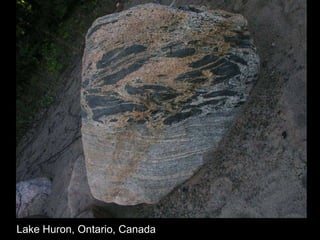
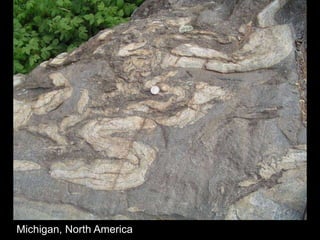
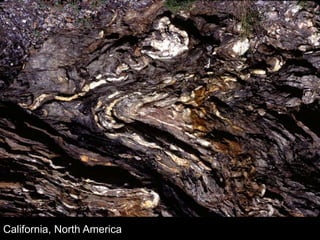
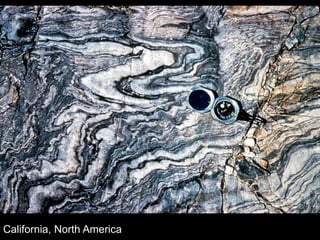
Metamorphism – transformation of one rock type into another Metamorphic rocks – produced from pre-existing sedimentary, igneous and metamorphic rocks
 Parent rock – origin of a metamorphic rockSee next slides for samples of metamorphic rocks
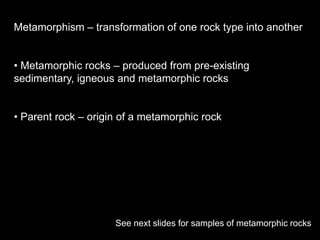
Norway
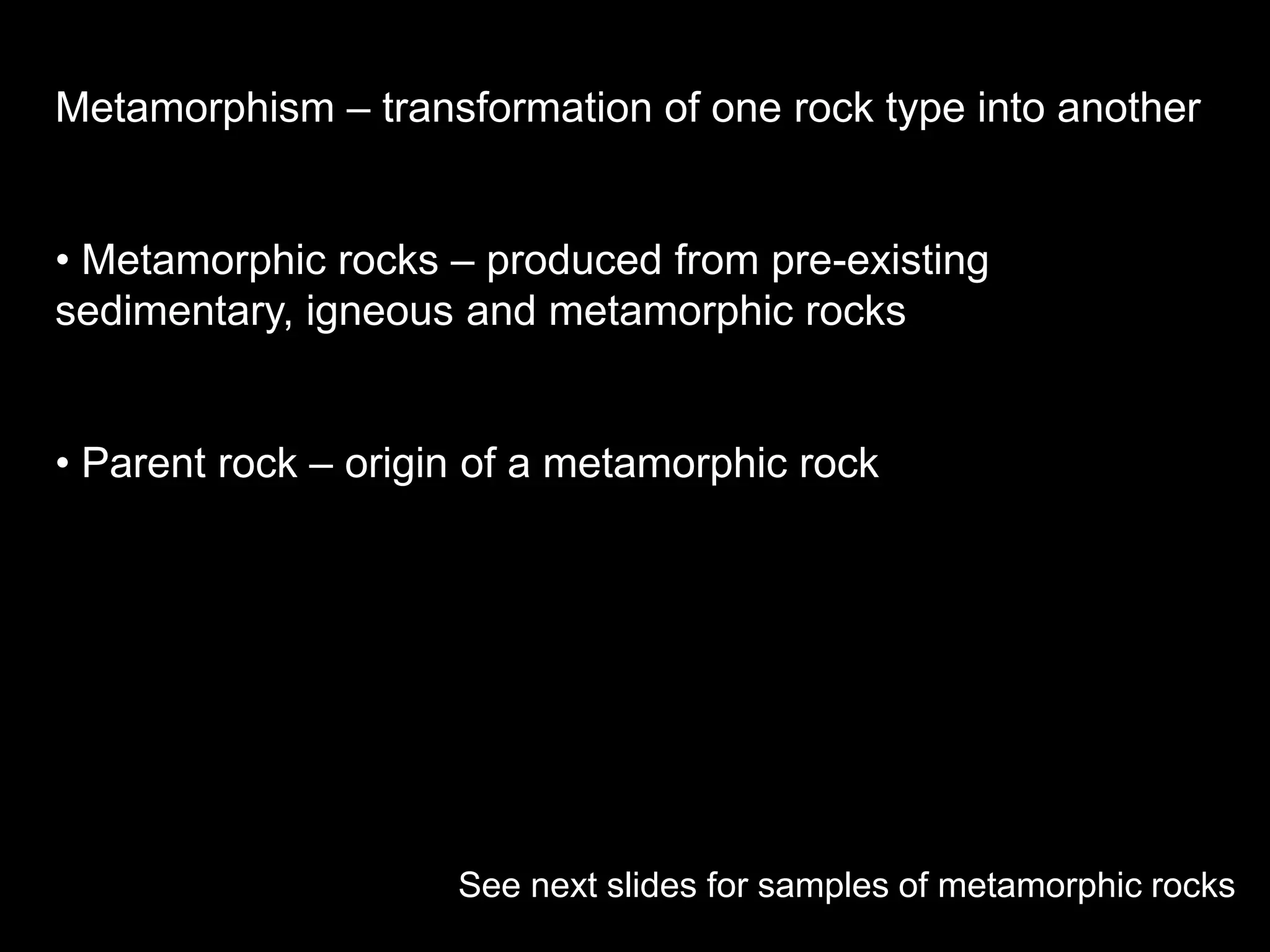
China
Lake Huron, Ontario, Canada
Michigan, North America
California, North America
Metamorphism leads to changes in: Mineral content
 Texture
 Chemical compositionMetamorphic agents are: Heat
 Pressure
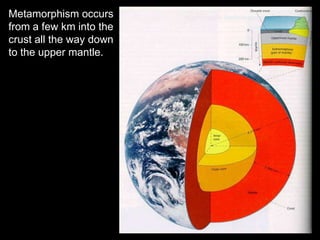
 Chemically active fluidsMetamorphism occurs from a few km into the crust all the way down to the upper mantle.
Degrees of metamorphism Low-grade metamorphism : little change in the parent rock
 High-grade metamorphism : identity of parent rock becomes hard to distinguish
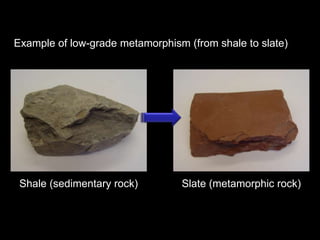
 Remember : parent rock should not melt, if it does, then igneous processes (not metamorphic) become involvedExample of low-grade metamorphism (from shale to slate)Shale (sedimentary rock)Slate (metamorphic rock)
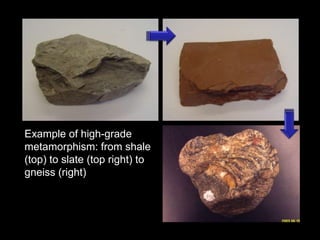
Example of high-grade metamorphism: from shale (top) to slate (top right) to gneiss (right)
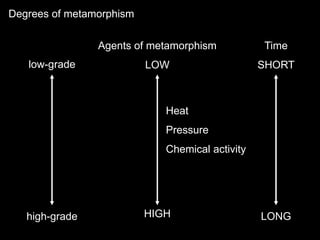
Degrees of metamorphismAgents of metamorphismTimelow-gradeLOWSHORTHeatPressureChemical activityHIGHhigh-gradeLONG
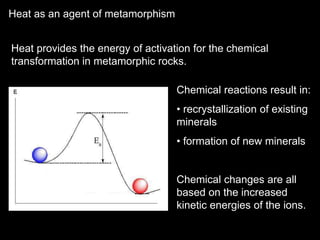
Heat as an agent of metamorphismHeat provides the energy of activation for the chemical transformation in metamorphic rocks.Chemical reactions result in:recrystallization of existing minerals
formation of new minerals Chemical changes are all based on the increased kinetic energies of the ions.
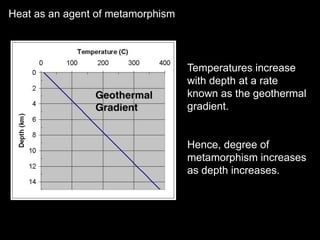
Heat as an agent of metamorphismTemperatures increase with depth at a rate known as the geothermal gradient.Hence, degree of metamorphism increases as depth increases.
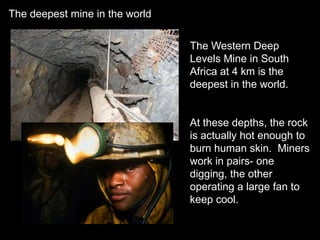
The deepest mine in the worldThe Western Deep Levels Mine in South Africa at 4 km is the deepest in the world.At these depths, the rock is actually hot enough to burn human skin.  Miners work in pairs- one digging, the other operating a large fan to keep cool.
What heats up the Earth? Primordial heat – trapped when Earth’s crust first cooled
 Radioactivity – energy released when subatomic particles are spontaneously emitted by radioactive elements
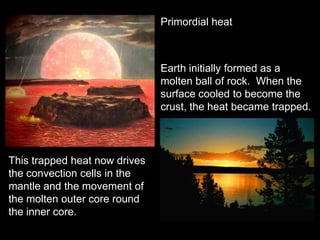
 Solar radiation – absorbed and converted to thermal energy by the Earth’s surfacePrimordial heatEarth initially formed as a molten ball of rock.  When the surface cooled to become the  crust, the heat became trapped.This trapped heat now drives the convection cells in the mantle and the movement of the molten outer core round the inner core.
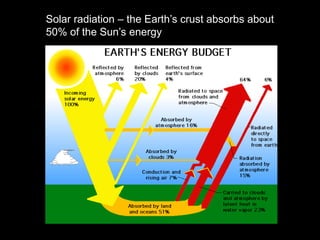
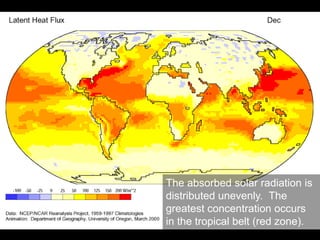
Solar radiation – the Earth’s crust absorbs about 50% of the Sun’s energy
The absorbed solar radiation is distributed unevenly.  The greatest concentration occurs in the tropical belt (red zone).
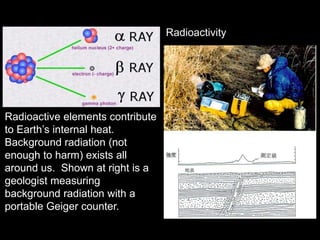
RadioactivityRadioactive elements contribute to Earth’s internal heat.  Background radiation (not enough to harm) exists all around us.  Shown at right is a geologist measuring background radiation with a portable Geiger counter.
Pressure as an agent of metamorphismTwo types of pressure: Confining pressure – experienced by buried rocks; forces are applied equally in all directions
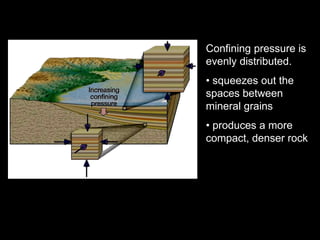
 Differential stress – forces are unequal in different directionsConfining pressure is evenly distributed. squeezes out the spaces between mineral grains
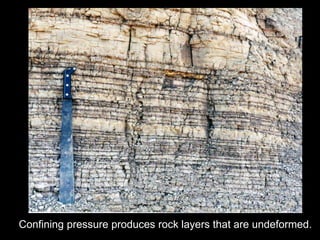
 produces a more compact, denser rockConfining pressure produces rock layers that are undeformed.
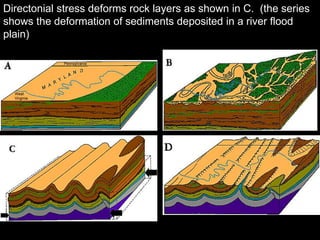
Directonial stress deforms rock layers as shown in C.  (the series shows the deformation of sediments deposited in a river flood plain)
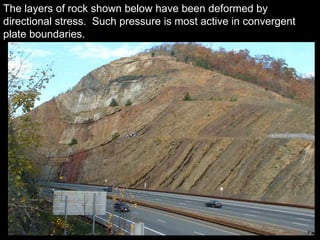
The layers of rock shown below have been deformed by directional stress.  Such pressure is most active in convergent plate boundaries.
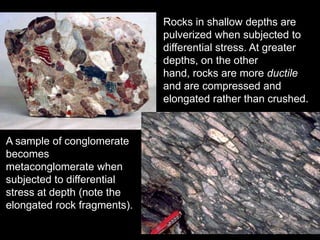
Rocks in shallow depths are pulverized when subjected to differential stress. At greater depths, on the other hand, rocks are more ductile and are compressed and elongated rather than crushed.A sample of conglomerate becomes metaconglomerate when subjected to differential stress at depth (note the elongated rock fragments).
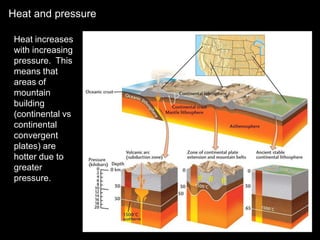
Heat and pressureHeat increases with increasing pressure.  This means that areas of mountain building (continental vs continental convergent plates) are hotter due to greater pressure.
METAMORPHIC ROCKS definition
 degrees of metamorphism
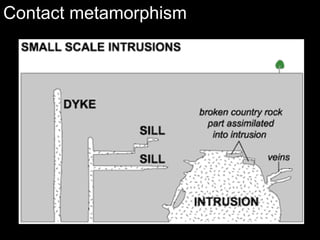
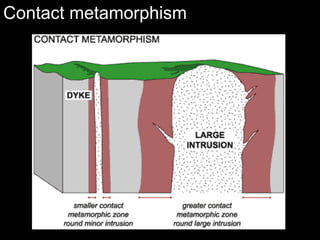
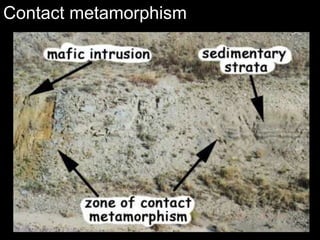
 agents of metamorphismWhere does metamorphism occur? contact metamorphism
 regional metamorphism
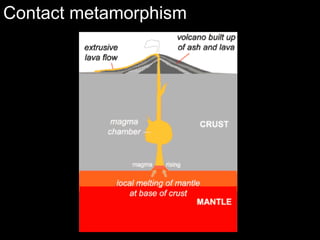
 dynamic metamorphismContact metamorphism
Contact metamorphism
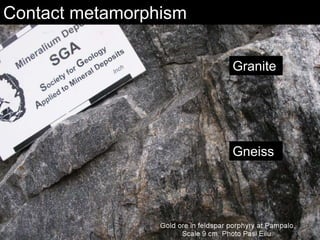
Contact metamorphismGraniteGneiss
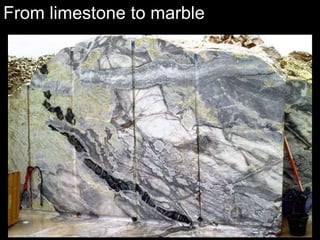
From limestone to marble
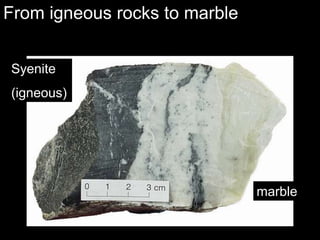
From igneous rocks to marbleSyenite(igneous)marble
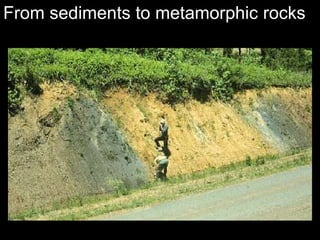
From sediments to metamorphic rocks
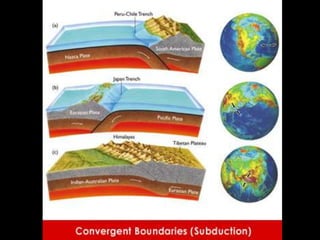
Regional metamorphismMountain-building: plate tectonics (convergent boundaries)
 directional stresses are involved
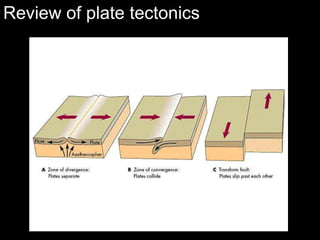
 greatest volume of metamorphic rocks are produced in this wayReview of plate tectonics
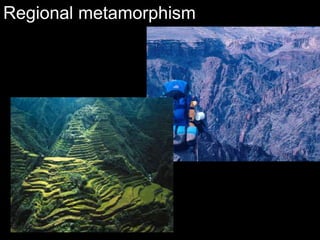
Regional metamorphism
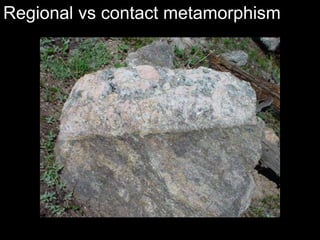
Regional vs contact metamorphism
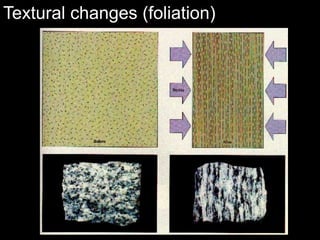
Textural changesTexture – size, shape, and distribution of particles that constitute a rock foliated
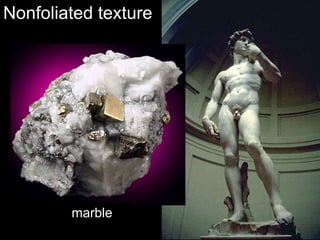
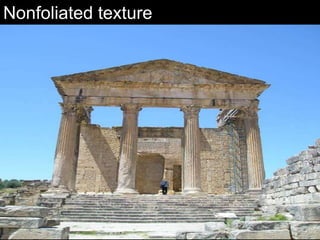
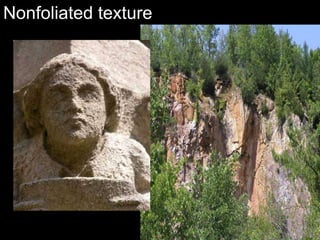
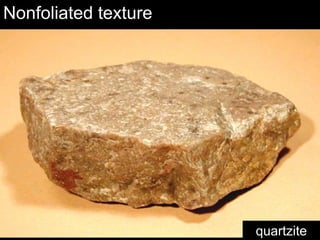
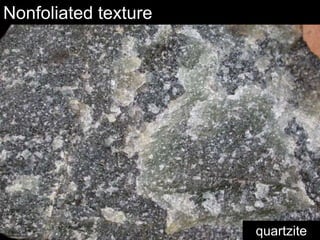
 non-foliatedTextural changes (foliation)
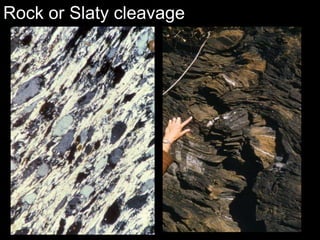
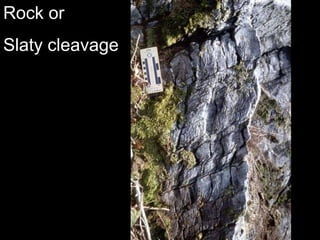
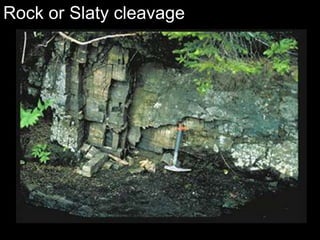
Types of foliation: rock or slaty cleavage – minute crystals
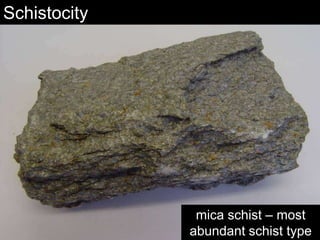
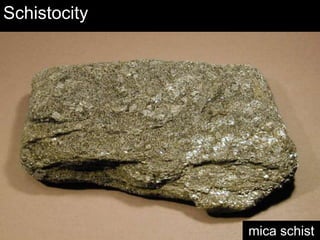
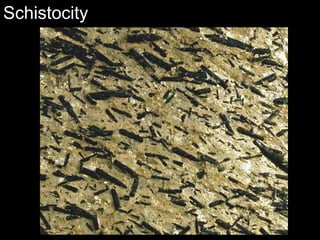
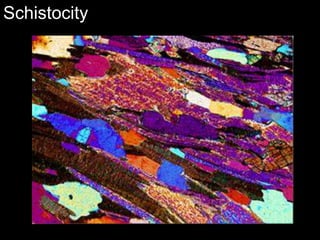
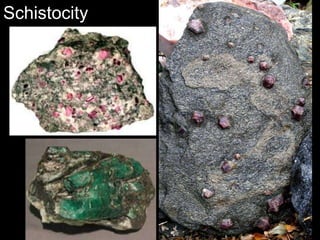
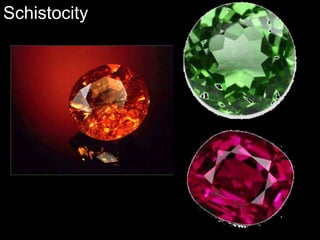
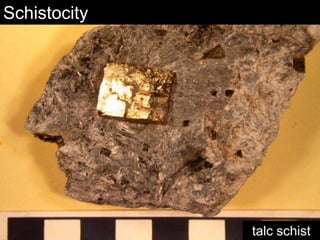
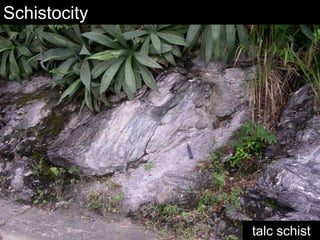
 schistosity – larger crystals
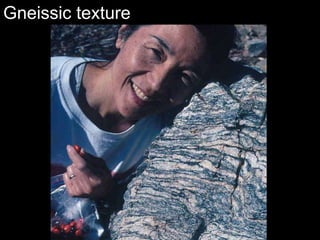
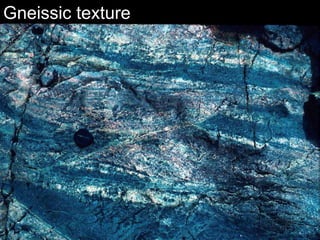
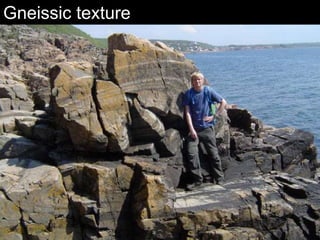
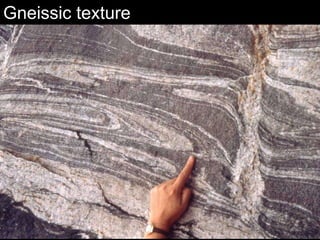
 gneissic texture – segregation of mineralsRock or Slaty cleavage
Rock or Slaty cleavage
Schistocitymica schist – most abundant schist type
Schistocitymica schist
Schistocity
Schistocity
Schistocity
Schistocity
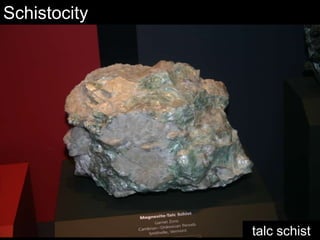
Schistocitytalc schist

Metamorphism