METAMORPHIC ROCK
• Rocks that have changed due to intense
temperature and pressure
• “Meta” means “change” and morphosis means “form”
in Greek
• Igneous, sedimentary and other metamorphic rocks
can change to become metamorphic rocks
What occurs in the Earth to change
these rocks?
• Pressure from overlying rock layers
• High heat, but not enough to melt the rock
• Rocks may be flattened or bent or atoms may be exchanged to
form new minerals.
• *You can think of metamorphic rocks as a squished
peanut butter & jelly sandwich in your lunch.
How are metamorphic rocks classified?
• Foliated—mineral grains are flattened and line up in
parallel bands
• Example: gneiss formed from rearrangement of
minerals in granite into bands
How are metamorphic rocks classified?
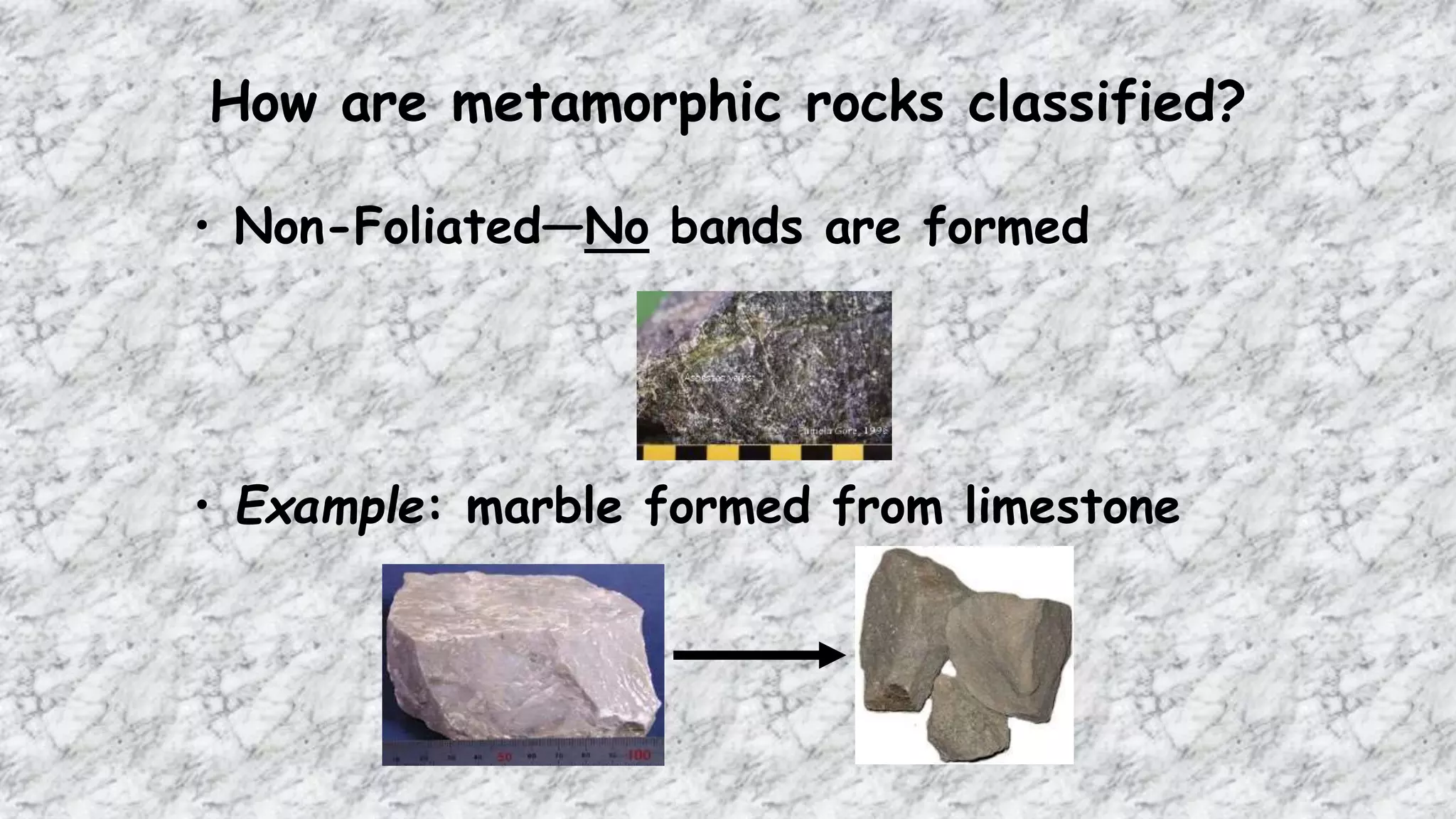
• Non-Foliated—No bands are formed
• Example: marble formed from limestone
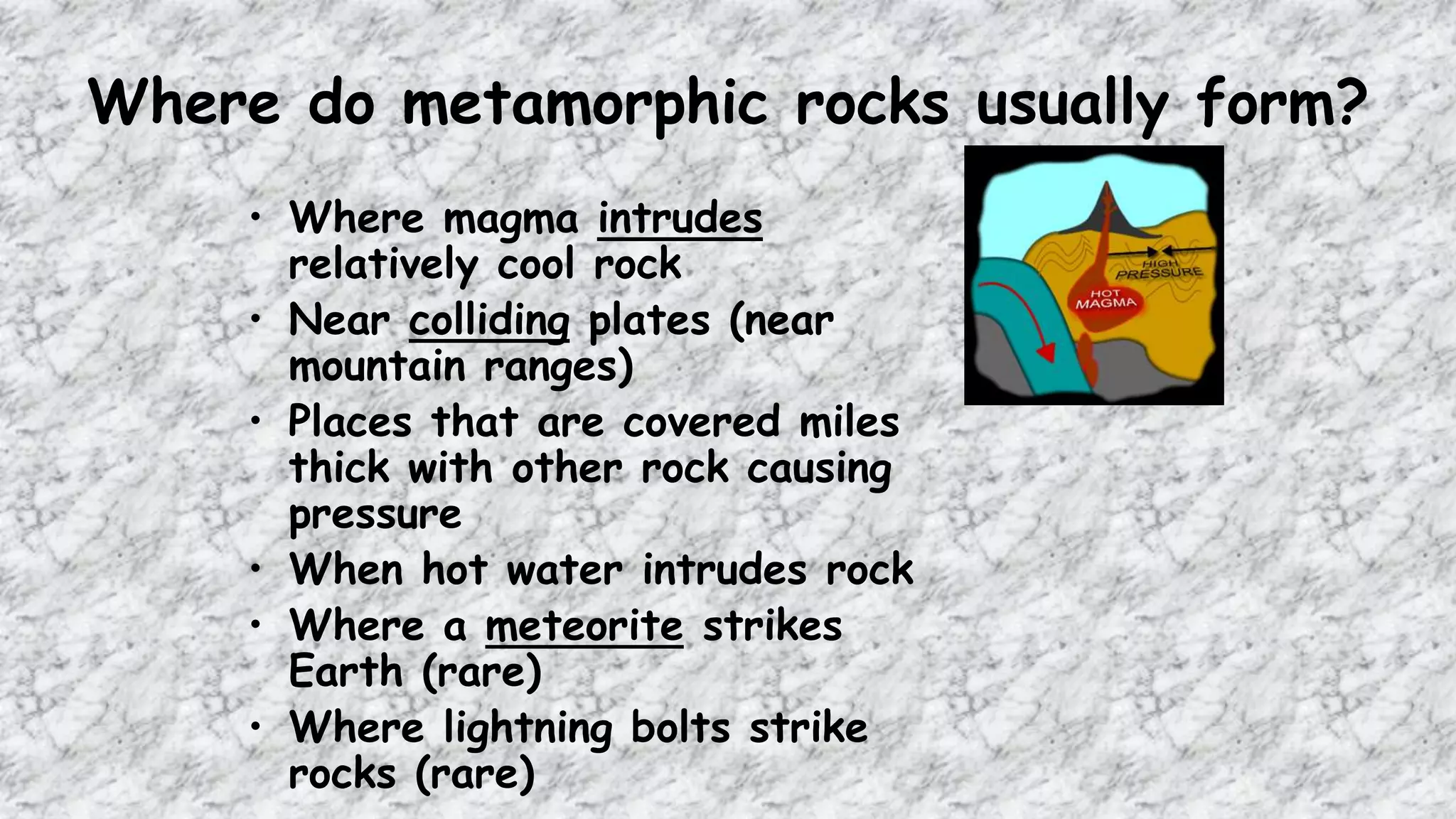
Where do metamorphic rocks usually form?
• Where magma intrudes
relatively cool rock
• Near colliding plates (near
mountain ranges)
• Places that are covered miles
thick with other rock causing
pressure
• When hot water intrudes rock
• Where a meteorite strikes
Earth (rare)
• Where lightning bolts strike
rocks (rare)
Metamorphic rock

Metamorphic rock

  • 1.
  • 2.
    • Rocks thathave changed due to intense temperature and pressure • “Meta” means “change” and morphosis means “form” in Greek • Igneous, sedimentary and other metamorphic rocks can change to become metamorphic rocks
  • 3.
    What occurs inthe Earth to change these rocks? • Pressure from overlying rock layers • High heat, but not enough to melt the rock • Rocks may be flattened or bent or atoms may be exchanged to form new minerals.
  • 4.
    • *You canthink of metamorphic rocks as a squished peanut butter & jelly sandwich in your lunch.
  • 5.
    How are metamorphicrocks classified? • Foliated—mineral grains are flattened and line up in parallel bands • Example: gneiss formed from rearrangement of minerals in granite into bands
  • 6.
    How are metamorphicrocks classified? • Non-Foliated—No bands are formed • Example: marble formed from limestone
  • 7.
    Where do metamorphicrocks usually form? • Where magma intrudes relatively cool rock • Near colliding plates (near mountain ranges) • Places that are covered miles thick with other rock causing pressure • When hot water intrudes rock • Where a meteorite strikes Earth (rare) • Where lightning bolts strike rocks (rare)