
RISK ANALYSIS
AND
MANAGEMENT
Submitted By:
XYZ
Submitted To:
Mr. ABC
CONTENT
 Introduction
 Process of Risk Management
 Risk Identification
 Internal Risks
 External Risks
 Risk Assessment
 Risk Response Planning and Control
INTRODUCTION
 Risk is a function of the chance and the result of an
undesired event happening.
 Risk can also be said to be the failure of not
meeting the schedule/ budget/ technical
parameters.
 Risk cannot be eliminated, only reduced.
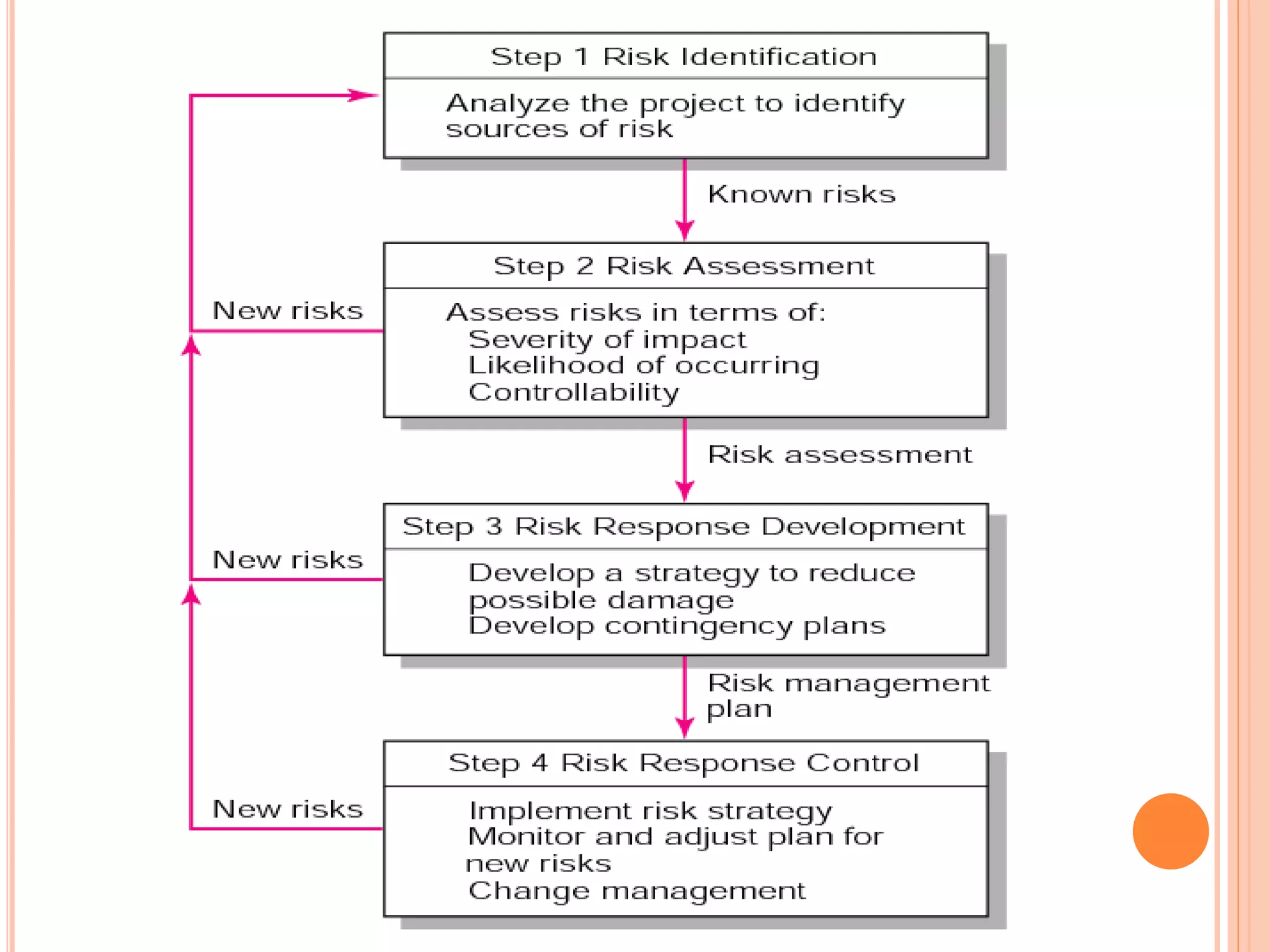
PROCESS OF RISK MANAGEMENT
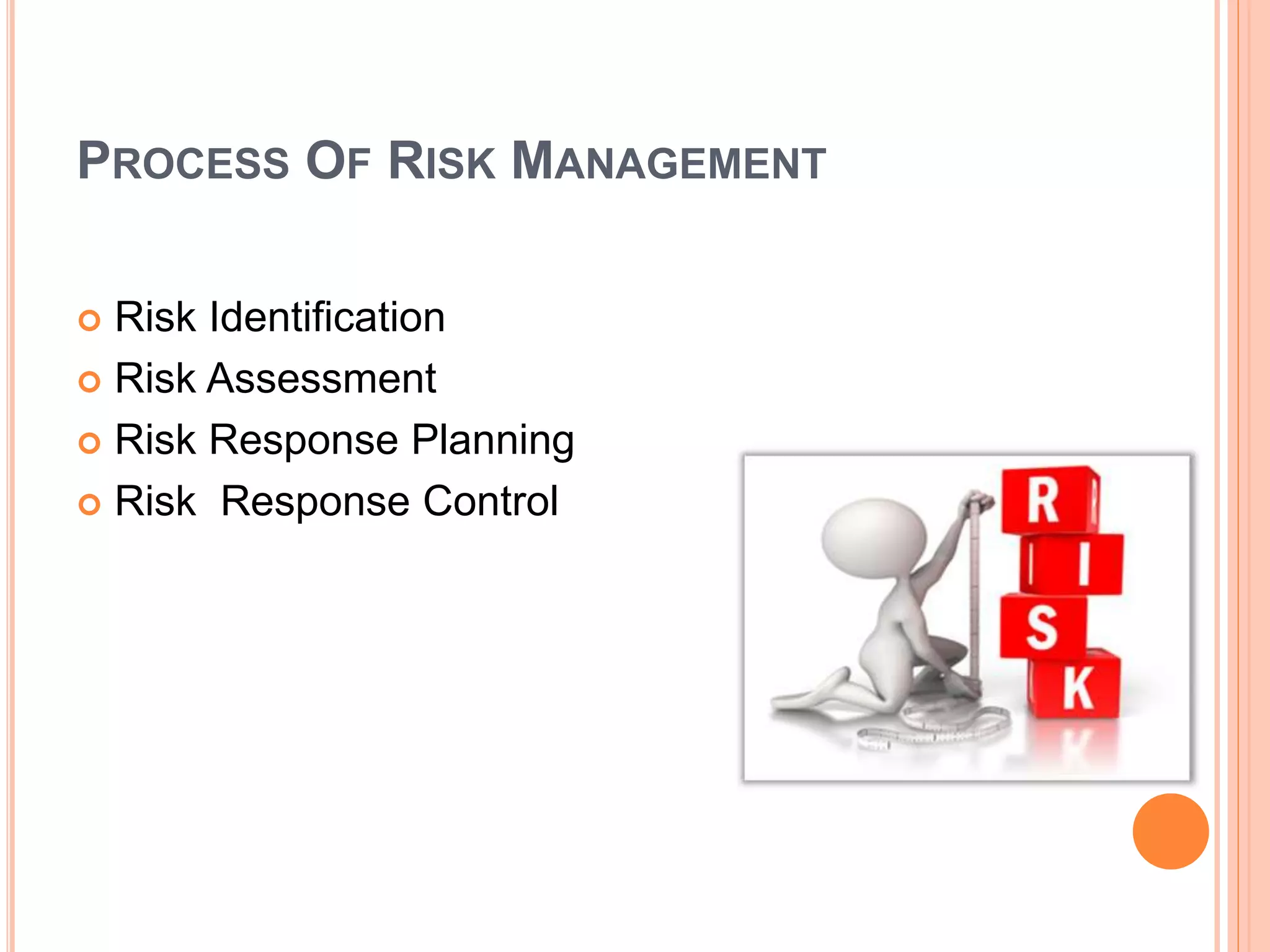
 Risk Identification
 Risk Assessment
 Risk Response Planning
 Risk Response Control
RISK IDENTIFICATION
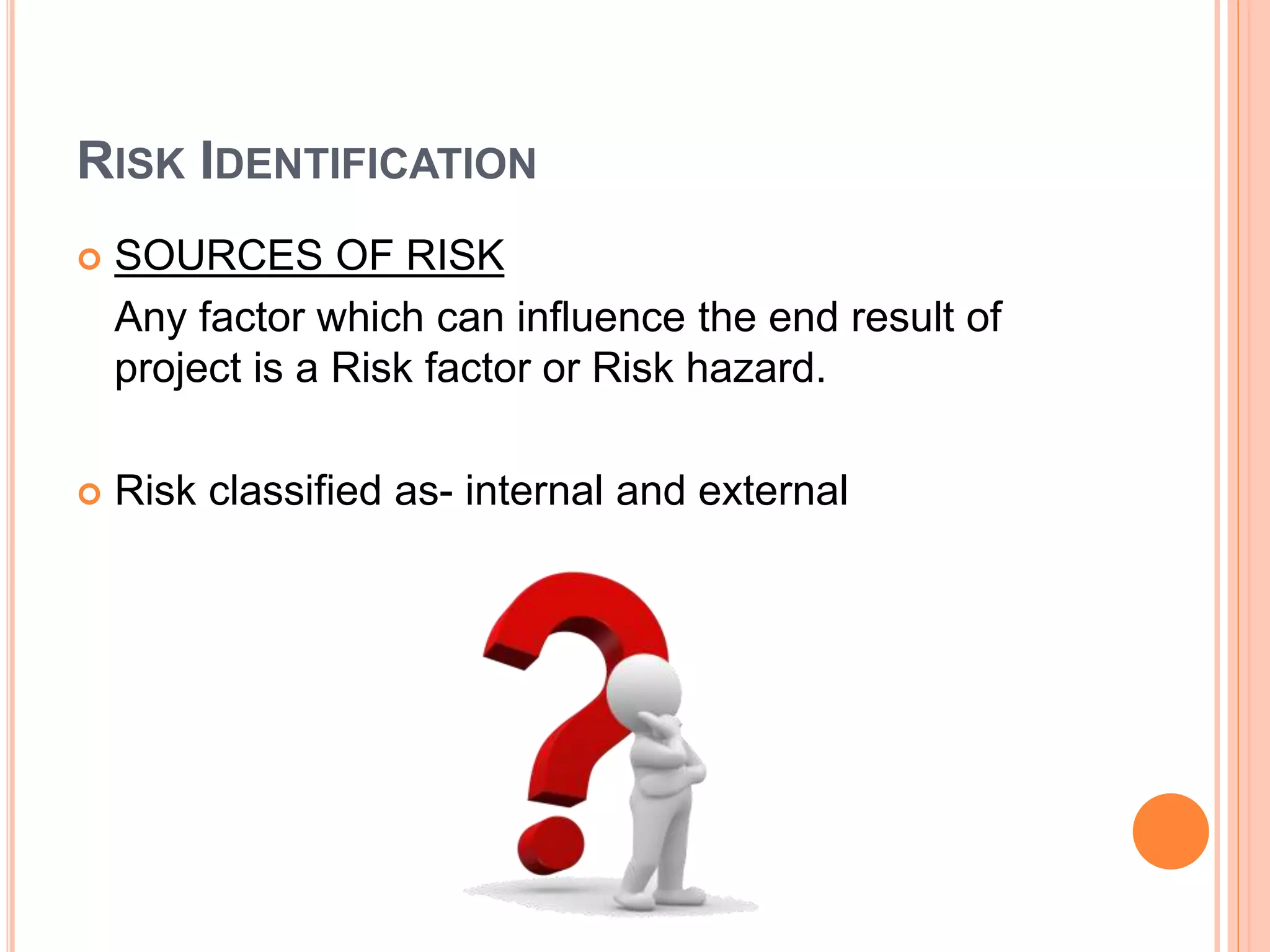
 SOURCES OF RISK
Any factor which can influence the end result of
project is a Risk factor or Risk hazard.
 Risk classified as- internal and external
INTERNAL RISKS
 Originates inside the project
 Project managers & the organization generally have
a degree of control over them.
 Market risk and Technical risk
 Market risk- Incomplete identification of customer
needs
- Failure to identify changing needs
- Failure to identify new products
 Technical Risk is not meeting the cost, time and
performance requirements due to technical
problems with the end items of project.
 Technical risk is high in new technologies, new
skills, new products
 Technical risk is low in projects dealing with familiar
activities
EXTERNAL RISKS
 Market Conditions
 Competitor’s action
 Government Regulations
 Interest Rates
 Customer Needs and Behavior
 Supplier relations
 Weather
 Labor and material availability
RISK ASSESSMENT
 Only the important ones need to be assessed.
 Risk chance is -- the probability of happening-
low/ medium/ high -- assign numerical values - 0 to 1.0
 Risk impact (result) -- specified in terms of time, cost and
performance measures-- assign numerical values.
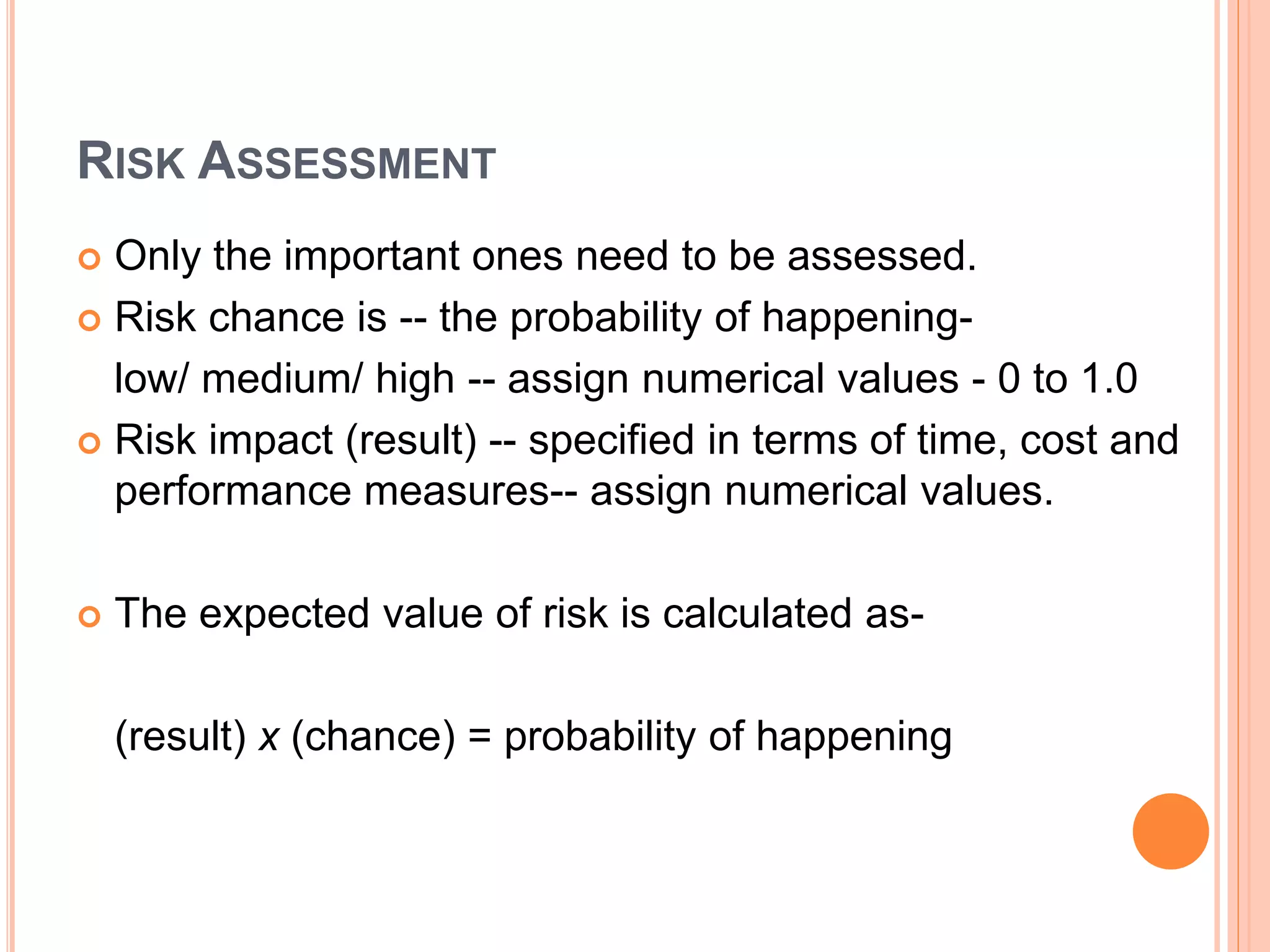
 The expected value of risk is calculated as-
(result) x (chance) = probability of happening
RISK RESPONSE PLANNING AND CONTROL
 Methods of dealing with risk-
 Transferring risk
 Altering plans or procedures to avoid or reduce risk
 Prepare contingency plans
 Accepting the risk
 Transfer the Risk
Paying a premium to pass the risk to another party.
 Warranties, penalties, contractual incentives attached to
project cost, schedule or performance measures.
 Different types of contract share it in different ways
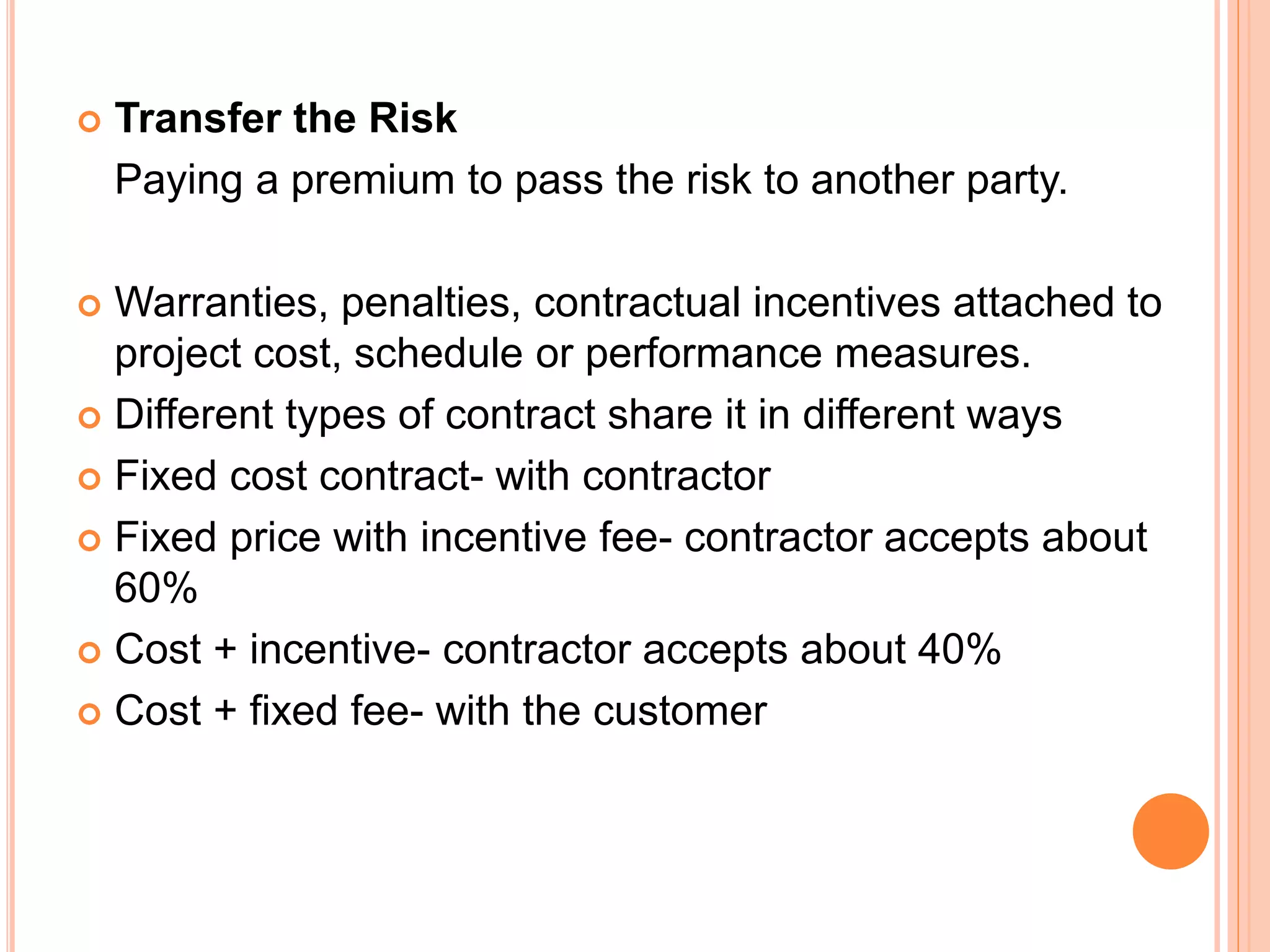
 Fixed cost contract- with contractor
 Fixed price with incentive fee- contractor accepts about
60%
 Cost + incentive- contractor accepts about 40%
 Cost + fixed fee- with the customer
 Avoid Risk
Changing the project plan to eliminate the risk or
condition.
 By altering the original project concept
 Eliminating the risky elements
 Minimizing system complexity
 Reducing end-item quality requirement
 Changing contractor
 Safety procedures
 Avoiding reduces payoff opportunities
 New product design
 Reduce Risk
Reducing the chance that an adverse event will occur
Reducing the impact of adverse event.
Reducing Technical Risk-
 Employ the best technical team
 Base decisions on models and simulation of key
technical parameters
 Use computer aided system engineering tools
 Perform test and evaluations
 Minimize system complexity
Reducing Schedule Risk-
 Create a master project schedule and adhere to it
 Maintain focus on critical activities
 Allot best workers on time-critical activities
 Schedule risky tasks as early as possible to allow time for
failure from recovery
Reducing Cost Target Risk-
 Identify and monitor the key cost drivers
 Use low-cost design alternative reviews and
assessments
 Use proven technology
 Perform prototyping and testing on risky components and
modules
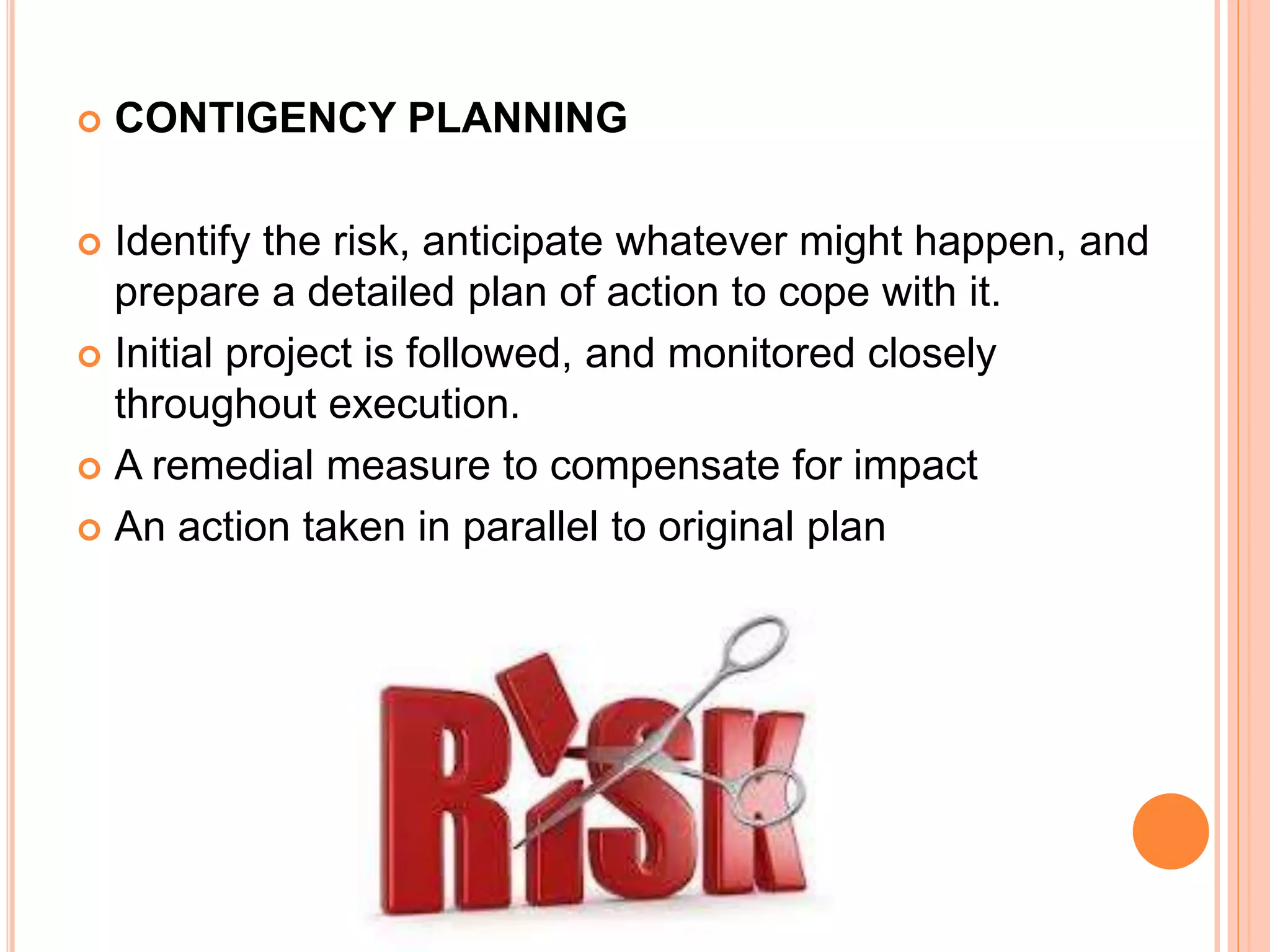
 CONTIGENCY PLANNING
 Identify the risk, anticipate whatever might happen, and
prepare a detailed plan of action to cope with it.
 Initial project is followed, and monitored closely
throughout execution.
 A remedial measure to compensate for impact
 An action taken in parallel to original plan
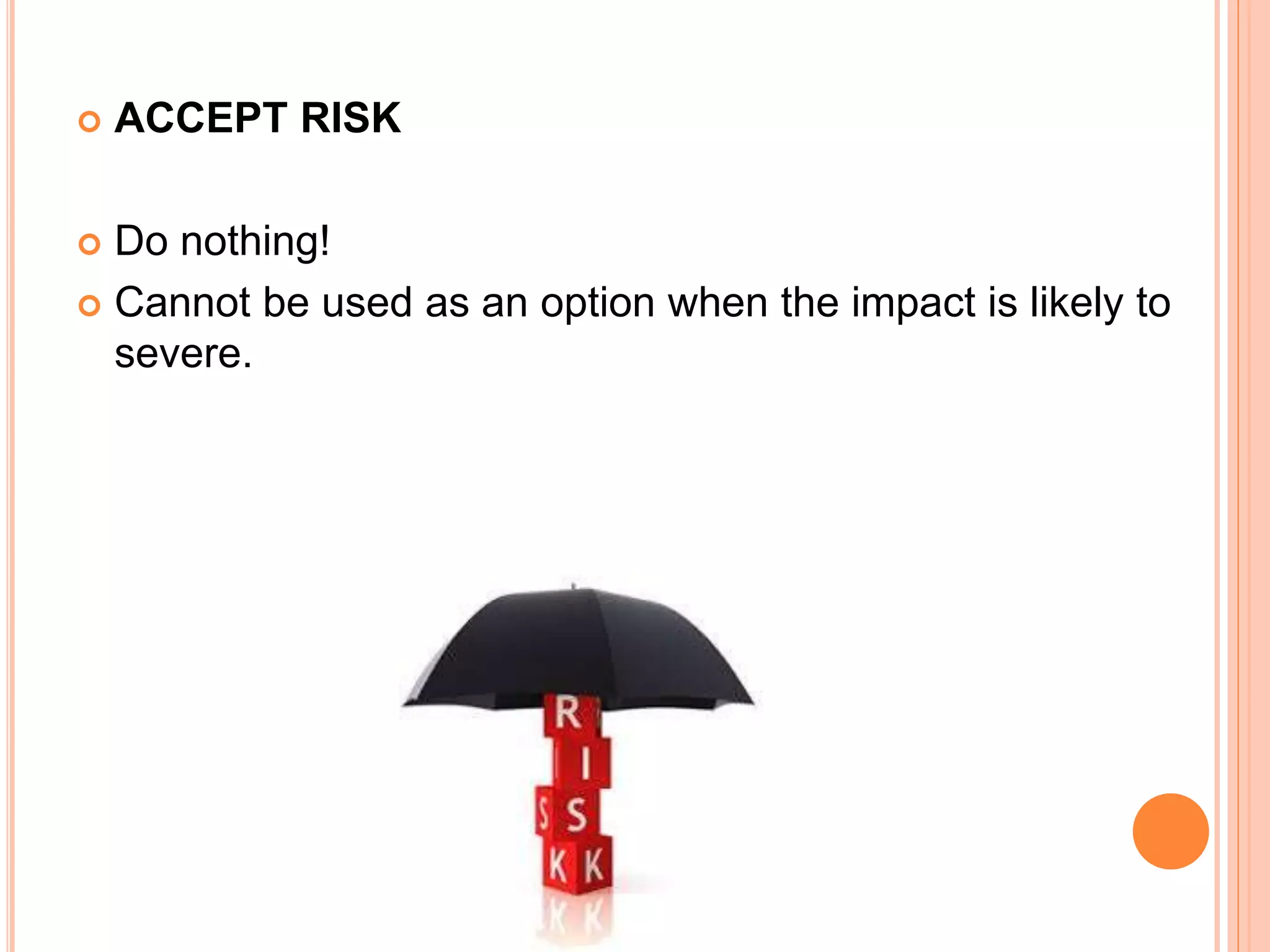
 ACCEPT RISK
 Do nothing!
 Cannot be used as an option when the impact is likely to
severe.
THANK YOU

Risk Analysis and Management

  • 1.
  • 2.
    CONTENT  Introduction  Processof Risk Management  Risk Identification  Internal Risks  External Risks  Risk Assessment  Risk Response Planning and Control
  • 3.
    INTRODUCTION  Risk isa function of the chance and the result of an undesired event happening.  Risk can also be said to be the failure of not meeting the schedule/ budget/ technical parameters.  Risk cannot be eliminated, only reduced.
  • 4.
    PROCESS OF RISKMANAGEMENT  Risk Identification  Risk Assessment  Risk Response Planning  Risk Response Control
  • 6.
    RISK IDENTIFICATION  SOURCESOF RISK Any factor which can influence the end result of project is a Risk factor or Risk hazard.  Risk classified as- internal and external
  • 7.
    INTERNAL RISKS  Originatesinside the project  Project managers & the organization generally have a degree of control over them.  Market risk and Technical risk  Market risk- Incomplete identification of customer needs - Failure to identify changing needs - Failure to identify new products
  • 8.
     Technical Riskis not meeting the cost, time and performance requirements due to technical problems with the end items of project.  Technical risk is high in new technologies, new skills, new products  Technical risk is low in projects dealing with familiar activities
  • 9.
    EXTERNAL RISKS  MarketConditions  Competitor’s action  Government Regulations  Interest Rates  Customer Needs and Behavior  Supplier relations  Weather  Labor and material availability
  • 10.
    RISK ASSESSMENT  Onlythe important ones need to be assessed.  Risk chance is -- the probability of happening- low/ medium/ high -- assign numerical values - 0 to 1.0  Risk impact (result) -- specified in terms of time, cost and performance measures-- assign numerical values.  The expected value of risk is calculated as- (result) x (chance) = probability of happening
  • 11.
    RISK RESPONSE PLANNINGAND CONTROL  Methods of dealing with risk-  Transferring risk  Altering plans or procedures to avoid or reduce risk  Prepare contingency plans  Accepting the risk
  • 12.
     Transfer theRisk Paying a premium to pass the risk to another party.  Warranties, penalties, contractual incentives attached to project cost, schedule or performance measures.  Different types of contract share it in different ways  Fixed cost contract- with contractor  Fixed price with incentive fee- contractor accepts about 60%  Cost + incentive- contractor accepts about 40%  Cost + fixed fee- with the customer
  • 13.
     Avoid Risk Changingthe project plan to eliminate the risk or condition.  By altering the original project concept  Eliminating the risky elements  Minimizing system complexity  Reducing end-item quality requirement  Changing contractor  Safety procedures  Avoiding reduces payoff opportunities  New product design
  • 14.
     Reduce Risk Reducingthe chance that an adverse event will occur Reducing the impact of adverse event. Reducing Technical Risk-  Employ the best technical team  Base decisions on models and simulation of key technical parameters  Use computer aided system engineering tools  Perform test and evaluations  Minimize system complexity
  • 15.
    Reducing Schedule Risk- Create a master project schedule and adhere to it  Maintain focus on critical activities  Allot best workers on time-critical activities  Schedule risky tasks as early as possible to allow time for failure from recovery Reducing Cost Target Risk-  Identify and monitor the key cost drivers  Use low-cost design alternative reviews and assessments  Use proven technology  Perform prototyping and testing on risky components and modules
  • 16.
     CONTIGENCY PLANNING Identify the risk, anticipate whatever might happen, and prepare a detailed plan of action to cope with it.  Initial project is followed, and monitored closely throughout execution.  A remedial measure to compensate for impact  An action taken in parallel to original plan
  • 17.
     ACCEPT RISK Do nothing!  Cannot be used as an option when the impact is likely to severe.
  • 18.