Architectural Project


     Members:
   EDELY GARRIDO
    WENDY PIÑA
Architectural Project


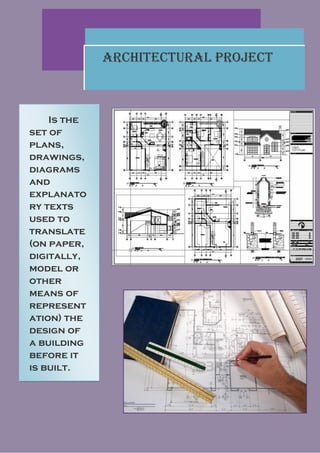
    Is the
set of
plans,
drawings,
diagrams
and
explanato
ry texts
used to
translate
(on paper,
digitally,
model or
other
means of
represent
ation) the
design of
a building
before it
is built.
Architectural Project


        Design stages of a project
Defining scope, needs or objectives: To develop an
architectural project, is conducted prior research
process that guides the architect in his work
throughout the entire project. The interpretation
by the Architect of the results of this stage is what
defines the personality largely project.


     Program Design: The results of the
     research synthesis, the designer makes a
     list identifying the system components and
     their particular requirements. This list is
     called Architectural Program.
Architectural Project


Architectural
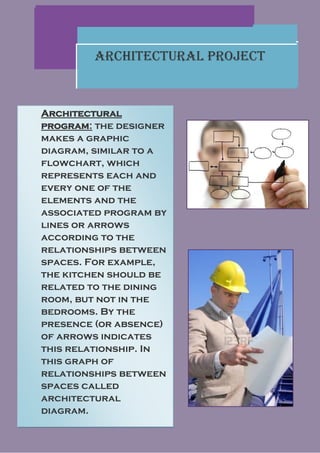
program: the designer
makes a graphic
diagram, similar to a
flowchart, which
represents each and
every one of the
elements and the
associated program by
lines or arrows
according to the
relationships between
spaces. For example,
the kitchen should be
related to the dining
room, but not in the
bedrooms. By the
presence (or absence)
of arrows indicates
this relationship. In
this graph of
relationships between
spaces called
architectural
diagram.
Architectural Project


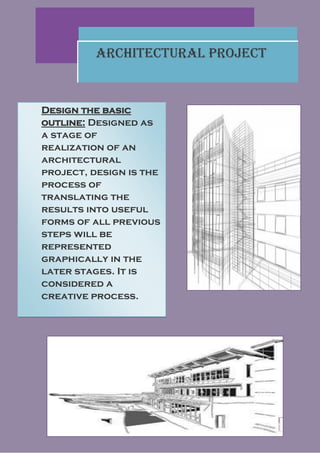
Design the basic
outline: Designed as
a stage of
realization of an
architectural
project, design is the
process of
translating the
results into useful
forms of all previous
steps will be
represented
graphically in the
later stages. It is
considered a
creative process.
Architectural Project


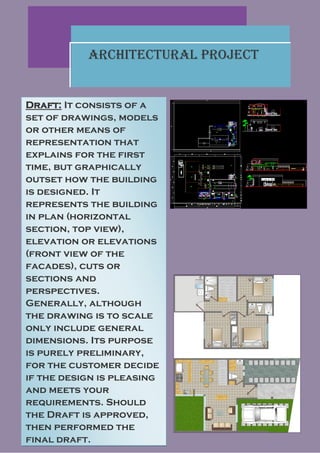
Draft: It consists of a
set of drawings, models
or other means of
representation that
explains for the first
time, but graphically
outset how the building
is designed. It
represents the building
in plan (horizontal
section, top view),
elevation or elevations
(front view of the
facades), cuts or
sections and
perspectives.
Generally, although
the drawing is to scale
only include general
dimensions. Its purpose
is purely preliminary,
for the customer decide
if the design is pleasing
and meets your
requirements. Should
the Draft is approved,
then performed the
final draft.
Architectural Project


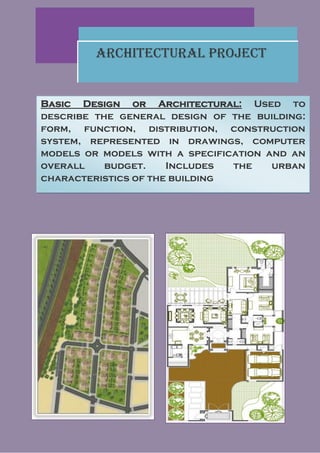
Basic Design or Architectural: Used to
describe the general design of the building:
form, function, distribution, construction
system, represented in drawings, computer
models or models with a specification and an
overall    budget.    Includes  the    urban
characteristics of the building
Architectural Project


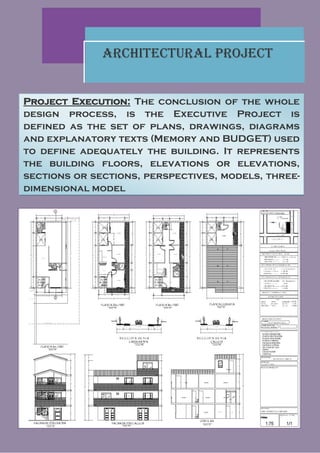
Project Execution: The conclusion of the whole
design process, is the Executive Project is
defined as the set of plans, drawings, diagrams
and explanatory texts (Memory and BUDGET) used
to define adequately the building. It represents
the building floors, elevations or elevations,
sections or sections, perspectives, models, three-
dimensional model
Architectural Project


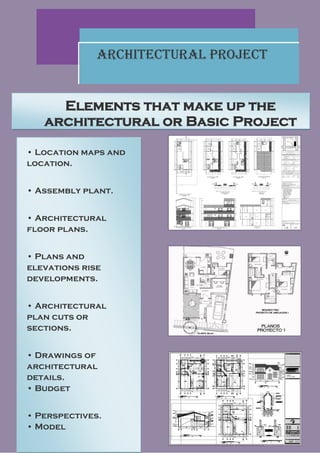
     Elements that make up the
   architectural or Basic Project

• Location maps and
location.


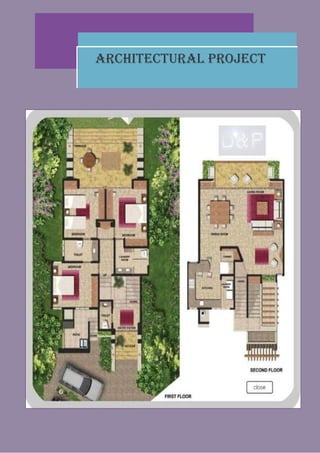
• Assembly plant.


• Architectural
floor plans.


• Plans and
elevations rise
developments.


• Architectural
plan cuts or
sections.


• Drawings of
architectural
details.
• Budget


• Perspectives.
• Model
Architectural Project


         EXECUTIVE PROJECT
         (construction plans)
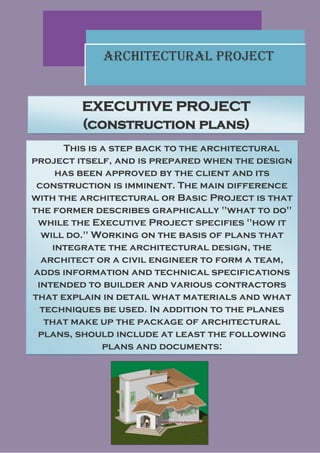
      This is a step back to the architectural
project itself, and is prepared when the design
     has been approved by the client and its
 construction is imminent. The main difference
with the architectural or Basic Project is that
the former describes graphically "what to do"
 while the Executive Project specifies "how it
  will do." Working on the basis of plans that
    integrate the architectural design, the
  architect or a civil engineer to form a team,
adds information and technical specifications
 intended to builder and various contractors
that explain in detail what materials and what
  techniques be used. In addition to the planes
   that make up the package of architectural
 plans, should include at least the following
              plans and documents:
Architectural Project


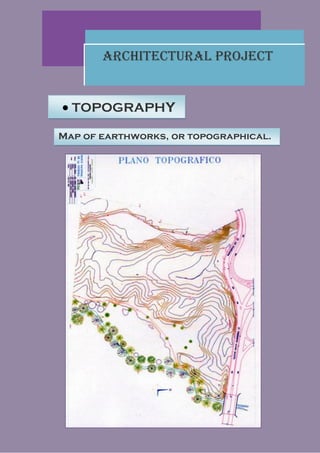
 TOPOGRAPHY
Map of earthworks, or topographical.
Architectural Project


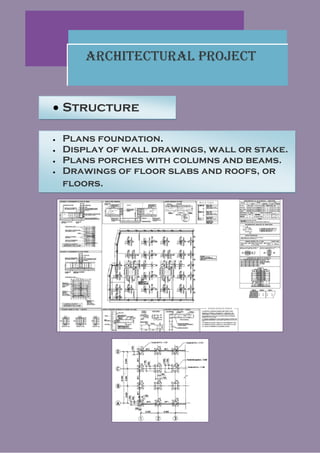
 Structure

   Plans foundation.
   Display of wall drawings, wall or stake.
   Plans porches with columns and beams.
   Drawings of floor slabs and roofs, or
    floors.
Architectural Project


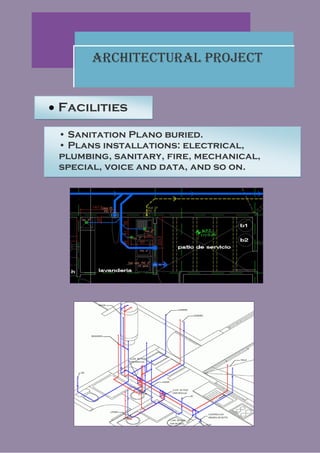
 Facilities

 • Sanitation Plano buried.
 • Plans installations: electrical,
 plumbing, sanitary, fire, mechanical,
 special, voice and data, and so on.
Architectural Project


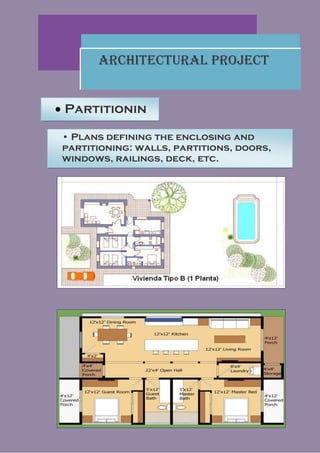
 Partitionin
  g and
  joinery
 • Plans defining the enclosing and
 partitioning: walls, partitions, doors,
 windows, railings, deck, etc.
Architectural Project


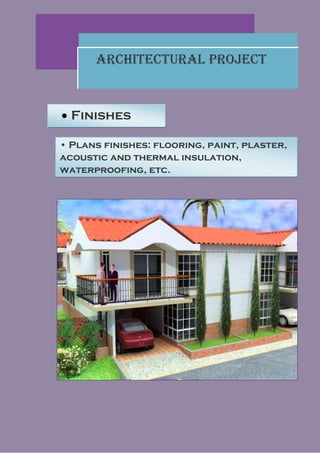
 Finishes
  joinery
• Plans finishes: flooring, paint, plaster,
acoustic and thermal insulation,
waterproofing, etc.
Architectural Project


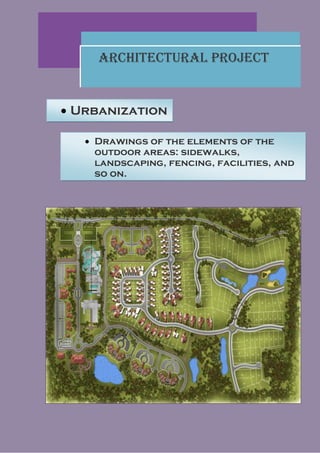
 Urbanization

    Drawings of the elements of the
     outdoor areas: sidewalks,
     landscaping, fencing, facilities, and
     so on.
Architectural Project


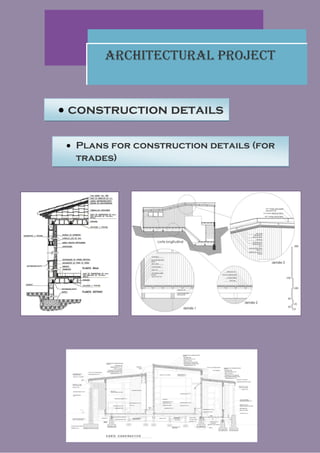
 construction details

  Plans for construction details (for
   trades)
Architectural Project


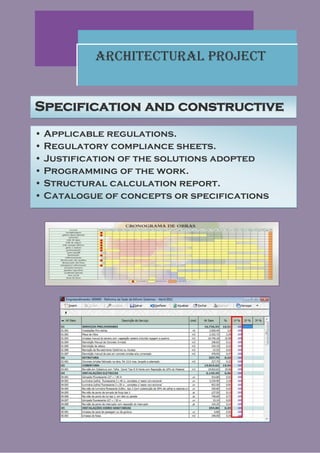
Specification and constructive
• Applicable regulations.
• Regulatory compliance sheets.
• Justification of the solutions adopted
• Programming of the work.
• Structural calculation report.
• Catalogue of concepts or specifications
Architectural Project

Revista

  • 1.
    Architectural Project Members: EDELY GARRIDO WENDY PIÑA
  • 2.
    Architectural Project Is the set of plans, drawings, diagrams and explanato ry texts used to translate (on paper, digitally, model or other means of represent ation) the design of a building before it is built.
  • 3.
    Architectural Project Design stages of a project Defining scope, needs or objectives: To develop an architectural project, is conducted prior research process that guides the architect in his work throughout the entire project. The interpretation by the Architect of the results of this stage is what defines the personality largely project. Program Design: The results of the research synthesis, the designer makes a list identifying the system components and their particular requirements. This list is called Architectural Program.
  • 4.
    Architectural Project Architectural program: thedesigner makes a graphic diagram, similar to a flowchart, which represents each and every one of the elements and the associated program by lines or arrows according to the relationships between spaces. For example, the kitchen should be related to the dining room, but not in the bedrooms. By the presence (or absence) of arrows indicates this relationship. In this graph of relationships between spaces called architectural diagram.
  • 5.
    Architectural Project Design thebasic outline: Designed as a stage of realization of an architectural project, design is the process of translating the results into useful forms of all previous steps will be represented graphically in the later stages. It is considered a creative process.
  • 6.
    Architectural Project Draft: Itconsists of a set of drawings, models or other means of representation that explains for the first time, but graphically outset how the building is designed. It represents the building in plan (horizontal section, top view), elevation or elevations (front view of the facades), cuts or sections and perspectives. Generally, although the drawing is to scale only include general dimensions. Its purpose is purely preliminary, for the customer decide if the design is pleasing and meets your requirements. Should the Draft is approved, then performed the final draft.
  • 7.
    Architectural Project Basic Designor Architectural: Used to describe the general design of the building: form, function, distribution, construction system, represented in drawings, computer models or models with a specification and an overall budget. Includes the urban characteristics of the building
  • 8.
    Architectural Project Project Execution:The conclusion of the whole design process, is the Executive Project is defined as the set of plans, drawings, diagrams and explanatory texts (Memory and BUDGET) used to define adequately the building. It represents the building floors, elevations or elevations, sections or sections, perspectives, models, three- dimensional model
  • 9.
    Architectural Project Elements that make up the architectural or Basic Project • Location maps and location. • Assembly plant. • Architectural floor plans. • Plans and elevations rise developments. • Architectural plan cuts or sections. • Drawings of architectural details. • Budget • Perspectives. • Model
  • 10.
    Architectural Project EXECUTIVE PROJECT (construction plans) This is a step back to the architectural project itself, and is prepared when the design has been approved by the client and its construction is imminent. The main difference with the architectural or Basic Project is that the former describes graphically "what to do" while the Executive Project specifies "how it will do." Working on the basis of plans that integrate the architectural design, the architect or a civil engineer to form a team, adds information and technical specifications intended to builder and various contractors that explain in detail what materials and what techniques be used. In addition to the planes that make up the package of architectural plans, should include at least the following plans and documents:
  • 11.
    Architectural Project  TOPOGRAPHY Mapof earthworks, or topographical.
  • 12.
    Architectural Project  Structure  Plans foundation.  Display of wall drawings, wall or stake.  Plans porches with columns and beams.  Drawings of floor slabs and roofs, or floors.
  • 13.
    Architectural Project  Facilities • Sanitation Plano buried. • Plans installations: electrical, plumbing, sanitary, fire, mechanical, special, voice and data, and so on.
  • 14.
    Architectural Project  Partitionin g and joinery • Plans defining the enclosing and partitioning: walls, partitions, doors, windows, railings, deck, etc.
  • 15.
    Architectural Project  Finishes joinery • Plans finishes: flooring, paint, plaster, acoustic and thermal insulation, waterproofing, etc.
  • 16.
    Architectural Project  Urbanization  Drawings of the elements of the outdoor areas: sidewalks, landscaping, fencing, facilities, and so on.
  • 17.
    Architectural Project  constructiondetails  Plans for construction details (for trades)
  • 18.
    Architectural Project Specification andconstructive • Applicable regulations. • Regulatory compliance sheets. • Justification of the solutions adopted • Programming of the work. • Structural calculation report. • Catalogue of concepts or specifications
  • 19.