The 4+1+1 
Introduction to the Construction Industry & 
Introduction to Drawing 
( Engineering) 
PROJECT 1 
Lim Wei Heng 0320148 
Lim Jey Sheng 0319796 
Lim Yang Kang 0320538 
Marco Leong Wong Ka Henn 0320026 
Muhammad Irfaan Yadun 0319353 
Ahmed Ali Karama Senan 0320478
Civil 
engineer 
Introduction to the 
Construction Industry 
& Introduction to Drawing
What is 
Civil Engineer? 
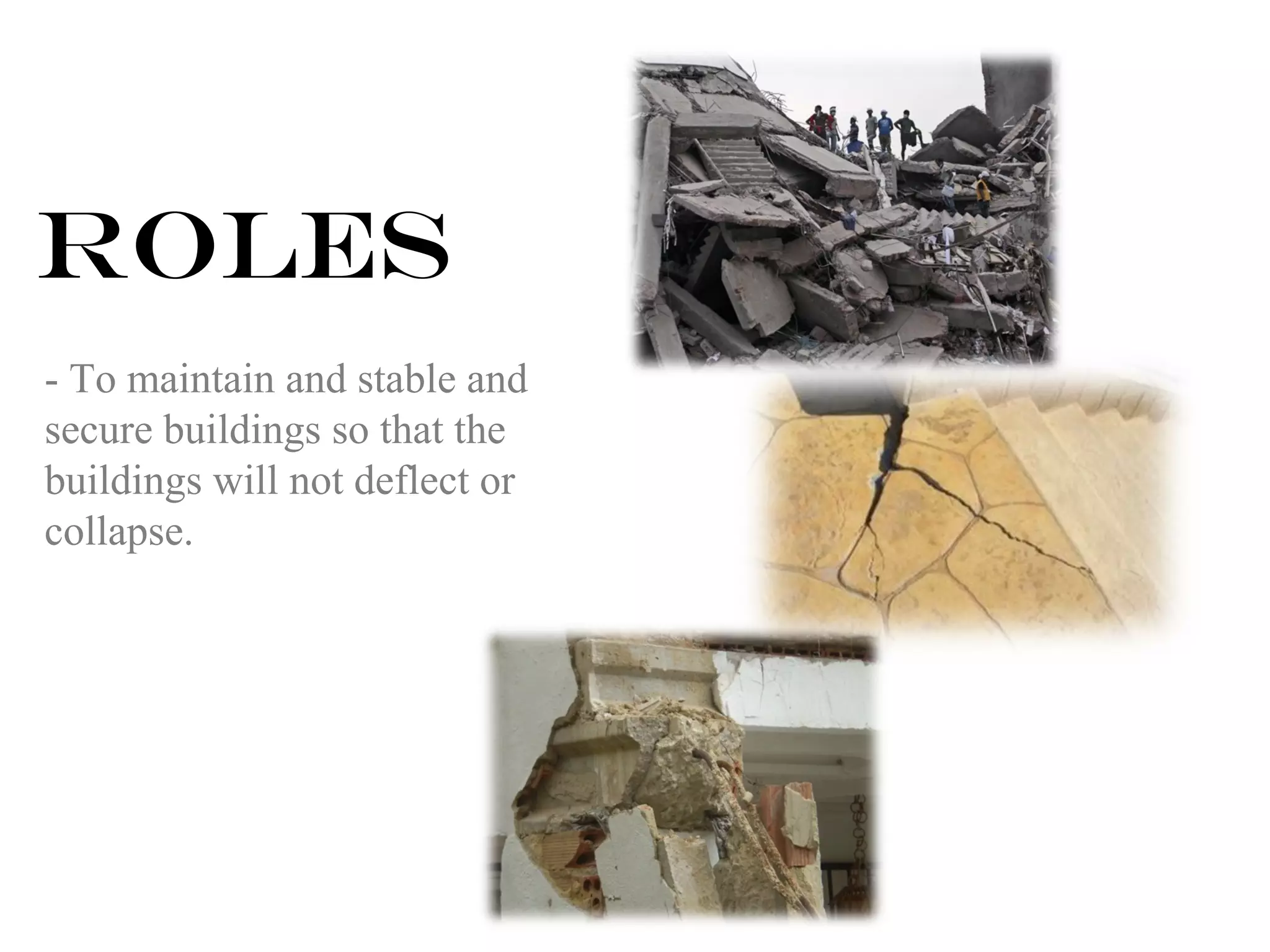
• Civil engineers create, improve and protect the environment in which we 
live. 
• They plan, design and oversee construction and maintenance of building 
structures and facilities, such as roads, power plants, water, sewerage 
systems and etc… 
• They also design and build buildings and large structures that they can 
last for hundreds of years and withstand all weather conditions.
Roles 
- To maintain and stable and 
secure buildings so that the 
buildings will not deflect or 
collapse.
Responsibilities 
• To plan, design and oversee buildings. 
• Design the foundation structures so that the building can 
withstand pressure imposed through environmental 
conditions and human use 
• To advice on projects and design or contracting engineers 
to suggest their plans into reality and maintain the 
structure once they built 
• To investigate the building structures and facilities.
Pre-Construction 
• Obtaining site surveys and soil-engineering services. 
• Secure any required technical tests during construction. 
• Find an on-site project representative and obtain the necessary 
legal, auditing, and insurance counseling services needed to 
fulfill these responsibilities, as outlined in AIA documents 
B141 and A201.
During Construction 
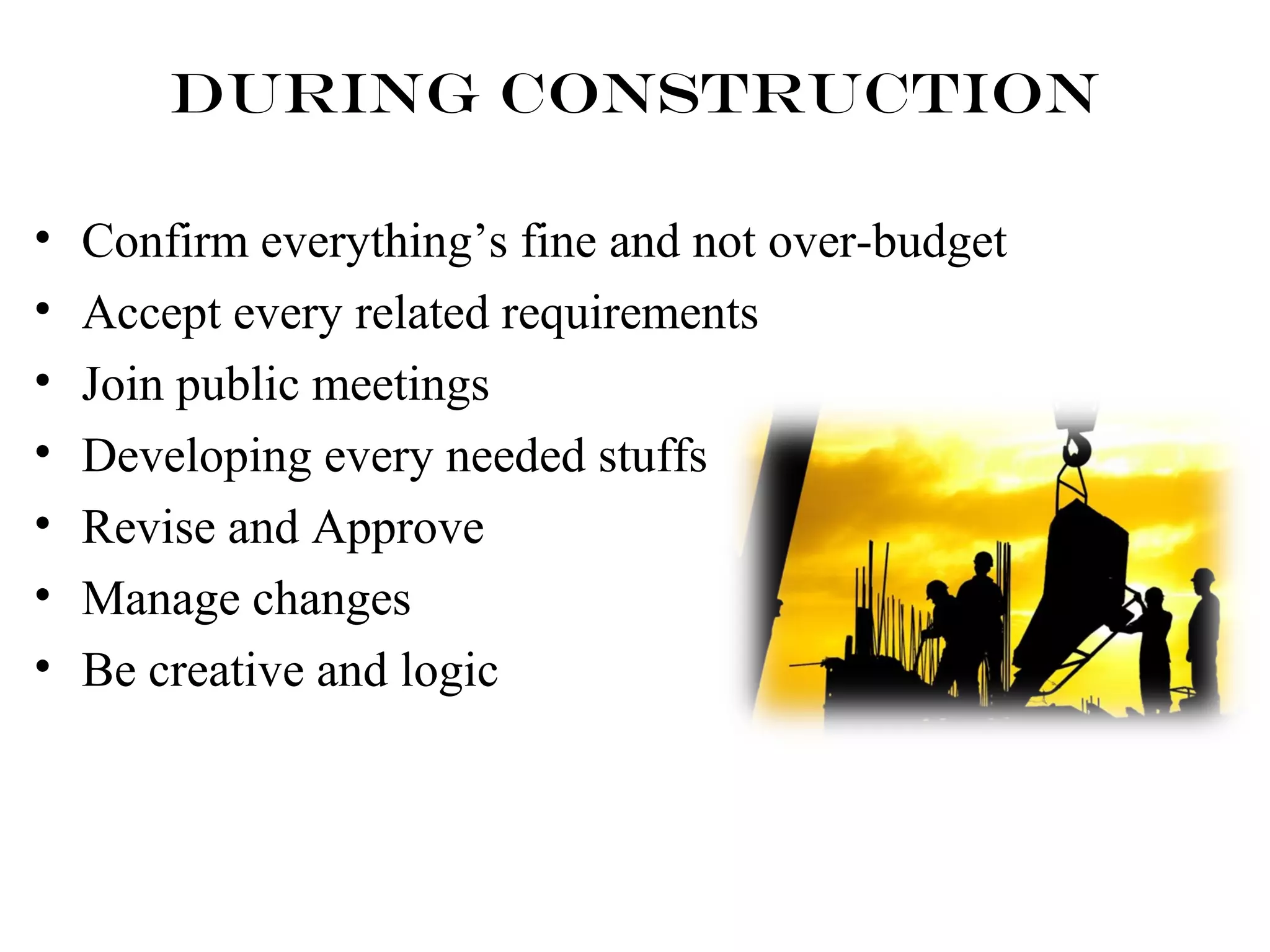
• Confirm everything’s fine and not over-budget 
• Accept every related requirements 
• Join public meetings 
• Developing every needed stuffs 
• Revise and Approve 
• Manage changes 
• Be creative and logic
Post Construction 
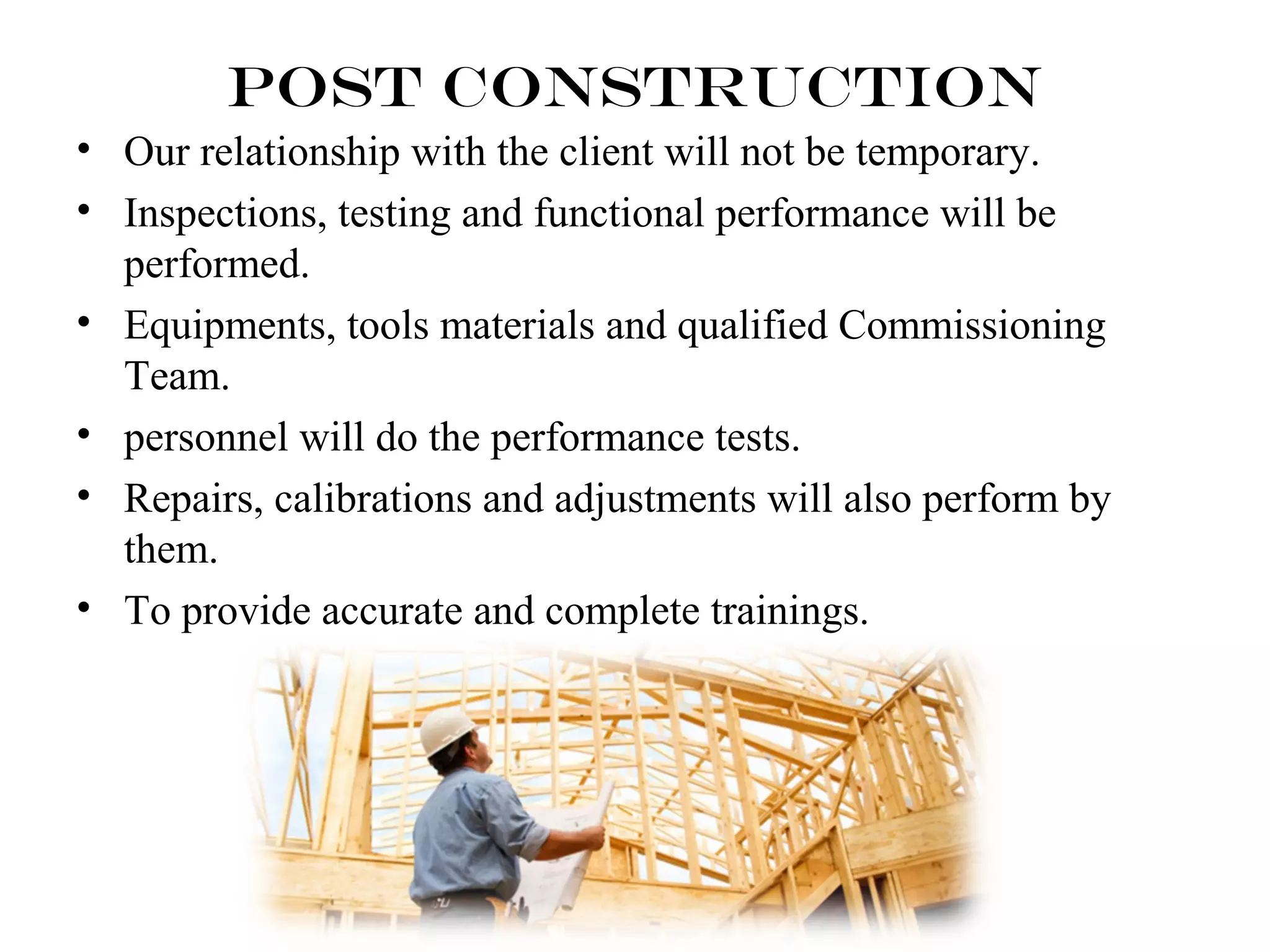
• Our relationship with the client will not be temporary. 
• Inspections, testing and functional performance will be 
performed. 
• Equipments, tools materials and qualified Commissioning 
Team. 
• personnel will do the performance tests. 
• Repairs, calibrations and adjustments will also perform by 
them. 
• To provide accurate and complete trainings.
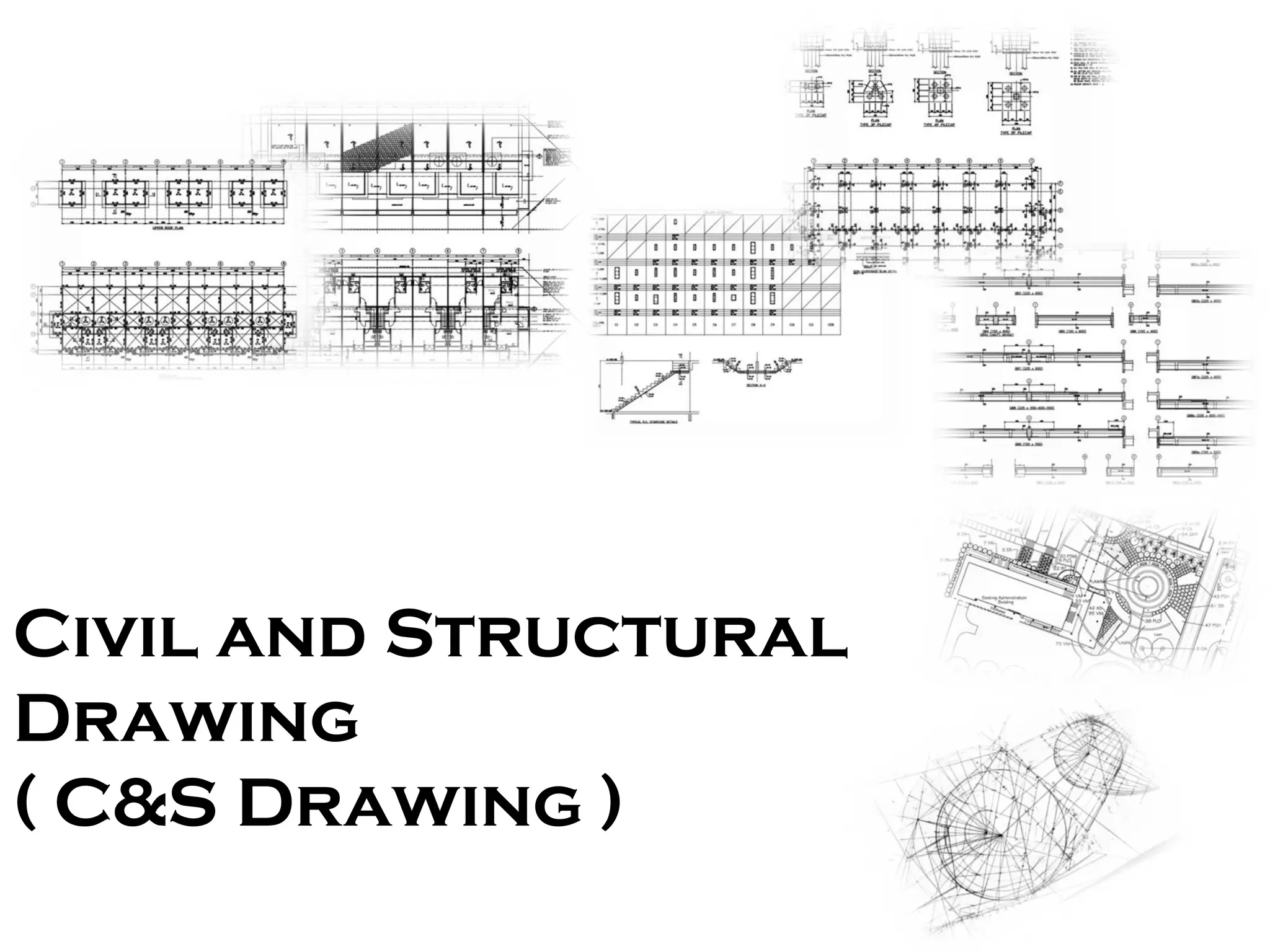
Civil and Structural 
Drawing 
( C&S Drawing )
What is 
Civil AND STRUCRURAL 
engineer drawing? 
• Engineering drawing is a language in which 
the idea of engineer are expressed in an 
manner that is clearly understood by 
technician or people concern with the job.
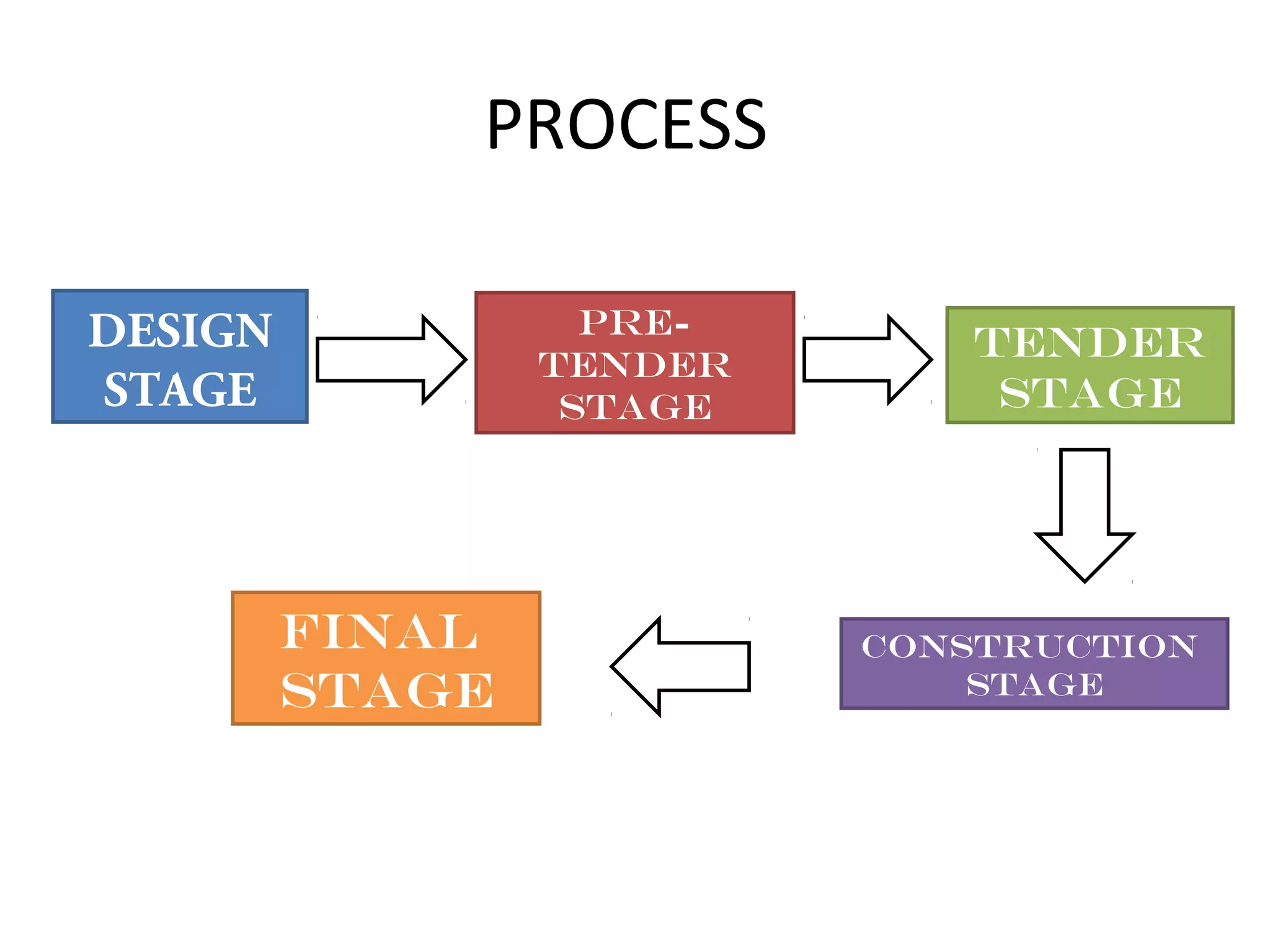
PROCESS 
DESIGN 
STAGE 
PRE-TENDER 
STAGE 
TENDER 
STAGE 
CONSTRUCTION 
STAGE 
FINAL 
STAGE
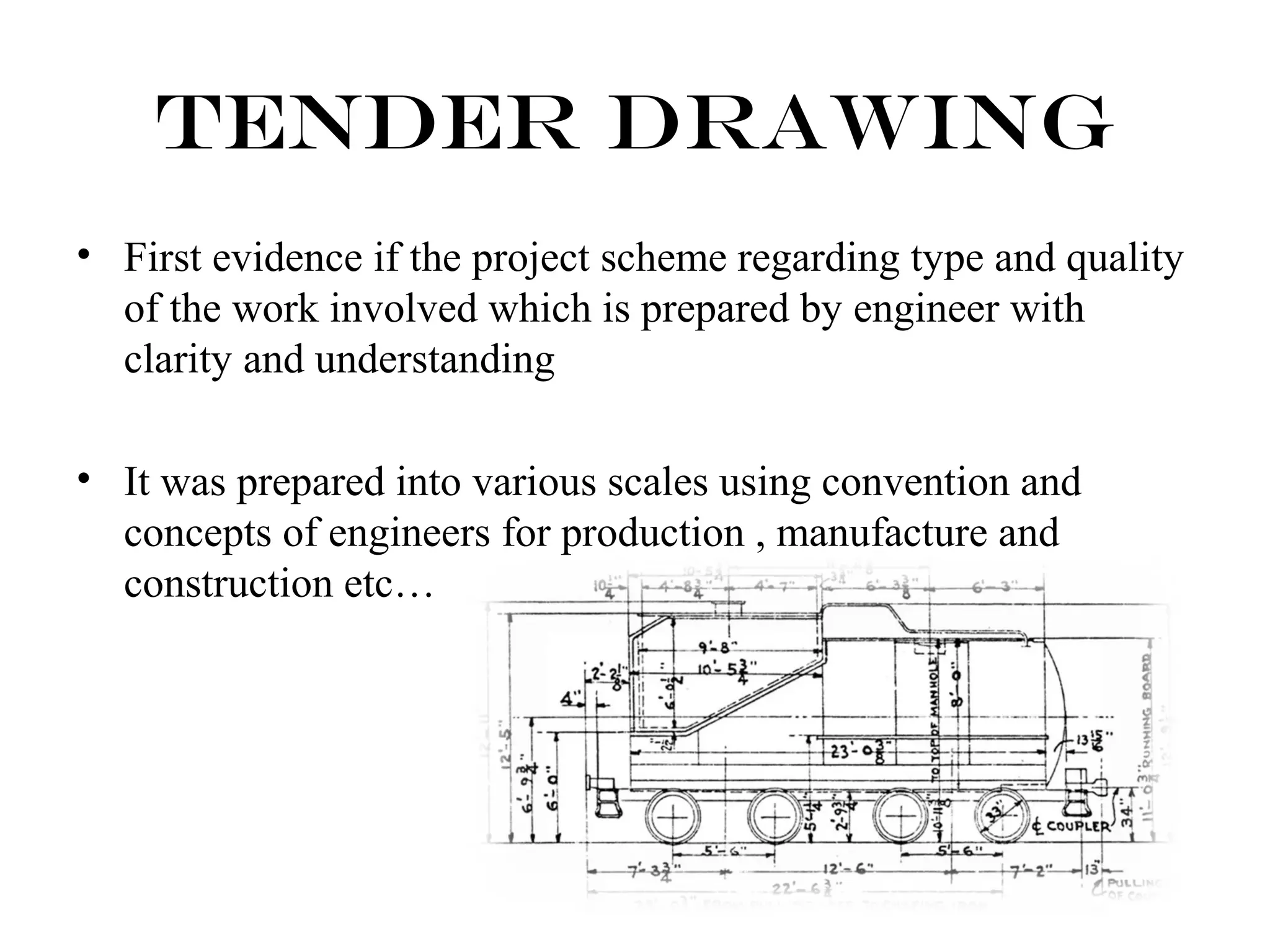
Tender Drawing 
• First evidence if the project scheme regarding type and quality 
of the work involved which is prepared by engineer with 
clarity and understanding 
• It was prepared into various scales using convention and 
concepts of engineers for production , manufacture and 
construction etc…
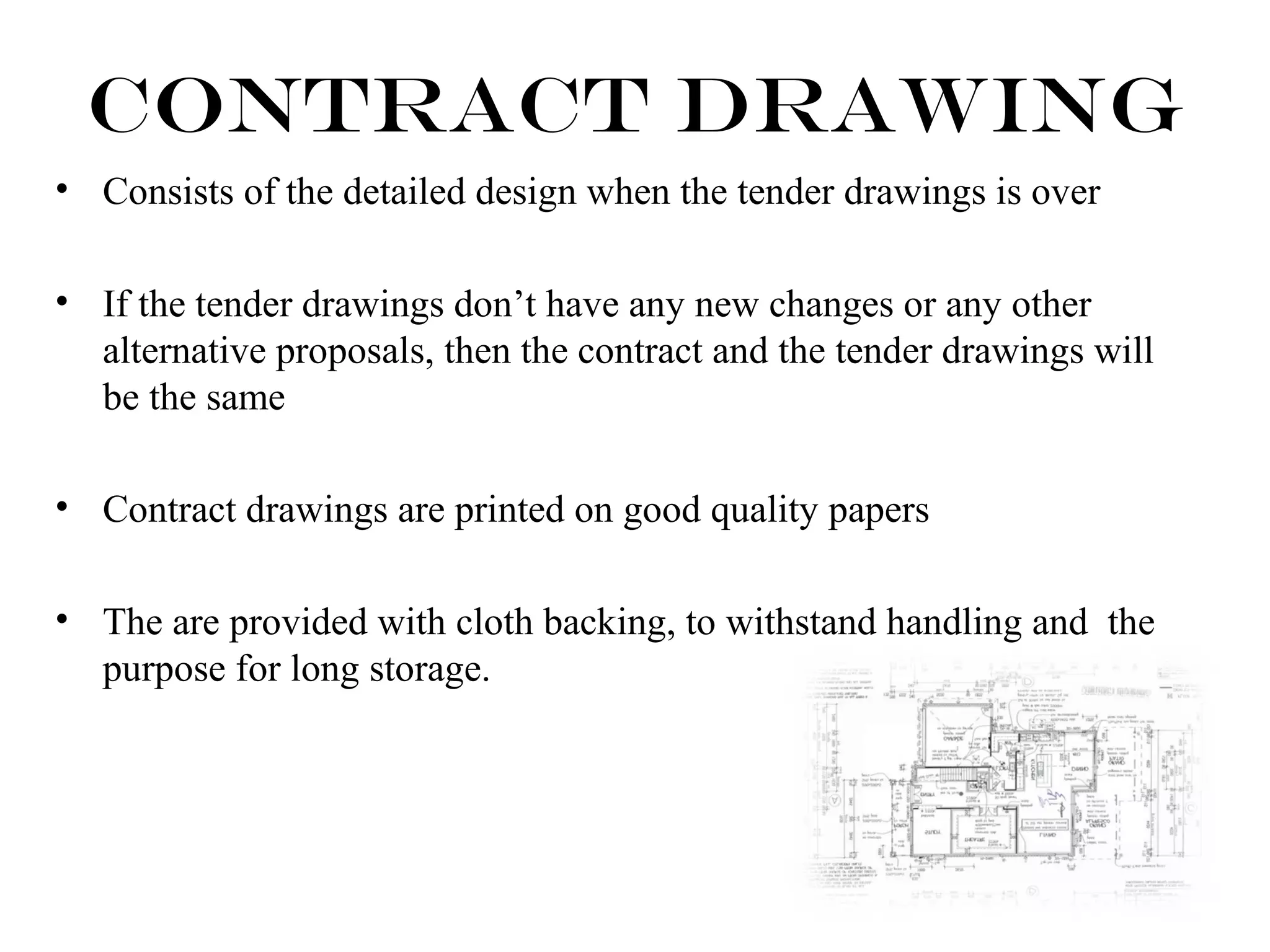
Contract Drawing 
• Consists of the detailed design when the tender drawings is over 
• If the tender drawings don’t have any new changes or any other 
alternative proposals, then the contract and the tender drawings will 
be the same 
• Contract drawings are printed on good quality papers 
• The are provided with cloth backing, to withstand handling and the 
purpose for long storage.
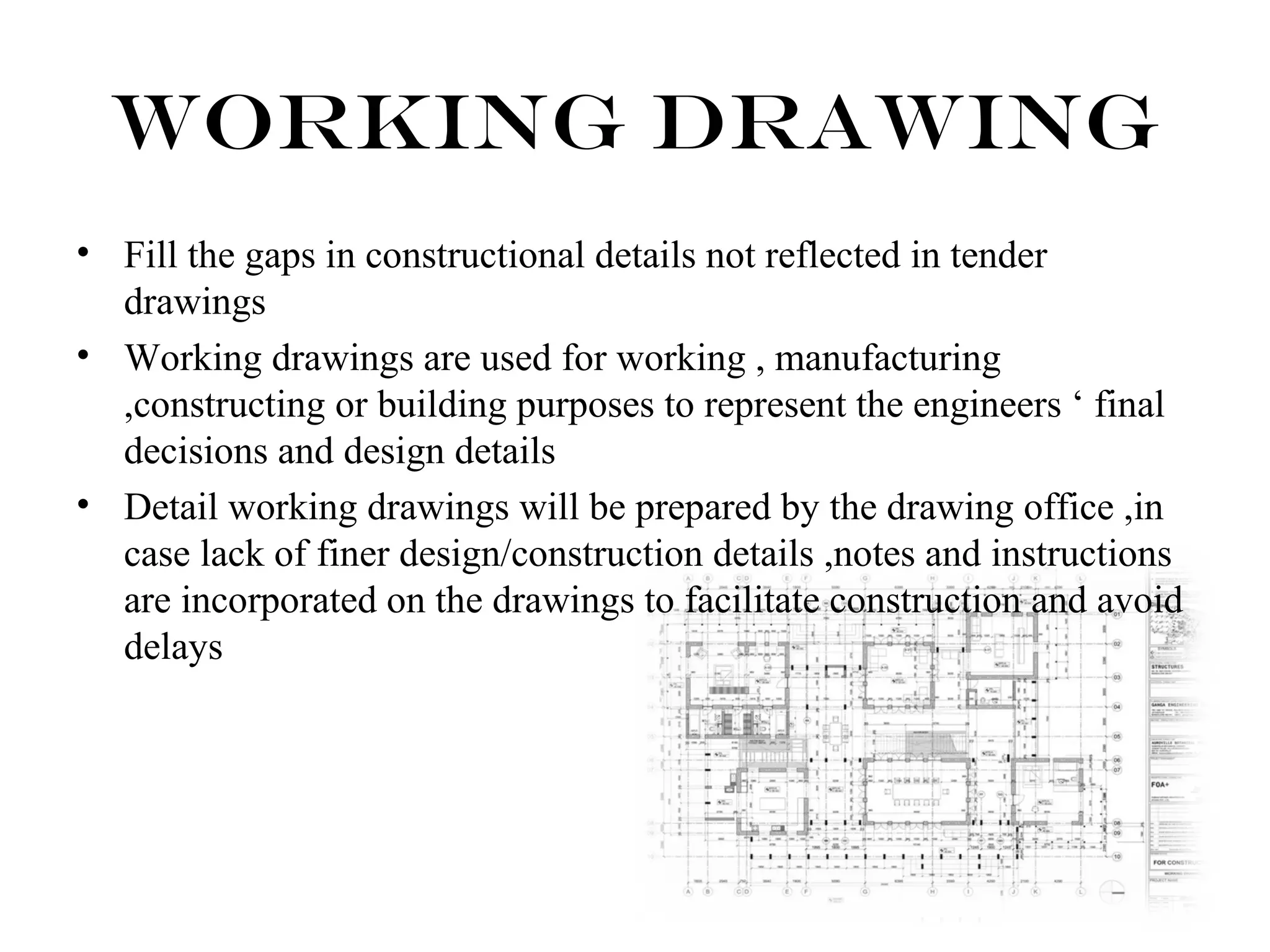
Working Drawing 
• Fill the gaps in constructional details not reflected in tender 
drawings 
• Working drawings are used for working , manufacturing 
,constructing or building purposes to represent the engineers ‘ final 
decisions and design details 
• Detail working drawings will be prepared by the drawing office ,in 
case lack of finer design/construction details ,notes and instructions 
are incorporated on the drawings to facilitate construction and avoid 
delays
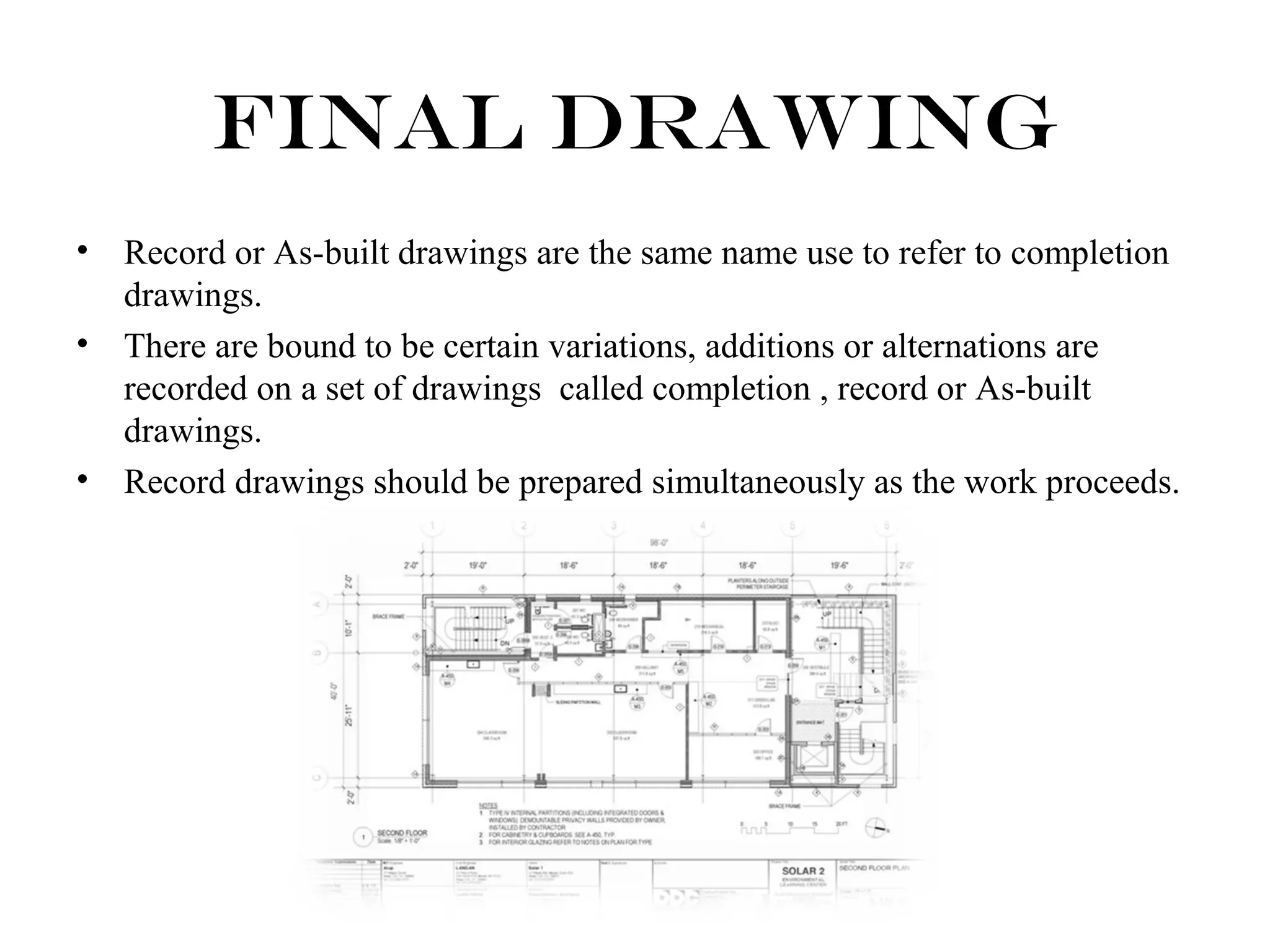
Final Drawing 
• Record or As-built drawings are the same name use to refer to completion 
drawings. 
• There are bound to be certain variations, additions or alternations are 
recorded on a set of drawings called completion , record or As-built 
drawings. 
• Record drawings should be prepared simultaneously as the work proceeds.
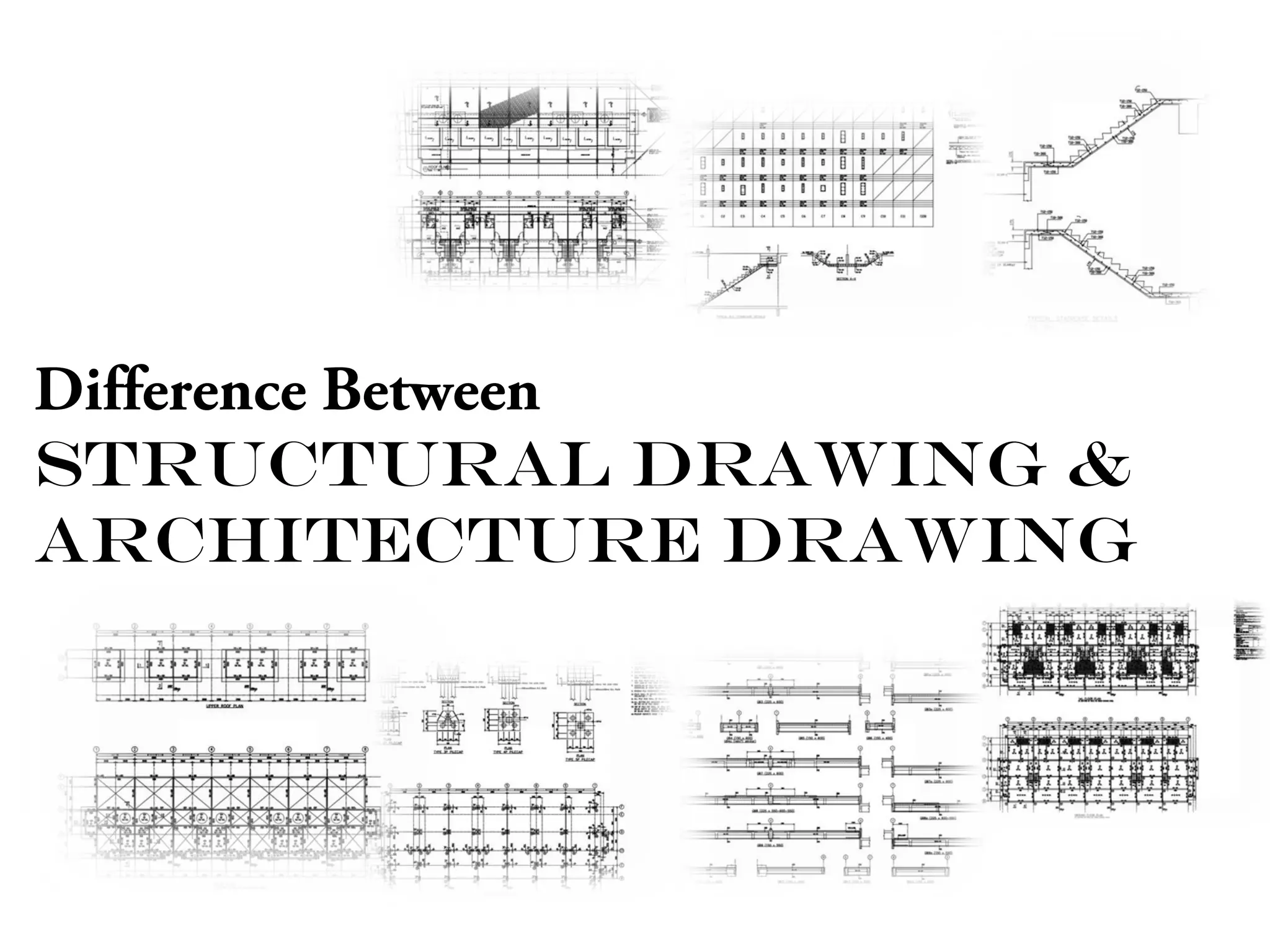
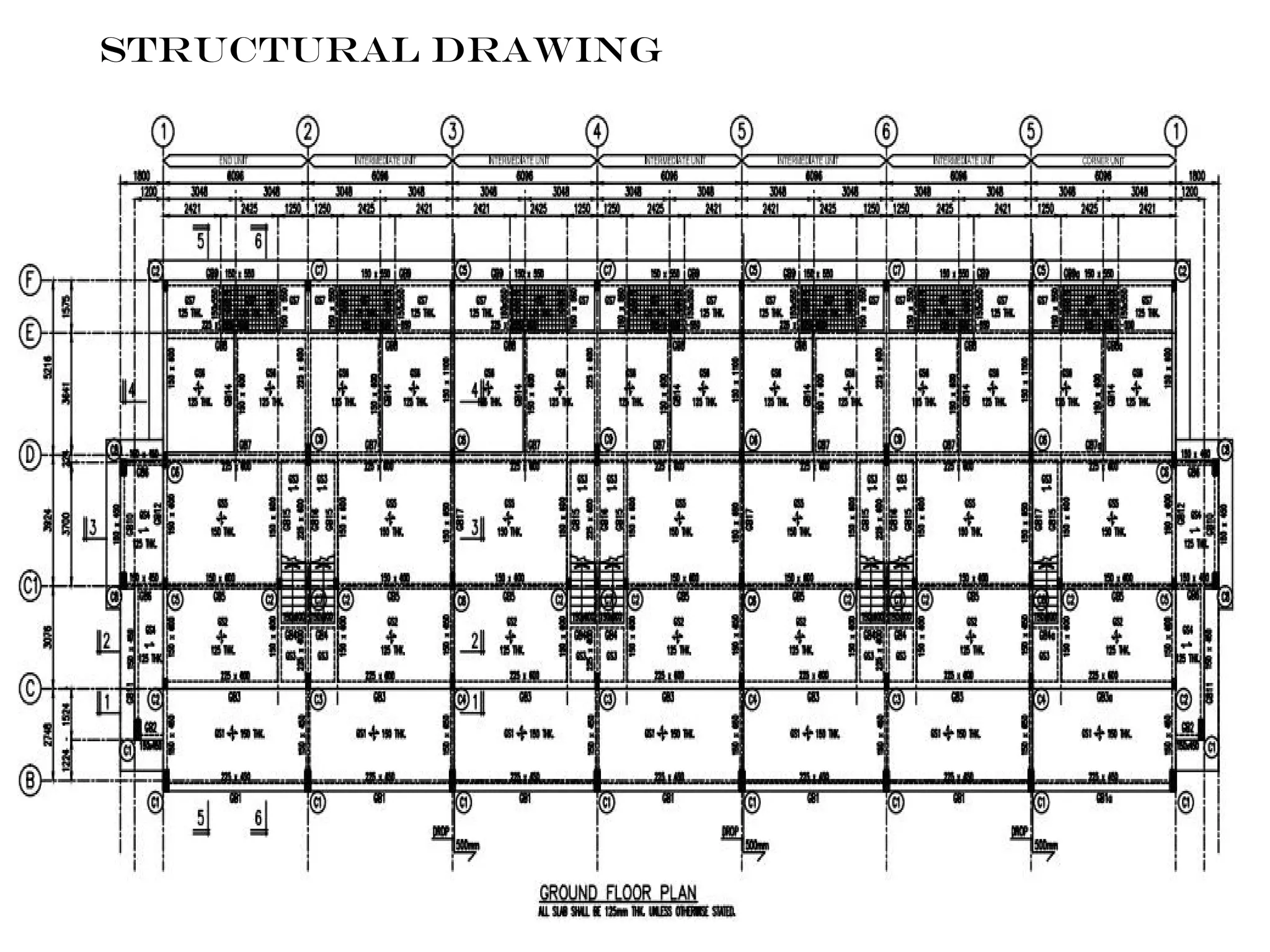
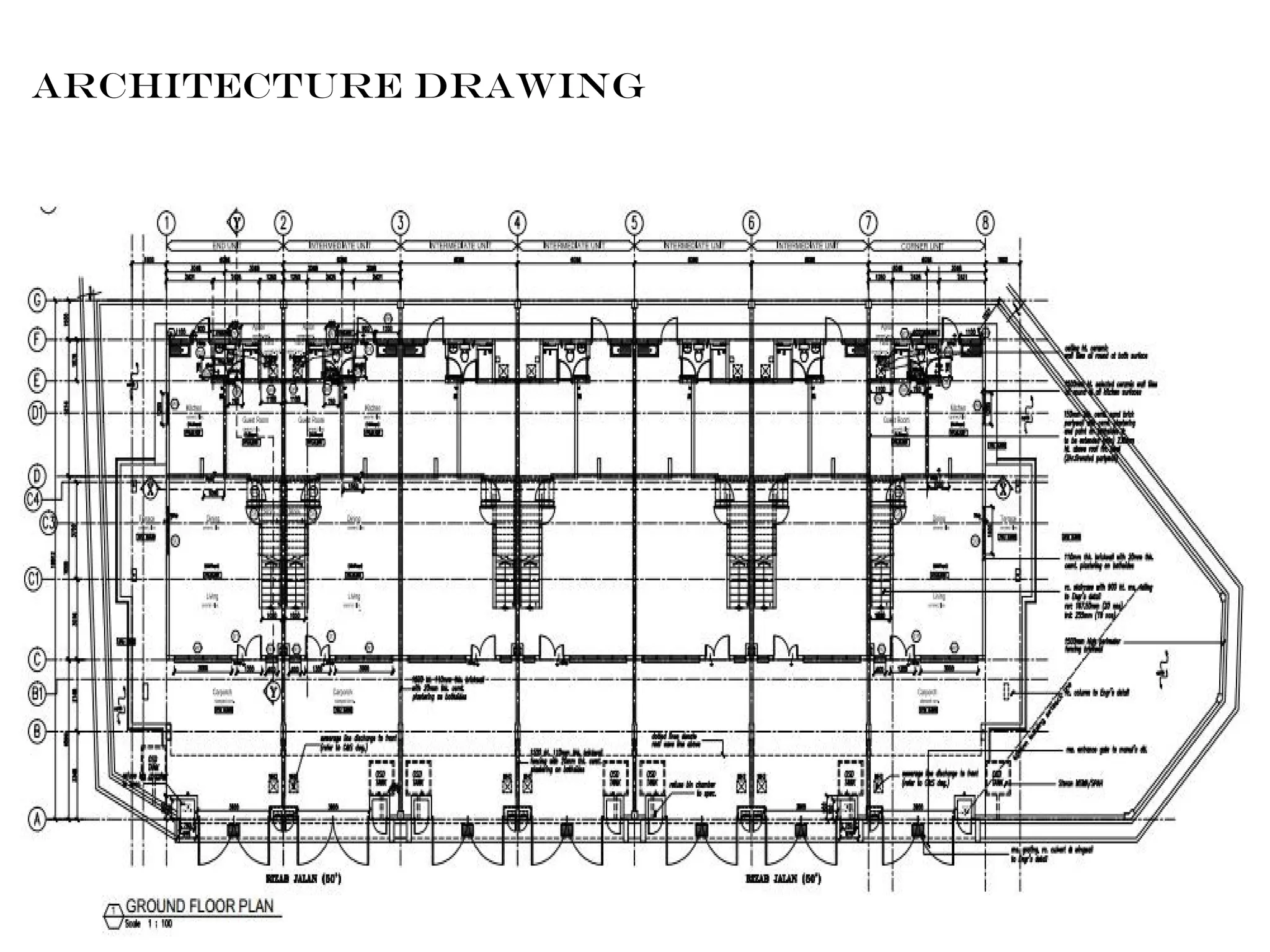
Difference Between 
STRUCTURAL DRAWING & 
ARCHITECTURE DRAWING
STRUCTURAL DRAWING
ARCHITECTURE DRAWING
Reference 
• http://targetjobs.co.uk/careers-advice/job-descriptions/• http://www.worldengg.com/civil1.HTML
The End

ICI and ITD presentation

  • 1.
    The 4+1+1 Introductionto the Construction Industry & Introduction to Drawing ( Engineering) PROJECT 1 Lim Wei Heng 0320148 Lim Jey Sheng 0319796 Lim Yang Kang 0320538 Marco Leong Wong Ka Henn 0320026 Muhammad Irfaan Yadun 0319353 Ahmed Ali Karama Senan 0320478
  • 2.
    Civil engineer Introductionto the Construction Industry & Introduction to Drawing
  • 3.
    What is CivilEngineer? • Civil engineers create, improve and protect the environment in which we live. • They plan, design and oversee construction and maintenance of building structures and facilities, such as roads, power plants, water, sewerage systems and etc… • They also design and build buildings and large structures that they can last for hundreds of years and withstand all weather conditions.
  • 4.
    Roles - Tomaintain and stable and secure buildings so that the buildings will not deflect or collapse.
  • 5.
    Responsibilities • Toplan, design and oversee buildings. • Design the foundation structures so that the building can withstand pressure imposed through environmental conditions and human use • To advice on projects and design or contracting engineers to suggest their plans into reality and maintain the structure once they built • To investigate the building structures and facilities.
  • 6.
    Pre-Construction • Obtainingsite surveys and soil-engineering services. • Secure any required technical tests during construction. • Find an on-site project representative and obtain the necessary legal, auditing, and insurance counseling services needed to fulfill these responsibilities, as outlined in AIA documents B141 and A201.
  • 7.
    During Construction •Confirm everything’s fine and not over-budget • Accept every related requirements • Join public meetings • Developing every needed stuffs • Revise and Approve • Manage changes • Be creative and logic
  • 8.
    Post Construction •Our relationship with the client will not be temporary. • Inspections, testing and functional performance will be performed. • Equipments, tools materials and qualified Commissioning Team. • personnel will do the performance tests. • Repairs, calibrations and adjustments will also perform by them. • To provide accurate and complete trainings.
  • 9.
    Civil and Structural Drawing ( C&S Drawing )
  • 10.
    What is CivilAND STRUCRURAL engineer drawing? • Engineering drawing is a language in which the idea of engineer are expressed in an manner that is clearly understood by technician or people concern with the job.
  • 11.
    PROCESS DESIGN STAGE PRE-TENDER STAGE TENDER STAGE CONSTRUCTION STAGE FINAL STAGE
  • 12.
    Tender Drawing •First evidence if the project scheme regarding type and quality of the work involved which is prepared by engineer with clarity and understanding • It was prepared into various scales using convention and concepts of engineers for production , manufacture and construction etc…
  • 13.
    Contract Drawing •Consists of the detailed design when the tender drawings is over • If the tender drawings don’t have any new changes or any other alternative proposals, then the contract and the tender drawings will be the same • Contract drawings are printed on good quality papers • The are provided with cloth backing, to withstand handling and the purpose for long storage.
  • 14.
    Working Drawing •Fill the gaps in constructional details not reflected in tender drawings • Working drawings are used for working , manufacturing ,constructing or building purposes to represent the engineers ‘ final decisions and design details • Detail working drawings will be prepared by the drawing office ,in case lack of finer design/construction details ,notes and instructions are incorporated on the drawings to facilitate construction and avoid delays
  • 15.
    Final Drawing •Record or As-built drawings are the same name use to refer to completion drawings. • There are bound to be certain variations, additions or alternations are recorded on a set of drawings called completion , record or As-built drawings. • Record drawings should be prepared simultaneously as the work proceeds.
  • 16.
    Difference Between STRUCTURALDRAWING & ARCHITECTURE DRAWING
  • 17.
  • 18.
  • 19.
  • 20.