Presentation By
RANI SUMMEYA SEME
33
 Definition
 History
 Location
 Origin
 Nomenclature
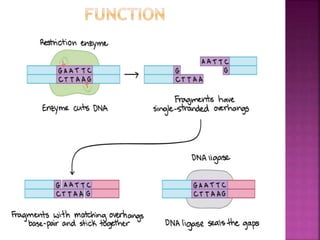
 Function
 Recognition site
 Types
 Artificial R E
 Application
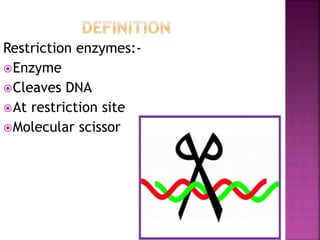
Restriction enzymes:-
Enzyme
Cleaves DNA
At restriction site
Molecular scissor
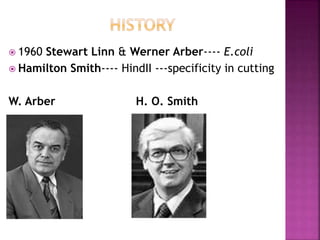
 1960 Stewart Linn & Werner Arber---- E.coli
 Hamilton Smith---- HindII ---specificity in cutting
W. Arber H. O. Smith
 Bacteria
 Archea
Provide a defense mechanism against invading virus
Origin
Restriction Enzymes originate from
 Common ancestor via
 Horizontal gene transfer
Selfish Genetic Element--- no contribution to
reproductive process
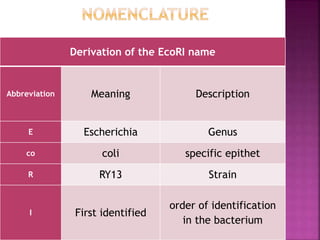
Derivation of the EcoRI name
Abbreviation Meaning Description
E Escherichia Genus
co coli specific epithet
R RY13 Strain
I First identified
order of identification
in the bacterium
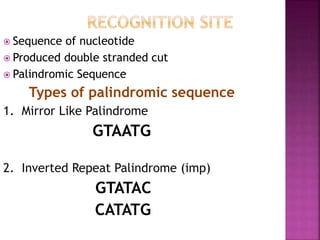
 Sequence of nucleotide
 Produced double stranded cut
 Palindromic Sequence
Types of palindromic sequence
1. Mirror Like Palindrome
GTAATG
2. Inverted Repeat Palindrome (imp)
GTATAC
CATATG
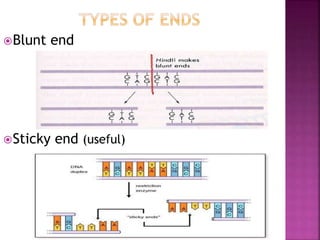
Blunt end
Sticky end (useful)
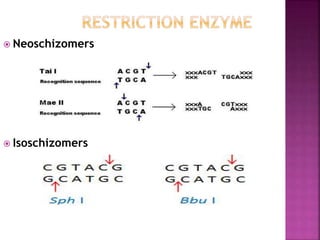
 Neoschizomers
 Isoschizomers
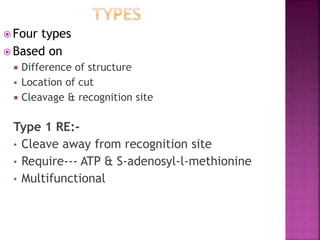
 Four types
 Based on
 Difference of structure
 Location of cut
 Cleavage & recognition site
Type 1 RE:-
• Cleave away from recognition site
• Require--- ATP & S-adenosyl-l-methionine
• Multifunctional
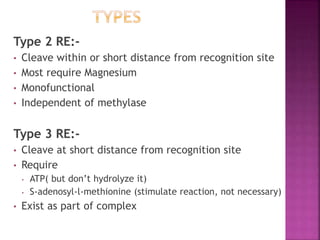
Type 2 RE:-
• Cleave within or short distance from recognition site
• Most require Magnesium
• Monofunctional
• Independent of methylase
Type 3 RE:-
• Cleave at short distance from recognition site
• Require
• ATP( but don’t hydrolyze it)
• S-adenosyl-l-methionine (stimulate reaction, not necessary)
• Exist as part of complex
Type 4 RE:-
• Target modified DNA eg
• Metylated
• Hydroxymethylated
Artificial restriction enzymes
 Can be generated by fusing
• DNA Domain
• Nuclease Domain
 Target large DNA site
 Eg Zinc Finger Nucleases
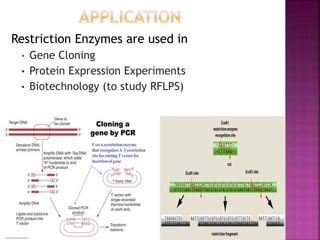
Restriction Enzymes are used in
• Gene Cloning
• Protein Expression Experiments
• Biotechnology (to study RFLPS)
Restriction   Enzymes

Restriction Enzymes

  • 2.
  • 3.
     Definition  History Location  Origin  Nomenclature  Function  Recognition site  Types  Artificial R E  Application
  • 4.
    Restriction enzymes:- Enzyme Cleaves DNA Atrestriction site Molecular scissor
  • 5.
     1960 StewartLinn & Werner Arber---- E.coli  Hamilton Smith---- HindII ---specificity in cutting W. Arber H. O. Smith
  • 6.
     Bacteria  Archea Providea defense mechanism against invading virus Origin Restriction Enzymes originate from  Common ancestor via  Horizontal gene transfer Selfish Genetic Element--- no contribution to reproductive process
  • 7.
    Derivation of theEcoRI name Abbreviation Meaning Description E Escherichia Genus co coli specific epithet R RY13 Strain I First identified order of identification in the bacterium
  • 9.
     Sequence ofnucleotide  Produced double stranded cut  Palindromic Sequence Types of palindromic sequence 1. Mirror Like Palindrome GTAATG 2. Inverted Repeat Palindrome (imp) GTATAC CATATG
  • 10.
  • 11.
  • 12.
     Four types Based on  Difference of structure  Location of cut  Cleavage & recognition site Type 1 RE:- • Cleave away from recognition site • Require--- ATP & S-adenosyl-l-methionine • Multifunctional
  • 13.
    Type 2 RE:- •Cleave within or short distance from recognition site • Most require Magnesium • Monofunctional • Independent of methylase Type 3 RE:- • Cleave at short distance from recognition site • Require • ATP( but don’t hydrolyze it) • S-adenosyl-l-methionine (stimulate reaction, not necessary) • Exist as part of complex
  • 14.
    Type 4 RE:- •Target modified DNA eg • Metylated • Hydroxymethylated Artificial restriction enzymes  Can be generated by fusing • DNA Domain • Nuclease Domain  Target large DNA site  Eg Zinc Finger Nucleases
  • 15.
    Restriction Enzymes areused in • Gene Cloning • Protein Expression Experiments • Biotechnology (to study RFLPS)