Gastroenteritis
by Vibrio cholerae
Rani Summeya Seme 33
Outline
• Definition
• History
• Society & Culture
• Symptoms
• Traveler’s Diarrhea
• Cause
• Transmission
• Diagnosis
• Treatment
• Home Remedies
• Prevention’
• Complications
Gastroenteritis
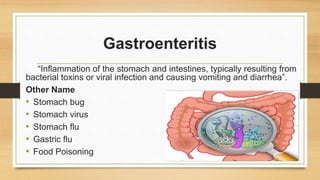
“Inflammation of the stomach and intestines, typically resulting from
bacterial toxins or viral infection and causing vomiting and diarrhea”.
Other Name
• Stomach bug
• Stomach virus
• Stomach flu
• Gastric flu
• Food Poisoning
History
The first usage of "gastroenteritis" was in 1825. Before this time it was
commonly known as
• Typhoid fever
• Cholera morbus
• Griping of the gut
• Flux
• colic
• Bowel complaint
Society and culture
Gastroenteritis is associated with many colloquial names, including
• Montezuma’s Revenge
• Delhi belly
• La turista
• Back door sprint
Gastroenteritis is the main reason for
• 3.7 million visits to physicians a year in the US
• 3 million visits in France.
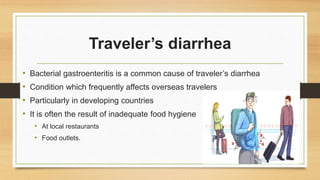
Traveler’s diarrhea
• Bacterial gastroenteritis is a common cause of traveler’s diarrhea
• Condition which frequently affects overseas travelers
• Particularly in developing countries
• It is often the result of inadequate food hygiene
• At local restaurants
• Food outlets.
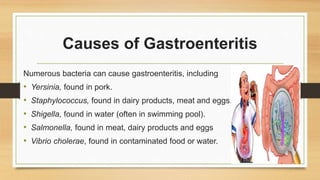
Causes of Gastroenteritis
Numerous bacteria can cause gastroenteritis, including
• Yersinia, found in pork.
• Staphylococcus, found in dairy products, meat and eggs.
• Shigella, found in water (often in swimming pool).
• Salmonella, found in meat, dairy products and eggs
• Vibrio cholerae, found in contaminated food or water. by f
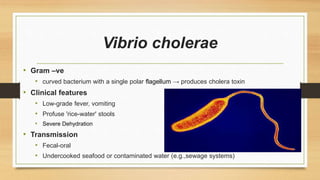
Vibrio cholerae
• Gram –ve
• curved bacterium with a single polar flagellum → produces cholera toxin
• Clinical features
• Low-grade fever, vomiting
• Profuse 'rice-water' stools
• Severe Dehydration
• Transmission
• Fecal-oral
• Undercooked seafood or contaminated water (e.g.,sewage systems)
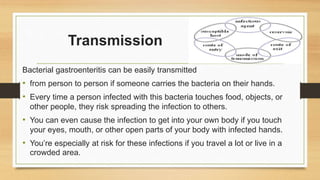
Transmission
Bacterial gastroenteritis can be easily transmitted
• from person to person if someone carries the bacteria on their hands.
• Every time a person infected with this bacteria touches food, objects, or
other people, they risk spreading the infection to others.
• You can even cause the infection to get into your own body if you touch
your eyes, mouth, or other open parts of your body with infected hands.
• You’re especially at risk for these infections if you travel a lot or live in a
crowded area.
Diagnosis
Healthcare provider will
• do an exam
• ask about your health history
• likely ask for a stool sample
• To find the source of illness
• Bacterial
• Viral
Treatment
• Treatment is meant to keep you hydrated and avoid complications
• It’s important not to lose too much salt, such Na and K
• Your body needs these in certain amounts in order to function properly
• If you have a serious case of gastroenteritis
• you may be admitted to the hospital and given fluids and salts intravenously.
• Antibiotics are usually reserved for the most severe case
Home remedies for mild cases
If you have a milder case, you may be able to treat your illness at home. Try
the following:
• Drink fluids regularly throughout the day, especially after bouts of diarrhea.
• Eat little and often, and include some salty foods.
• Consume foods or drinks with potassium, such as fruit juice and bananas.
• Don’t take any medications without asking your doctor.
• Go to the hospital if you can’t keep any fluids down.
Continue
A few ingredients you may have at home can help keep your electrolytes
balanced and treat diarrhea.
• Ginger can help combat infection and make stomach or abdominal pain
less severe.
• Apple cider vinegar and basil can also
• Soothe
• Strengthen
• stomach against future infections.
Preventing Gastroenteritis
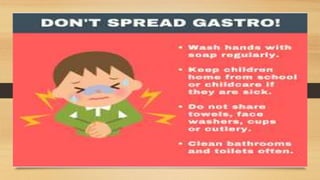
• If you already have gastroenteritis, take safety precautions to avoid spreading the
bacteria to others.
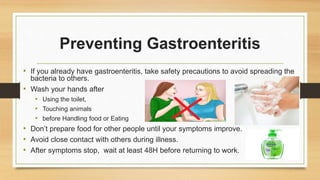
• Wash your hands after
• Using the toilet,
• Touching animals
• before Handling food or Eating
• Don’t prepare food for other people until your symptoms improve.
• Avoid close contact with others during illness.
• After symptoms stop, wait at least 48H before returning to work.
Continue
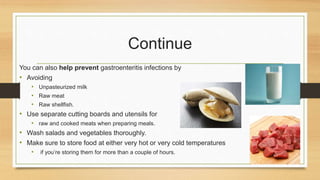
You can also help prevent gastroenteritis infections by
• Avoiding
• Unpasteurized milk
• Raw meat
• Raw shellfish.
• Use separate cutting boards and utensils for
• raw and cooked meats when preparing meals.
• Wash salads and vegetables thoroughly.
• Make sure to store food at either very hot or very cold temperatures
• if you’re storing them for more than a couple of hours.
Complications
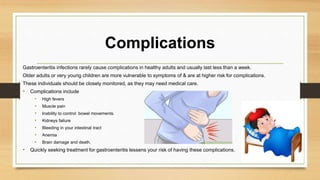
Gastroenteritis infections rarely cause complications in healthy adults and usually last less than a week.
Older adults or very young children are more vulnerable to symptoms of & are at higher risk for complications.
These individuals should be closely monitored, as they may need medical care.
• Complications include
• High fevers
• Muscle pain
• Inability to control bowel movements.
• Kidneys failure
• Bleeding in your intestinal tract
• Anemia
• Brain damage and death.
• Quickly seeking treatment for gastroenteritis lessens your risk of having these complications.
Gastroenteritis by vibrio cholerae

Gastroenteritis by vibrio cholerae

  • 2.
  • 3.
    Outline • Definition • History •Society & Culture • Symptoms • Traveler’s Diarrhea • Cause • Transmission • Diagnosis • Treatment • Home Remedies • Prevention’ • Complications
  • 4.
    Gastroenteritis “Inflammation of thestomach and intestines, typically resulting from bacterial toxins or viral infection and causing vomiting and diarrhea”. Other Name • Stomach bug • Stomach virus • Stomach flu • Gastric flu • Food Poisoning
  • 5.
    History The first usageof "gastroenteritis" was in 1825. Before this time it was commonly known as • Typhoid fever • Cholera morbus • Griping of the gut • Flux • colic • Bowel complaint
  • 6.
    Society and culture Gastroenteritisis associated with many colloquial names, including • Montezuma’s Revenge • Delhi belly • La turista • Back door sprint Gastroenteritis is the main reason for • 3.7 million visits to physicians a year in the US • 3 million visits in France.
  • 8.
    Traveler’s diarrhea • Bacterialgastroenteritis is a common cause of traveler’s diarrhea • Condition which frequently affects overseas travelers • Particularly in developing countries • It is often the result of inadequate food hygiene • At local restaurants • Food outlets.
  • 9.
    Causes of Gastroenteritis Numerousbacteria can cause gastroenteritis, including • Yersinia, found in pork. • Staphylococcus, found in dairy products, meat and eggs. • Shigella, found in water (often in swimming pool). • Salmonella, found in meat, dairy products and eggs • Vibrio cholerae, found in contaminated food or water. by f
  • 10.
    Vibrio cholerae • Gram–ve • curved bacterium with a single polar flagellum → produces cholera toxin • Clinical features • Low-grade fever, vomiting • Profuse 'rice-water' stools • Severe Dehydration • Transmission • Fecal-oral • Undercooked seafood or contaminated water (e.g.,sewage systems)
  • 11.
    Transmission Bacterial gastroenteritis canbe easily transmitted • from person to person if someone carries the bacteria on their hands. • Every time a person infected with this bacteria touches food, objects, or other people, they risk spreading the infection to others. • You can even cause the infection to get into your own body if you touch your eyes, mouth, or other open parts of your body with infected hands. • You’re especially at risk for these infections if you travel a lot or live in a crowded area.
  • 12.
    Diagnosis Healthcare provider will •do an exam • ask about your health history • likely ask for a stool sample • To find the source of illness • Bacterial • Viral
  • 13.
    Treatment • Treatment ismeant to keep you hydrated and avoid complications • It’s important not to lose too much salt, such Na and K • Your body needs these in certain amounts in order to function properly • If you have a serious case of gastroenteritis • you may be admitted to the hospital and given fluids and salts intravenously. • Antibiotics are usually reserved for the most severe case
  • 14.
    Home remedies formild cases If you have a milder case, you may be able to treat your illness at home. Try the following: • Drink fluids regularly throughout the day, especially after bouts of diarrhea. • Eat little and often, and include some salty foods. • Consume foods or drinks with potassium, such as fruit juice and bananas. • Don’t take any medications without asking your doctor. • Go to the hospital if you can’t keep any fluids down.
  • 15.
    Continue A few ingredientsyou may have at home can help keep your electrolytes balanced and treat diarrhea. • Ginger can help combat infection and make stomach or abdominal pain less severe. • Apple cider vinegar and basil can also • Soothe • Strengthen • stomach against future infections.
  • 16.
    Preventing Gastroenteritis • Ifyou already have gastroenteritis, take safety precautions to avoid spreading the bacteria to others. • Wash your hands after • Using the toilet, • Touching animals • before Handling food or Eating • Don’t prepare food for other people until your symptoms improve. • Avoid close contact with others during illness. • After symptoms stop, wait at least 48H before returning to work.
  • 17.
    Continue You can alsohelp prevent gastroenteritis infections by • Avoiding • Unpasteurized milk • Raw meat • Raw shellfish. • Use separate cutting boards and utensils for • raw and cooked meats when preparing meals. • Wash salads and vegetables thoroughly. • Make sure to store food at either very hot or very cold temperatures • if you’re storing them for more than a couple of hours.
  • 19.
    Complications Gastroenteritis infections rarelycause complications in healthy adults and usually last less than a week. Older adults or very young children are more vulnerable to symptoms of & are at higher risk for complications. These individuals should be closely monitored, as they may need medical care. • Complications include • High fevers • Muscle pain • Inability to control bowel movements. • Kidneys failure • Bleeding in your intestinal tract • Anemia • Brain damage and death. • Quickly seeking treatment for gastroenteritis lessens your risk of having these complications.