Reproductive strategies for SurvivalVCE Biology – Unit 2
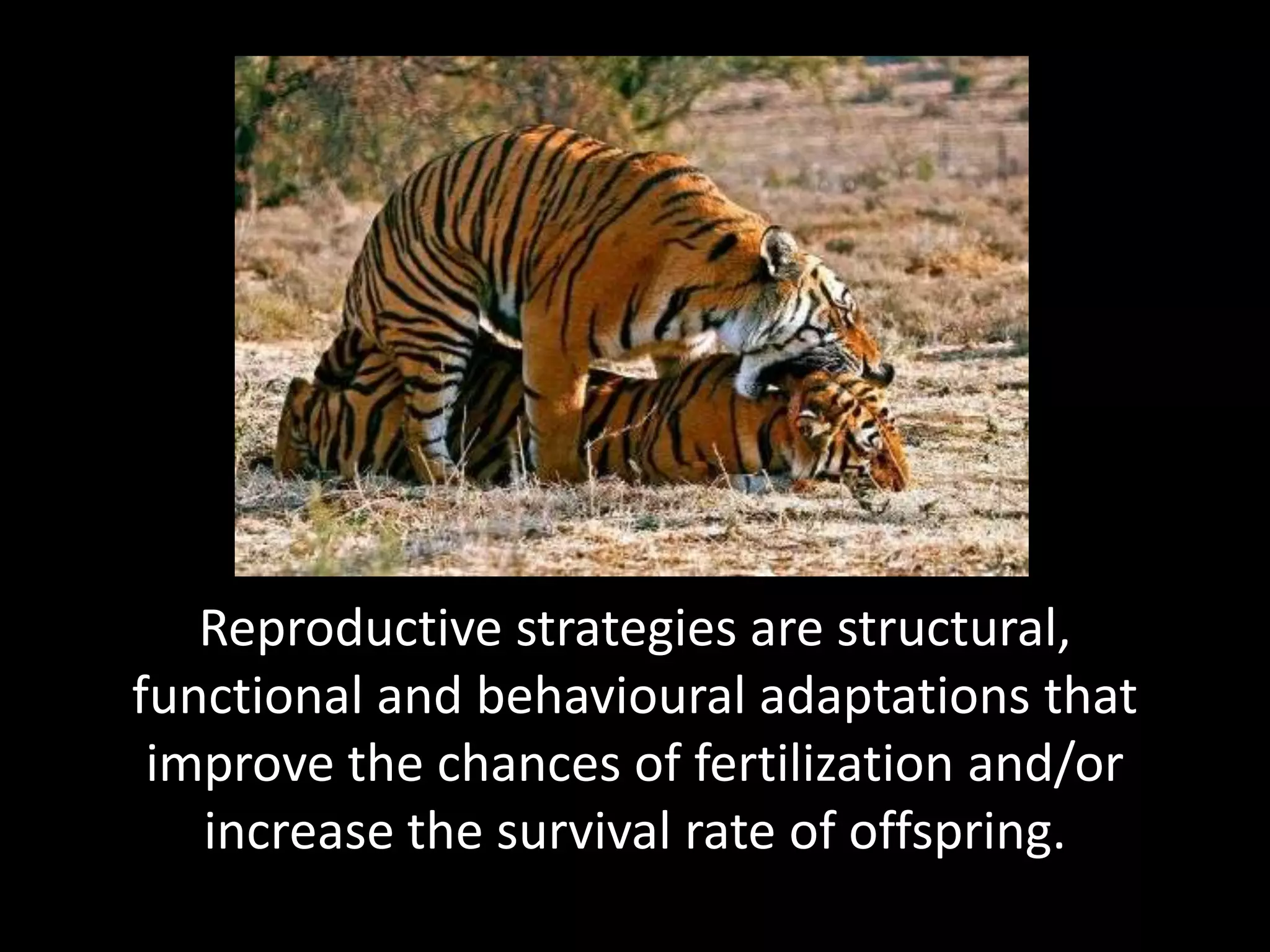
Reproductive strategies are structural, functional and behavioural adaptations that improve the chances of fertilization and/or increase the survival rate of offspring.
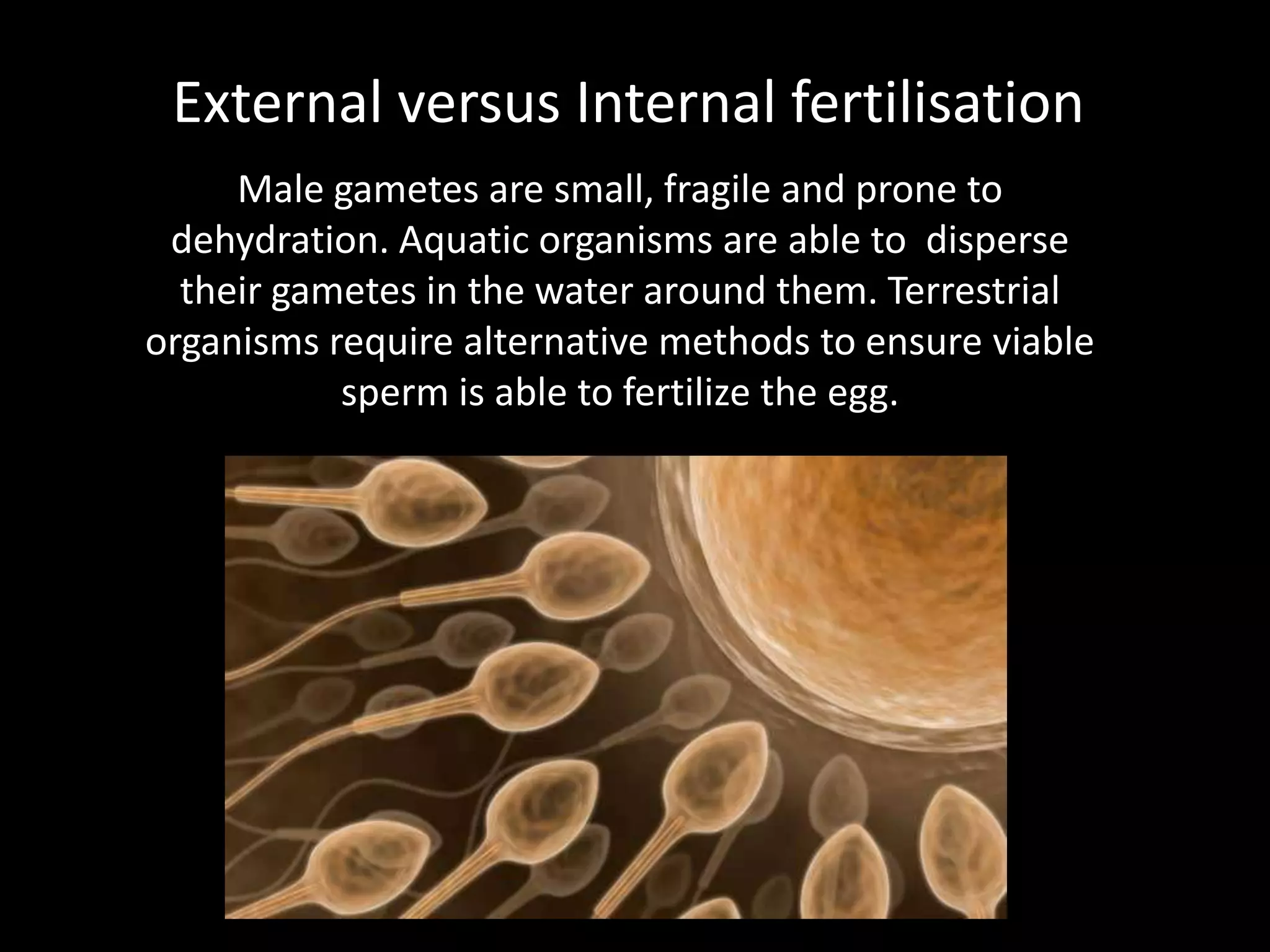
External versus Internal fertilisationMale gametes are small, fragile and prone to dehydration. Aquatic organisms are able to  disperse their gametes in the water around them. Terrestrial organisms require alternative methods to ensure viable sperm is able to fertilize the egg.
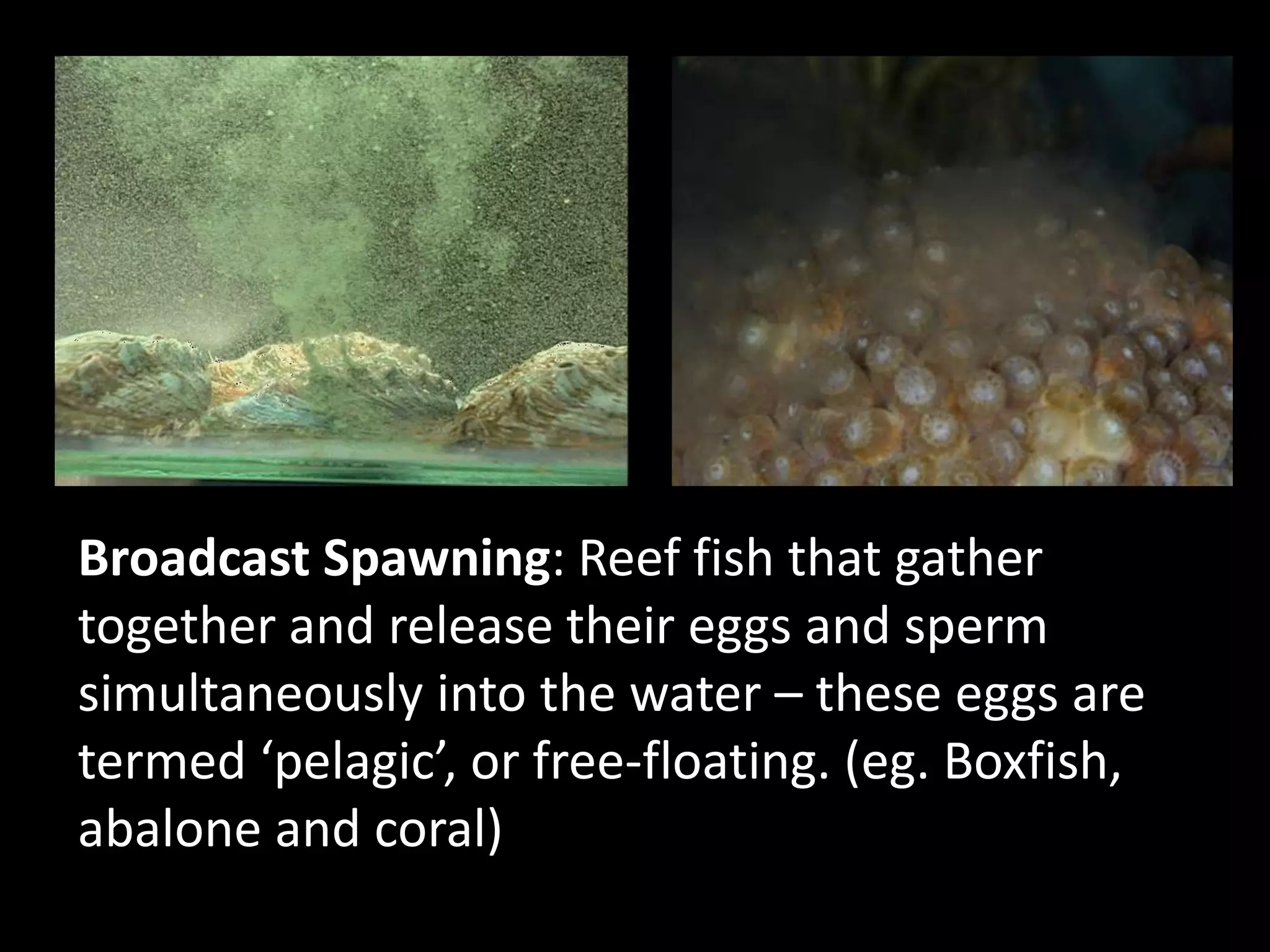
Broadcast Spawning: Reef fish that gather together and release their eggs and sperm simultaneously into the water – these eggs are termed ‘pelagic’, or free-floating. (eg. Boxfish, abalone and coral)
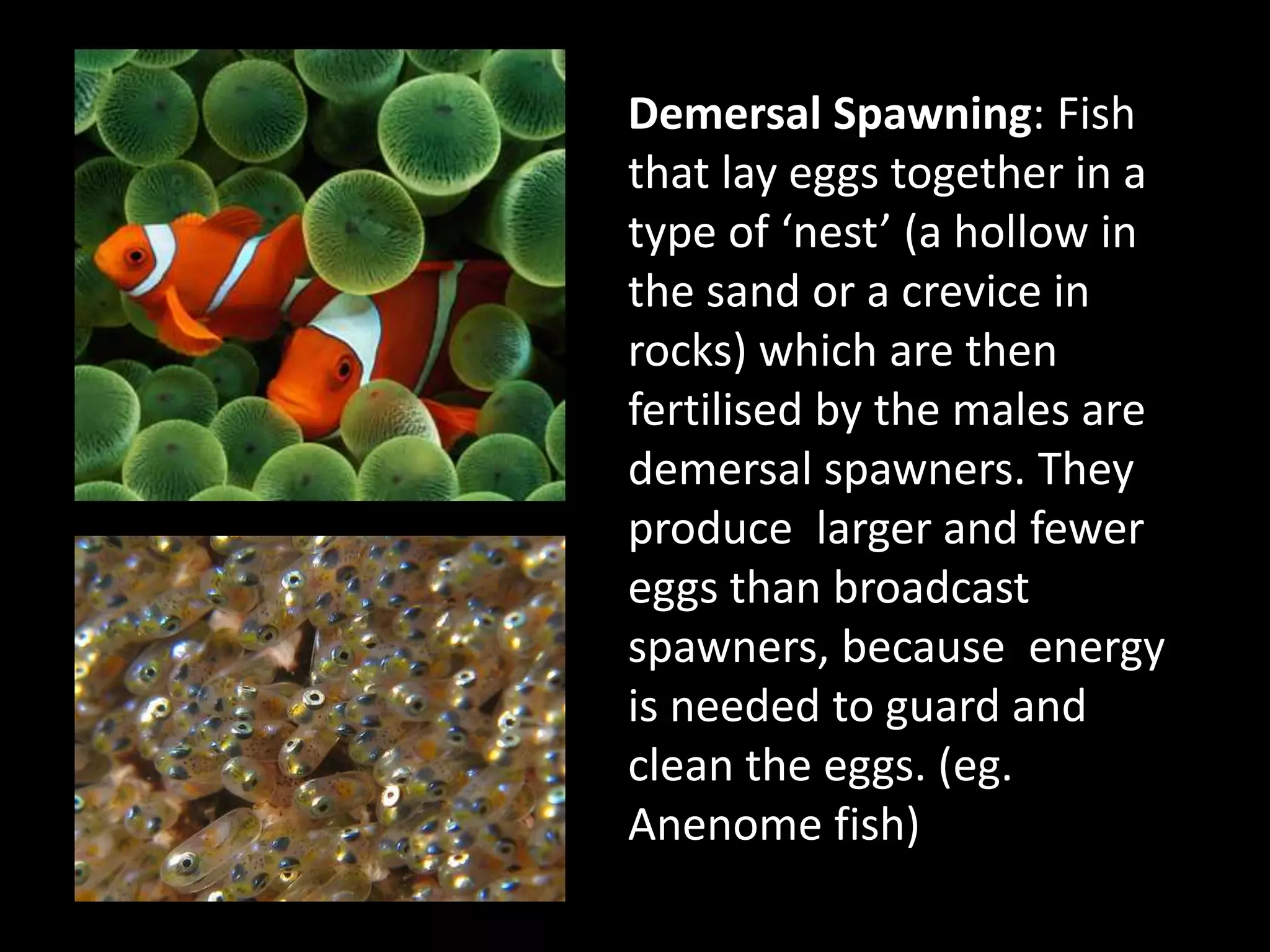
Demersal Spawning: Fish that lay eggs together in a type of ‘nest’ (a hollow in the sand or a crevice in rocks) which are then fertilised by the males are demersal spawners. They produce  larger and fewer eggs than broadcast spawners, because  energy is needed to guard and clean the eggs. (eg. Anenome fish)
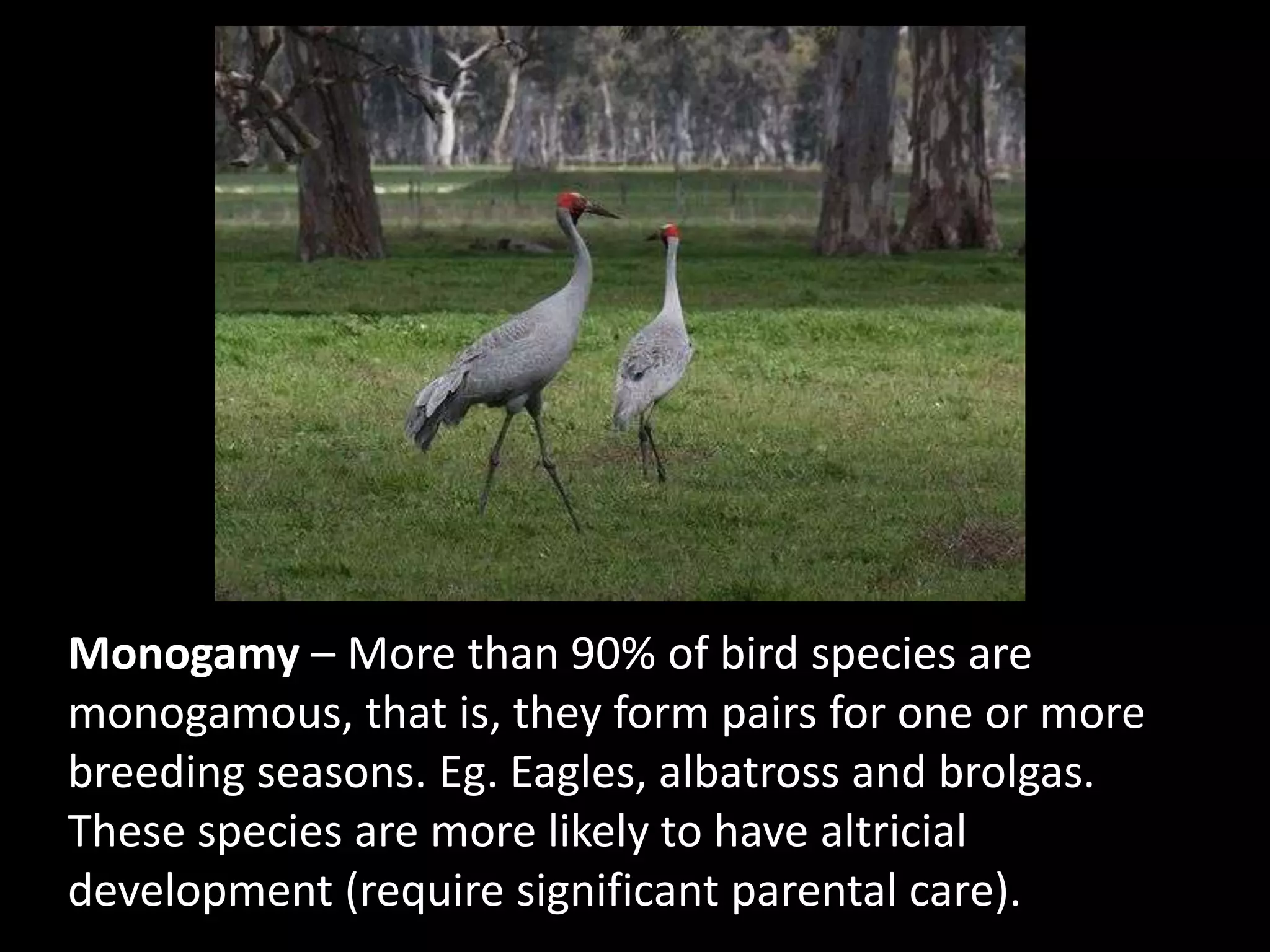
Monogamy – More than 90% of bird species are monogamous, that is, they form pairs for one or more breeding seasons. Eg. Eagles, albatross and brolgas. These species are more likely to have altricial development (require significant parental care).
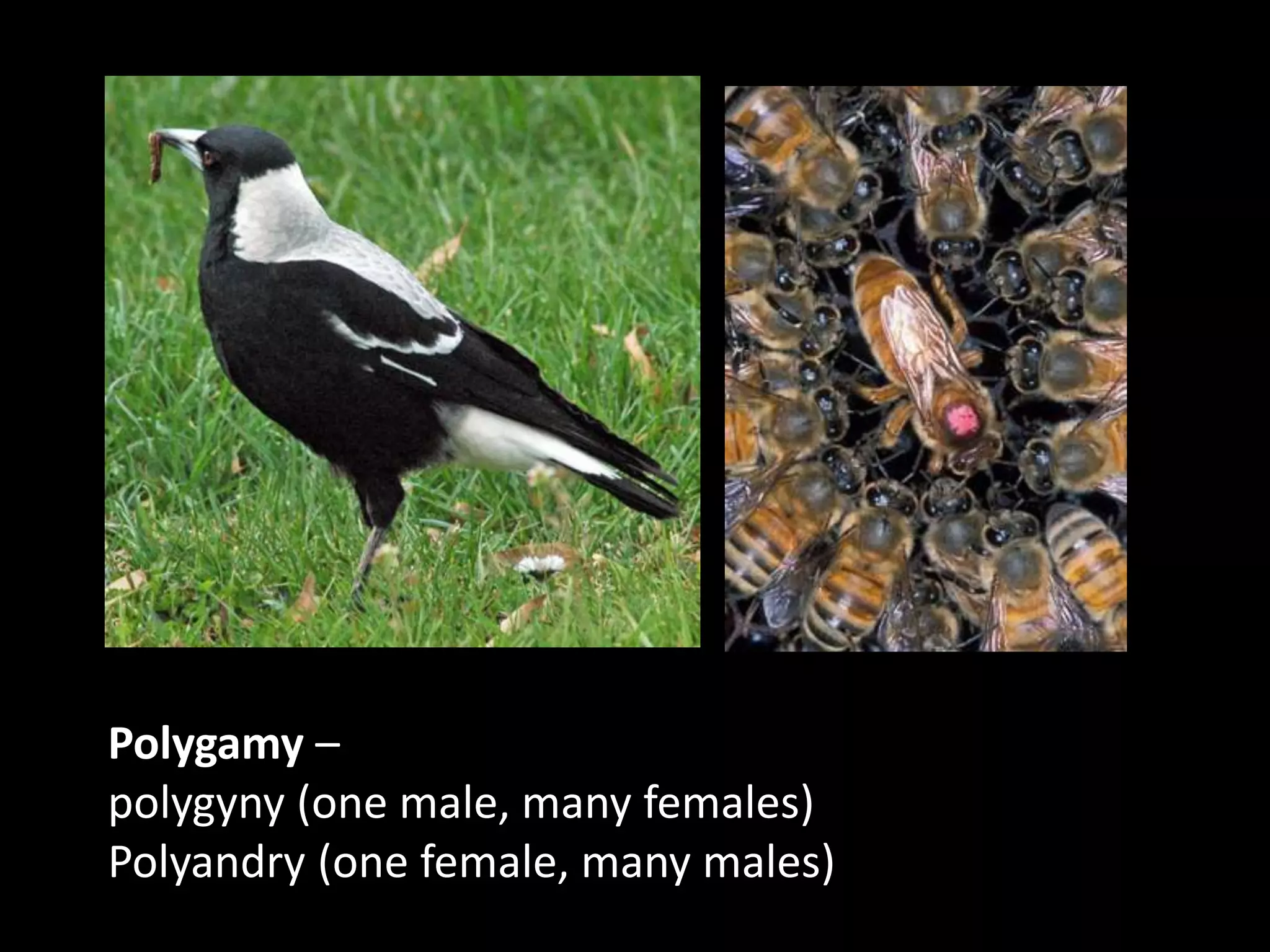
Polygamy – polygyny(one male, many females)Polyandry (one female, many males)
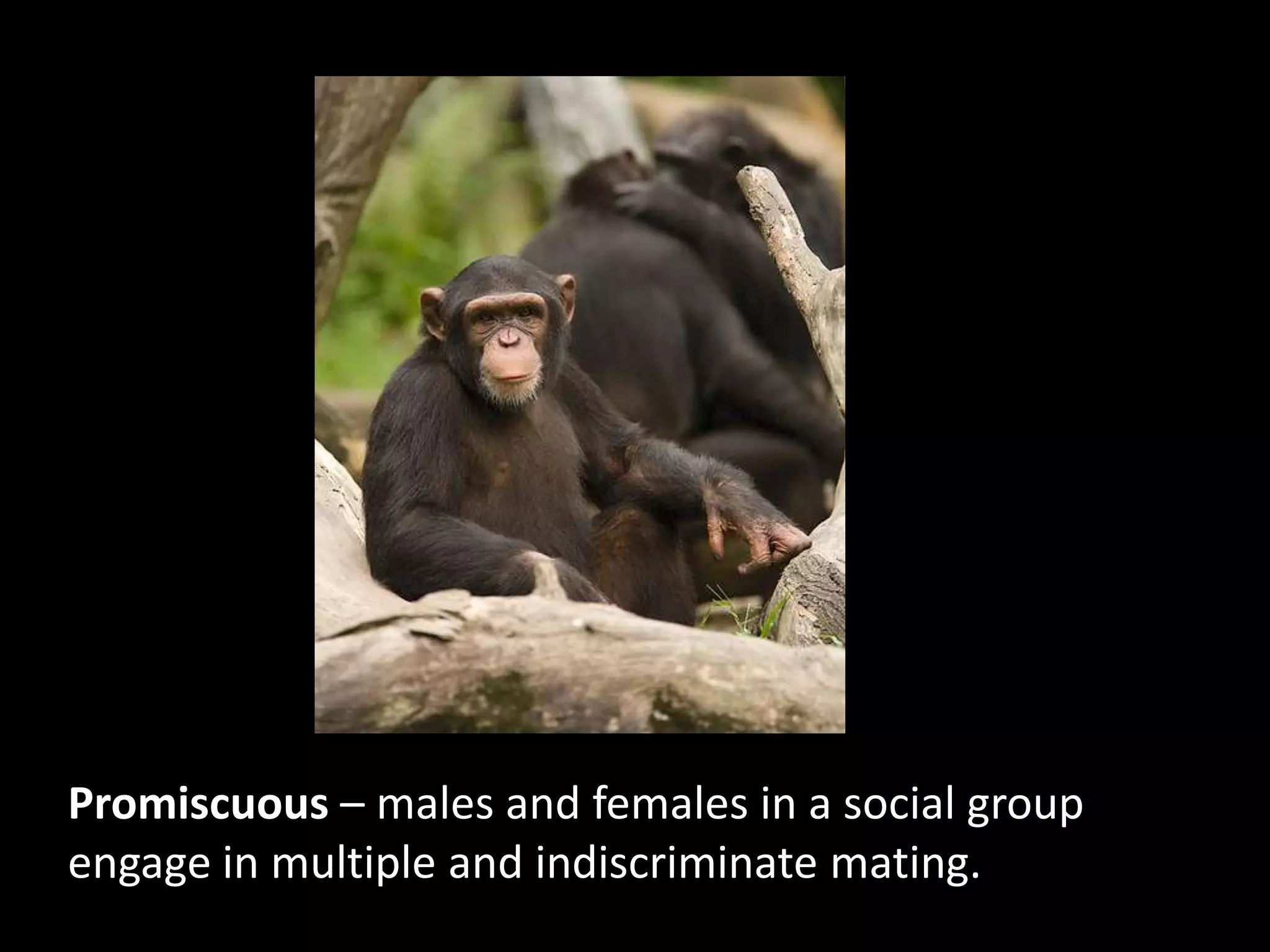
Promiscuous – males and females in a social group engage in multiple and indiscriminate mating.
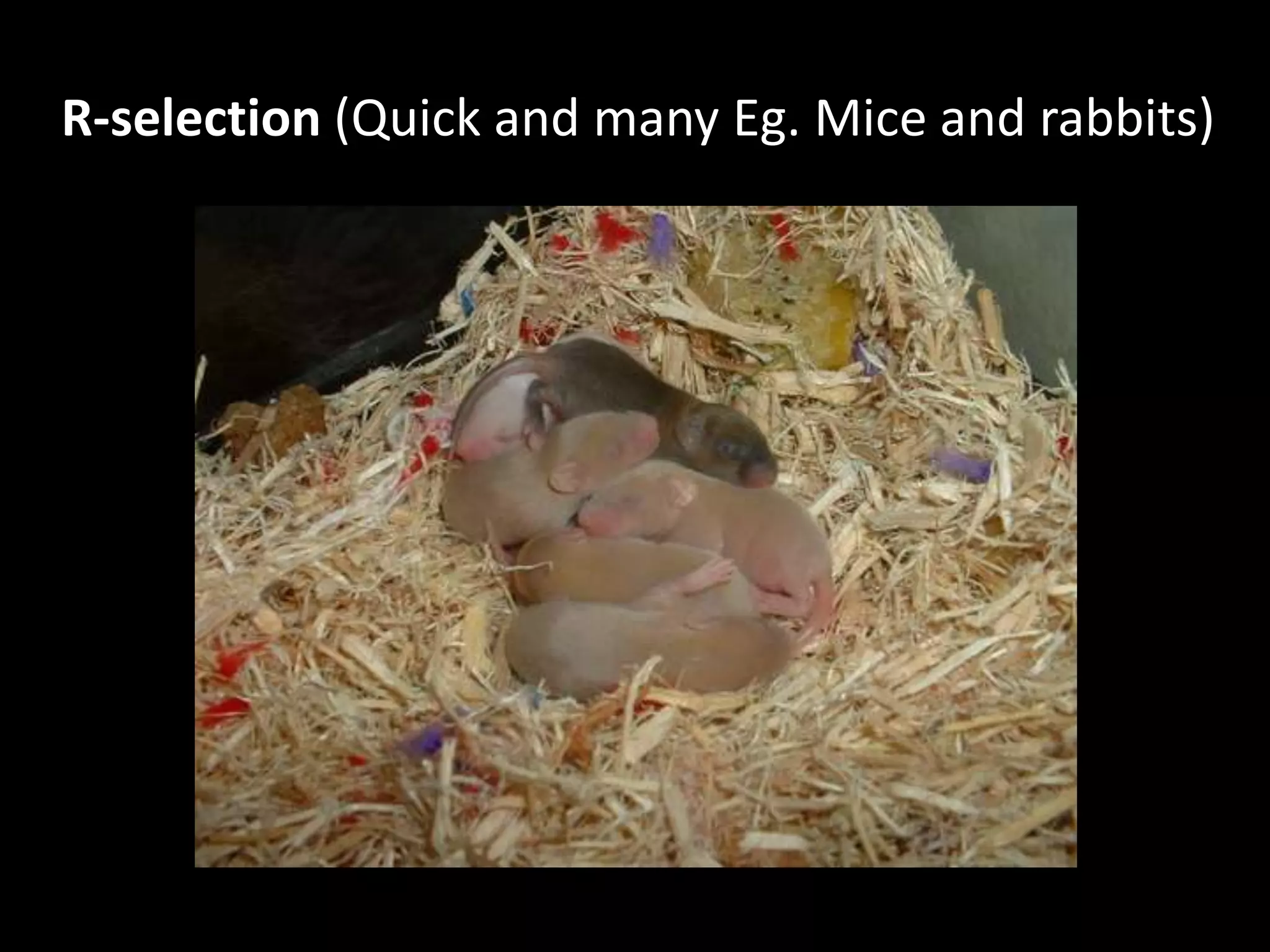
R-selection (Quick and many Eg. Mice and rabbits)
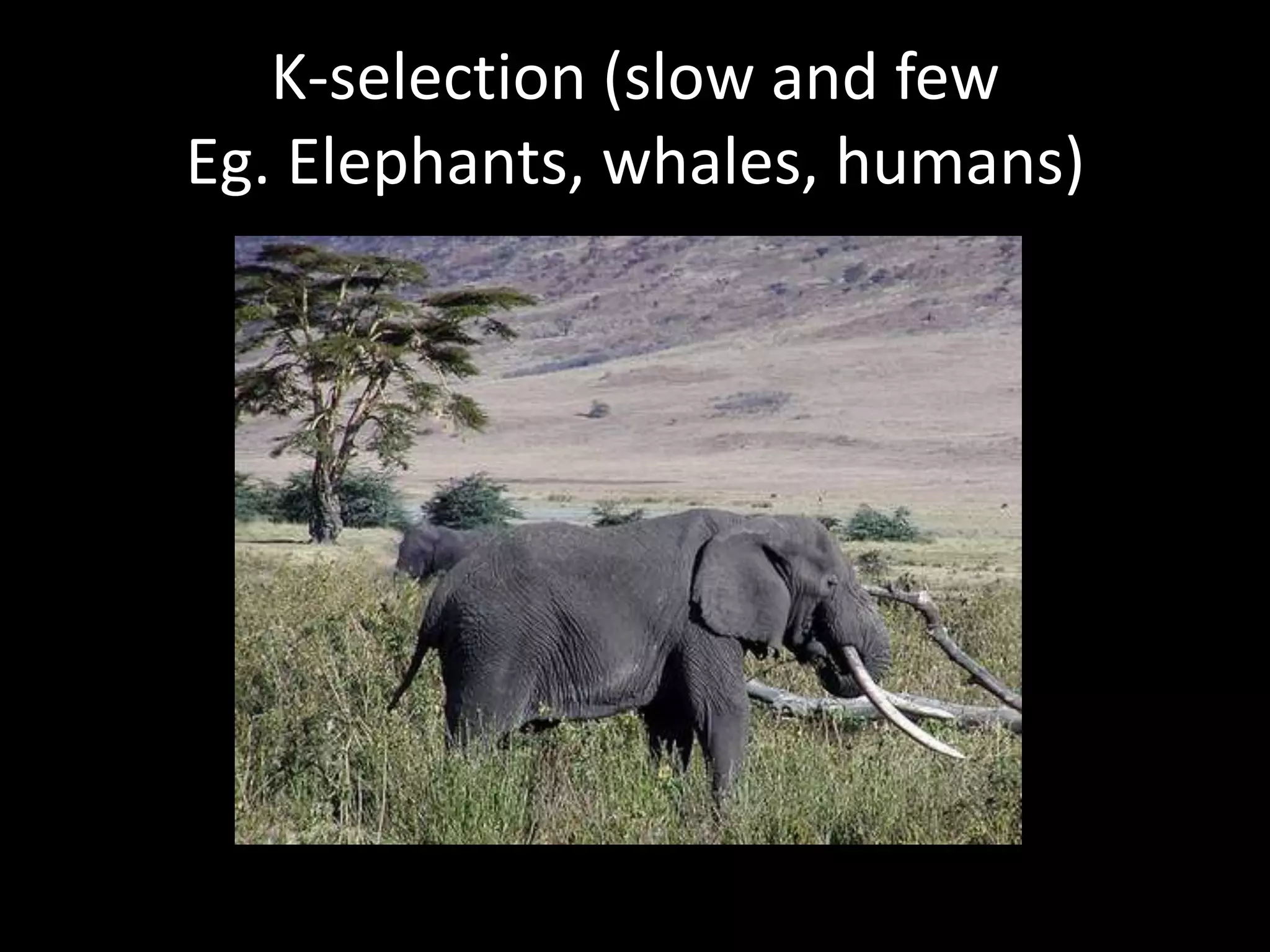
K-selection (slow and few Eg. Elephants, whales, humans)
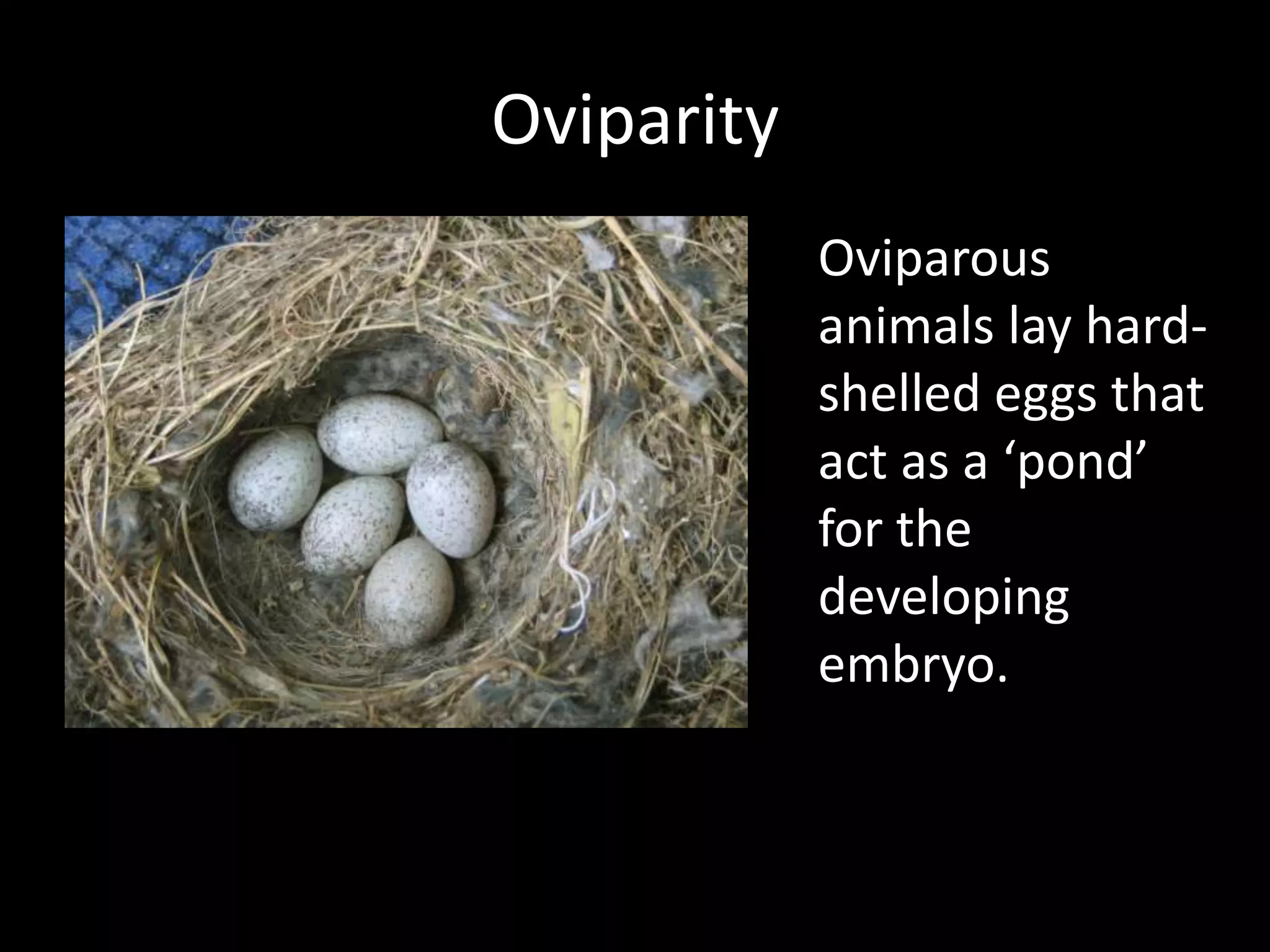
OviparityOviparous animals lay hard-shelled eggs that act as a ‘pond’ for the developing embryo.
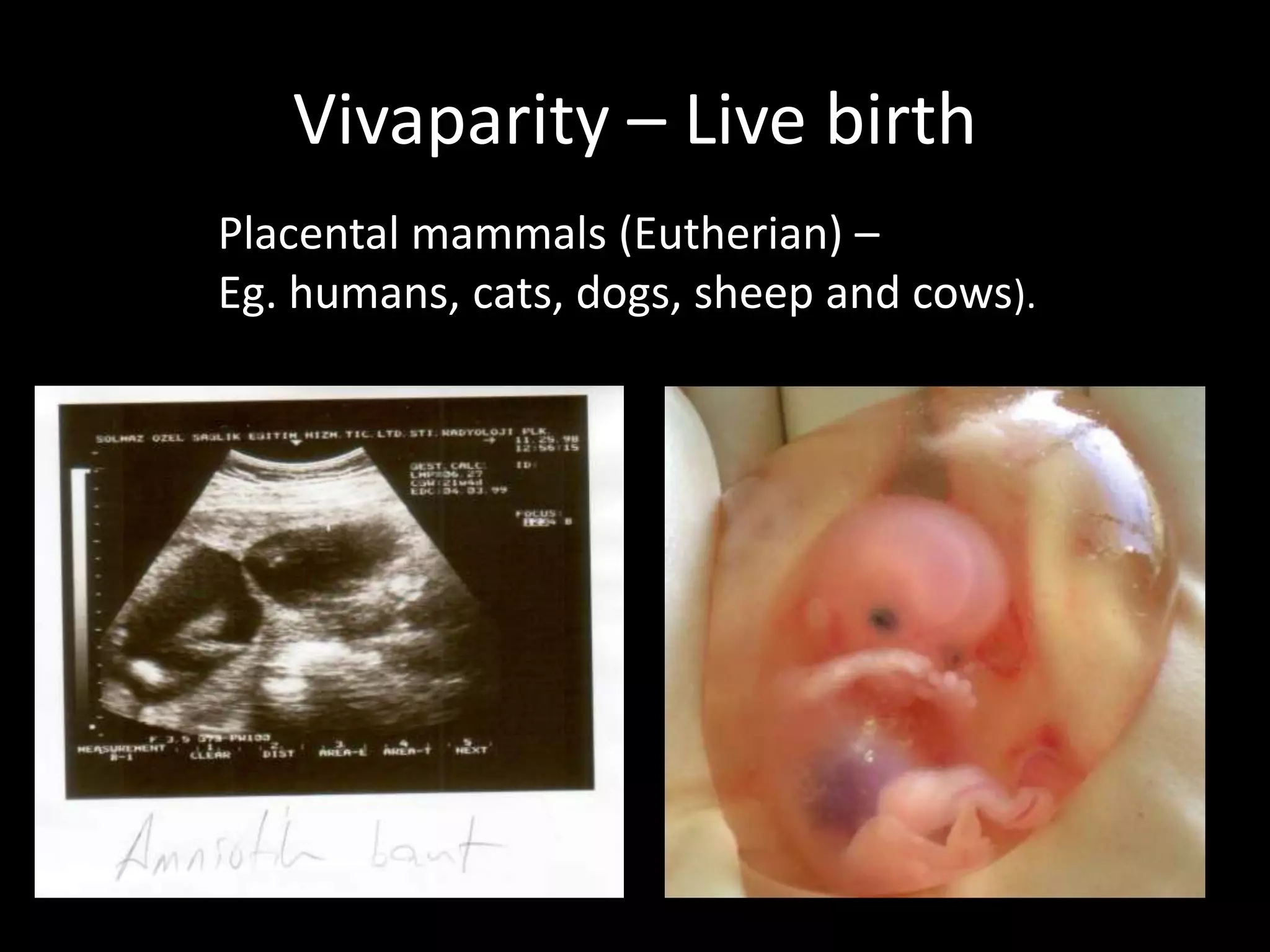
Vivaparity – Live birthPlacental mammals (Eutherian) – Eg. humans, cats, dogs, sheep and cows).
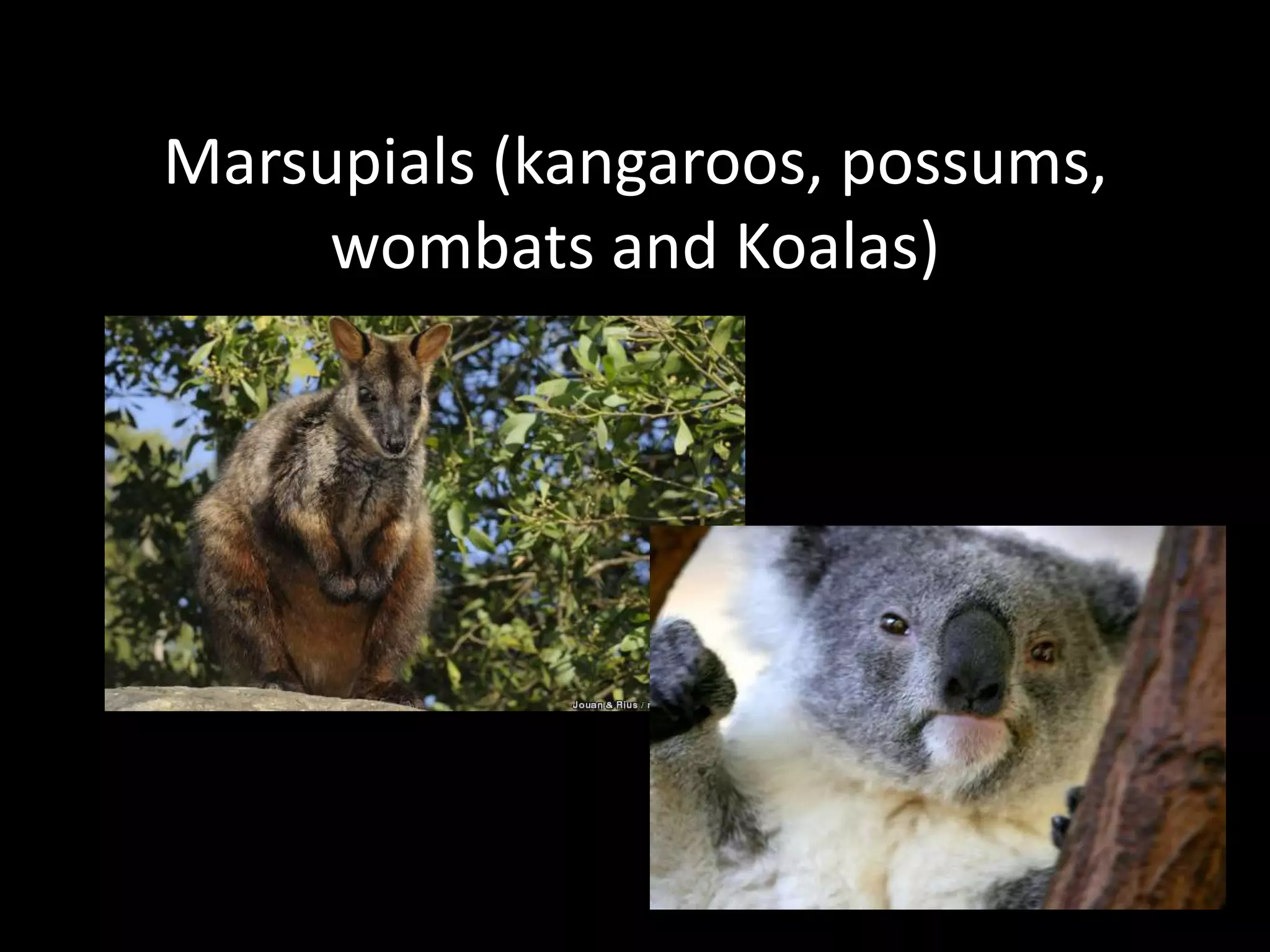
Marsupials (kangaroos, possums, wombats and Koalas)
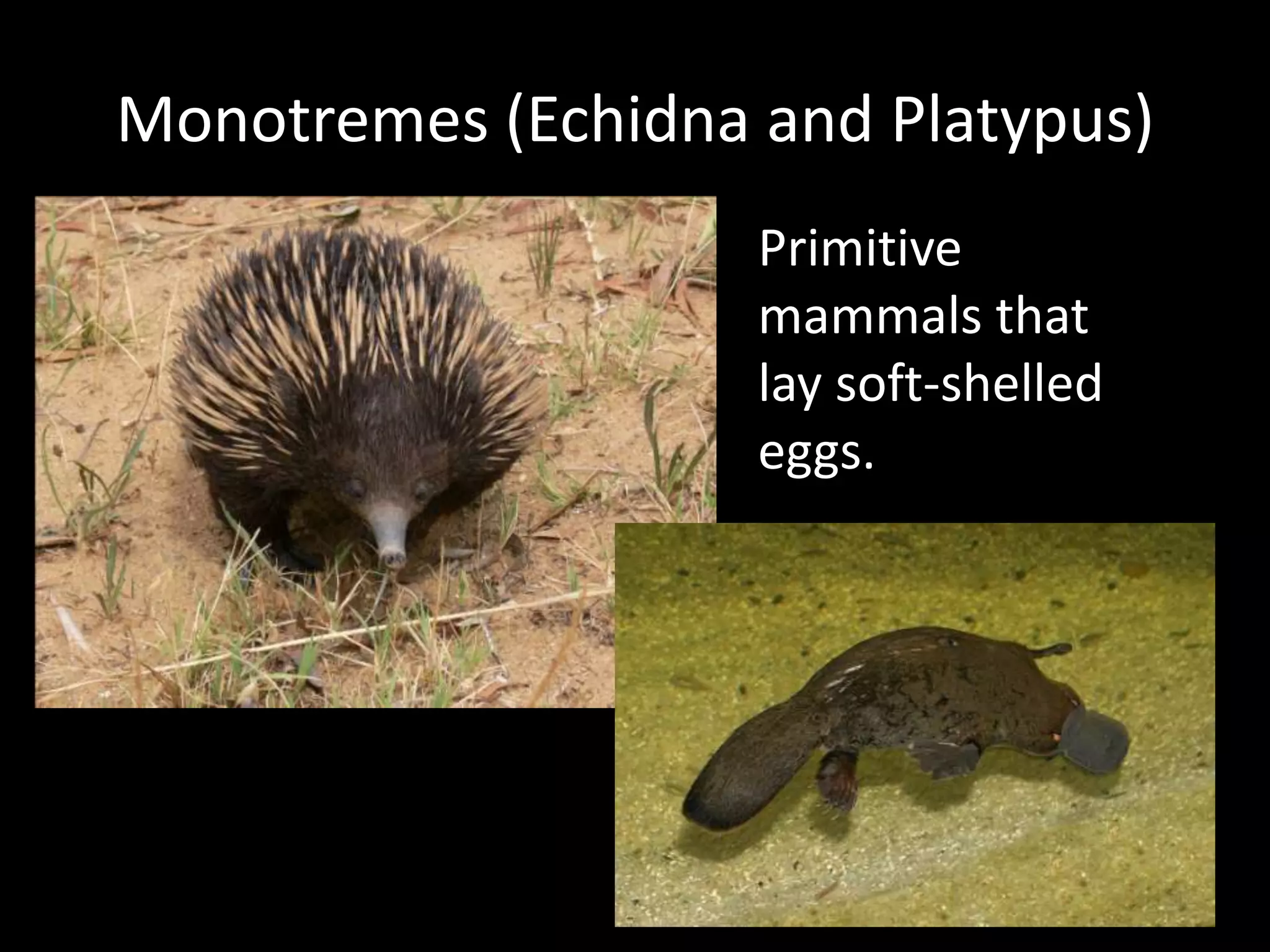
Monotremes (Echidna and Platypus)Primitive mammals that lay soft-shelled eggs.

Reproductive strategies for survival

  • 1.
    Reproductive strategies forSurvivalVCE Biology – Unit 2
  • 2.
    Reproductive strategies arestructural, functional and behavioural adaptations that improve the chances of fertilization and/or increase the survival rate of offspring.
  • 4.
    External versus InternalfertilisationMale gametes are small, fragile and prone to dehydration. Aquatic organisms are able to disperse their gametes in the water around them. Terrestrial organisms require alternative methods to ensure viable sperm is able to fertilize the egg.
  • 5.
    Broadcast Spawning: Reeffish that gather together and release their eggs and sperm simultaneously into the water – these eggs are termed ‘pelagic’, or free-floating. (eg. Boxfish, abalone and coral)
  • 6.
    Demersal Spawning: Fishthat lay eggs together in a type of ‘nest’ (a hollow in the sand or a crevice in rocks) which are then fertilised by the males are demersal spawners. They produce larger and fewer eggs than broadcast spawners, because energy is needed to guard and clean the eggs. (eg. Anenome fish)
  • 7.
    Monogamy – Morethan 90% of bird species are monogamous, that is, they form pairs for one or more breeding seasons. Eg. Eagles, albatross and brolgas. These species are more likely to have altricial development (require significant parental care).
  • 8.
    Polygamy – polygyny(onemale, many females)Polyandry (one female, many males)
  • 9.
    Promiscuous – malesand females in a social group engage in multiple and indiscriminate mating.
  • 10.
    R-selection (Quick andmany Eg. Mice and rabbits)
  • 11.
    K-selection (slow andfew Eg. Elephants, whales, humans)
  • 12.
    OviparityOviparous animals layhard-shelled eggs that act as a ‘pond’ for the developing embryo.
  • 13.
    Vivaparity – LivebirthPlacental mammals (Eutherian) – Eg. humans, cats, dogs, sheep and cows).
  • 14.
  • 15.
    Monotremes (Echidna andPlatypus)Primitive mammals that lay soft-shelled eggs.