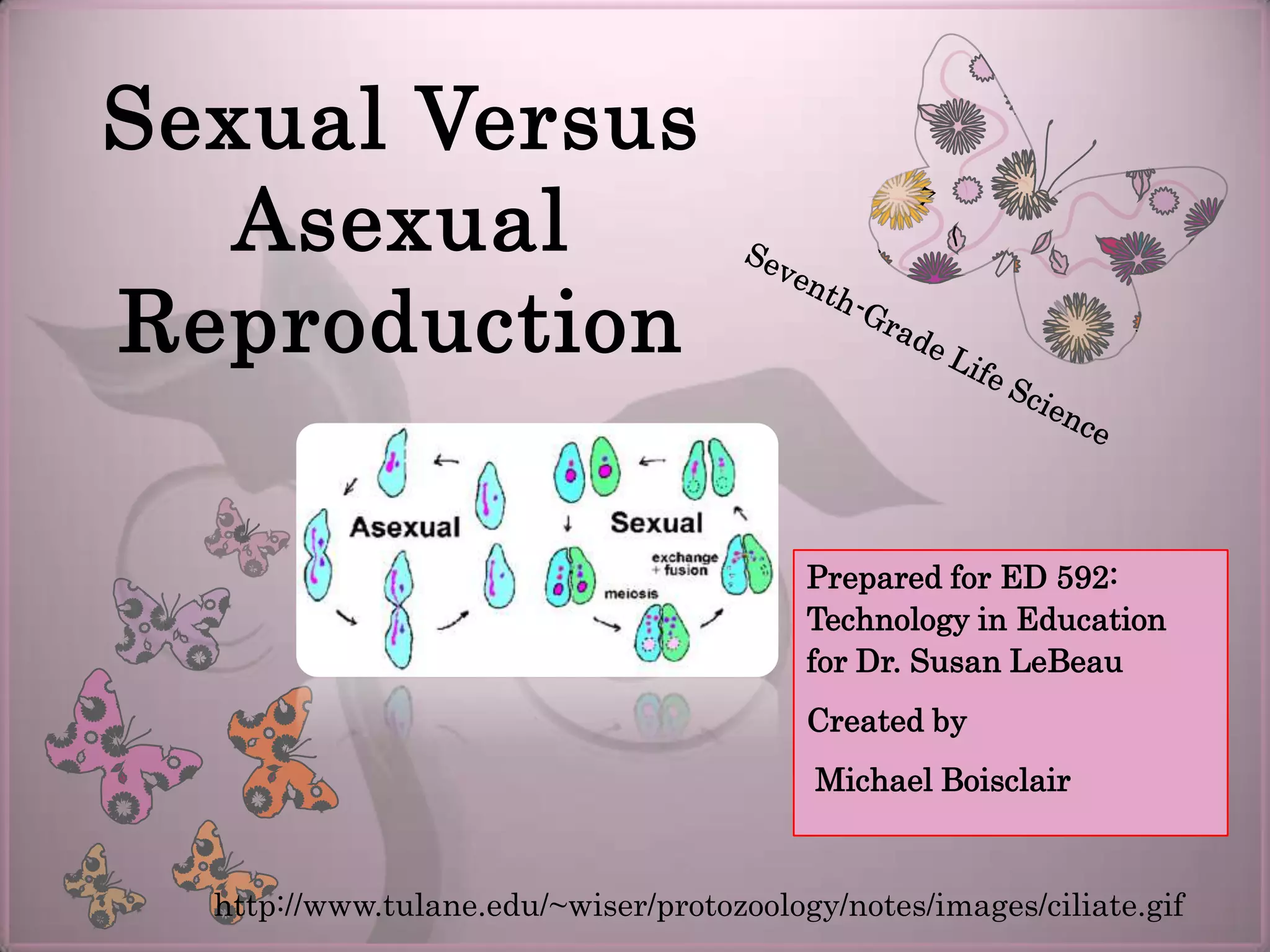
Sexual Versus
   Asexual
Reproduction

                                          Prepared for ED 592:
                                          Technology in Education
                                          for Dr. Susan LeBeau
                                          Created by
                                          Michael Boisclair


  http://www.tulane.edu/~wiser/protozoology/notes/images/ciliate.gif
Reproduction


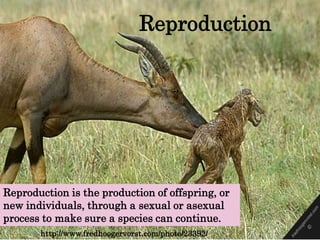
Reproduction is the production of offspring, or
new individuals, through a sexual or asexual
process to make sure a species can continue.
       http://www.fredhoogervorst.com/photo/23392/
Sexual Reproduction
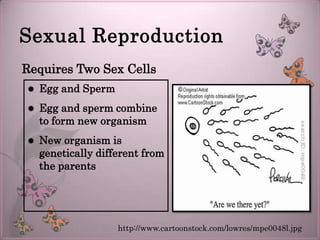
Requires Two Sex Cells
   Egg and Sperm
   Egg and sperm combine
    to form new organism
   New organism is
    genetically different from
    the parents


                    http://www.cartoonstock.com/lowres/mpe0048l.jpg
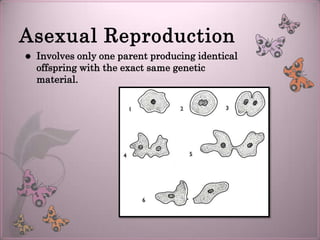
Asexual Reproduction
   Involves only one parent producing identical
    offspring with the exact same genetic
    material.
Types of Asexual
Reproduction

     Binary   fission
     Regeneration
     Budding
     Spores
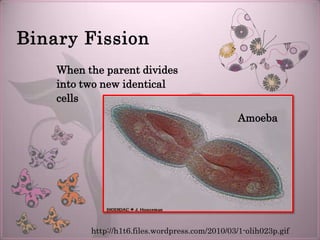
Binary Fission
    When the parent divides
    into two new identical
    cells
                                                  Amoeba


          http://h1t6.files.wordpress.com/2010/03/1-olih023p.gif
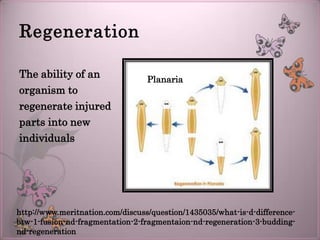
Regeneration

The ability of an                 Planaria
organism to
regenerate injured
parts into new
individuals


http://www.meritnation.com/discuss/question/1435035/what-is-d-difference-
btw-1-fusion-nd-fragmentation-2-fragmentaion-nd-regeneration-3-budding-
nd-regeneration
http://www.youtube.com/watch?v=4JIytOL-Q18

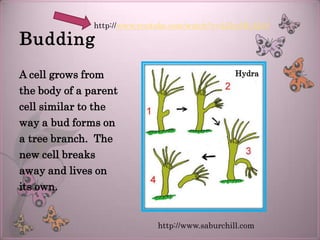
Budding
A cell grows from                                 Hydra

the body of a parent
cell similar to the
way a bud forms on
a tree branch. The
new cell breaks
away and lives on
its own.


                              http://www.saburchill.com
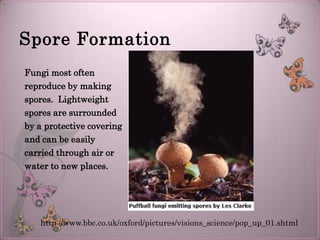
Spore Formation
Fungi most often
reproduce by making
spores. Lightweight
spores are surrounded
by a protective covering
and can be easily
carried through air or
water to new places.


   http://www.bbc.co.uk/oxford/pictures/visions_science/pop_up_01.shtml
Remember!
      Offspring from sexual
       reproduction results in
       organisms that are genetically
       different from the parents.
      Offspring from asexual
       reproduction are genetically
       identical to the parent.
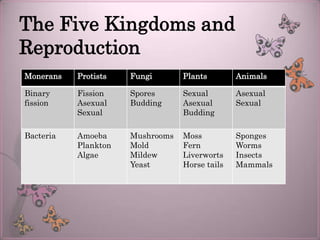
The Five Kingdoms and
Reproduction
Monerans   Protists   Fungi       Plants        Animals

Binary     Fission    Spores      Sexual        Asexual
fission    Asexual    Budding     Asexual       Sexual
           Sexual                 Budding

Bacteria   Amoeba     Mushrooms   Moss          Sponges
           Plankton   Mold        Fern          Worms
           Algae      Mildew      Liverworts    Insects
                      Yeast       Horse tails   Mammals

Sexual versus asexual reproduction

  • 1.
    Sexual Versus Asexual Reproduction Prepared for ED 592: Technology in Education for Dr. Susan LeBeau Created by Michael Boisclair http://www.tulane.edu/~wiser/protozoology/notes/images/ciliate.gif
  • 2.
    Reproduction Reproduction is theproduction of offspring, or new individuals, through a sexual or asexual process to make sure a species can continue. http://www.fredhoogervorst.com/photo/23392/
  • 3.
    Sexual Reproduction Requires TwoSex Cells  Egg and Sperm  Egg and sperm combine to form new organism  New organism is genetically different from the parents http://www.cartoonstock.com/lowres/mpe0048l.jpg
  • 4.
    Asexual Reproduction  Involves only one parent producing identical offspring with the exact same genetic material.
  • 5.
    Types of Asexual Reproduction Binary fission Regeneration Budding Spores
  • 6.
    Binary Fission When the parent divides into two new identical cells Amoeba http://h1t6.files.wordpress.com/2010/03/1-olih023p.gif
  • 7.
    Regeneration The ability ofan Planaria organism to regenerate injured parts into new individuals http://www.meritnation.com/discuss/question/1435035/what-is-d-difference- btw-1-fusion-nd-fragmentation-2-fragmentaion-nd-regeneration-3-budding- nd-regeneration
  • 8.
    http://www.youtube.com/watch?v=4JIytOL-Q18 Budding A cell growsfrom Hydra the body of a parent cell similar to the way a bud forms on a tree branch. The new cell breaks away and lives on its own. http://www.saburchill.com
  • 9.
    Spore Formation Fungi mostoften reproduce by making spores. Lightweight spores are surrounded by a protective covering and can be easily carried through air or water to new places. http://www.bbc.co.uk/oxford/pictures/visions_science/pop_up_01.shtml
  • 10.
    Remember!  Offspring from sexual reproduction results in organisms that are genetically different from the parents.  Offspring from asexual reproduction are genetically identical to the parent.
  • 11.
    The Five Kingdomsand Reproduction Monerans Protists Fungi Plants Animals Binary Fission Spores Sexual Asexual fission Asexual Budding Asexual Sexual Sexual Budding Bacteria Amoeba Mushrooms Moss Sponges Plankton Mold Fern Worms Algae Mildew Liverworts Insects Yeast Horse tails Mammals

Editor's Notes

  • #12 Compare and contrast the five kingdoms and the type of reproduction. Give one example of each.