

Reporting with
 social media
      Steve Buttry
    Everyday Health
      June 8, 2012
Read more about it
•   stevebuttry.wordpress.com
•   slideshare.net/stevebuttry
•   @stevebuttry
•   zombiejournalism.com
•   stephenbuttry@gmail.com
What’s your social strategy?
Great for promotion, but also …
•   Great for reporting
•   Find story ideas
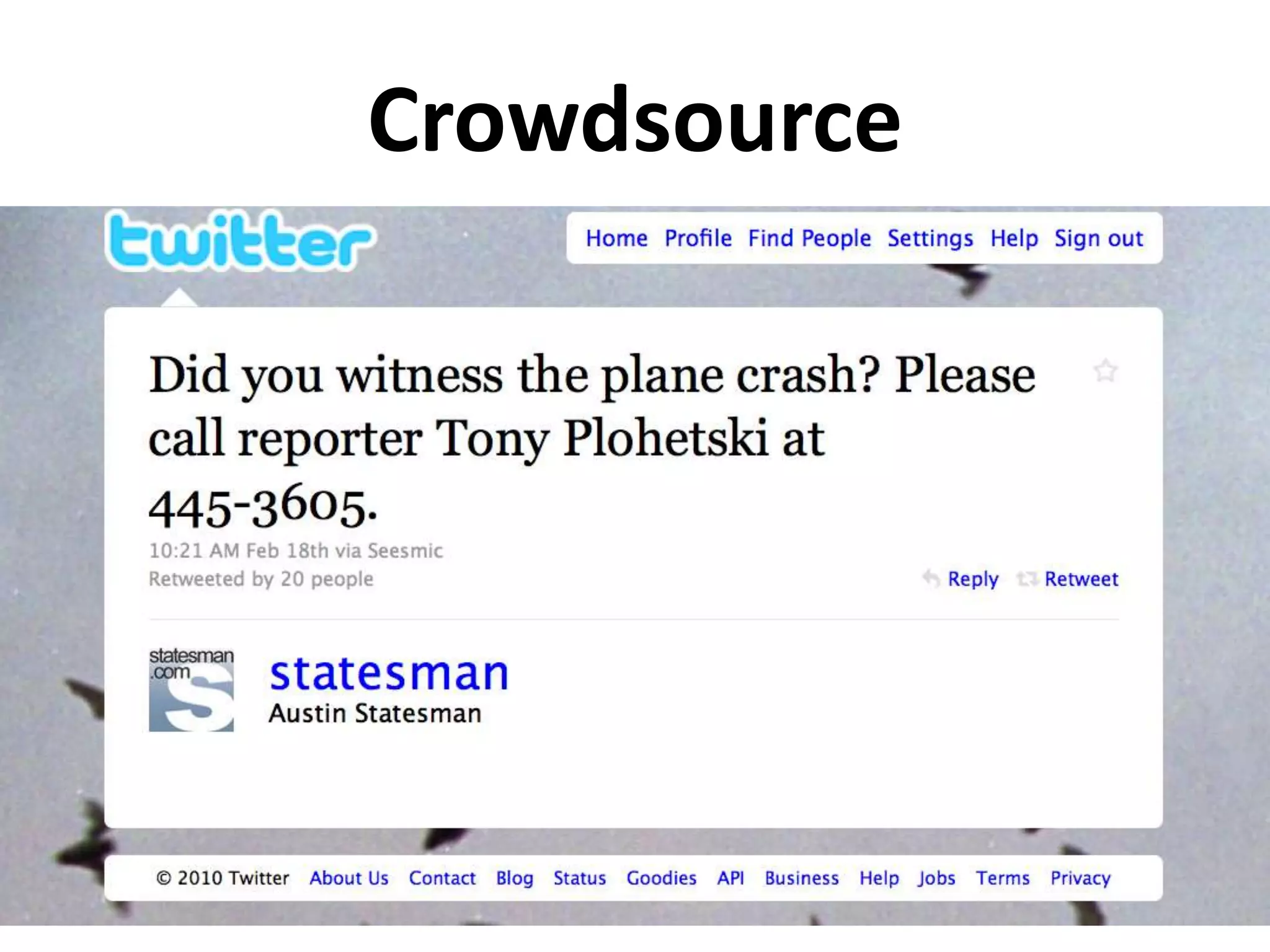
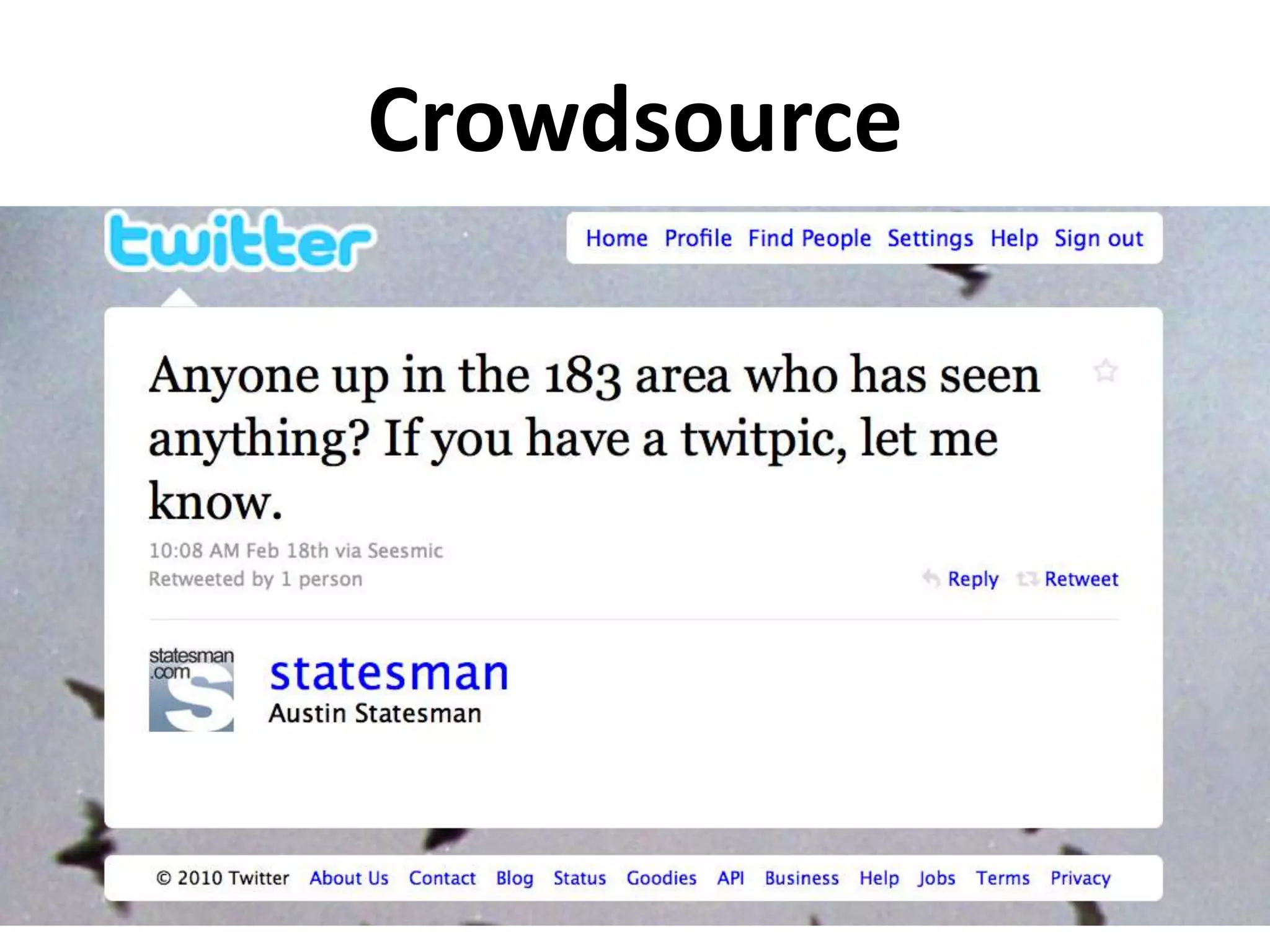
•   Crowdsource
•   Join the conversation (reply, retweet, ask
    questions)
• Many more users     • Great for breaking
• Much info private     news
• Tougher to search   • Great real-time
• Not as immediate      search
  (less frequent      • Engagement not as
  updates)              intrusive
• Engage, don’t       • Hashtags help w/
  intrude               search, conversation
Personal vs. professional use
• Separate accounts OK but not necessary
• Always behave professionally, even on
  private accounts
• Be personable on pro accounts
• Presume boss will see all posts
• Don’t bore pro audience
• Connect w/ sources (balance,
  disclosure?)
• Check pages of agencies, people on beat
• Crowdsourcing (ask on their pages as
  well as yours)
• Look for people in the news
• Ask for permission to use photos
• Create group around topic on your beat
• Create page for topic or story
Options for journalists:
• Use personal FB account, all or most
  public
• Journalist page
• Personal account, enable subscriptions
  (decide which updates are public)
Why use Twitter?
•   It can save you time
•   It extends your reach
•   It’s an engaging, conversational tool
•   It’s great for connecting with people who
    experience stories you write about
Bookmark this page

https://twitter.com/#!/search-advanced
Vetting tweeps, verifying info
 •   Check full Twitter stream, profile
 •   Connect on phone, in person
 •   Check location (not 100% reliable)
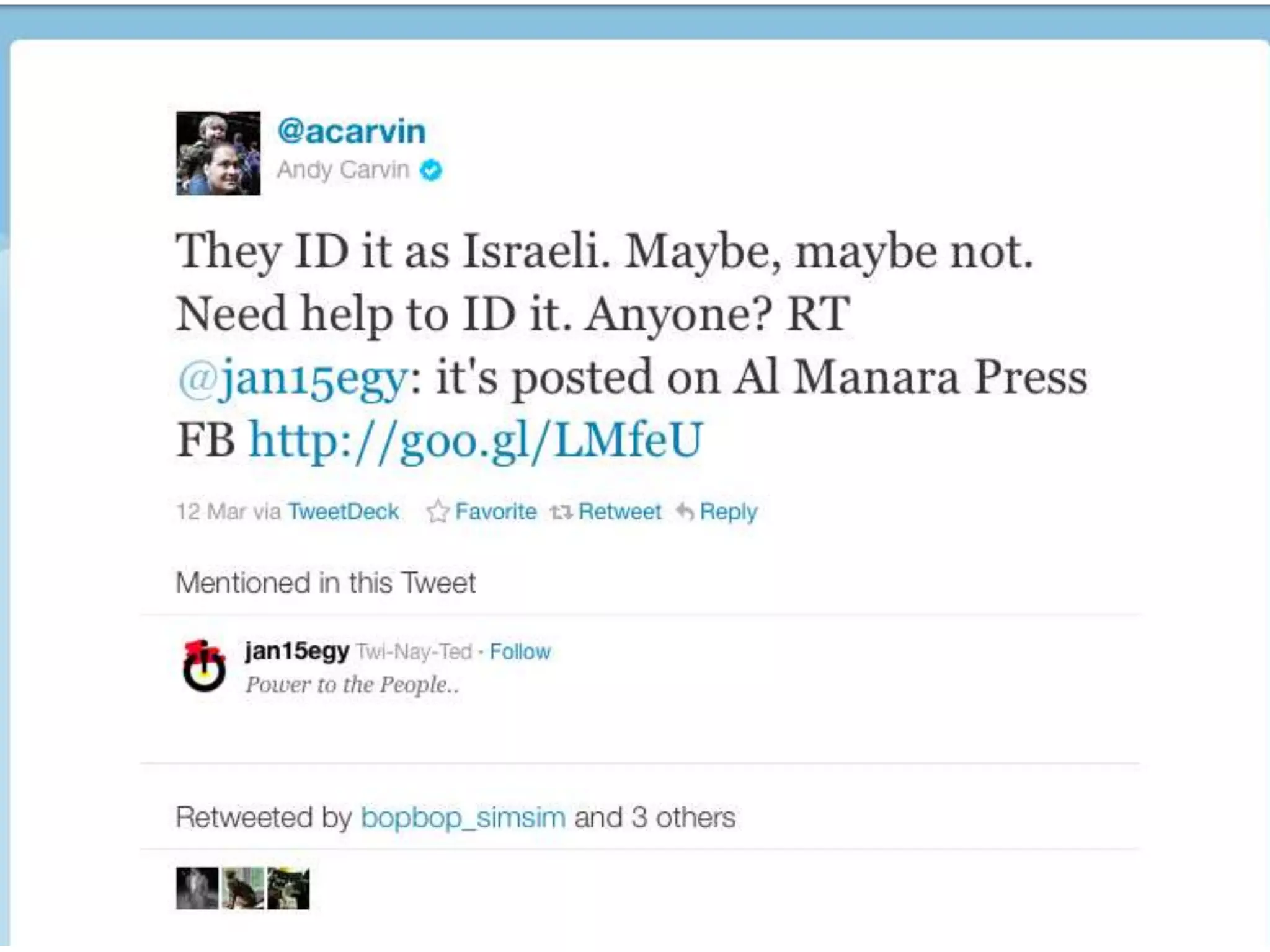
 •   Others verifying? Clusters, not echos
 •   Photos?
 •   Other sources, other tweeps
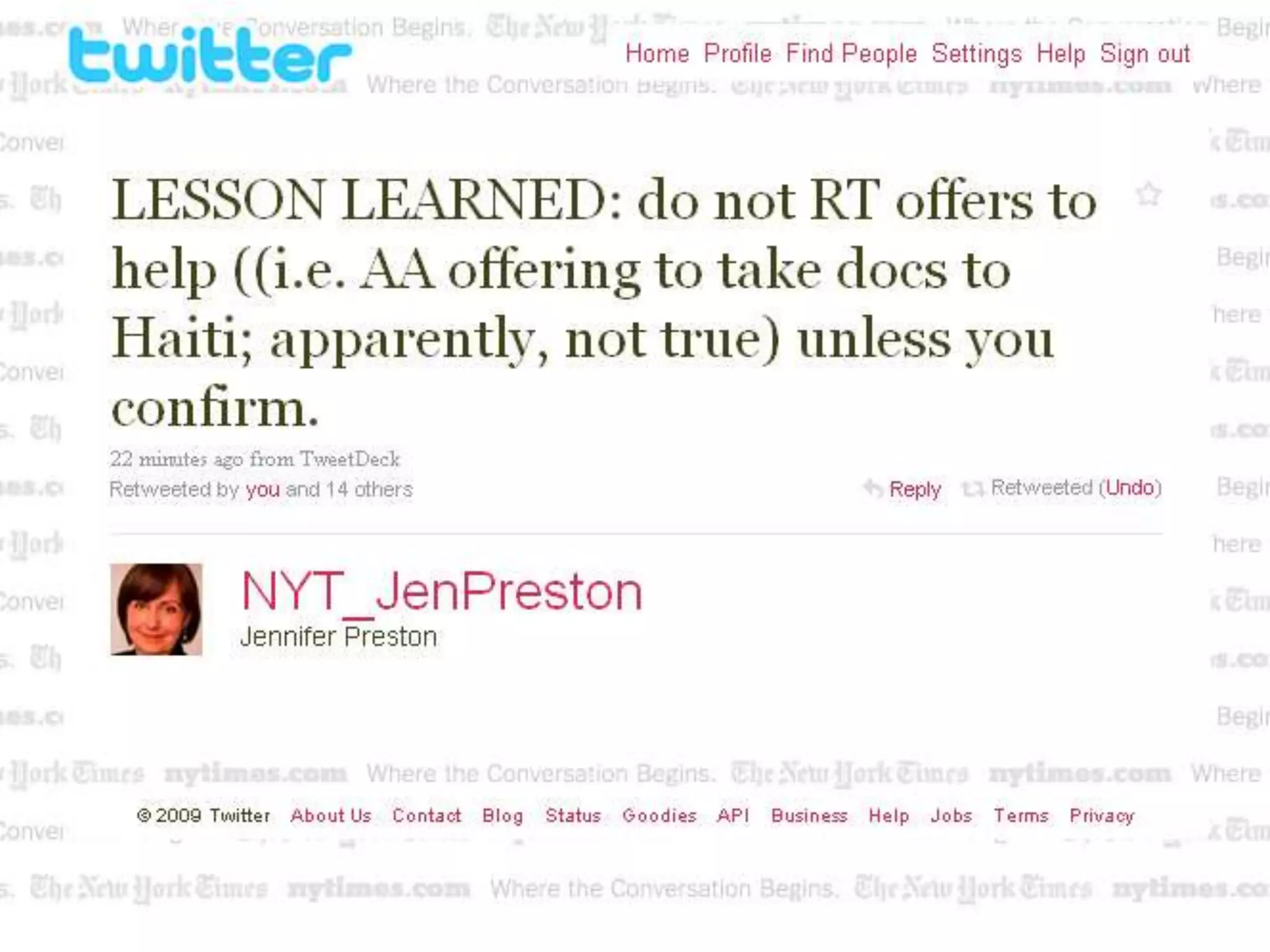
 •   Ask, “How do you know that?”
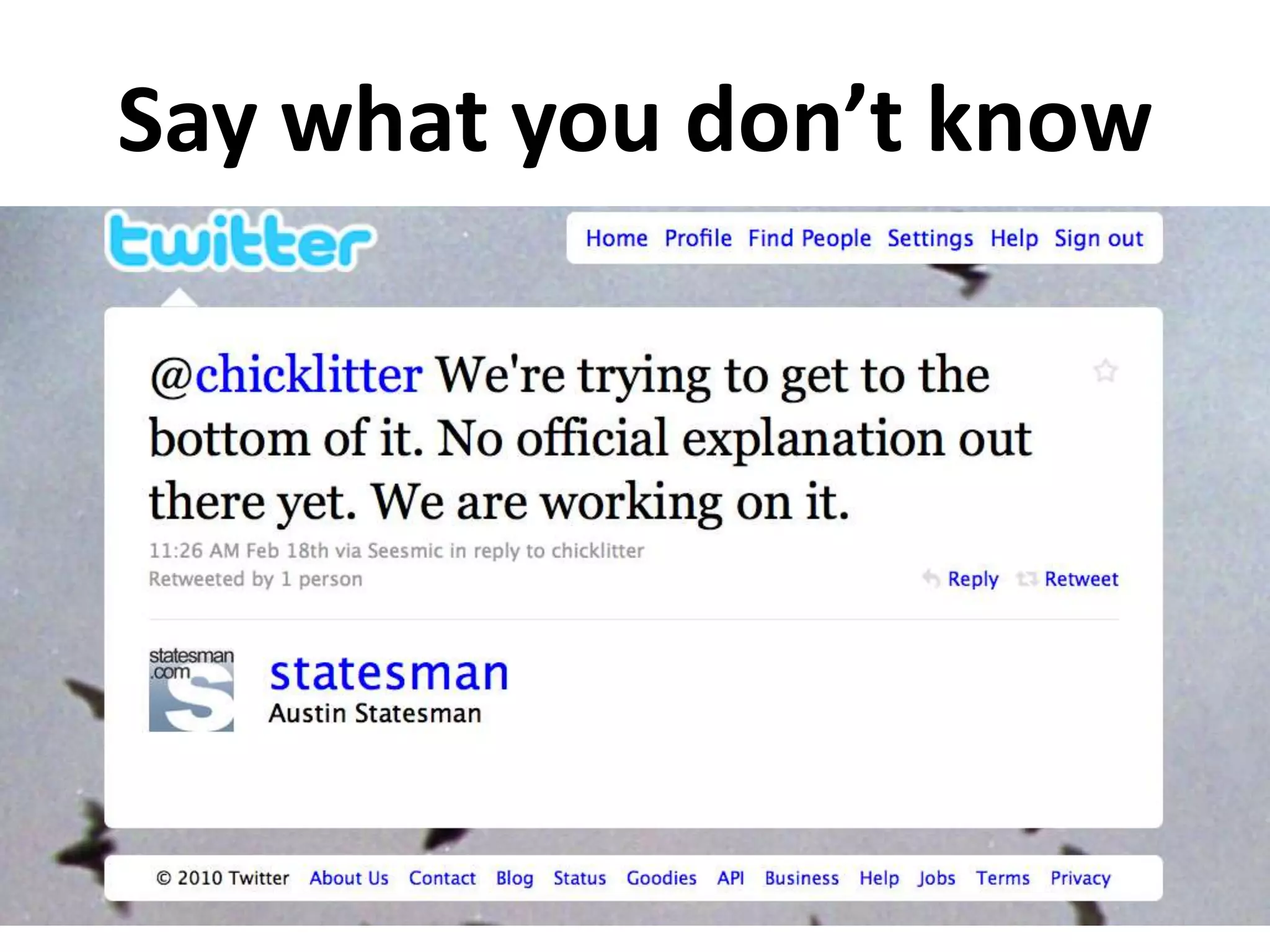
Say what you don’t know
More on verification
             Craig Silverman tips:
http://www.cjr.org/behind_the_news/eight_sim
          ple_rules_for_doing_a.php
              Mandy Jenkins tips:
  http://zombiejournalism.com/2011/09/b-s-
           detection-for-journalists/
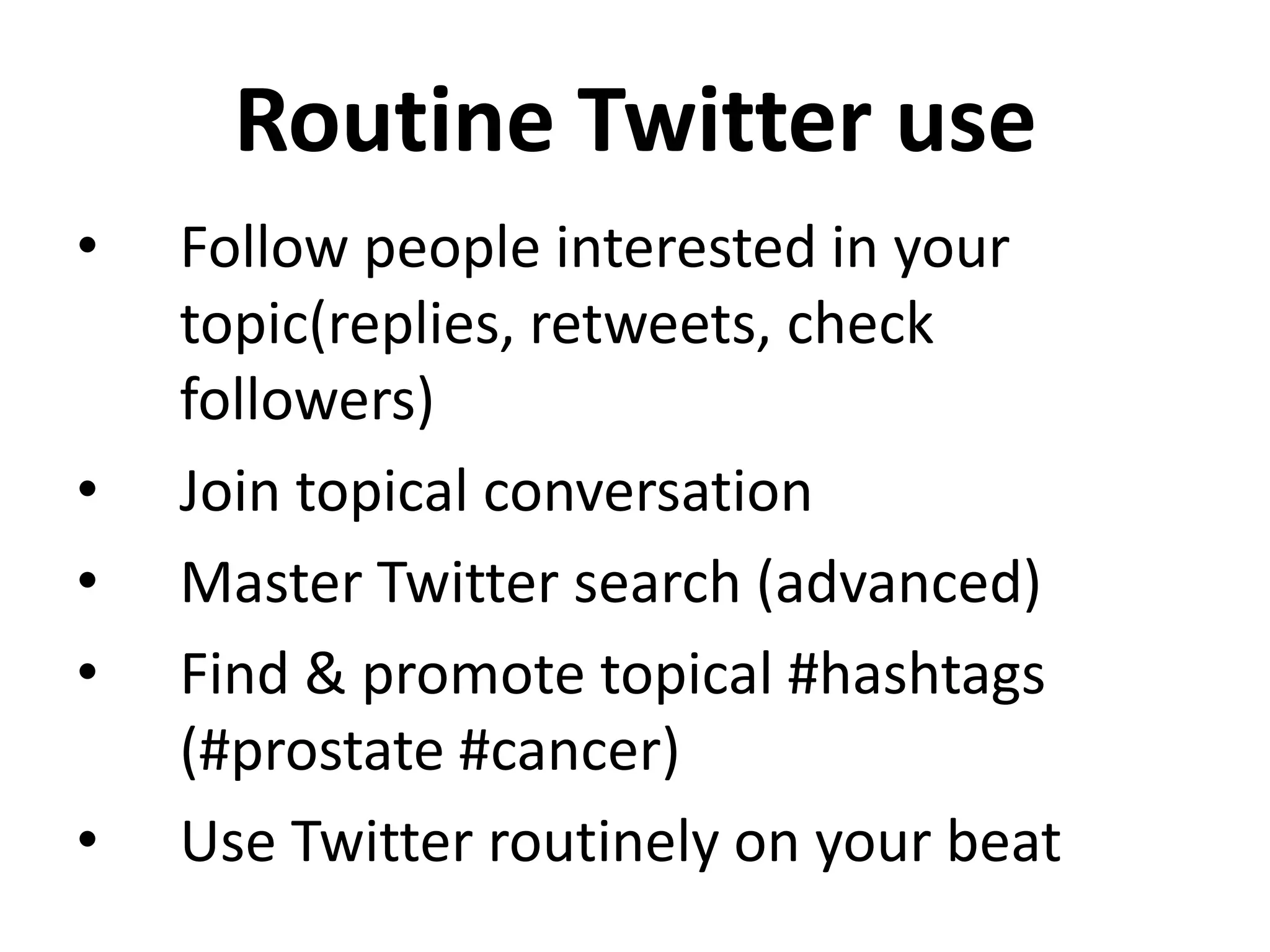
Routine Twitter use
•   Follow people interested in your
    topic(replies, retweets, check
    followers)
•   Join topical conversation
•   Master Twitter search (advanced)
•   Find & promote topical #hashtags
    (#prostate #cancer)
•   Use Twitter routinely on your beat
Crowdsource
Crowdsource
Use other social tools, too
•   Growing swiftly
•   Users share (pin, re-pin) visual content
•   80% of users are women
•   Heavy use for food, fashion, travel
•   Embeddable
•   How might you use?
• Do agencies on beat post photos?
• Search for keywords, photos
• Invite people to contribute photos on
  news stories
• Connect w/ people posting photos
• Seek permission (check conditions)
• Give credit
• Do agencies, people on beat use?
• Watch for public videos getting attention
  (will often see links, mentions on Twitter)
• Embed in stories, blogs
• “Mayor” is great source about an org or
  venue (employee or customer)
• See who has checked in for event or
  breaking news story
• Tips might provide questions for stories
• Break story w/ Foursquare “shout”
• Connect with sources
• Find new sources through connections,
  groups
• Discussions help find experts
• Check updates, slides, travel
• Search by location & keyword
•   Important for search
•   Find sources
•   Follow sources in Circles
•   Follow beat topics in Sparks
•   Interview by video Hangouts
Niche tools
Social fame is fleeting
Time management
• Integrate social media into reporting,
  writing & editing processes
• Use lists, TweetDeck, HootSuite to
  organize the chaos
• You can tweet & read tweets quickly
• Invest some time
• Decide what’s not important
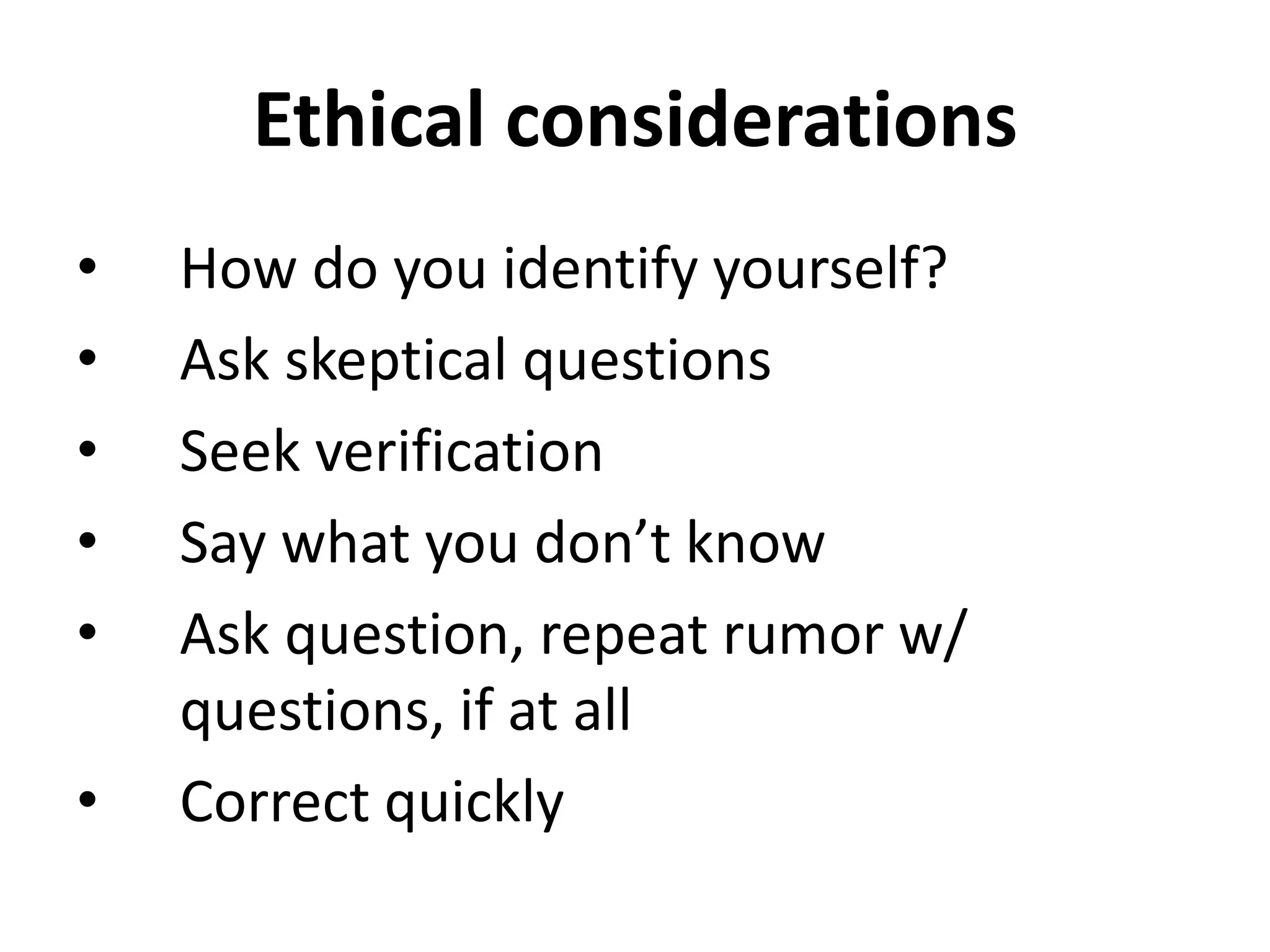
Ethical considerations
•   How do you identify yourself?
•   Ask skeptical questions
•   Seek verification
•   Say what you don’t know
•   Ask question, repeat rumor w/
    questions, if at all
•   Correct quickly
Read more about it
•   stevebuttry.wordpress.com
•   slideshare.net/stevebuttry
•   @stevebuttry
•   zombiejournalism.com
•   stephenbuttry@gmail.com

Reporting with social media

  • 1.
    Reporting with socialmedia Steve Buttry Everyday Health June 8, 2012
  • 2.
    Read more aboutit • stevebuttry.wordpress.com • slideshare.net/stevebuttry • @stevebuttry • zombiejournalism.com • stephenbuttry@gmail.com
  • 3.
  • 4.
    Great for promotion,but also … • Great for reporting • Find story ideas • Crowdsource • Join the conversation (reply, retweet, ask questions)
  • 5.
    • Many moreusers • Great for breaking • Much info private news • Tougher to search • Great real-time • Not as immediate search (less frequent • Engagement not as updates) intrusive • Engage, don’t • Hashtags help w/ intrude search, conversation
  • 6.
    Personal vs. professionaluse • Separate accounts OK but not necessary • Always behave professionally, even on private accounts • Be personable on pro accounts • Presume boss will see all posts • Don’t bore pro audience
  • 7.
    • Connect w/sources (balance, disclosure?) • Check pages of agencies, people on beat • Crowdsourcing (ask on their pages as well as yours) • Look for people in the news • Ask for permission to use photos
  • 8.
    • Create grouparound topic on your beat • Create page for topic or story
  • 9.
    Options for journalists: •Use personal FB account, all or most public • Journalist page • Personal account, enable subscriptions (decide which updates are public)
  • 10.
    Why use Twitter? • It can save you time • It extends your reach • It’s an engaging, conversational tool • It’s great for connecting with people who experience stories you write about
  • 14.
  • 15.
    Vetting tweeps, verifyinginfo • Check full Twitter stream, profile • Connect on phone, in person • Check location (not 100% reliable) • Others verifying? Clusters, not echos • Photos? • Other sources, other tweeps • Ask, “How do you know that?”
  • 16.
    Say what youdon’t know
  • 18.
    More on verification Craig Silverman tips: http://www.cjr.org/behind_the_news/eight_sim ple_rules_for_doing_a.php Mandy Jenkins tips: http://zombiejournalism.com/2011/09/b-s- detection-for-journalists/
  • 19.
    Routine Twitter use • Follow people interested in your topic(replies, retweets, check followers) • Join topical conversation • Master Twitter search (advanced) • Find & promote topical #hashtags (#prostate #cancer) • Use Twitter routinely on your beat
  • 20.
  • 21.
  • 22.
    Use other socialtools, too
  • 23.
    Growing swiftly • Users share (pin, re-pin) visual content • 80% of users are women • Heavy use for food, fashion, travel • Embeddable • How might you use?
  • 24.
    • Do agencieson beat post photos? • Search for keywords, photos • Invite people to contribute photos on news stories • Connect w/ people posting photos • Seek permission (check conditions) • Give credit
  • 25.
    • Do agencies,people on beat use? • Watch for public videos getting attention (will often see links, mentions on Twitter) • Embed in stories, blogs
  • 26.
    • “Mayor” isgreat source about an org or venue (employee or customer) • See who has checked in for event or breaking news story • Tips might provide questions for stories • Break story w/ Foursquare “shout”
  • 27.
    • Connect withsources • Find new sources through connections, groups • Discussions help find experts • Check updates, slides, travel • Search by location & keyword
  • 28.
    Important for search • Find sources • Follow sources in Circles • Follow beat topics in Sparks • Interview by video Hangouts
  • 29.
  • 30.
  • 31.
    Time management • Integratesocial media into reporting, writing & editing processes • Use lists, TweetDeck, HootSuite to organize the chaos • You can tweet & read tweets quickly • Invest some time • Decide what’s not important
  • 32.
    Ethical considerations • How do you identify yourself? • Ask skeptical questions • Seek verification • Say what you don’t know • Ask question, repeat rumor w/ questions, if at all • Correct quickly
  • 34.
    Read more aboutit • stevebuttry.wordpress.com • slideshare.net/stevebuttry • @stevebuttry • zombiejournalism.com • stephenbuttry@gmail.com

Editor's Notes

  • #4 We’ll discuss how reporters need to use social media to cover their beats more efficiently.
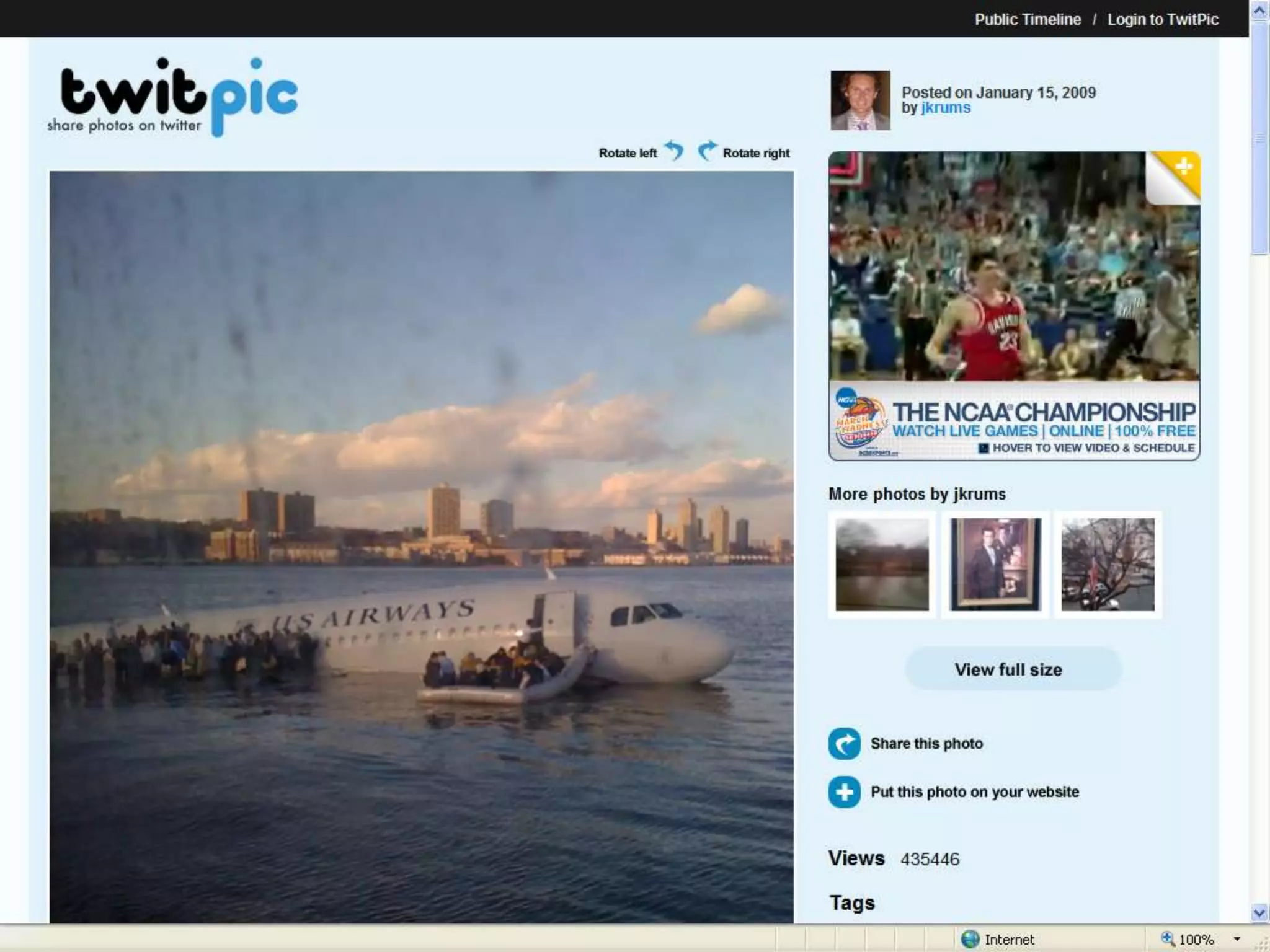
  • #12 We’ll start with some examples of why Twitter is a valuable breaking-news tool. Most will, of course, remember that Twitpic had the first shot of the Hudson landing.
  • #14 We’ll also discuss the Denver plane crash that Mike Wilson survived and how the media missed an opportunity by not using Twitter.
  • #23 We’ll discuss how reporters need to use social media to cover their beats more efficiently.