Renewable energy sources
By:
Dr. Shashikala A R
Associate Professor in Chemistry,
School of Engineering,
Presidency University,
Bangalore
What is Energy?
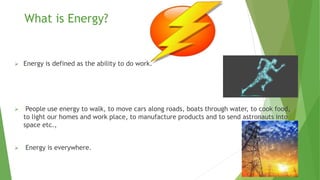
 Energy is defined as the ability to do work.
 People use energy to walk, to move cars along roads, boats through water, to cook food,
to light our homes and work place, to manufacture products and to send astronauts into
space etc.,
 Energy is everywhere.
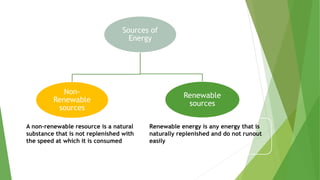
Sources of
Energy
Non-
Renewable
sources
Renewable
sources
A non-renewable resource is a natural
substance that is not replenished with
the speed at which it is consumed
Renewable energy is any energy that is
naturally replenished and do not runout
easily
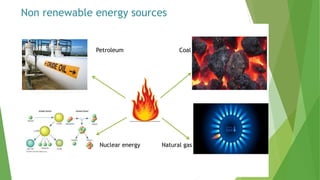
Non renewable energy sources
Petroleum Coal
Nuclear energy Natural gas
Advantages
 Extremely efficient: can generate huge amounts of energy
 Economic benefits: number of industries powered by fossil fuels
 Easy to transport: They can be transported on large trucks or pumped through
large pipes below and above the ground
 Reliable: Fossil fuels guarantee a reliable supply of electricity
 Create jobs: extraction, refining and transportation provides employment
 High calorific value:
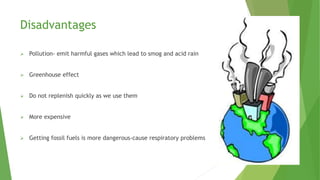
Disadvantages
 Pollution- emit harmful gases which lead to smog and acid rain
 Greenhouse effect
 Do not replenish quickly as we use them
 More expensive
 Getting fossil fuels is more dangerous-cause respiratory problems
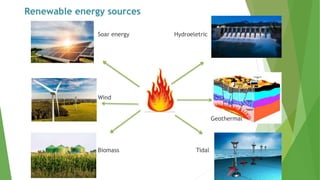
Renewable energy sources
Soar energy Hydroeletric
Wind
Geothermal
Biomass Tidal
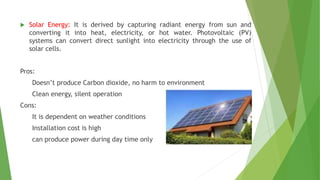
 Solar Energy: It is derived by capturing radiant energy from sun and
converting it into heat, electricity, or hot water. Photovoltaic (PV)
systems can convert direct sunlight into electricity through the use of
solar cells.
Pros:
Doesn’t produce Carbon dioxide, no harm to environment
Clean energy, silent operation
Cons:
It is dependent on weather conditions
Installation cost is high
can produce power during day time only
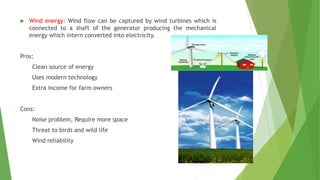
 Wind energy: Wind flow can be captured by wind turbines which is
connected to a shaft of the generator producing the mechanical
energy which intern converted into electricity.
Pros:
Clean source of energy
Uses modern technology
Extra income for farm owners
Cons:
Noise problem, Require more space
Threat to birds and wild life
Wind reliability
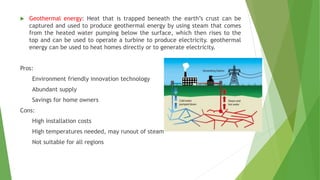
 Geothermal energy: Heat that is trapped beneath the earth’s crust can be
captured and used to produce geothermal energy by using steam that comes
from the heated water pumping below the surface, which then rises to the
top and can be used to operate a turbine to produce electricity. geothermal
energy can be used to heat homes directly or to generate electricity.
Pros:
Environment friendly innovation technology
Abundant supply
Savings for home owners
Cons:
High installation costs
High temperatures needed, may runout of steam
Not suitable for all regions
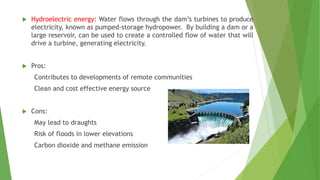
 Hydroelectric energy: Water flows through the dam’s turbines to produce
electricity, known as pumped-storage hydropower. By building a dam or a
large reservoir, can be used to create a controlled flow of water that will
drive a turbine, generating electricity.
 Pros:
Contributes to developments of remote communities
Clean and cost effective energy source
 Cons:
May lead to draughts
Risk of floods in lower elevations
Carbon dioxide and methane emission
 Tidal energy: Tidal energy is powered by the natural rise and fall of ocean
tides and currents. It is generated by the combined effects of the
gravitational force of the moon and the sun and the rotation of the earth. The
power generation in tidal energy is possible due to the difference of the
potential energies of the tides.
Pros:
No need of dams
Turbine is enough
Cons:
May lead to corrosion
Best tides are near poles
Navigation problems
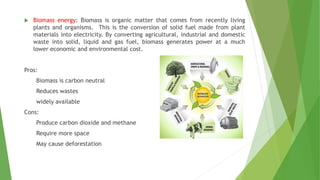
 Biomass energy: Biomass is organic matter that comes from recently living
plants and organisms. This is the conversion of solid fuel made from plant
materials into electricity. By converting agricultural, industrial and domestic
waste into solid, liquid and gas fuel, biomass generates power at a much
lower economic and environmental cost.
Pros:
Biomass is carbon neutral
Reduces wastes
widely available
Cons:
Produce carbon dioxide and methane
Require more space
May cause deforestation
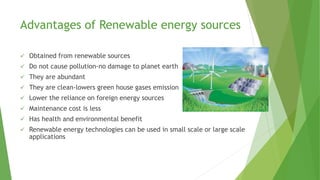
Advantages of Renewable energy sources
 Obtained from renewable sources
 Do not cause pollution-no damage to planet earth
 They are abundant
 They are clean-lowers green house gases emission
 Lower the reliance on foreign energy sources
 Maintenance cost is less
 Has health and environmental benefit
 Renewable energy technologies can be used in small scale or large scale
applications
Disadvantages of Renewable energy sources
 Expensive, installation cost is high
 Not always a commercially viable option
 Low efficiencies
 Intermittency- Unreliable weather can affect energy supply
 Geographic limitations
 It's hard to produce the same amounts as non-renewable sources
 Energy storage is a challenge
 Hydroelectric systems can harm environment and wild life
 Lot of land space is required to setup large scale systems.

Renewable energy sources

  • 1.
    Renewable energy sources By: Dr.Shashikala A R Associate Professor in Chemistry, School of Engineering, Presidency University, Bangalore
  • 2.
    What is Energy? Energy is defined as the ability to do work.  People use energy to walk, to move cars along roads, boats through water, to cook food, to light our homes and work place, to manufacture products and to send astronauts into space etc.,  Energy is everywhere.
  • 3.
    Sources of Energy Non- Renewable sources Renewable sources A non-renewableresource is a natural substance that is not replenished with the speed at which it is consumed Renewable energy is any energy that is naturally replenished and do not runout easily
  • 4.
    Non renewable energysources Petroleum Coal Nuclear energy Natural gas
  • 5.
    Advantages  Extremely efficient:can generate huge amounts of energy  Economic benefits: number of industries powered by fossil fuels  Easy to transport: They can be transported on large trucks or pumped through large pipes below and above the ground  Reliable: Fossil fuels guarantee a reliable supply of electricity  Create jobs: extraction, refining and transportation provides employment  High calorific value:
  • 6.
    Disadvantages  Pollution- emitharmful gases which lead to smog and acid rain  Greenhouse effect  Do not replenish quickly as we use them  More expensive  Getting fossil fuels is more dangerous-cause respiratory problems
  • 7.
    Renewable energy sources Soarenergy Hydroeletric Wind Geothermal Biomass Tidal
  • 8.
     Solar Energy:It is derived by capturing radiant energy from sun and converting it into heat, electricity, or hot water. Photovoltaic (PV) systems can convert direct sunlight into electricity through the use of solar cells. Pros: Doesn’t produce Carbon dioxide, no harm to environment Clean energy, silent operation Cons: It is dependent on weather conditions Installation cost is high can produce power during day time only
  • 9.
     Wind energy:Wind flow can be captured by wind turbines which is connected to a shaft of the generator producing the mechanical energy which intern converted into electricity. Pros: Clean source of energy Uses modern technology Extra income for farm owners Cons: Noise problem, Require more space Threat to birds and wild life Wind reliability
  • 10.
     Geothermal energy:Heat that is trapped beneath the earth’s crust can be captured and used to produce geothermal energy by using steam that comes from the heated water pumping below the surface, which then rises to the top and can be used to operate a turbine to produce electricity. geothermal energy can be used to heat homes directly or to generate electricity. Pros: Environment friendly innovation technology Abundant supply Savings for home owners Cons: High installation costs High temperatures needed, may runout of steam Not suitable for all regions
  • 11.
     Hydroelectric energy:Water flows through the dam’s turbines to produce electricity, known as pumped-storage hydropower. By building a dam or a large reservoir, can be used to create a controlled flow of water that will drive a turbine, generating electricity.  Pros: Contributes to developments of remote communities Clean and cost effective energy source  Cons: May lead to draughts Risk of floods in lower elevations Carbon dioxide and methane emission
  • 12.
     Tidal energy:Tidal energy is powered by the natural rise and fall of ocean tides and currents. It is generated by the combined effects of the gravitational force of the moon and the sun and the rotation of the earth. The power generation in tidal energy is possible due to the difference of the potential energies of the tides. Pros: No need of dams Turbine is enough Cons: May lead to corrosion Best tides are near poles Navigation problems
  • 13.
     Biomass energy:Biomass is organic matter that comes from recently living plants and organisms. This is the conversion of solid fuel made from plant materials into electricity. By converting agricultural, industrial and domestic waste into solid, liquid and gas fuel, biomass generates power at a much lower economic and environmental cost. Pros: Biomass is carbon neutral Reduces wastes widely available Cons: Produce carbon dioxide and methane Require more space May cause deforestation
  • 14.
    Advantages of Renewableenergy sources  Obtained from renewable sources  Do not cause pollution-no damage to planet earth  They are abundant  They are clean-lowers green house gases emission  Lower the reliance on foreign energy sources  Maintenance cost is less  Has health and environmental benefit  Renewable energy technologies can be used in small scale or large scale applications
  • 15.
    Disadvantages of Renewableenergy sources  Expensive, installation cost is high  Not always a commercially viable option  Low efficiencies  Intermittency- Unreliable weather can affect energy supply  Geographic limitations  It's hard to produce the same amounts as non-renewable sources  Energy storage is a challenge  Hydroelectric systems can harm environment and wild life  Lot of land space is required to setup large scale systems.