Solar still
Submitted by
YOGESH PATIL
11031m02060
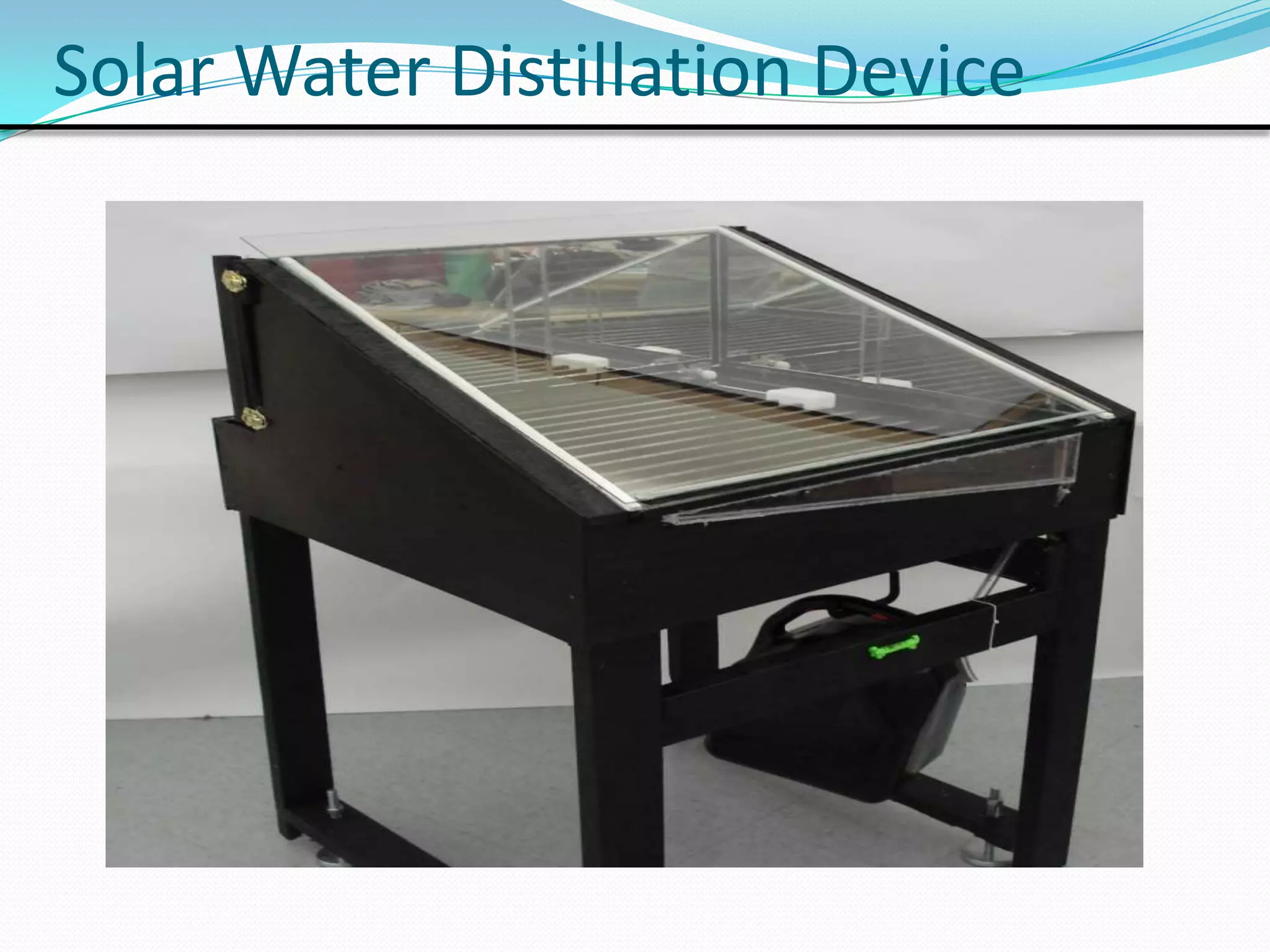
Solar Water Distillation Device
Overview/Outline
 Introduction
 Necessity
 Design
 System Development
 Water distillation
 Working
 Advantages
 Disadvantages
 Application
A solar still is a simple way of distilling water, using the heat of
the Sun to drive evaporation from humid soil, and ambient air to cool
a condenser film. Two basic types of solar stills are box and pit stills. In
a solar still, impure water is contained outside the collector, where it is
evaporated by sunlight shining through clear plastic. The pure water
vapor condenses on the cool inside plastic surface and drips down
from the weighted low point, where it is collected and removed. The
box type is more sophisticated. The basic principles of solar water
distillation are simple, yet effective, as distillation replicates the way
nature makes rain. The sun's energy heats water to the point of
evaporation. As the water evaporates, water vapor rises, condensing on
the glass surface for collection. This process removes impurities, such
as salts and heavy metals, and eliminates microbiological organisms.
The end result is water cleaner than the purest rainwater.
Introduction
NECESSITY
 Over 1 billion people without
access to clean water
worldwide
 26.8% in Africa
 Clean water essential to stop
spread of disease & improve
overall health
 Solar energy = untapped
resource
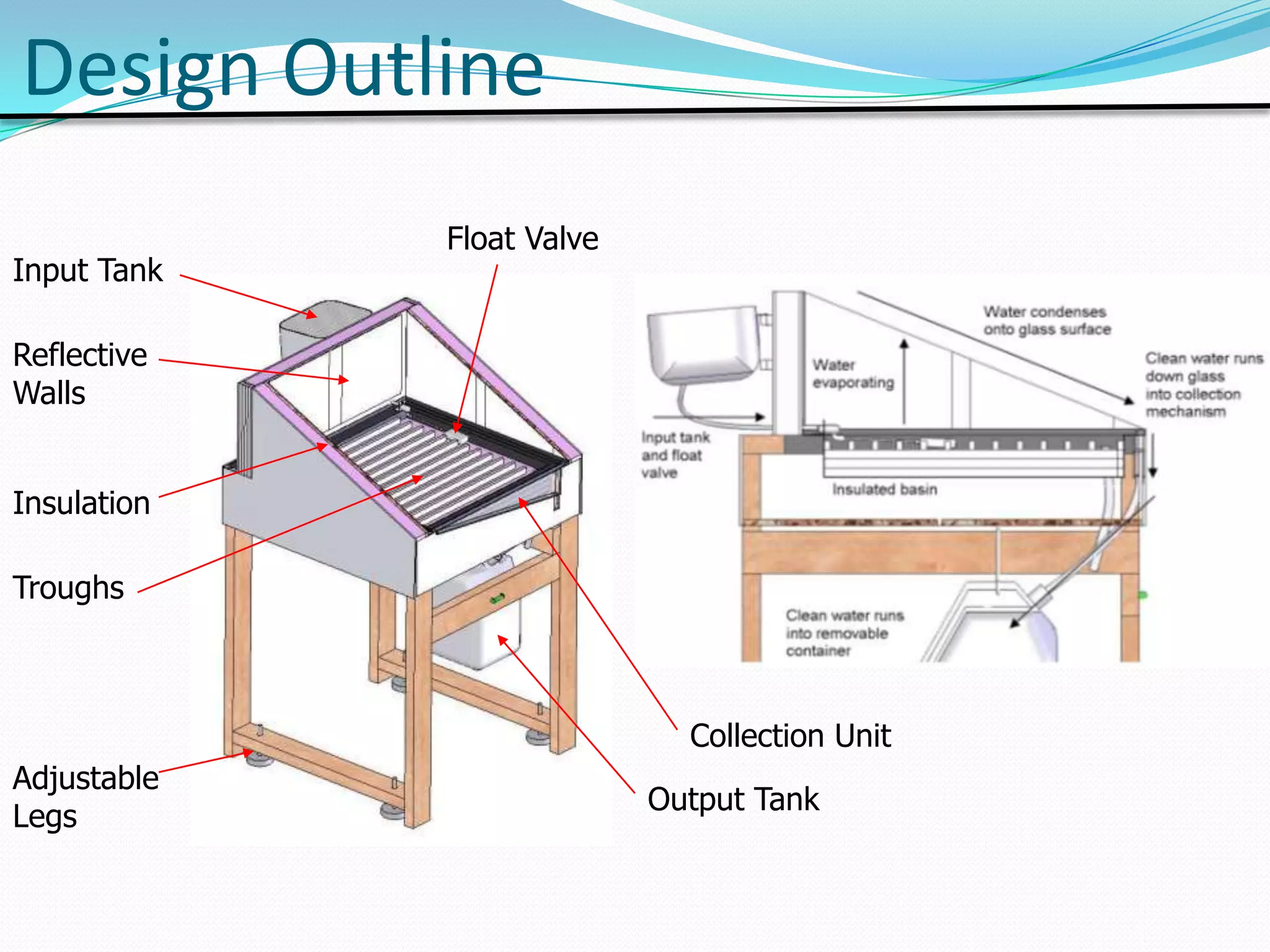
Design Outline
Input Tank
Reflective
Walls
Adjustable
Legs
Output Tank
Float Valve
Troughs
Collection Unit
Insulation
System development
Water Distillation
 Process that removes impurities & contaminants
 How?
 Heat water to point of vaporization
 Water vapor condenses on cooler surfaces
 Condensate runs off into collection bin
Working
 1. Once you have the contraption in place you will need to fill the center
trough with the water you are trying to purify. The center trough usually will
have a black bottom, which helps to attract sunlight.
 2. The heat from the sun evaporates the salt water that is sitting in the
center trough. The process of evaporation only lifts pure molecule of H2O
into the air of the container, leaving the dirty parts of the water sitting in the
trough.
 3. Next, the process of condensation occurs. This is when the water vapor
molecules hit the glass or plastic ceiling of the solar still and turn into water
droplets. This is the same type of condensation you see when you are
drinking cold water out of a glass or cold can.
 4. After condensation, the water droplets are forced by gravity and to slide
down the glass or plastic ceiling into a second clean trough along the inside
edge of the solar still. They cling to the edge of the glass or plastic and
follow it all the way down into an outer rim that flows into the ‘clean water’
area. Because the water is clinging to the angled glass or plastic, it does
not get mixed back in with the dirty water.
 5. After a certain amount of time enough water is collected and the water is
ready to drink. This is usually done with a hose that is connected from the
clean trough to the outside of the contraption.
Advantages
 Cost Effectiveness
 Free of charge sun energy (during sunlight it
eliminates 500 Watt electric consumption per one
hour of sunlight)
 We provide quality water for personal and
industrial use
Disadvangs
 Low production capacity, not enough for the
drinking water needs of the average family
 Solar distillers don’t kill bacteria and they don’t
break down harmful chemicals because they don’t
boil the water
 The large area tilted glass cover might be an
attraction to bugs and insects
Application
 For industrial process
 For sterilization
 For battery maintanance and radiator
Thank You !

solar still

  • 1.
  • 2.
  • 3.
    Overview/Outline  Introduction  Necessity Design  System Development  Water distillation  Working  Advantages  Disadvantages  Application
  • 4.
    A solar stillis a simple way of distilling water, using the heat of the Sun to drive evaporation from humid soil, and ambient air to cool a condenser film. Two basic types of solar stills are box and pit stills. In a solar still, impure water is contained outside the collector, where it is evaporated by sunlight shining through clear plastic. The pure water vapor condenses on the cool inside plastic surface and drips down from the weighted low point, where it is collected and removed. The box type is more sophisticated. The basic principles of solar water distillation are simple, yet effective, as distillation replicates the way nature makes rain. The sun's energy heats water to the point of evaporation. As the water evaporates, water vapor rises, condensing on the glass surface for collection. This process removes impurities, such as salts and heavy metals, and eliminates microbiological organisms. The end result is water cleaner than the purest rainwater. Introduction
  • 5.
    NECESSITY  Over 1billion people without access to clean water worldwide  26.8% in Africa  Clean water essential to stop spread of disease & improve overall health  Solar energy = untapped resource
  • 6.
    Design Outline Input Tank Reflective Walls Adjustable Legs OutputTank Float Valve Troughs Collection Unit Insulation
  • 7.
  • 8.
    Water Distillation  Processthat removes impurities & contaminants  How?  Heat water to point of vaporization  Water vapor condenses on cooler surfaces  Condensate runs off into collection bin
  • 9.
    Working  1. Onceyou have the contraption in place you will need to fill the center trough with the water you are trying to purify. The center trough usually will have a black bottom, which helps to attract sunlight.  2. The heat from the sun evaporates the salt water that is sitting in the center trough. The process of evaporation only lifts pure molecule of H2O into the air of the container, leaving the dirty parts of the water sitting in the trough.  3. Next, the process of condensation occurs. This is when the water vapor molecules hit the glass or plastic ceiling of the solar still and turn into water droplets. This is the same type of condensation you see when you are drinking cold water out of a glass or cold can.  4. After condensation, the water droplets are forced by gravity and to slide down the glass or plastic ceiling into a second clean trough along the inside edge of the solar still. They cling to the edge of the glass or plastic and follow it all the way down into an outer rim that flows into the ‘clean water’ area. Because the water is clinging to the angled glass or plastic, it does not get mixed back in with the dirty water.  5. After a certain amount of time enough water is collected and the water is ready to drink. This is usually done with a hose that is connected from the clean trough to the outside of the contraption.
  • 12.
    Advantages  Cost Effectiveness Free of charge sun energy (during sunlight it eliminates 500 Watt electric consumption per one hour of sunlight)  We provide quality water for personal and industrial use
  • 13.
    Disadvangs  Low productioncapacity, not enough for the drinking water needs of the average family  Solar distillers don’t kill bacteria and they don’t break down harmful chemicals because they don’t boil the water  The large area tilted glass cover might be an attraction to bugs and insects
  • 14.
    Application  For industrialprocess  For sterilization  For battery maintanance and radiator
  • 15.