Name :- Smit Shah -140410109096
S.Y electrical 2 Sem 4
Subject:-EPG
Topic :- .
Solar Drying
 Food Preservation
 Food spoilage is caused due to molds, yeast , bacteria and
enzymes.
 Preservation can Reduce wastage and facilitate export to
high-value markets.
 Methods of Preservation are : canning, freezing, pickling,
curing and drying.
Natural Drying
 Drying was done by open Sun under the open sky.
 Slow process.
 Reduction in product quality due to insects and micro-organisms
growth.
 Spoilage of product due to rain, wind, moist, dust ,birds & animals,
fungal growth.
 Time consuming.
 Requires large area.
Solar dryers
 Useful from energy conservation point of view.
 Occupies less area.
 Improves quality of product.
 Protects environment.
Solar dryers useful for …
 Agricultural crop drying
 Food processing industries for dehydration of fruits and
vegetables
 Fish and meat drying
 Dairy industries for the production of milk powder
 Seasoning of wood and timber
 Textile industries for drying of textile materials
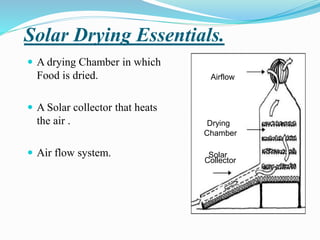
Solar Drying Essentials.
 A drying Chamber in which
Food is dried.
 A Solar collector that heats
the air .
 Air flow system.
Drying
Chamber
Airflow
Solar
Collector
Classification of
Solar dryers
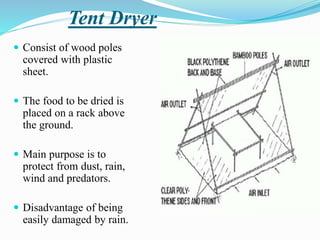
Tent Dryer
 Consist of wood poles
covered with plastic
sheet.
 The food to be dried is
placed on a rack above
the ground.
 Main purpose is to
protect from dust, rain,
wind and predators.
 Disadvantage of being
easily damaged by rain.
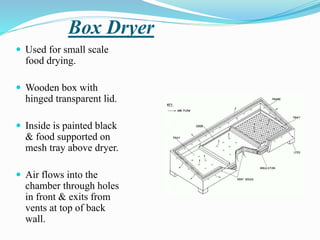
Box Dryer
 Used for small scale
food drying.
 Wooden box with
hinged transparent lid.
 Inside is painted black
& food supported on
mesh tray above dryer.
 Air flows into the
chamber through holes
in front & exits from
vents at top of back
wall.
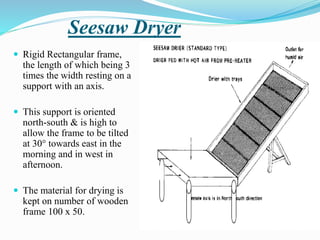
Seesaw Dryer
 Rigid Rectangular frame,
the length of which being 3
times the width resting on a
support with an axis.
 This support is oriented
north-south & is high to
allow the frame to be tilted
at 30° towards east in the
morning and in west in
afternoon.
 The material for drying is
kept on number of wooden
frame 100 x 50.
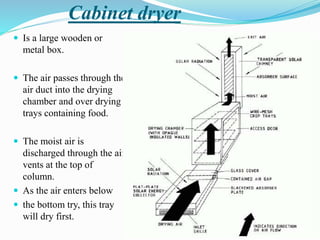
Cabinet dryer
 Is a large wooden or
metal box.
 The air passes through the
air duct into the drying
chamber and over drying
trays containing food.
 The moist air is
discharged through the air
vents at the top of
column.
 As the air enters below
 the bottom try, this tray
will dry first.
Solar water
distillation
Introduction
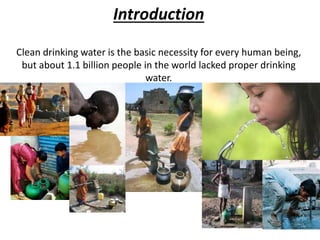
Clean drinking water is the basic necessity for every human being,
but about 1.1 billion people in the world lacked proper drinking
water.
Clean drinking water is the basic necessity for every
human being, but about 1.1 billion people in the world
lacked proper drinking water.
Water purification
 There are many different types of water purification
processes such as filtration, reverse osmosis,
ultraviolet radiation, carbon absorption, but the most
reliable processes are distillation and boiling .
Solar water purification
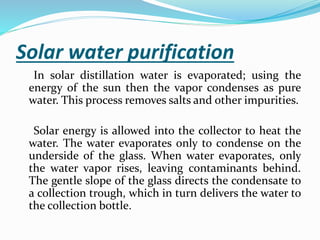
In solar distillation water is evaporated; using the
energy of the sun then the vapor condenses as pure
water. This process removes salts and other impurities.
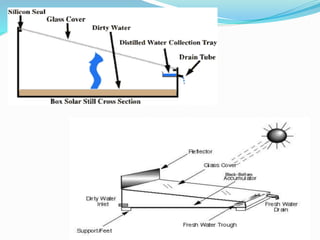
Solar energy is allowed into the collector to heat the
water. The water evaporates only to condense on the
underside of the glass. When water evaporates, only
the water vapor rises, leaving contaminants behind.
The gentle slope of the glass directs the condensate to
a collection trough, which in turn delivers the water to
the collection bottle.
Solar distill
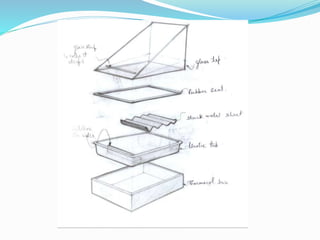
 Constructing a solar water distiller using available
utensils like plastic for casing, aluminum for
absorption of heat, glass and the thermocol for
insulation. Got the temperature of water up to 60
degrees and 100 ml of distilled water in 4 hours.
Solar Dryer & Solar Distillation

Solar Dryer & Solar Distillation

  • 1.
    Name :- SmitShah -140410109096 S.Y electrical 2 Sem 4 Subject:-EPG Topic :- .
  • 2.
    Solar Drying  FoodPreservation  Food spoilage is caused due to molds, yeast , bacteria and enzymes.  Preservation can Reduce wastage and facilitate export to high-value markets.  Methods of Preservation are : canning, freezing, pickling, curing and drying.
  • 3.
    Natural Drying  Dryingwas done by open Sun under the open sky.  Slow process.  Reduction in product quality due to insects and micro-organisms growth.  Spoilage of product due to rain, wind, moist, dust ,birds & animals, fungal growth.  Time consuming.  Requires large area.
  • 4.
    Solar dryers  Usefulfrom energy conservation point of view.  Occupies less area.  Improves quality of product.  Protects environment.
  • 5.
    Solar dryers usefulfor …  Agricultural crop drying  Food processing industries for dehydration of fruits and vegetables  Fish and meat drying  Dairy industries for the production of milk powder  Seasoning of wood and timber  Textile industries for drying of textile materials
  • 6.
    Solar Drying Essentials. A drying Chamber in which Food is dried.  A Solar collector that heats the air .  Air flow system. Drying Chamber Airflow Solar Collector
  • 7.
  • 8.
    Tent Dryer  Consistof wood poles covered with plastic sheet.  The food to be dried is placed on a rack above the ground.  Main purpose is to protect from dust, rain, wind and predators.  Disadvantage of being easily damaged by rain.
  • 9.
    Box Dryer  Usedfor small scale food drying.  Wooden box with hinged transparent lid.  Inside is painted black & food supported on mesh tray above dryer.  Air flows into the chamber through holes in front & exits from vents at top of back wall.
  • 10.
    Seesaw Dryer  RigidRectangular frame, the length of which being 3 times the width resting on a support with an axis.  This support is oriented north-south & is high to allow the frame to be tilted at 30° towards east in the morning and in west in afternoon.  The material for drying is kept on number of wooden frame 100 x 50.
  • 11.
    Cabinet dryer  Isa large wooden or metal box.  The air passes through the air duct into the drying chamber and over drying trays containing food.  The moist air is discharged through the air vents at the top of column.  As the air enters below  the bottom try, this tray will dry first.
  • 12.
  • 13.
    Introduction Clean drinking wateris the basic necessity for every human being, but about 1.1 billion people in the world lacked proper drinking water. Clean drinking water is the basic necessity for every human being, but about 1.1 billion people in the world lacked proper drinking water.
  • 14.
    Water purification  Thereare many different types of water purification processes such as filtration, reverse osmosis, ultraviolet radiation, carbon absorption, but the most reliable processes are distillation and boiling .
  • 15.
    Solar water purification Insolar distillation water is evaporated; using the energy of the sun then the vapor condenses as pure water. This process removes salts and other impurities. Solar energy is allowed into the collector to heat the water. The water evaporates only to condense on the underside of the glass. When water evaporates, only the water vapor rises, leaving contaminants behind. The gentle slope of the glass directs the condensate to a collection trough, which in turn delivers the water to the collection bottle.
  • 17.
    Solar distill  Constructinga solar water distiller using available utensils like plastic for casing, aluminum for absorption of heat, glass and the thermocol for insulation. Got the temperature of water up to 60 degrees and 100 ml of distilled water in 4 hours.