RRT When ?!
By
Dr. Ahmed Rabie EL-Arbagy
Prof. Of Renal Medicine
Internal Med. Dep.-Menoufia University
Dakahlia Syndicate Work Shop 8/12/2017
Content
sIntroduction & Include:
*What are the renal functions& Forms of Dysfunctions ?
**Importance of early referral to nephrologist
** Predictions for starting dialysis
** Multidisciplinary predialysis care
** Predialysis evaluation program
** Aim of all RRT techniques & general principles
** Indications of RRT ** Options of RRT
** Contraindications of Dialysis
** Dealing with disruptive patients
** Withdrawal of Dialysis
Contents
Lab.assessment of renal function Include
*a-Serum creatinine
*b-Blood urea nitrogen(BUN), creatinine and
urea clearance
*c-Measurement of GFR (glomerular filtration
rate) using radioisotope.
*d- All of the above
Which of the following define CKD?
A-Albuminuria> 3/12
B-Urine sediment abnormalities> 3/12
C-Decreased GFR> 3/12
D- All of the above
When to Initiate Renal Replacement
Therapy (RRT)?
• Earlier is better
• Late is better
• I do not know
Indications of Initiations of RRT
• Absolute: Mention 3
• Common: mention 2
• Relative : Mention 1
Indications Of Dialysis, In AKI
• Mention 3 important indications
• What is the most suitable type of dialysis in
AKI?
Mention the contraindications of dialysis
• Absolute
• Relative
INTRODUCTION, Renal Functions
The kidneys have important roles in maintaining health.
Main job is to remove toxins from the blood. A buildup
of waste products can lead to death.
Healthy kidneys maintain the body's internal
equilibrium of water and minerals (sodium,
potassium, chloride, calcium, phosphorus, magnesium,
sulfate).
The kidneys also function as a part of the endocrine
system, producing erythropoietin and maintain blood
pressure( RAAS).
Erythropoietin( EPO) is involved in the production of
RBCs and calcitriol plays a role in bone formation.
INTRODUCTION, Renal Functions
Uremia
The liver stores protein and breaks it down into amino acids
whenever they are needed by the body. It also converts amino acids
into urea and sends urea to the kidneys. In acute renal failure, the
kidneys cannot excrete urea efficiently. This leads to uremia, or too
much urea in the bloodstream. This is toxic, since urea has nitrogen.
The symptoms include weakness, nausea and vomiting, confusion,
seizures, jerky hand movementsand even coma.
Source of S. creatinine
The skeletal muscle breaks down creatine phosphate for
its energy needs. This results in a substance called
creatinine. If the kidneys are functioning, they will excrete
creatinine. But in acute renal failure, there are high levels
of creatinine in the bloodstream.
How To Assess Renal Function?
Assessment Of Renal Function
&Forms of dysfunctions
Assessment Of Renal Functions:
*Serum creatinine
*Blood urea nitrogen, Creatinine and urea clearance
*Measurement of GFR (glomerular filtration rate) using
radioisotope.
----------------------------------------------------
*???? Urine analysis to assess-----? R diseasess & dysfunctions
--------------------------------------------------------
Forms of renal dysfunctions:
-AKI - CKD - RPRF
- Acute on top of chronic
Criteria for CKD
(Either of the following present for ≥ 3 months)
Markers of kidney damage (one or more)
Albuminuria:
Albumin excretion ration (AER) ≥30mg/24 hours)
Albumin Creatinine ratio (ACR) ≥30mg/g (≥3mg/mmol))
Urine sediment abnormalities.
Electrolyte and other abnormalities due to tubular disorders.
Abnormalities detected by histology.
Structural abnormalities detected by imaging.
History of kidney transplantation.
Decreased GFR
GFR <60ml/min per 1.73m2 (GFR categories G3a–G5)
(Kidney Disease ImprovingOutcome (KDIGO) guidelines,2013)
GFR categories in CKD
GFR (ml/min per 1.73m2)
Terms
G1 ≥90
Normal or high
G2 60–89
Mildly decreased
G3a 45–59
Mildly to moderately decreased
G3b 30–44
Moderately to severely decreased
G4 15–29
Severely decreased
G5 <15
Kidney failure
(Kidney Disease Improving Outcome (KDIGO) guidelines, 2013)
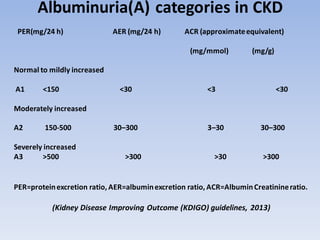
Albuminuria(A) categories in CKD
PER(mg/24 h) AER (mg/24 h) ACR (approximateequivalent)
(mg/mmol) (mg/g)
Normal to mildly increased
A1 <150 <30 <3 <30
Moderately increased
A2 150-500 30–300 3–30 30–300
Severely increased
A3 >500 >300 >30 >300
PER=proteinexcretion ratio, AER=albuminexcretion ratio, ACR=AlbuminCreatinineratio.
(Kidney Disease Improving Outcome (KDIGO) guidelines, 2013)
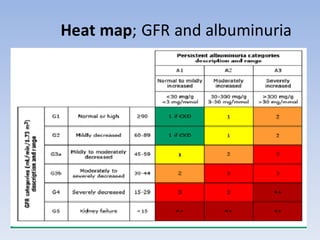
Heat map; GFR and albuminuria
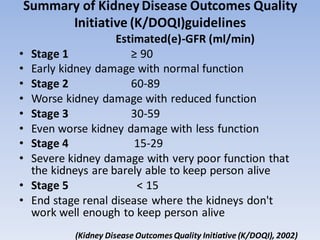
Summary of Kidney Disease Outcomes Quality
Initiative (K/DOQI)guidelines
Estimated(e)-GFR (ml/min)
• Stage 1 ≥ 90
• Early kidney damage with normal function
• Stage 2 60-89
• Worse kidney damage with reduced function
• Stage 3 30-59
• Even worse kidney damage with less function
• Stage 4 15-29
• Severe kidney damage with very poor function that
the kidneys are barely able to keep person alive
• Stage 5 < 15
• End stage renal disease where the kidneys don't
work well enough to keep person alive
(Kidney Disease Outcomes Quality Initiative (K/DOQI), 2002)
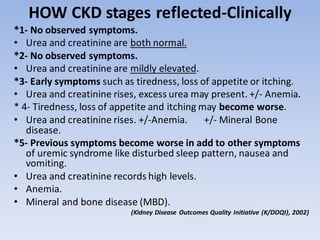
HOW CKD stages reflected-Clinically
*1- No observed symptoms.
• Urea and creatinine are both normal.
*2- No observed symptoms.
• Urea and creatinine are mildly elevated.
*3- Early symptoms such as tiredness, loss of appetite or itching.
• Urea and creatinine rises, excess urea may present. +/- Anemia.
* 4- Tiredness, loss of appetite and itching may become worse.
• Urea and creatinine rises. +/-Anemia. +/- Mineral Bone
disease.
*5- Previous symptoms become worse in add to other symptoms
of uremic syndrome like disturbed sleep pattern, nausea and
vomiting.
• Urea and creatinine records high levels.
• Anemia.
• Mineral and bone disease (MBD).
(Kidney Disease Outcomes Quality Initiative (K/DOQI), 2002)
CKD Treatment options
• Identify reversible causes
• Try to stop or slow the progression of the
disease.
• Continue try to stop or slow the progression of
the disease.
• Teach the patient more about the disease
course and treating modalities.
• Plan and create access site for dialysis.
• Start transplantationwork up.
• Start renal replacement therapy (RRT) either
dialysis or transplantation.
(Kidney Disease Outcomes Quality Initiative (K/DOQI), 2002)
When to Initiate Dialysis?
The decision to initiate dialysis in a patient with CKD involves the
consideration of subjective and objective parameters by the
physician and the patient.
There are no absolute laboratory values that indicate a requirement
to begin dialysis.
The decision is partly based on the patient’s perception of his or her
quality of life and anxiety about starting a complex, potentially life-
long therapy.
In addition, the nephrologist’s perception about the patient’s state of
health, decline of kidney function, and potential hazards of therapy
influence the timing of initiation of renal replacement therapy.
** In short, the decision of when to start dialysis is clearly one of
the most difficult decisions that both the patient and the
nephrologist must make.
Predictions Of The Start Of Dialysis
- Routine measurement of GFR(confirm results).
- Estimate severity from monitoring of GFR against time.
-Follow up of GFR allow to identify renal deterioration,
as rate of decline give idea about time that patient will
require dialysis in the next 1-2 years & give chance for
preparation & education.
- It is important to prepare the patient for RRT.
When Should dialysis Be Started?
*With close monitoring of GFR & became < 15 ml/m 1.73
m2 (start dialysis once symptoms develop).
*Threshold to start dialysis varies from country to another
(of course from patient to another).
*Earlier threshold (~ 15 ml/m 1.73 m2) in diabetics who
has poor tolerance to uremia, sodium retention &overload).
*Other measures to be taken into considerations include:
a- Rising S. phosphorus b- Falling sodium bicarbonate
c- Protein- Energy malnutrition
**N.B. A fall in S. albumin is a late sign of reduced
protein intake & debility ( do not wait for-----)
What does Dialysis mean?
Dialysis (from Greek dialusis,"διάλυσις",
meaning dissolution. Dia, meaning through, and
lysis, meaning loosening or splitting) is a process
for removing waste and excess water from the
blood, and is used primarily to provide an
artificial replacement for lost kidney function in
people with renal failure .
Dialysis may be used for those with an acute
kidney injury ( AKI), or progressive but
chronically worsening kidney function (GFR <
15), ESR disease ( CKD, stage 5).
What does dialysis mean?
Dialysis is an imperfect treatment to replace kidney
function because it does not correct the compromised
endocrine functions of the kidney.
Dialysis treatments replace some of these functions
through diffusion (waste removal) and ultrafiltration
(fluid removal).
CKD may develop over months or years ( in contrast to
AKI) is not usually reversible, and dialysis is regarded
as a "holding measure" until a renal transplant can be
performed, or sometimes as the only supportive
measure in those for whom a transplant would be
inappropriate.
Indications for initiation of Dialysis
Absolute indications:Pericarditis without other explanation.
Blood diathesis (prolonged bleeding time)
Neurological disorders (encephalopathy e.g. tremors, multifocal
myoclonus, seizures and coma , neuropathy either motor e.g.
dropped wrist or foot, or sensory e.g. restless leg syndrome and
psychiatric disorder)
Common indications:Intractable extracellular volume overload
and/or hypertension.
Hyperkalemia refractory to dietary restriction and pharmacological
treatment.
Metabolic acidosis refractory to bicarbonate treatment.
Hyperphosphatemia refractory to dietary counseling and
phosphorus binders.
Recent weight loss or deterioration of nutritional status specially if
accompanied by nausea, vomiting or other evidence of
gastrodudenitis.Relative indications:Decreased attentivenessand
cognitive tasking,depression&persistent pruritus.
(Hemodialysis Adequacy Work Group, 2015)
Indications For Early Start On Dialysis
Note that there is increasing data to suggest
benefit with proper time initiation of dialysis
prior to the occurrence of these �absolute�
indications in both the acute and chronic settings.
*Intractable(Fluid overload and/or hyperkalemia)
•Uremic S& S:
• - Neurologic dysfunction( reduce cognitive
dysfunction affect learning, necessitate early
dialysis
- Serositis - Malnutrition
* Functional deterioration otherwise unexplained
Indications of Dialysis, In CKD
** Urgent Indications:
There are a number of clinical indications:
Pericarditis or pleuritis (urgent indication)
Progressive uremic encephalopathy or neuropathy, with
signs such as confusion, asterixis, myoclonus, wrist or foot
drop, or, in severe cases, seizures (urgent indication).
A clinically significant bleeding diathesis attributable to
uremia (urgent indication).
Persistent metabolic disturbances that are refractory to
medical therapy; these include hyperkalemia, metabolic
acidosis,hypercalcemia, hypocalcemia, and
hyperphosphatemia(Severe biochemical derangement in the
absence of symptoms(with a rising trend in an oliguric &
hyper catabolic patient).
Fluid overload refractory to diuretics
Indications of dialysis, In CKD,continue
*Hypertension poorly responsive to antihypertensive medications
*Persistent nausea and vomiting. *Evidence of malnutrition
The first five of the above indications (serositis, uremic
encephalopathy, bleeding diathesis and refractory metabolic
disturbances & fluid overload) are potentially acutely life-threatening
and should not be allowed to develop prior to initiation of dialysis in
patients with known CKD under medical care.
The last two (nausea & vomiting and malnutrition) develop more
insidiously and can also be due to other co-morbidities or drug
effects. They are no less dangerous.
**N.B. Dialysis for those with progressing CKD will be more easier
after repeated & long term trials of conservative, supportive &
symptomatic treatment including diet, medications,education &
preparation for RRT.
In the contrary,Can Dialysis be Delayed?
The answer is (--?--------)
Asymptomatic
Awaiting immenent ( Kidney Tx., Placement for permanent
HD or PD access).
After appropriate education.
Patient has chosen conservative therapy.
N.B. Remember That, those who delay dialysis( for
any reason) should be closely & frequently monitored
( to see if dialysis became necessary).
*Nephrologist should have practice considering
conservative( non-dialysis) treatment for renal failure.
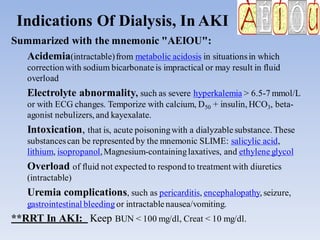
Indications Of Dialysis, In AKI
Summarized with the mnemonic "AEIOU":
Acidemia(intractable)from metabolic acidosis in situationsin which
correction with sodium bicarbonateis impractical or may result in fluid
overload
Electrolyte abnormality, such as severe hyperkalemia > 6.5-7 mmol/L
or with ECG changes. Temporize with calcium, D50 + insulin, HCO3, beta-
agonist nebulizers, and kayexalate.
Intoxication, that is, acute poisoningwith a dialyzablesubstance. These
substancescan be represented by the mnemonic SLIME: salicylic acid,
lithium, isopropanol,Magnesium-containinglaxatives, and ethyleneglycol
Overload of fluid not expected to respond to treatment with diuretics
(intractable)
Uremia complications, such as pericarditis, encephalopathy, seizure,
gastrointestinal bleedingor intractablenausea/vomiting.
**RRT In AKI: Keep BUN < 100 mg/dl, Creat < 10 mg/dl.
Types of Dialysis For AKI
There are 3 primary and 2 secondary types of
dialysis:
**Primary:
Hemodialysis (HD), Peritoneal Dialysis(PD)
and Hemofiltration
**Secondary:
Hemodiafiltration and Intestinal Dialysis.
Types of Dialysis For AKI
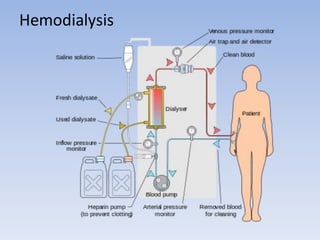
1. Hemodialysis
Requires vascular access, stable hemodynamics &systemic heparin.
Risks - disequilibrium syn., shock, bleeding, catheter site infection
and/or sepsis, air embolism.
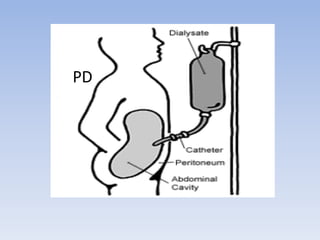
2. Peritoneal Dialysis
Requires intact abdomen without ileus and ICU care. No heparin
needed; continuous Rx.
Risks - failure to drain, impaired respirations, shock, bleeding,
peritonitis, bowel perforation, and hyperglycemia.
3. CAVH or CAVHD –CRRT
Requires vascular access, systemic heparin, and continuous Rx.
Consider for postop patient with unstable hemo-dynamics, fluid
overload,or catabolic patient on TPN.
Types of Dialysis For AKI
4- Hemofiltration
Hemofiltration is a similar treatment to hemodialysis, but it makes use of a
different principle. The blood is pumped through a dialyzer or "hemofilter" as
in dialysis, but no dialysate is used. A pressure gradient is applied; as a result,
water moves across the very permeable membrane rapidly, "dragging" along
with it many dissolved substances, including ones with large molecular
weights, which are not cleared as well by hemodialysis. Salts and water lost
from the blood during this process are replaced with a "substitution fluid" that
is infused into the extracorporeal circuit during the treatment.
5- Hemodiafiltration
Hemodialfiltration is a combination of hemodialysis and hemofiltration in one
process.
6- Intestinal dialysis??
In intestinal dialysis, the diet is supplemented with soluble fibres such as
acacia fibre, which is digested by bacteria in the colon. This bacterial growth
increases the amount of nitrogen that is eliminated in fecal waste.
An alternative approach utilizes the ingestion of 1 to 1.5 liters of non-
absorbable solutions of polyethylene glycol or mannitol every fourth hour.
CAN DIALYSIS DELAY RECOVERYOF RENAL FUNCTION?
There is at least theoretical concern that dialysis might
have detrimental effects on renal function.
Three factors may be important in this regard:
1- A reduction in urine output; 2- Induction of hypotension;
3- Complement activation resulting from a blood-dialysis membrane
interaction .
SUMMARY
There is no convincing evidence of benefit from early or aggressive
dialysis and there is some concern that renal function might be
impaired .
As a result, dialysis is usually performed in AKI only for a specific
indication with the suitable available mode of dialysis
Limitations Of A Purely Clinical Approach To The
Initiation Of Dialysis
Waiting for patient to develop uremic symptoms( nausea,
vomiting & loss of lean body wt.) carries the risk that the pt.
will start dialysis in a malnourished state with an increased
risk of mortality. RF is a catabolic state & patient on dialysis
has difficulties to regain lost weight.
As renal disease became chronic, patient remain unaware of
the severity of illness (gradualloss of RF gives time for
patient to accommodate).
With decrease protein intake, decrease uremic symptoms on
the expense of a loss of lean body mass.
Also, patient reduce their activities with decrease their
exercise tolerance.
Because of lack of awareness, ask patient some questions
that can help to assess his deterioration e.g. eating habits &
lifestyle over last 6-12 months and also, ask close relatives
or friends (a useful third party).
Limitations Of A Purely (Laboratory Result-Based)
Approach To The Initiation Of Dialysis
*Difficult to convince the patient for early
dialysis in presence of no symptoms of uremia
*We need complete confidence in the lab. values
to convince a reluctant asymptomatic patient.
* Earlier Vs late starting of dialysis, time dialysis
begins( what we call, Lead-time bias).
( No big difference in mortality or other
clinical outcomes).
Options of RRT (Dialysis and transplantation)
*Several patient factors may modify the choice of RRT
modality, the most important are:
- Patient preference, - Psychological stability,
- availability of a living-related donor,
- social circumstances and economic factors.
* In AKI hemodialysis, continuous renal replacement
therapies( CRRT), and PD may be done.
* In chronic renal failure or ESRD – HD,PD,CAPD
or CCPD (continuous cyclic PD), or renal transplant
may be done.
* In younger patients, PD is preferred.
* In older patients, obese patients with very poor renal
function, HD is preferred.
Options of RRT, Dialysis
HD and PD should not be seen as competing therapeutic
options, rather, they are two complementary methods of
dealing with uremia. Neither one is best suited for all patients.
Each modality has its own unique advantages and
disadvantages and at the same time it shares problems that exist
across therapies.Adequate selection of treatment modality and
optimization of each treatment modality will allow us to
improve the outcome and to offer to ESRD patients higher
survival, less morbidity and better quality of life.
(No Place For One- Fits- all).
Severely malnourished with severe hypoalbuminemia,
I personally would be reluctant to put onto PD from the
beginning of their dialysis therapy.
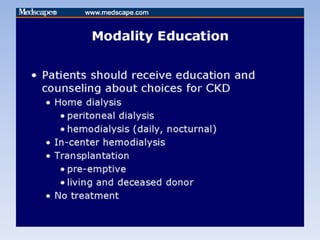
Options of RRT (Transplantation)
Renal transplant is the best treatment of
advanced ESRD.
Transplantation results in improved lifestyle and
improved life expectancy.
The problems are acute irreversible rejection or
chronic rejection.
Immunosuppressive protocol is applied.
Antibiotics may be needed for management of
infections.
Chronic renal transplant rejection may be caused by
recurrent disease, hypertension, cyclosporine or
tacrolimus (immunosuppressive), nephrotoxicity,
chronic rejection, focal glomerulosclerosis etc.
Education about transplantation
a- Best choice for patients with ESRD
as regard RRT( better survival & quality of life).
b- Suitable recipient, available donor (deceased or living).
c- Kidney or combined kid. & pancreas in diabetics.
d- Dialysis then TX. Or TX. Without dialysis( ? better
graft survival) Vs dialysis then TX.
e- Increasing duration on dialysis was associated with
increasing # of rejections within 6 months of TX.
(immunologic stimulation during long-term dialysis).
Suggested Steps For Resolving Conflict In
The Shared Decision About Starting Dialysis
Patient should understand diagnosis, prognosis &
treatment alternatives.
Nephrologist should understand patient's legal,
psychological, cultural or spiritual concerns &
values.
Assessment of psychologist, social worker may be
needed.
The need for social and official assessment.
Is there any contraindications for dialysis???
What are the contraindications for Dialysis??
Contraindications of Dialysis therapy
*Principally there is no absolute contraindication
to dialysis therapy.
*Advanced age in and of itself is not a contraindication to
dialysis therapy. Many elderly are physiologically
equivalent
to young patients.
*Patient refusal( try with the patient using all efforts and
available methods to convince the patient.
Relative contraindications to dialysis therapy
1. Advanced malignancy (except multiple myeloma)
2. Alzheimer’s disease 3. Multi-infarct dementia
4. Hepatorenal syndrome
5. Advanced liver cirrhosis with encephalopathy
6. Hypotension unresponsive to pressors
7. Terminal illness 8. Organic brain syndrome
Contraindications For HD
**Absolute ( Very few):
* Probably the overwhelming ones are a complete lack of vascular
access
* Severe intolerance to the hemodialysis procedure (severe
hemodynamic instability).
• unavailability of facilities
**Relative contraindications For HD:
*Difficult vascular access *Needle phobia
*Cardiac failure *Coagulopathy
**Hemodialysis is contraindicated or is carried out
with great caution in:
* Malignant tumors, * Hemophilia,
* Hemiplegia and * Prolonged internal bleeding.
Contraindications For PD
**Absolute contraindication to PD of course would be:
* Nonfunctioning peritoneal cavity (Loss of peritoneal function):
1. Peritoneal fibrosis 2. Pleuroperitoneal leak
3- Unusable peritoneal cavity (body size, low BMI >
35kg/ m2 ).
4- Surgically uncorrected abd. Hernia
5- Incapacity to carry out dialysis
(All lead to inadequate dialysis, also, adhesions blocking
dialysate flow).
* Complete inability to perform the procedure
Either by the patient or by their caregiver, helper, or
partner homeless or massive central obesity"
Relative contraindications for PD
**Relative Major:
1. Chronic Ostomies 2. Severe hyper catabolic state
3. Fresh aortic prosthesis (need at least 16 weeks, this time
allow epithelium to be covered & protect it from bacterial
seeding).
4. Recent Abdominal surgery 5. Recent Thoracic surgery
6. Extensive abdominal adhesions 7. Quadriplegia
8. Blindness 9. Physical handicaps 10. Mental Retardation
**Relative Minor:
1. PCKD 2.diverticulosis 3. Obesity
4- Large muscle mass 5. Peripheral vascular disease
6. Dyslipidemia 7- Severe malnutrition(PD↑protein loss)
8. A poor social situation.
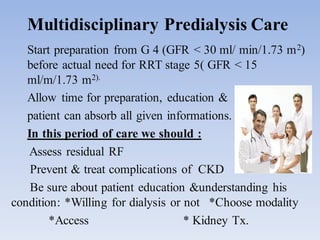
Multidisciplinary Predialysis Care
Start preparation from G 4 (GFR < 30 ml/ min/1.73 m2)
before actual need for RRT stage 5( GFR < 15
ml/m/1.73 m2).
Allow time for preparation, education &
patient can absorb all given informations.
In this period of care we should :
Assess residual RF
Prevent & treat complications of CKD
Be sure about patient education &understanding his
condition: *Willing for dialysis or not *Choose modality
*Access * Kidney Tx.
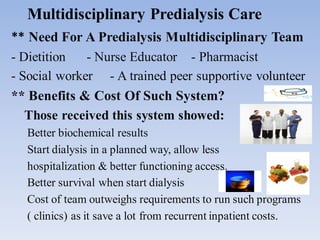
Multidisciplinary Predialysis Care
** Need For A Predialysis Multidisciplinary Team
- Dietition - Nurse Educator - Pharmacist
- Social worker - A trained peer supportive volunteer
** Benefits & Cost Of Such System?
Those received this system showed:
Better biochemical results
Start dialysis in a planned way, allow less
hospitalization & better functioning access.
Better survival when start dialysis
Cost of team outweighs requirements to run such programs
( clinics) as it save a lot from recurrent inpatient costs.
Predialysis Education Programs
A- Still there is education gap inspite nephrologist effort.
B- We should follow same as for adult learning:
a- Assess patient knowledge understanding
b- Accordingly, build up the appropriate knowledge on
an appropriate way.
c- Be sure by any means that patient has got the
information,
understanding & accepted.
d- Use individual or supportive groups and all available
communications methods ( e.g. mastaba ‫مصطبه‬ up to net-)
e- All efforts to help socioeconomically by all available
supportive societies.
f- Rehabilitation programs to improve work ability,
positive attitude to work ( encourage patient to work).
Hemodialysis
PD
PD
TAKING CARE OF YOUR GRAFT OR AVF
Avoid all pressure on the access site. If the graft or fistula
clots, you may need a new one.
Do not allow anyone to take a blood pressure reading or
any blood to be drawn on the same arm with the access.
Do not wear tight clothing around the access site .
Avoid placing pressure on the acess arm while you sleep.
Avoid placing pressure on lifting heavy items.
Do not use creams or lotions over the access.
Do not miss or skip any dialysis sessions. Make sure you
arrive on time. Many centers have busy schedules.
Watch the access site for the thrill, swelling, bleeding, or
signs of infection. Immediate Call for health care provider
Follow a strict kidney dialysis diet
Suggested Steps For Dealing With Disruptive Patients
(Some patients not comply with discipline required for
maintenance dialysis, they disrupt staff&other patients).
Identify and document problem behaviors and discuss with patients.
Try to understand the patient's perspective.
Share control & responspility for treatment with the
patient(education--)
Psychologist & social worker supportCare giver should be patient &
persistent
Allow patient to express with some tolerable words
( BUT Not Allow Verbal Abuse or any threats to staff or to other
patients)
Low enforcement officials
Group councellation & support
Transfer patient to another facility or documented& official
discharge.
Withdrawal Of Dialysis
What are the principles underlying withdrawal of
dialysis?
Ultimate responsibility for decision to treating
physician and not the relatives.
Protect patient interests & dignity.
Correctness of decision should be clear & no doubt,
otherwise continue.
Multidisciplinary team decision.
Psychological needs of health team.
Palliative care must be given in an appropriate.
environment, hospital sanitarium or patient's home.
Home Messages
Home Messages
*All efforts should be applied to treat any
cause, any curable factors, keep RRF &
slow progression to ESRD.
*Follow up GFR (against time) allow to
predict the time at which patient will
possibly need RRT for the next 1-2 years
( give chance for education & preparation).
*Exclude other causes(apart from uremia)
that can lead to cognitive dysfunctions, age
related or other systemic diseases.
Home Messages
Our target should be saving the patient &
his quality of life, morbidity and mortality
rather than to decrease S. creatinine on the
expense of other parameters.
Do not hesitate to start dialysis if indicated
& urgently needed.
Home Messages
Offering appropriate therapy choices and personalizing
dialysis.
Importance of individual explanation,
preparation & education of patient and
his family as regard conservative treatment
and RRT ( early vascular access).
We should have clinics for those who refuse RRT and
need to continue on conservative treatment( Diet
control-----). Do not deprive the patient from any
supportive treatment.
Home Messages
*Close follow up, perfect diagnosis
*Appropriate therapy for
*Appropriate patient in the
*Appropriate time with
*Appropriate dose with
* Less side effects
References
Source and further information:
http://www.dialysistips.com/indications.html
http://www.medscape.com
http://en.wikipedia.org/wiki/Dialysis
"Atlas of Diseases of the Kidney 2011
NKF KDOQI GUIDELINES
Am J Kidney Dis. 2001 May ;37 (5):981-6
Clin J Am Soc Nephrol. 2011 Jul ;6 (7):1676-83
Thank You
‫أمنه‬ ‫مصر‬ ‫هللا‬ ‫حفظ‬–‫حرة‬-‫مستقله‬–‫متقدمه‬
‫واحد‬ ‫علم‬ ‫تحت‬ ‫واحد‬ ‫شعب‬

Renal replacement therapy prof. ahmed rabee

  • 1.
    RRT When ?! By Dr.Ahmed Rabie EL-Arbagy Prof. Of Renal Medicine Internal Med. Dep.-Menoufia University Dakahlia Syndicate Work Shop 8/12/2017
  • 2.
    Content sIntroduction & Include: *Whatare the renal functions& Forms of Dysfunctions ? **Importance of early referral to nephrologist ** Predictions for starting dialysis ** Multidisciplinary predialysis care ** Predialysis evaluation program ** Aim of all RRT techniques & general principles ** Indications of RRT ** Options of RRT ** Contraindications of Dialysis ** Dealing with disruptive patients ** Withdrawal of Dialysis
  • 3.
  • 4.
    Lab.assessment of renalfunction Include *a-Serum creatinine *b-Blood urea nitrogen(BUN), creatinine and urea clearance *c-Measurement of GFR (glomerular filtration rate) using radioisotope. *d- All of the above
  • 5.
    Which of thefollowing define CKD? A-Albuminuria> 3/12 B-Urine sediment abnormalities> 3/12 C-Decreased GFR> 3/12 D- All of the above
  • 6.
    When to InitiateRenal Replacement Therapy (RRT)? • Earlier is better • Late is better • I do not know
  • 7.
    Indications of Initiationsof RRT • Absolute: Mention 3 • Common: mention 2 • Relative : Mention 1
  • 8.
    Indications Of Dialysis,In AKI • Mention 3 important indications • What is the most suitable type of dialysis in AKI?
  • 9.
    Mention the contraindicationsof dialysis • Absolute • Relative
  • 10.
    INTRODUCTION, Renal Functions Thekidneys have important roles in maintaining health. Main job is to remove toxins from the blood. A buildup of waste products can lead to death. Healthy kidneys maintain the body's internal equilibrium of water and minerals (sodium, potassium, chloride, calcium, phosphorus, magnesium, sulfate). The kidneys also function as a part of the endocrine system, producing erythropoietin and maintain blood pressure( RAAS). Erythropoietin( EPO) is involved in the production of RBCs and calcitriol plays a role in bone formation.
  • 11.
    INTRODUCTION, Renal Functions Uremia Theliver stores protein and breaks it down into amino acids whenever they are needed by the body. It also converts amino acids into urea and sends urea to the kidneys. In acute renal failure, the kidneys cannot excrete urea efficiently. This leads to uremia, or too much urea in the bloodstream. This is toxic, since urea has nitrogen. The symptoms include weakness, nausea and vomiting, confusion, seizures, jerky hand movementsand even coma. Source of S. creatinine The skeletal muscle breaks down creatine phosphate for its energy needs. This results in a substance called creatinine. If the kidneys are functioning, they will excrete creatinine. But in acute renal failure, there are high levels of creatinine in the bloodstream.
  • 12.
    How To AssessRenal Function?
  • 13.
    Assessment Of RenalFunction &Forms of dysfunctions Assessment Of Renal Functions: *Serum creatinine *Blood urea nitrogen, Creatinine and urea clearance *Measurement of GFR (glomerular filtration rate) using radioisotope. ---------------------------------------------------- *???? Urine analysis to assess-----? R diseasess & dysfunctions -------------------------------------------------------- Forms of renal dysfunctions: -AKI - CKD - RPRF - Acute on top of chronic
  • 14.
    Criteria for CKD (Eitherof the following present for ≥ 3 months) Markers of kidney damage (one or more) Albuminuria: Albumin excretion ration (AER) ≥30mg/24 hours) Albumin Creatinine ratio (ACR) ≥30mg/g (≥3mg/mmol)) Urine sediment abnormalities. Electrolyte and other abnormalities due to tubular disorders. Abnormalities detected by histology. Structural abnormalities detected by imaging. History of kidney transplantation. Decreased GFR GFR <60ml/min per 1.73m2 (GFR categories G3a–G5) (Kidney Disease ImprovingOutcome (KDIGO) guidelines,2013)
  • 15.
    GFR categories inCKD GFR (ml/min per 1.73m2) Terms G1 ≥90 Normal or high G2 60–89 Mildly decreased G3a 45–59 Mildly to moderately decreased G3b 30–44 Moderately to severely decreased G4 15–29 Severely decreased G5 <15 Kidney failure (Kidney Disease Improving Outcome (KDIGO) guidelines, 2013)
  • 16.
    Albuminuria(A) categories inCKD PER(mg/24 h) AER (mg/24 h) ACR (approximateequivalent) (mg/mmol) (mg/g) Normal to mildly increased A1 <150 <30 <3 <30 Moderately increased A2 150-500 30–300 3–30 30–300 Severely increased A3 >500 >300 >30 >300 PER=proteinexcretion ratio, AER=albuminexcretion ratio, ACR=AlbuminCreatinineratio. (Kidney Disease Improving Outcome (KDIGO) guidelines, 2013)
  • 17.
    Heat map; GFRand albuminuria
  • 18.
    Summary of KidneyDisease Outcomes Quality Initiative (K/DOQI)guidelines Estimated(e)-GFR (ml/min) • Stage 1 ≥ 90 • Early kidney damage with normal function • Stage 2 60-89 • Worse kidney damage with reduced function • Stage 3 30-59 • Even worse kidney damage with less function • Stage 4 15-29 • Severe kidney damage with very poor function that the kidneys are barely able to keep person alive • Stage 5 < 15 • End stage renal disease where the kidneys don't work well enough to keep person alive (Kidney Disease Outcomes Quality Initiative (K/DOQI), 2002)
  • 19.
    HOW CKD stagesreflected-Clinically *1- No observed symptoms. • Urea and creatinine are both normal. *2- No observed symptoms. • Urea and creatinine are mildly elevated. *3- Early symptoms such as tiredness, loss of appetite or itching. • Urea and creatinine rises, excess urea may present. +/- Anemia. * 4- Tiredness, loss of appetite and itching may become worse. • Urea and creatinine rises. +/-Anemia. +/- Mineral Bone disease. *5- Previous symptoms become worse in add to other symptoms of uremic syndrome like disturbed sleep pattern, nausea and vomiting. • Urea and creatinine records high levels. • Anemia. • Mineral and bone disease (MBD). (Kidney Disease Outcomes Quality Initiative (K/DOQI), 2002)
  • 20.
    CKD Treatment options •Identify reversible causes • Try to stop or slow the progression of the disease. • Continue try to stop or slow the progression of the disease. • Teach the patient more about the disease course and treating modalities. • Plan and create access site for dialysis. • Start transplantationwork up. • Start renal replacement therapy (RRT) either dialysis or transplantation. (Kidney Disease Outcomes Quality Initiative (K/DOQI), 2002)
  • 21.
    When to InitiateDialysis? The decision to initiate dialysis in a patient with CKD involves the consideration of subjective and objective parameters by the physician and the patient. There are no absolute laboratory values that indicate a requirement to begin dialysis. The decision is partly based on the patient’s perception of his or her quality of life and anxiety about starting a complex, potentially life- long therapy. In addition, the nephrologist’s perception about the patient’s state of health, decline of kidney function, and potential hazards of therapy influence the timing of initiation of renal replacement therapy. ** In short, the decision of when to start dialysis is clearly one of the most difficult decisions that both the patient and the nephrologist must make.
  • 22.
    Predictions Of TheStart Of Dialysis - Routine measurement of GFR(confirm results). - Estimate severity from monitoring of GFR against time. -Follow up of GFR allow to identify renal deterioration, as rate of decline give idea about time that patient will require dialysis in the next 1-2 years & give chance for preparation & education. - It is important to prepare the patient for RRT.
  • 23.
    When Should dialysisBe Started? *With close monitoring of GFR & became < 15 ml/m 1.73 m2 (start dialysis once symptoms develop). *Threshold to start dialysis varies from country to another (of course from patient to another). *Earlier threshold (~ 15 ml/m 1.73 m2) in diabetics who has poor tolerance to uremia, sodium retention &overload). *Other measures to be taken into considerations include: a- Rising S. phosphorus b- Falling sodium bicarbonate c- Protein- Energy malnutrition **N.B. A fall in S. albumin is a late sign of reduced protein intake & debility ( do not wait for-----)
  • 24.
    What does Dialysismean? Dialysis (from Greek dialusis,"διάλυσις", meaning dissolution. Dia, meaning through, and lysis, meaning loosening or splitting) is a process for removing waste and excess water from the blood, and is used primarily to provide an artificial replacement for lost kidney function in people with renal failure . Dialysis may be used for those with an acute kidney injury ( AKI), or progressive but chronically worsening kidney function (GFR < 15), ESR disease ( CKD, stage 5).
  • 25.
    What does dialysismean? Dialysis is an imperfect treatment to replace kidney function because it does not correct the compromised endocrine functions of the kidney. Dialysis treatments replace some of these functions through diffusion (waste removal) and ultrafiltration (fluid removal). CKD may develop over months or years ( in contrast to AKI) is not usually reversible, and dialysis is regarded as a "holding measure" until a renal transplant can be performed, or sometimes as the only supportive measure in those for whom a transplant would be inappropriate.
  • 26.
    Indications for initiationof Dialysis Absolute indications:Pericarditis without other explanation. Blood diathesis (prolonged bleeding time) Neurological disorders (encephalopathy e.g. tremors, multifocal myoclonus, seizures and coma , neuropathy either motor e.g. dropped wrist or foot, or sensory e.g. restless leg syndrome and psychiatric disorder) Common indications:Intractable extracellular volume overload and/or hypertension. Hyperkalemia refractory to dietary restriction and pharmacological treatment. Metabolic acidosis refractory to bicarbonate treatment. Hyperphosphatemia refractory to dietary counseling and phosphorus binders. Recent weight loss or deterioration of nutritional status specially if accompanied by nausea, vomiting or other evidence of gastrodudenitis.Relative indications:Decreased attentivenessand cognitive tasking,depression&persistent pruritus. (Hemodialysis Adequacy Work Group, 2015)
  • 27.
    Indications For EarlyStart On Dialysis Note that there is increasing data to suggest benefit with proper time initiation of dialysis prior to the occurrence of these �absolute� indications in both the acute and chronic settings. *Intractable(Fluid overload and/or hyperkalemia) •Uremic S& S: • - Neurologic dysfunction( reduce cognitive dysfunction affect learning, necessitate early dialysis - Serositis - Malnutrition * Functional deterioration otherwise unexplained
  • 28.
    Indications of Dialysis,In CKD ** Urgent Indications: There are a number of clinical indications: Pericarditis or pleuritis (urgent indication) Progressive uremic encephalopathy or neuropathy, with signs such as confusion, asterixis, myoclonus, wrist or foot drop, or, in severe cases, seizures (urgent indication). A clinically significant bleeding diathesis attributable to uremia (urgent indication). Persistent metabolic disturbances that are refractory to medical therapy; these include hyperkalemia, metabolic acidosis,hypercalcemia, hypocalcemia, and hyperphosphatemia(Severe biochemical derangement in the absence of symptoms(with a rising trend in an oliguric & hyper catabolic patient). Fluid overload refractory to diuretics
  • 29.
    Indications of dialysis,In CKD,continue *Hypertension poorly responsive to antihypertensive medications *Persistent nausea and vomiting. *Evidence of malnutrition The first five of the above indications (serositis, uremic encephalopathy, bleeding diathesis and refractory metabolic disturbances & fluid overload) are potentially acutely life-threatening and should not be allowed to develop prior to initiation of dialysis in patients with known CKD under medical care. The last two (nausea & vomiting and malnutrition) develop more insidiously and can also be due to other co-morbidities or drug effects. They are no less dangerous. **N.B. Dialysis for those with progressing CKD will be more easier after repeated & long term trials of conservative, supportive & symptomatic treatment including diet, medications,education & preparation for RRT.
  • 30.
    In the contrary,CanDialysis be Delayed? The answer is (--?--------) Asymptomatic Awaiting immenent ( Kidney Tx., Placement for permanent HD or PD access). After appropriate education. Patient has chosen conservative therapy. N.B. Remember That, those who delay dialysis( for any reason) should be closely & frequently monitored ( to see if dialysis became necessary). *Nephrologist should have practice considering conservative( non-dialysis) treatment for renal failure.
  • 31.
    Indications Of Dialysis,In AKI Summarized with the mnemonic "AEIOU": Acidemia(intractable)from metabolic acidosis in situationsin which correction with sodium bicarbonateis impractical or may result in fluid overload Electrolyte abnormality, such as severe hyperkalemia > 6.5-7 mmol/L or with ECG changes. Temporize with calcium, D50 + insulin, HCO3, beta- agonist nebulizers, and kayexalate. Intoxication, that is, acute poisoningwith a dialyzablesubstance. These substancescan be represented by the mnemonic SLIME: salicylic acid, lithium, isopropanol,Magnesium-containinglaxatives, and ethyleneglycol Overload of fluid not expected to respond to treatment with diuretics (intractable) Uremia complications, such as pericarditis, encephalopathy, seizure, gastrointestinal bleedingor intractablenausea/vomiting. **RRT In AKI: Keep BUN < 100 mg/dl, Creat < 10 mg/dl.
  • 32.
    Types of DialysisFor AKI There are 3 primary and 2 secondary types of dialysis: **Primary: Hemodialysis (HD), Peritoneal Dialysis(PD) and Hemofiltration **Secondary: Hemodiafiltration and Intestinal Dialysis.
  • 33.
    Types of DialysisFor AKI 1. Hemodialysis Requires vascular access, stable hemodynamics &systemic heparin. Risks - disequilibrium syn., shock, bleeding, catheter site infection and/or sepsis, air embolism. 2. Peritoneal Dialysis Requires intact abdomen without ileus and ICU care. No heparin needed; continuous Rx. Risks - failure to drain, impaired respirations, shock, bleeding, peritonitis, bowel perforation, and hyperglycemia. 3. CAVH or CAVHD –CRRT Requires vascular access, systemic heparin, and continuous Rx. Consider for postop patient with unstable hemo-dynamics, fluid overload,or catabolic patient on TPN.
  • 34.
    Types of DialysisFor AKI 4- Hemofiltration Hemofiltration is a similar treatment to hemodialysis, but it makes use of a different principle. The blood is pumped through a dialyzer or "hemofilter" as in dialysis, but no dialysate is used. A pressure gradient is applied; as a result, water moves across the very permeable membrane rapidly, "dragging" along with it many dissolved substances, including ones with large molecular weights, which are not cleared as well by hemodialysis. Salts and water lost from the blood during this process are replaced with a "substitution fluid" that is infused into the extracorporeal circuit during the treatment. 5- Hemodiafiltration Hemodialfiltration is a combination of hemodialysis and hemofiltration in one process. 6- Intestinal dialysis?? In intestinal dialysis, the diet is supplemented with soluble fibres such as acacia fibre, which is digested by bacteria in the colon. This bacterial growth increases the amount of nitrogen that is eliminated in fecal waste. An alternative approach utilizes the ingestion of 1 to 1.5 liters of non- absorbable solutions of polyethylene glycol or mannitol every fourth hour.
  • 35.
    CAN DIALYSIS DELAYRECOVERYOF RENAL FUNCTION? There is at least theoretical concern that dialysis might have detrimental effects on renal function. Three factors may be important in this regard: 1- A reduction in urine output; 2- Induction of hypotension; 3- Complement activation resulting from a blood-dialysis membrane interaction . SUMMARY There is no convincing evidence of benefit from early or aggressive dialysis and there is some concern that renal function might be impaired . As a result, dialysis is usually performed in AKI only for a specific indication with the suitable available mode of dialysis
  • 36.
    Limitations Of APurely Clinical Approach To The Initiation Of Dialysis Waiting for patient to develop uremic symptoms( nausea, vomiting & loss of lean body wt.) carries the risk that the pt. will start dialysis in a malnourished state with an increased risk of mortality. RF is a catabolic state & patient on dialysis has difficulties to regain lost weight. As renal disease became chronic, patient remain unaware of the severity of illness (gradualloss of RF gives time for patient to accommodate). With decrease protein intake, decrease uremic symptoms on the expense of a loss of lean body mass. Also, patient reduce their activities with decrease their exercise tolerance. Because of lack of awareness, ask patient some questions that can help to assess his deterioration e.g. eating habits & lifestyle over last 6-12 months and also, ask close relatives or friends (a useful third party).
  • 37.
    Limitations Of APurely (Laboratory Result-Based) Approach To The Initiation Of Dialysis *Difficult to convince the patient for early dialysis in presence of no symptoms of uremia *We need complete confidence in the lab. values to convince a reluctant asymptomatic patient. * Earlier Vs late starting of dialysis, time dialysis begins( what we call, Lead-time bias). ( No big difference in mortality or other clinical outcomes).
  • 38.
    Options of RRT(Dialysis and transplantation) *Several patient factors may modify the choice of RRT modality, the most important are: - Patient preference, - Psychological stability, - availability of a living-related donor, - social circumstances and economic factors. * In AKI hemodialysis, continuous renal replacement therapies( CRRT), and PD may be done. * In chronic renal failure or ESRD – HD,PD,CAPD or CCPD (continuous cyclic PD), or renal transplant may be done. * In younger patients, PD is preferred. * In older patients, obese patients with very poor renal function, HD is preferred.
  • 39.
    Options of RRT,Dialysis HD and PD should not be seen as competing therapeutic options, rather, they are two complementary methods of dealing with uremia. Neither one is best suited for all patients. Each modality has its own unique advantages and disadvantages and at the same time it shares problems that exist across therapies.Adequate selection of treatment modality and optimization of each treatment modality will allow us to improve the outcome and to offer to ESRD patients higher survival, less morbidity and better quality of life. (No Place For One- Fits- all). Severely malnourished with severe hypoalbuminemia, I personally would be reluctant to put onto PD from the beginning of their dialysis therapy.
  • 40.
    Options of RRT(Transplantation) Renal transplant is the best treatment of advanced ESRD. Transplantation results in improved lifestyle and improved life expectancy. The problems are acute irreversible rejection or chronic rejection. Immunosuppressive protocol is applied. Antibiotics may be needed for management of infections. Chronic renal transplant rejection may be caused by recurrent disease, hypertension, cyclosporine or tacrolimus (immunosuppressive), nephrotoxicity, chronic rejection, focal glomerulosclerosis etc.
  • 41.
    Education about transplantation a-Best choice for patients with ESRD as regard RRT( better survival & quality of life). b- Suitable recipient, available donor (deceased or living). c- Kidney or combined kid. & pancreas in diabetics. d- Dialysis then TX. Or TX. Without dialysis( ? better graft survival) Vs dialysis then TX. e- Increasing duration on dialysis was associated with increasing # of rejections within 6 months of TX. (immunologic stimulation during long-term dialysis).
  • 42.
    Suggested Steps ForResolving Conflict In The Shared Decision About Starting Dialysis Patient should understand diagnosis, prognosis & treatment alternatives. Nephrologist should understand patient's legal, psychological, cultural or spiritual concerns & values. Assessment of psychologist, social worker may be needed. The need for social and official assessment.
  • 43.
    Is there anycontraindications for dialysis??? What are the contraindications for Dialysis??
  • 44.
    Contraindications of Dialysistherapy *Principally there is no absolute contraindication to dialysis therapy. *Advanced age in and of itself is not a contraindication to dialysis therapy. Many elderly are physiologically equivalent to young patients. *Patient refusal( try with the patient using all efforts and available methods to convince the patient. Relative contraindications to dialysis therapy 1. Advanced malignancy (except multiple myeloma) 2. Alzheimer’s disease 3. Multi-infarct dementia 4. Hepatorenal syndrome 5. Advanced liver cirrhosis with encephalopathy 6. Hypotension unresponsive to pressors 7. Terminal illness 8. Organic brain syndrome
  • 45.
    Contraindications For HD **Absolute( Very few): * Probably the overwhelming ones are a complete lack of vascular access * Severe intolerance to the hemodialysis procedure (severe hemodynamic instability). • unavailability of facilities **Relative contraindications For HD: *Difficult vascular access *Needle phobia *Cardiac failure *Coagulopathy **Hemodialysis is contraindicated or is carried out with great caution in: * Malignant tumors, * Hemophilia, * Hemiplegia and * Prolonged internal bleeding.
  • 46.
    Contraindications For PD **Absolutecontraindication to PD of course would be: * Nonfunctioning peritoneal cavity (Loss of peritoneal function): 1. Peritoneal fibrosis 2. Pleuroperitoneal leak 3- Unusable peritoneal cavity (body size, low BMI > 35kg/ m2 ). 4- Surgically uncorrected abd. Hernia 5- Incapacity to carry out dialysis (All lead to inadequate dialysis, also, adhesions blocking dialysate flow). * Complete inability to perform the procedure Either by the patient or by their caregiver, helper, or partner homeless or massive central obesity"
  • 47.
    Relative contraindications forPD **Relative Major: 1. Chronic Ostomies 2. Severe hyper catabolic state 3. Fresh aortic prosthesis (need at least 16 weeks, this time allow epithelium to be covered & protect it from bacterial seeding). 4. Recent Abdominal surgery 5. Recent Thoracic surgery 6. Extensive abdominal adhesions 7. Quadriplegia 8. Blindness 9. Physical handicaps 10. Mental Retardation **Relative Minor: 1. PCKD 2.diverticulosis 3. Obesity 4- Large muscle mass 5. Peripheral vascular disease 6. Dyslipidemia 7- Severe malnutrition(PD↑protein loss) 8. A poor social situation.
  • 48.
    Multidisciplinary Predialysis Care Startpreparation from G 4 (GFR < 30 ml/ min/1.73 m2) before actual need for RRT stage 5( GFR < 15 ml/m/1.73 m2). Allow time for preparation, education & patient can absorb all given informations. In this period of care we should : Assess residual RF Prevent & treat complications of CKD Be sure about patient education &understanding his condition: *Willing for dialysis or not *Choose modality *Access * Kidney Tx.
  • 49.
    Multidisciplinary Predialysis Care **Need For A Predialysis Multidisciplinary Team - Dietition - Nurse Educator - Pharmacist - Social worker - A trained peer supportive volunteer ** Benefits & Cost Of Such System? Those received this system showed: Better biochemical results Start dialysis in a planned way, allow less hospitalization & better functioning access. Better survival when start dialysis Cost of team outweighs requirements to run such programs ( clinics) as it save a lot from recurrent inpatient costs.
  • 50.
    Predialysis Education Programs A-Still there is education gap inspite nephrologist effort. B- We should follow same as for adult learning: a- Assess patient knowledge understanding b- Accordingly, build up the appropriate knowledge on an appropriate way. c- Be sure by any means that patient has got the information, understanding & accepted. d- Use individual or supportive groups and all available communications methods ( e.g. mastaba ‫مصطبه‬ up to net-) e- All efforts to help socioeconomically by all available supportive societies. f- Rehabilitation programs to improve work ability, positive attitude to work ( encourage patient to work).
  • 52.
  • 53.
  • 54.
    TAKING CARE OFYOUR GRAFT OR AVF Avoid all pressure on the access site. If the graft or fistula clots, you may need a new one. Do not allow anyone to take a blood pressure reading or any blood to be drawn on the same arm with the access. Do not wear tight clothing around the access site . Avoid placing pressure on the acess arm while you sleep. Avoid placing pressure on lifting heavy items. Do not use creams or lotions over the access. Do not miss or skip any dialysis sessions. Make sure you arrive on time. Many centers have busy schedules. Watch the access site for the thrill, swelling, bleeding, or signs of infection. Immediate Call for health care provider Follow a strict kidney dialysis diet
  • 55.
    Suggested Steps ForDealing With Disruptive Patients (Some patients not comply with discipline required for maintenance dialysis, they disrupt staff&other patients). Identify and document problem behaviors and discuss with patients. Try to understand the patient's perspective. Share control & responspility for treatment with the patient(education--) Psychologist & social worker supportCare giver should be patient & persistent Allow patient to express with some tolerable words ( BUT Not Allow Verbal Abuse or any threats to staff or to other patients) Low enforcement officials Group councellation & support Transfer patient to another facility or documented& official discharge.
  • 56.
    Withdrawal Of Dialysis Whatare the principles underlying withdrawal of dialysis? Ultimate responsibility for decision to treating physician and not the relatives. Protect patient interests & dignity. Correctness of decision should be clear & no doubt, otherwise continue. Multidisciplinary team decision. Psychological needs of health team. Palliative care must be given in an appropriate. environment, hospital sanitarium or patient's home.
  • 57.
  • 58.
    Home Messages *All effortsshould be applied to treat any cause, any curable factors, keep RRF & slow progression to ESRD. *Follow up GFR (against time) allow to predict the time at which patient will possibly need RRT for the next 1-2 years ( give chance for education & preparation). *Exclude other causes(apart from uremia) that can lead to cognitive dysfunctions, age related or other systemic diseases.
  • 59.
    Home Messages Our targetshould be saving the patient & his quality of life, morbidity and mortality rather than to decrease S. creatinine on the expense of other parameters. Do not hesitate to start dialysis if indicated & urgently needed.
  • 60.
    Home Messages Offering appropriatetherapy choices and personalizing dialysis. Importance of individual explanation, preparation & education of patient and his family as regard conservative treatment and RRT ( early vascular access). We should have clinics for those who refuse RRT and need to continue on conservative treatment( Diet control-----). Do not deprive the patient from any supportive treatment.
  • 61.
    Home Messages *Close followup, perfect diagnosis *Appropriate therapy for *Appropriate patient in the *Appropriate time with *Appropriate dose with * Less side effects
  • 62.
    References Source and furtherinformation: http://www.dialysistips.com/indications.html http://www.medscape.com http://en.wikipedia.org/wiki/Dialysis "Atlas of Diseases of the Kidney 2011 NKF KDOQI GUIDELINES Am J Kidney Dis. 2001 May ;37 (5):981-6 Clin J Am Soc Nephrol. 2011 Jul ;6 (7):1676-83
  • 63.
  • 64.
    ‫أمنه‬ ‫مصر‬ ‫هللا‬‫حفظ‬–‫حرة‬-‫مستقله‬–‫متقدمه‬ ‫واحد‬ ‫علم‬ ‫تحت‬ ‫واحد‬ ‫شعب‬