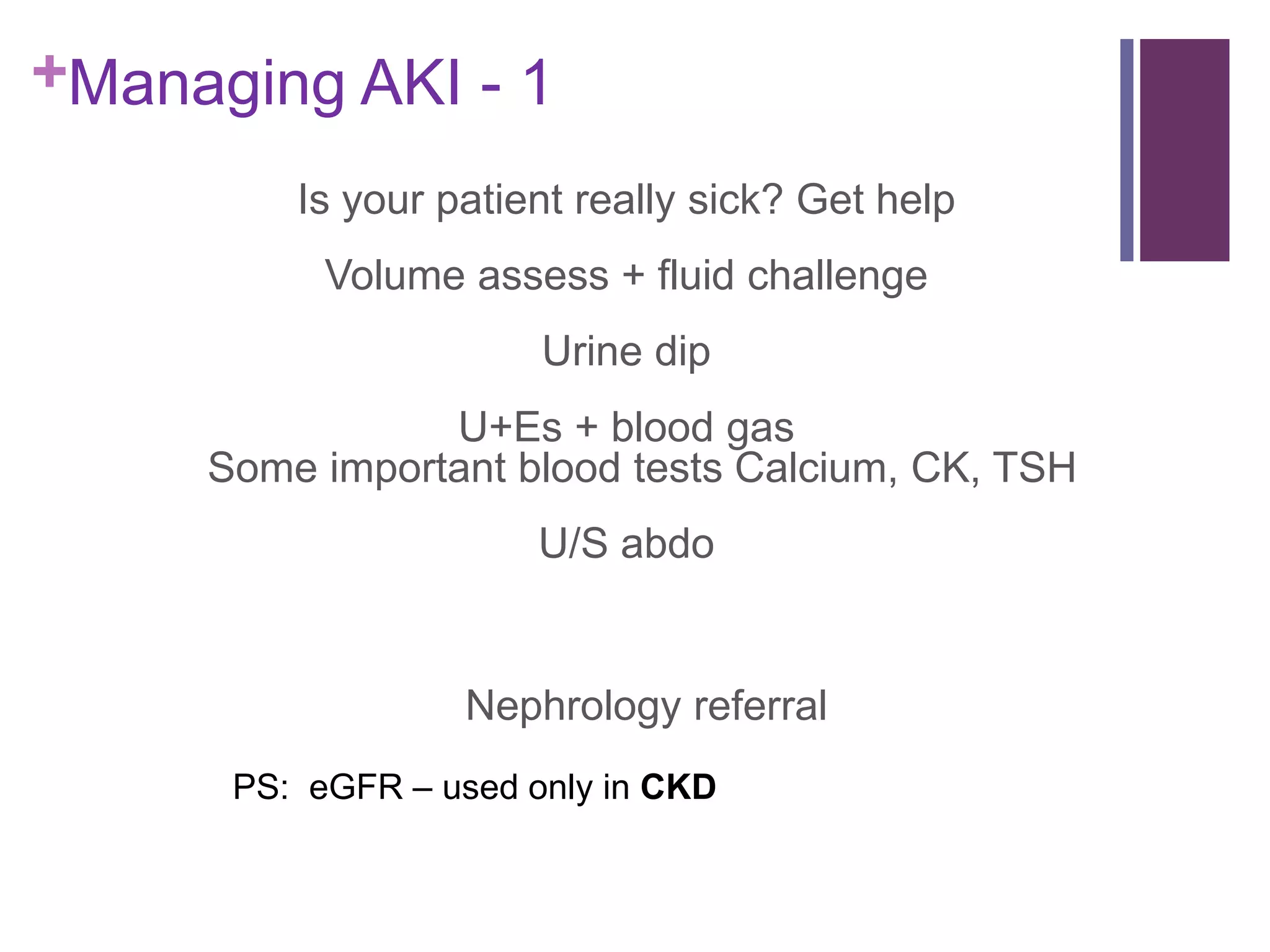
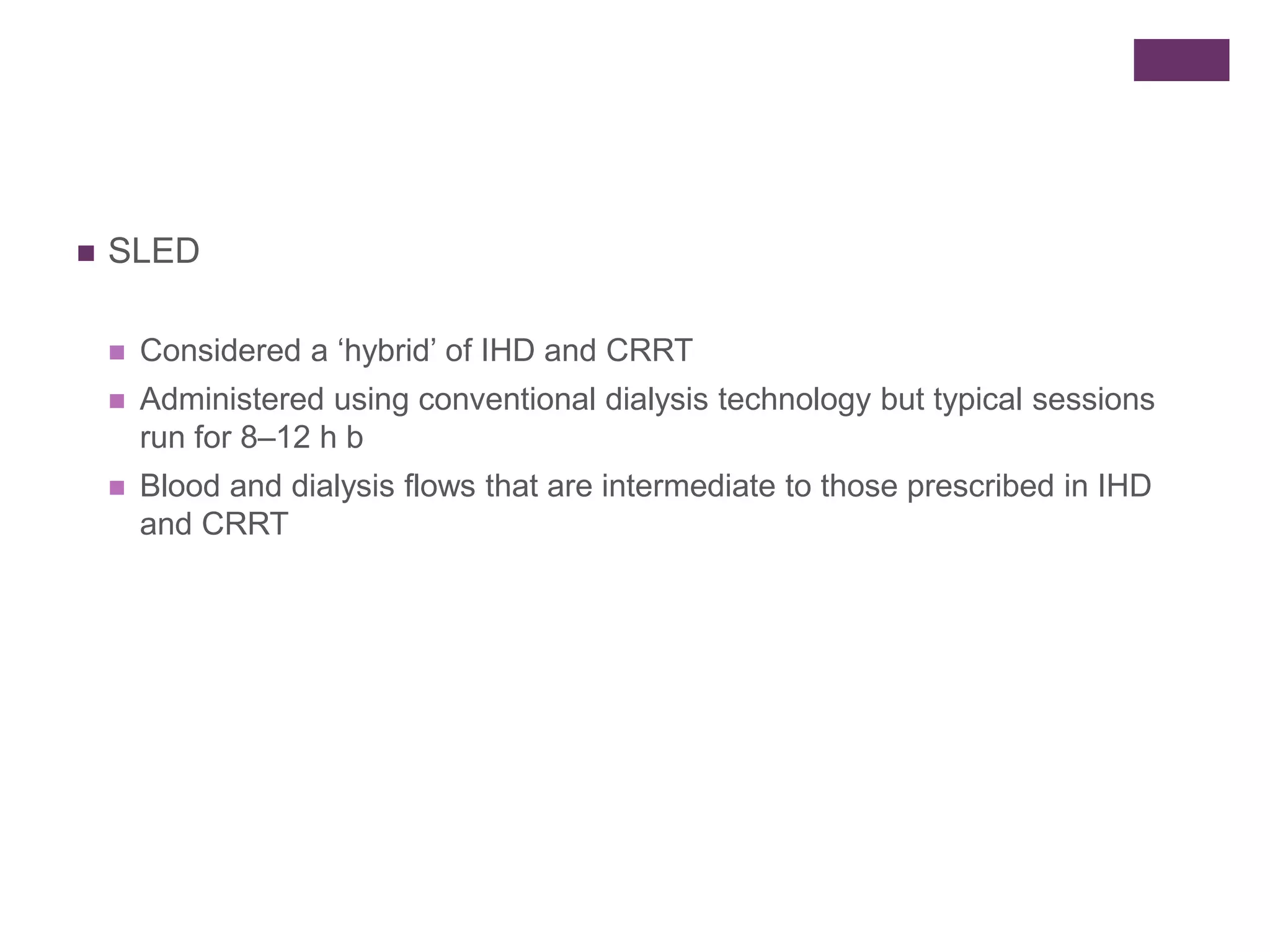
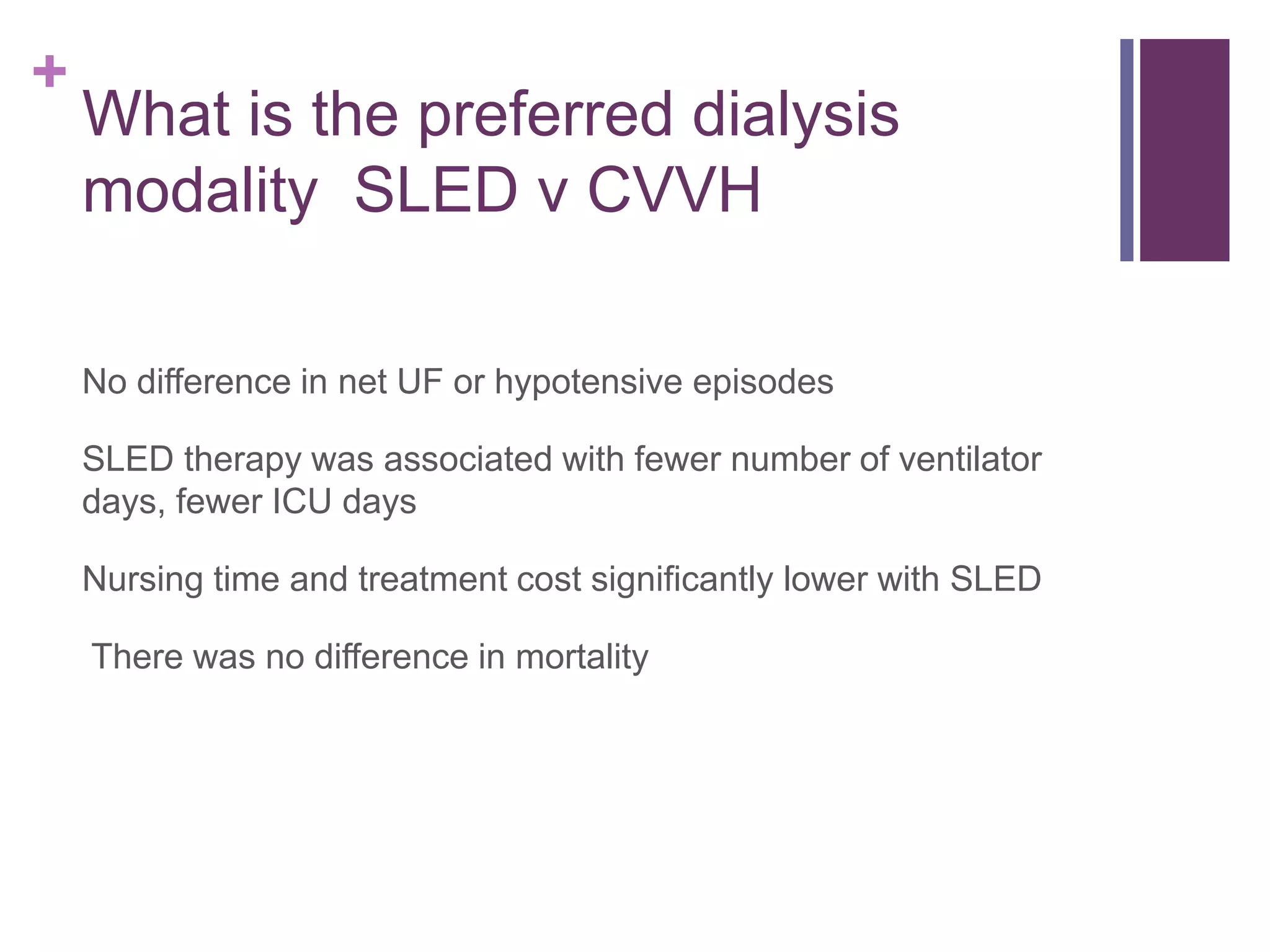
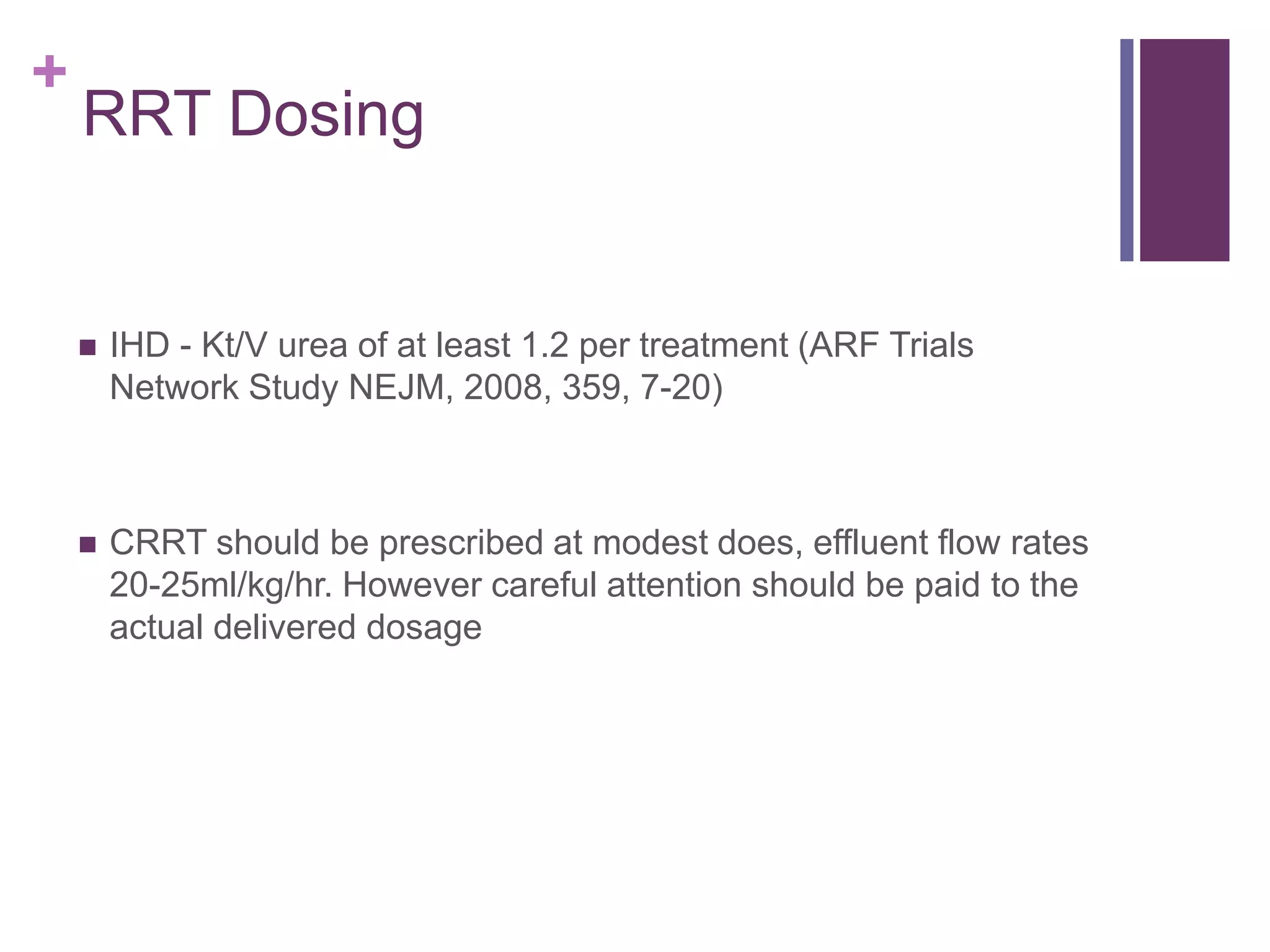
AKI, or acute kidney injury, occurs in 18% of hospital admissions and can be caused by sepsis, hypovolemia, drugs, acute glomerulonephritis, or obstruction. Early signs include increased serum creatinine, low blood pressure under 90, and low urine output under 500ml in 24 hours. Treatment focuses on fluid management and supportive care; starting renal replacement therapy is based on fluid overload and high blood urea levels. Continuous renal replacement therapy is preferred for hemodynamic instability while intermittent hemodialysis enables faster clearance but is riskier for unstable patients.