



REMOTE SENSING PLATFORMS
M.Senthamizhan
Assistant Professor / Civil
Alagappa Chettiar Government College of
Engineering and Technology, Karaikudi
Tamilnadu
Vital Role in remote sensing data acquisition
Necessary to correct the position the remote sensors
that collect data from the objects of interest
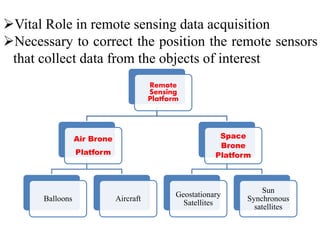
Remote
Sensing
Platform
Air Brone
Platform
Balloons Aircraft
Space
Brone
Platform
Geostationary
Satellites
Sun
Synchronous
satellites
Air brone Platforms
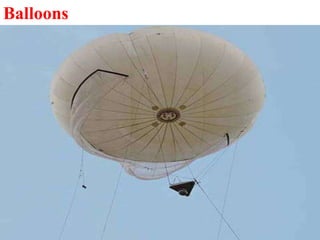
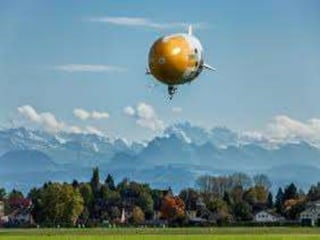
Balloons
Used for specific projects
Commonly restricted by meteorological
factors, such as Wind velocity, direction
etc.,
Two Types (i) Free Balloons
(ii) Tethered Balloons
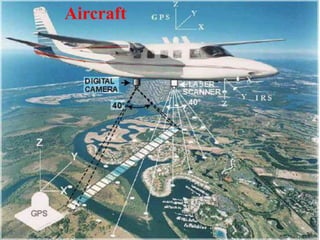
Aircraft
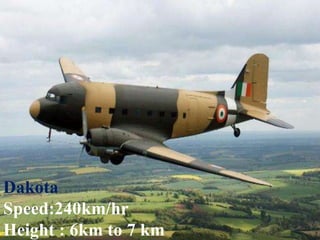
Dakota
Speed:240km/hr
Height : 6km to 7 km
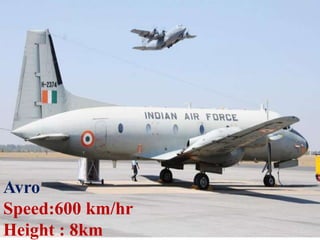
Avro
Speed:600 km/hr
Height : 8km
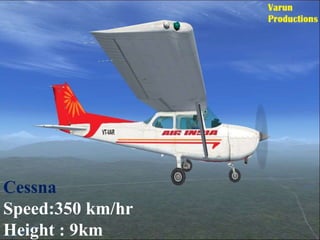
Cessna
Speed:350 km/hr
Height : 9km
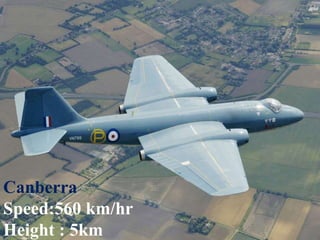
Canberra
Speed:560 km/hr
Height : 5km
Used for obtaining aerial photographs
Useful for regional coverage and large scale
mapping
Flexibility of altitude in flying and data acquisition
as per need
Important : Maximum Stability, Free from vibrations
and oscillations, fly with a uniform speed, the height
of ceiling.
Types:
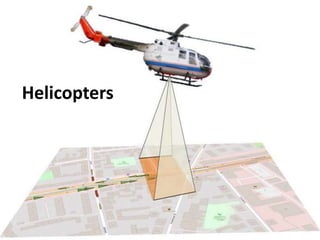
(i) Helicopters
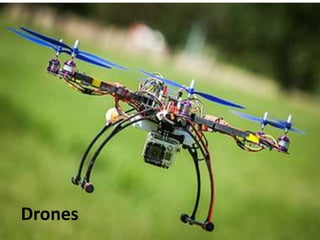
(ii) Drones
(iii) Sail Planes are also used for low altitude
photography and television photography.
Helicopters
Drones
Sail Planes
Space brone Platforms
Satellites – Use in Natural resource mapping,
meteorological and communication applications
Free flying orbiting vehicles whose motion is
governed by gravity and atmosphere based Kepler’s
Law
Entire earth or designated portion can be suitably
covered at specified intervals
Least affected by disturbance in atmosphere and
hence their orbits can be properly defined
Also helpful in viewing extraterrestrial bodies
Types (i) Geostationary Satellites
(ii) Sun Synchronous Satellites
Geostationary Satellites
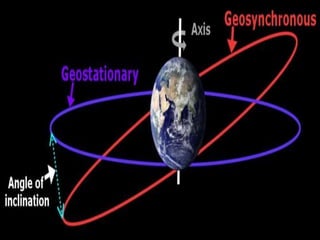
Also known as Earth Synchronous Satellites and
the orbit in which these satellites move is called
geosynchronous or geostationary satellite
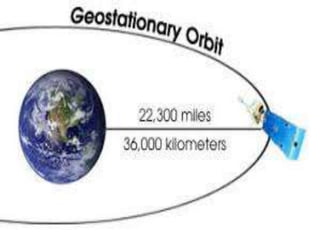
Placed at a distance of 36,000km above the equator
At this altitude the orbital speed of the satellite is
the same as that of the Earth’s rotation speed.
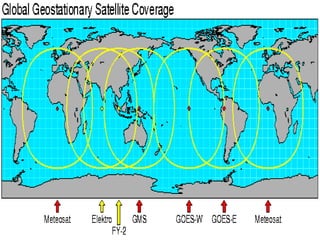
Satellite cover the same area continuously over
they are flying and information transmission is
rapid
Spatial resolution is poor (1 km)
Used for Weather forecasting and Communication
Purposes
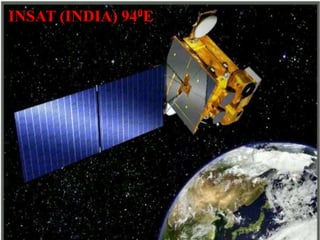
INSAT (INDIA) 940E
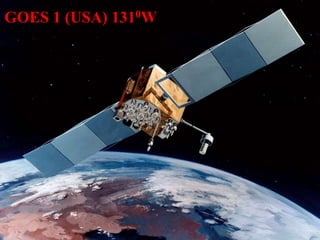
GOES 1 (USA) 1310W
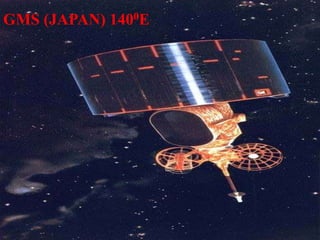
GMS (JAPAN) 1400E
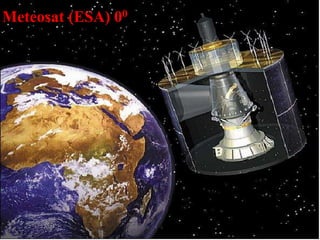
Meteosat (ESA) 00
Sun Synchronous Satellites
Provide Global coverage with high resolution
Used for applications in resource surveys and
monitoring
Also called natural resource or polar satellites
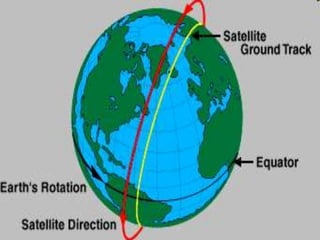
Move in low earth orbit at 800-1000km altitude
over or near the north and south poles.
The orbit is known as polar or sun synchronous
orbit, coinciding with the plane of the sun.
Normally passes a particular place at the same
local time after a regular interval of time, providing
repetitive coverage of the place.
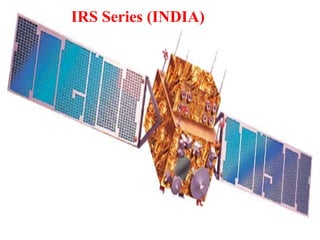
IRS Series (INDIA)
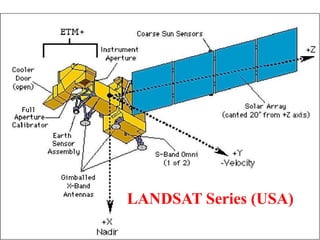
LANDSAT Series (USA)
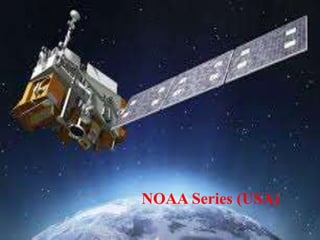
NOAA Series (USA)
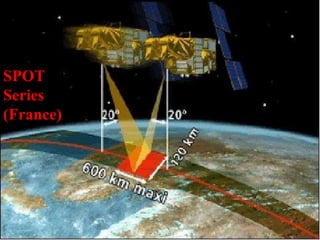
SPOT
Series
(France)
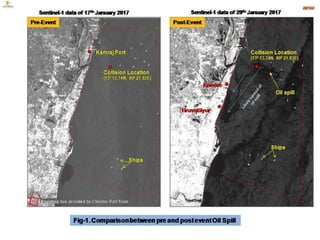
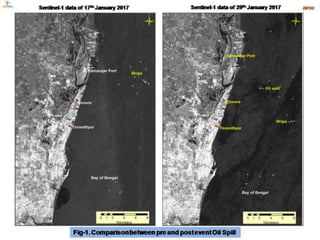
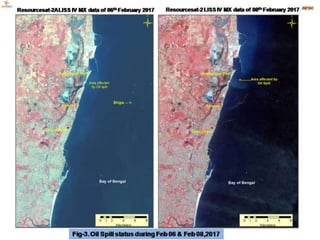
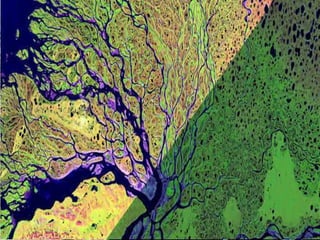
some satellite images
Remote Sensing Platforms and Its types

Remote Sensing Platforms and Its types

  • 1.
    REMOTE SENSING PLATFORMS M.Senthamizhan AssistantProfessor / Civil Alagappa Chettiar Government College of Engineering and Technology, Karaikudi Tamilnadu
  • 2.
    Vital Role inremote sensing data acquisition Necessary to correct the position the remote sensors that collect data from the objects of interest Remote Sensing Platform Air Brone Platform Balloons Aircraft Space Brone Platform Geostationary Satellites Sun Synchronous satellites
  • 3.
  • 4.
  • 6.
    Used for specificprojects Commonly restricted by meteorological factors, such as Wind velocity, direction etc., Two Types (i) Free Balloons (ii) Tethered Balloons
  • 7.
  • 8.
  • 9.
  • 10.
  • 11.
  • 12.
    Used for obtainingaerial photographs Useful for regional coverage and large scale mapping Flexibility of altitude in flying and data acquisition as per need Important : Maximum Stability, Free from vibrations and oscillations, fly with a uniform speed, the height of ceiling. Types: (i) Helicopters (ii) Drones (iii) Sail Planes are also used for low altitude photography and television photography.
  • 13.
  • 14.
  • 15.
  • 16.
  • 17.
    Satellites – Usein Natural resource mapping, meteorological and communication applications Free flying orbiting vehicles whose motion is governed by gravity and atmosphere based Kepler’s Law Entire earth or designated portion can be suitably covered at specified intervals Least affected by disturbance in atmosphere and hence their orbits can be properly defined Also helpful in viewing extraterrestrial bodies Types (i) Geostationary Satellites (ii) Sun Synchronous Satellites
  • 18.
    Geostationary Satellites Also knownas Earth Synchronous Satellites and the orbit in which these satellites move is called geosynchronous or geostationary satellite Placed at a distance of 36,000km above the equator At this altitude the orbital speed of the satellite is the same as that of the Earth’s rotation speed. Satellite cover the same area continuously over they are flying and information transmission is rapid Spatial resolution is poor (1 km) Used for Weather forecasting and Communication Purposes
  • 22.
  • 23.
  • 24.
  • 25.
  • 26.
    Sun Synchronous Satellites ProvideGlobal coverage with high resolution Used for applications in resource surveys and monitoring Also called natural resource or polar satellites Move in low earth orbit at 800-1000km altitude over or near the north and south poles. The orbit is known as polar or sun synchronous orbit, coinciding with the plane of the sun. Normally passes a particular place at the same local time after a regular interval of time, providing repetitive coverage of the place.
  • 29.
  • 30.
  • 31.
  • 32.
  • 33.