RECOMBINANT
DNA
TECHNOLOGY
(RDT)By: CHHAVI KAUSHAL
(M.Sc FORENSIC SCIENCE & CRIMINOLOGY)
CONTENTS
 Introduction
 History and discovery of Recombinant DNA
Technology
 Steps involved in RDT
I. Selection and isolation of DNA insert
II. Selection of suitable cloning vector
III. Introduction of DNA-insert into vector to
form rDNA molecule
IV. rDNA molecule is introduced into a
suitable host
V. Selection of transformed host cells
VI. Expression and multiplication of DNA-
insert in the host
 Tools for RDT
 Role of enzymes
 Restriction Endonucleases
 Vectors used in RDT
 Host organism
 DNA insert or foreign DNA
 Linkers & adapters
 Techniques used in RDT
 Applications of RDT
 Some Ongoing projects
 References
INTRODUCTION
 Based on the concept of gene recombination i.e., genetic engineering.
What is RDT?
 The deliberate modification in genetic material of an organism by changing the nucleic acid
directly is called genetic engineering or gene cloning or gene manipulation and is
accomplished by several methods which are collectively known as recombinant DNA (rDNA)
technology.
DNA has been created artificially (not natural). DNA from two or more sources is
incorporated into a single recombinant molecule.
HISTORY & DISCOVERY OF RECOMBINANT
DNA TECHNOLOGY
1970: Hamilton Smith, at Johns Hopkins Medical School, isolates the first restriction enzyme,
an enzyme that cuts DNA at very specific nucleotide sequence.
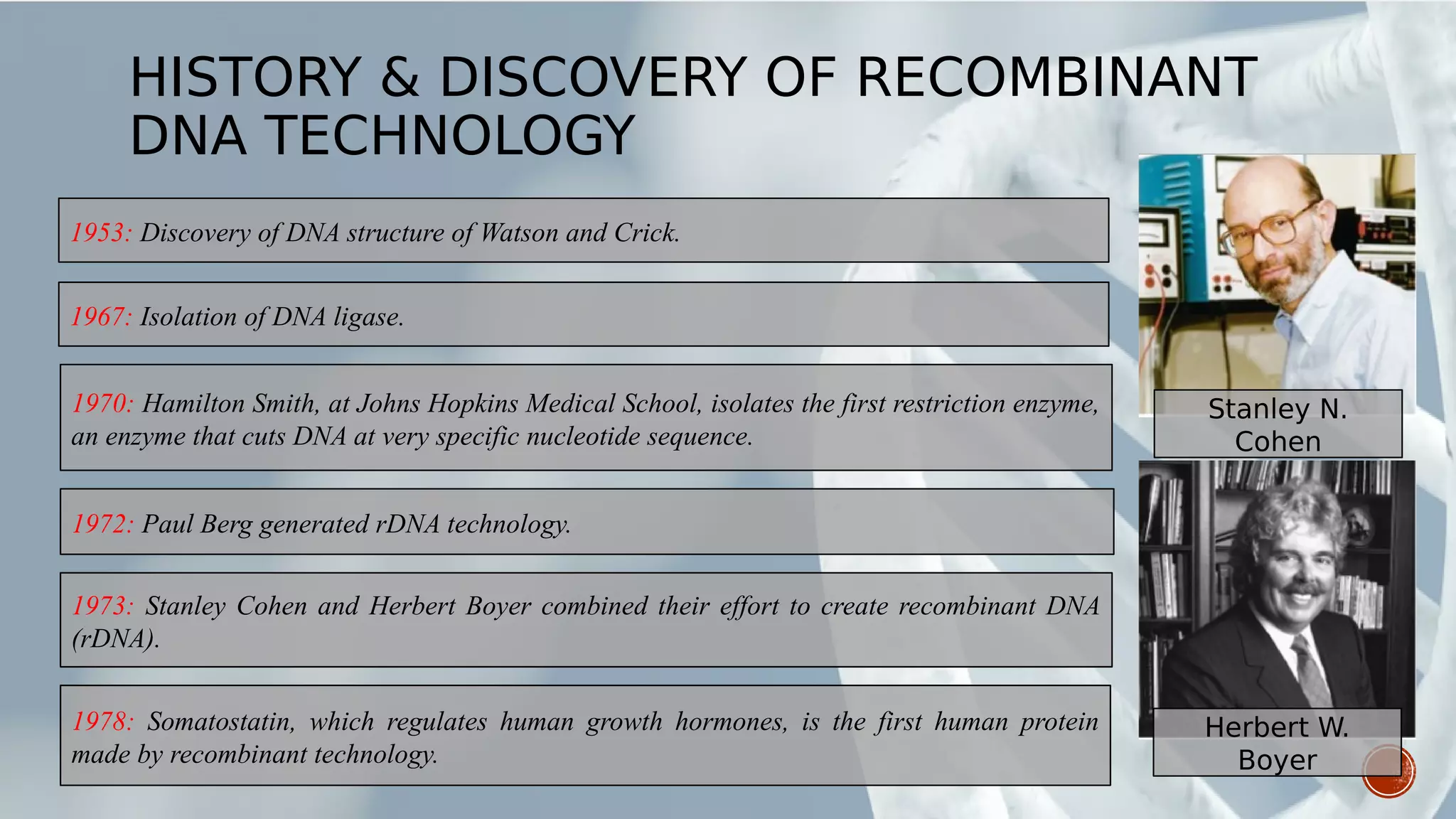
1973: Stanley Cohen and Herbert Boyer combined their effort to create recombinant DNA
(rDNA).
1978: Somatostatin, which regulates human growth hormones, is the first human protein
made by recombinant technology.
1972: Paul Berg generated rDNA technology.
1953: Discovery of DNA structure of Watson and Crick.
1967: Isolation of DNA ligase.
Stanley N.
Cohen
Herbert W.
Boyer
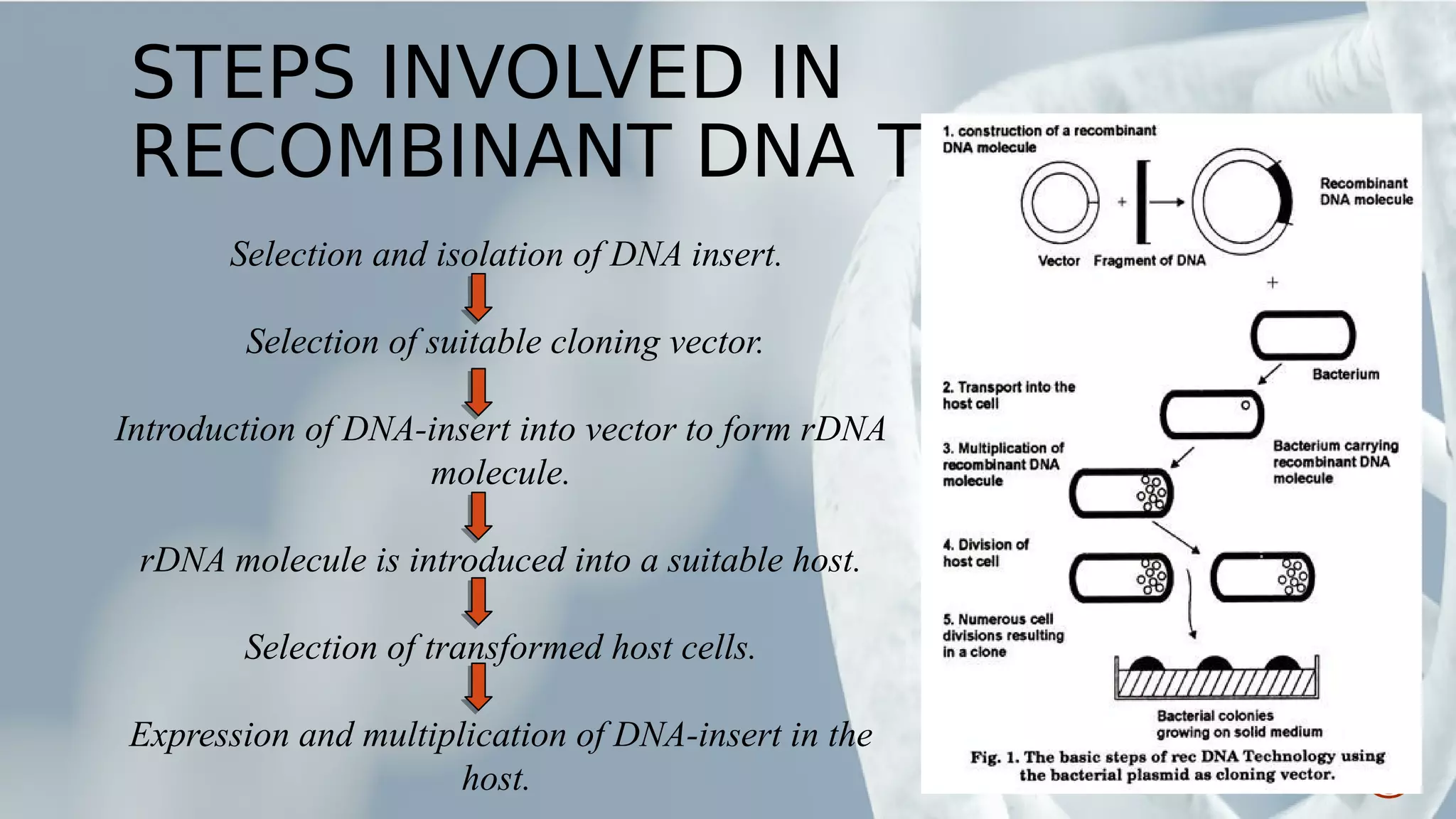
STEPS INVOLVED IN
RECOMBINANT DNA TECHNOLOGY
Selection and isolation of DNA insert.
Selection of suitable cloning vector.
Introduction of DNA-insert into vector to form rDNA
molecule.
rDNA molecule is introduced into a suitable host.
Selection of transformed host cells.
Expression and multiplication of DNA-insert in the
host.
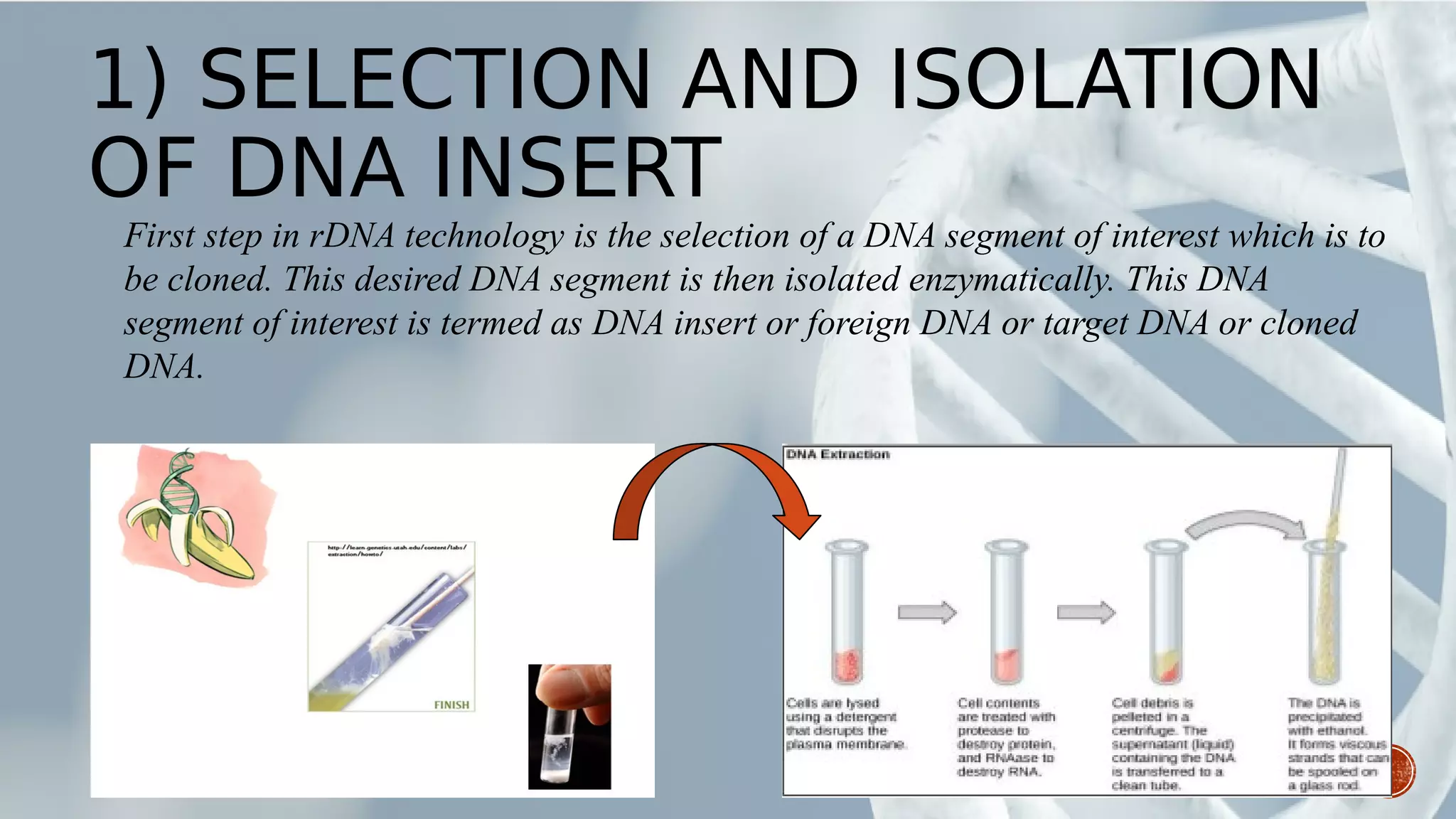
1) SELECTION AND ISOLATION
OF DNA INSERT
First step in rDNA technology is the selection of a DNA segment of interest which is to
be cloned. This desired DNA segment is then isolated enzymatically. This DNA
segment of interest is termed as DNA insert or foreign DNA or target DNA or cloned
DNA.
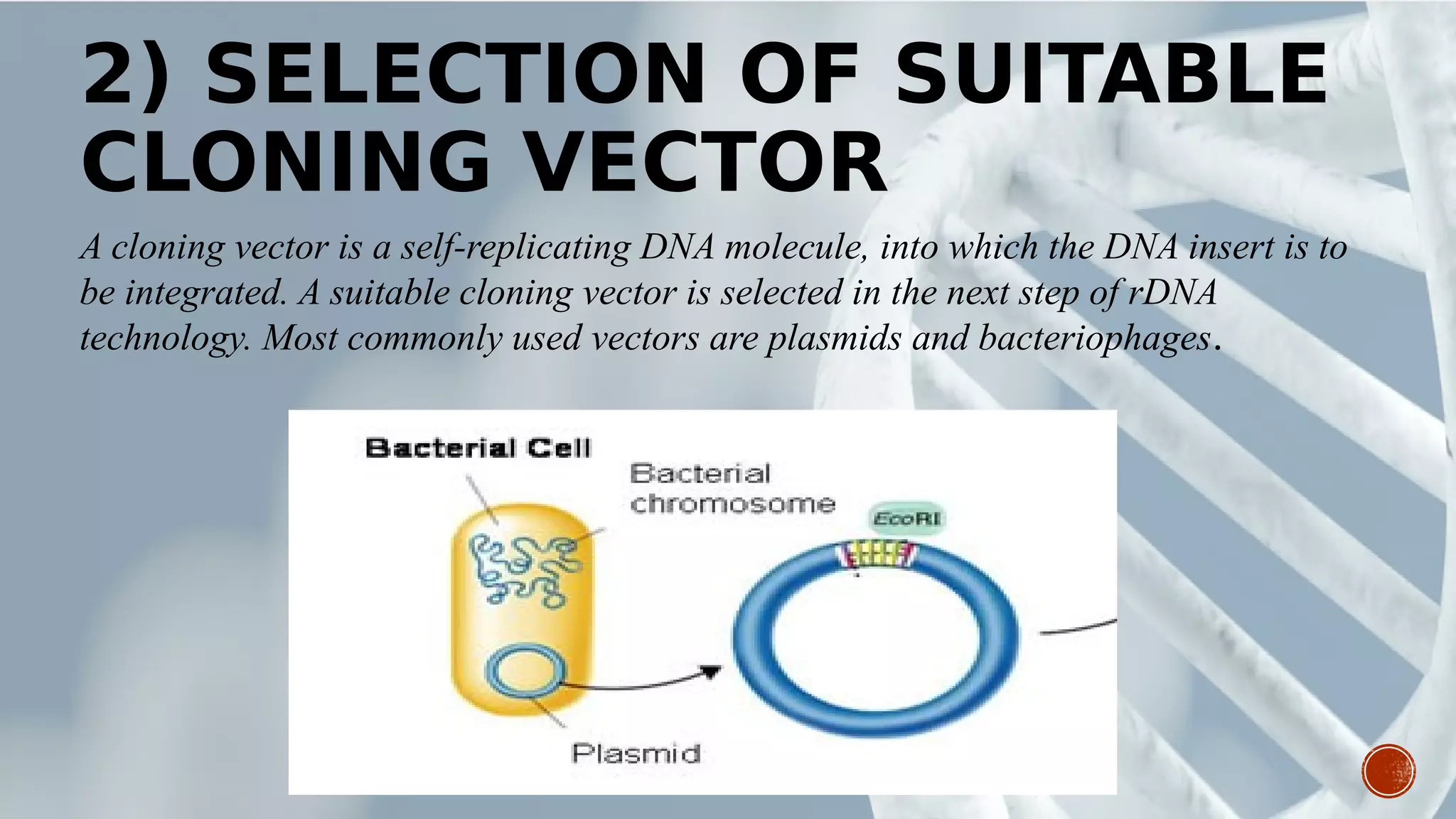
2) SELECTION OF SUITABLE
CLONING VECTOR
A cloning vector is a self-replicating DNA molecule, into which the DNA insert is to
be integrated. A suitable cloning vector is selected in the next step of rDNA
technology. Most commonly used vectors are plasmids and bacteriophages.
3) INTRODUCTION OF DNA-INSERT INTO
VECTOR TO FORM RECOMBINANT DNA
MOLECULE
The target DNA or the DNA insert
which has been extracted and cleaved
enzymatically by the selective
restriction endonuclease enzymes [in
step (1)] are now ligated (joined) by
the enzyme ligase to vector DNA to
form a rDNA molecule which is often
called as cloning-vector-insert DNA
construct.
4) RECOMBINANT DNA MOLECULE IS
INTRODUCED INTO A SUITABLE HOST
Suitable host cells are selected and
the rec DNA molecule so formed [in
step (3)] is introduced into these
host cells. This process of entry of
rec DNA into the host cell is called
transformation. Usually selected
hosts are bacterial cells like E. coli,
however yeast, fungi may also be
utilized.
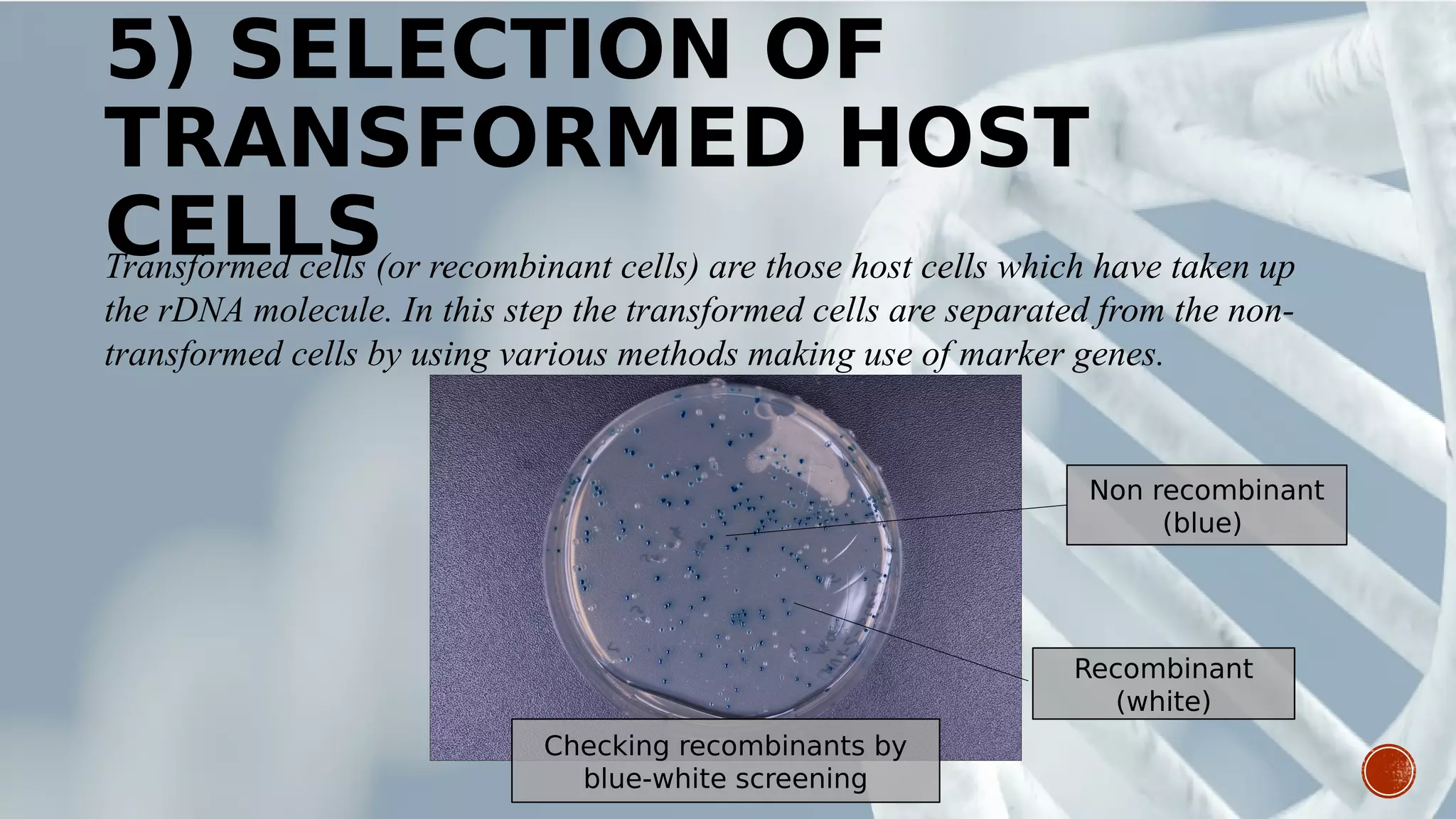
5) SELECTION OF
TRANSFORMED HOST
CELLSTransformed cells (or recombinant cells) are those host cells which have taken up
the rDNA molecule. In this step the transformed cells are separated from the non-
transformed cells by using various methods making use of marker genes.
Non recombinant
(blue)
Recombinant
(white)
Checking recombinants by
blue-white screening
6) EXPRESSION AND
MULTIPLICATION OF DNA INSERT IN
THE HOST
Finally, it is to be ensured that the foreign DNA inserted into the vector
DNA is expressing the desired character in the host cells. Also, the
transformed host cells are multiplied to obtain sufficient number of copies.
If needed, such genes may also be transferred and expressed into another
organism.
rDNA technology utilizes a number of
biological tools to achieve its objectives, most
important of them being the enzymes.
Important biological tools for rec DNA
technology are:
(A) Enzymes:
a. Restriction Endonucleases
b. Exonucleases
c. DNA ligases
d. DNA polymerase
(B) Cloning Vector
(C) Host organism
(D) DNA insert or foreign DNA
(E) Linker and adaptor sequences.
TOOLS FOR RECOMBINANT DNA TECHNOLOGY
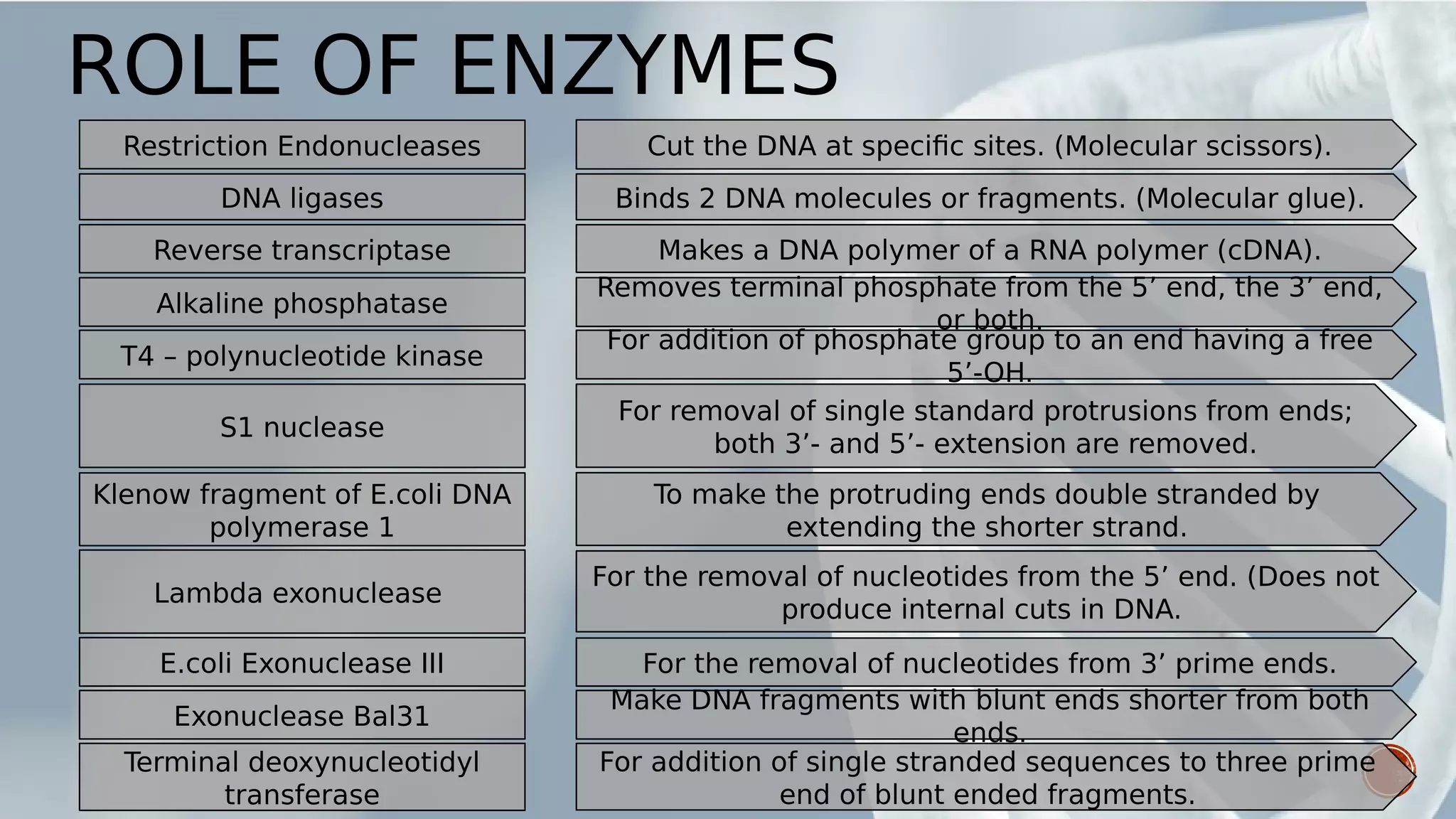
ROLE OF ENZYMES
DNA ligases
Exonuclease Bal31
Klenow fragment of E.coli DNA
polymerase 1
E.coli Exonuclease III
S1 nuclease
Alkaline phosphatase
Restriction Endonucleases
Reverse transcriptase
Terminal deoxynucleotidyl
transferase
T4 – polynucleotide kinase
Lambda exonuclease
Cut the DNA at specific sites. (Molecular scissors).
Binds 2 DNA molecules or fragments. (Molecular glue).
Makes a DNA polymer of a RNA polymer (cDNA).
Removes terminal phosphate from the 5’ end, the 3’ end,
or both.
For addition of phosphate group to an end having a free
5’-OH.
For removal of single standard protrusions from ends;
both 3’- and 5’- extension are removed.
To make the protruding ends double stranded by
extending the shorter strand.
For the removal of nucleotides from the 5’ end. (Does not
produce internal cuts in DNA.
For the removal of nucleotides from 3’ prime ends.
Make DNA fragments with blunt ends shorter from both
ends.
For addition of single stranded sequences to three prime
end of blunt ended fragments.
RESTRICTION
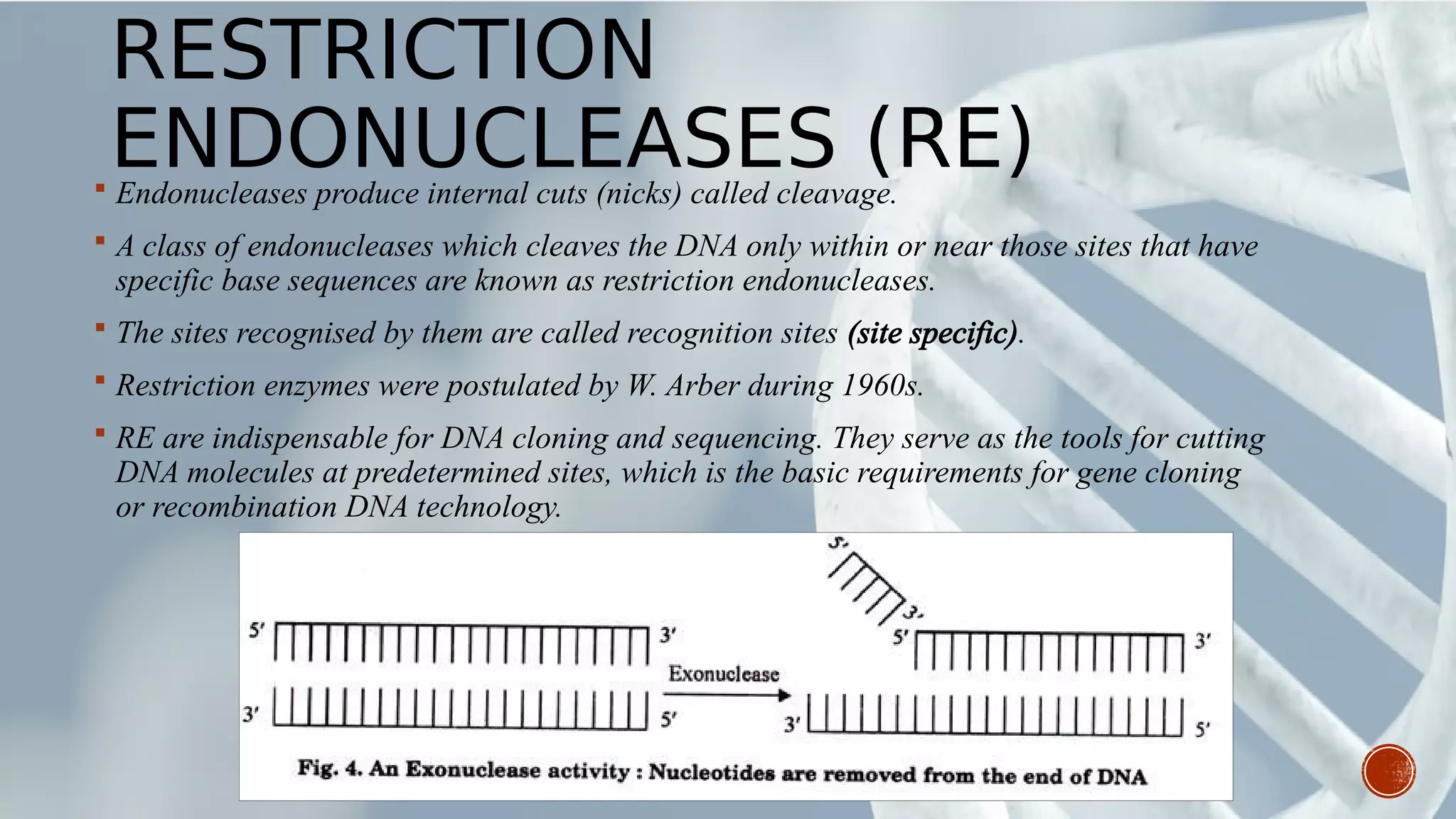
ENDONUCLEASES (RE) Endonucleases produce internal cuts (nicks) called cleavage.
 A class of endonucleases which cleaves the DNA only within or near those sites that have
specific base sequences are known as restriction endonucleases.
 The sites recognised by them are called recognition sites (site specific).
 Restriction enzymes were postulated by W. Arber during 1960s.
 RE are indispensable for DNA cloning and sequencing. They serve as the tools for cutting
DNA molecules at predetermined sites, which is the basic requirements for gene cloning
or recombination DNA technology.
Types of Restriction Endonucleases:
There are 3 main categories of restriction endonuclease enzymes:
 Type-I Restriction Endonucleases, e.g. EcoK, EcoB, etc.
 Type-II Restriction Endonucleases, e.g. Hinfl, EcoRI, PvuII, Alul, Haelll etc.
 Type-III Restriction Endonucleases, e.g. Hinf III, etc.
R.E.- Complex type of endonucleases which cleave only one strand of DNA. These enzymes have the recognition
sequences of about 15 bp length.
They require Mg++ ions and ATP for their functioning.
R.E.- These enzymes are most stable. They show cleavage only at specific sites and therefore they produce the DNA
fragments of a defined length. These enzymes show cleavage in both the strands of DNA, immediately outs.de then-
recognition sequences. They require Mg++
 ions for their functioning. Such enzymes are advantageous because they
don’t require ATP for cleavage and they cause cleavage in both strands of DNA. 
R.E.- These are not used for gene cloning. They are the intermediate enzymes between Type-I and Type-II restriction
endonuclease. They require Mg++
 ions and ATP for cleavage and they cleave the DNA at well-defined sites in the
immediate vicinity of recognition sequences.
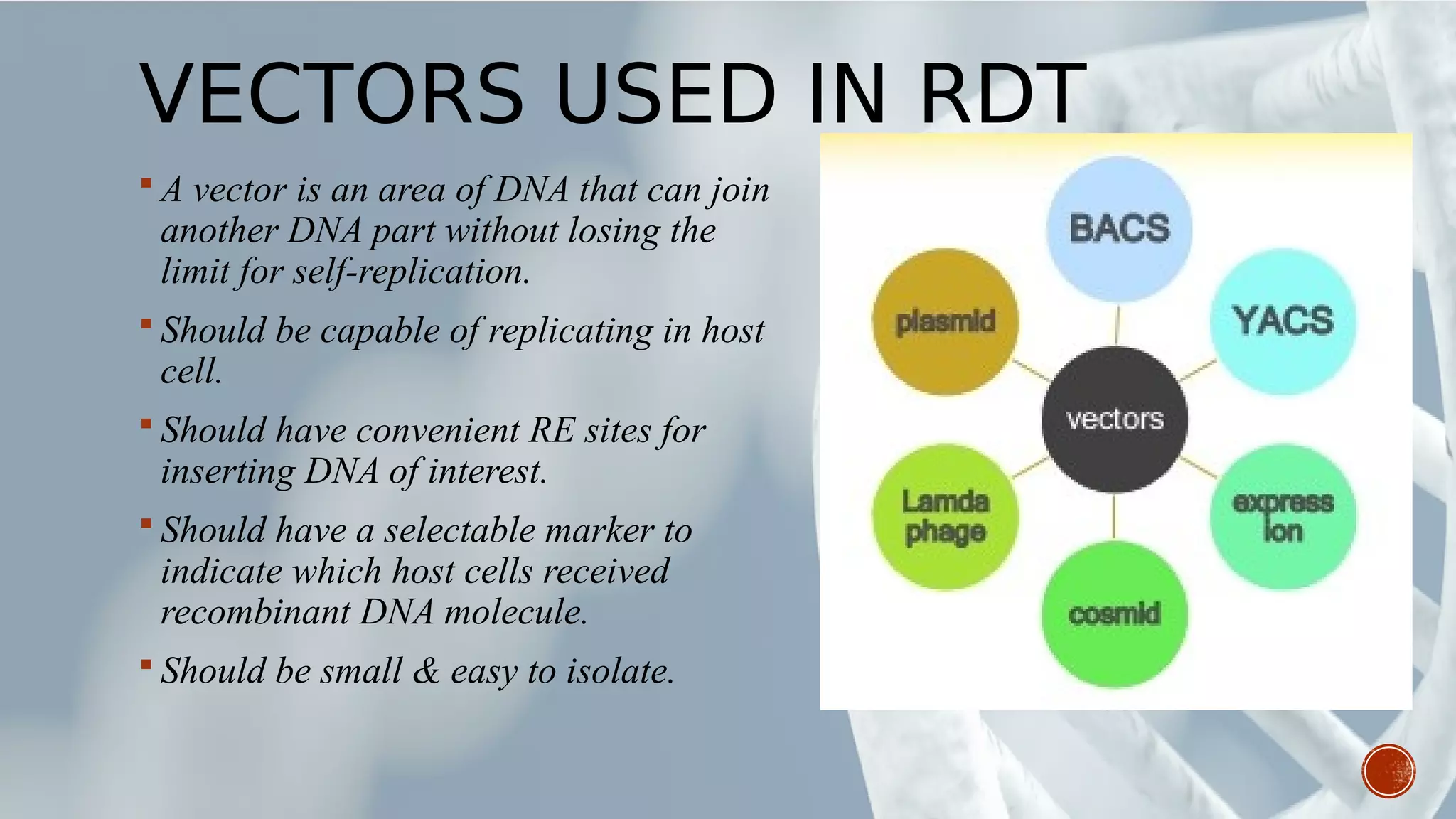
VECTORS USED IN RDT
 A vector is an area of DNA that can join
another DNA part without losing the
limit for self-replication.
 Should be capable of replicating in host
cell.
 Should have convenient RE sites for
inserting DNA of interest.
 Should have a selectable marker to
indicate which host cells received
recombinant DNA molecule.
 Should be small & easy to isolate.
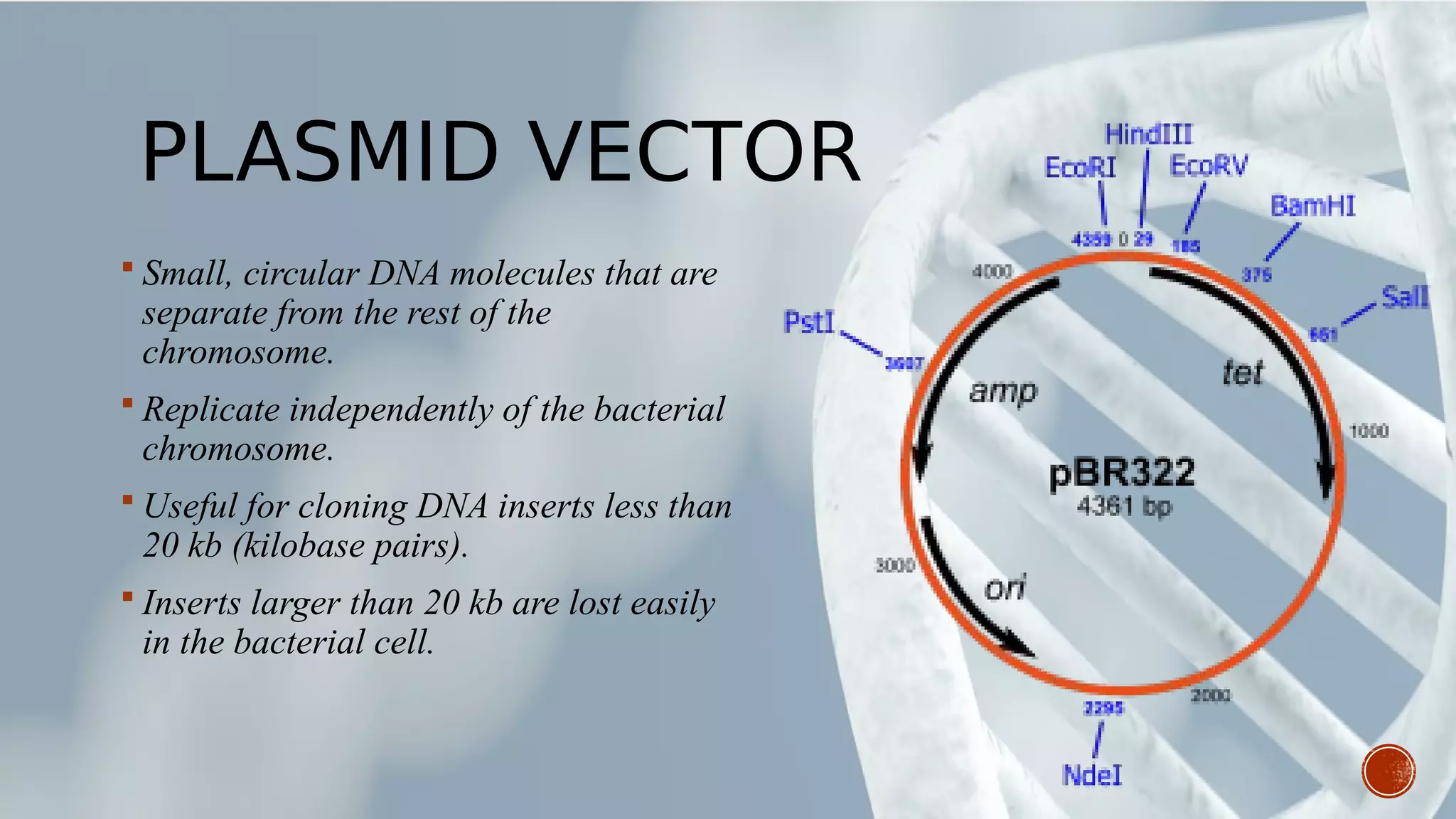
PLASMID VECTOR
 Small, circular DNA molecules that are
separate from the rest of the
chromosome.
 Replicate independently of the bacterial
chromosome.
 Useful for cloning DNA inserts less than
20 kb (kilobase pairs).
 Inserts larger than 20 kb are lost easily
in the bacterial cell.
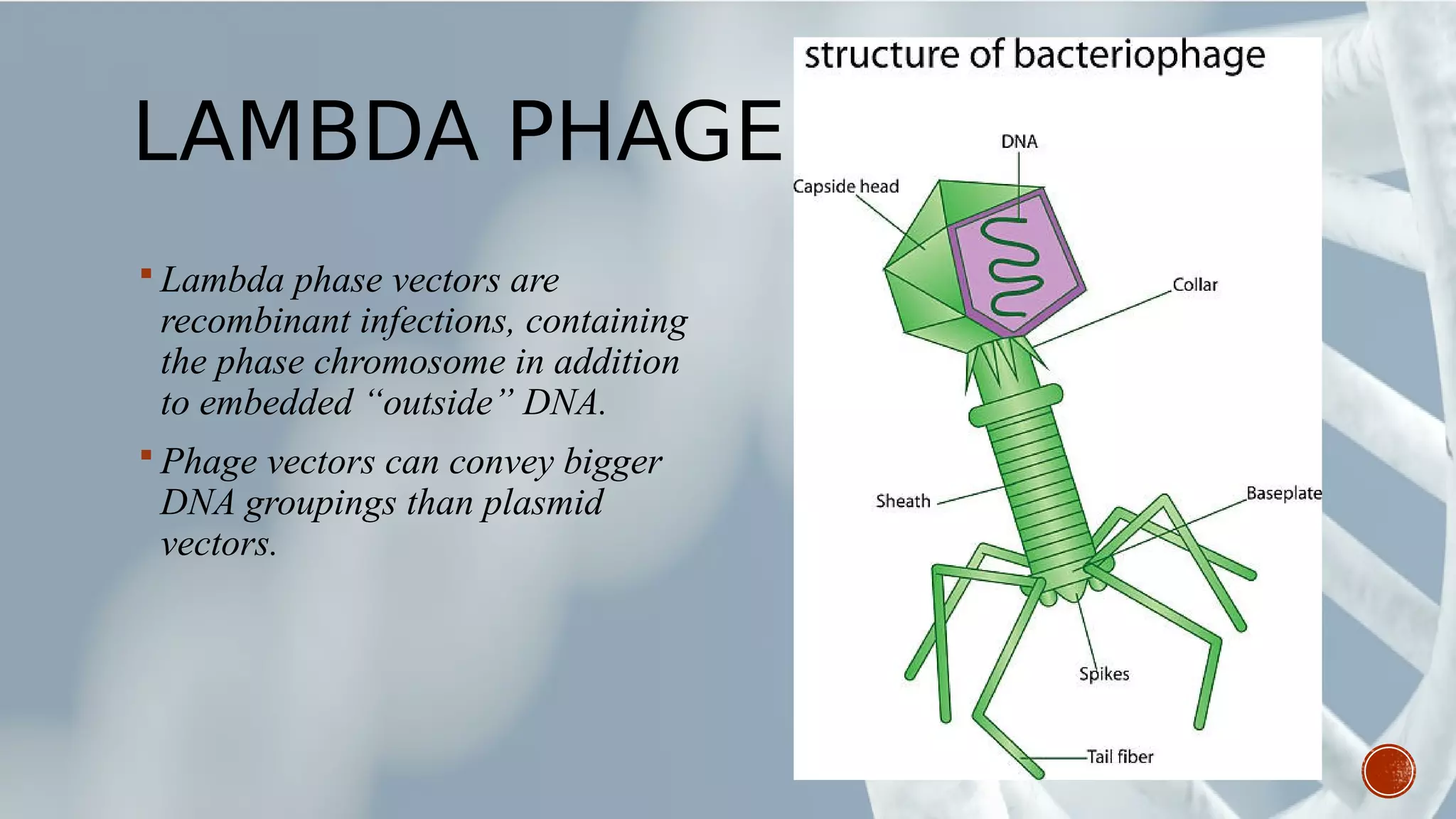
LAMBDA PHAGE VECTOR
 Lambda phase vectors are
recombinant infections, containing
the phase chromosome in addition
to embedded “outside” DNA.
 Phage vectors can convey bigger
DNA groupings than plasmid
vectors.
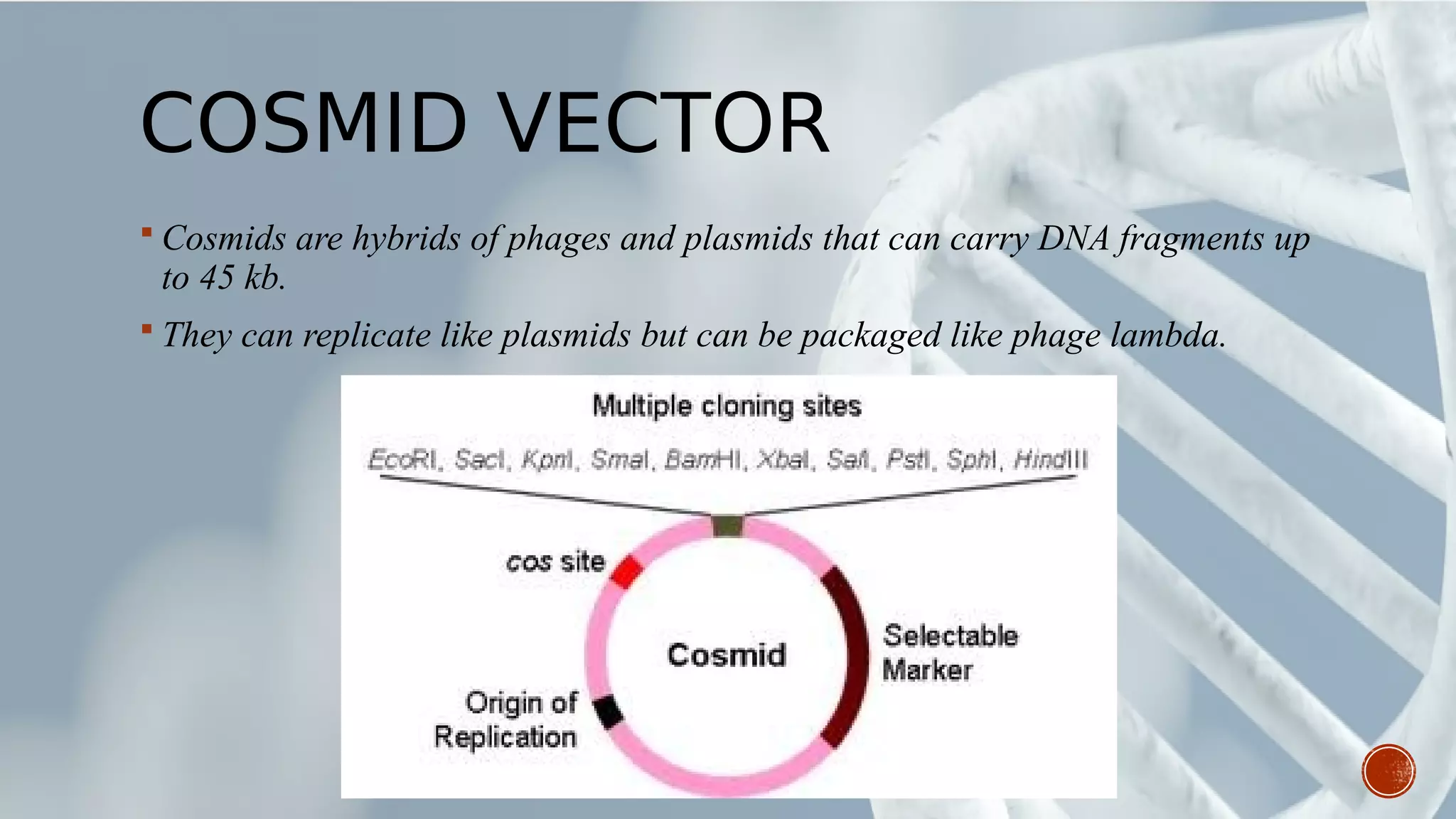
COSMID VECTOR
 Cosmids are hybrids of phages and plasmids that can carry DNA fragments up
to 45 kb.
 They can replicate like plasmids but can be packaged like phage lambda.
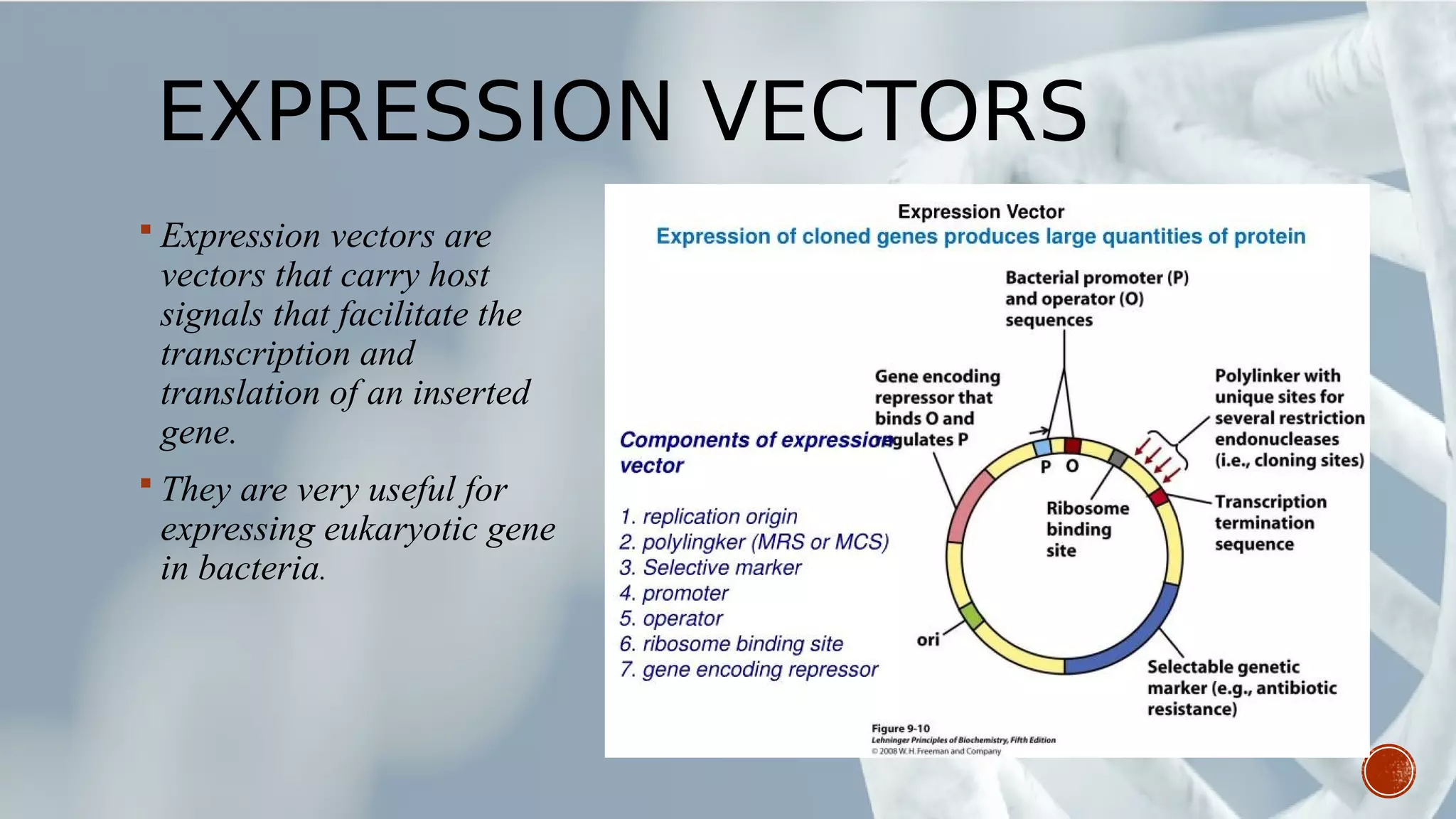
EXPRESSION VECTORS
 Expression vectors are
vectors that carry host
signals that facilitate the
transcription and
translation of an inserted
gene.
 They are very useful for
expressing eukaryotic gene
in bacteria.
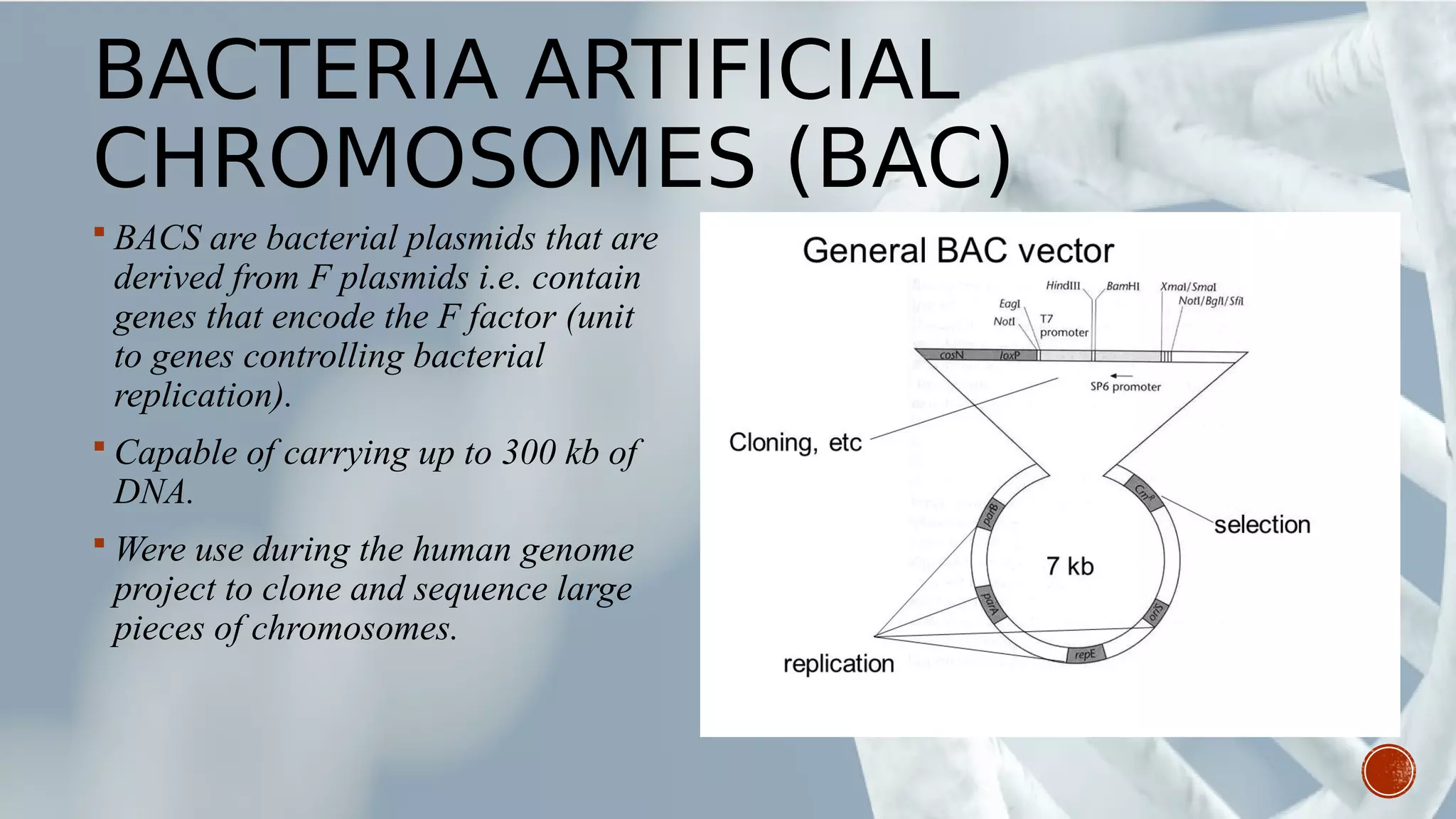
BACTERIA ARTIFICIAL
CHROMOSOMES (BAC)
 BACS are bacterial plasmids that are
derived from F plasmids i.e. contain
genes that encode the F factor (unit
to genes controlling bacterial
replication).
 Capable of carrying up to 300 kb of
DNA.
 Were use during the human genome
project to clone and sequence large
pieces of chromosomes.
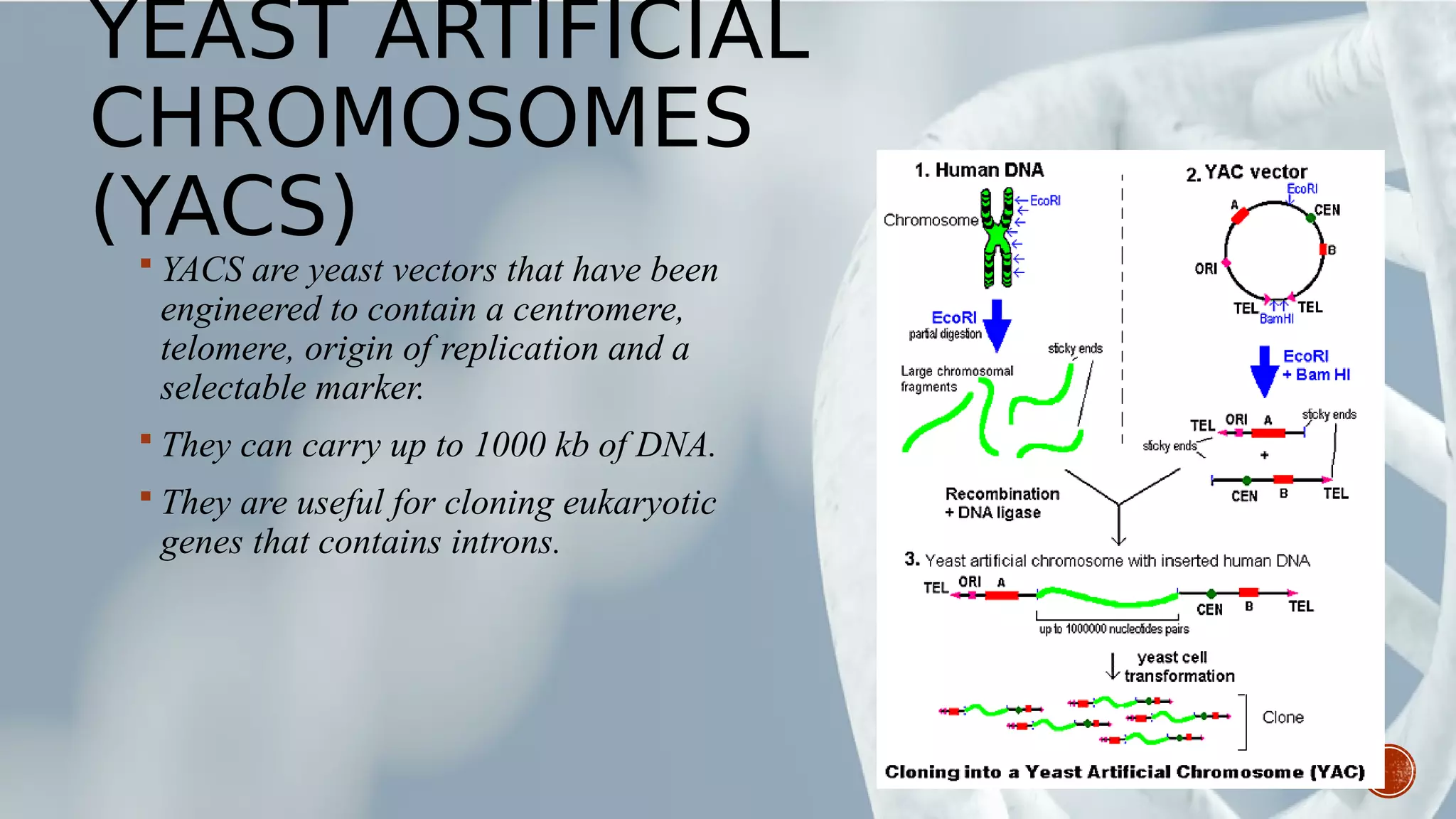
YEAST ARTIFICIAL
CHROMOSOMES
(YACS) YACS are yeast vectors that have been
engineered to contain a centromere,
telomere, origin of replication and a
selectable marker.
 They can carry up to 1000 kb of DNA.
 They are useful for cloning eukaryotic
genes that contains introns.
HOST ORGANISM
 A good host organism is an essential tool tor genetic engineering. Most
widely used host for rDNA technology is the bacterium E. coli. because
cloning and isolation of DNA inserts is very easy in this host. A good
host organism is the one winch easy to transform and in which the
replication of rDNA is easier. There should not be any interfering
element against the replication of rDNA in the host cells.
DNA INSERT OR FOREIGN
DNA
 The desired DNA segment which is to be cloned is called as DNA insert or
foreign DNA or target DNA. The selection of a suitable target DNA is the very
first step of rec DNA technology. The target DNA (gene) may be of viral, plant,
animal or bacterial origin.
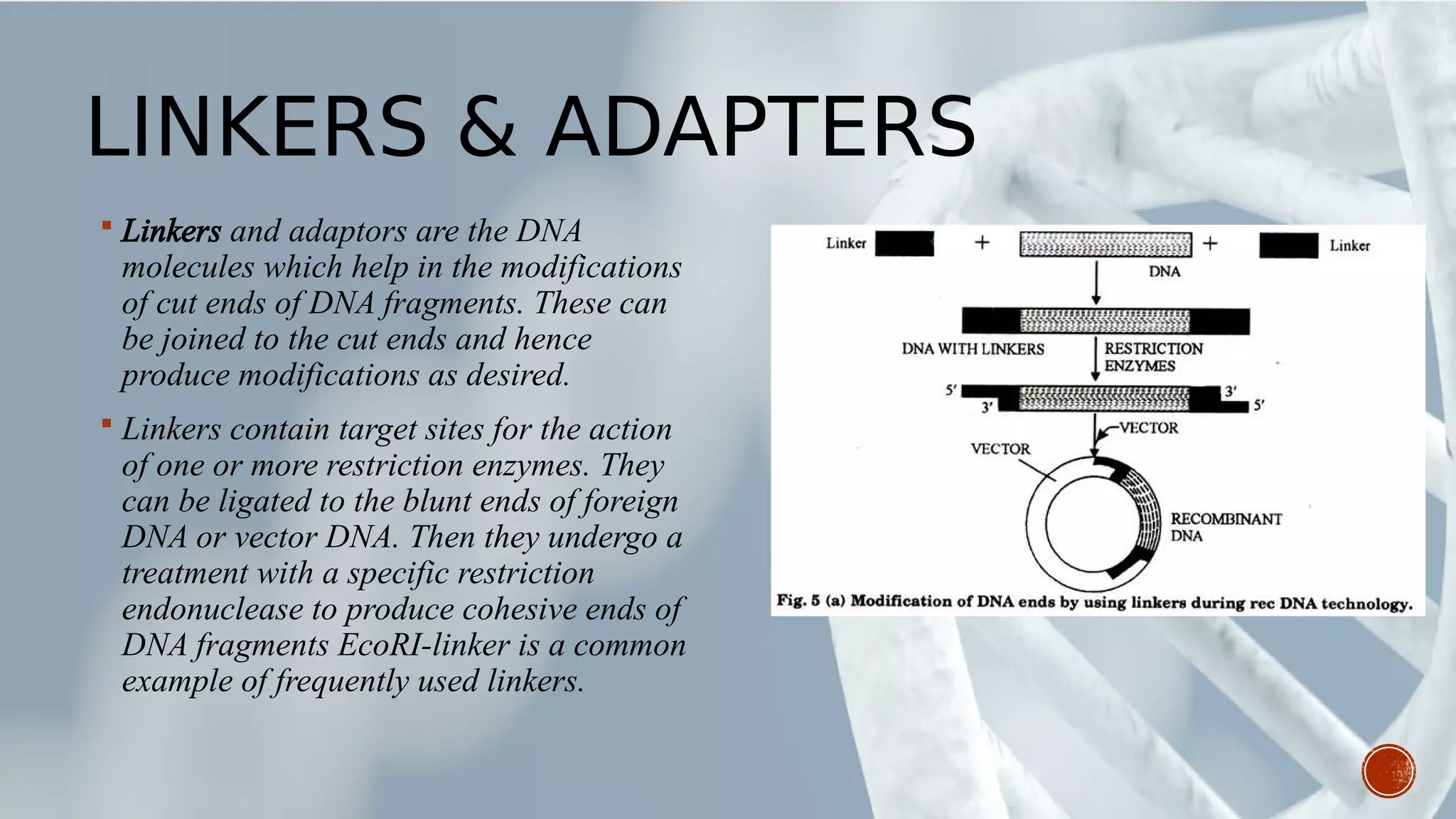
LINKERS & ADAPTERS
 Linkers and adaptors are the DNA
molecules which help in the modifications
of cut ends of DNA fragments. These can
be joined to the cut ends and hence
produce modifications as desired.
 Linkers contain target sites for the action
of one or more restriction enzymes. They
can be ligated to the blunt ends of foreign
DNA or vector DNA. Then they undergo a
treatment with a specific restriction
endonuclease to produce cohesive ends of
DNA fragments EcoRI-linker is a common
example of frequently used linkers.
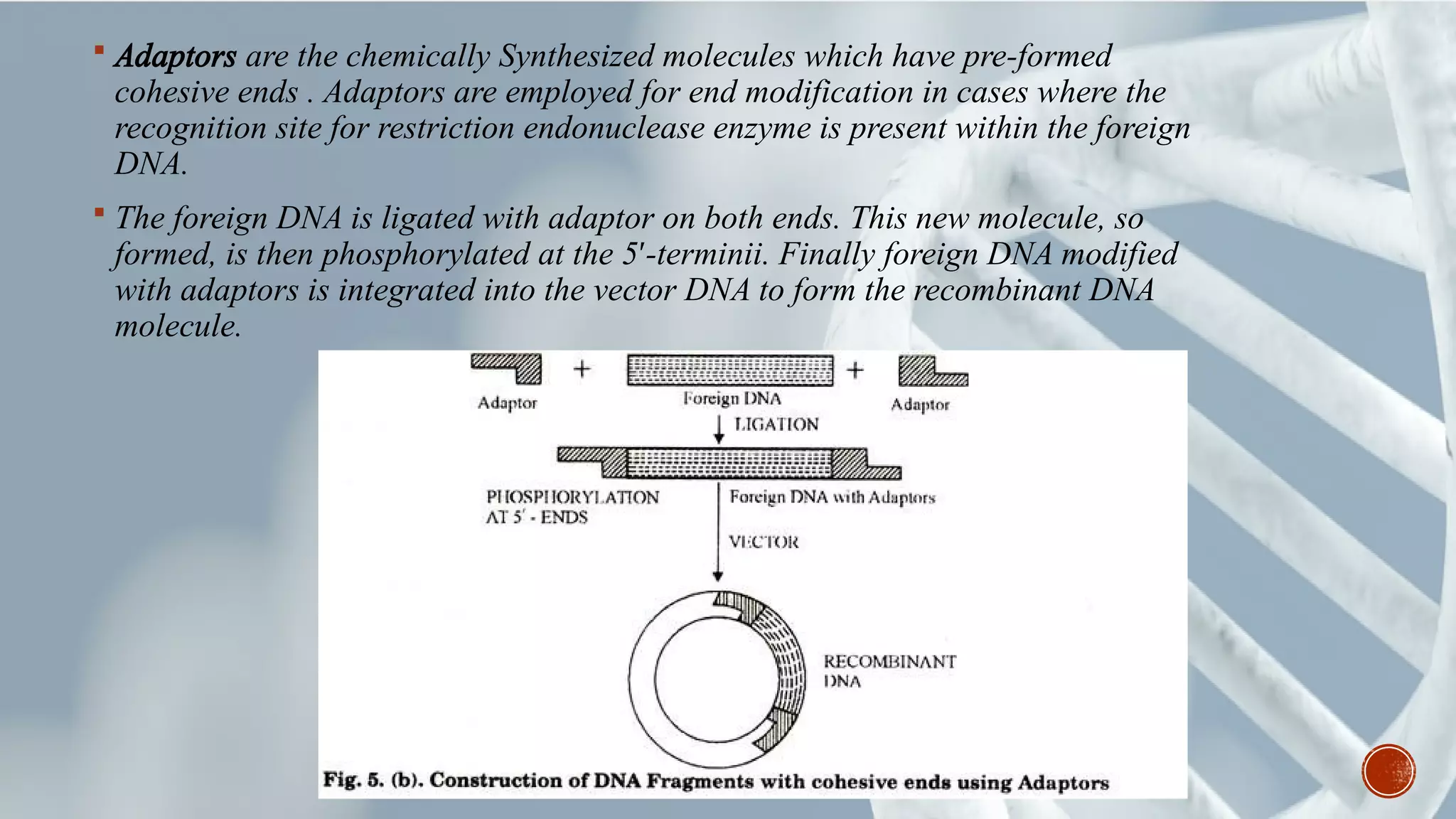
 Adaptors are the chemically Synthesized molecules which have pre-formed
cohesive ends . Adaptors are employed for end modification in cases where the
recognition site for restriction endonuclease enzyme is present within the foreign
DNA.
 The foreign DNA is ligated with adaptor on both ends. This new molecule, so
formed, is then phosphorylated at the 5 -terminii. Finally foreign DNA modified′
with adaptors is integrated into the vector DNA to form the recombinant DNA
molecule.
TECHNIQUES USED IN
RECOMBINANT DNA
TECHNOLOGY (SCREENING) Gel electrophoresis
 Cloning libraries
 Restriction enzyme mapping
 PCR
 Nucleic Acid Hybridization
 DNA Microarrays
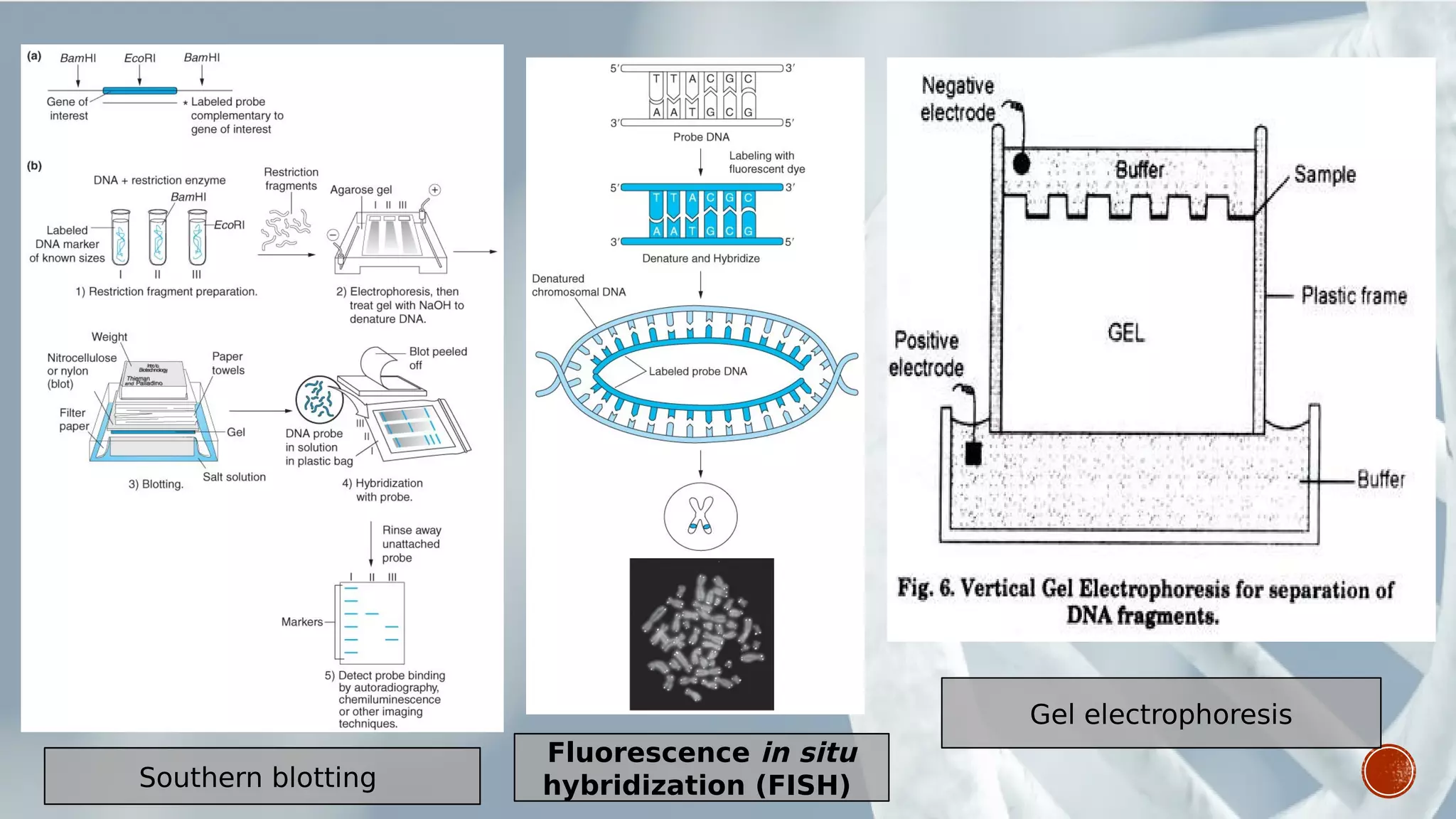
Fluorescence in situ
hybridization (FISH)Southern blotting
Gel electrophoresis
CLONING LIBRARIES
 Libraries are collection of DNA clones in a certain vector.
 The goal is to have each gene represented in the library at least once.
 Two types of libraries.
- Genomic - made from rDNA fragments of total genomic DNA.
- cDNA - made from DNA synthesised from mRNA.
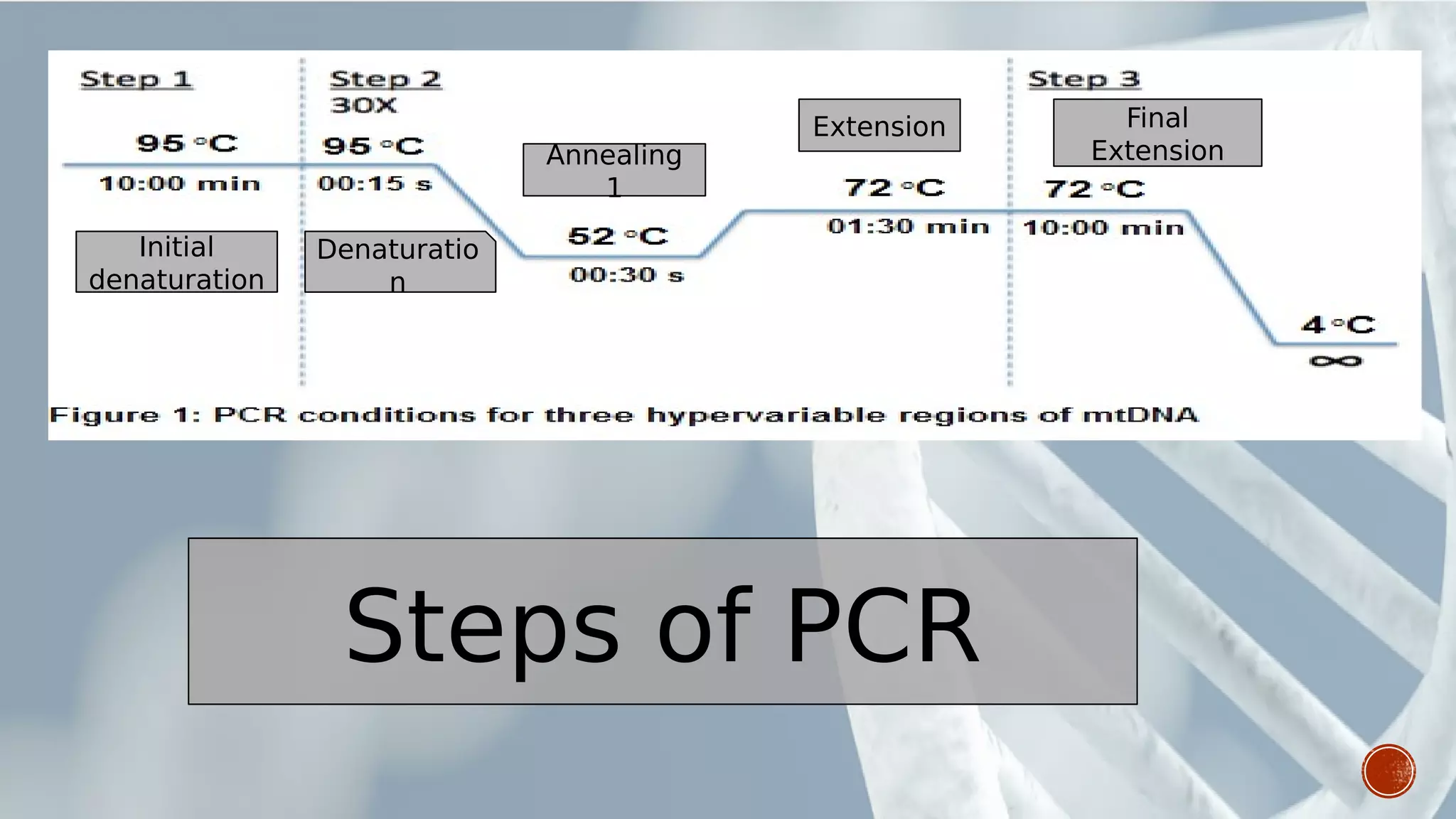
Annealing
1
Extension Final
Extension
Initial
denaturation
Denaturatio
n
Steps of PCR
RESTRICTION ENZYME
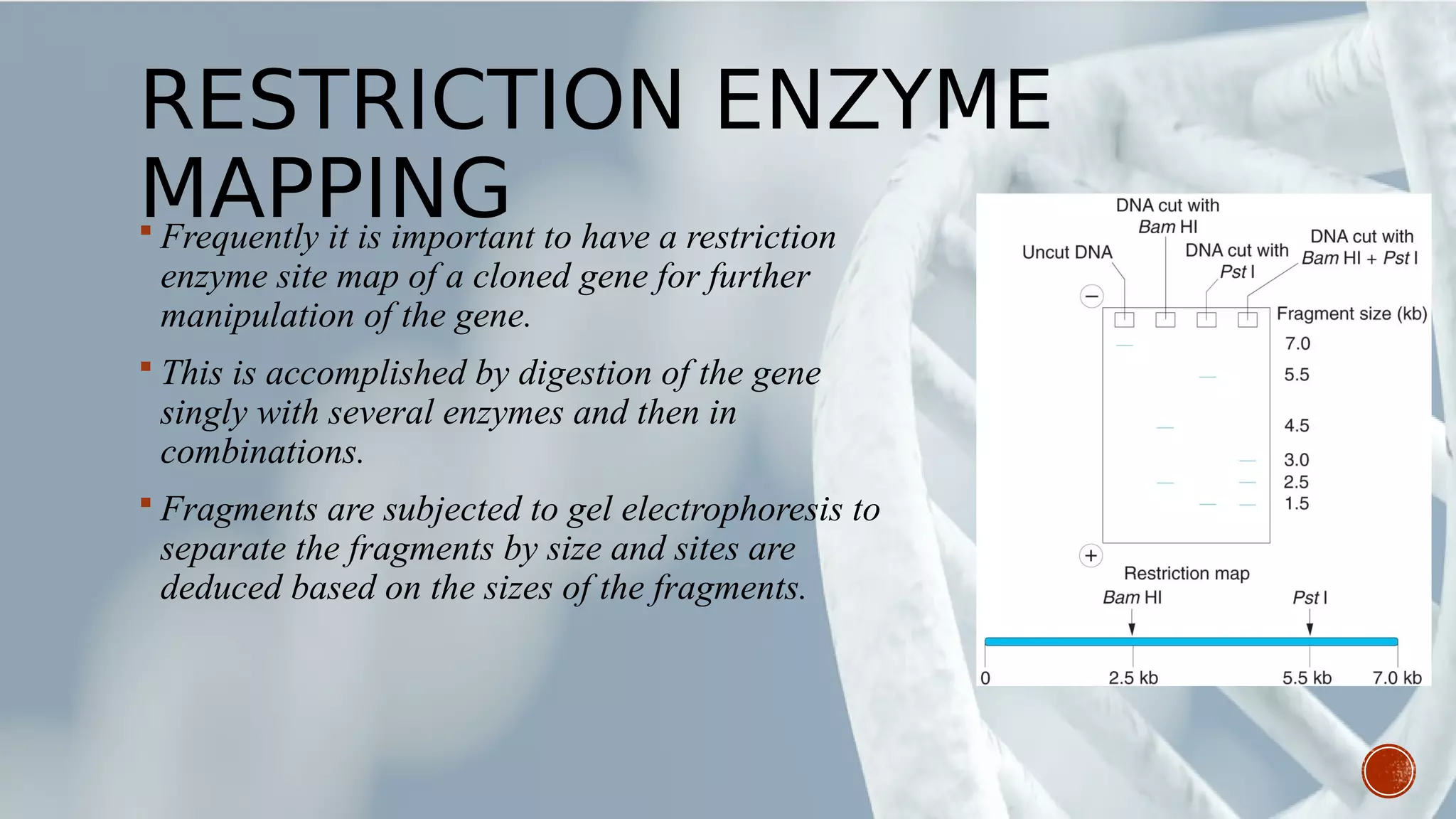
MAPPING Frequently it is important to have a restriction
enzyme site map of a cloned gene for further
manipulation of the gene.
 This is accomplished by digestion of the gene
singly with several enzymes and then in
combinations.
 Fragments are subjected to gel electrophoresis to
separate the fragments by size and sites are
deduced based on the sizes of the fragments.
NUCLEIC ACID
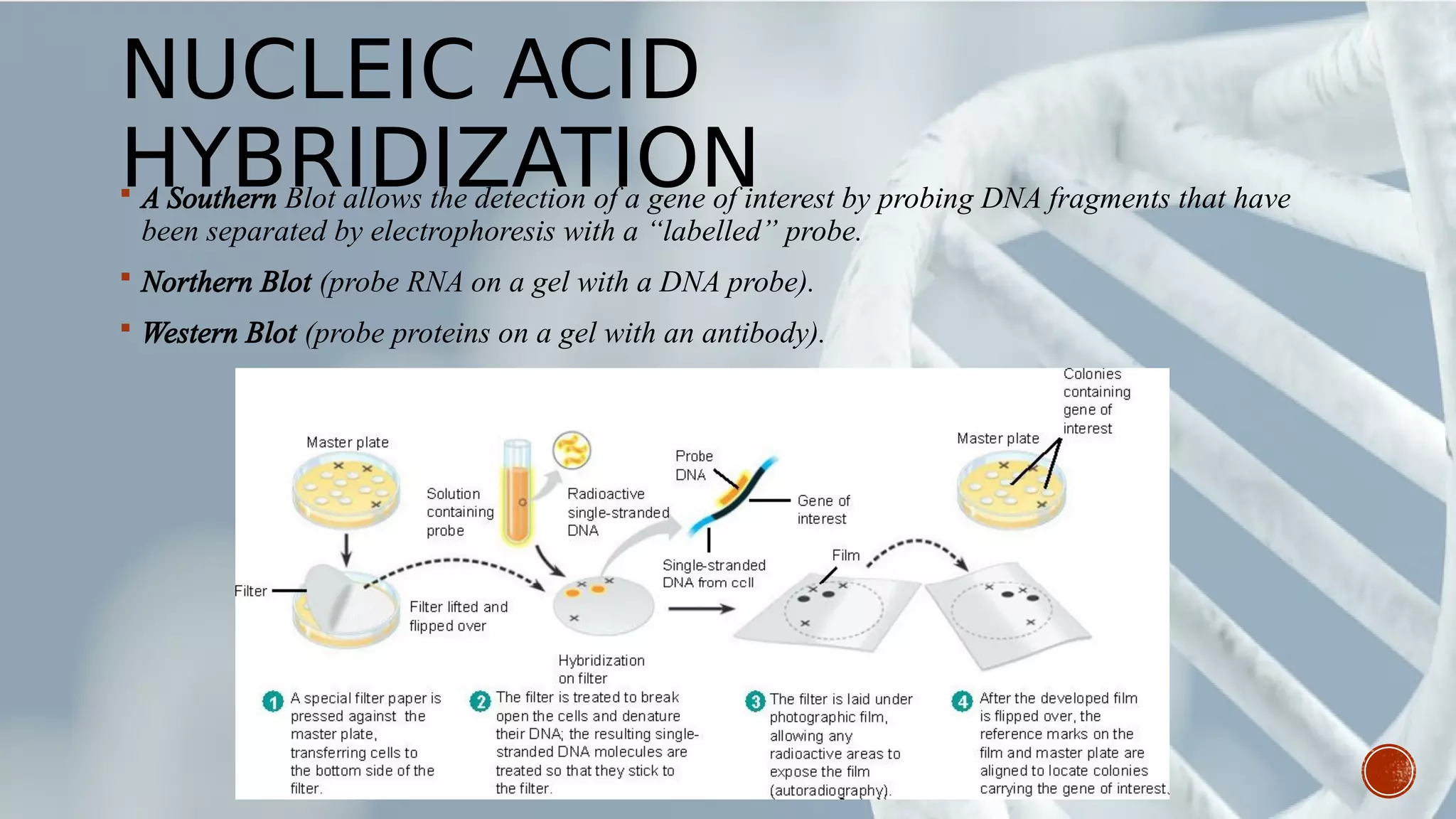
HYBRIDIZATION A Southern Blot allows the detection of a gene of interest by probing DNA fragments that have
been separated by electrophoresis with a “labelled” probe.
 Northern Blot (probe RNA on a gel with a DNA probe).
 Western Blot (probe proteins on a gel with an antibody).
DNA MICROARRAYS
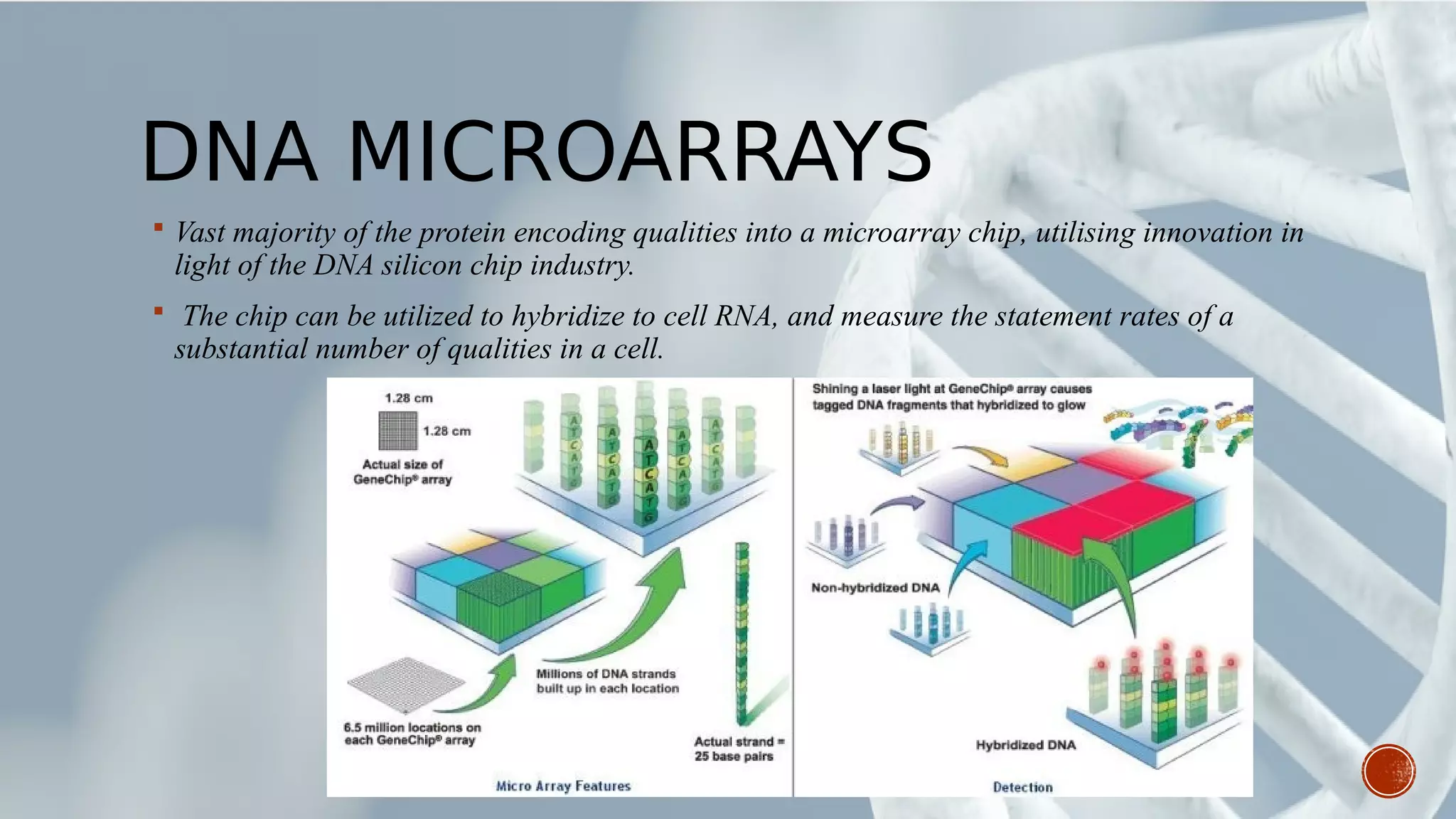
 Vast majority of the protein encoding qualities into a microarray chip, utilising innovation in
light of the DNA silicon chip industry.
 The chip can be utilized to hybridize to cell RNA, and measure the statement rates of a
substantial number of qualities in a cell.
APPLICATIONS OF RECOMBINANT
DNA TECHNOLOGY Production of Hormones: insulin, growth hormones, interferons, blood clotting factors (VIII & IX), etc.
 Medicine: Gene therapy, vaccinations, etc.
 Production of Transgenic Plants
 Production of Transgenic Animals
 Biosynthesis of Interferon
 Production of Antibiotics
 Production of Commercially Important Chemicals
 Application in Enzyme Engineering
 Prevention and Diagnosis of Diseases
 Practical Applications of Genetic Engineering
 Applications in forensic science
 Biofuel Production
 Environment Protection
SOME ONGOING PROJECTS
 Genetically modified maize showing successful results.
 FDA approves new gene therapy targeting rare form of inherited vision loss.
 Experts offer research strategies to yield more protective flu vaccine candidates.
 Study highlights new approach to produce coral snake anti-venom from synthetically designed
DNA.
REFERENCES
 Griffiths AJF, Gelbart WM, Millar JH, et al. Modern Genetic Analysis New York: W.H.
Freeman; 1999.
 http://www.biologydiscussion.com/dna/recombinant-dna-technology/recombinant-dna-
technology-with-diagram/17785
 https://www.slideshare.net/nasira55/recombinant-dna-technology-47715143
 https://www.alhefzi.com/G34/Molecular/Recombinant%20DNA.ppt
 S.S.Sandhu Recombinant DNA technology I.K. International Pvt Ltd, 01 –Jun -2010
 http://www.infoplease.com/cig/biology/dna-technology-applications.html
 http://biology.Kenyon.edu/courses/biol114/chap08/chapter08a.html
THANKYOU…

Recombinant dna technology (rdt)

  • 1.
  • 2.
    CONTENTS  Introduction  Historyand discovery of Recombinant DNA Technology  Steps involved in RDT I. Selection and isolation of DNA insert II. Selection of suitable cloning vector III. Introduction of DNA-insert into vector to form rDNA molecule IV. rDNA molecule is introduced into a suitable host V. Selection of transformed host cells VI. Expression and multiplication of DNA- insert in the host  Tools for RDT  Role of enzymes  Restriction Endonucleases  Vectors used in RDT  Host organism  DNA insert or foreign DNA  Linkers & adapters  Techniques used in RDT  Applications of RDT  Some Ongoing projects  References
  • 3.
    INTRODUCTION  Based onthe concept of gene recombination i.e., genetic engineering. What is RDT?  The deliberate modification in genetic material of an organism by changing the nucleic acid directly is called genetic engineering or gene cloning or gene manipulation and is accomplished by several methods which are collectively known as recombinant DNA (rDNA) technology. DNA has been created artificially (not natural). DNA from two or more sources is incorporated into a single recombinant molecule.
  • 4.
    HISTORY & DISCOVERYOF RECOMBINANT DNA TECHNOLOGY 1970: Hamilton Smith, at Johns Hopkins Medical School, isolates the first restriction enzyme, an enzyme that cuts DNA at very specific nucleotide sequence. 1973: Stanley Cohen and Herbert Boyer combined their effort to create recombinant DNA (rDNA). 1978: Somatostatin, which regulates human growth hormones, is the first human protein made by recombinant technology. 1972: Paul Berg generated rDNA technology. 1953: Discovery of DNA structure of Watson and Crick. 1967: Isolation of DNA ligase. Stanley N. Cohen Herbert W. Boyer
  • 5.
    STEPS INVOLVED IN RECOMBINANTDNA TECHNOLOGY Selection and isolation of DNA insert. Selection of suitable cloning vector. Introduction of DNA-insert into vector to form rDNA molecule. rDNA molecule is introduced into a suitable host. Selection of transformed host cells. Expression and multiplication of DNA-insert in the host.
  • 7.
    1) SELECTION ANDISOLATION OF DNA INSERT First step in rDNA technology is the selection of a DNA segment of interest which is to be cloned. This desired DNA segment is then isolated enzymatically. This DNA segment of interest is termed as DNA insert or foreign DNA or target DNA or cloned DNA.
  • 8.
    2) SELECTION OFSUITABLE CLONING VECTOR A cloning vector is a self-replicating DNA molecule, into which the DNA insert is to be integrated. A suitable cloning vector is selected in the next step of rDNA technology. Most commonly used vectors are plasmids and bacteriophages.
  • 9.
    3) INTRODUCTION OFDNA-INSERT INTO VECTOR TO FORM RECOMBINANT DNA MOLECULE The target DNA or the DNA insert which has been extracted and cleaved enzymatically by the selective restriction endonuclease enzymes [in step (1)] are now ligated (joined) by the enzyme ligase to vector DNA to form a rDNA molecule which is often called as cloning-vector-insert DNA construct.
  • 10.
    4) RECOMBINANT DNAMOLECULE IS INTRODUCED INTO A SUITABLE HOST Suitable host cells are selected and the rec DNA molecule so formed [in step (3)] is introduced into these host cells. This process of entry of rec DNA into the host cell is called transformation. Usually selected hosts are bacterial cells like E. coli, however yeast, fungi may also be utilized.
  • 11.
    5) SELECTION OF TRANSFORMEDHOST CELLSTransformed cells (or recombinant cells) are those host cells which have taken up the rDNA molecule. In this step the transformed cells are separated from the non- transformed cells by using various methods making use of marker genes. Non recombinant (blue) Recombinant (white) Checking recombinants by blue-white screening
  • 12.
    6) EXPRESSION AND MULTIPLICATIONOF DNA INSERT IN THE HOST Finally, it is to be ensured that the foreign DNA inserted into the vector DNA is expressing the desired character in the host cells. Also, the transformed host cells are multiplied to obtain sufficient number of copies. If needed, such genes may also be transferred and expressed into another organism.
  • 13.
    rDNA technology utilizesa number of biological tools to achieve its objectives, most important of them being the enzymes. Important biological tools for rec DNA technology are: (A) Enzymes: a. Restriction Endonucleases b. Exonucleases c. DNA ligases d. DNA polymerase (B) Cloning Vector (C) Host organism (D) DNA insert or foreign DNA (E) Linker and adaptor sequences. TOOLS FOR RECOMBINANT DNA TECHNOLOGY
  • 14.
    ROLE OF ENZYMES DNAligases Exonuclease Bal31 Klenow fragment of E.coli DNA polymerase 1 E.coli Exonuclease III S1 nuclease Alkaline phosphatase Restriction Endonucleases Reverse transcriptase Terminal deoxynucleotidyl transferase T4 – polynucleotide kinase Lambda exonuclease Cut the DNA at specific sites. (Molecular scissors). Binds 2 DNA molecules or fragments. (Molecular glue). Makes a DNA polymer of a RNA polymer (cDNA). Removes terminal phosphate from the 5’ end, the 3’ end, or both. For addition of phosphate group to an end having a free 5’-OH. For removal of single standard protrusions from ends; both 3’- and 5’- extension are removed. To make the protruding ends double stranded by extending the shorter strand. For the removal of nucleotides from the 5’ end. (Does not produce internal cuts in DNA. For the removal of nucleotides from 3’ prime ends. Make DNA fragments with blunt ends shorter from both ends. For addition of single stranded sequences to three prime end of blunt ended fragments.
  • 15.
    RESTRICTION ENDONUCLEASES (RE) Endonucleasesproduce internal cuts (nicks) called cleavage.  A class of endonucleases which cleaves the DNA only within or near those sites that have specific base sequences are known as restriction endonucleases.  The sites recognised by them are called recognition sites (site specific).  Restriction enzymes were postulated by W. Arber during 1960s.  RE are indispensable for DNA cloning and sequencing. They serve as the tools for cutting DNA molecules at predetermined sites, which is the basic requirements for gene cloning or recombination DNA technology.
  • 16.
    Types of RestrictionEndonucleases: There are 3 main categories of restriction endonuclease enzymes:  Type-I Restriction Endonucleases, e.g. EcoK, EcoB, etc.  Type-II Restriction Endonucleases, e.g. Hinfl, EcoRI, PvuII, Alul, Haelll etc.  Type-III Restriction Endonucleases, e.g. Hinf III, etc. R.E.- Complex type of endonucleases which cleave only one strand of DNA. These enzymes have the recognition sequences of about 15 bp length. They require Mg++ ions and ATP for their functioning. R.E.- These enzymes are most stable. They show cleavage only at specific sites and therefore they produce the DNA fragments of a defined length. These enzymes show cleavage in both the strands of DNA, immediately outs.de then- recognition sequences. They require Mg++  ions for their functioning. Such enzymes are advantageous because they don’t require ATP for cleavage and they cause cleavage in both strands of DNA.  R.E.- These are not used for gene cloning. They are the intermediate enzymes between Type-I and Type-II restriction endonuclease. They require Mg++  ions and ATP for cleavage and they cleave the DNA at well-defined sites in the immediate vicinity of recognition sequences.
  • 17.
    VECTORS USED INRDT  A vector is an area of DNA that can join another DNA part without losing the limit for self-replication.  Should be capable of replicating in host cell.  Should have convenient RE sites for inserting DNA of interest.  Should have a selectable marker to indicate which host cells received recombinant DNA molecule.  Should be small & easy to isolate.
  • 18.
    PLASMID VECTOR  Small,circular DNA molecules that are separate from the rest of the chromosome.  Replicate independently of the bacterial chromosome.  Useful for cloning DNA inserts less than 20 kb (kilobase pairs).  Inserts larger than 20 kb are lost easily in the bacterial cell.
  • 19.
    LAMBDA PHAGE VECTOR Lambda phase vectors are recombinant infections, containing the phase chromosome in addition to embedded “outside” DNA.  Phage vectors can convey bigger DNA groupings than plasmid vectors.
  • 20.
    COSMID VECTOR  Cosmidsare hybrids of phages and plasmids that can carry DNA fragments up to 45 kb.  They can replicate like plasmids but can be packaged like phage lambda.
  • 21.
    EXPRESSION VECTORS  Expressionvectors are vectors that carry host signals that facilitate the transcription and translation of an inserted gene.  They are very useful for expressing eukaryotic gene in bacteria.
  • 22.
    BACTERIA ARTIFICIAL CHROMOSOMES (BAC) BACS are bacterial plasmids that are derived from F plasmids i.e. contain genes that encode the F factor (unit to genes controlling bacterial replication).  Capable of carrying up to 300 kb of DNA.  Were use during the human genome project to clone and sequence large pieces of chromosomes.
  • 23.
    YEAST ARTIFICIAL CHROMOSOMES (YACS) YACSare yeast vectors that have been engineered to contain a centromere, telomere, origin of replication and a selectable marker.  They can carry up to 1000 kb of DNA.  They are useful for cloning eukaryotic genes that contains introns.
  • 24.
    HOST ORGANISM  Agood host organism is an essential tool tor genetic engineering. Most widely used host for rDNA technology is the bacterium E. coli. because cloning and isolation of DNA inserts is very easy in this host. A good host organism is the one winch easy to transform and in which the replication of rDNA is easier. There should not be any interfering element against the replication of rDNA in the host cells.
  • 25.
    DNA INSERT ORFOREIGN DNA  The desired DNA segment which is to be cloned is called as DNA insert or foreign DNA or target DNA. The selection of a suitable target DNA is the very first step of rec DNA technology. The target DNA (gene) may be of viral, plant, animal or bacterial origin.
  • 26.
    LINKERS & ADAPTERS Linkers and adaptors are the DNA molecules which help in the modifications of cut ends of DNA fragments. These can be joined to the cut ends and hence produce modifications as desired.  Linkers contain target sites for the action of one or more restriction enzymes. They can be ligated to the blunt ends of foreign DNA or vector DNA. Then they undergo a treatment with a specific restriction endonuclease to produce cohesive ends of DNA fragments EcoRI-linker is a common example of frequently used linkers.
  • 27.
     Adaptors arethe chemically Synthesized molecules which have pre-formed cohesive ends . Adaptors are employed for end modification in cases where the recognition site for restriction endonuclease enzyme is present within the foreign DNA.  The foreign DNA is ligated with adaptor on both ends. This new molecule, so formed, is then phosphorylated at the 5 -terminii. Finally foreign DNA modified′ with adaptors is integrated into the vector DNA to form the recombinant DNA molecule.
  • 28.
    TECHNIQUES USED IN RECOMBINANTDNA TECHNOLOGY (SCREENING) Gel electrophoresis  Cloning libraries  Restriction enzyme mapping  PCR  Nucleic Acid Hybridization  DNA Microarrays
  • 29.
    Fluorescence in situ hybridization(FISH)Southern blotting Gel electrophoresis
  • 30.
    CLONING LIBRARIES  Librariesare collection of DNA clones in a certain vector.  The goal is to have each gene represented in the library at least once.  Two types of libraries. - Genomic - made from rDNA fragments of total genomic DNA. - cDNA - made from DNA synthesised from mRNA.
  • 31.
  • 32.
    RESTRICTION ENZYME MAPPING Frequentlyit is important to have a restriction enzyme site map of a cloned gene for further manipulation of the gene.  This is accomplished by digestion of the gene singly with several enzymes and then in combinations.  Fragments are subjected to gel electrophoresis to separate the fragments by size and sites are deduced based on the sizes of the fragments.
  • 33.
    NUCLEIC ACID HYBRIDIZATION ASouthern Blot allows the detection of a gene of interest by probing DNA fragments that have been separated by electrophoresis with a “labelled” probe.  Northern Blot (probe RNA on a gel with a DNA probe).  Western Blot (probe proteins on a gel with an antibody).
  • 34.
    DNA MICROARRAYS  Vastmajority of the protein encoding qualities into a microarray chip, utilising innovation in light of the DNA silicon chip industry.  The chip can be utilized to hybridize to cell RNA, and measure the statement rates of a substantial number of qualities in a cell.
  • 35.
    APPLICATIONS OF RECOMBINANT DNATECHNOLOGY Production of Hormones: insulin, growth hormones, interferons, blood clotting factors (VIII & IX), etc.  Medicine: Gene therapy, vaccinations, etc.  Production of Transgenic Plants  Production of Transgenic Animals  Biosynthesis of Interferon  Production of Antibiotics  Production of Commercially Important Chemicals  Application in Enzyme Engineering  Prevention and Diagnosis of Diseases  Practical Applications of Genetic Engineering  Applications in forensic science  Biofuel Production  Environment Protection
  • 36.
    SOME ONGOING PROJECTS Genetically modified maize showing successful results.  FDA approves new gene therapy targeting rare form of inherited vision loss.  Experts offer research strategies to yield more protective flu vaccine candidates.  Study highlights new approach to produce coral snake anti-venom from synthetically designed DNA.
  • 37.
    REFERENCES  Griffiths AJF,Gelbart WM, Millar JH, et al. Modern Genetic Analysis New York: W.H. Freeman; 1999.  http://www.biologydiscussion.com/dna/recombinant-dna-technology/recombinant-dna- technology-with-diagram/17785  https://www.slideshare.net/nasira55/recombinant-dna-technology-47715143  https://www.alhefzi.com/G34/Molecular/Recombinant%20DNA.ppt  S.S.Sandhu Recombinant DNA technology I.K. International Pvt Ltd, 01 –Jun -2010  http://www.infoplease.com/cig/biology/dna-technology-applications.html  http://biology.Kenyon.edu/courses/biol114/chap08/chapter08a.html
  • 38.