Pollen Grains: An
Introduction
CHHAVI KAUSHAL
M.Sc FORENSIC SCIENCE & CRIMINOLOGY
2nd SEMESTER
Contents
 What are pollen grains?
 Formation
 Structure
 Functions of pollen wall
 Spectrum of possible pollen types
 Pollination
 Forensic palynology
 What can Forensic Palynologists do?
 How does Forensic Palynology work?
 Case Study
 References
What are Pollen Grains?
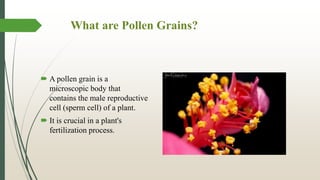
 A pollen grain is a
microscopic body that
contains the male reproductive
cell (sperm cell) of a plant.
 It is crucial in a plant's
fertilization process.
Formation of Pollen grains
Gymnosperms
Angiosperms
Formation
 In angiosperms, produced by
the anthers of the stamens.
 In gymnosperms, formed in
the microsporophylls of the
microstrobili (male pollen cones).
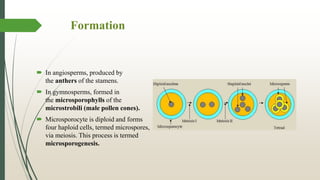
 Microsporocyte is diploid and forms
four haploid cells, termed microspores,
via meiosis. This process is termed
microsporogenesis.
• The four microspores form the double
wall of the pollen grain within a
structure made of callose.
• The callose is digested by callase and
the pollen grains are able to grow and
complete the formation of the endospore
and exospore.
Structure of Pollen grains
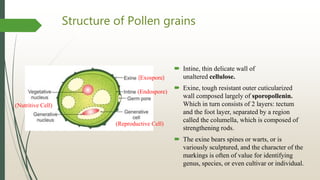
 Intine, thin delicate wall of
unaltered cellulose.
 Exine, tough resistant outer cuticularized
wall composed largely of sporopollenin.
Which in turn consists of 2 layers: tectum
and the foot layer, separated by a region
called the columella, which is composed of
strengthening rods.
 The exine bears spines or warts, or is
variously sculptured, and the character of the
markings is often of value for identifying
genus, species, or even cultivar or individual.
(Exospore)
(Endospore)
(Nutritive Cell)
(Reproductive Cell)
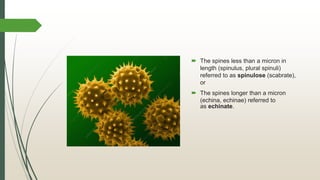
 The spines less than a micron in
length (spinulus, plural spinuli)
referred to as spinulose (scabrate),
or
 The spines longer than a micron
(echina, echinae) referred to
as echinate.
Functions of Pollen Wall
 Protects the sperm (while movement from anther to stigma).
 Protects the vital genetic material from drying out and solar radiation.
 The outer pollen wall, which prevents the pollen grain from shrinking and crushing
the genetic material during desiccation.
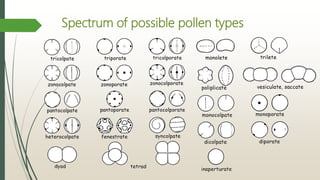
Spectrum of possible pollen types
Pollination
 The transfer of pollen grains to the female reproductive structure is
called pollination.
 Pollination by wind: anemophilous.
 Pollination by insects: Entomophilous.
Forensic palynology
• Pollen can tell a lot about where a person or
object has been region specific.
• Reveal the season in which a particular
object picked up the pollen.
What can Forensic Palynologists do?
How does Forensic Palynology work?
Continue…
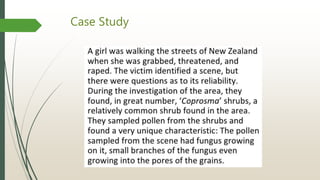
Case Study
Continue…
References
 https://www.sciencedirect.com/topics/medicine-and-dentistry/pollen
 https://biologydictionary.net/pollen/
 https://en.wikipedia.org/wiki/Pollen
 https://www.britannica.com/science/pollen
 https://study.com/academy/lesson/pollen-grain-definition-structure-function.html
 http://www.botany.unibe.ch/paleo/pollen_e/apertures.htm
 https://www.slideshare.net/fbeer1/forensic-palynology-12819754
Pollen grains

Pollen grains

  • 1.
    Pollen Grains: An Introduction CHHAVIKAUSHAL M.Sc FORENSIC SCIENCE & CRIMINOLOGY 2nd SEMESTER
  • 2.
    Contents  What arepollen grains?  Formation  Structure  Functions of pollen wall  Spectrum of possible pollen types  Pollination  Forensic palynology  What can Forensic Palynologists do?  How does Forensic Palynology work?  Case Study  References
  • 3.
    What are PollenGrains?  A pollen grain is a microscopic body that contains the male reproductive cell (sperm cell) of a plant.  It is crucial in a plant's fertilization process.
  • 4.
    Formation of Pollengrains Gymnosperms Angiosperms
  • 5.
    Formation  In angiosperms,produced by the anthers of the stamens.  In gymnosperms, formed in the microsporophylls of the microstrobili (male pollen cones).  Microsporocyte is diploid and forms four haploid cells, termed microspores, via meiosis. This process is termed microsporogenesis.
  • 6.
    • The fourmicrospores form the double wall of the pollen grain within a structure made of callose. • The callose is digested by callase and the pollen grains are able to grow and complete the formation of the endospore and exospore.
  • 7.
    Structure of Pollengrains  Intine, thin delicate wall of unaltered cellulose.  Exine, tough resistant outer cuticularized wall composed largely of sporopollenin. Which in turn consists of 2 layers: tectum and the foot layer, separated by a region called the columella, which is composed of strengthening rods.  The exine bears spines or warts, or is variously sculptured, and the character of the markings is often of value for identifying genus, species, or even cultivar or individual. (Exospore) (Endospore) (Nutritive Cell) (Reproductive Cell)
  • 8.
     The spinesless than a micron in length (spinulus, plural spinuli) referred to as spinulose (scabrate), or  The spines longer than a micron (echina, echinae) referred to as echinate.
  • 9.
    Functions of PollenWall  Protects the sperm (while movement from anther to stigma).  Protects the vital genetic material from drying out and solar radiation.  The outer pollen wall, which prevents the pollen grain from shrinking and crushing the genetic material during desiccation.
  • 10.
  • 11.
    Pollination  The transferof pollen grains to the female reproductive structure is called pollination.  Pollination by wind: anemophilous.  Pollination by insects: Entomophilous.
  • 12.
    Forensic palynology • Pollencan tell a lot about where a person or object has been region specific. • Reveal the season in which a particular object picked up the pollen.
  • 13.
    What can ForensicPalynologists do?
  • 14.
    How does ForensicPalynology work?
  • 15.
  • 17.
  • 18.
  • 19.
    References  https://www.sciencedirect.com/topics/medicine-and-dentistry/pollen  https://biologydictionary.net/pollen/ https://en.wikipedia.org/wiki/Pollen  https://www.britannica.com/science/pollen  https://study.com/academy/lesson/pollen-grain-definition-structure-function.html  http://www.botany.unibe.ch/paleo/pollen_e/apertures.htm  https://www.slideshare.net/fbeer1/forensic-palynology-12819754