Receive feedback with
grace and dignity
Try to control
your
defensiveness.
Try to control your
defensiveness.
Fear of hurting you or having to deal
with defensive or justifying behavior
make people hesitant to give feedback
to someone else. If you can create an
aura of approachability, people are
more likely to return with more
feedback. Defensiveness, anger,
justifying and excuse-making will
ensure that coworkers and bosses are
uncomfortable giving you feedback.
Listen to
understand.
Listen to understand.
Practice all the skills of
an effective
listener including using
body language and facial
expressions that
encourage the other
person to talk.
Try to
suspend
judgment.
Try to suspend
judgment.
After all, in learning the views of the
feedback provider, you learn about
yourself and how your actions are
interpreted and seen in the world.
Noted consultant and author, Tom
Peters, in a well-known quote, said,
"Perception is all there is." That's true
for your career growth and progress.
How the world views you is an
opportunity for continued growth
Summarize
and reflect
what you
hear.
Summarize and reflect
what you hear.
Your feedback provider will
appreciate that you are really
hearing what they are saying.
Rather than using the little voice in
your brain to argue, deny, or
formulate your response, focus on
making sure that you understand
the point of view you are
receiving. You are also
determining the validity of what
you are really hearing.
Ask
questions
to clarify.
Ask questions to
clarify.
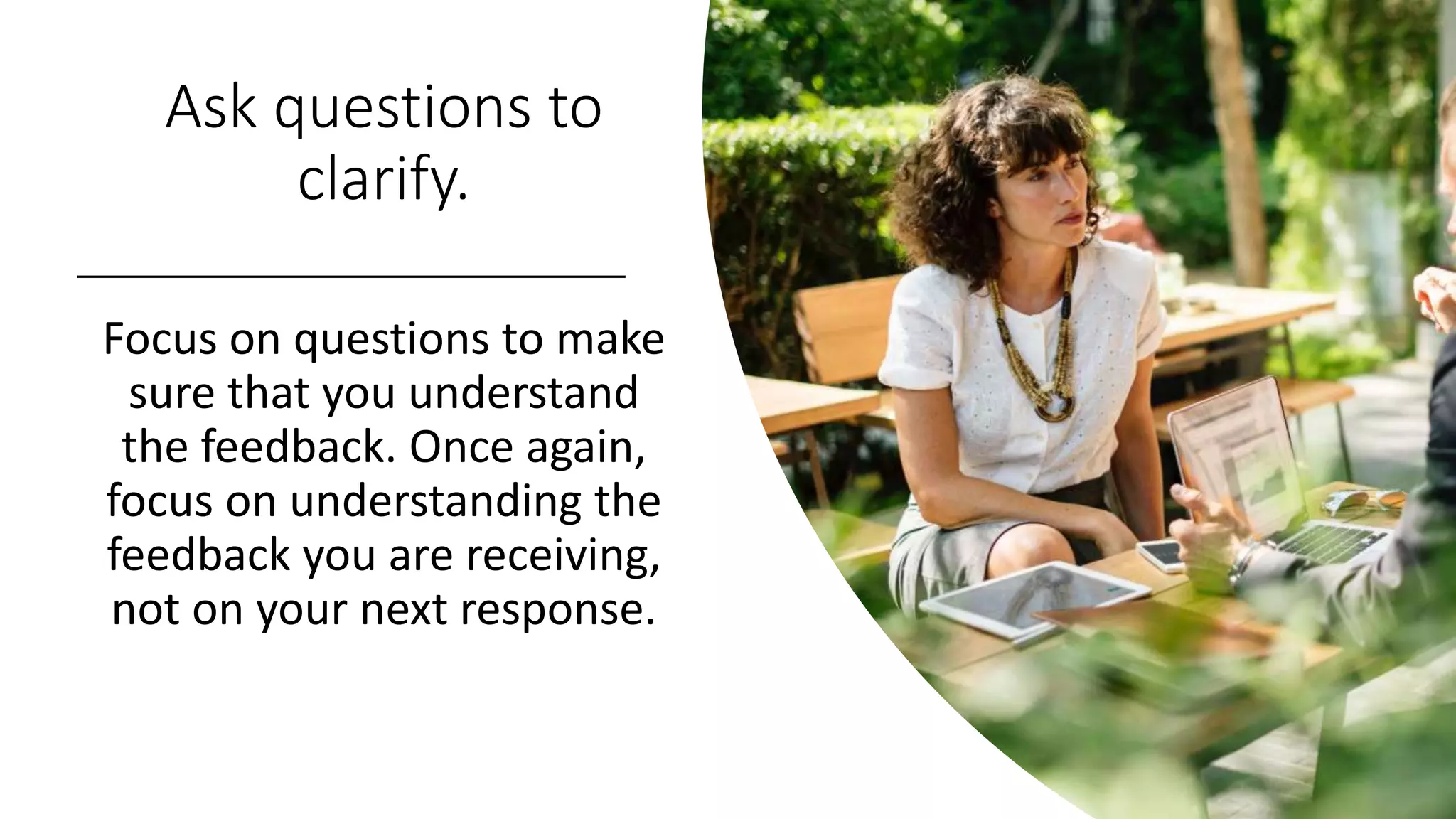
Focus on questions to make
sure that you understand
the feedback. Once again,
focus on understanding the
feedback you are receiving,
not on your next response.
Ask for
examples
Ask for examples
Ask for examples and
stories that illustrate the
feedback, so you know
that you share meaning
with the person providing
feedback.
Be free to
say no
thank you
Be free to say no
thank you
Just because a person gives you
feedback, doesn't mean their
feedback is right or widely shared
by other coworkers and bosses.
Remember that they see your
actions but interpret them
through their own perceptual
screen and life experiences.
Be
approachable.
Be approachable.
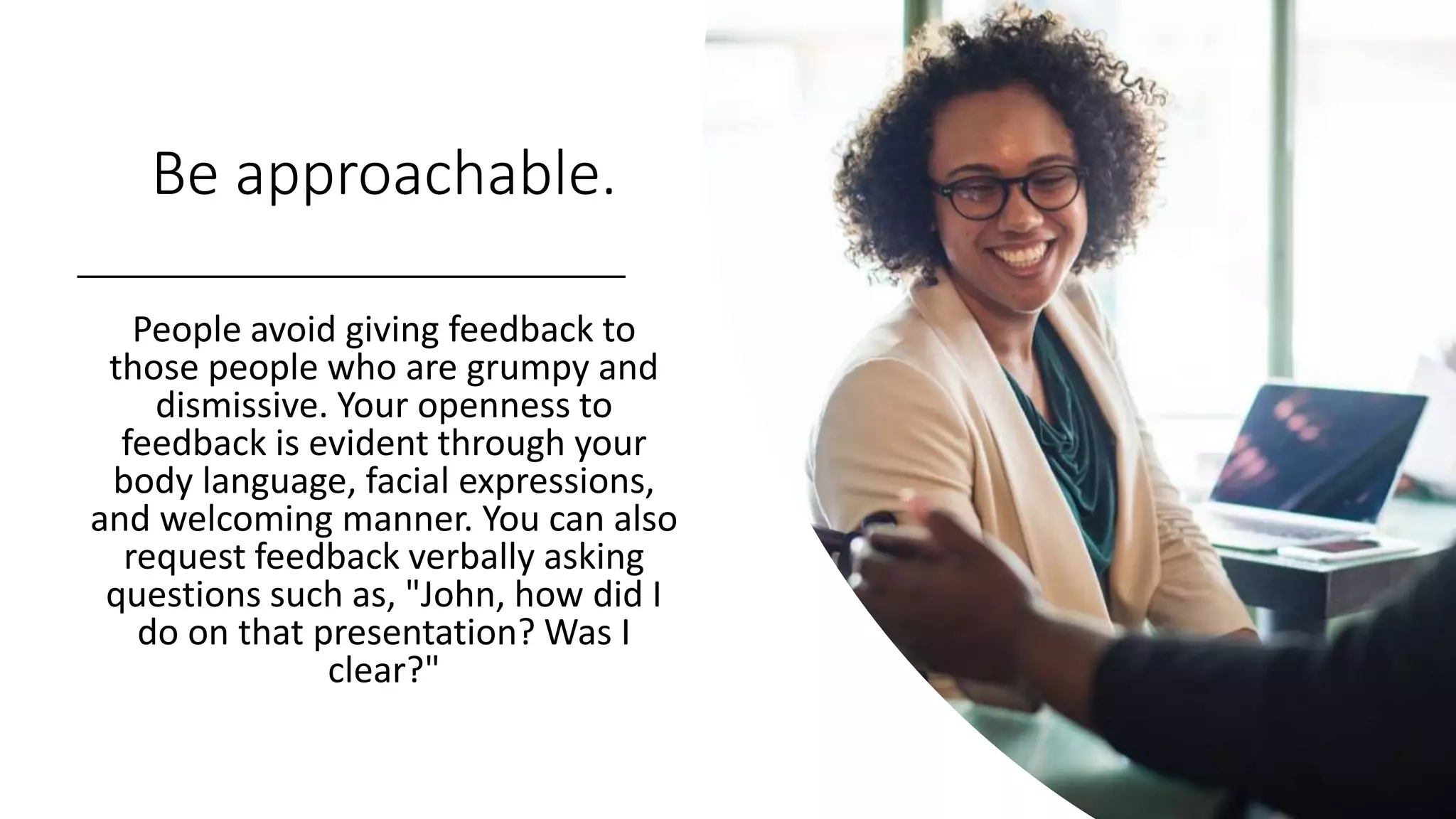
People avoid giving feedback to
those people who are grumpy and
dismissive. Your openness to
feedback is evident through your
body language, facial expressions,
and welcoming manner. You can also
request feedback verbally asking
questions such as, "John, how did I
do on that presentation? Was I
clear?"
Validate
the
feedback
Validate the feedback
Check with others to determine
the reliability of the feedback
you have received. If only one
person believes it about you, it
may be just about him or her,
not you. This is a major step as
you always have the choice
about whether to accept
feedback and do something
about it—or not.
It is in
your
control.
It is in your control
Remember, only you have the
right and the ability to decide
what to do with the feedback you
have received. It is up to you to
check it out with others, seek out
examples, and then, decide if the
feedback is worth doing
something about.
source: https://www.thebalancecareers.com/receive-feedback-with-grace-and-dignity-1916643

Receive feedback with grace and dignity

  • 1.
  • 2.
  • 3.
    Try to controlyour defensiveness. Fear of hurting you or having to deal with defensive or justifying behavior make people hesitant to give feedback to someone else. If you can create an aura of approachability, people are more likely to return with more feedback. Defensiveness, anger, justifying and excuse-making will ensure that coworkers and bosses are uncomfortable giving you feedback.
  • 4.
  • 5.
    Listen to understand. Practiceall the skills of an effective listener including using body language and facial expressions that encourage the other person to talk.
  • 6.
  • 7.
    Try to suspend judgment. Afterall, in learning the views of the feedback provider, you learn about yourself and how your actions are interpreted and seen in the world. Noted consultant and author, Tom Peters, in a well-known quote, said, "Perception is all there is." That's true for your career growth and progress. How the world views you is an opportunity for continued growth
  • 8.
  • 9.
    Summarize and reflect whatyou hear. Your feedback provider will appreciate that you are really hearing what they are saying. Rather than using the little voice in your brain to argue, deny, or formulate your response, focus on making sure that you understand the point of view you are receiving. You are also determining the validity of what you are really hearing.
  • 10.
  • 11.
    Ask questions to clarify. Focuson questions to make sure that you understand the feedback. Once again, focus on understanding the feedback you are receiving, not on your next response.
  • 12.
  • 13.
    Ask for examples Askfor examples and stories that illustrate the feedback, so you know that you share meaning with the person providing feedback.
  • 14.
    Be free to sayno thank you
  • 15.
    Be free tosay no thank you Just because a person gives you feedback, doesn't mean their feedback is right or widely shared by other coworkers and bosses. Remember that they see your actions but interpret them through their own perceptual screen and life experiences.
  • 16.
  • 17.
    Be approachable. People avoidgiving feedback to those people who are grumpy and dismissive. Your openness to feedback is evident through your body language, facial expressions, and welcoming manner. You can also request feedback verbally asking questions such as, "John, how did I do on that presentation? Was I clear?"
  • 18.
  • 19.
    Validate the feedback Checkwith others to determine the reliability of the feedback you have received. If only one person believes it about you, it may be just about him or her, not you. This is a major step as you always have the choice about whether to accept feedback and do something about it—or not.
  • 20.
  • 21.
    It is inyour control Remember, only you have the right and the ability to decide what to do with the feedback you have received. It is up to you to check it out with others, seek out examples, and then, decide if the feedback is worth doing something about. source: https://www.thebalancecareers.com/receive-feedback-with-grace-and-dignity-1916643