Reading Discovery Using  Non-fiction Strategies Effectively
Before  You Read This is the preparation stage Time and care taken  before  reading will make the actual reading experience easier
Set A Purpose Decide why you are reading this information To make a decision? To create something? To help you? For school?
Preview Read headlines and subtitles Look at pictures and other graphics; read captions Skim side bars Read section outline in textbooks and articles
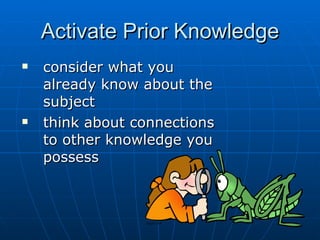
Activate Prior Knowledge consider what you already know about the subject think about connections to other knowledge you possess
Write Questions make predictions about  information you expect to find write down things you wondered while previewing  create questions you think might be answered by the text
Set a Reading Speed Good readers adjust their reading rate to fit the text and purpose Think about WHY you are reading and WHAT you are reading Then pick a speed
First Gear Slow, thoughtful reading Use when the text is complex or difficult Use when you are reading to remember important information Use when you are going to take action
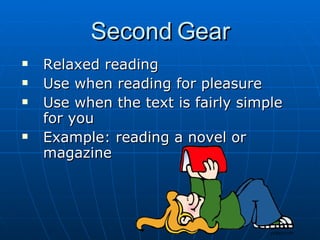
Second Gear Relaxed reading Use when reading for pleasure Use when the text is fairly simple for you Example: reading a novel or magazine
Third Gear Skimming the text Use when you need basic answers or information quickly You don’t have to read every word, until you locate the information you need
Fourth Gear Scanning the text rapidly Use when looking for a particular word or concept Your eyes move quickly over the page until you find what you are looking for
Before Reading P review A ctivate prior knowledge W rite down wonders S et a speed
During  Reading Now that you have prepared your brain, you are ready to read Remember: “READING IS THINKING” Use effective strategies to help you make sense of what you are reading
Visualize Use illustrations to help you create mental pictures  Add in images from your own experiences so that you create a “Mental Movie”
Predict Pay attention to section headings and subtitles to help you know what is coming up Create questions, then search for  answers as you read

Reading Strategies

  • 1.
    Reading Discovery Using Non-fiction Strategies Effectively
  • 2.
    Before YouRead This is the preparation stage Time and care taken before reading will make the actual reading experience easier
  • 3.
    Set A PurposeDecide why you are reading this information To make a decision? To create something? To help you? For school?
  • 4.
    Preview Read headlinesand subtitles Look at pictures and other graphics; read captions Skim side bars Read section outline in textbooks and articles
  • 5.
    Activate Prior Knowledgeconsider what you already know about the subject think about connections to other knowledge you possess
  • 6.
    Write Questions makepredictions about information you expect to find write down things you wondered while previewing create questions you think might be answered by the text
  • 7.
    Set a ReadingSpeed Good readers adjust their reading rate to fit the text and purpose Think about WHY you are reading and WHAT you are reading Then pick a speed
  • 8.
    First Gear Slow,thoughtful reading Use when the text is complex or difficult Use when you are reading to remember important information Use when you are going to take action
  • 9.
    Second Gear Relaxedreading Use when reading for pleasure Use when the text is fairly simple for you Example: reading a novel or magazine
  • 10.
    Third Gear Skimmingthe text Use when you need basic answers or information quickly You don’t have to read every word, until you locate the information you need
  • 11.
    Fourth Gear Scanningthe text rapidly Use when looking for a particular word or concept Your eyes move quickly over the page until you find what you are looking for
  • 12.
    Before Reading Preview A ctivate prior knowledge W rite down wonders S et a speed
  • 13.
    During ReadingNow that you have prepared your brain, you are ready to read Remember: “READING IS THINKING” Use effective strategies to help you make sense of what you are reading
  • 14.
    Visualize Use illustrationsto help you create mental pictures Add in images from your own experiences so that you create a “Mental Movie”
  • 15.
    Predict Pay attentionto section headings and subtitles to help you know what is coming up Create questions, then search for answers as you read